Basic Laws Of
Aerodynamics

           Or

 Aerodynamics for Dummies
Newton’s Laws of Motion


•Law of Inertia

•Law of Acceleration

•Law of Action and Reaction
Law of Inertia
Newton’s First Law:
This law states that a body at rest will
remain at rest, and a body in motion
will remain in motion until acted upon
by an outside force.
Practical example of the Law of Inertia

•Rotor system prior to start (remains at rest)
•Engine overcomes resistance to
movement (outside force)
•Rotor continues to spin after shutdown
(remains in motion)
•Rotor slows due to air resistance
(Drag or outside force)
Law of Acceleration
Newton’s Second Law:
The force required to produce a
change in the motion of a body is
directly proportional to its mass and
the rate of change in its velocity.
Acceleration is a change in velocity
with respect to time. It can be either
an increase or decrease in velocity
Acceleration = Force over Mass

The force required to move an A-Star
across the ramp to some speed is
greater than the force required to
move an R-22
               OR
If we applied the same force used to
move the A-Star on the R-22, the R-22
would move faster, or accelerate.
Law of Action and Reaction
Newton’s Third Law:
For every action, there is an equal and
opposite reaction
If an interaction occurs between two
bodies, equal forces in opposite
directions will be imparted to each body
Torque Effect is an example
            of
     “Action - Reaction”

            or

    Another example is

  The Recoil from a Gun…
Question
Why does the projectile move and
the barrel remain in place?
Answer:
Because the barrel has more mass
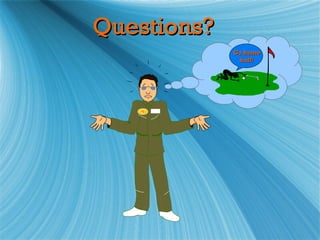
Questions?
             Go home
              ball!

Basic laws

  • 1.
    Basic Laws Of Aerodynamics Or Aerodynamics for Dummies
  • 2.
    Newton’s Laws ofMotion •Law of Inertia •Law of Acceleration •Law of Action and Reaction
  • 3.
    Law of Inertia Newton’sFirst Law: This law states that a body at rest will remain at rest, and a body in motion will remain in motion until acted upon by an outside force.
  • 4.
    Practical example ofthe Law of Inertia •Rotor system prior to start (remains at rest) •Engine overcomes resistance to movement (outside force) •Rotor continues to spin after shutdown (remains in motion) •Rotor slows due to air resistance (Drag or outside force)
  • 5.
    Law of Acceleration Newton’sSecond Law: The force required to produce a change in the motion of a body is directly proportional to its mass and the rate of change in its velocity. Acceleration is a change in velocity with respect to time. It can be either an increase or decrease in velocity
  • 6.
    Acceleration = Forceover Mass The force required to move an A-Star across the ramp to some speed is greater than the force required to move an R-22 OR If we applied the same force used to move the A-Star on the R-22, the R-22 would move faster, or accelerate.
  • 7.
    Law of Actionand Reaction Newton’s Third Law: For every action, there is an equal and opposite reaction If an interaction occurs between two bodies, equal forces in opposite directions will be imparted to each body
  • 8.
    Torque Effect isan example of “Action - Reaction” or Another example is The Recoil from a Gun…
  • 9.
    Question Why does theprojectile move and the barrel remain in place?
  • 10.
  • 11.
    Questions? Go home ball!

Editor's Notes

  • #2 Introduction Title Page