Unit – 1
Social Research and Social Work Research,
Basic Elements of Social Work Research
Presented By:
Shashikirana .K
Lecturer
Dept.of Social Work
Gangothri BSW Degree College Kottur
1
Social research
2
 Redman and Mary :
“systematized effort to gain new knowledge”
 The Advanced Learner’s Dictionary:
“ A carful investigation or inquiry specially
through search for new facts in any branch of
knowledge.
 lPÀ̪ÀÄ£ï:¥Àæ±ÉßUÀ½UÉGvÀÛgÀUÀ¼À£ÀÄß ªÀåªÀ¹ÜvÀªÁV
PÀAqÀÄPÉÆ¼ÀÄîªÀ ¥ÀæAiÀÄvÀߪÀ£Éßà ¸ÀªÀiÁfPÀ ¸ÀA±ÉÆÃzsÀ£É

 §£ïìð:¸ÀªÀĸÉåUÀ½UÉ ¥ÀjºÁgÀªÀ£ÀÄßPÀAqÀÄPÉÆ¼ÀÄîªÀAvÀºÀ
ªÀåªÀ¹ÜvÀªÁzÀ ¥ÀæAiÀÄvÀß.
3
 Social work research is the application of
research methods to the production of
knowledge that social workers need to solve
problems they confront in the practice of
social work.
 ªÀÈwÛ¥ÀgÀ ¸ÀªÀiÁdPÁAiÀÄðPÀvÀðgÀÄ vÀªÀÄä ªÀÈwÛAiÀÄ
DZÀgÀuÉAiÀİè vÀªÀÄä£Àß vÁªÀÅ vÉÆqÀV¹PÉÆAqÁUÀ
JzÀÄgÁUÀ§ºÀÄzÁzÀ C£ÉÃPÀ ¸ÀªÁ®ÄUÀ¼ÀÄ,
¸ÀªÀĸÉåUÀ¼ÀÄ ¸ÀAPÀµÀÖUÀ¼À£Àß ¸ÀªÀÄxÀðªÁV
¤¨sÁ¬Ä¹PÉÆ¼ÀÄîªÀAvÀºÀ eÁÕ£ÀªÀ£Àß MzÀV¸ÀĪÀÅzÉÃ
¸ÀªÀiÁdPÁAiÀÄð ¸ÀA±ÉÆÃzsÀ£É 4
BASIC ELEMENTS OF
SOCIAL RESEARCH
5
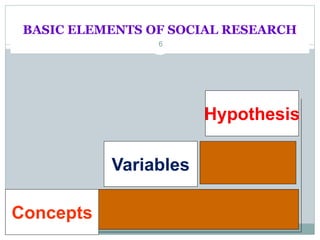
BASIC ELEMENTS OF SOCIAL RESEARCH
Concepts
Hypothesis
Variables
6
7
BASIC ELEMENTS OF
RESEARCH……
• Concepts
– A concept is an abstraction representing an object, a
property of an object, or a phenomenon .
MAzÀĪÀ¸ÀÄÛ«£À§UÉÎ/M§â ªÀåQÛAiÀÄ §UÉÎ / MAzÀÄWÀl£ÉAiÀÄ §UÉÎ
DVgÀ§ºÀÄzÀÄ,D PÀëtPÉÌ£ÀªÀÄä ªÀÄ£À¹ì£À°è ªÀÄÆqÀĪÀ avÀætªÉÃ
¥ÀjPÀ®à£É
– For example, “Religion”, “Women”, “Education ”,
“Income ”.
 Employees
 Length of Service
 Salary
8
CONCEPTS
9
BASIC ELEMENTS OF
RESEARCH……
VARIABLES
• A variable is an empirical property
that takes two or more values.
2 CxÀªÁ ºÉaÑ£À ªÀiË®åUÀ¼ÀÄ/ UÀÄt®PÀëtUÀ¼À£ÀÄß
¥ÀqÉzÀÄPÉÆ¼ÀÄîªÀÅzÀ£Àß ZÀ®PÀUÀ¼ÀÄ JAzÀÄ
PÀgÉAiÀħºÀÄzÀÄ
• For example, ‘ gender’ is a variable
because it can be assigned two or
more values : Male, Female, …..
10
Cont….
• Independent Variable
The variable which represents the cause is
termed as independent variable.
Example : Age,
• Dependent Variable
The variable that is the effect or is the result or
outcome of another variable is the dependent
variable.
Example : Life Satisfaction
• AiÀiÁªÀÅzÁzÀgÉÆAzÀÄ¥ÀjªÀvÀðPÀªÀÅE£ÉÆßAzÀÄ
¥ÀjªÀvÀðPÀªÀ£ÀÄßCªÀ®A©¹zÀÝgÉ CxÀªÁ E£ÉÆßAzÀgÀ
¥ÀjuÁªÀĪÁVPÁt§gÀÄwÛzÀݰè CzÀ£ÀÄß CªÀ®A©vÀ
¥ÀjªÀvÀðPÀ J£Àß§ºÀÄzÀÄ.
11
Hypothesis
• The term hypothesis can be
defined as a proposition or
tentative solutions or answers of
research questions which are yet
to be tested.
• £ÁªÀÅ gÀƦ¹PÉÆ¼Àî¯ÁUÀĪÀ vÁvÁ̰PÀ ¥ÀjºÁgÀ/ GvÀÛgÀ
• ªÉÊeÁÕ¤PÀ vÀ¼ÀºÀ¢.
The term null hypothesis can be
defined as a hypothesis indicating
no association / relationship
between variables in questions.
12
 Null Hypothesis (H0) :
1. Economic status and size of family are not associated.
2. Suicide rate and marital status are not associated.
13
14
Sources of Hypothesis
• Theories
• Available literature
• Personal experiences
• Findings of other studies
15
Some Characteristics of Usable
Hypothesis
• Empirically testable
• Must not be moral
judgments
• Conceptually clear and
specific.
16

BASIC ELEMENTS of social work research final.ppt

  • 1.
    Unit – 1 SocialResearch and Social Work Research, Basic Elements of Social Work Research Presented By: Shashikirana .K Lecturer Dept.of Social Work Gangothri BSW Degree College Kottur 1
  • 2.
  • 3.
     Redman andMary : “systematized effort to gain new knowledge”  The Advanced Learner’s Dictionary: “ A carful investigation or inquiry specially through search for new facts in any branch of knowledge.  lPÀ̪ÀÄ£ï:¥Àæ±ÉßUÀ½UÉGvÀÛgÀUÀ¼À£ÀÄß ªÀåªÀ¹ÜvÀªÁV PÀAqÀÄPÉÆ¼ÀÄîªÀ ¥ÀæAiÀÄvÀߪÀ£Éßà ¸ÀªÀiÁfPÀ ¸ÀA±ÉÆÃzsÀ£É   §£ïìð:¸ÀªÀĸÉåUÀ½UÉ ¥ÀjºÁgÀªÀ£ÀÄßPÀAqÀÄPÉÆ¼ÀÄîªÀAvÀºÀ ªÀåªÀ¹ÜvÀªÁzÀ ¥ÀæAiÀÄvÀß. 3
  • 4.
     Social workresearch is the application of research methods to the production of knowledge that social workers need to solve problems they confront in the practice of social work.  ªÀÈwÛ¥ÀgÀ ¸ÀªÀiÁdPÁAiÀÄðPÀvÀðgÀÄ vÀªÀÄä ªÀÈwÛAiÀÄ DZÀgÀuÉAiÀİè vÀªÀÄä£Àß vÁªÀÅ vÉÆqÀV¹PÉÆAqÁUÀ JzÀÄgÁUÀ§ºÀÄzÁzÀ C£ÉÃPÀ ¸ÀªÁ®ÄUÀ¼ÀÄ, ¸ÀªÀĸÉåUÀ¼ÀÄ ¸ÀAPÀµÀÖUÀ¼À£Àß ¸ÀªÀÄxÀðªÁV ¤¨sÁ¬Ä¹PÉÆ¼ÀÄîªÀAvÀºÀ eÁÕ£ÀªÀ£Àß MzÀV¸ÀĪÀÅzÉà ¸ÀªÀiÁdPÁAiÀÄð ¸ÀA±ÉÆÃzsÀ£É 4
  • 5.
  • 6.
    BASIC ELEMENTS OFSOCIAL RESEARCH Concepts Hypothesis Variables 6
  • 7.
    7 BASIC ELEMENTS OF RESEARCH…… •Concepts – A concept is an abstraction representing an object, a property of an object, or a phenomenon . MAzÀĪÀ¸ÀÄÛ«£À§UÉÎ/M§â ªÀåQÛAiÀÄ §UÉÎ / MAzÀÄWÀl£ÉAiÀÄ §UÉÎ DVgÀ§ºÀÄzÀÄ,D PÀëtPÉÌ£ÀªÀÄä ªÀÄ£À¹ì£À°è ªÀÄÆqÀĪÀ avÀætªÉà ¥ÀjPÀ®à£É – For example, “Religion”, “Women”, “Education ”, “Income ”.
  • 8.
     Employees  Lengthof Service  Salary 8 CONCEPTS
  • 9.
    9 BASIC ELEMENTS OF RESEARCH…… VARIABLES •A variable is an empirical property that takes two or more values. 2 CxÀªÁ ºÉaÑ£À ªÀiË®åUÀ¼ÀÄ/ UÀÄt®PÀëtUÀ¼À£ÀÄß ¥ÀqÉzÀÄPÉÆ¼ÀÄîªÀÅzÀ£Àß ZÀ®PÀUÀ¼ÀÄ JAzÀÄ PÀgÉAiÀħºÀÄzÀÄ • For example, ‘ gender’ is a variable because it can be assigned two or more values : Male, Female, …..
  • 10.
    10 Cont…. • Independent Variable Thevariable which represents the cause is termed as independent variable. Example : Age, • Dependent Variable The variable that is the effect or is the result or outcome of another variable is the dependent variable. Example : Life Satisfaction • AiÀiÁªÀÅzÁzÀgÉÆAzÀÄ¥ÀjªÀvÀðPÀªÀÅE£ÉÆßAzÀÄ ¥ÀjªÀvÀðPÀªÀ£ÀÄßCªÀ®A©¹zÀÝgÉ CxÀªÁ E£ÉÆßAzÀgÀ ¥ÀjuÁªÀĪÁVPÁt§gÀÄwÛzÀݰè CzÀ£ÀÄß CªÀ®A©vÀ ¥ÀjªÀvÀðPÀ J£Àß§ºÀÄzÀÄ.
  • 11.
    11 Hypothesis • The termhypothesis can be defined as a proposition or tentative solutions or answers of research questions which are yet to be tested. • £ÁªÀÅ gÀƦ¹PÉÆ¼Àî¯ÁUÀĪÀ vÁvÁ̰PÀ ¥ÀjºÁgÀ/ GvÀÛgÀ • ªÉÊeÁÕ¤PÀ vÀ¼ÀºÀ¢.
  • 12.
    The term nullhypothesis can be defined as a hypothesis indicating no association / relationship between variables in questions. 12
  • 13.
     Null Hypothesis(H0) : 1. Economic status and size of family are not associated. 2. Suicide rate and marital status are not associated. 13
  • 14.
    14 Sources of Hypothesis •Theories • Available literature • Personal experiences • Findings of other studies
  • 15.
    15 Some Characteristics ofUsable Hypothesis • Empirically testable • Must not be moral judgments • Conceptually clear and specific.
  • 16.