Base Isolation
Conventional Construction Practice
assumes Fixed Base Structures
 The Dynamic Characteristics of Fixed Base Structures are
determined by the general characteristics of the structural
system
 The Designer can only slightly adjust those Dynamic
Characteristics
 As a matter of fact, most common Building Structures have
unfavorable Dynamic Characteristics that result in increased
Seismic Response
Earthquake Performance of Fixed
Base Structures
 Conventional Fixed Base Structures can not be realistically
designed to remain elastic in large seismic events (more so
in regions of high seismicity)
 Common practice is to design them so that they experience
damage in a controlled manner and have large inelastic
displacements potential
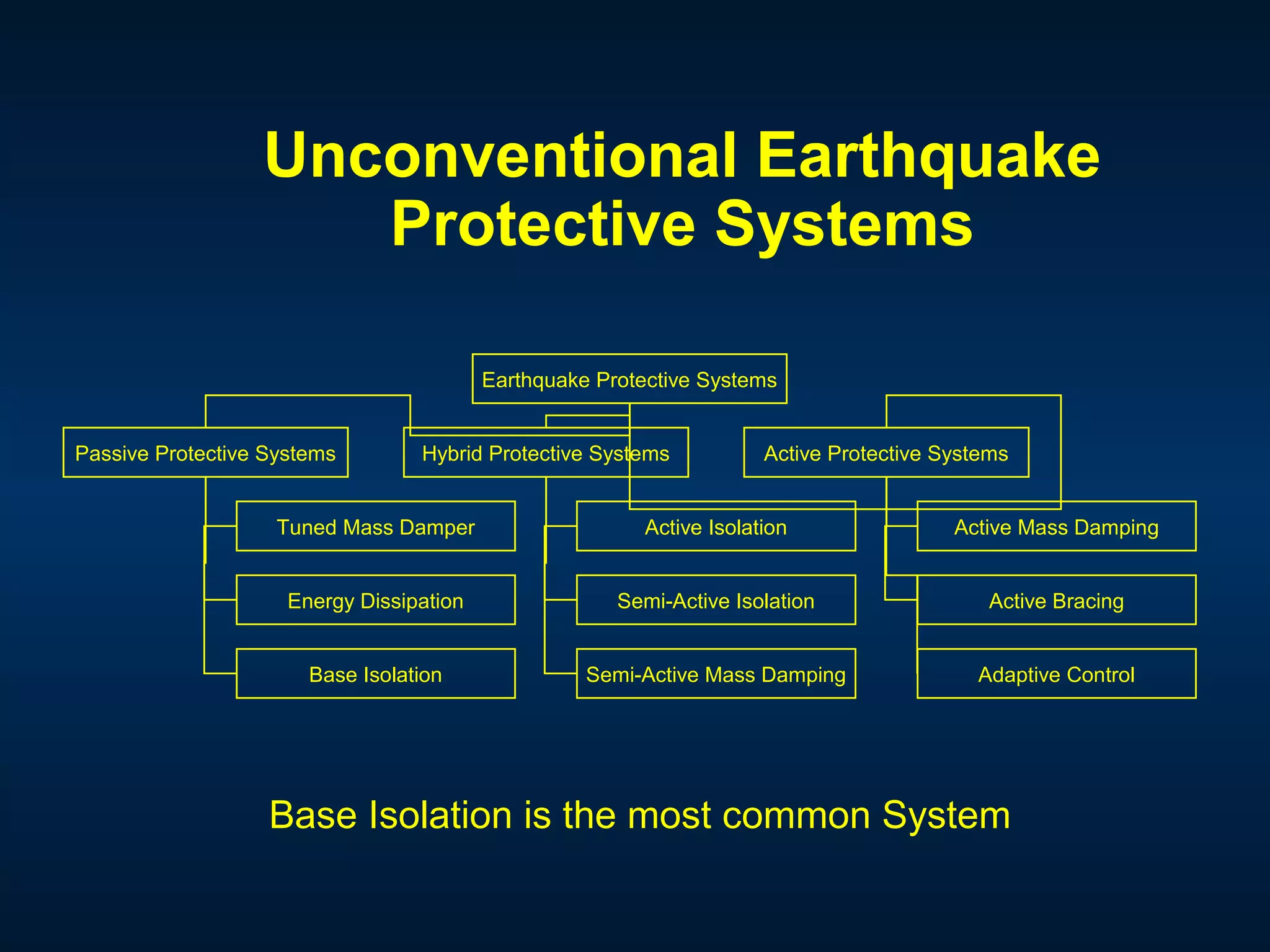
Unconventional Earthquake
Protective Systems
Base Isolation is the most common System
Earthquake Protective Systems
Passive Protective Systems Hybrid Protective Systems Active Protective Systems
Tuned Mass Damper
Energy Dissipation
Base Isolation
Active Isolation
Semi-Active Isolation
Semi-Active Mass Damping
Active Mass Damping
Active Bracing
Adaptive Control
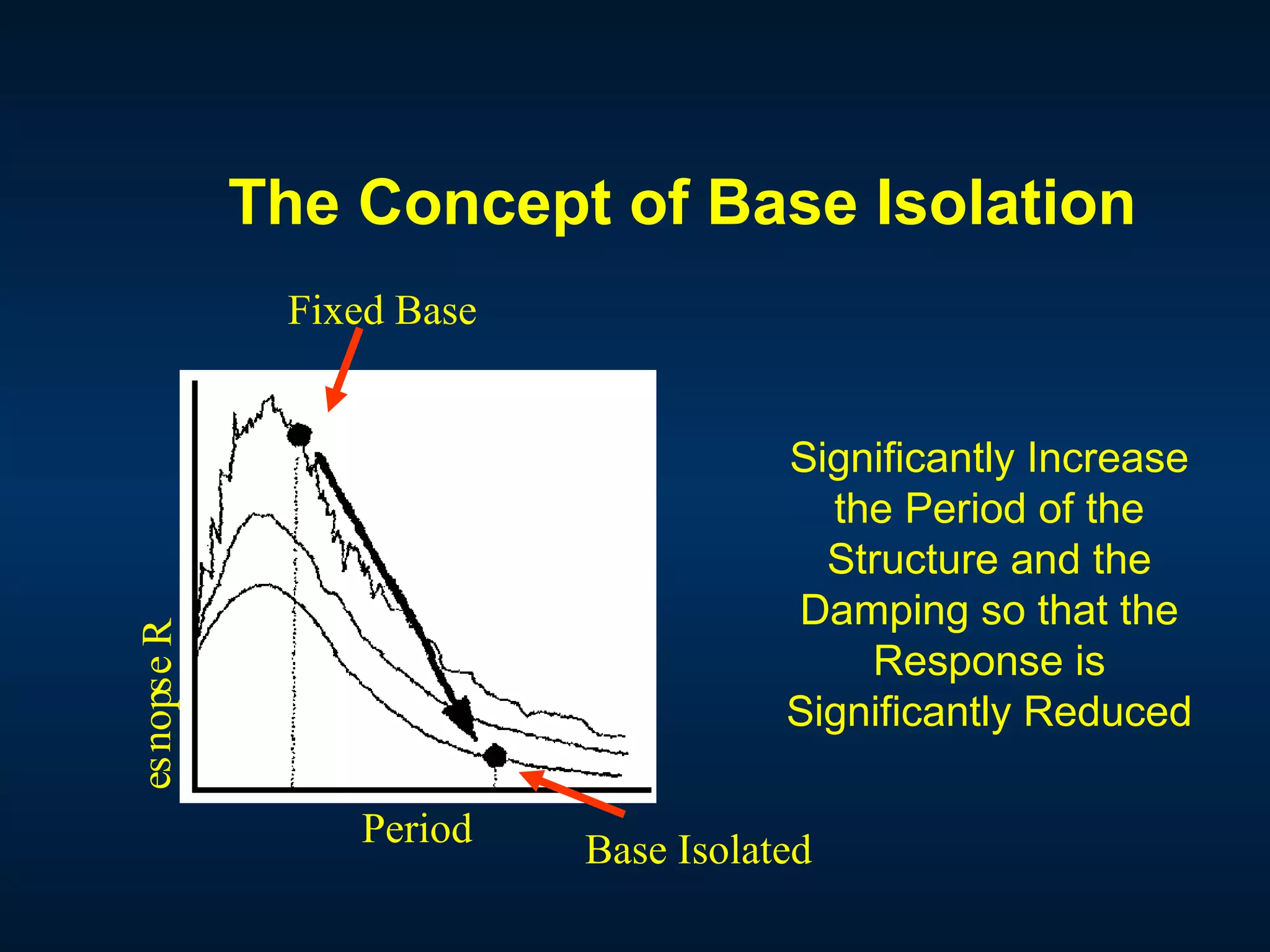
The Concept of Base Isolation
Fixed Base
Base Isolated
Period
Response
Significantly Increase
the Period of the
Structure and the
Damping so that the
Response is
Significantly Reduced
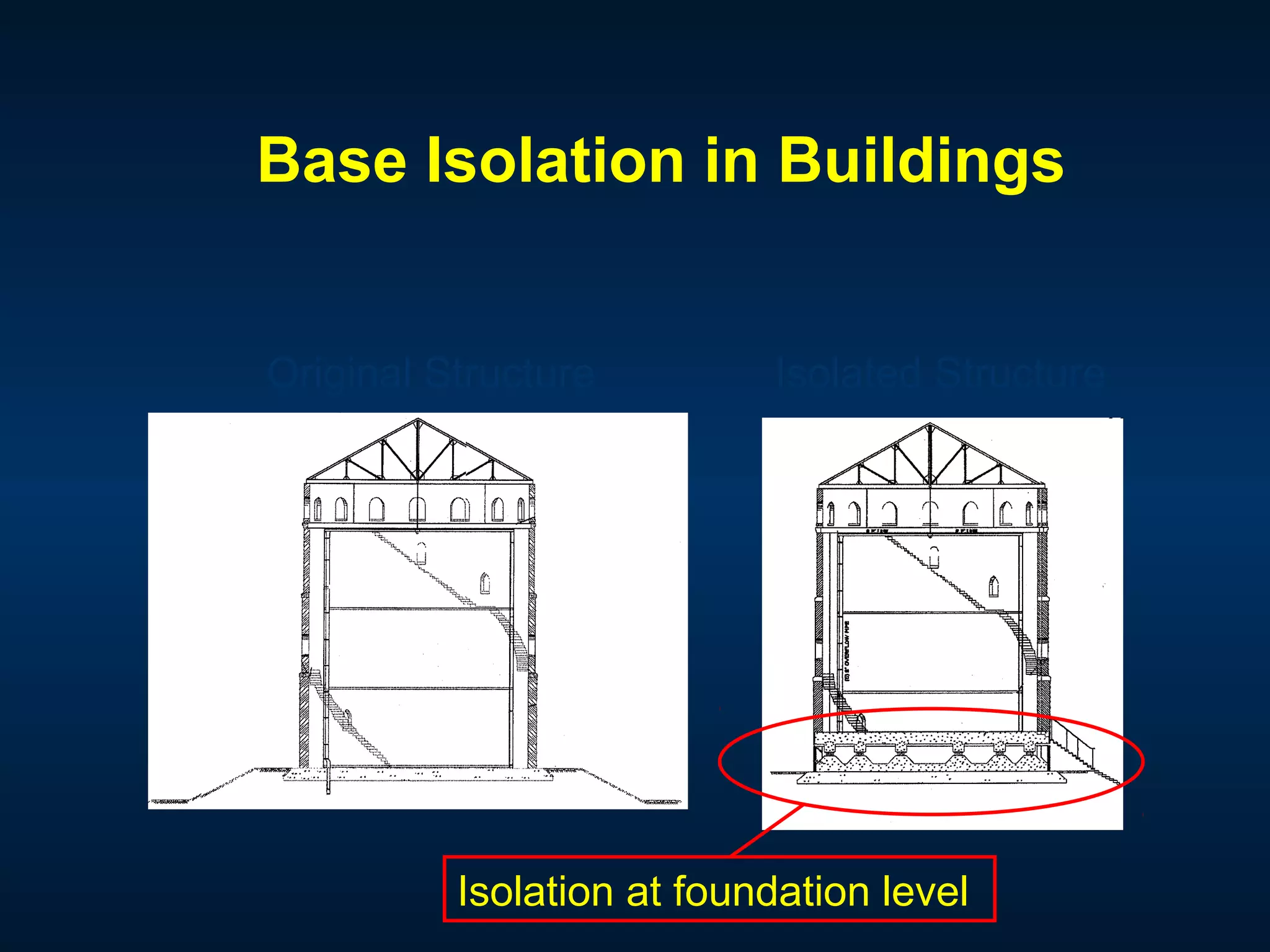
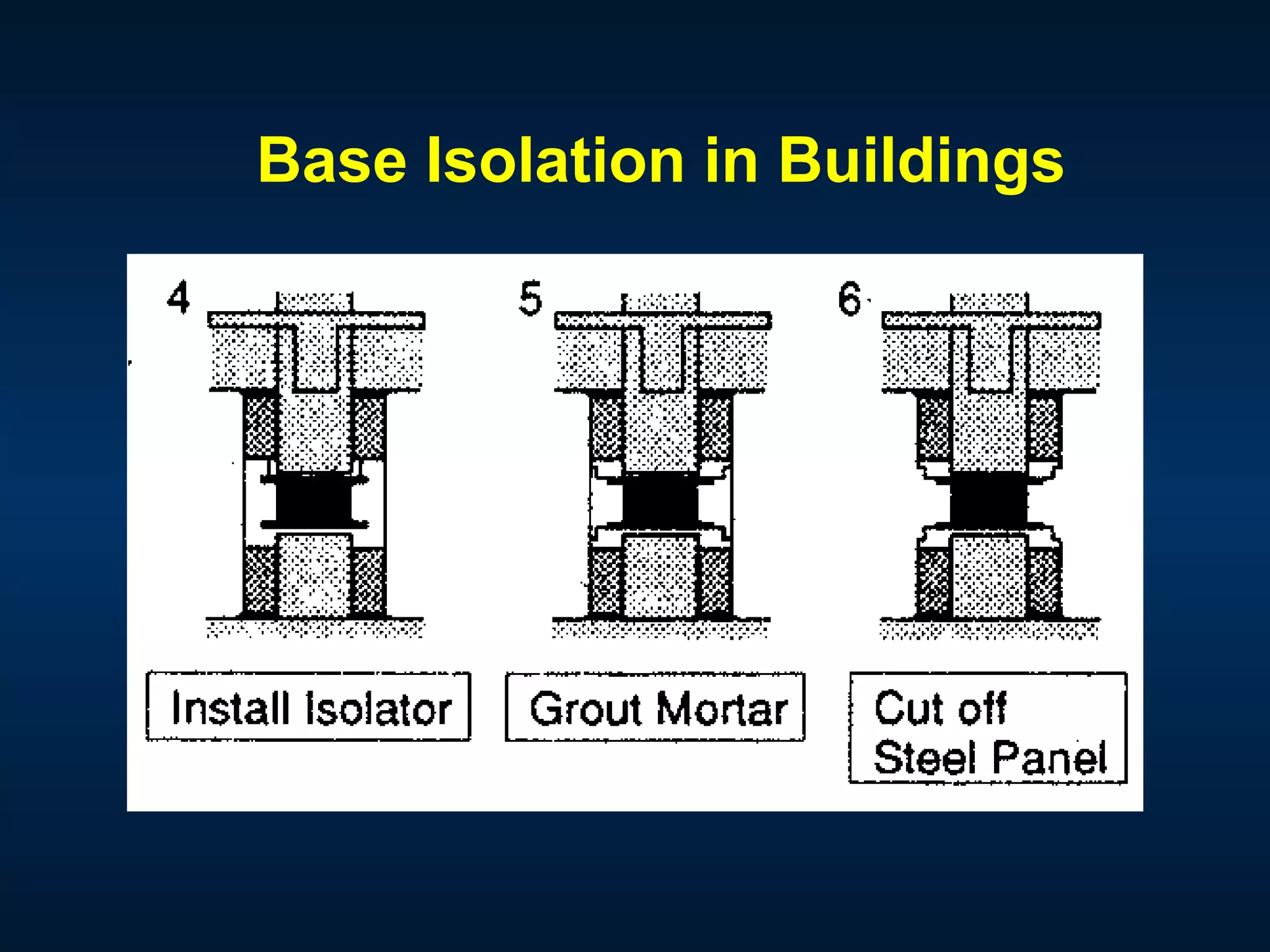
Base Isolation in Buildings
Original Structure Isolated Structure
Isolation at foundation level
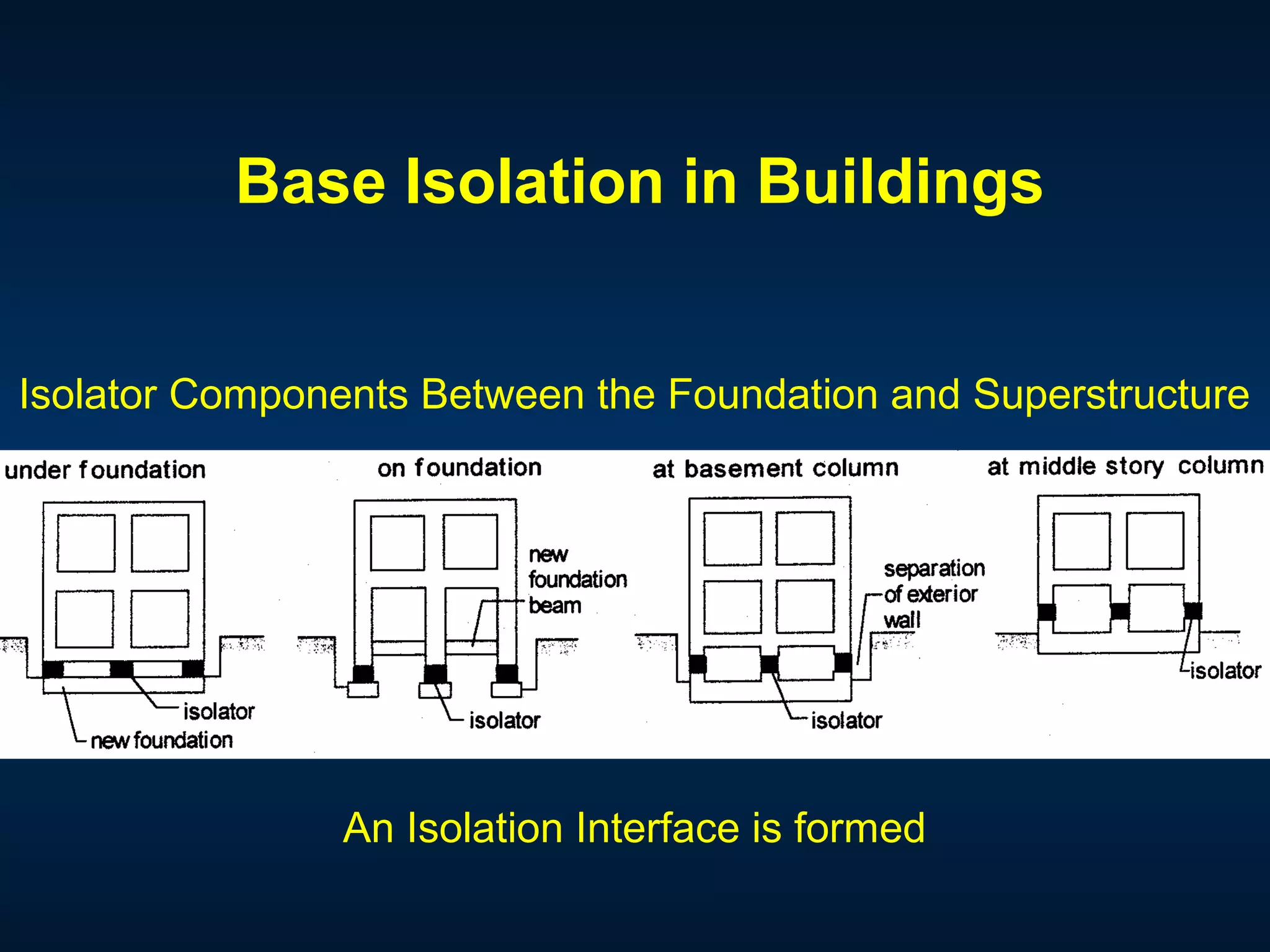
Base Isolation in Buildings
Isolator Components Between the Foundation and Superstructure
An Isolation Interface is formed
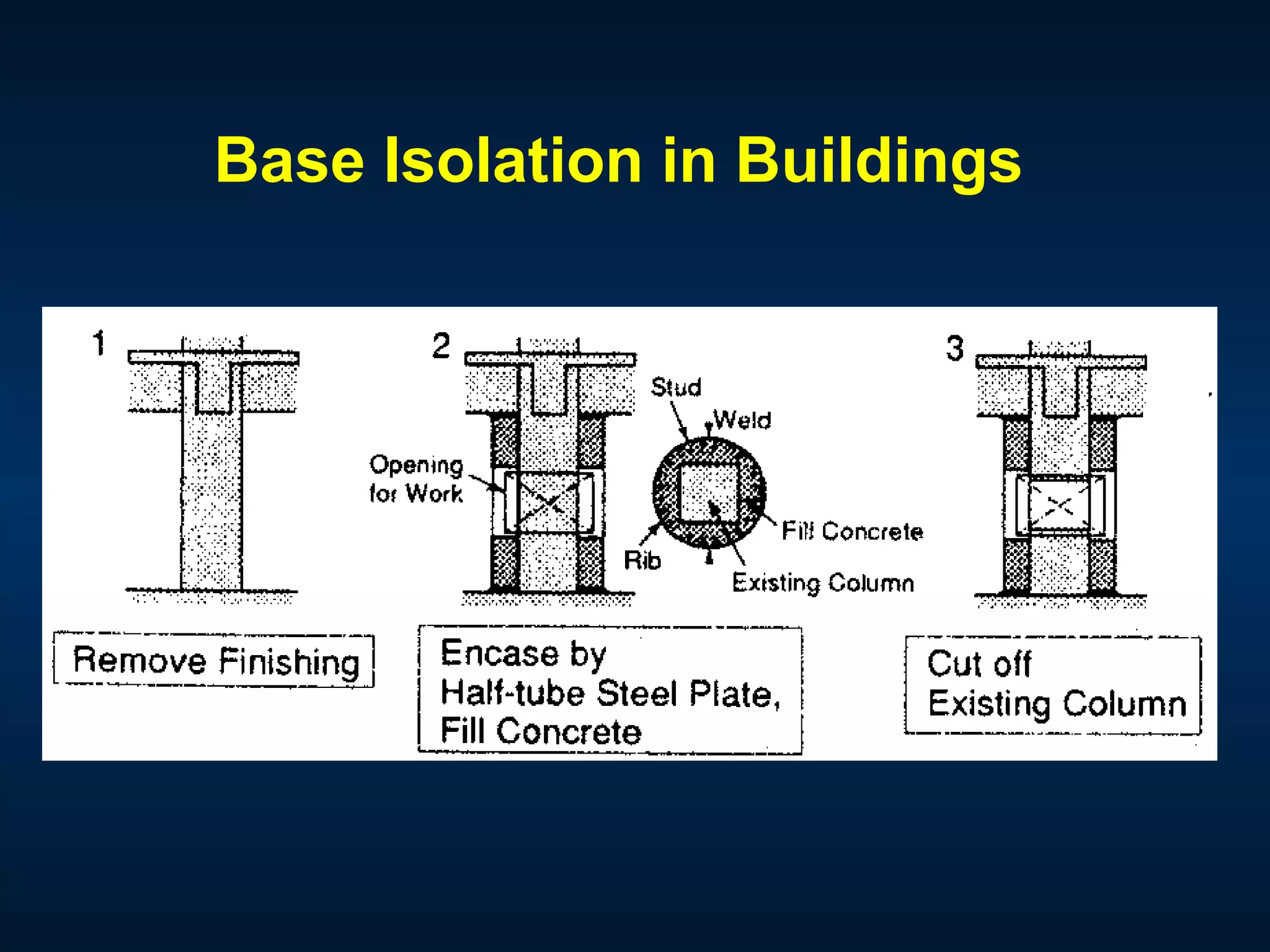
Base Isolation in Buildings
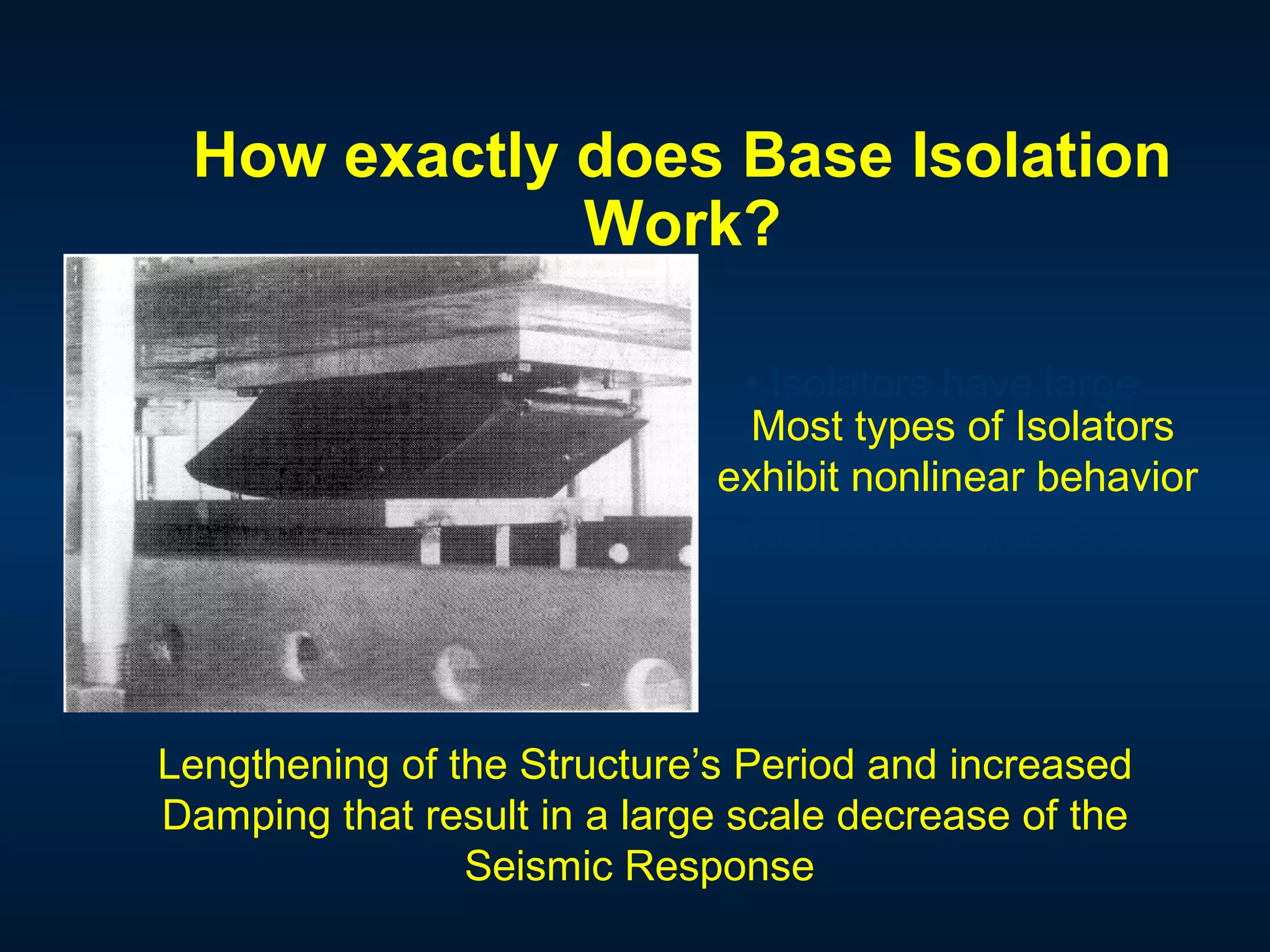
How exactly does Base Isolation
Work?
• Isolators have large
deformation potential
allowing for large drift on
the Isolation Interface
Most types of Isolators
exhibit nonlinear behavior
Lengthening of the Structure’s Period and increased
Damping that result in a large scale decrease of the
Seismic Response
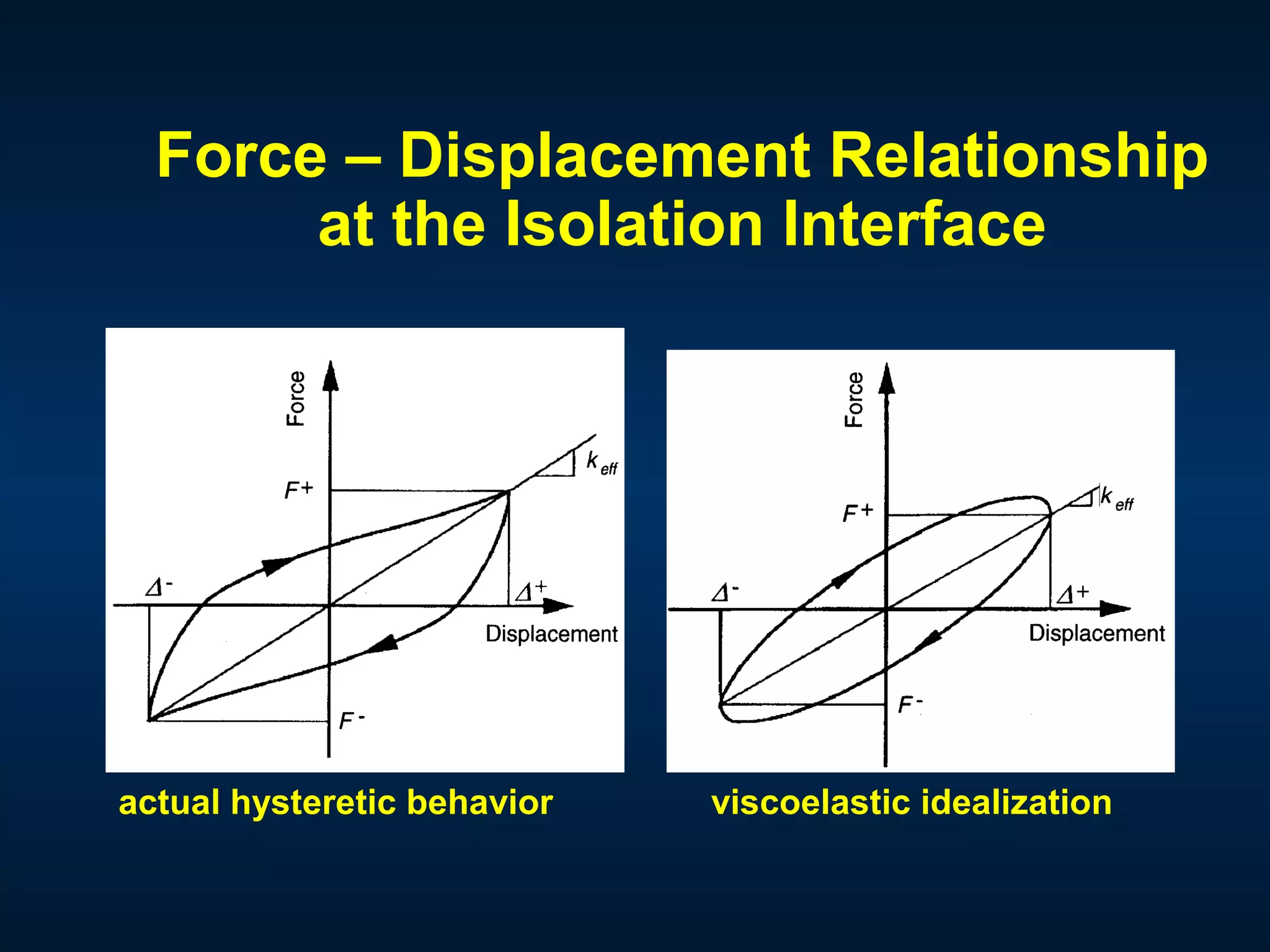
Force – Displacement Relationship
at the Isolation Interface
actual hysteretic behavior viscoelastic idealization
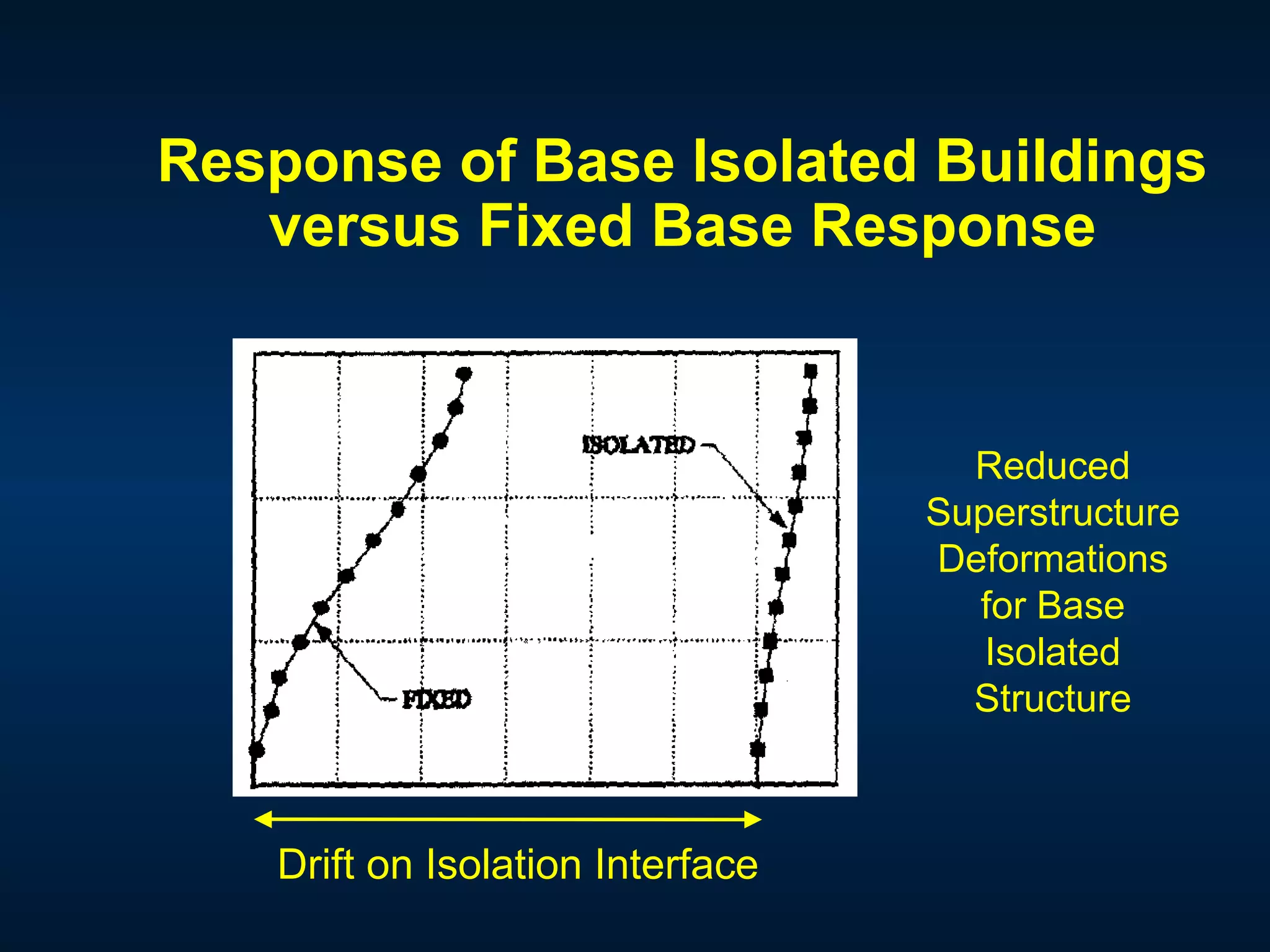
Response of Base Isolated Buildings
versus Fixed Base Response
Drift on Isolation Interface
Reduced
Superstructure
Deformations
for Base
Isolated
Structure
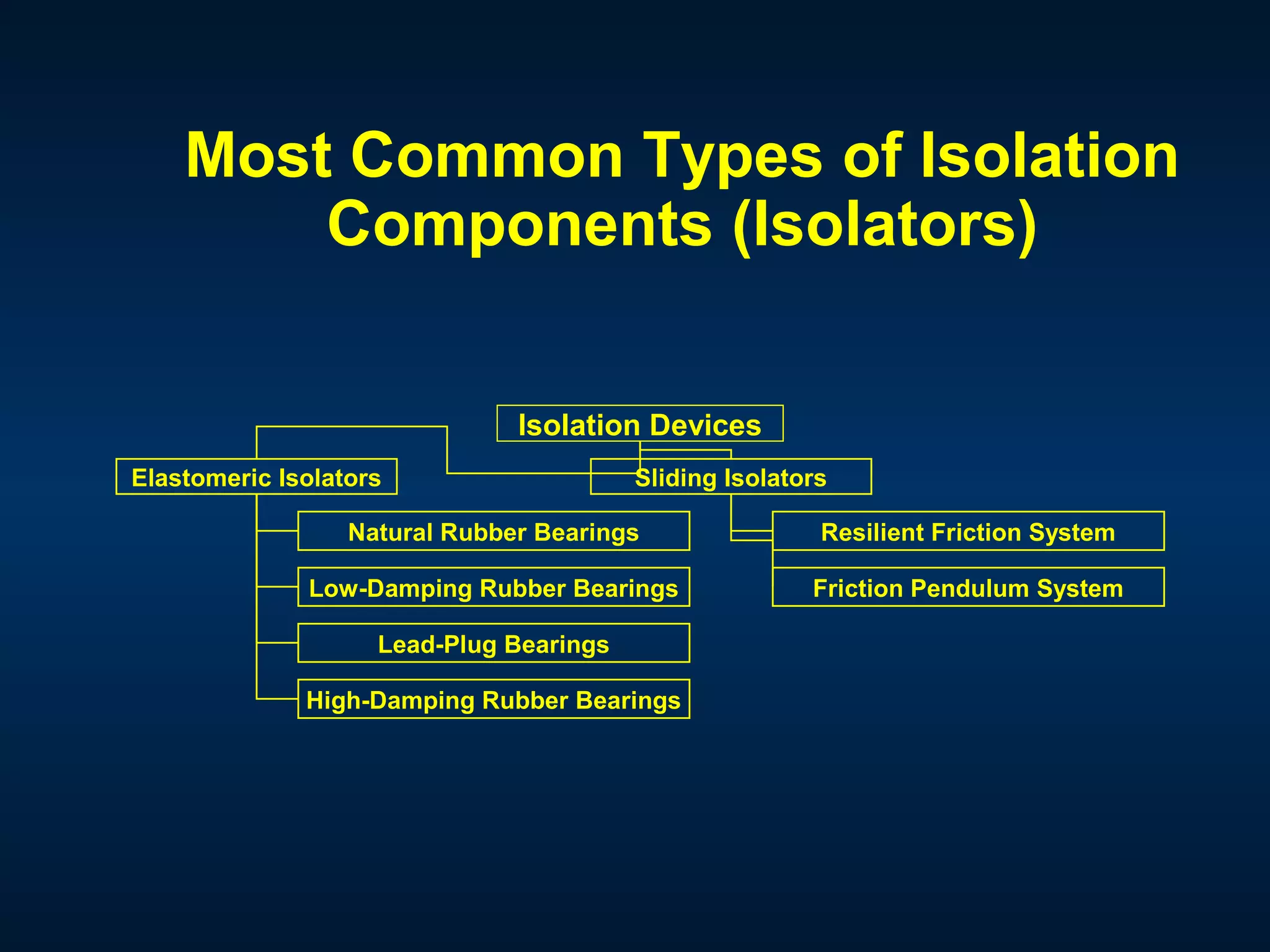
Most Common Types of Isolation
Components (Isolators)
Isolation Devices
Elastomeric Isolators Sliding Isolators
Natural Rubber Bearings
Low-Damping Rubber Bearings
Lead-Plug Bearings
High-Damping Rubber Bearings
Resilient Friction System
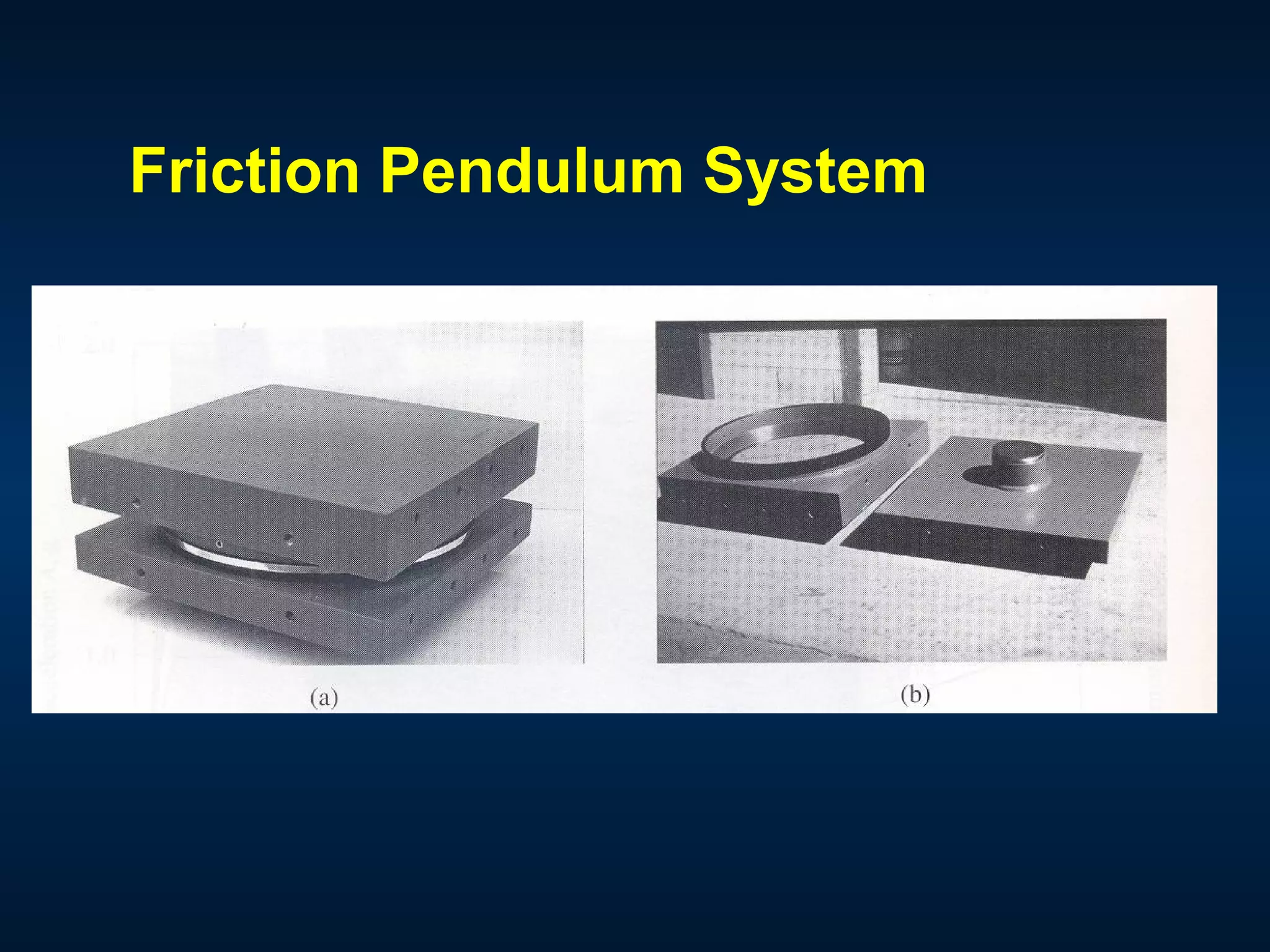
Friction Pendulum System
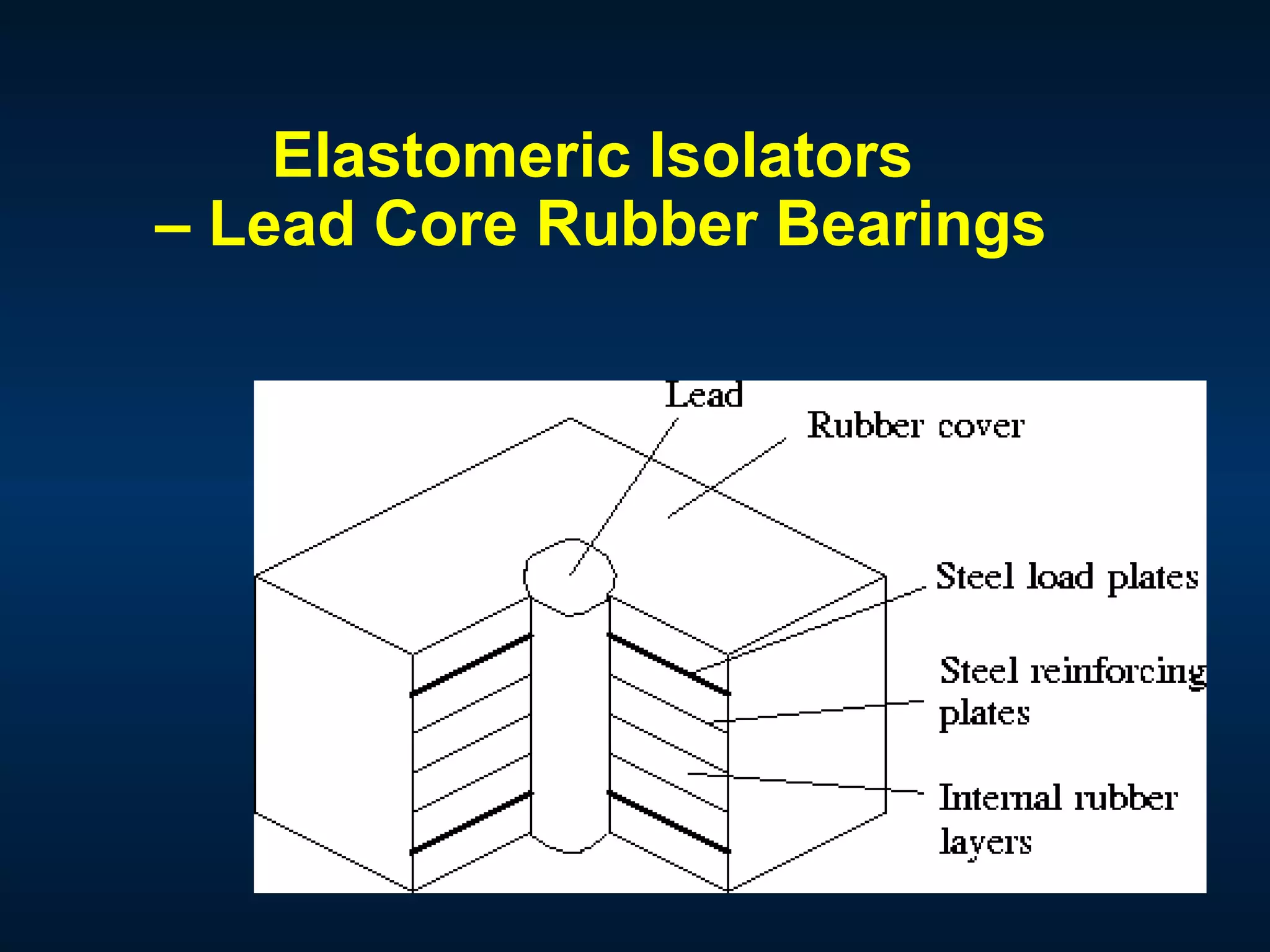
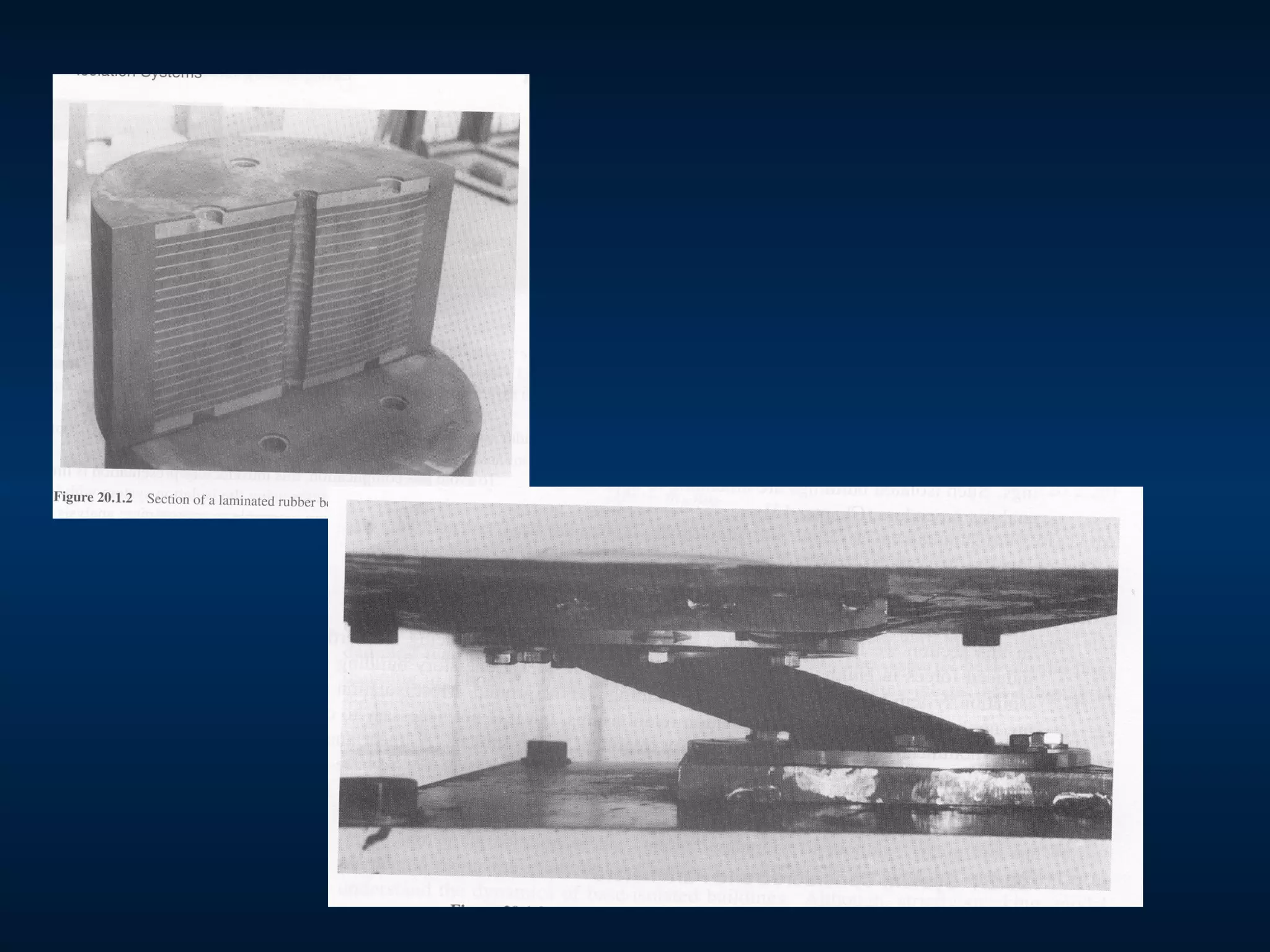
Elastomeric Isolators
– Lead Core Rubber Bearings
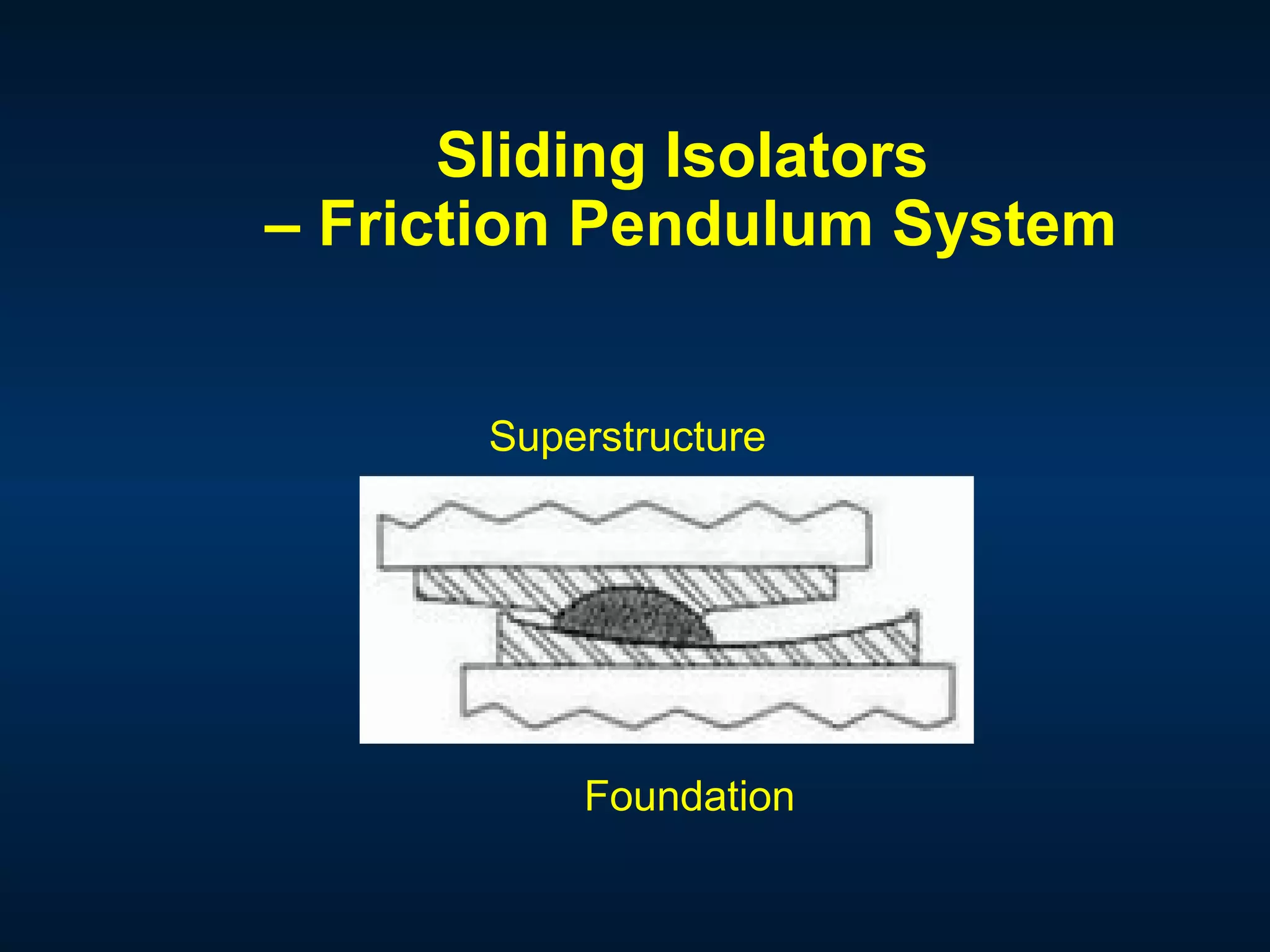
Sliding Isolators
– Friction Pendulum System
Superstructure
Foundation
Friction Pendulum System
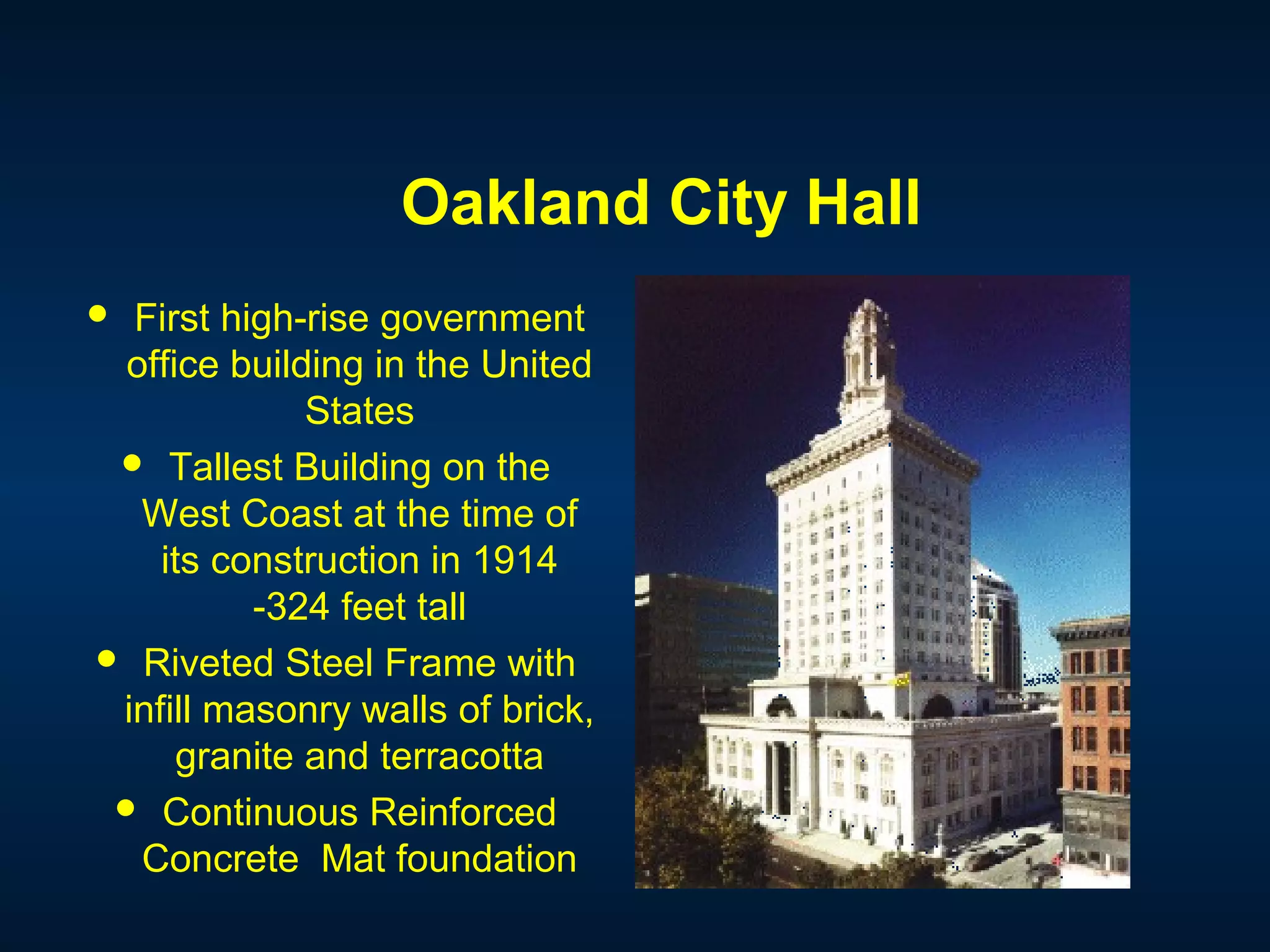
Oakland City Hall
 First high-rise government
office building in the United
States
 Tallest Building on the
West Coast at the time of
its construction in 1914
-324 feet tall
 Riveted Steel Frame with
infill masonry walls of brick,
granite and terracotta
 Continuous Reinforced
Concrete Mat foundation
Oakland City Hall
 Building was severely damaged during the 1989
Loma Prieta earthquake
 Building is listed on the historic register – Retrofit
had to preserve the interior architecture and the
historic fabric of the building
 Both conventional fixed-base and base isolation
retrofit concepts were studied
 The most economical and effective method was
determined to be base isolation
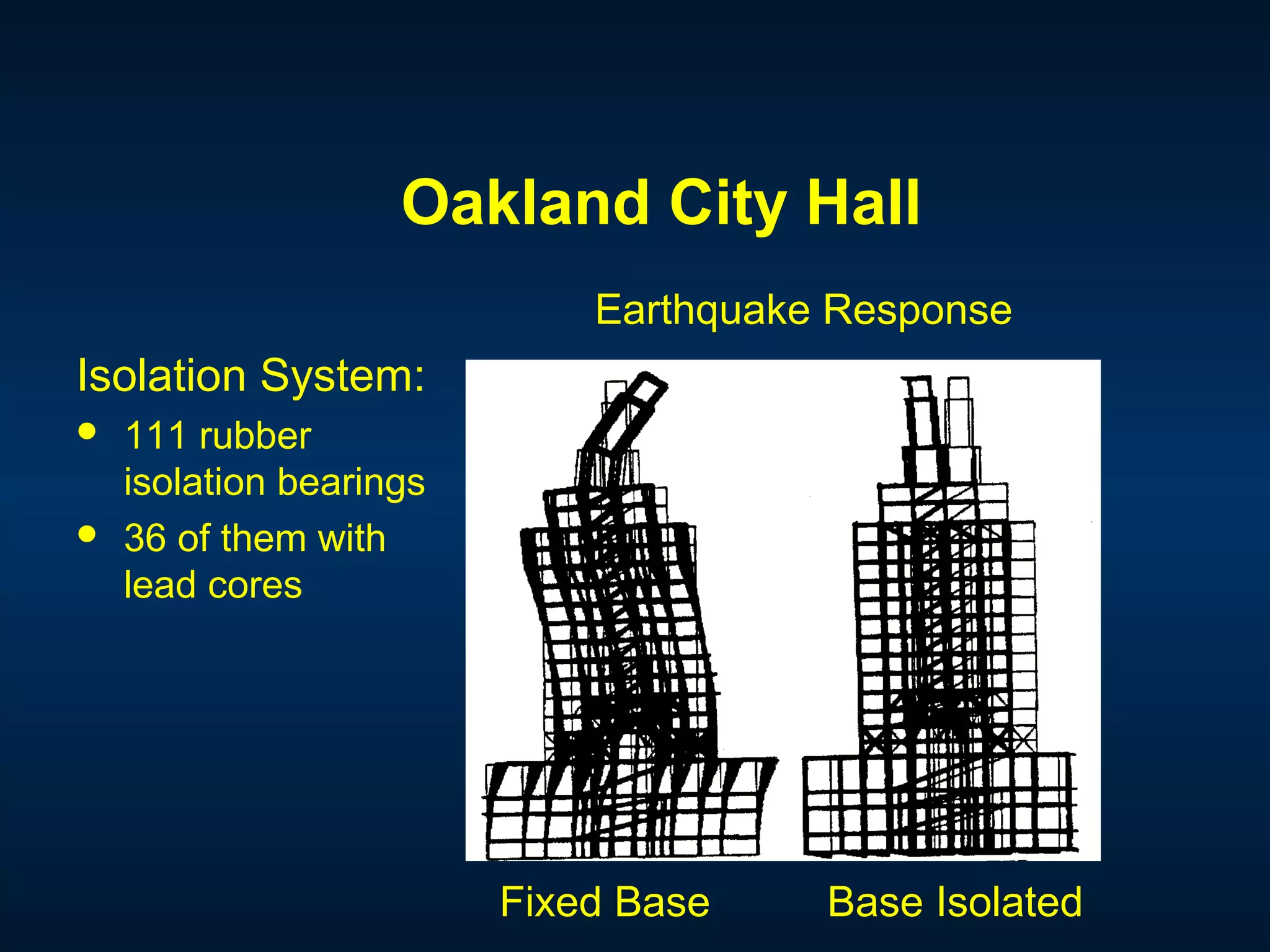
Oakland City Hall
Isolation System:
 111 rubber
isolation bearings
 36 of them with
lead cores
Fixed Base Base Isolated
Earthquake Response
Oakland City Hall
Critical Construction Issues:
 Temporary lateral bracing during construction period to
safeguard against possible earthquake occurrence
 Symmetric work sequence was important to reduce the
possibility of torsional response in the event of an
earthquake
 Vertical column displacement during jacking was
limited to around 0.10 inches to prevent damage to
superstructure finishes
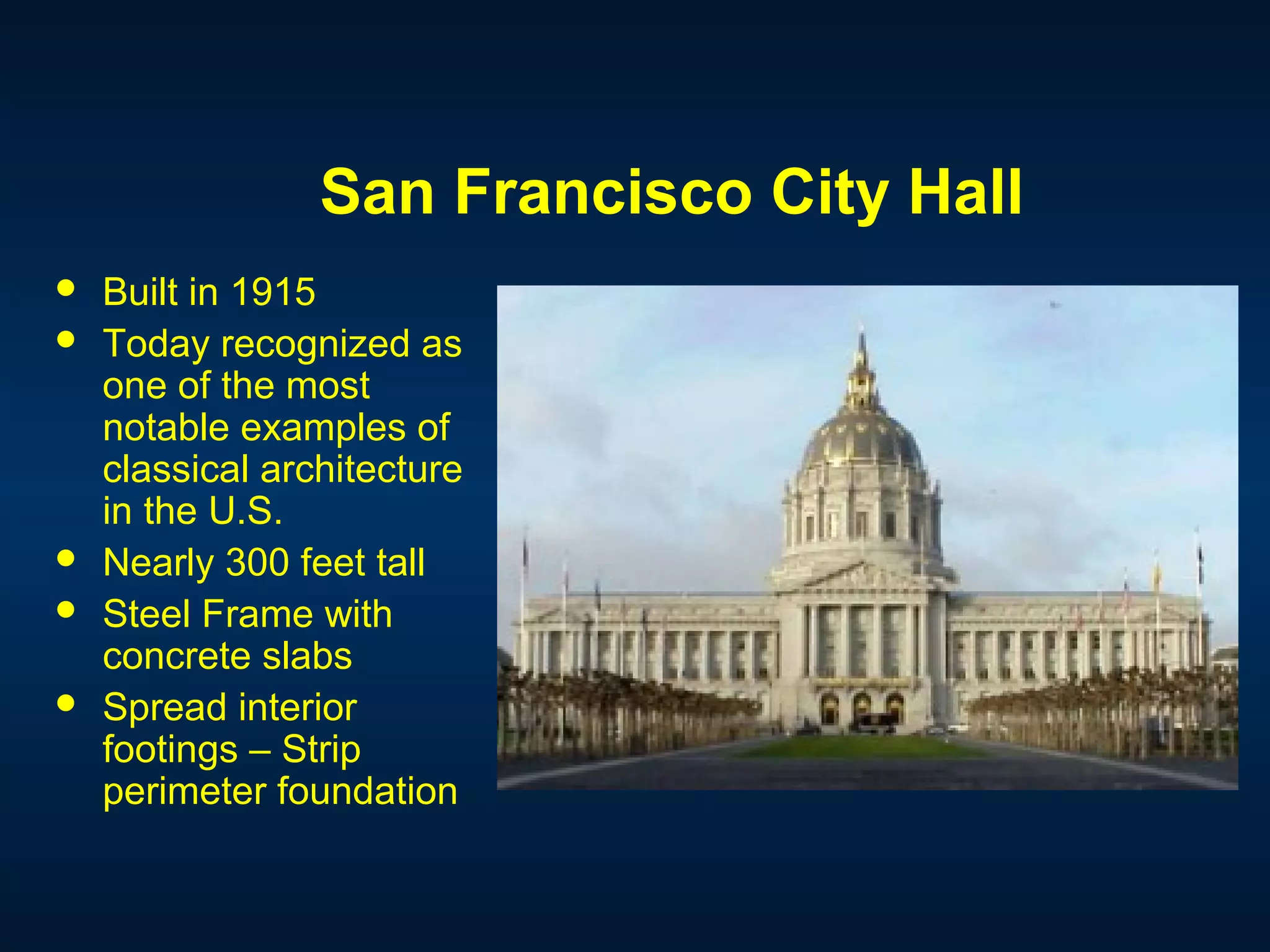
San Francisco City Hall
 Built in 1915
 Today recognized as
one of the most
notable examples of
classical architecture
in the U.S.
 Nearly 300 feet tall
 Steel Frame with
concrete slabs
 Spread interior
footings – Strip
perimeter foundation
San Francisco City Hall
 The original design of the building incorporates a
“soft story” approach at the main floor, intended to
dissipate energy
 This alongside other discontinuities in the
structural system make the dynamic
characteristics of the building unfavorable
 The Building was severely damaged during the
1989 Loma Prieta earthquake
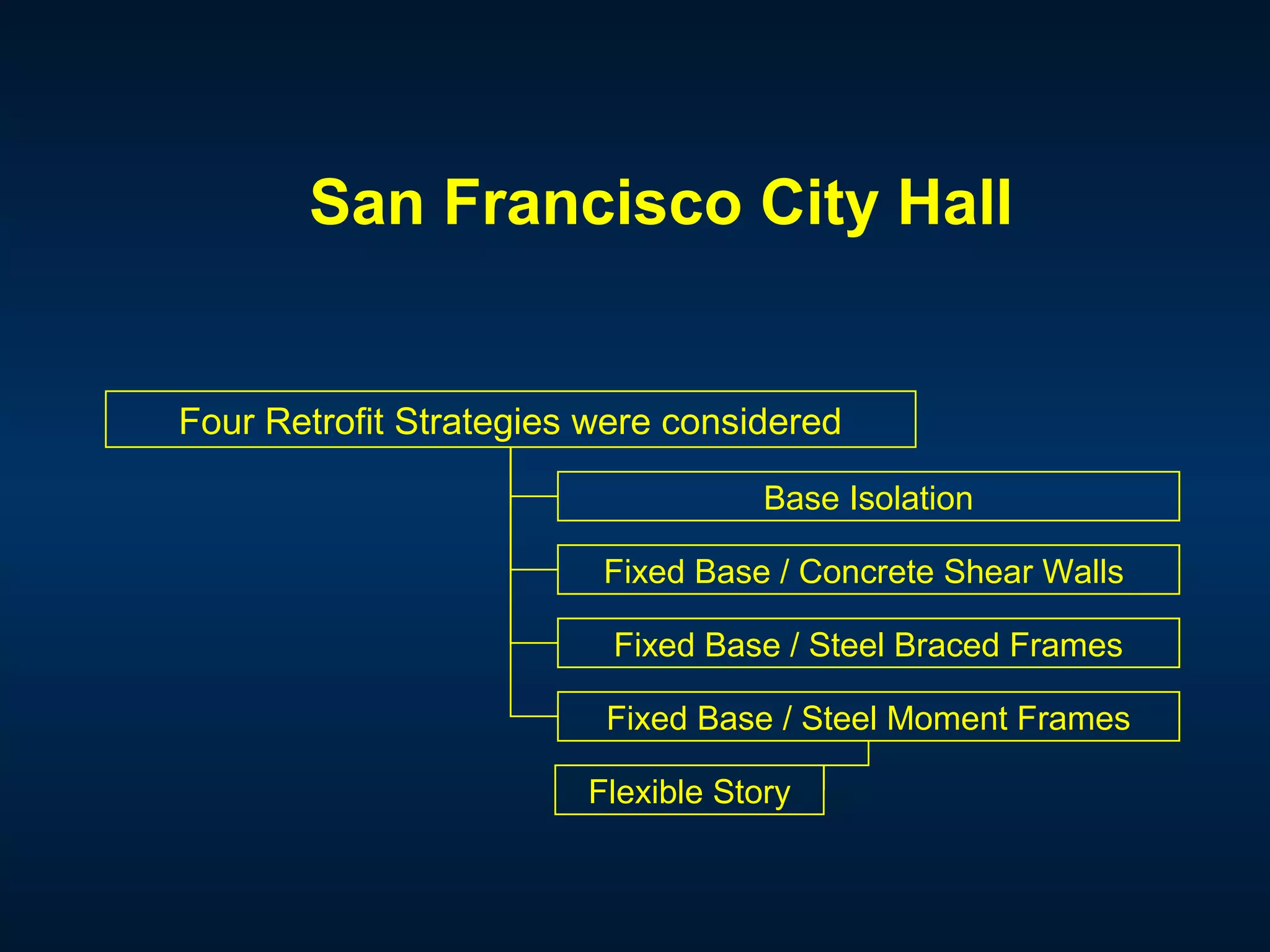
San Francisco City Hall
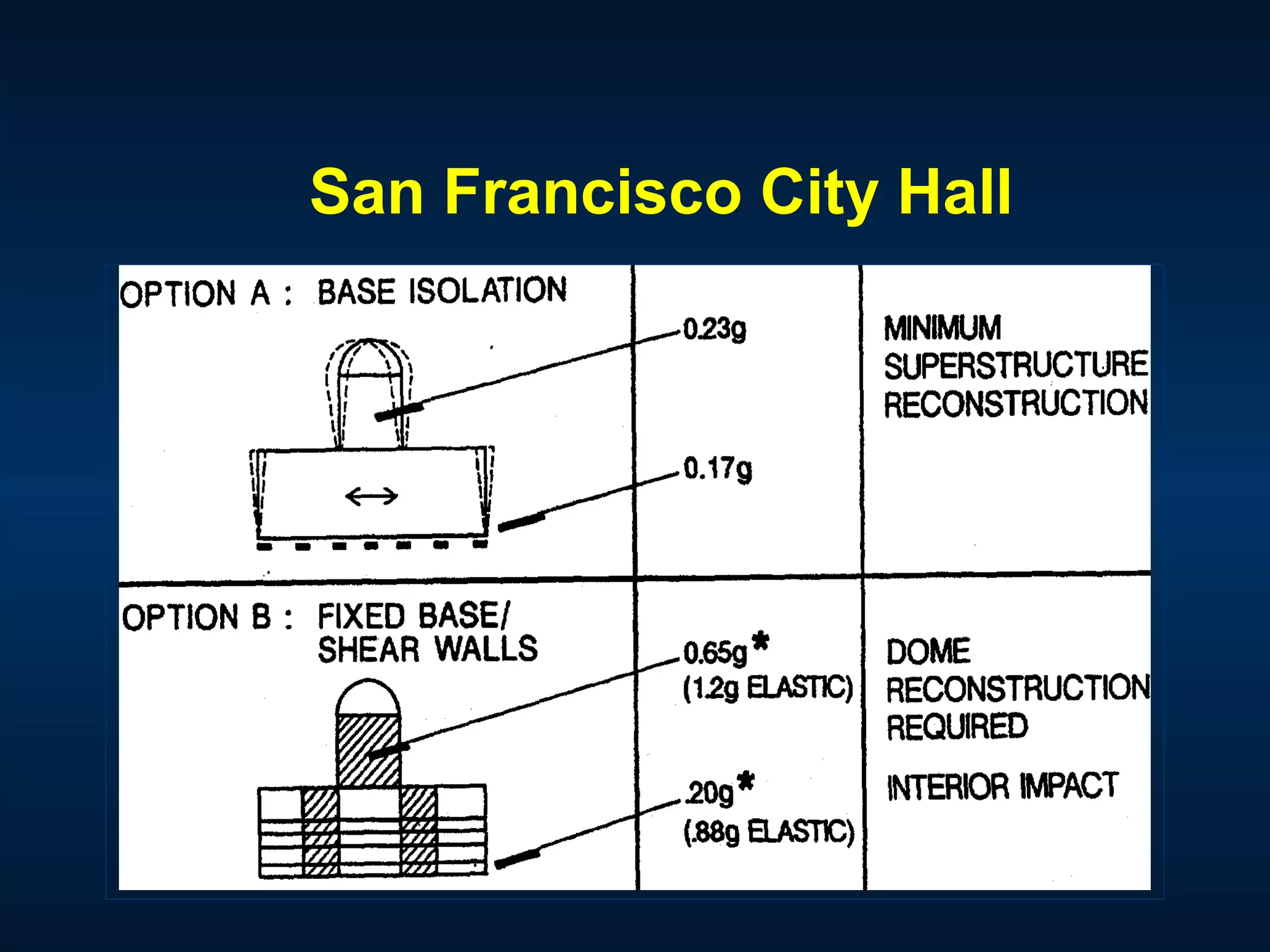
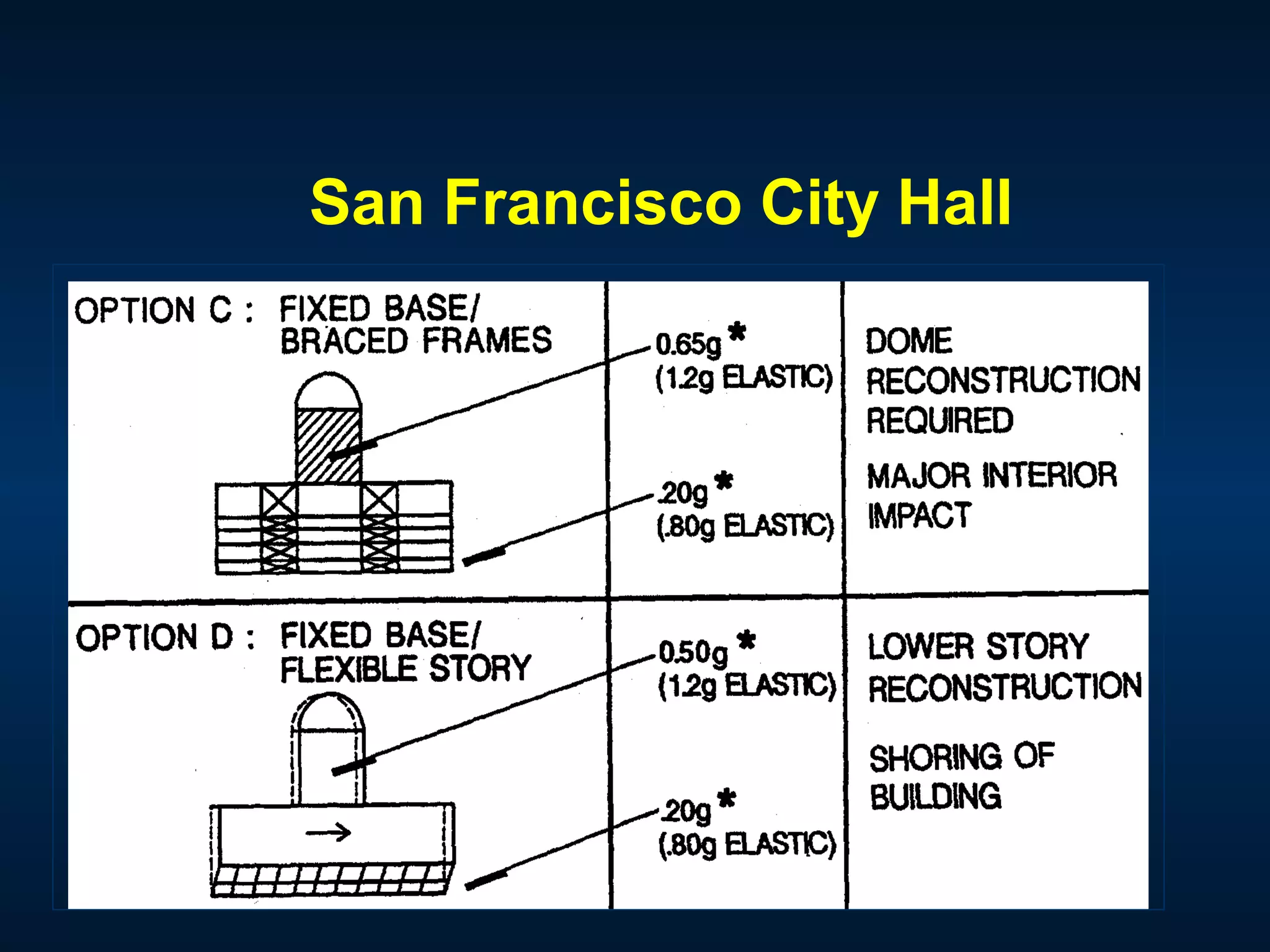
Four Retrofit Strategies were considered
Base Isolation
Fixed Base / Concrete Shear Walls
Fixed Base / Steel Braced Frames
Fixed Base / Steel Moment Frames
Flexible Story
San Francisco City Hall
 Based on the results of the analysis, the
Base Isolation Scheme was selected as
best meeting the retrofit objectives and
providing the most favorable
performance for the least relative cost
Base Isolation is considered a particularly
effective strategy when applied to massive (and
rather stiff) structures

Base isolation for Engineers

  • 1.
  • 2.
    Conventional Construction Practice assumesFixed Base Structures  The Dynamic Characteristics of Fixed Base Structures are determined by the general characteristics of the structural system  The Designer can only slightly adjust those Dynamic Characteristics  As a matter of fact, most common Building Structures have unfavorable Dynamic Characteristics that result in increased Seismic Response
  • 3.
    Earthquake Performance ofFixed Base Structures  Conventional Fixed Base Structures can not be realistically designed to remain elastic in large seismic events (more so in regions of high seismicity)  Common practice is to design them so that they experience damage in a controlled manner and have large inelastic displacements potential
  • 4.
    Unconventional Earthquake Protective Systems BaseIsolation is the most common System Earthquake Protective Systems Passive Protective Systems Hybrid Protective Systems Active Protective Systems Tuned Mass Damper Energy Dissipation Base Isolation Active Isolation Semi-Active Isolation Semi-Active Mass Damping Active Mass Damping Active Bracing Adaptive Control
  • 5.
    The Concept ofBase Isolation Fixed Base Base Isolated Period Response Significantly Increase the Period of the Structure and the Damping so that the Response is Significantly Reduced
  • 6.
    Base Isolation inBuildings Original Structure Isolated Structure Isolation at foundation level
  • 7.
    Base Isolation inBuildings Isolator Components Between the Foundation and Superstructure An Isolation Interface is formed
  • 8.
  • 9.
  • 10.
    How exactly doesBase Isolation Work? • Isolators have large deformation potential allowing for large drift on the Isolation Interface Most types of Isolators exhibit nonlinear behavior Lengthening of the Structure’s Period and increased Damping that result in a large scale decrease of the Seismic Response
  • 11.
    Force – DisplacementRelationship at the Isolation Interface actual hysteretic behavior viscoelastic idealization
  • 12.
    Response of BaseIsolated Buildings versus Fixed Base Response Drift on Isolation Interface Reduced Superstructure Deformations for Base Isolated Structure
  • 13.
    Most Common Typesof Isolation Components (Isolators) Isolation Devices Elastomeric Isolators Sliding Isolators Natural Rubber Bearings Low-Damping Rubber Bearings Lead-Plug Bearings High-Damping Rubber Bearings Resilient Friction System Friction Pendulum System
  • 14.
    Elastomeric Isolators – LeadCore Rubber Bearings
  • 16.
    Sliding Isolators – FrictionPendulum System Superstructure Foundation
  • 17.
  • 18.
    Oakland City Hall First high-rise government office building in the United States  Tallest Building on the West Coast at the time of its construction in 1914 -324 feet tall  Riveted Steel Frame with infill masonry walls of brick, granite and terracotta  Continuous Reinforced Concrete Mat foundation
  • 19.
    Oakland City Hall Building was severely damaged during the 1989 Loma Prieta earthquake  Building is listed on the historic register – Retrofit had to preserve the interior architecture and the historic fabric of the building  Both conventional fixed-base and base isolation retrofit concepts were studied  The most economical and effective method was determined to be base isolation
  • 20.
    Oakland City Hall IsolationSystem:  111 rubber isolation bearings  36 of them with lead cores Fixed Base Base Isolated Earthquake Response
  • 21.
    Oakland City Hall CriticalConstruction Issues:  Temporary lateral bracing during construction period to safeguard against possible earthquake occurrence  Symmetric work sequence was important to reduce the possibility of torsional response in the event of an earthquake  Vertical column displacement during jacking was limited to around 0.10 inches to prevent damage to superstructure finishes
  • 22.
    San Francisco CityHall  Built in 1915  Today recognized as one of the most notable examples of classical architecture in the U.S.  Nearly 300 feet tall  Steel Frame with concrete slabs  Spread interior footings – Strip perimeter foundation
  • 23.
    San Francisco CityHall  The original design of the building incorporates a “soft story” approach at the main floor, intended to dissipate energy  This alongside other discontinuities in the structural system make the dynamic characteristics of the building unfavorable  The Building was severely damaged during the 1989 Loma Prieta earthquake
  • 24.
    San Francisco CityHall Four Retrofit Strategies were considered Base Isolation Fixed Base / Concrete Shear Walls Fixed Base / Steel Braced Frames Fixed Base / Steel Moment Frames Flexible Story
  • 25.
  • 26.
  • 27.
    San Francisco CityHall  Based on the results of the analysis, the Base Isolation Scheme was selected as best meeting the retrofit objectives and providing the most favorable performance for the least relative cost Base Isolation is considered a particularly effective strategy when applied to massive (and rather stiff) structures