Tara Baranowski TNC OHIO
Lake Erie Coast and Islands Project Manager
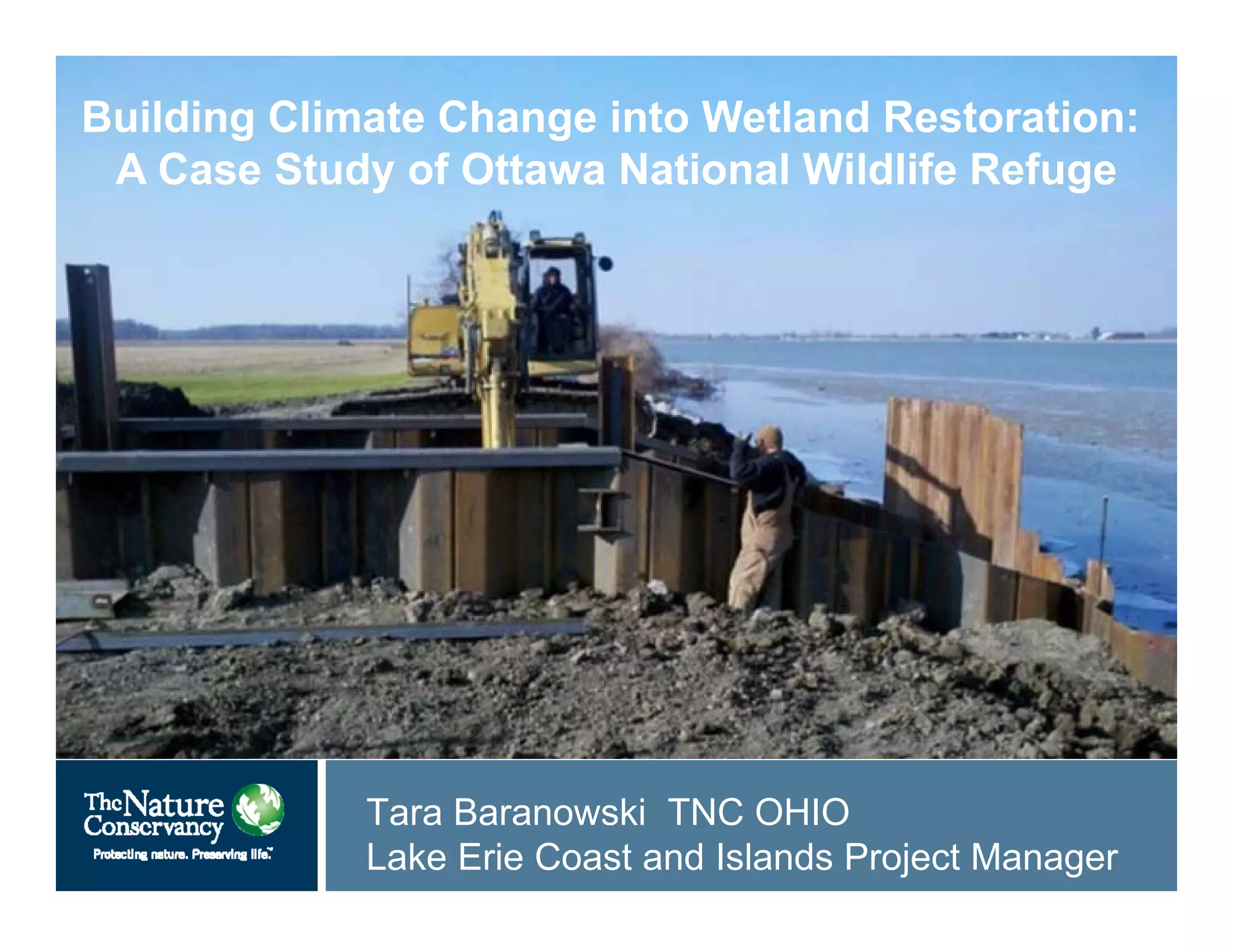
Building Climate Change into Wetland Restoration:
A Case Study of Ottawa National Wildlife Refuge
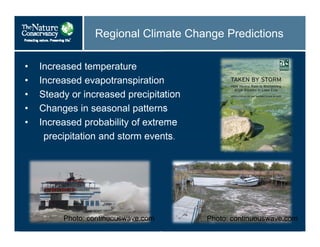
Regional Climate Change Predictions
• Increased temperature
• Increased evapotranspiration
• Steady or increased precipitation
• Changes in seasonal patterns
• Increased probability of extreme
precipitation and storm events.
Photo: continuouswave.com Photo: continuouswave.com
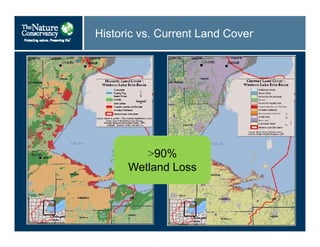
Historic vs. Current Land Cover
>90%
Wetland Loss
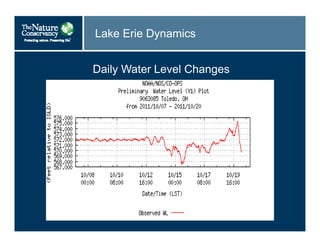
Lake Erie Dynamics
Daily Water Level Changes
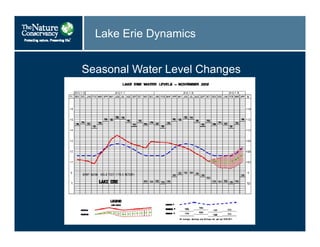
Lake Erie Dynamics
Seasonal Water Level Changes
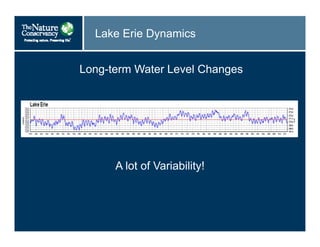
Lake Erie Dynamics
Long-term Water Level Changes
A lot of Variability!
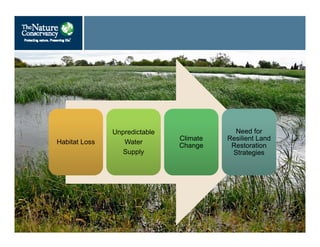
Habitat LossHabitat Loss
Unpredictable
Water
Supply
Unpredictable
Water
Supply
Climate
Change
Climate
Change
Need for
Resilient Land
Restoration
Strategies
Need for
Resilient Land
Restoration
Strategies
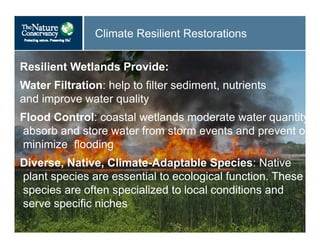
Climate Resilient Restorations
Resilient Wetlands Provide:
Water Filtration: help to filter sediment, nutrients
and improve water quality
Flood Control: coastal wetlands moderate water quantity
absorb and store water from storm events and prevent o
minimize flooding
Diverse, Native, Climate-Adaptable Species: Native
plant species are essential to ecological function. These
species are often specialized to local conditions and
serve specific niches
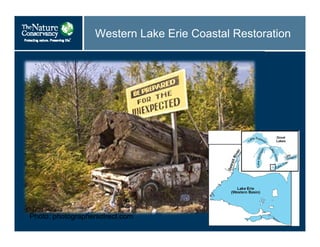
Western Lake Erie Coastal Restoration
Photo: photographersdirect.com
Restoration in a changing environment
The Nature Conservancy, Ducks
Unlimited and Ottawa National Wildlife
Refuge – Partnership Case Studies
• Infrastructure Improvements
• Reforestation
• Reconnection
• Wetland Restoration
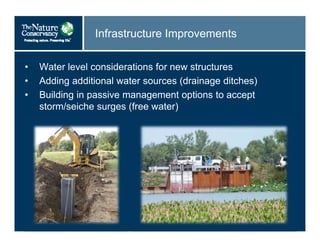
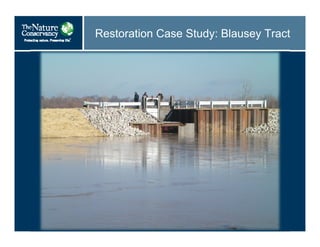
Infrastructure Improvements
• Water level considerations for new structures
• Adding additional water sources (drainage ditches)
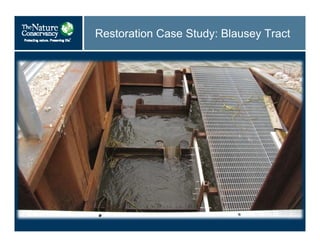
• Building in passive management options to accept
storm/seiche surges (free water)
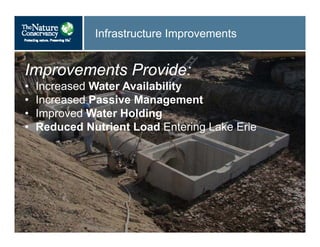
Infrastructure Improvements
Improvements Provide:
• Increased Water Availability
• Increased Passive Management
• Improved Water Holding
• Reduced Nutrient Load Entering Lake Erie
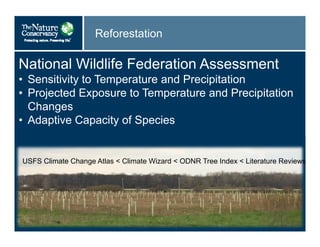
Reforestation
National Wildlife Federation Assessment
• Sensitivity to Temperature and Precipitation
• Projected Exposure to Temperature and Precipitation
Changes
• Adaptive Capacity of Species
USFS Climate Change Atlas < Climate Wizard < ODNR Tree Index < Literature Reviews
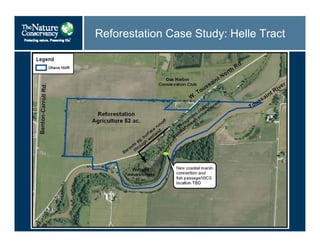
Reforestation Case Study: Helle Tract
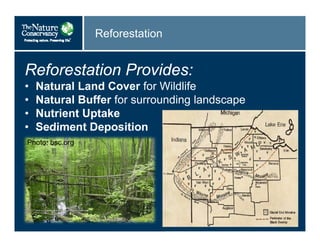
Reforestation
Reforestation Provides:
• Natural Land Cover for Wildlife
• Natural Buffer for surrounding landscape
• Nutrient Uptake
• Sediment Deposition
Photo: bsc.org
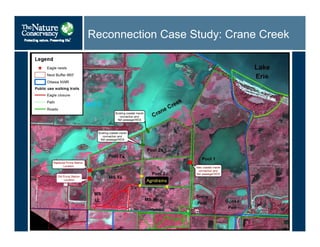
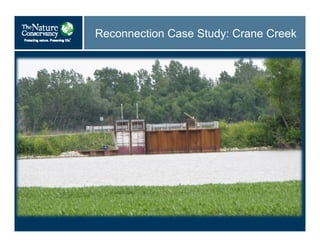
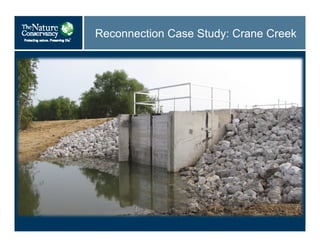
Reconnection Case Study: Crane Creek
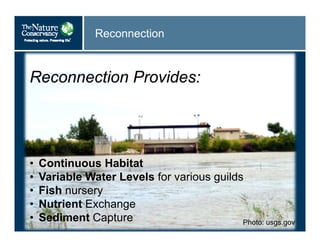
Reconnection
Reconnection Provides:
• Continuous Habitat
• Variable Water Levels for various guilds
• Fish nursery
• Nutrient Exchange
• Sediment Capture Photo: usgs.gov
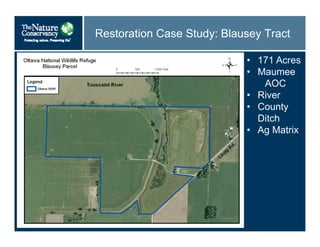
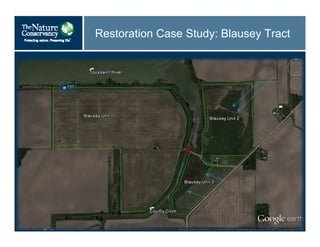
Restoration Case Study: Blausey Tract
• 171 Acres
• Maumee
AOC
• River
• County
Ditch
• Ag Matrix
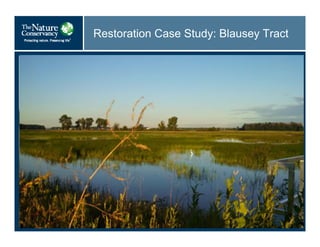
Restoration Case Study: Blausey Tract
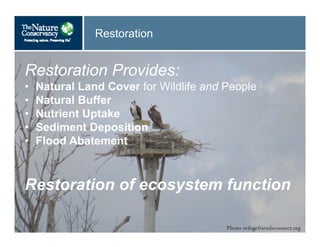
Restoration
Restoration Provides:
• Natural Land Cover for Wildlife and People
• Natural Buffer
• Nutrient Uptake
• Sediment Deposition
• Flood Abatement
Restoration of ecosystem function
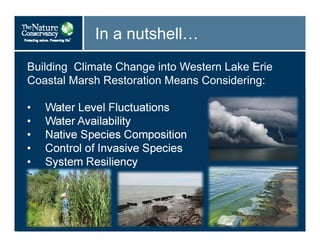
In a nutshell…
Building Climate Change into Western Lake Erie
Coastal Marsh Restoration Means Considering:
• Water Level Fluctuations
• Water Availability
• Native Species Composition
• Control of Invasive Species
• System Resiliency
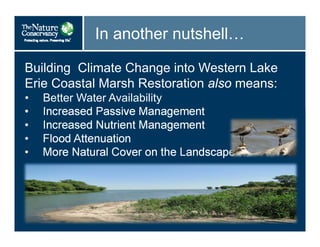
In another nutshell…
Building Climate Change into Western Lake
Erie Coastal Marsh Restoration also means:
• Better Water Availability
• Increased Passive Management
• Increased Nutrient Management
• Flood Attenuation
• More Natural Cover on the Landscape
Tara Baranowski – TNC Ohio
tbaranowski@tnc.org
Thank you
Photo: flitzyphoebie.blogspot.com

Baranowski adapting conservation systems