CCooaassttaall CCiittiizzeennsshhiipp:: AA 
BBrriieeff PPrriimmeerr oonn tthhee 
GGeeoorrggiiaa CCooaasstt 
Dionne Hoskins 
NOAA Sponsored Programs 
NOAA Living Marine Resources 
Cooperative Science Center 
Savannah State University 
Distinguished Lecture Series 
Fall 2014
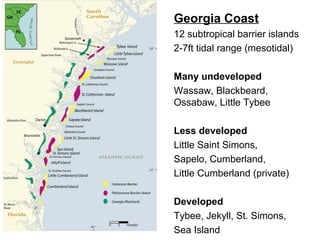
Georgia Coast 
12 subtropical barrier islands 
2-7ft tidal range (mesotidal) 
Many undeveloped 
Wassaw, Blackbeard, 
Ossabaw, Little Tybee 
Less developed 
Little Saint Simons, 
Sapelo, Cumberland, 
Little Cumberland (private) 
Developed 
Tybee, Jekyll, St. Simons, 
Sea Island
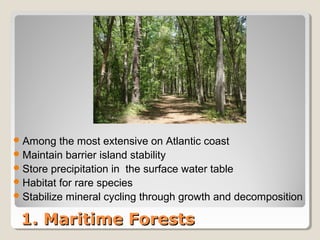
Among the most extensive on Atlantic coast 
Maintain barrier island stability 
Store precipitation in the surface water table 
Habitat for rare species 
Stabilize mineral cycling through growth and decomposition 
11.. MMaarriittiimmee FFoorreessttss
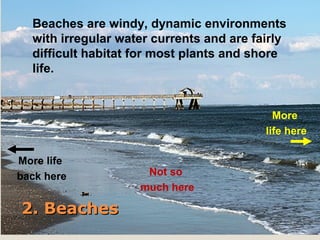
Beaches are windy, dynamic environments 
with irregular water currents and are fairly 
difficult habitat for most plants and shore 
life. 
22.. BBeeaacchheess 
More 
life here 
More life 
back here Not so 
much here
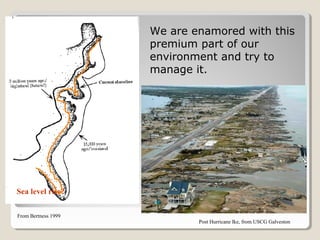
We are enamored with this 
premium part of our 
environment and try to 
manage it. 
Sea level rise? 
From Bertness 1999 
Post Hurricane Ike, from USCG Galveston
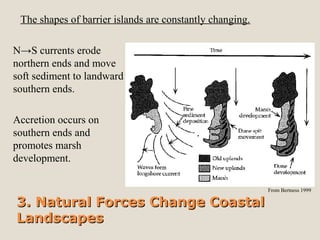
The shapes of barrier islands are constantly changing. 
N→S currents erode 
northern ends and move 
soft sediment to landward 
southern ends. 
Accretion occurs on 
southern ends and 
promotes marsh 
development. 
From Bertness 1999 
3. NNaattuurraall FFoorrcceess CChhaannggee CCooaassttaall 
LLaannddssccaappeess
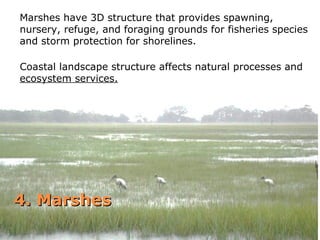
Marshes have 3D structure that provides spawning, 
nursery, refuge, and foraging grounds for fisheries species 
and storm protection for shorelines. 
Coastal landscape structure affects natural processes and 
ecosystem services. 
44.. MMaarrsshheess
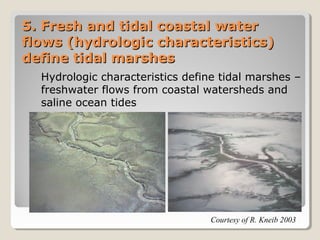
5. Fresh aanndd ttiiddaall ccooaassttaall wwaatteerr 
fflloowwss ((hhyyddrroollooggiicc cchhaarraacctteerriissttiiccss)) 
ddeeffiinnee ttiiddaall mmaarrsshheess 
Hydrologic characteristics define tidal marshes – 
freshwater flows from coastal watersheds and 
saline ocean tides 
Courtesy of R. Kneib 2003
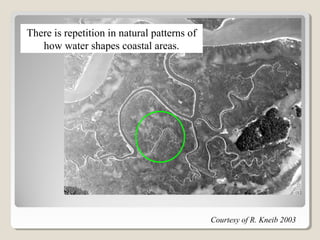
There is repetition in natural patterns of 
how water shapes coastal areas. 
Courtesy of R. Kneib 2003
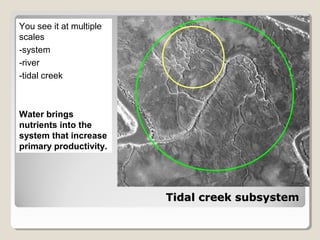
TTiiddaall ccrreeeekk ssuubbssyysstteemm 
You see it at multiple 
scales 
-system 
-river 
-tidal creek 
Water brings 
nutrients into the 
system that increase 
primary productivity.
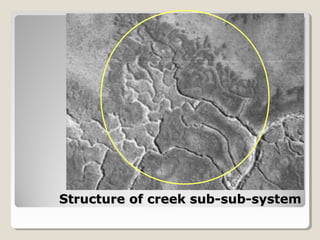
Structure ooff ccrreeeekk ssuubb--ssuubb--ssyysstteemm
Across all habitats (i.e., forests, wetlands), 
ecosystem services are fundamental life-support 
processes upon which all organisms 
depend (Daily et al., 1997). 
Among other things, they 
produce ecosystem goods (ex. food, timber) 
generate and maintain biodiversity 
stabilize climate and life (ex. storms) 
mitigate floods and droughts and 
provide aesthetic beauty and intellectual and 
spiritual stimulation. 
6. NNaattuurraall hhaabbiittaattss pprroovviiddee 
eeccoossyysstteemm sseerrvviicceess
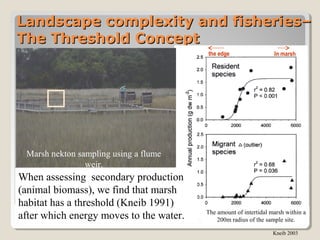
LLaannddssccaappee ccoommpplleexxiittyy aanndd ffiisshheerriieess–– 
TThhee TThhrreesshhoolldd CCoonncceepptt 
In marsh 
Kneib 2003 
Marsh nekton sampling using a flume 
weir. 
When assessing secondary production 
(animal biomass), we find that marsh 
habitat has a threshold (Kneib 1991) 
after which energy moves to the water. 
the edge 
The amount of intertidal marsh within a 
200m radius of the sample site.
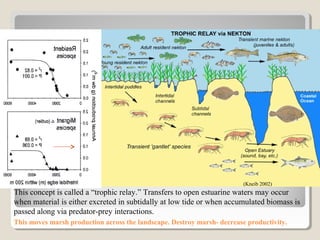
(Kneib 2002) 
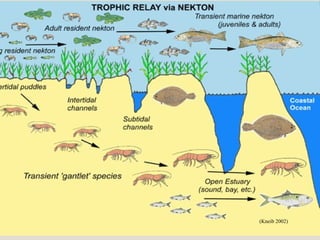
This concept is called a “trophic relay.” Transfers to open estuarine waters may occur 
when material is either excreted in subtidally at low tide or when accumulated biomass is 
passed along via predator-prey interactions. 
This moves marsh production across the landscape. Destroy marsh- decrease productivity.
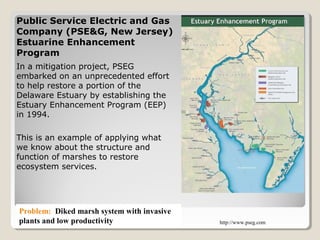
http://www.pseg.com 
Public Service Electric and Gas 
Company (PSE&G, New Jersey) 
Estuarine Enhancement 
Program 
In a mitigation project, PSEG 
embarked on an unprecedented effort 
to help restore a portion of the 
Delaware Estuary by establishing the 
Estuary Enhancement Program (EEP) 
in 1994. 
This is an example of applying what 
we know about the structure and 
function of marshes to restore 
ecosystem services. 
Problem: Diked marsh system with invasive 
plants and low productivity
Goal: To restore ecosystem functionality of a portion 
of the Delaware Estuary 
•Returned diked salt hay farms (10,000 acres) to communication 
with Delaware Bay (water → nutrients) 
•Recover Phragmites-dominated sites to native species 
•Constructed fish ladders for river herring 
•Began biological monitoring 
•Construction of public use facilities and enhancements 
•Support for artificial reef programs in New Jersey and Delaware
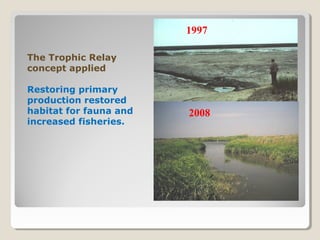
The Trophic Relay 
concept applied 
Restoring primary 
production restored 
habitat for fauna and 
increased fisheries. 
1997 
2008
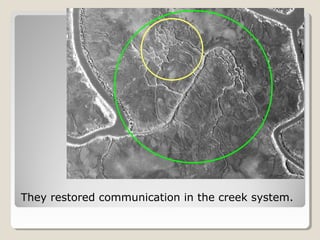
They restored communication in the creek system.
(Kneib 2002)
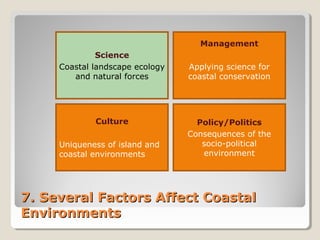
Management 
Applying science for 
coastal conservation 
Science 
Coastal landscape ecology 
and natural forces 
Policy/Politics 
Consequences of the 
socio-political 
environment 
Culture 
Uniqueness of island and 
coastal environments 
7. Several FFaaccttoorrss AAffffeecctt CCooaassttaall 
EEnnvviirroonnmmeennttss
Georgia’s coastal zone is shaped by two 
major forces 
◦ The power of water currents – which 
environmental science can help to 
understand 
◦ The power of currency – over which 
science has little or no influence
TThhaannkk yyoouu..
http://www.n-georgia.com/images/costIslndWeb.jpg 
http://www.lternet.edu/sites/default/files/photo2%5B1%5D_1.jpg 
http://georgiaseagrant.uga.edu/images/uploads/article_images/m-7713.jpg 
SSoouurrcceess

Hoskins lecture: Coastal Citizens - a Brief Primer of the Goergia Coast

  • 1.
    CCooaassttaall CCiittiizzeennsshhiipp:: AA BBrriieeff PPrriimmeerr oonn tthhee GGeeoorrggiiaa CCooaasstt Dionne Hoskins NOAA Sponsored Programs NOAA Living Marine Resources Cooperative Science Center Savannah State University Distinguished Lecture Series Fall 2014
  • 2.
    Georgia Coast 12subtropical barrier islands 2-7ft tidal range (mesotidal) Many undeveloped Wassaw, Blackbeard, Ossabaw, Little Tybee Less developed Little Saint Simons, Sapelo, Cumberland, Little Cumberland (private) Developed Tybee, Jekyll, St. Simons, Sea Island
  • 3.
    Among the mostextensive on Atlantic coast Maintain barrier island stability Store precipitation in the surface water table Habitat for rare species Stabilize mineral cycling through growth and decomposition 11.. MMaarriittiimmee FFoorreessttss
  • 4.
    Beaches are windy,dynamic environments with irregular water currents and are fairly difficult habitat for most plants and shore life. 22.. BBeeaacchheess More life here More life back here Not so much here
  • 5.
    We are enamoredwith this premium part of our environment and try to manage it. Sea level rise? From Bertness 1999 Post Hurricane Ike, from USCG Galveston
  • 6.
    The shapes ofbarrier islands are constantly changing. N→S currents erode northern ends and move soft sediment to landward southern ends. Accretion occurs on southern ends and promotes marsh development. From Bertness 1999 3. NNaattuurraall FFoorrcceess CChhaannggee CCooaassttaall LLaannddssccaappeess
  • 7.
    Marshes have 3Dstructure that provides spawning, nursery, refuge, and foraging grounds for fisheries species and storm protection for shorelines. Coastal landscape structure affects natural processes and ecosystem services. 44.. MMaarrsshheess
  • 8.
    5. Fresh aannddttiiddaall ccooaassttaall wwaatteerr fflloowwss ((hhyyddrroollooggiicc cchhaarraacctteerriissttiiccss)) ddeeffiinnee ttiiddaall mmaarrsshheess Hydrologic characteristics define tidal marshes – freshwater flows from coastal watersheds and saline ocean tides Courtesy of R. Kneib 2003
  • 9.
    There is repetitionin natural patterns of how water shapes coastal areas. Courtesy of R. Kneib 2003
  • 10.
    TTiiddaall ccrreeeekk ssuubbssyysstteemm You see it at multiple scales -system -river -tidal creek Water brings nutrients into the system that increase primary productivity.
  • 11.
    Structure ooff ccrreeeekkssuubb--ssuubb--ssyysstteemm
  • 12.
    Across all habitats(i.e., forests, wetlands), ecosystem services are fundamental life-support processes upon which all organisms depend (Daily et al., 1997). Among other things, they produce ecosystem goods (ex. food, timber) generate and maintain biodiversity stabilize climate and life (ex. storms) mitigate floods and droughts and provide aesthetic beauty and intellectual and spiritual stimulation. 6. NNaattuurraall hhaabbiittaattss pprroovviiddee eeccoossyysstteemm sseerrvviicceess
  • 13.
    LLaannddssccaappee ccoommpplleexxiittyy aannddffiisshheerriieess–– TThhee TThhrreesshhoolldd CCoonncceepptt In marsh Kneib 2003 Marsh nekton sampling using a flume weir. When assessing secondary production (animal biomass), we find that marsh habitat has a threshold (Kneib 1991) after which energy moves to the water. the edge The amount of intertidal marsh within a 200m radius of the sample site.
  • 14.
    (Kneib 2002) Thisconcept is called a “trophic relay.” Transfers to open estuarine waters may occur when material is either excreted in subtidally at low tide or when accumulated biomass is passed along via predator-prey interactions. This moves marsh production across the landscape. Destroy marsh- decrease productivity.
  • 15.
    http://www.pseg.com Public ServiceElectric and Gas Company (PSE&G, New Jersey) Estuarine Enhancement Program In a mitigation project, PSEG embarked on an unprecedented effort to help restore a portion of the Delaware Estuary by establishing the Estuary Enhancement Program (EEP) in 1994. This is an example of applying what we know about the structure and function of marshes to restore ecosystem services. Problem: Diked marsh system with invasive plants and low productivity
  • 16.
    Goal: To restoreecosystem functionality of a portion of the Delaware Estuary •Returned diked salt hay farms (10,000 acres) to communication with Delaware Bay (water → nutrients) •Recover Phragmites-dominated sites to native species •Constructed fish ladders for river herring •Began biological monitoring •Construction of public use facilities and enhancements •Support for artificial reef programs in New Jersey and Delaware
  • 17.
    The Trophic Relay concept applied Restoring primary production restored habitat for fauna and increased fisheries. 1997 2008
  • 18.
    They restored communicationin the creek system.
  • 19.
  • 20.
    Management Applying sciencefor coastal conservation Science Coastal landscape ecology and natural forces Policy/Politics Consequences of the socio-political environment Culture Uniqueness of island and coastal environments 7. Several FFaaccttoorrss AAffffeecctt CCooaassttaall EEnnvviirroonnmmeennttss
  • 21.
    Georgia’s coastal zoneis shaped by two major forces ◦ The power of water currents – which environmental science can help to understand ◦ The power of currency – over which science has little or no influence
  • 22.
  • 23.

Editor's Notes