Balanced, Surplus and Deficit Budget
PA10-PublicFiscal
3rd YearBPA-A31
TaguigCityUniversity
Members:
KennethFrancisco
LalaLaguitan
MaMaicaMinetteMendoza
KierbeSison
MariaJanineMeleniaVasquez
• A budget is an estimation of revenue and
expenses over a specified future period of time
and is usually compiled and re-evaluated on a
periodic basis. Budgets can be made for a person,
a group of people, a business, a government, or
just about anything else that makes and spends
money.
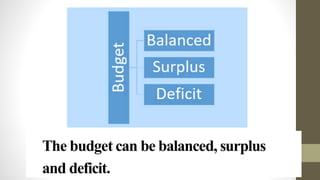
The budget is classified into (3) three types.
What is budget?
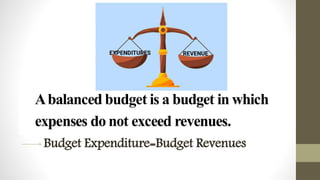
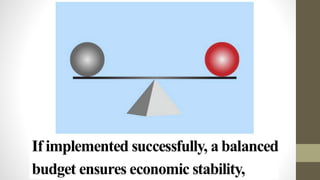
Budget Expenditure=Budget Revenues
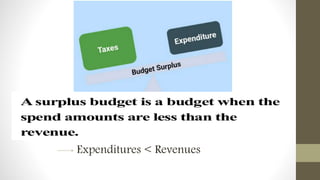
Expenditures < Revenues
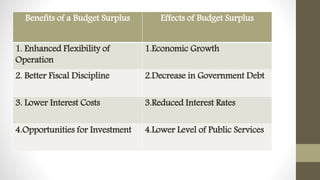
Benefits of a Budget Surplus Effects of Budget Surplus
1. Enhanced Flexibility of
Operation
1.Economic Growth
2. Better Fiscal Discipline 2.Decrease in Government Debt
3. Lower Interest Costs 3.Reduced Interest Rates
4.Opportunities for Investment 4.Lower Level of Public Services
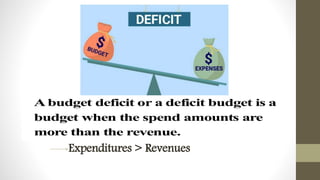
Expenditures > Revenues
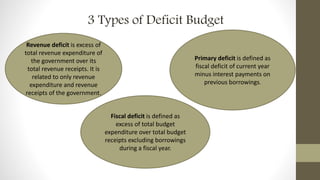
Revenue deficit is excess of
total revenue expenditure of
the government over its
total revenue receipts. It is
related to only revenue
expenditure and revenue
receipts of the government.
Fiscal deficit is defined as
excess of total budget
expenditure over total budget
receipts excluding borrowings
during a fiscal year.
Primary deficit is defined as
fiscal deficit of current year
minus interest payments on
previous borrowings.
3 Types of Deficit Budget
References:
https://www.toppr.com/ask/content/story/amp/balan
ced-surplus-and-deficit-budget-101509/
https://www.investopedia.com/terms/b/budget.asp
https://byjus.com/commerce/balanced-surplus-and-deficit-budget/
https://www.economicsdiscussion.net/budget/3-types-of-budget-deficits-and-
their-measures-micro-economics/753

Balanced Surplus and Deficit Budget