BACTERIAL CELL DIVISION
Tanvi Raulaji
Department of Biosciences
CELL DIVISION
Cell division is pre programmed in 3D. It occurs in a Sptial & Temporal
context:
 DNA replicates
 Formation of Z ring & Cell Elongation
 DNA partitions aided by Divisome
 A cell septum forms
 Daughter cells then separate
BINNARY FISSION IN BACTERIAL
Here's a breakdown of binary fission in prokaryotes:
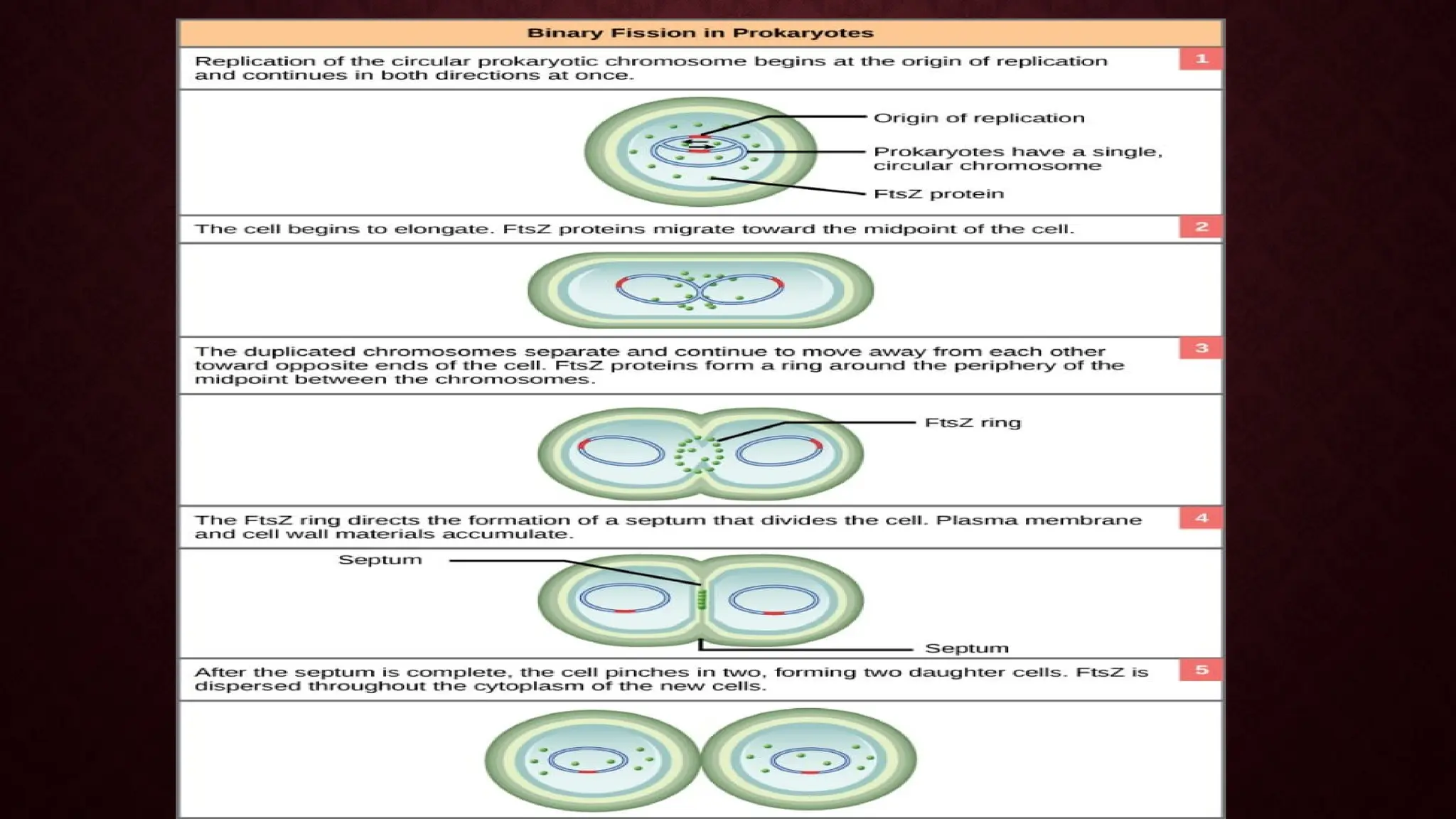
1. Replication:The single, circular chromosome replicates, starting at the origin of
replication and moving in both directions.
2. Elongation:The cell begins to elongate, and FtsZ proteins (a type of cytoskeletal
protein) gather at the midpoint.
3. Separation:The replicated chromosomes move to opposite ends of the cell, and
the FtsZ proteins form a ring around the midpoint.
4. Septum Formation:The FtsZ ring directs the formation of a septum (a new cell
wall) that divides the cell.
5. Cell Division: After the septum is complete, the cell pinches into two daughter
cells, each with a copy of the original chromosome.The FtsZ proteins disperse
FORMATION OF Z RING
 The Z ring is a critical structure in bacterial cell division, serving as
Scaffold for assembly of divisome.
 The Z ring is composed of protein pf protein Fts z, a homologe of tubulin
in eukaryotes. Fts z assemble into the ring like structure at the future site
of division, usually at the center of cell.
 Fts z binds to the GTP which is essential for its polymerization. GTP
hydrolysis promote the dynamic instability of Fts z filament.
 Fts stands for Filamentous Temperature Sensitive.
 Fts Z protein is master regulator of cell division.
Z RING ASSEMBLY
 Fts Z monomer are recruited to cell membrane, often facilitated by other
protein like zip A & fts A which is anchor fts Z to membrane.
 Fts Z monomer then polymerize laterally to form protofilament , which
further associate to form Z ring.
 Fts Z ring is dynamic, undergoing cycle of assembly and disassembly,
allowing the cell to modulate timing of division.
CELL DIVISION MACHINERY
Once Z ring is established it organize the divisome. ti’s required
multiprotein complex, which includes several essential protein:
Fts A : an actin like protein that help anchor fts z to membrane and link z
ring to other divisome components.
Fts I : A penicillin Binding Protein (PBP) that crucial for forming new cell
wall during division process.
Fts K : protein that helps to segregate the chromosome during division.
SOME ADDITION PROTEIN
 Min system
Min protein (Min C , Min D , Min E) it’s regulate the placement of Z ring to
ensure it forms at the cell center.
Min C Inhibit Fts z polymerization
Min D Directs min C to the pole
Min E directs Min D & C to pole, Preventing Z ring formation at the
extremes.
 Nucleoid Occlusion Protein (NOC)
Prevent Zring formation over nucleoid, rnsuring that division occur in correct
spatial context.
CYTOKINESIS PROCESS
 The divisome orchestrate various process to achieve successful cytokinesis.
 First peptidoglycan synthesis, the Z ring constrict, Fts I facilitates insertion of
new peptidoglycan layer, allowing cellwall to expand and two daughter cell to
separate.
 Mre B which maintain cell shape and assists in proper localization of cellwall
synthesis enzyme during division.
 Once Z ring is established,
 The Z ring constrict drawing the cytoplasmic membrane inward.
 Fts Z & fts A play cruial role in this process, facilitating inward movement of the
membrane.
.
Fts I and other PPB protein synthesize and remodel peptidoglycan at
septum, allowing formation of new cell wall structure.
Autolysin :These enzyme degrade the existing peptidoglycan to allow
for new material to added, Facilitating the formation of septum.
Once septum is fully fomed the inner membrane fuse, completing
division process.
The final step involves the cleavage of the septum by autolysin and other
enzyme, leading to physical separation of two daughter cell.
Bacterial Cell Division.............pptx

Bacterial Cell Division.............pptx

  • 1.
    BACTERIAL CELL DIVISION TanviRaulaji Department of Biosciences
  • 2.
    CELL DIVISION Cell divisionis pre programmed in 3D. It occurs in a Sptial & Temporal context:  DNA replicates  Formation of Z ring & Cell Elongation  DNA partitions aided by Divisome  A cell septum forms  Daughter cells then separate
  • 3.
    BINNARY FISSION INBACTERIAL Here's a breakdown of binary fission in prokaryotes: 1. Replication:The single, circular chromosome replicates, starting at the origin of replication and moving in both directions. 2. Elongation:The cell begins to elongate, and FtsZ proteins (a type of cytoskeletal protein) gather at the midpoint. 3. Separation:The replicated chromosomes move to opposite ends of the cell, and the FtsZ proteins form a ring around the midpoint. 4. Septum Formation:The FtsZ ring directs the formation of a septum (a new cell wall) that divides the cell. 5. Cell Division: After the septum is complete, the cell pinches into two daughter cells, each with a copy of the original chromosome.The FtsZ proteins disperse
  • 5.
    FORMATION OF ZRING  The Z ring is a critical structure in bacterial cell division, serving as Scaffold for assembly of divisome.  The Z ring is composed of protein pf protein Fts z, a homologe of tubulin in eukaryotes. Fts z assemble into the ring like structure at the future site of division, usually at the center of cell.  Fts z binds to the GTP which is essential for its polymerization. GTP hydrolysis promote the dynamic instability of Fts z filament.  Fts stands for Filamentous Temperature Sensitive.  Fts Z protein is master regulator of cell division.
  • 6.
    Z RING ASSEMBLY Fts Z monomer are recruited to cell membrane, often facilitated by other protein like zip A & fts A which is anchor fts Z to membrane.  Fts Z monomer then polymerize laterally to form protofilament , which further associate to form Z ring.  Fts Z ring is dynamic, undergoing cycle of assembly and disassembly, allowing the cell to modulate timing of division.
  • 8.
    CELL DIVISION MACHINERY OnceZ ring is established it organize the divisome. ti’s required multiprotein complex, which includes several essential protein: Fts A : an actin like protein that help anchor fts z to membrane and link z ring to other divisome components. Fts I : A penicillin Binding Protein (PBP) that crucial for forming new cell wall during division process. Fts K : protein that helps to segregate the chromosome during division.
  • 9.
    SOME ADDITION PROTEIN Min system Min protein (Min C , Min D , Min E) it’s regulate the placement of Z ring to ensure it forms at the cell center. Min C Inhibit Fts z polymerization Min D Directs min C to the pole Min E directs Min D & C to pole, Preventing Z ring formation at the extremes.  Nucleoid Occlusion Protein (NOC) Prevent Zring formation over nucleoid, rnsuring that division occur in correct spatial context.
  • 11.
    CYTOKINESIS PROCESS  Thedivisome orchestrate various process to achieve successful cytokinesis.  First peptidoglycan synthesis, the Z ring constrict, Fts I facilitates insertion of new peptidoglycan layer, allowing cellwall to expand and two daughter cell to separate.  Mre B which maintain cell shape and assists in proper localization of cellwall synthesis enzyme during division.  Once Z ring is established,  The Z ring constrict drawing the cytoplasmic membrane inward.  Fts Z & fts A play cruial role in this process, facilitating inward movement of the membrane.
  • 12.
    . Fts I andother PPB protein synthesize and remodel peptidoglycan at septum, allowing formation of new cell wall structure. Autolysin :These enzyme degrade the existing peptidoglycan to allow for new material to added, Facilitating the formation of septum. Once septum is fully fomed the inner membrane fuse, completing division process. The final step involves the cleavage of the septum by autolysin and other enzyme, leading to physical separation of two daughter cell.