
SUBMITTED TO-
Er. Beena Awasthi
SUBMITTED BY-
Anshu Maurya (005)
Subhi Agnihotri (033)
Backup and Recovery of SQL Server Database
 Introduction
 How to create a full “Database Backup”
 How to restore from “Backup”
 Advantages of using Database Backup
 Drawbacks and Limitations
 Conclusion
 In SQL Server we can create database backup in 3 ways
• Full – creates a complete backups of database as well as part of
transaction log, so the database can be recovered.
• Differential – a data backup that is based on the latest full backup
of a complete or partial database. It contains only those extends that
have changed since the last full backup.
• Transaction Log – A backup of transaction logs that includes all
log records that were not backed up in a previous log backup. It
allows us to backup the active part of the transaction log.
 Right click on the database that you want to backup
Then, Select "Tasks" and click on "Back Up”.
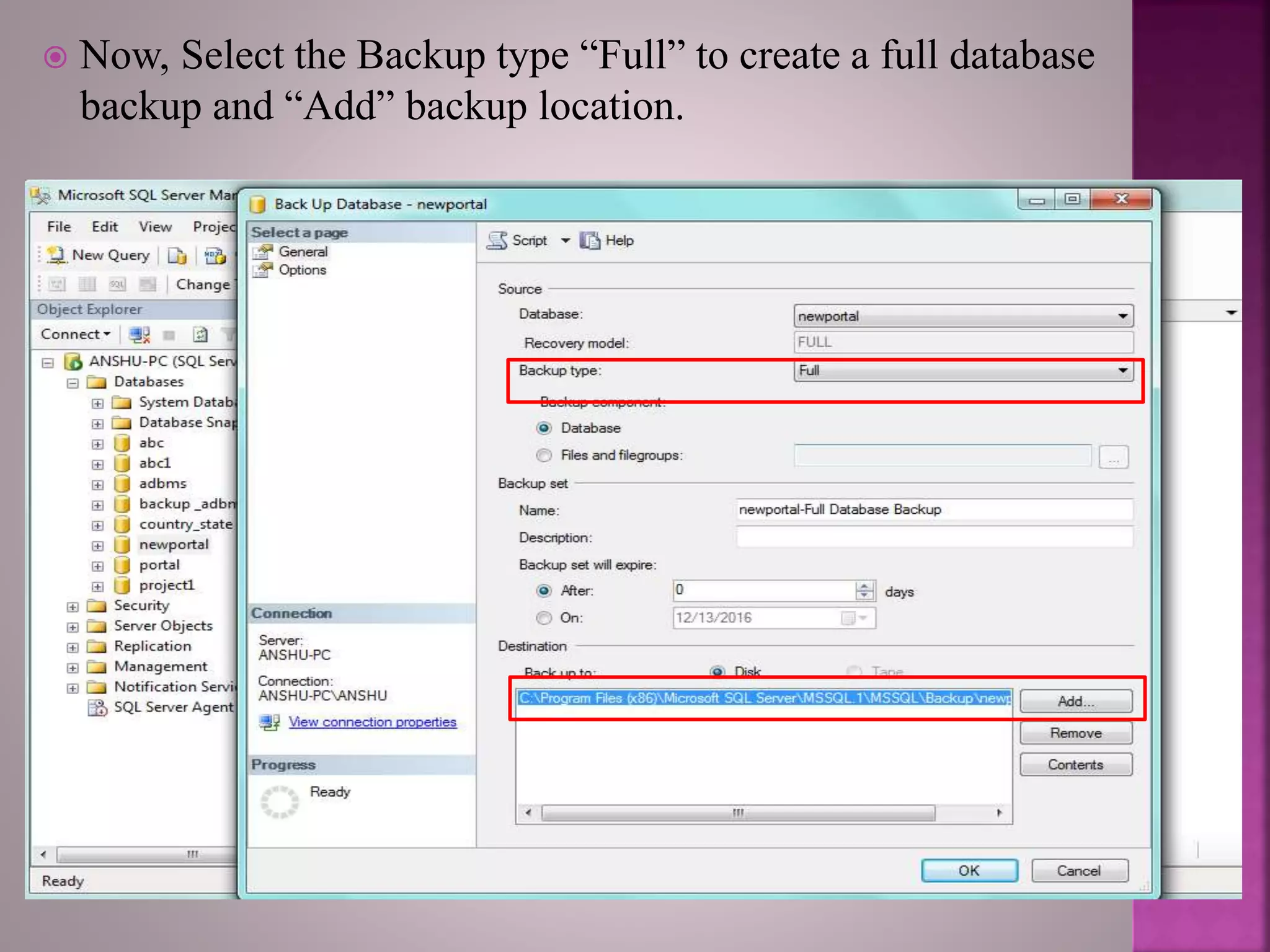
 Now, Select the Backup type “Full” to create a full database
backup and “Add” backup location.
 Give file name and Click “OK”.
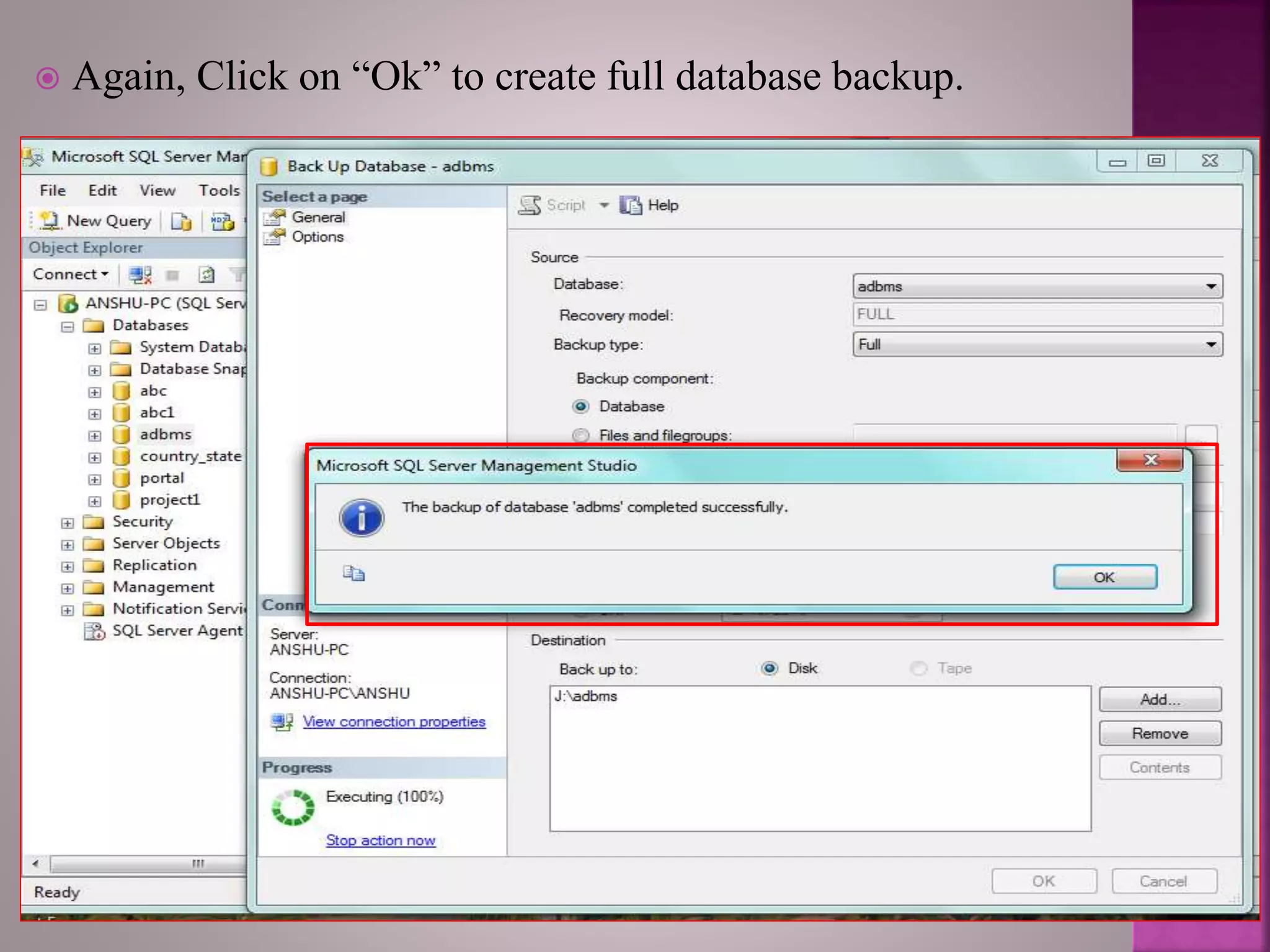
 Again, Click on “Ok” to create full database backup.
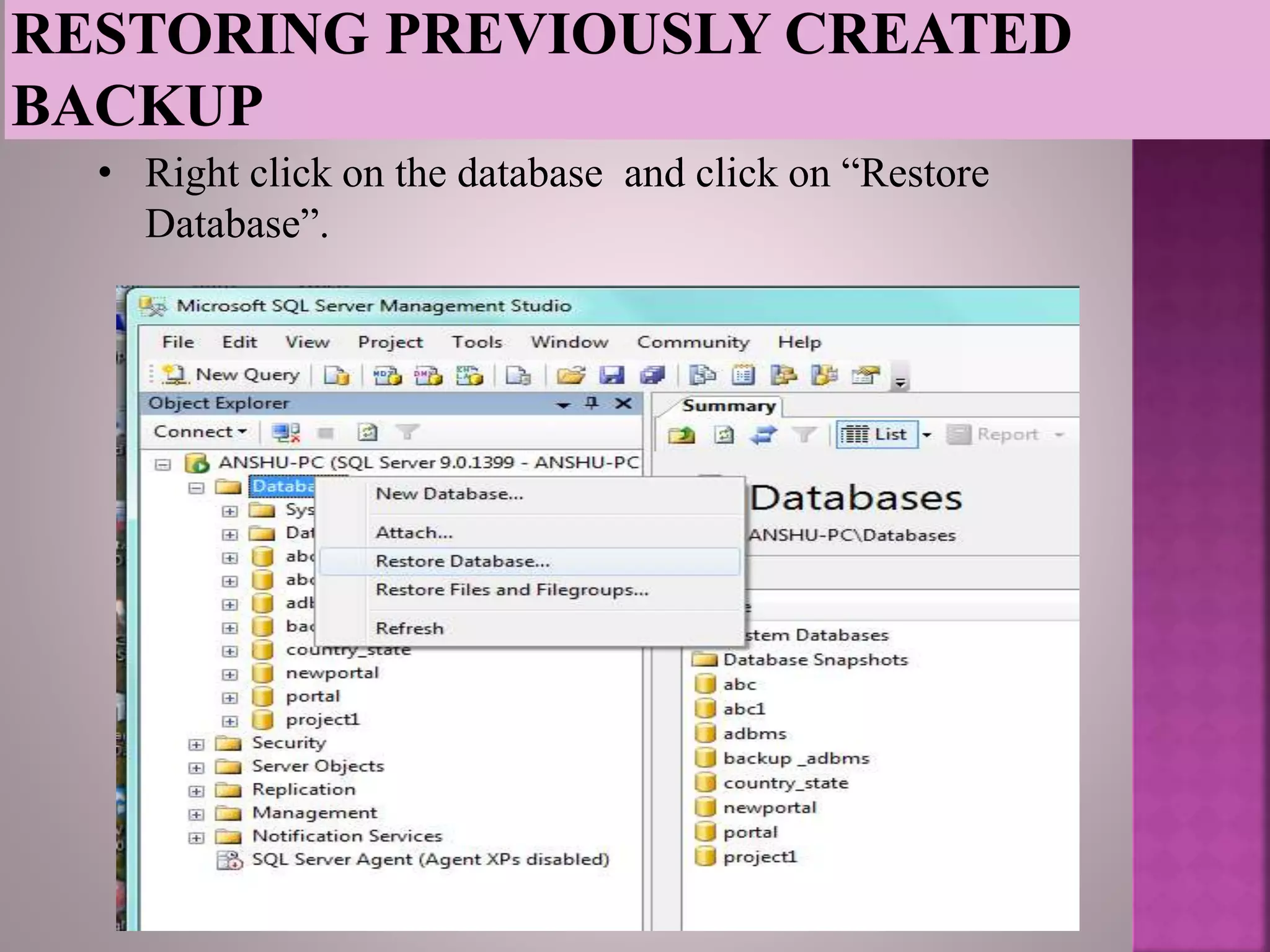
• Right click on the database and click on “Restore
Database”.
 Protects you from potentially catastrophic data loss.
o Backups of a database are useful for routine administrative
purposes.
 With valid backups of a database, you can recover your data
from many failures, such as:
• Media failure.
• User errors, for example, dropping a table by mistake.
• Hardware failures, for example, a damaged disk drive or
permanent loss of a server.
• Natural disasters.
 Due to a full backup of the database, every time space
required might develop into an issue.
 In case of a disaster, recovery is only possible since the last
FULL backup.
 Backups created by more recent versions of SQL server
cannot be restored in earlier versions of SQL Server
(doesn’t allows downgrading).
 Database created in lower versions of SQL server takes
more time to restore in higher versions due to the upgrade
process of database.
 DBA must be prepared for situations where a failure impacts the
availability, integrity or usability of a database.
 Reacting to failures and disruptions is a key component of DBA’s
job.
 The idea of creating a database backup and restoring them when
they are needed creates space overhead wherever we save the
backup copy.
 But it has saved many business industries and other organizations
from loss of millions or billion dollars.

Backup and recovery in sql server database

  • 1.
    SUBMITTED TO- Er. BeenaAwasthi SUBMITTED BY- Anshu Maurya (005) Subhi Agnihotri (033) Backup and Recovery of SQL Server Database
  • 2.
     Introduction  Howto create a full “Database Backup”  How to restore from “Backup”  Advantages of using Database Backup  Drawbacks and Limitations  Conclusion
  • 3.
     In SQLServer we can create database backup in 3 ways • Full – creates a complete backups of database as well as part of transaction log, so the database can be recovered. • Differential – a data backup that is based on the latest full backup of a complete or partial database. It contains only those extends that have changed since the last full backup. • Transaction Log – A backup of transaction logs that includes all log records that were not backed up in a previous log backup. It allows us to backup the active part of the transaction log.
  • 4.
     Right clickon the database that you want to backup Then, Select "Tasks" and click on "Back Up”.
  • 5.
     Now, Selectthe Backup type “Full” to create a full database backup and “Add” backup location.
  • 6.
     Give filename and Click “OK”.
  • 7.
     Again, Clickon “Ok” to create full database backup.
  • 8.
    • Right clickon the database and click on “Restore Database”.
  • 12.
     Protects youfrom potentially catastrophic data loss. o Backups of a database are useful for routine administrative purposes.  With valid backups of a database, you can recover your data from many failures, such as: • Media failure. • User errors, for example, dropping a table by mistake. • Hardware failures, for example, a damaged disk drive or permanent loss of a server. • Natural disasters.
  • 13.
     Due toa full backup of the database, every time space required might develop into an issue.  In case of a disaster, recovery is only possible since the last FULL backup.  Backups created by more recent versions of SQL server cannot be restored in earlier versions of SQL Server (doesn’t allows downgrading).  Database created in lower versions of SQL server takes more time to restore in higher versions due to the upgrade process of database.
  • 14.
     DBA mustbe prepared for situations where a failure impacts the availability, integrity or usability of a database.  Reacting to failures and disruptions is a key component of DBA’s job.  The idea of creating a database backup and restoring them when they are needed creates space overhead wherever we save the backup copy.  But it has saved many business industries and other organizations from loss of millions or billion dollars.