Presentation on File Backup
By-
Muskan soni.
To-
Mr. Devarshi Mehta sir.
Outline
• What is backup
• Backup strategy
• Recovery procedures
• Factors in recovery procedures
• Backup purposes
• Types of backup
• Backup architecture and process
• Backup topologies
• Backup technology options
• Features
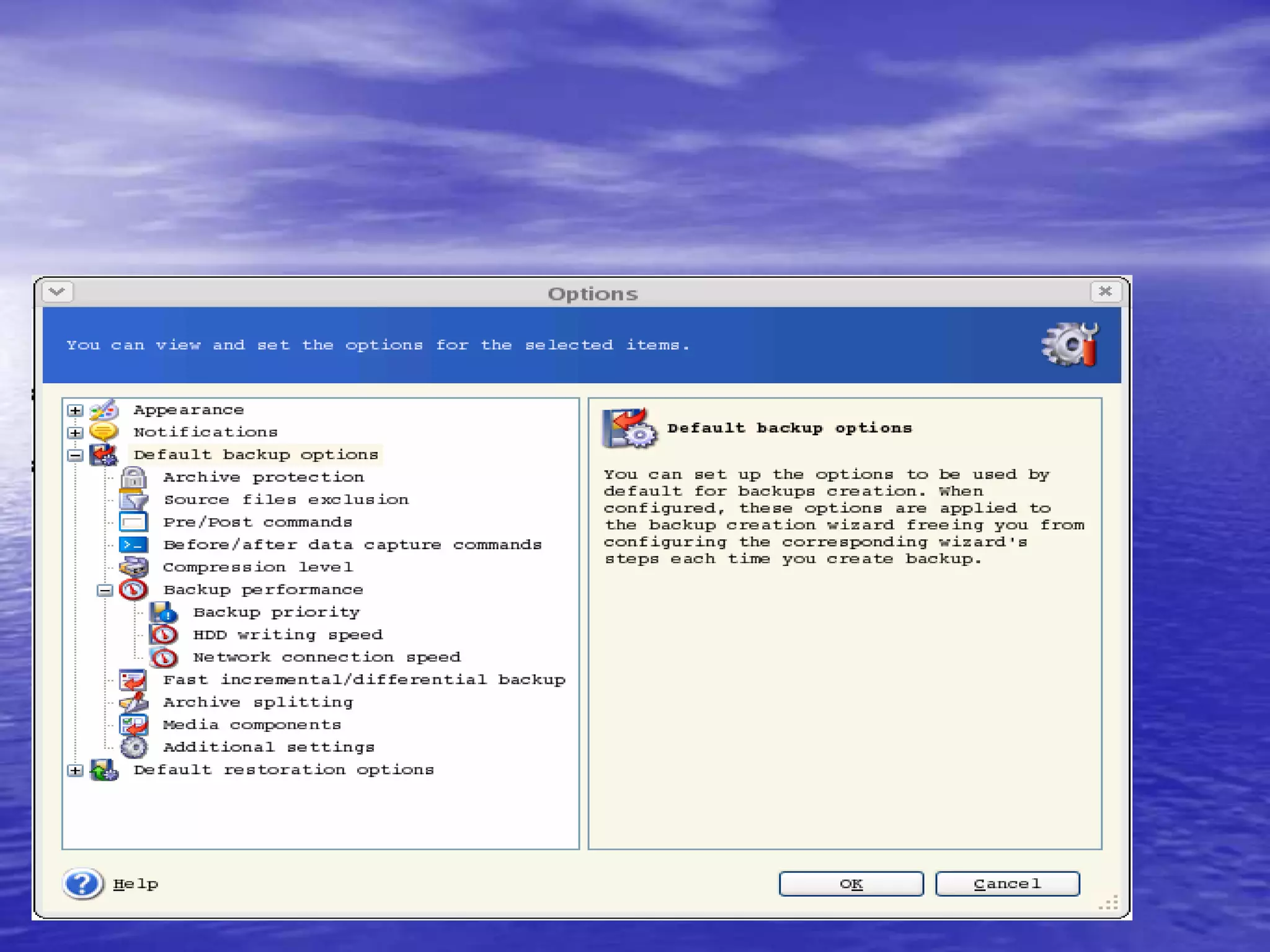
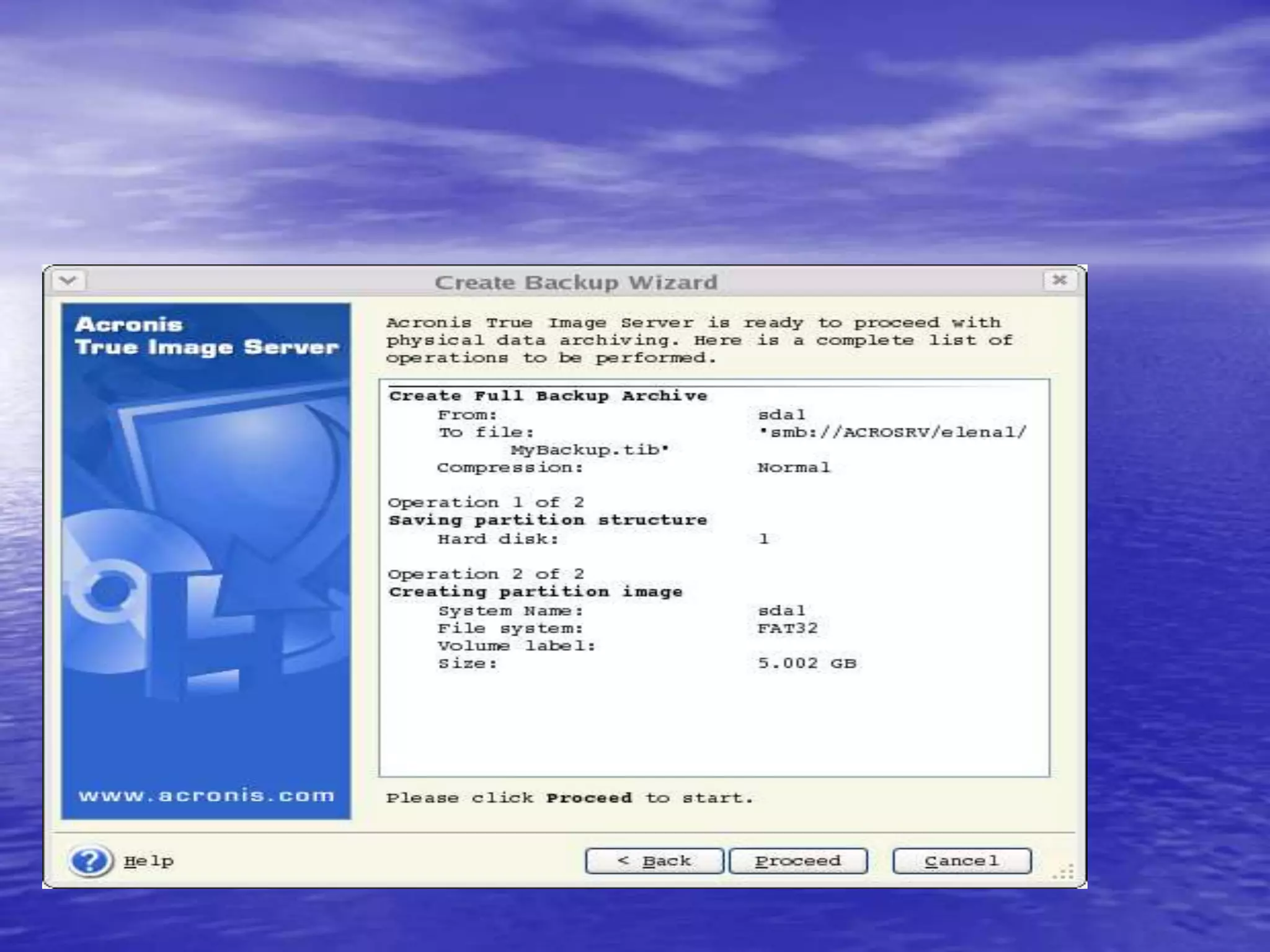
• Installation of Acronis
What is a Backup?
• Backup is an additional copy of data that
can be used for restore and recovery
purposes
• This Backup copy can be created by:
– Simply coping data (there can be one or more
copies)
– Mirroring data (the copy is always updated
with whatever is written to the primary
Backup Strategy
A backup is put in place to avoid
permanent data loss to ensure the
integrity of stored data i.e. can get
back to a previous version and build
up the data correctly if current data
found to be in error.
Recovery Procedures
• A backup strategy needs a well
documented and tested recovery
procedure to ensure backup data is
restored properly
Factors in recovery procedure:
• A well documented procedure that allocates
roles and responsibilities to staff.
• Availability of alternative hardware and
accommodation if the originals have been
destroyed.
• Availability of original software such as the
customised operating system and application
programs!
• That up-to-date backup data is readily available
Backup purposes
– Disaster Recovery
• Restores production data to an operational state
after disaster
– Operational
• Restore data in the event of data loss or logical
corruptions that may occur during routine
processing
– Archival
• Preserve transaction records, email, and other
business work products for regulatory compliance
Types of backups
• Three basic types of backups:
• Full backups
• Differential backups
• Incremental backups
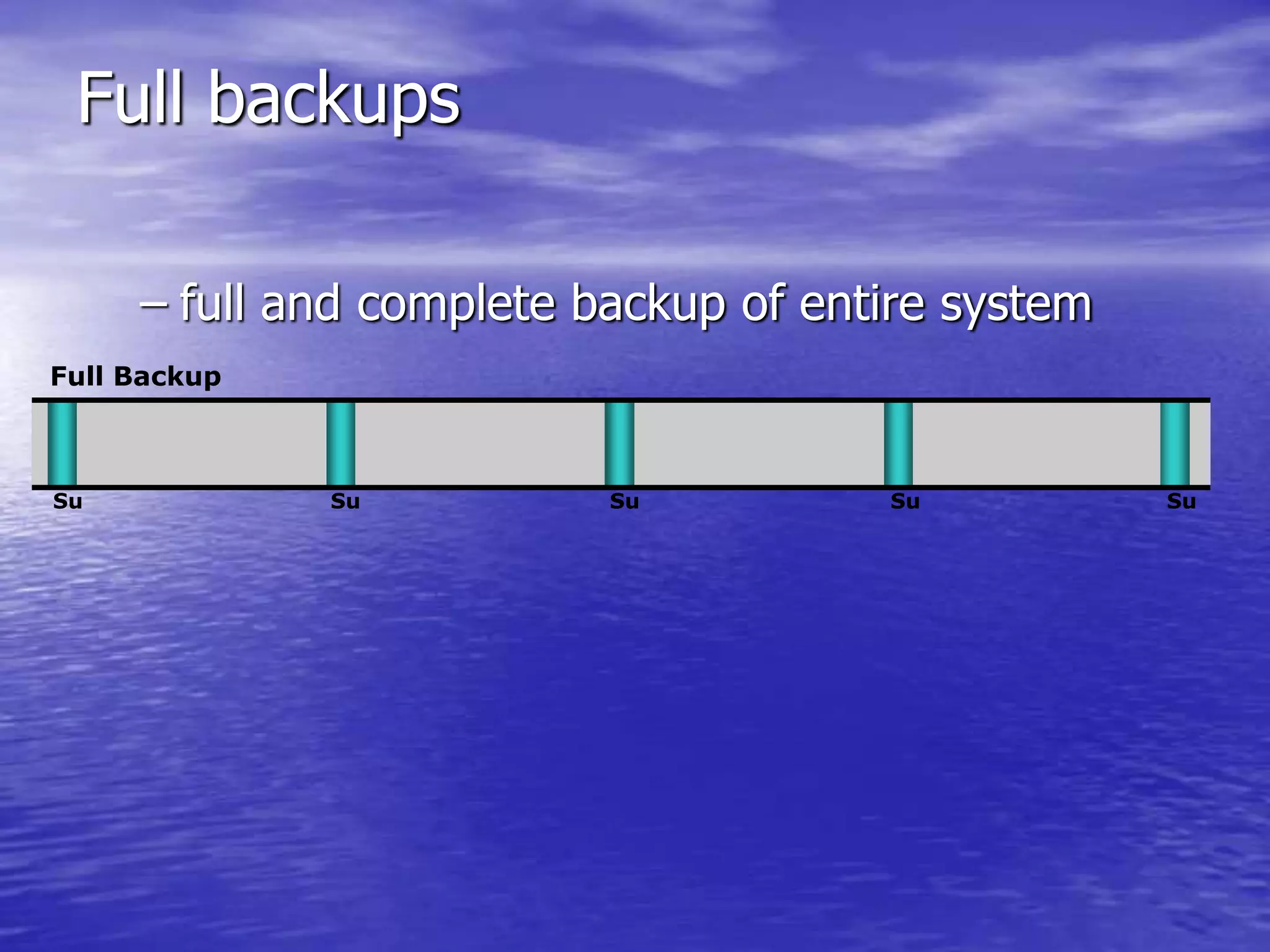
Full backups
– full and complete backup of entire system
Full Backup
Su Su Su Su Su
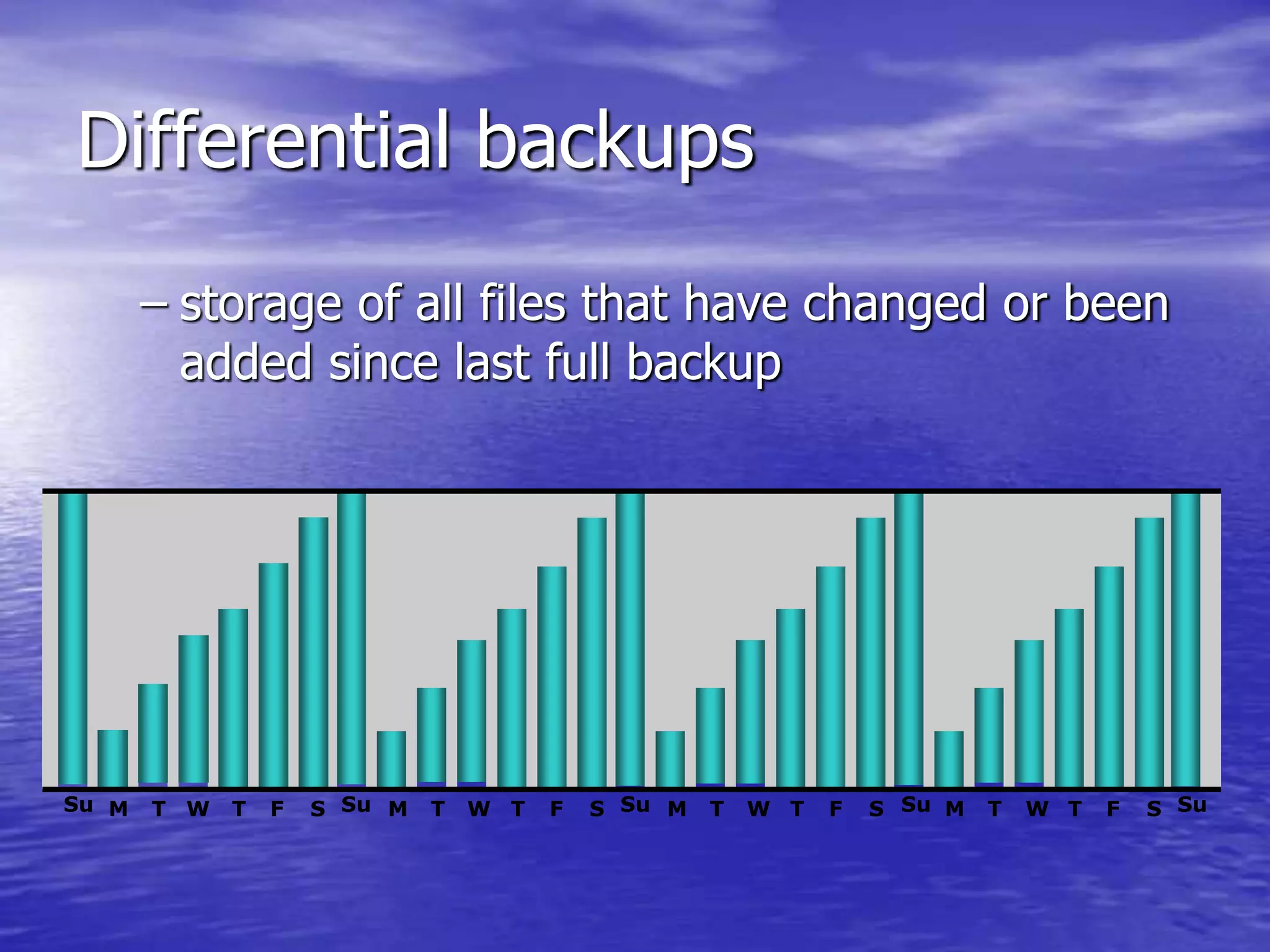
Differential backups
– storage of all files that have changed or been
added since last full backup
Su Su Su Su SuM T TW F S M T TW F S M T TW F S M T TW F S
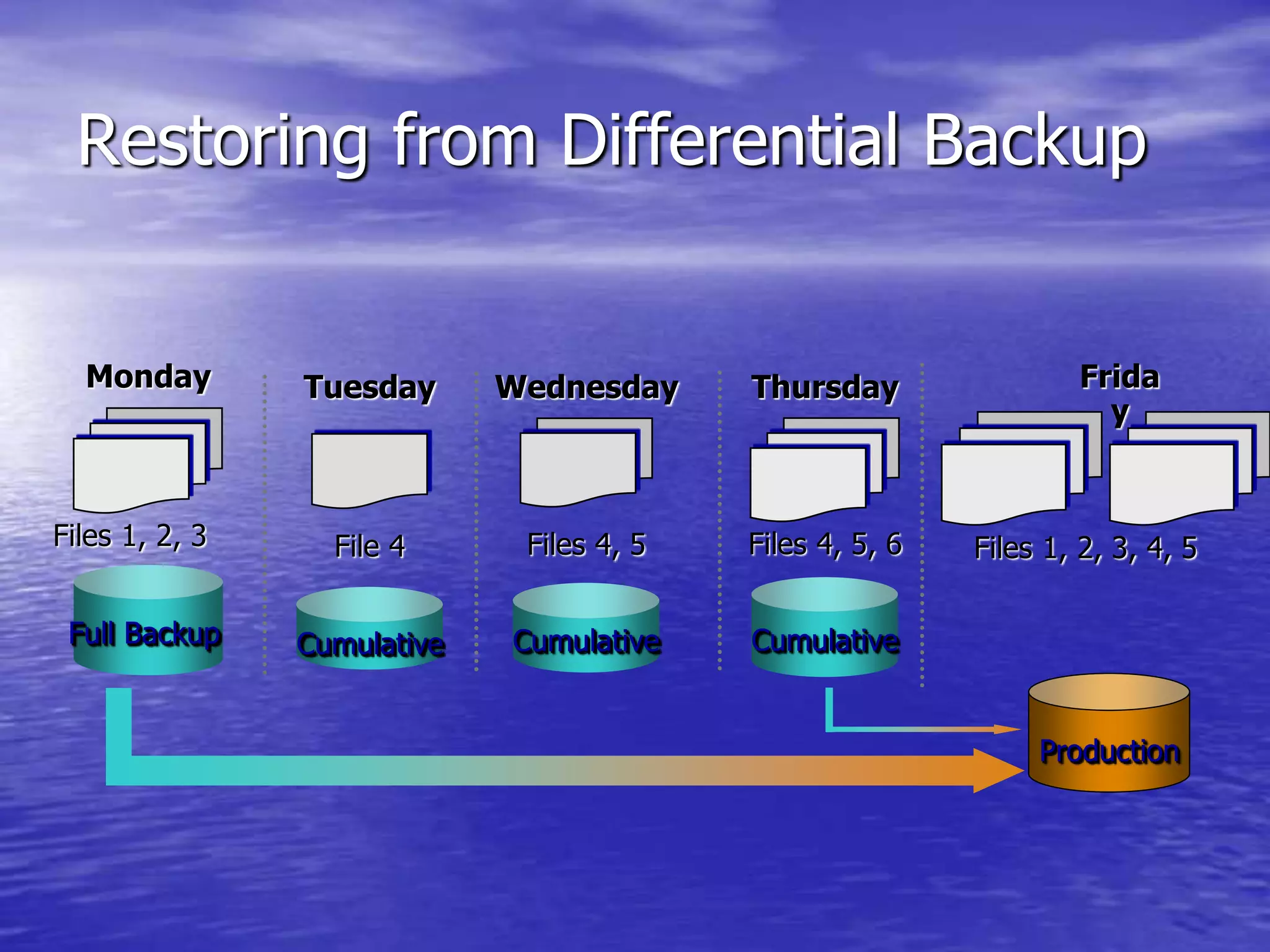
Restoring from Differential Backup
Files 1, 2, 3
Monday
Full Backup Cumulative
Tuesday
File 4
Cumulative
Wednesday
Files 4, 5
Cumulative
Thursday
Files 4, 5, 6 Files 1, 2, 3, 4, 5
Production
Frida
y
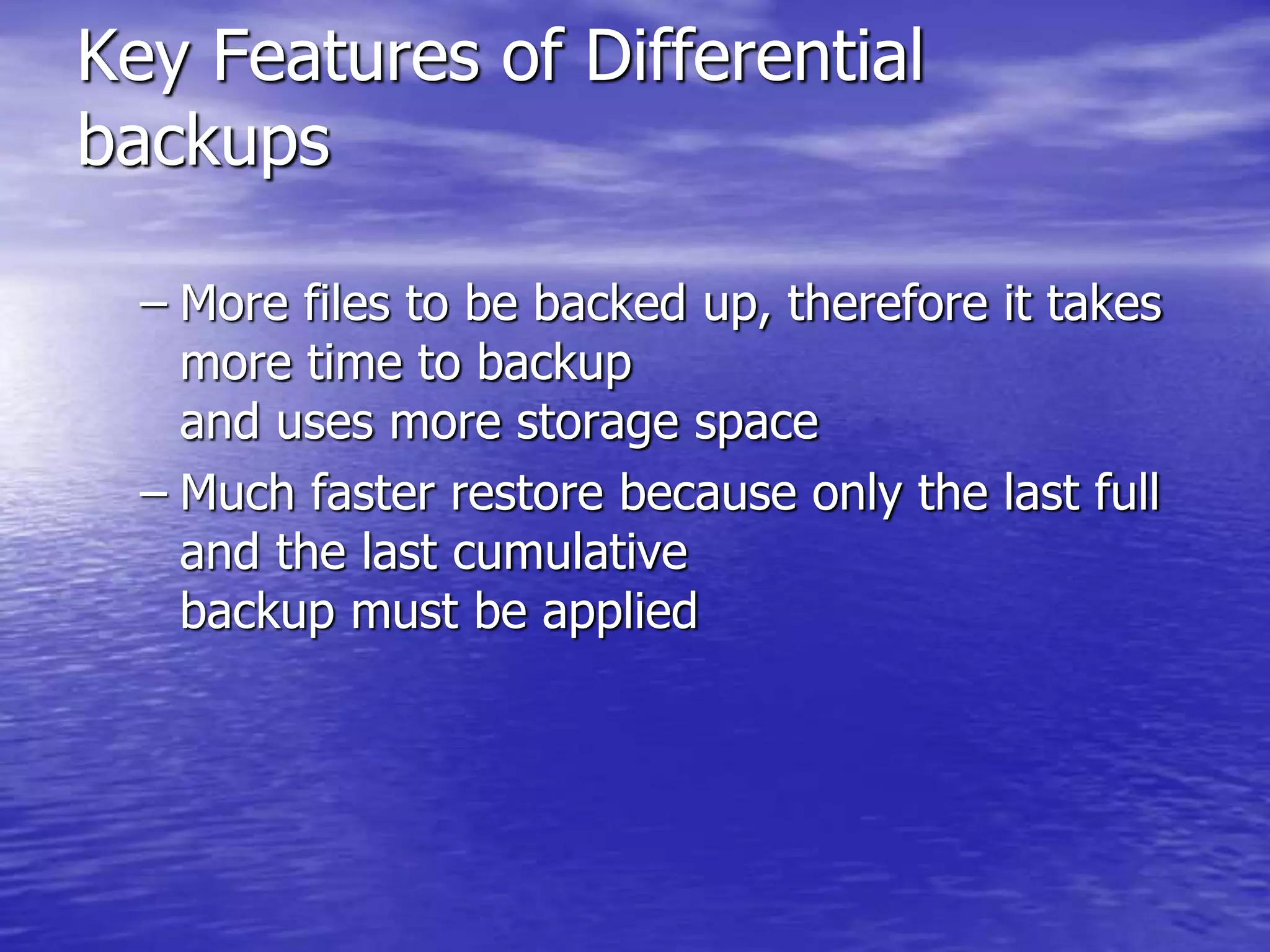
Key Features of Differential
backups
– More files to be backed up, therefore it takes
more time to backup
and uses more storage space
– Much faster restore because only the last full
and the last cumulative
backup must be applied
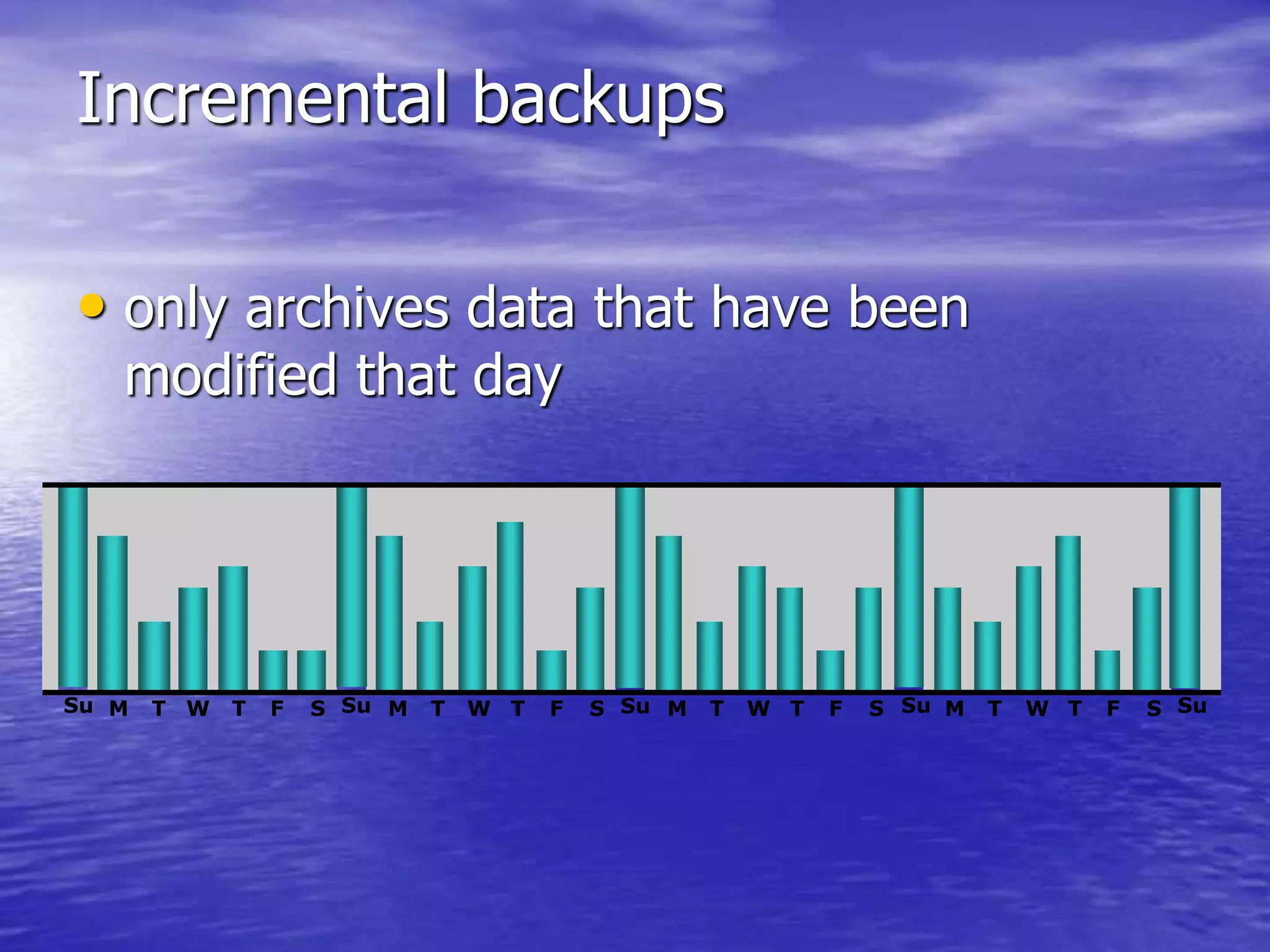
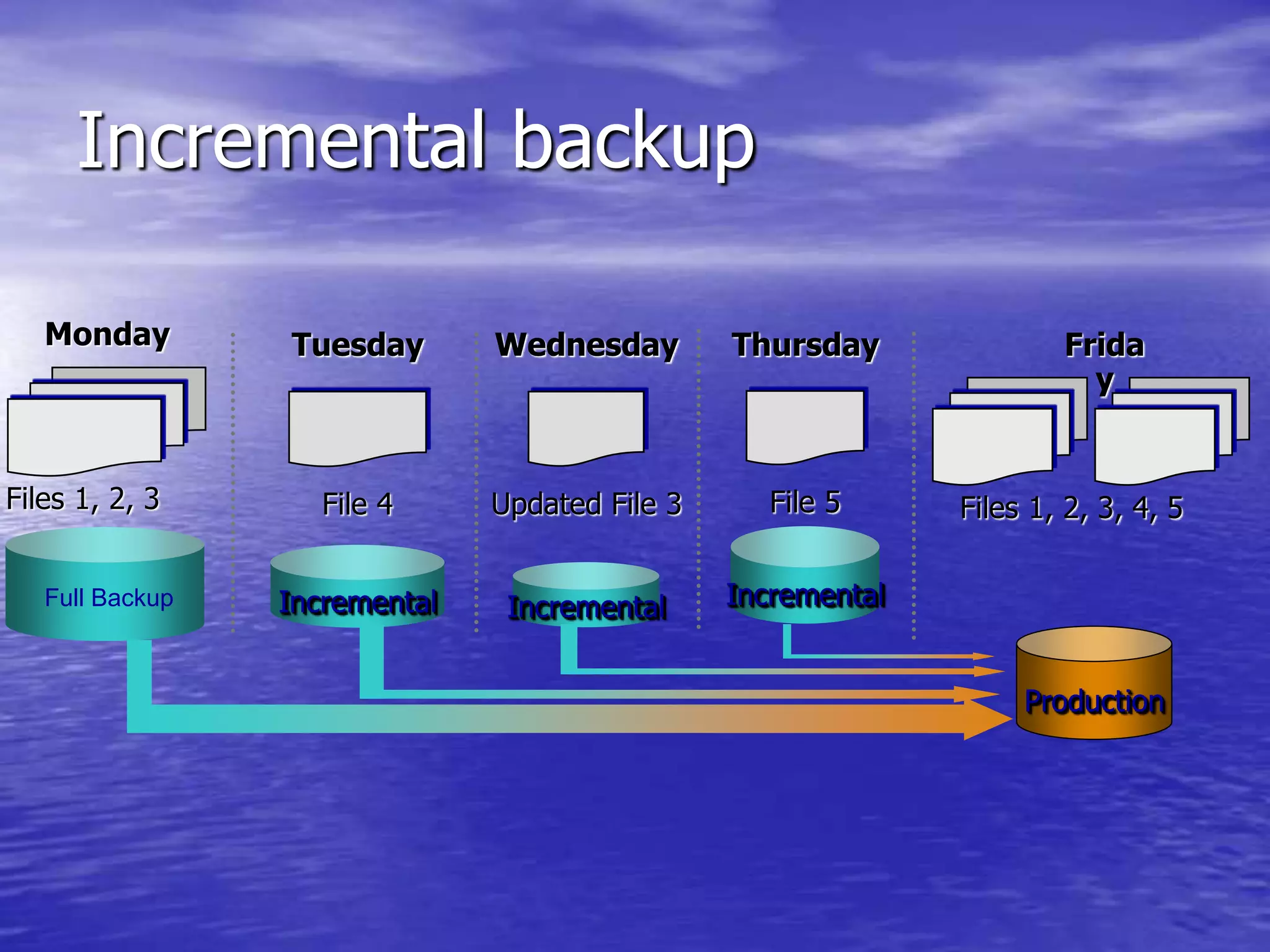
Incremental backups
• only archives data that have been
modified that day
Su Su Su Su SuM T TW F S M T TW F S M T TW F S M T TW F S
Incremental backup
Files 1, 2, 3
Monday
Full Backup Incremental
Tuesday
File 4
Incremental
Wednesday
Updated File 3
Incremental
Thursday
File 5 Files 1, 2, 3, 4, 5
Production
Frida
y
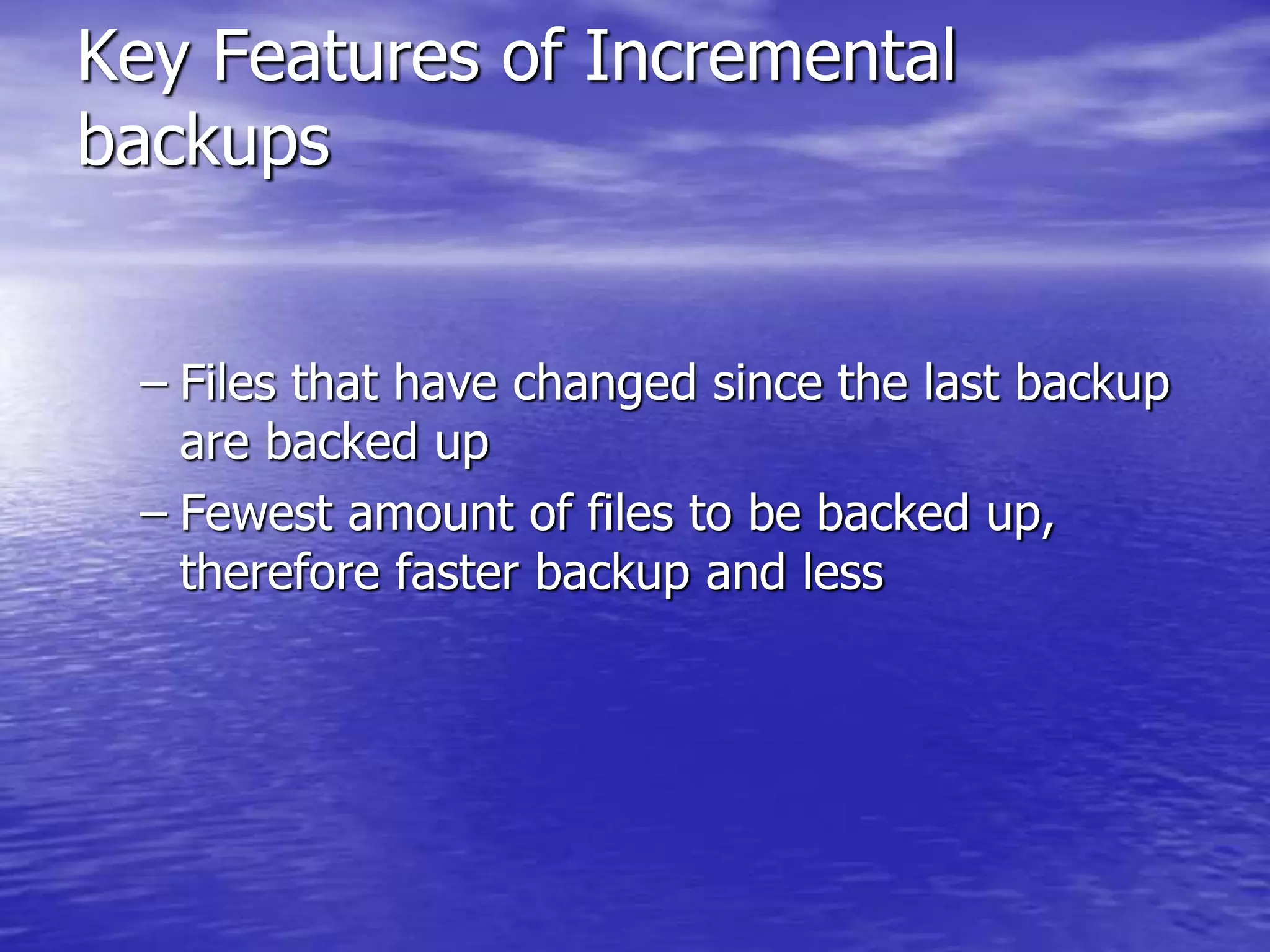
Key Features of Incremental
backups
– Files that have changed since the last backup
are backed up
– Fewest amount of files to be backed up,
therefore faster backup and less
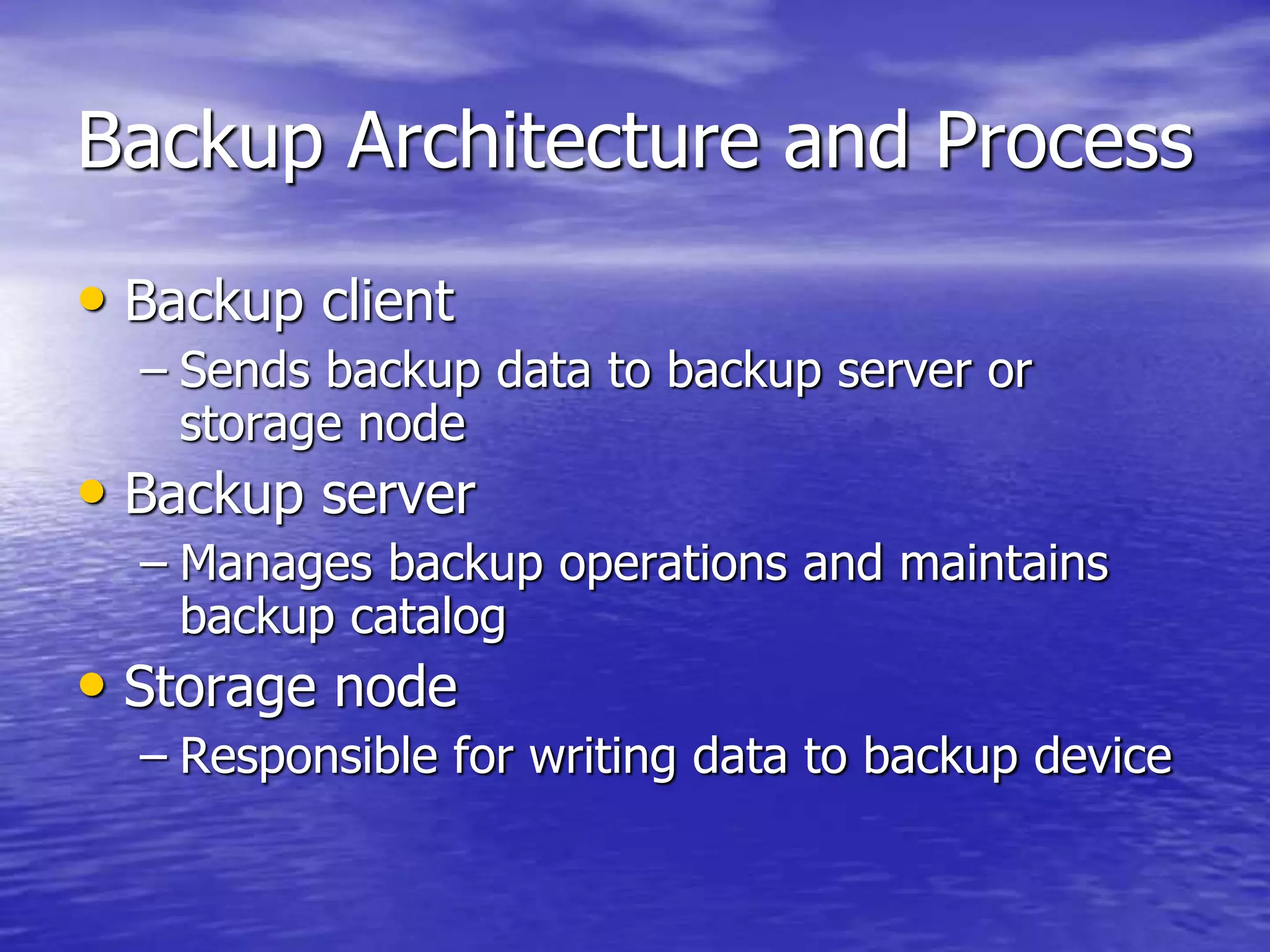
• Backup client
– Sends backup data to backup server or
storage node
• Backup server
– Manages backup operations and maintains
backup catalog
• Storage node
– Responsible for writing data to backup device
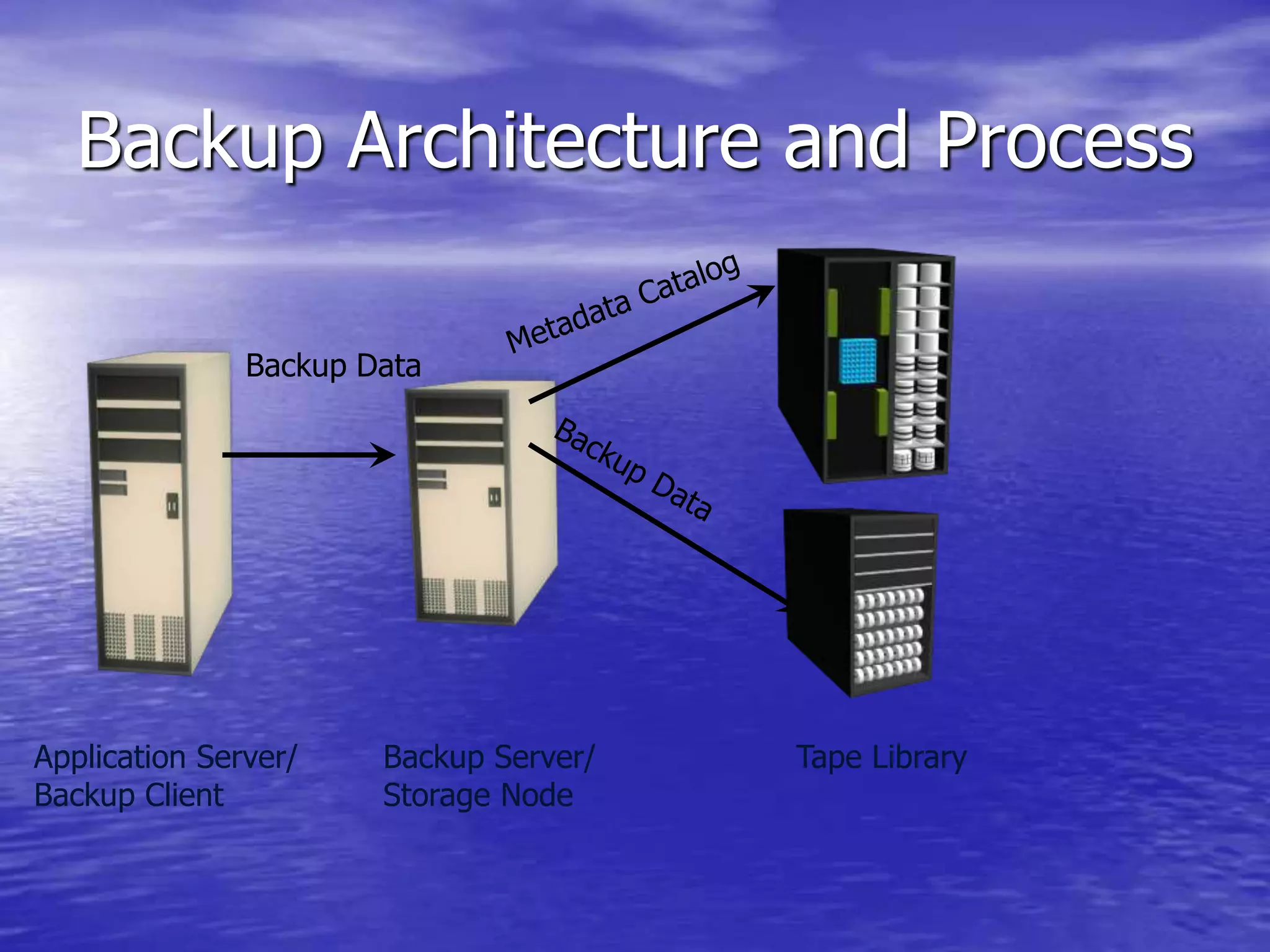
Backup Architecture and Process
Application Server/
Backup Client
Backup Data
Backup Server/
Storage Node
Tape Library
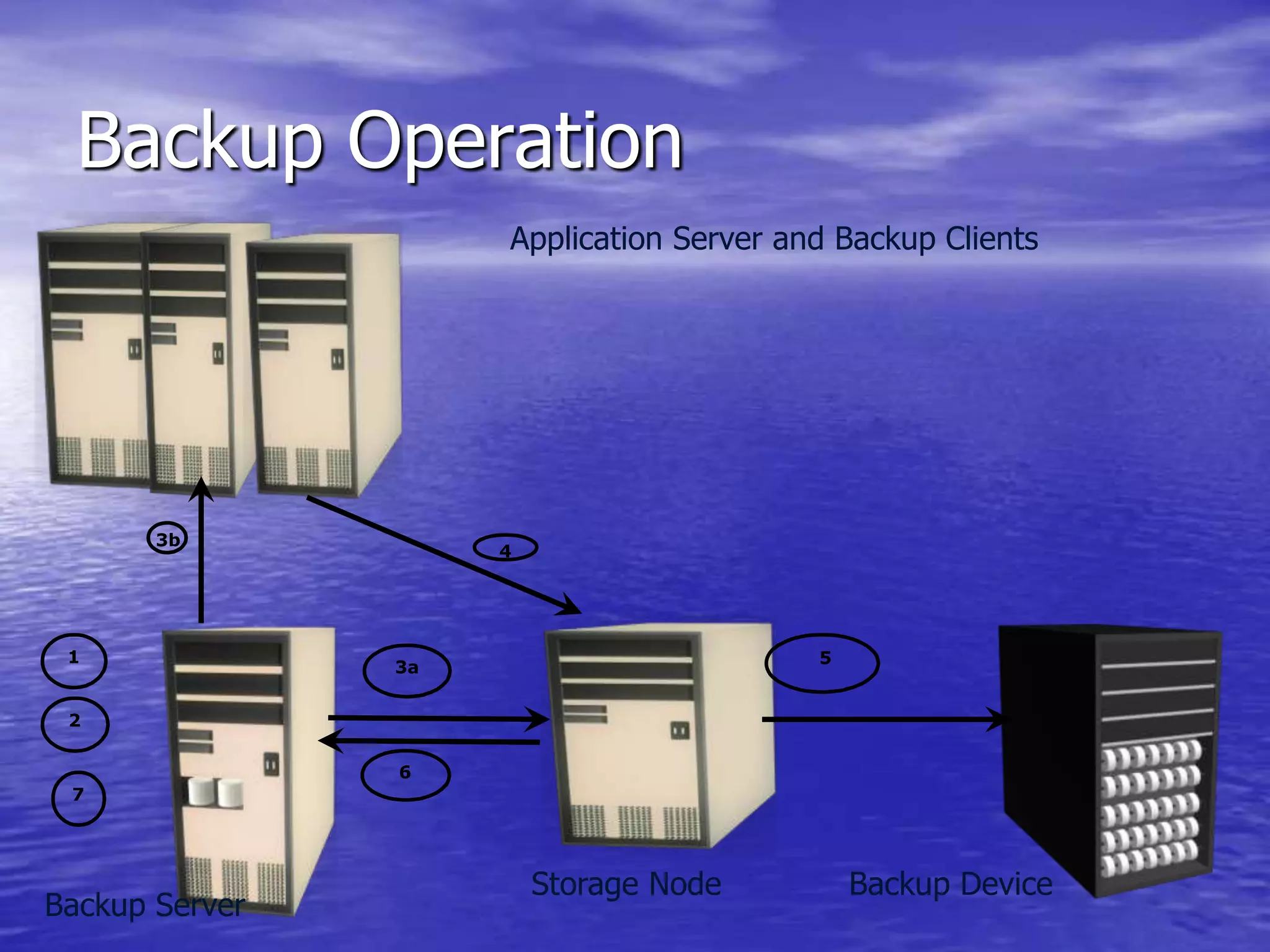
Backup Operation
Application Server and Backup Clients
1
2
7
3b
4
3a
6
5
Backup Server
Storage Node Backup Device
Backup Operation
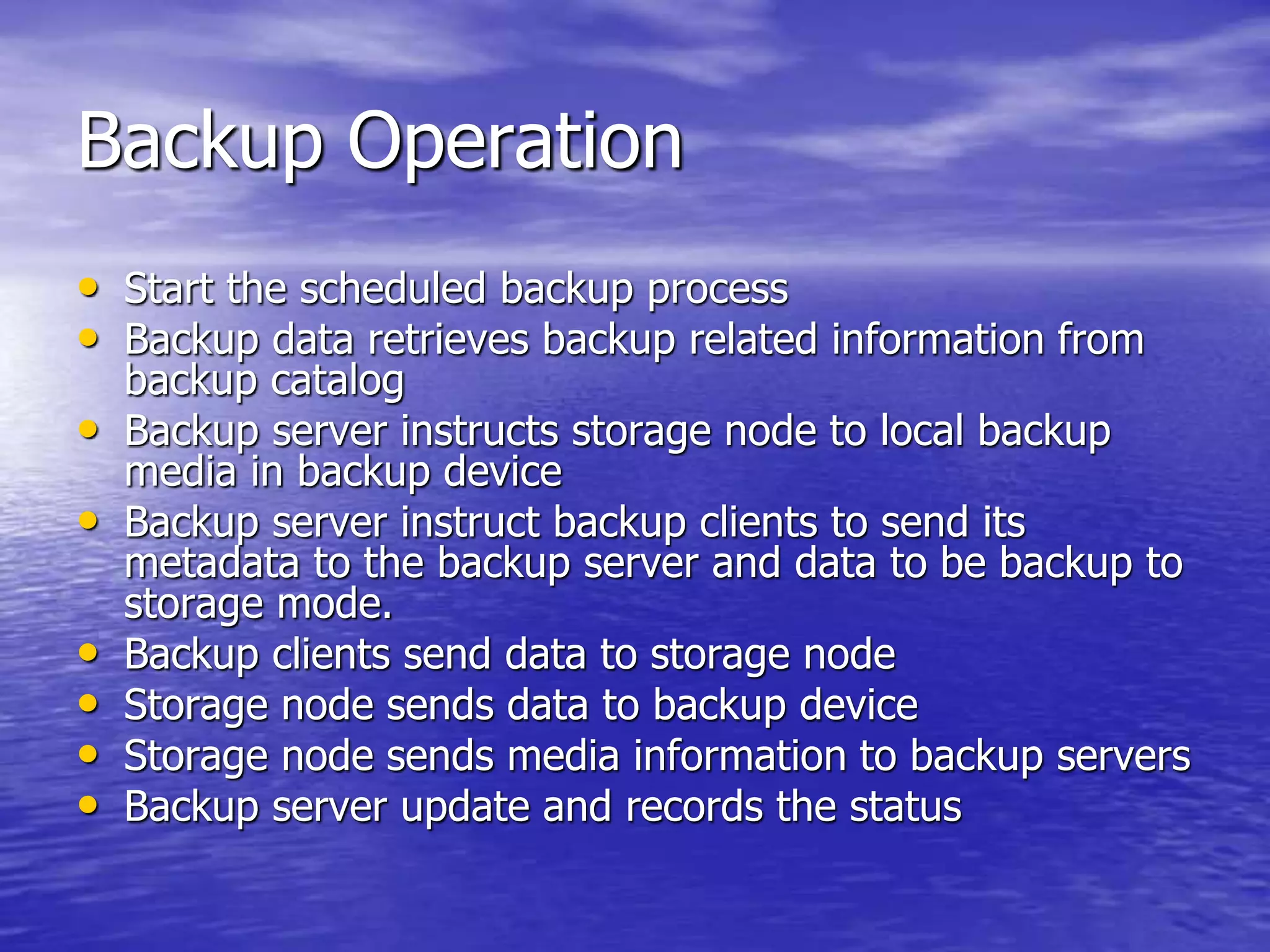
• Start the scheduled backup process
• Backup data retrieves backup related information from
backup catalog
• Backup server instructs storage node to local backup
media in backup device
• Backup server instruct backup clients to send its
metadata to the backup server and data to be backup to
storage mode.
• Backup clients send data to storage node
• Storage node sends data to backup device
• Storage node sends media information to backup servers
• Backup server update and records the status
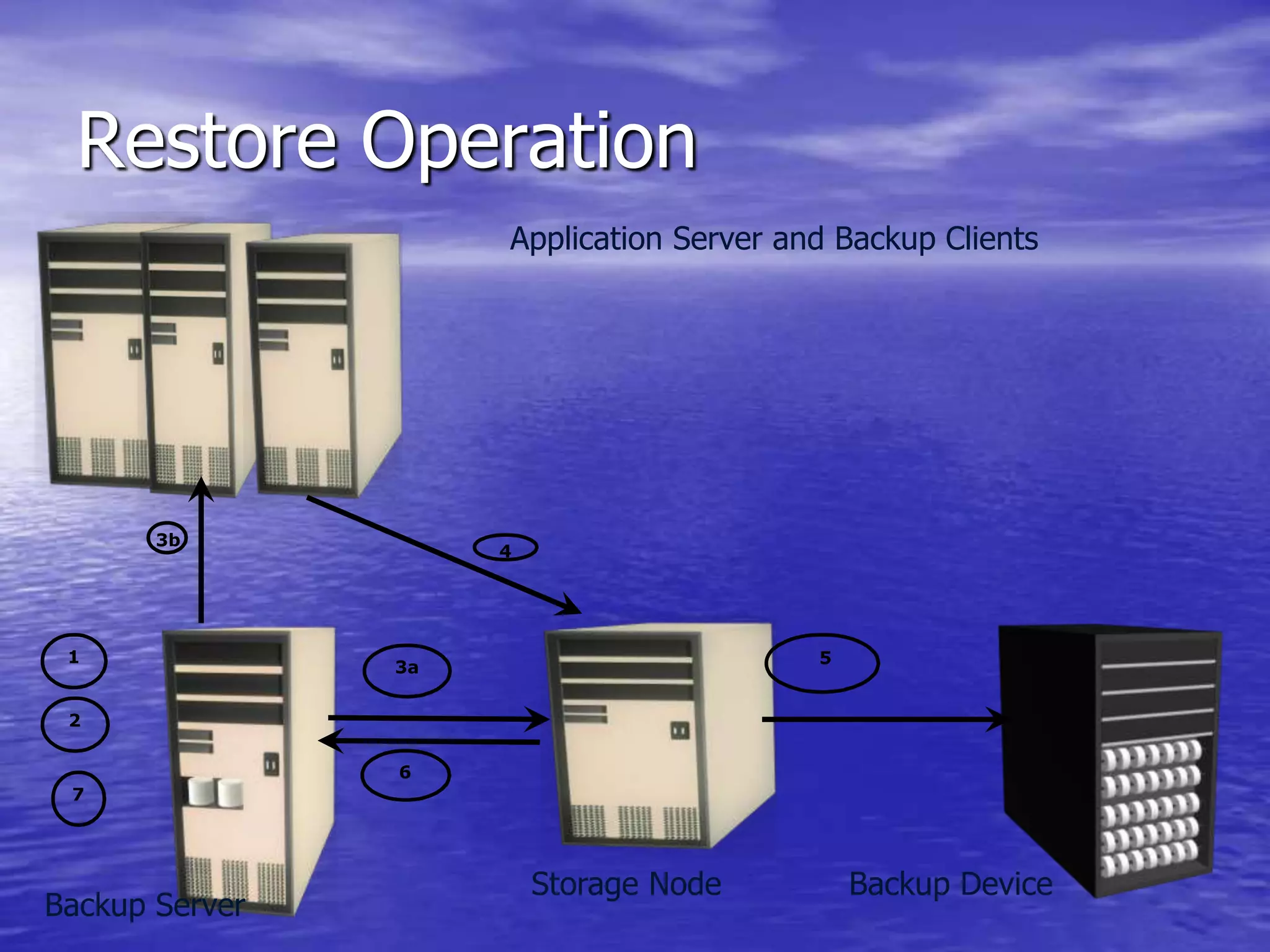
Restore Operation
Application Server and Backup Clients
1
2
7
3b
4
3a
6
5
Backup Server
Storage Node Backup Device
Restore Operation
• Backup server scans backup catalog to identify
the data to be restore and the client that will
receive data.
• Backup servers instructs storage node to load
backup media in backup device.
• Data is read and send to backup client.
• Storage node sends restore metadata to backup
server.
• Backup server updates catalog.
Backup Topologies
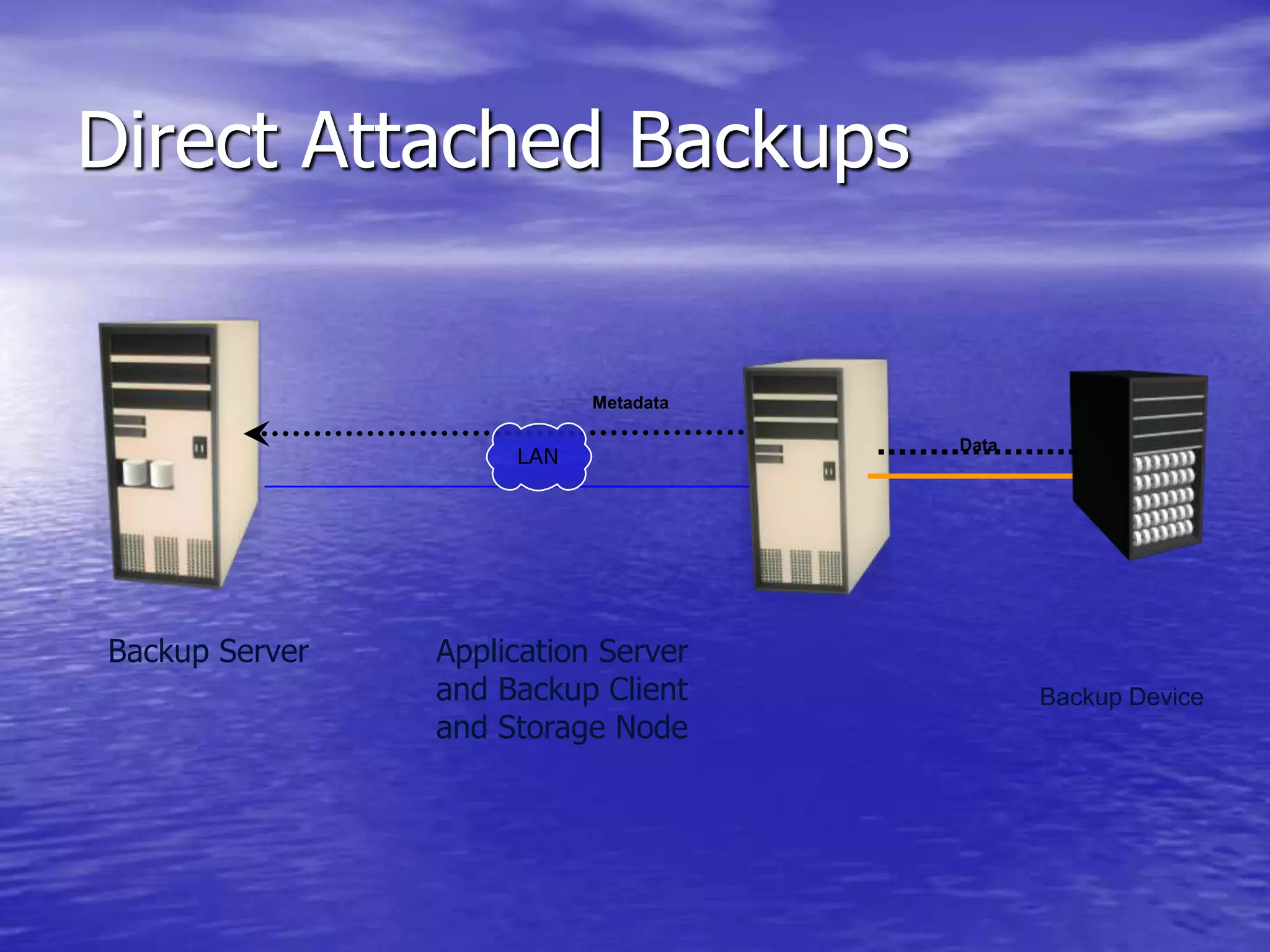
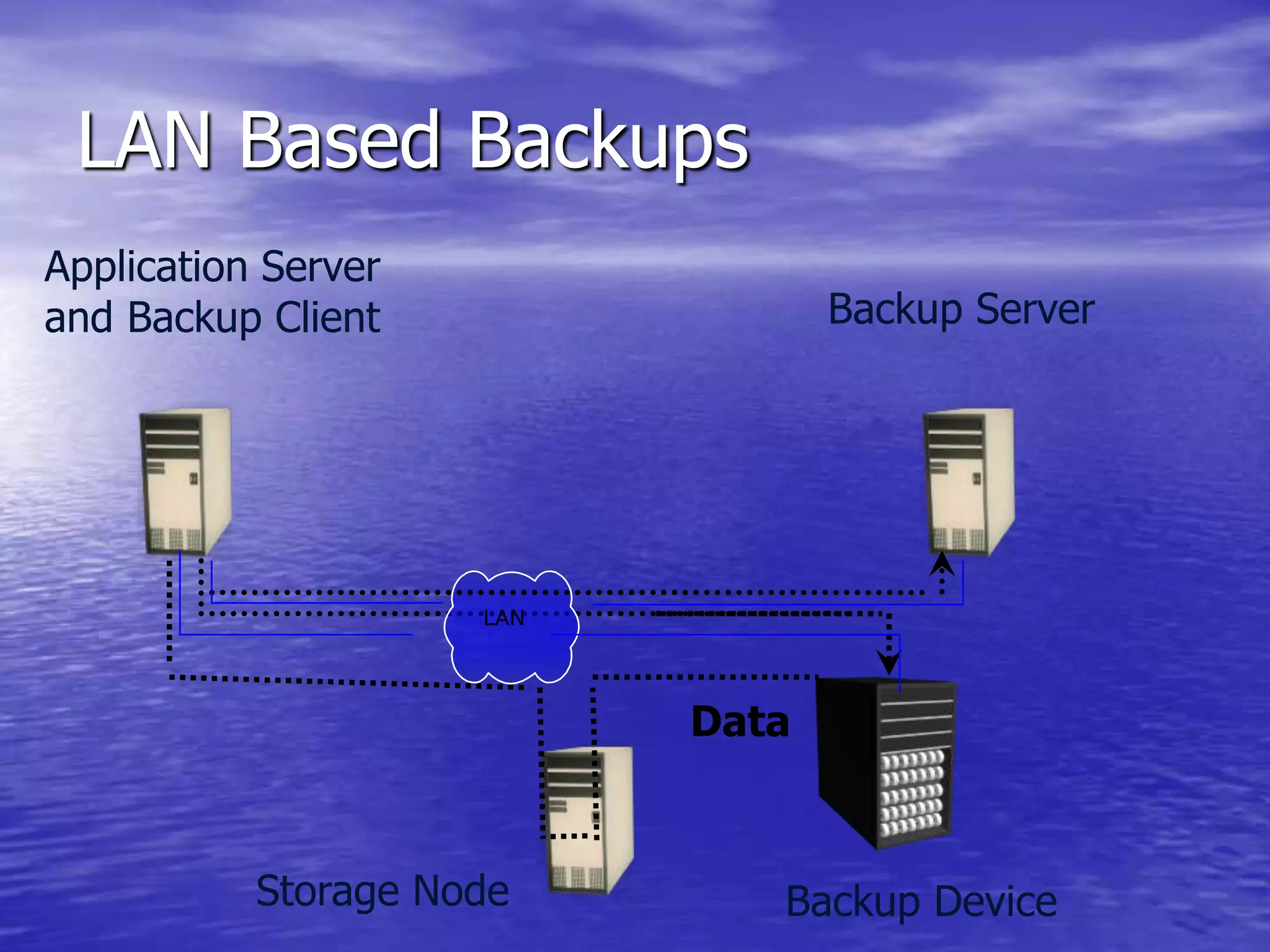
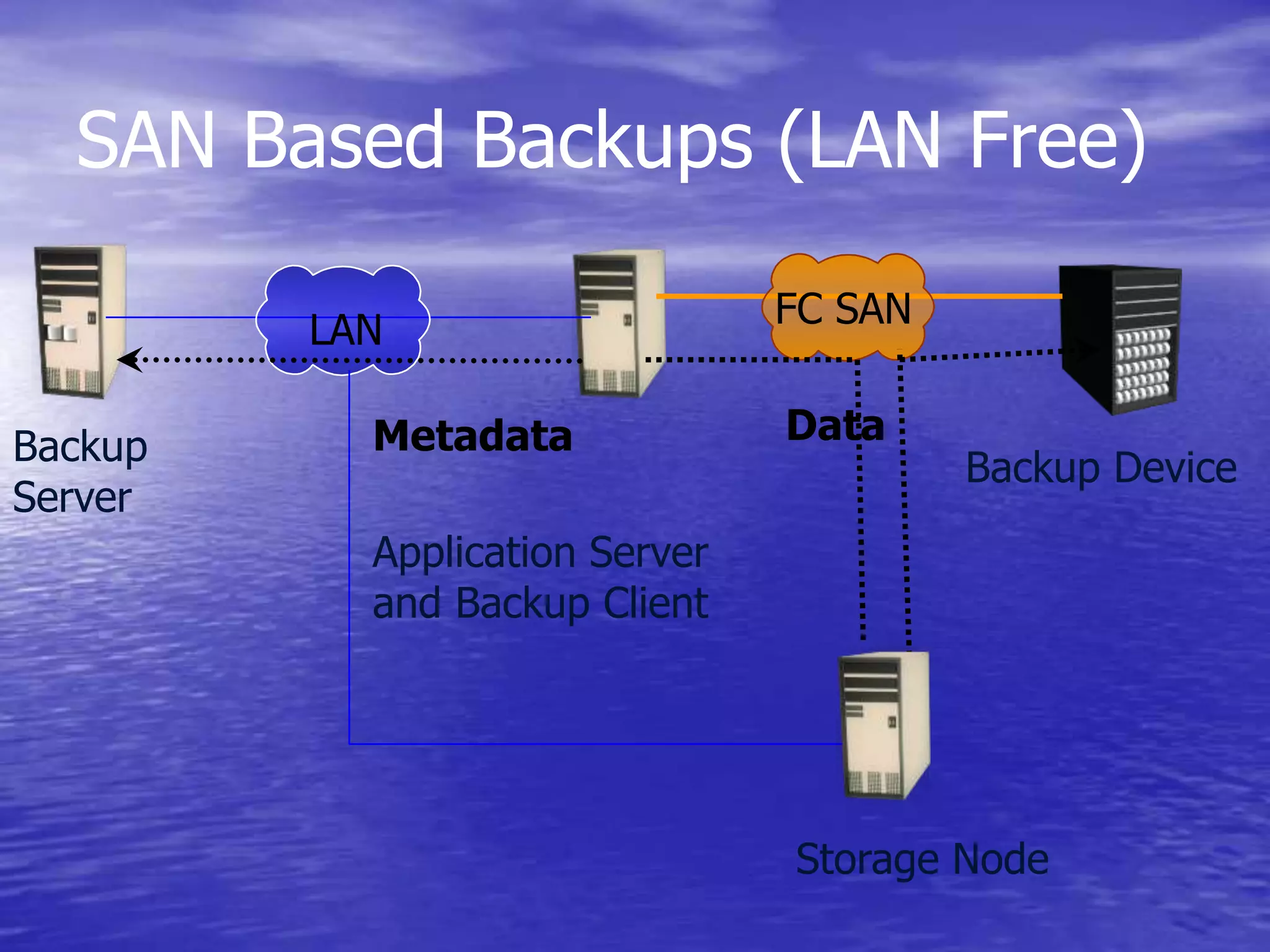
• There are 3 basic backup topologies:
– Direct Attached Based Backup
– LAN Based Backup
– SAN Based Backup
Direct Attached Backups
Backup Server
Metadata
LAN
Application Server
and Backup Client
and Storage Node
Data
Backup Device
LAN Based Backups
Application Server
and Backup Client
LAN
Data
Backup Server
Backup DeviceStorage Node
SAN Based Backups (LAN Free)
Metadata
LAN
FC SAN
Data
Backup
Server
Application Server
and Backup Client
Storage Node
Backup Device
Backup Technology options
• Backup to Tape
 Physical Tape library
• Backup to tape
Backup to Tape
• Traditional destination for backup
• Low cost option
• Sequential / Linear Access
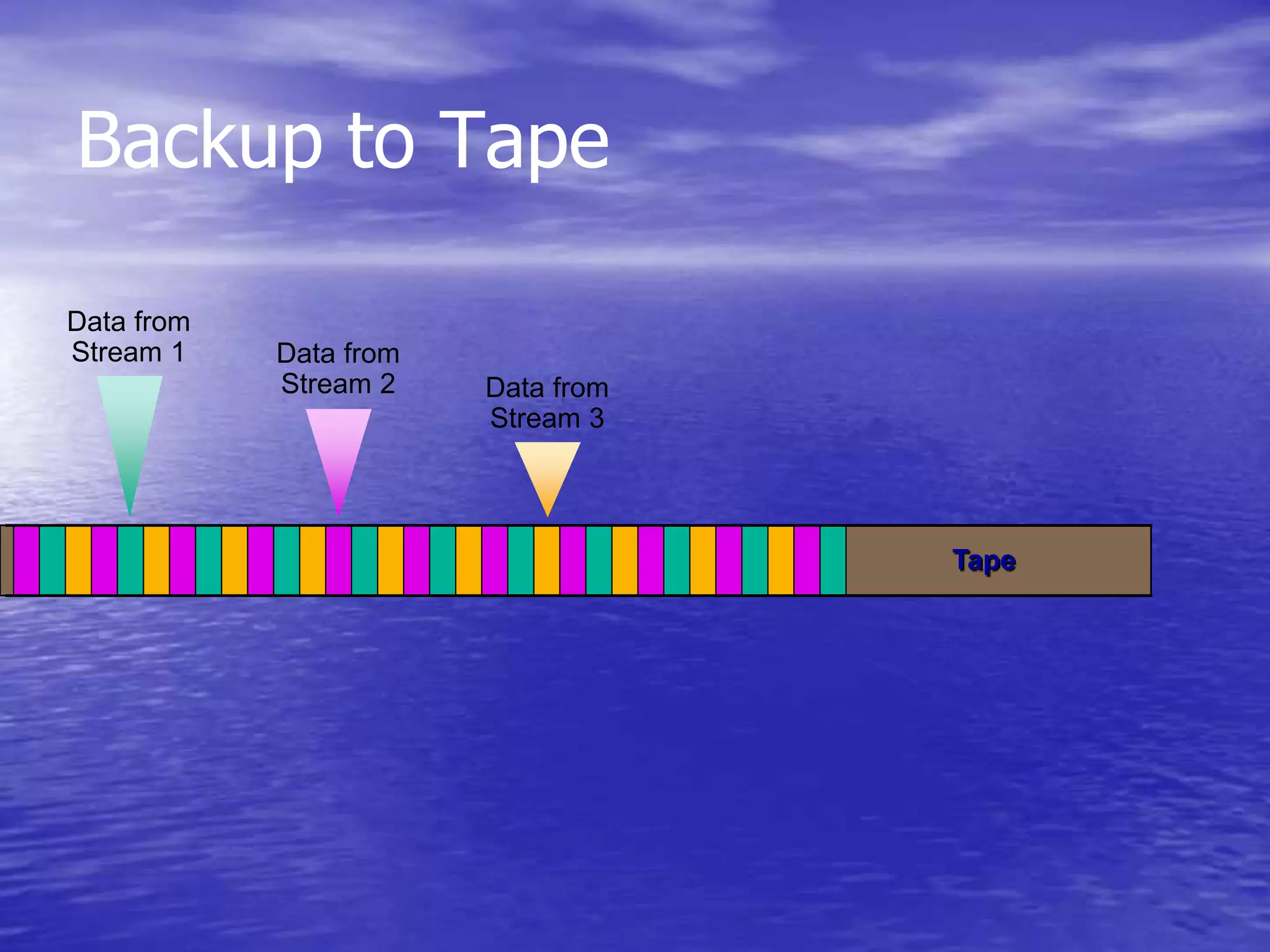
• Multiple streaming
– Backup streams from multiple clients to a
single backup device
Backup to Tape
Tape
Data from
Stream 1 Data from
Stream 2 Data from
Stream 3
Tape Limitations
• Reliability
• Sequential Access
• Cannot be accessed by multiple host
simultaneously
• Control environment for tape storage
• Wear and tear of tape
Backup to Disk
• Ease of implementation
• Fast access
• More reliable
• Random access
• Multiple host access
• Enhanced overall back and recovery
performance
New Features
• File backup and restore
Simple and automatic protection
Complete PC™ backup and restore
Block-level image
Entire computer
Server backup
Files, folders, disks, common workloads
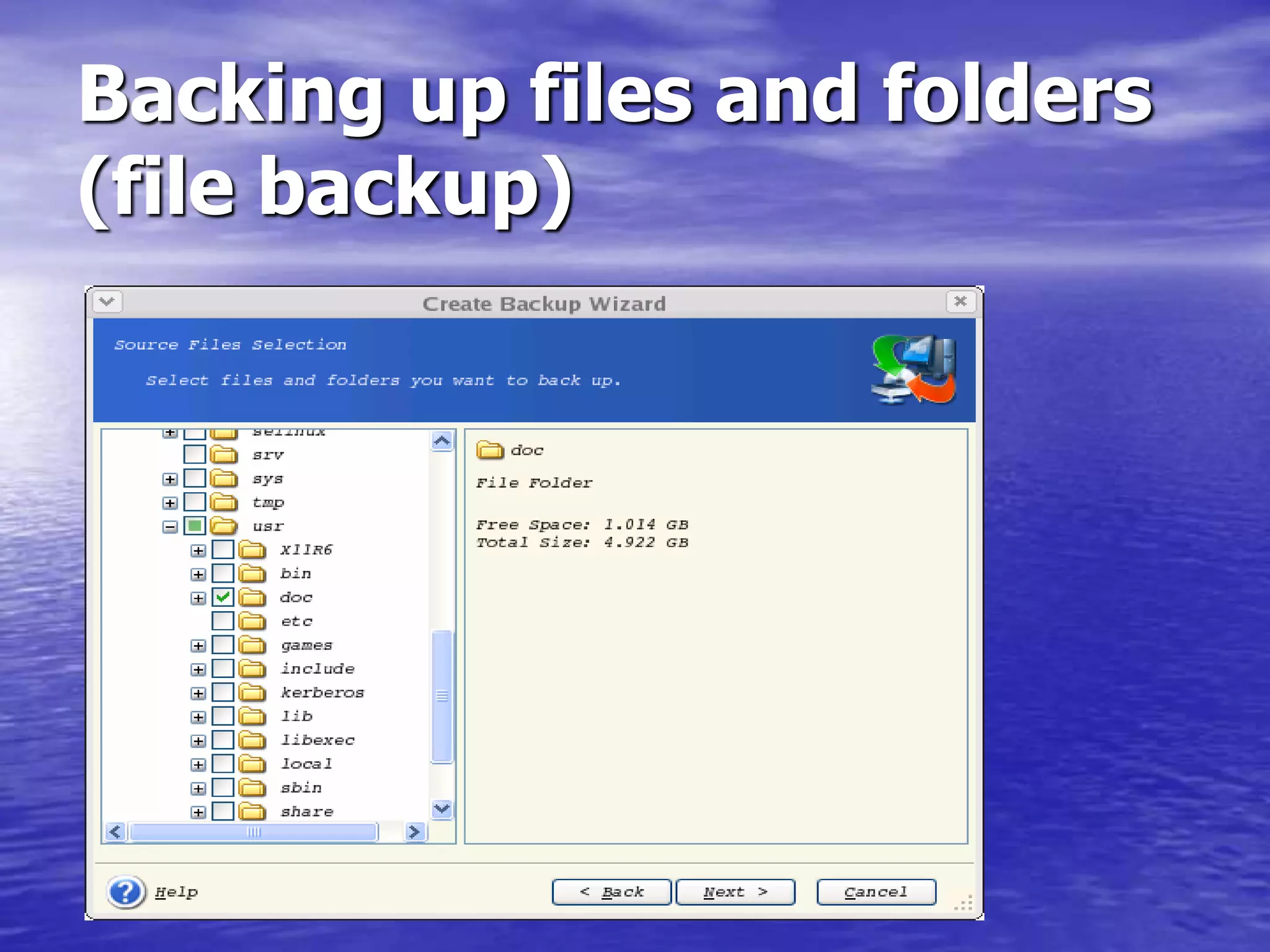
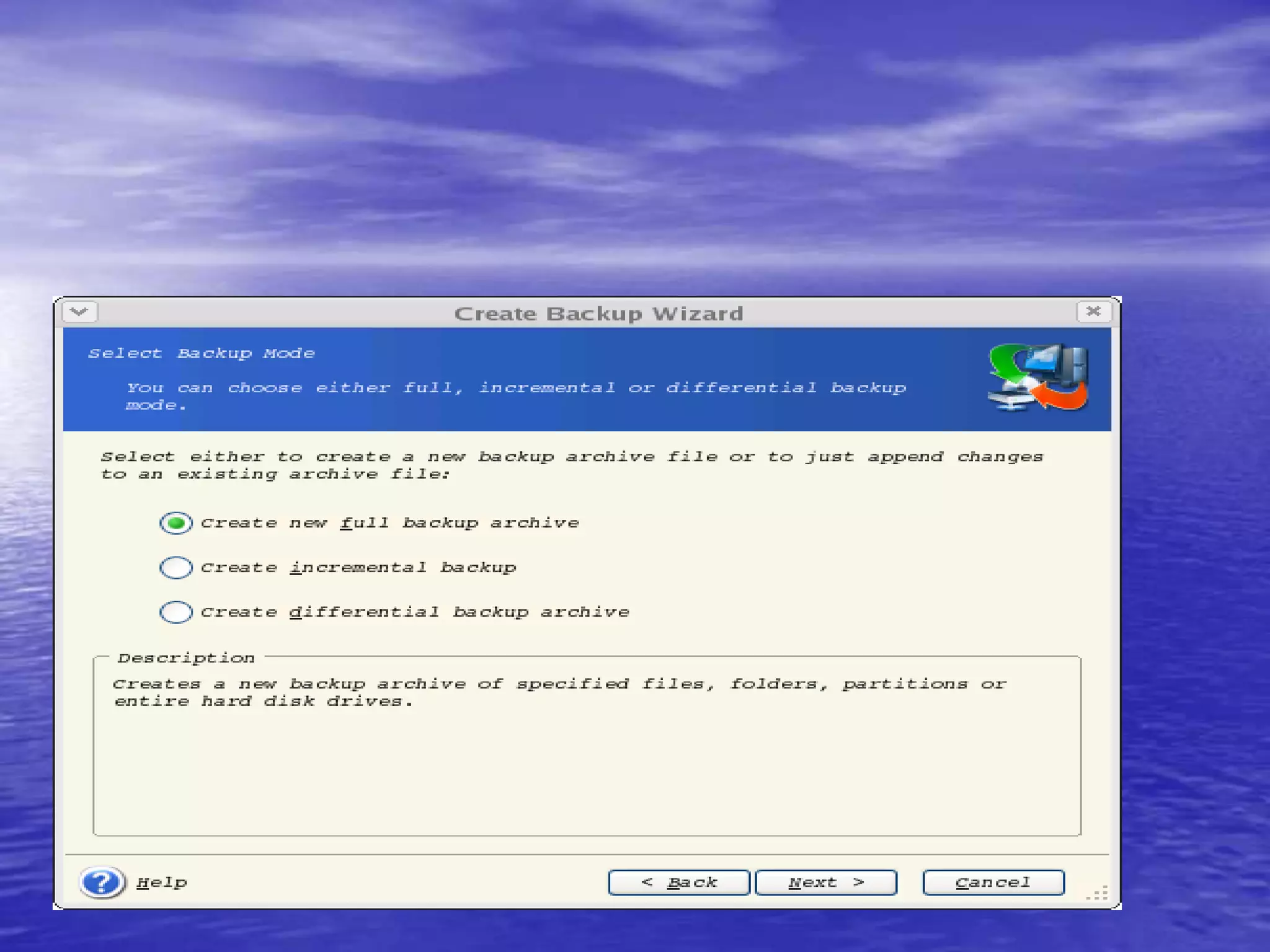
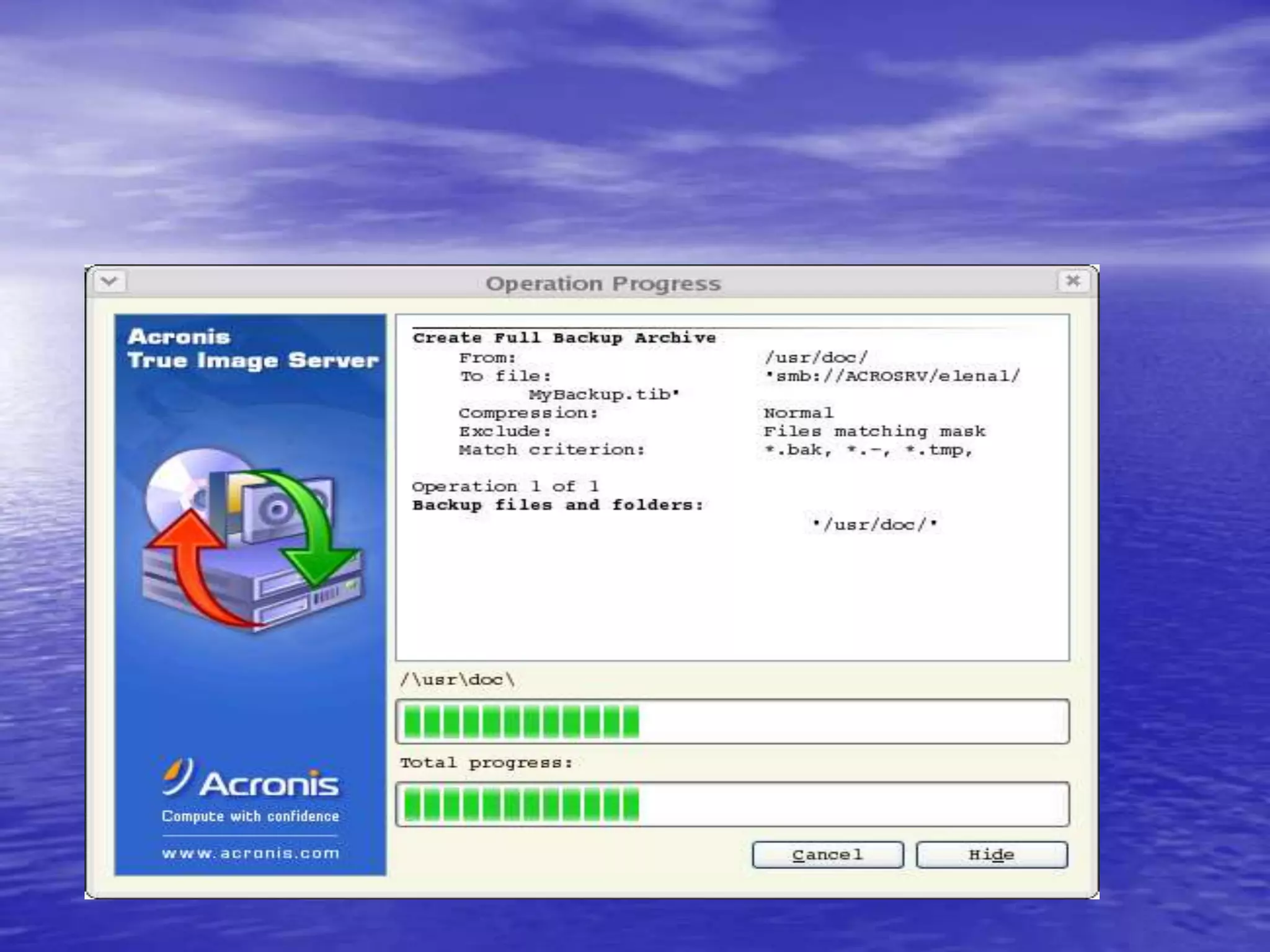
Backing up files and folders
(file backup)
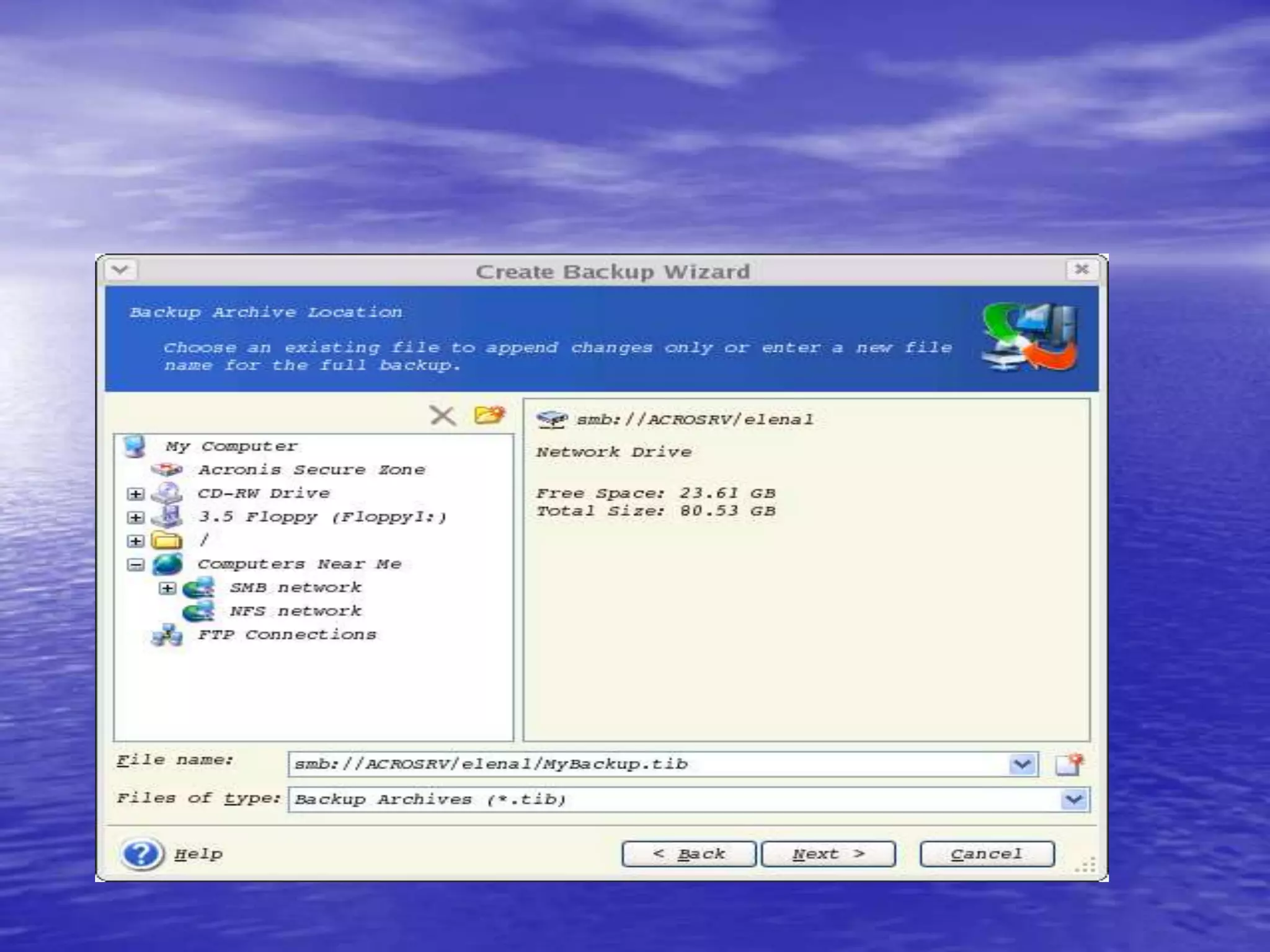
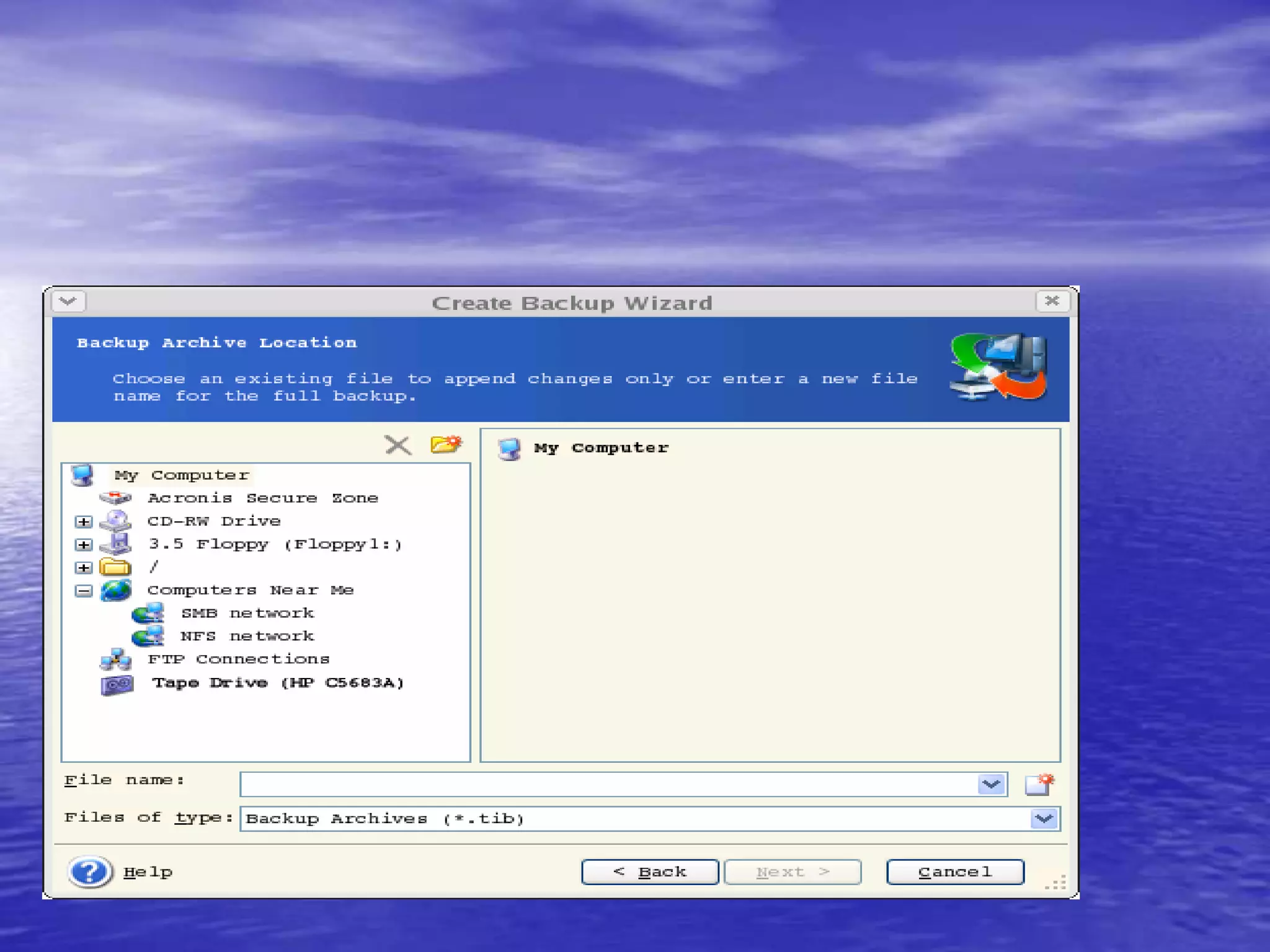
• If you are going to create a full backup,
type the file name in the File Name line,
or use the file name generator (a button
to the right of the line). If you select an
existing archive, it will be overwritten.
Thank you …

Backup and recovery

  • 1.
    Presentation on FileBackup By- Muskan soni. To- Mr. Devarshi Mehta sir.
  • 2.
    Outline • What isbackup • Backup strategy • Recovery procedures • Factors in recovery procedures • Backup purposes • Types of backup • Backup architecture and process • Backup topologies • Backup technology options • Features • Installation of Acronis
  • 3.
    What is aBackup? • Backup is an additional copy of data that can be used for restore and recovery purposes • This Backup copy can be created by: – Simply coping data (there can be one or more copies) – Mirroring data (the copy is always updated with whatever is written to the primary
  • 4.
    Backup Strategy A backupis put in place to avoid permanent data loss to ensure the integrity of stored data i.e. can get back to a previous version and build up the data correctly if current data found to be in error.
  • 5.
    Recovery Procedures • Abackup strategy needs a well documented and tested recovery procedure to ensure backup data is restored properly
  • 6.
    Factors in recoveryprocedure: • A well documented procedure that allocates roles and responsibilities to staff. • Availability of alternative hardware and accommodation if the originals have been destroyed. • Availability of original software such as the customised operating system and application programs! • That up-to-date backup data is readily available
  • 7.
    Backup purposes – DisasterRecovery • Restores production data to an operational state after disaster – Operational • Restore data in the event of data loss or logical corruptions that may occur during routine processing – Archival • Preserve transaction records, email, and other business work products for regulatory compliance
  • 8.
    Types of backups •Three basic types of backups: • Full backups • Differential backups • Incremental backups
  • 9.
    Full backups – fulland complete backup of entire system Full Backup Su Su Su Su Su
  • 10.
    Differential backups – storageof all files that have changed or been added since last full backup Su Su Su Su SuM T TW F S M T TW F S M T TW F S M T TW F S
  • 11.
    Restoring from DifferentialBackup Files 1, 2, 3 Monday Full Backup Cumulative Tuesday File 4 Cumulative Wednesday Files 4, 5 Cumulative Thursday Files 4, 5, 6 Files 1, 2, 3, 4, 5 Production Frida y
  • 12.
    Key Features ofDifferential backups – More files to be backed up, therefore it takes more time to backup and uses more storage space – Much faster restore because only the last full and the last cumulative backup must be applied
  • 13.
    Incremental backups • onlyarchives data that have been modified that day Su Su Su Su SuM T TW F S M T TW F S M T TW F S M T TW F S
  • 14.
    Incremental backup Files 1,2, 3 Monday Full Backup Incremental Tuesday File 4 Incremental Wednesday Updated File 3 Incremental Thursday File 5 Files 1, 2, 3, 4, 5 Production Frida y
  • 15.
    Key Features ofIncremental backups – Files that have changed since the last backup are backed up – Fewest amount of files to be backed up, therefore faster backup and less
  • 16.
    • Backup client –Sends backup data to backup server or storage node • Backup server – Manages backup operations and maintains backup catalog • Storage node – Responsible for writing data to backup device Backup Architecture and Process
  • 17.
    Backup Architecture andProcess Application Server/ Backup Client Backup Data Backup Server/ Storage Node Tape Library
  • 18.
    Backup Operation Application Serverand Backup Clients 1 2 7 3b 4 3a 6 5 Backup Server Storage Node Backup Device
  • 19.
    Backup Operation • Startthe scheduled backup process • Backup data retrieves backup related information from backup catalog • Backup server instructs storage node to local backup media in backup device • Backup server instruct backup clients to send its metadata to the backup server and data to be backup to storage mode. • Backup clients send data to storage node • Storage node sends data to backup device • Storage node sends media information to backup servers • Backup server update and records the status
  • 20.
    Restore Operation Application Serverand Backup Clients 1 2 7 3b 4 3a 6 5 Backup Server Storage Node Backup Device
  • 21.
    Restore Operation • Backupserver scans backup catalog to identify the data to be restore and the client that will receive data. • Backup servers instructs storage node to load backup media in backup device. • Data is read and send to backup client. • Storage node sends restore metadata to backup server. • Backup server updates catalog.
  • 22.
    Backup Topologies • Thereare 3 basic backup topologies: – Direct Attached Based Backup – LAN Based Backup – SAN Based Backup
  • 23.
    Direct Attached Backups BackupServer Metadata LAN Application Server and Backup Client and Storage Node Data Backup Device
  • 24.
    LAN Based Backups ApplicationServer and Backup Client LAN Data Backup Server Backup DeviceStorage Node
  • 25.
    SAN Based Backups(LAN Free) Metadata LAN FC SAN Data Backup Server Application Server and Backup Client Storage Node Backup Device
  • 26.
    Backup Technology options •Backup to Tape  Physical Tape library • Backup to tape
  • 27.
    Backup to Tape •Traditional destination for backup • Low cost option • Sequential / Linear Access • Multiple streaming – Backup streams from multiple clients to a single backup device
  • 28.
    Backup to Tape Tape Datafrom Stream 1 Data from Stream 2 Data from Stream 3
  • 29.
    Tape Limitations • Reliability •Sequential Access • Cannot be accessed by multiple host simultaneously • Control environment for tape storage • Wear and tear of tape
  • 30.
    Backup to Disk •Ease of implementation • Fast access • More reliable • Random access • Multiple host access • Enhanced overall back and recovery performance
  • 31.
    New Features • Filebackup and restore Simple and automatic protection Complete PC™ backup and restore Block-level image Entire computer Server backup Files, folders, disks, common workloads
  • 32.
    Backing up filesand folders (file backup)
  • 33.
    • If youare going to create a full backup, type the file name in the File Name line, or use the file name generator (a button to the right of the line). If you select an existing archive, it will be overwritten.
  • 42.