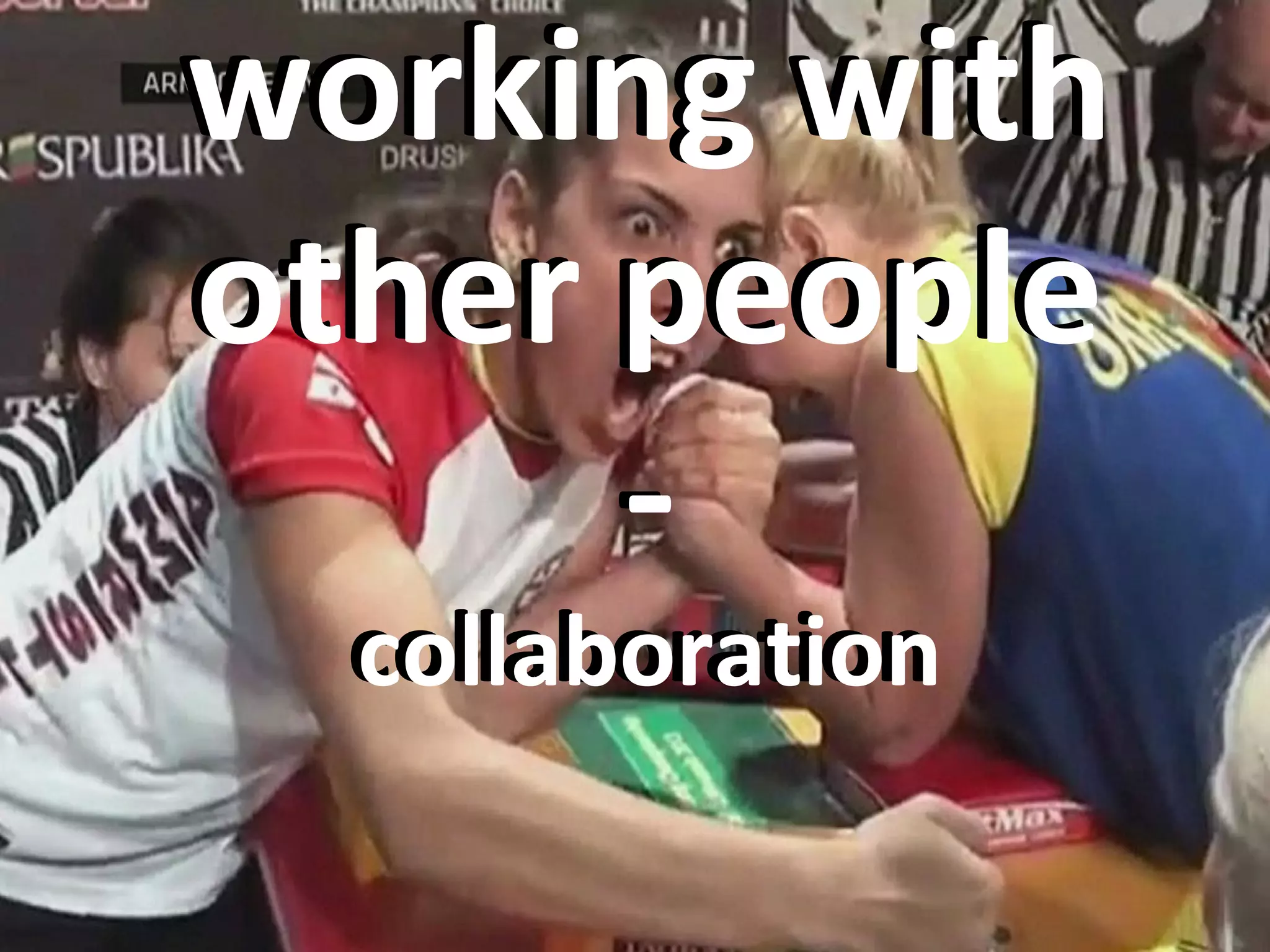
working with
other people
-
collaboration
working with
other people
-
collaboration
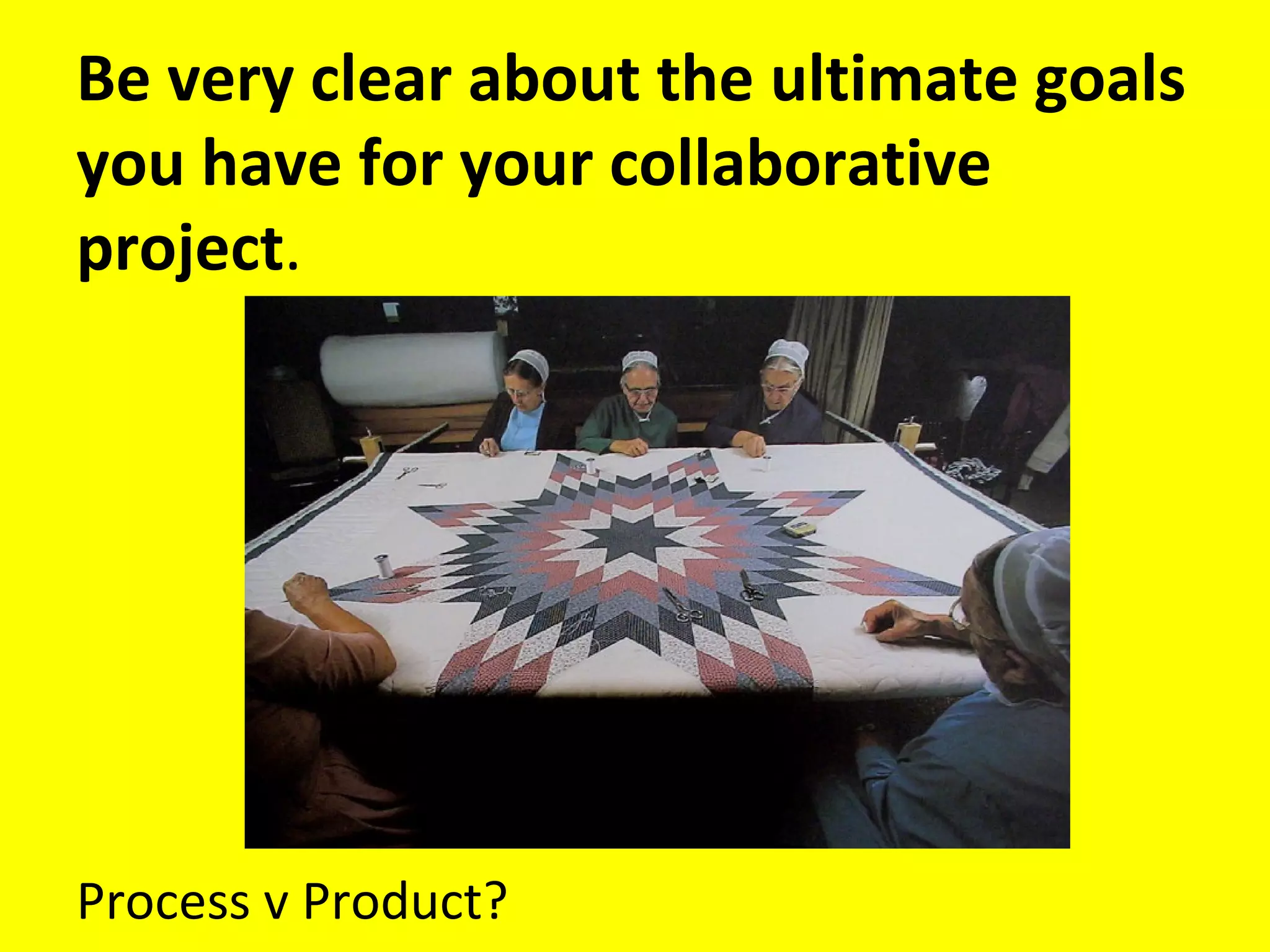
Be very clear about the ultimate goals
you have for your collaborative
project.
Process v Product?
Be very clear about the ultimate goals
you have for your collaborative
project.
When does it need to be finished?
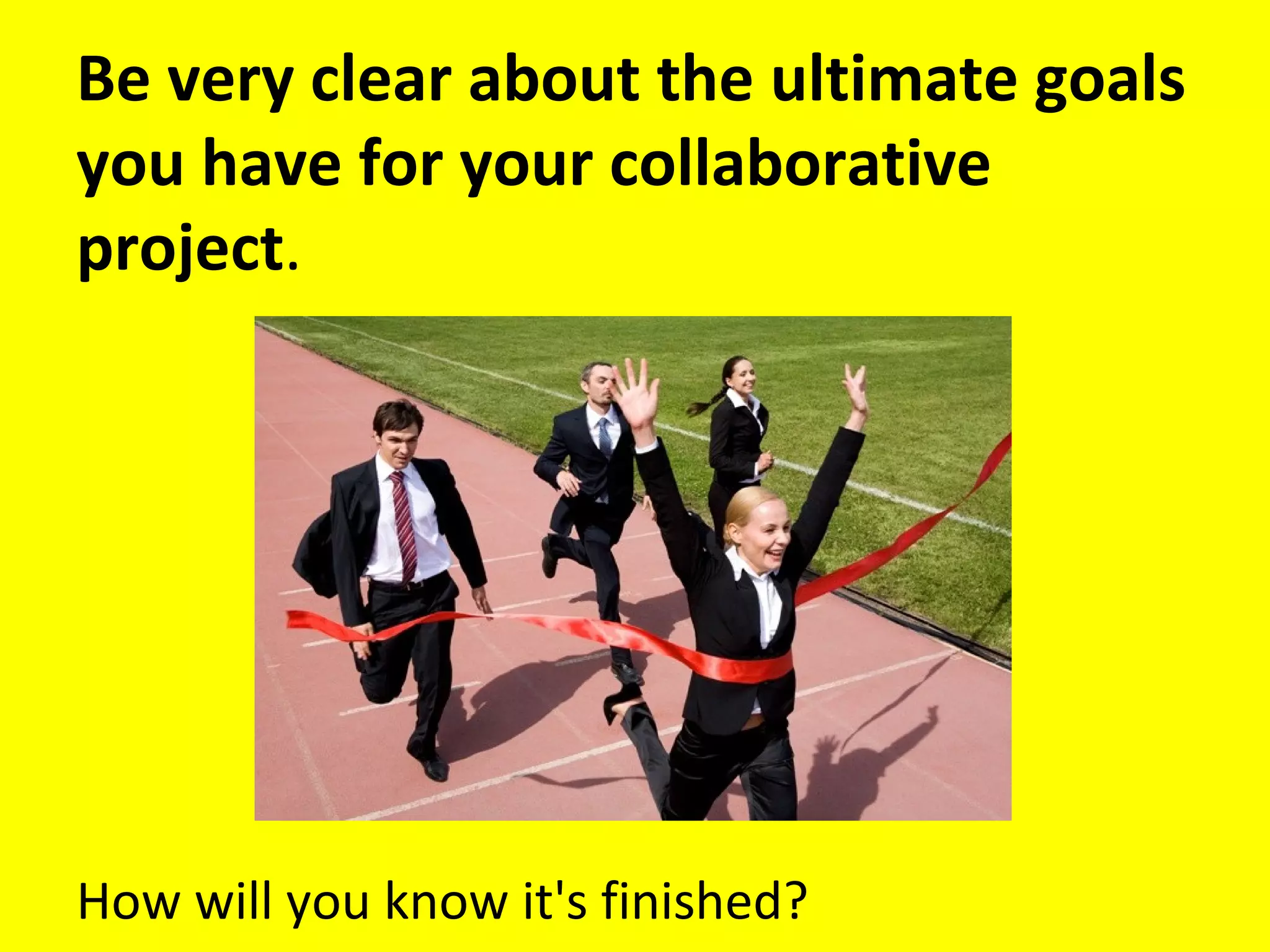
Be very clear about the ultimate goals
you have for your collaborative
project.
How will you know it's finished?
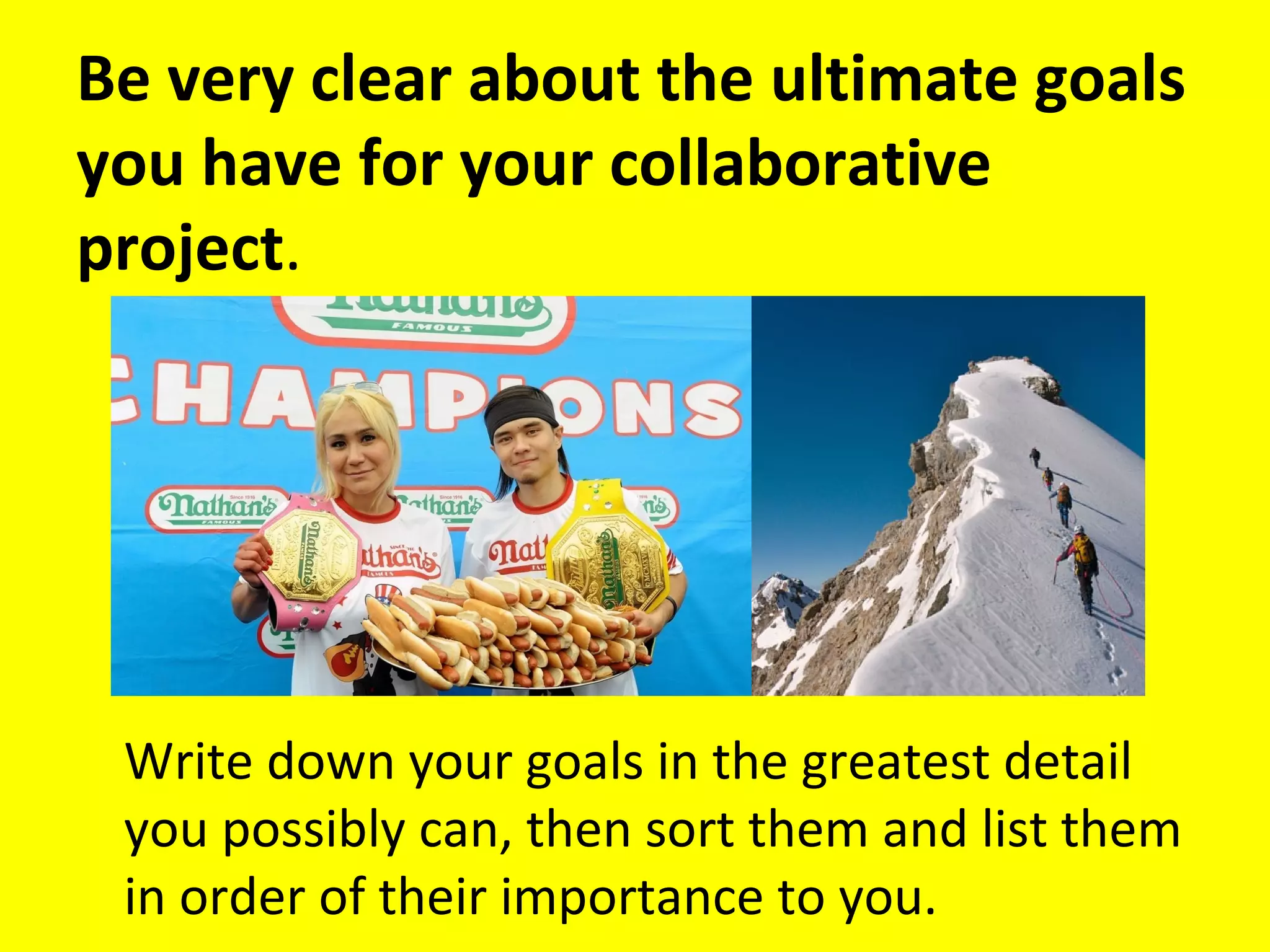
Be very clear about the ultimate goals
you have for your collaborative
project.
Write down your goals in the greatest detail
you possibly can, then sort them and list them
in order of their importance to you.
Be very clear about the process goals
you have for your project.
How will you and the (other) people interact?
Be very clear about the process goals
you have for your project.
Systems for decision making
Be very clear about the process goals
you have for your project.
Will there be a single leader? Chosen how?
Will you skip the leader idea, and make
decisions by consensus, or by majority rule, or
another way?
Communicate - Talk.
• Share
• Consult
• Open
• Responsibility
• Ownership
Building a team.
• Why be a team?
• What is the scope of project?
• Consider the aims / outcomes.
Building a team.
• Consider your team.
• What are your individual skills?
• What is your individual interest in the project?
Keep a track of your goals at all times.
• Ask - why did you decide to do this?
• Make and refer to lists daily while the project
is ongoing.
Do you sacrifice some of your
lower-priority goals in order to
achieve the higher-priority ones.
"I wanted this to be a mauve-y colour, and it's
too lilac.“
V
"to finish this project as great friends,"
workshop
rules
a starting point from what you know
1 - on your own visualise a structure.
2 – as a group you now have to create
one structure.
3 – to do this either decide who has the
best idea and make that
or
combine many ideas to make one.
4 – You have 20 minutes
rules
a starting point from what you know
intervention
oblique strategies
http://stoney.sb.org/eno/oblique.html
intervention
- using the instruction
5 - create a second structure that references
the first
- how do you choose what to do?
- which characteristics do you develop?
You have 10 minutes
intervention
- using the instruction
6 - now create a set/family with a minimum of 5 in the
collection.
- each individual element has to have some form of visual
connection but also be seen as separate objects
- the first two can be part of the set but you can make more if
you feel that they do not work as a group.
You have 15 minutes
intervention
- using the instruction
7 - now create a presentation to explain your work
You have 10 minutes
consider
- ideas around choice
- the rules you have created
- how do you feel about intuition?
- what was your role in the process?
- what you might take away from the process?
- how, if at all it might inform your own practice.

Ba2 collaboration

  • 1.
    working with other people - collaboration workingwith other people - collaboration
  • 2.
    Be very clearabout the ultimate goals you have for your collaborative project. Process v Product?
  • 3.
    Be very clearabout the ultimate goals you have for your collaborative project. When does it need to be finished?
  • 4.
    Be very clearabout the ultimate goals you have for your collaborative project. How will you know it's finished?
  • 5.
    Be very clearabout the ultimate goals you have for your collaborative project. Write down your goals in the greatest detail you possibly can, then sort them and list them in order of their importance to you.
  • 6.
    Be very clearabout the process goals you have for your project. How will you and the (other) people interact?
  • 7.
    Be very clearabout the process goals you have for your project. Systems for decision making
  • 8.
    Be very clearabout the process goals you have for your project. Will there be a single leader? Chosen how? Will you skip the leader idea, and make decisions by consensus, or by majority rule, or another way?
  • 9.
    Communicate - Talk. •Share • Consult • Open • Responsibility • Ownership
  • 10.
    Building a team. •Why be a team? • What is the scope of project? • Consider the aims / outcomes.
  • 11.
    Building a team. •Consider your team. • What are your individual skills? • What is your individual interest in the project?
  • 12.
    Keep a trackof your goals at all times. • Ask - why did you decide to do this? • Make and refer to lists daily while the project is ongoing.
  • 13.
    Do you sacrificesome of your lower-priority goals in order to achieve the higher-priority ones. "I wanted this to be a mauve-y colour, and it's too lilac.“ V "to finish this project as great friends,"
  • 14.
  • 15.
    rules a starting pointfrom what you know 1 - on your own visualise a structure. 2 – as a group you now have to create one structure. 3 – to do this either decide who has the best idea and make that or combine many ideas to make one.
  • 16.
    4 – Youhave 20 minutes rules a starting point from what you know
  • 17.
  • 18.
  • 19.
    - using theinstruction 5 - create a second structure that references the first - how do you choose what to do? - which characteristics do you develop? You have 10 minutes
  • 20.
  • 21.
    - using theinstruction 6 - now create a set/family with a minimum of 5 in the collection. - each individual element has to have some form of visual connection but also be seen as separate objects - the first two can be part of the set but you can make more if you feel that they do not work as a group. You have 15 minutes
  • 22.
  • 23.
    - using theinstruction 7 - now create a presentation to explain your work You have 10 minutes
  • 24.
    consider - ideas aroundchoice - the rules you have created - how do you feel about intuition? - what was your role in the process? - what you might take away from the process? - how, if at all it might inform your own practice.