


Marcos Dias de Assunção , Jean-Patrick Gelas, Laurent Lefèvre and Anne-Cécile Orgerie INRIA RESO, Université de Lyon École Normale Supérieure 46, allée d’Italie 69364 Lyon Cedex 07 - France  Grenoble, June 2011
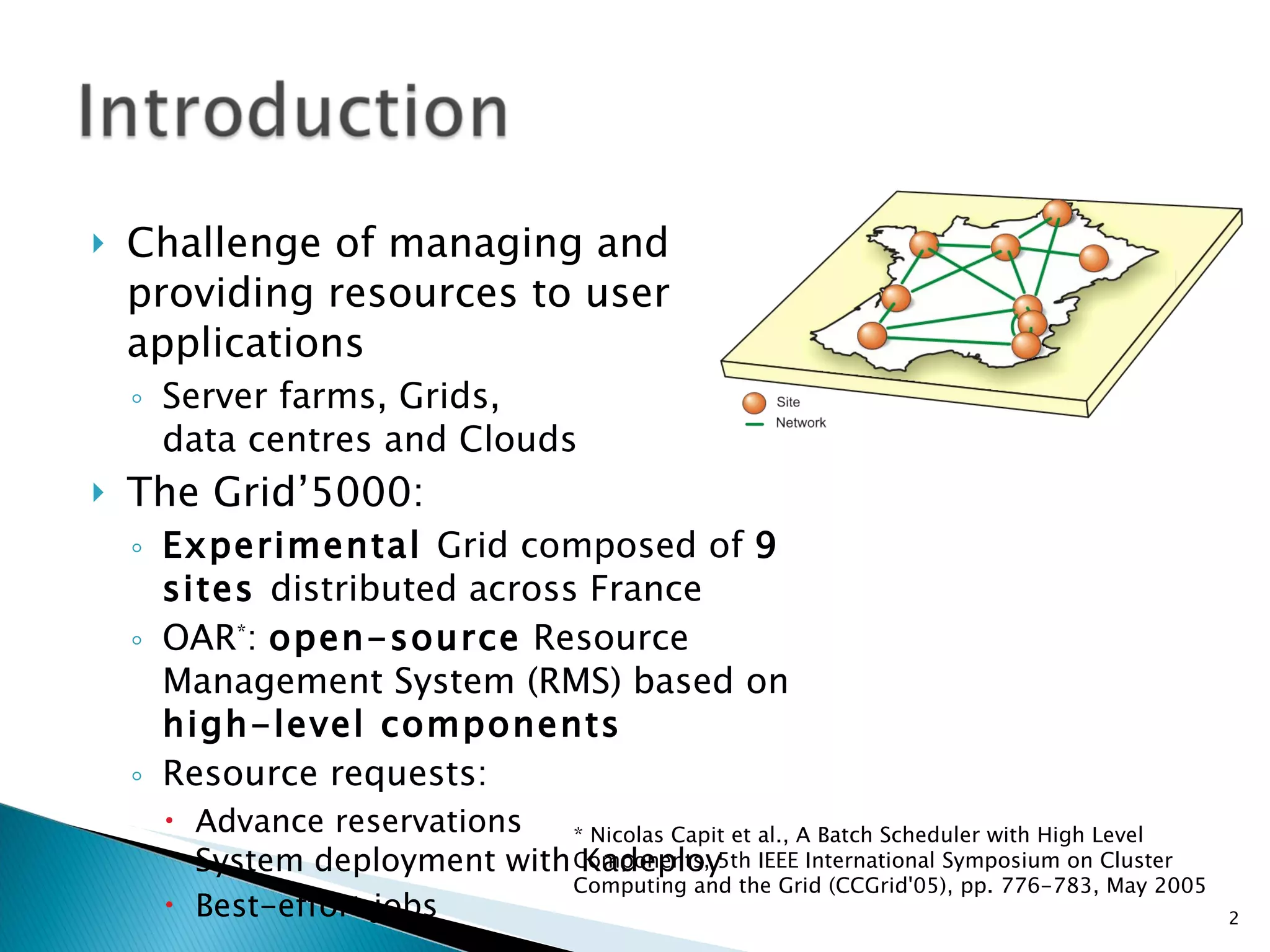
Challenge of managing and providing resources to user applications Server farms, Grids,  data centres and Clouds The Grid’5000: Experimental  Grid composed of  9 sites  distributed across France OAR * :  open-source  Resource Management System (RMS) based on  high-level components Resource requests:  Advance reservations System deployment with Kadeploy  Best-effort jobs * Nicolas Capit et al., A Batch Scheduler with High Level Components, 5th IEEE International Symposium on Cluster Computing and the Grid (CCGrid'05), pp. 776-783, May 2005
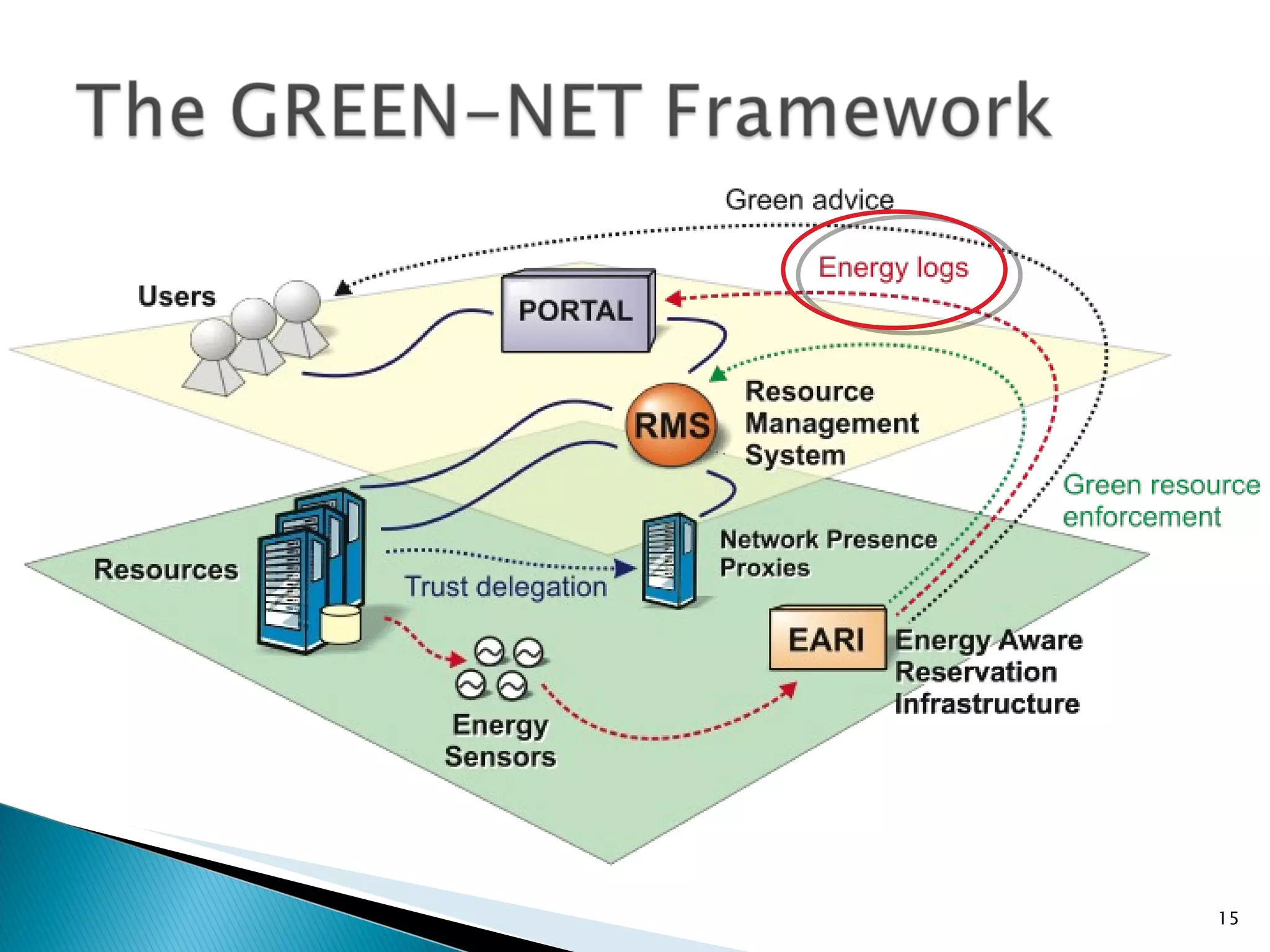
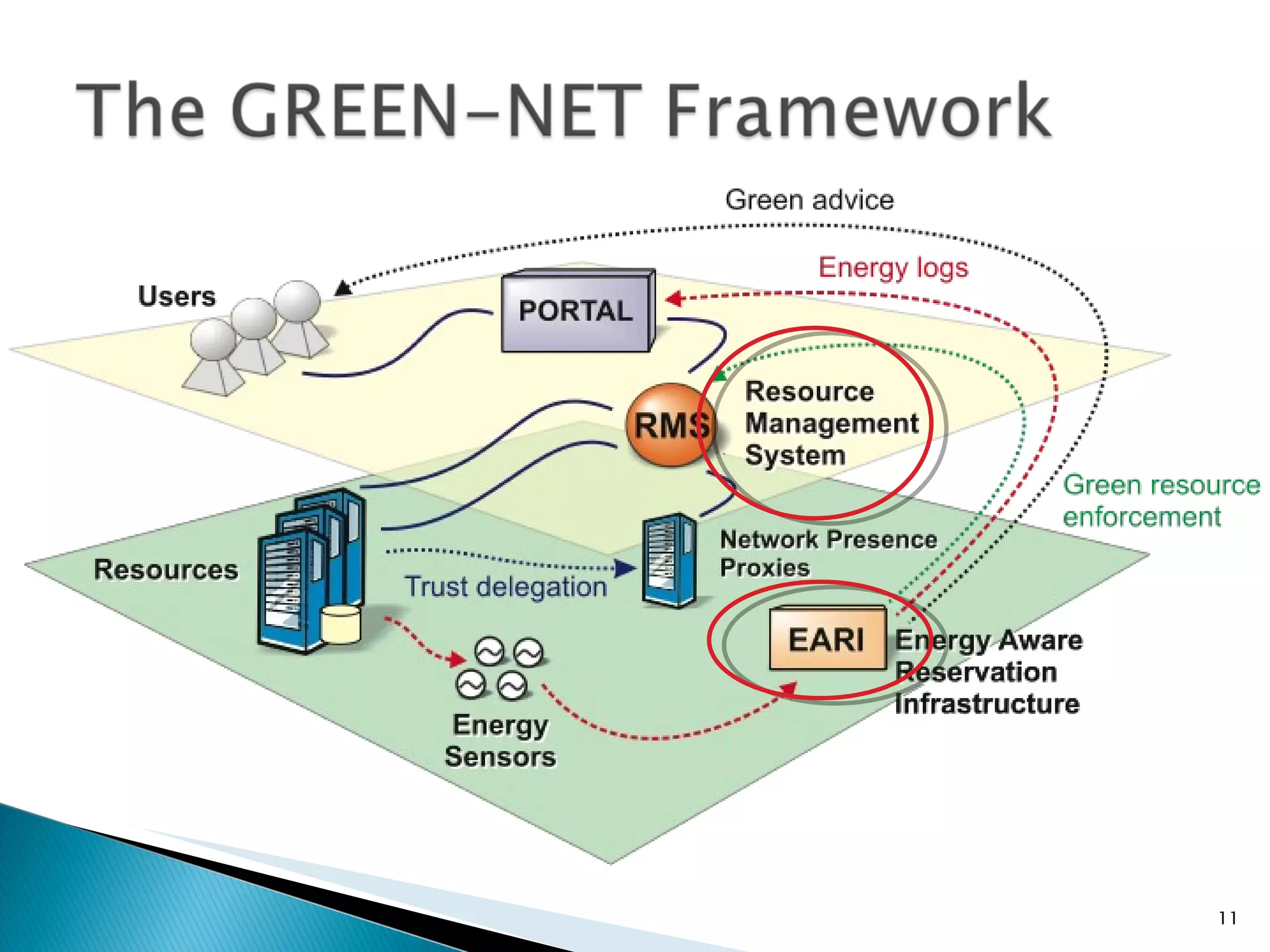
Energy  consumption  of IT CO 2  footprint of Grids and Clouds Existing hardware, software and cooling solutions Evaluation  of proposed solutions GREEN-NET approach* Informing the users Involving the users Autonomic energy aware support * G. Costa et al., Multi-Facet Approach to Reduce Energy Consumption in Clouds and Grids: The GREEN-NET Framework. In 1st Int. Conf. on Energy Efficient Computing and Networking, Passau, 2010.
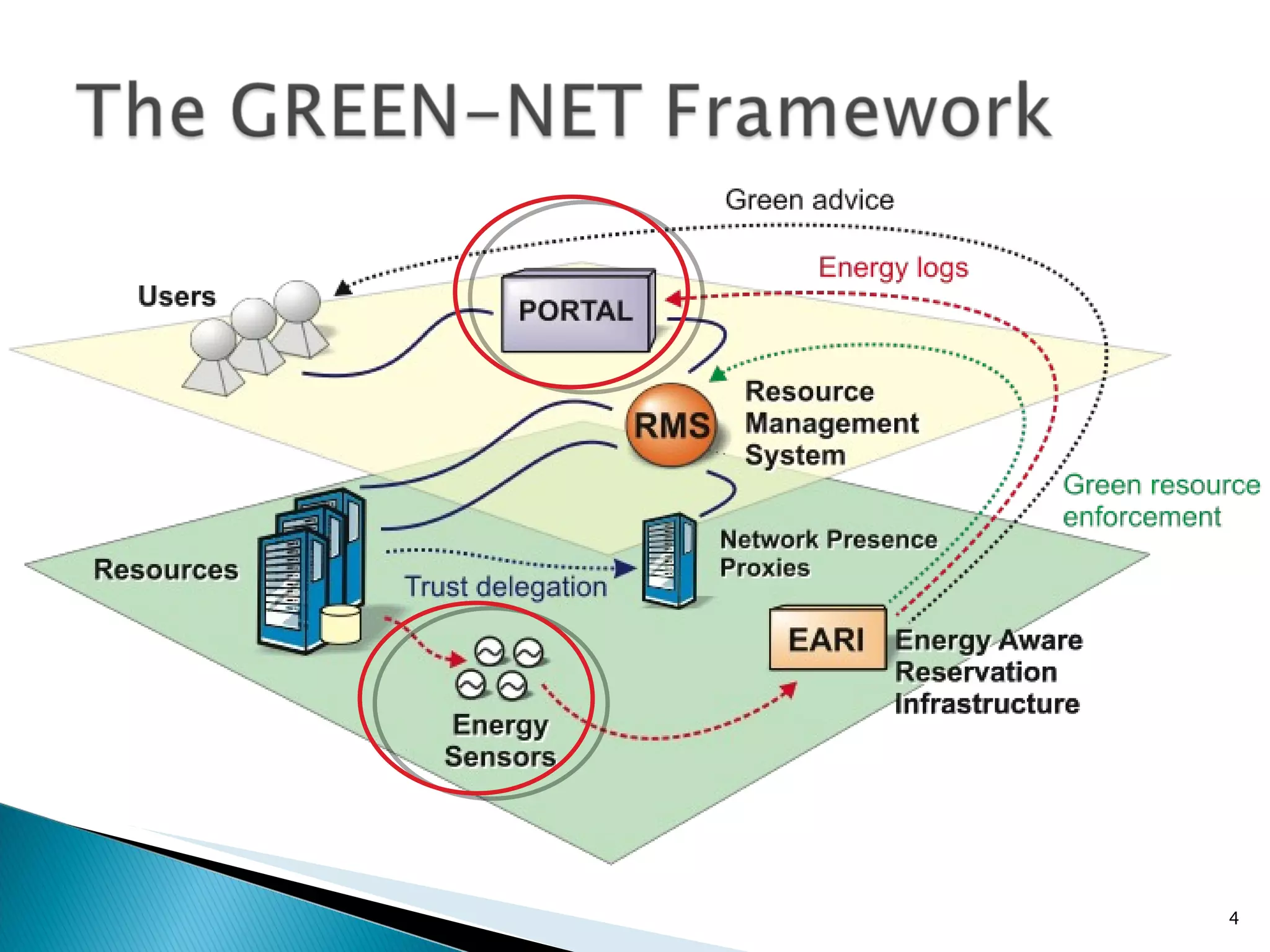
The  energy sensor infrastructure : Users’ awareness  of energy consumption Improving the  design of user applications Energy-aware  Grid middleware Power management  policies R epository  of energy consumption data Sensor heterogeneity Power meter HAMEG HM8115-2 Omegawatt box Library for  interfacing  with  energy sensors
Omegawatt box 6 or 48 ports, communication via serial port Deployed in three sites of Grid’5000  Lyon, T o ulouse and Grenoble Client-side  applications to  obtain  and  store  the energy consumption data * M. D. Assunção  et al.  The Green Grid'5000: Instrumenting and Using a Grid with Energy Sensors, 5th International Workshop on Distributed Cooperative Laboratories: Instrumenting the Grid, 2010
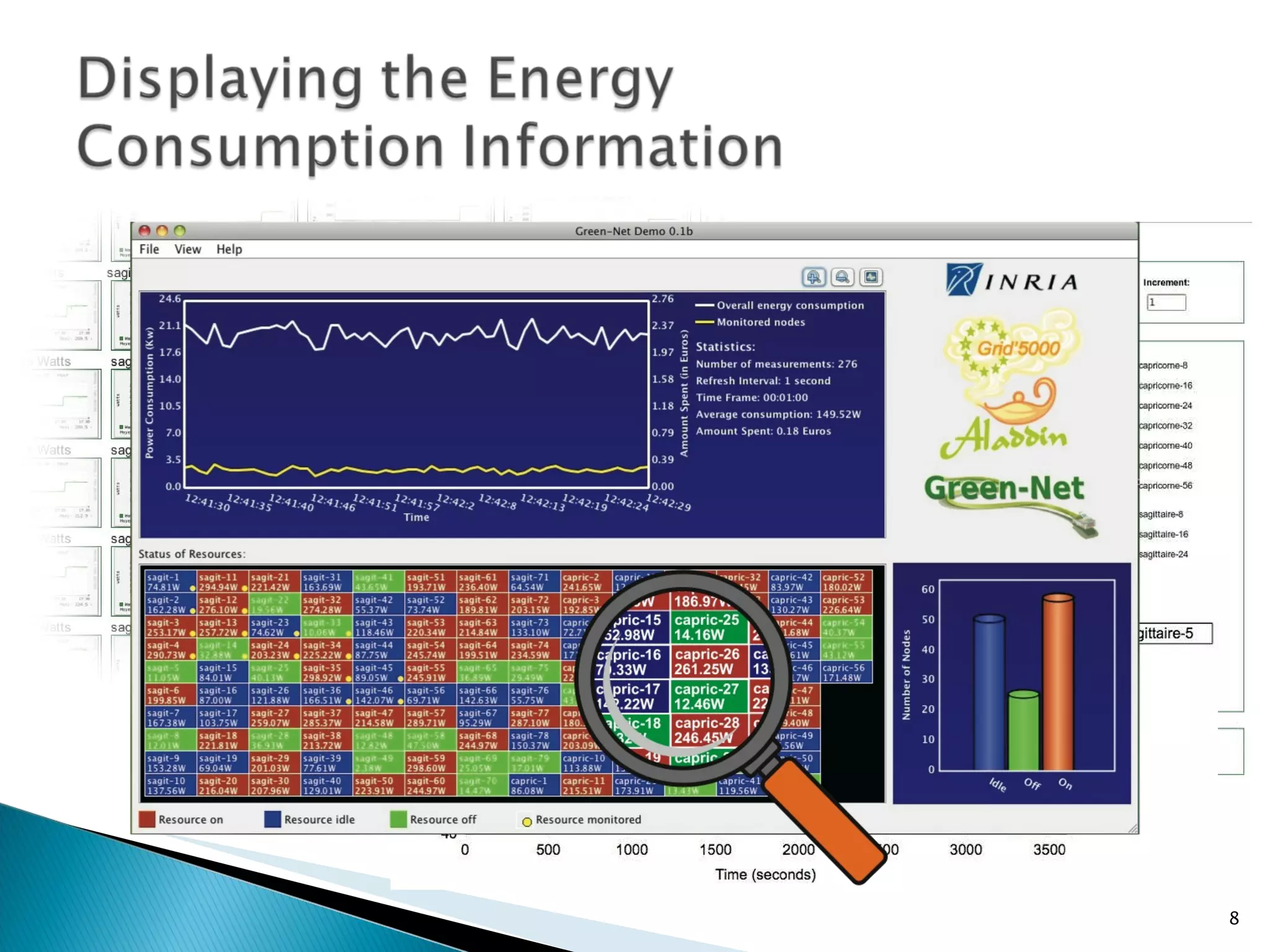
Periodicity  of  energy measurements : Administrators ’ requirements Performance and energy consumption of  applications Grid  middleware  designers One measurement per  second  for each equipment Data storage: Raw data (text files) Last values (text files in memory)  Round-robin databases * * RRD, http://oss.oetiker.ch/rrdtool
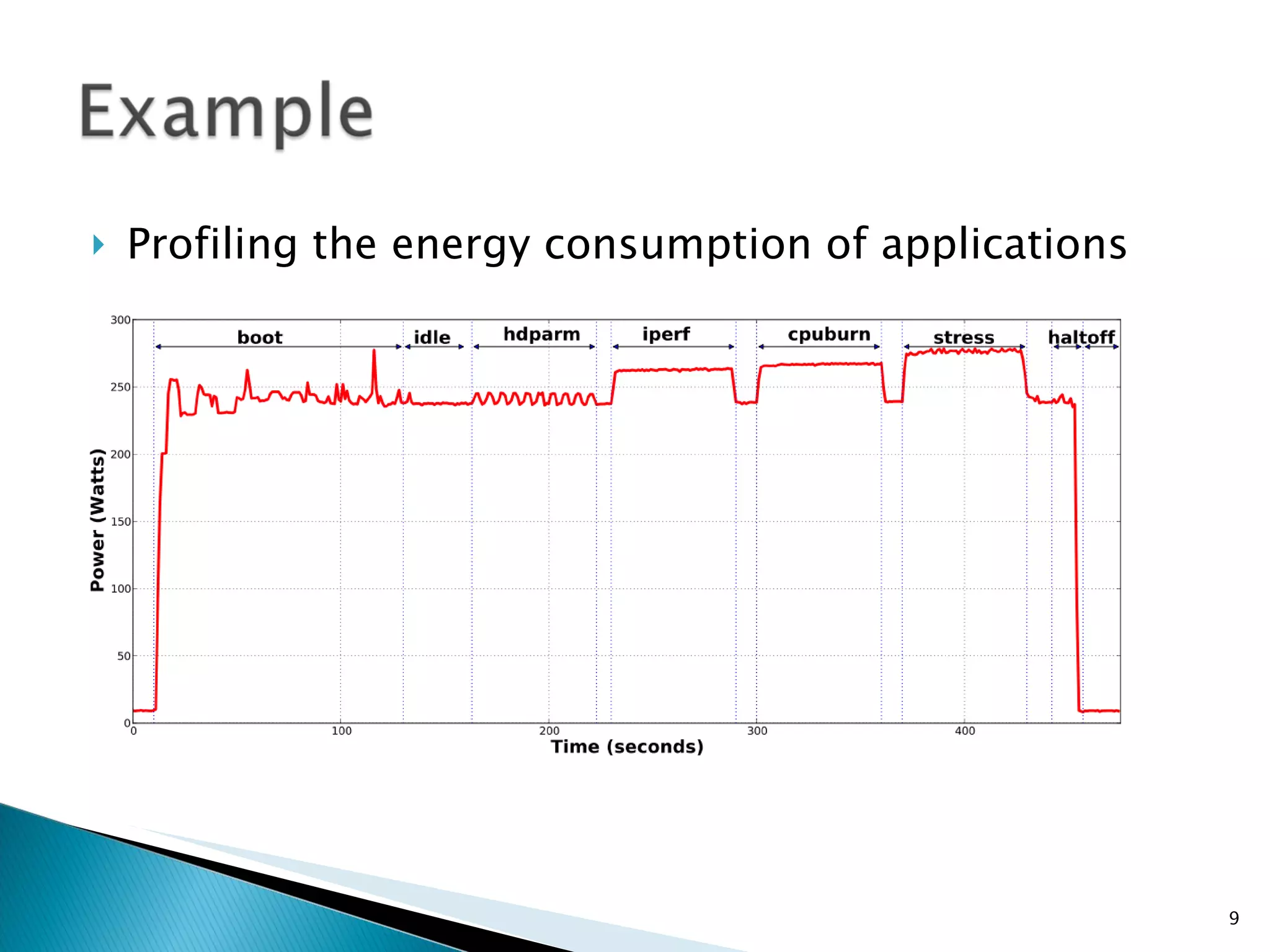
Profiling the energy consumption of applications
Next reservation R e  = (l e , n e , t e ) Method 1 : At time t, the estimated start time of R e  is the average of the arrival of reservations after time of the day t on: T he two previous days The same weekday of the previous week i.e. t e  = 1/3 [t t,j-1  + t t,j-2  + t t,j-7 ] + t_feedback Method 2 : Average of characteristics of 5 previous reservations Logs of advance reservation requests Length or duration Number of nodes Start time
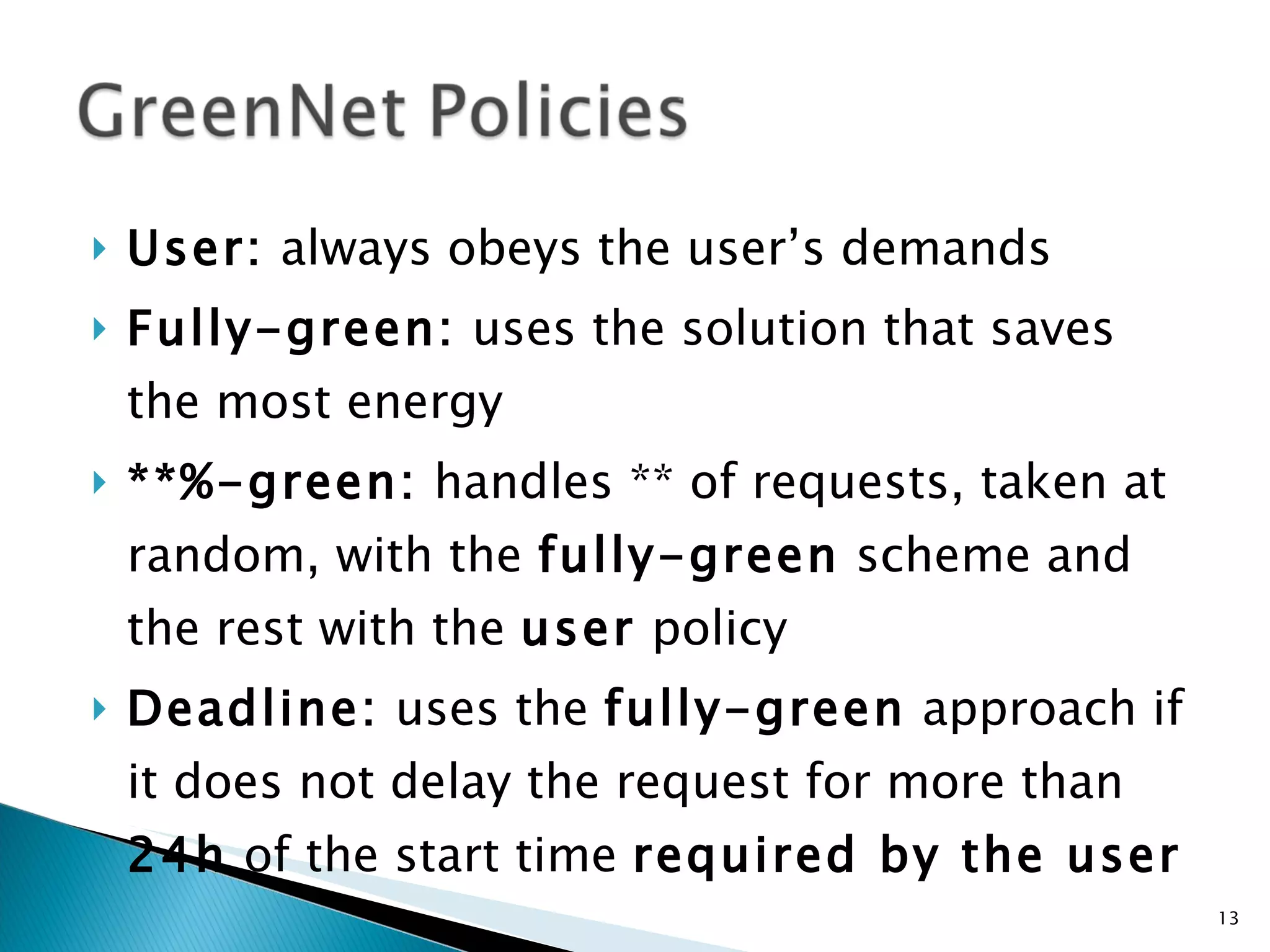
U ser:  always obeys the user’s demands F ully-green:  uses the solution that saves the most energy **%-green:  handles ** of requests, taken at random, with the  fully-green  scheme and the rest with the  user  policy D eadline:  uses the  fully-green  approach if it does not delay the request for more than  24h  of the start time  required by the user
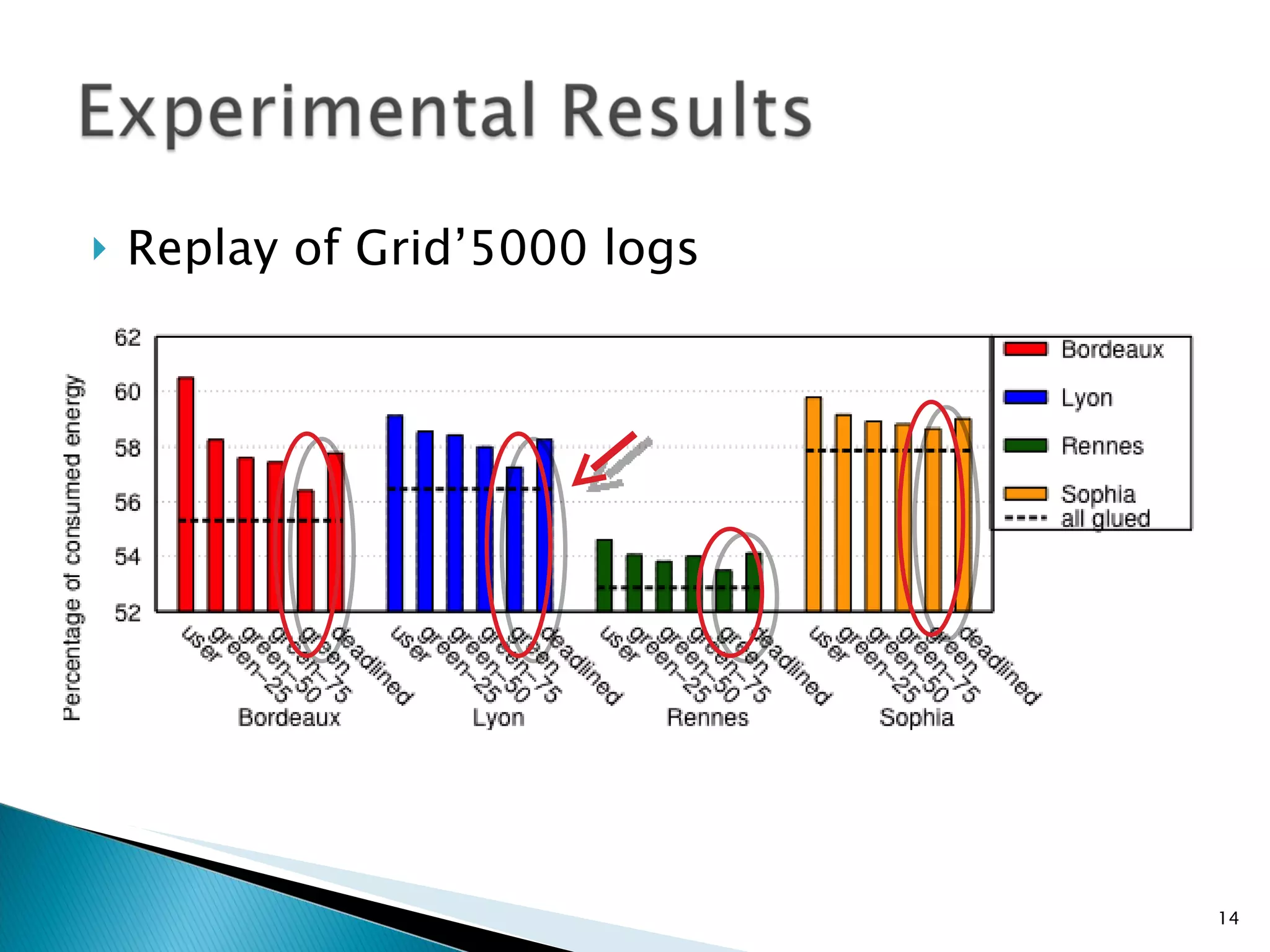
Replay of Grid’5000 logs
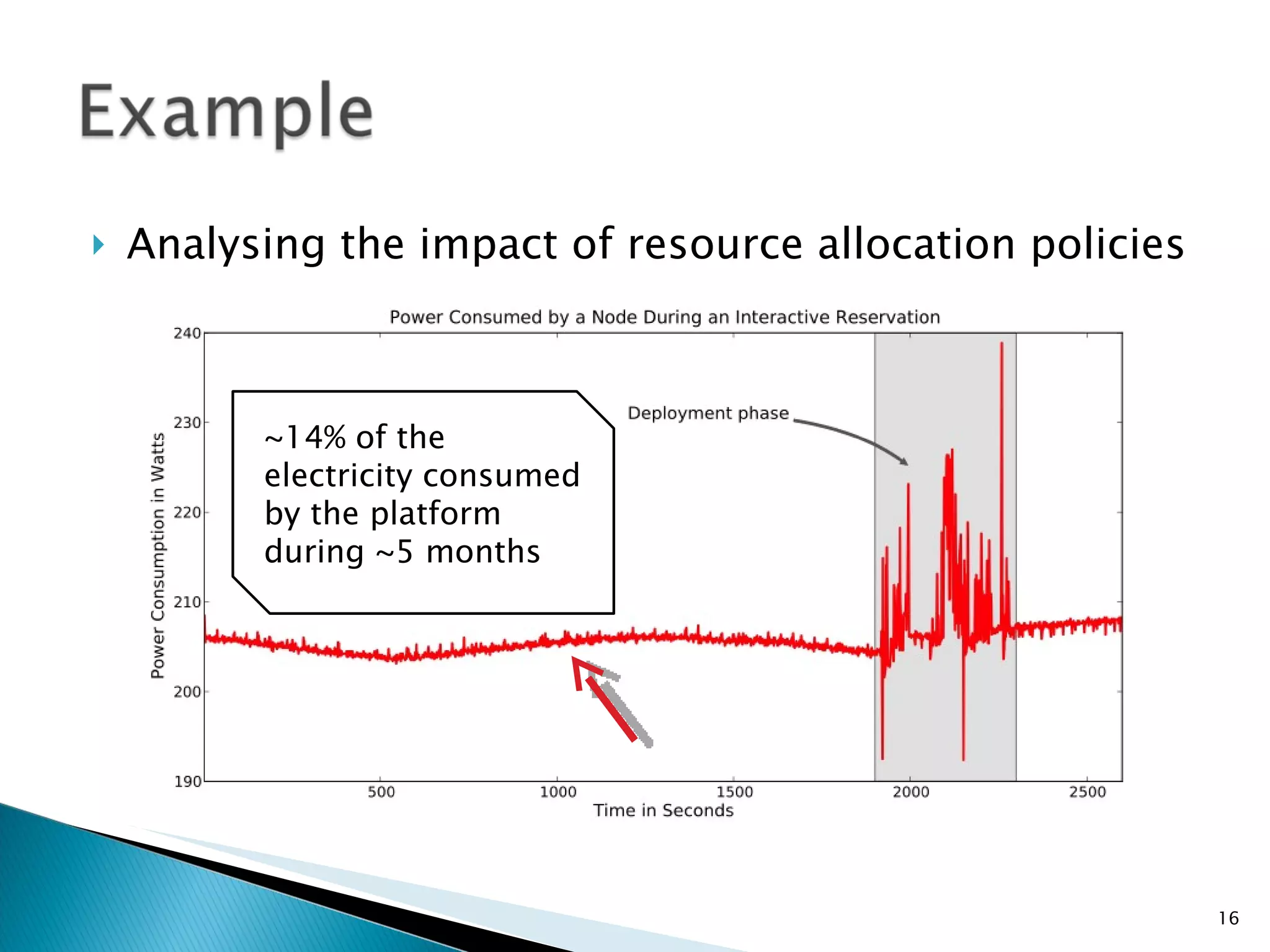
Analysing the impact of resource allocation policies ~14% of the electricity consumed by the platform during ~5 months
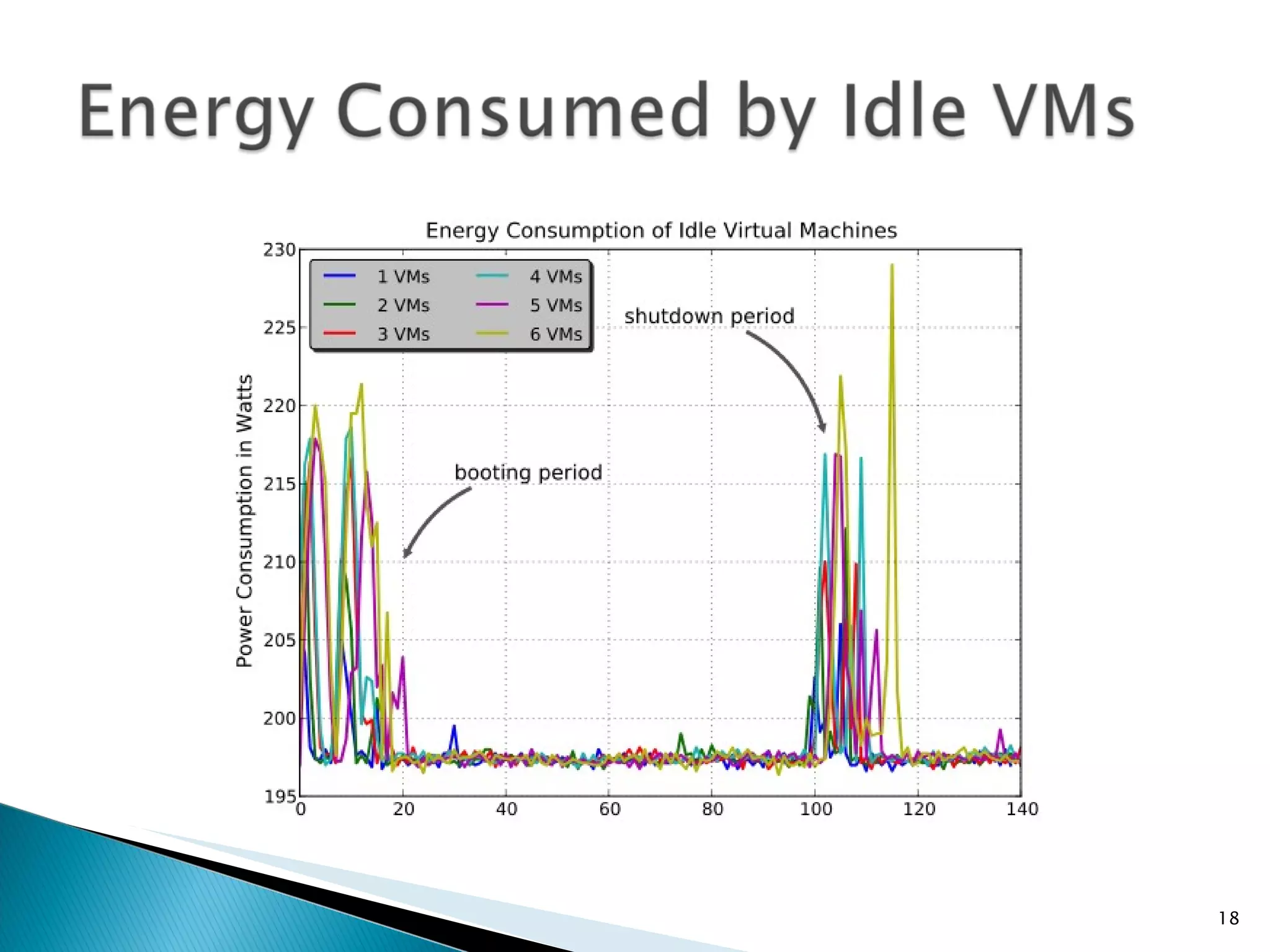
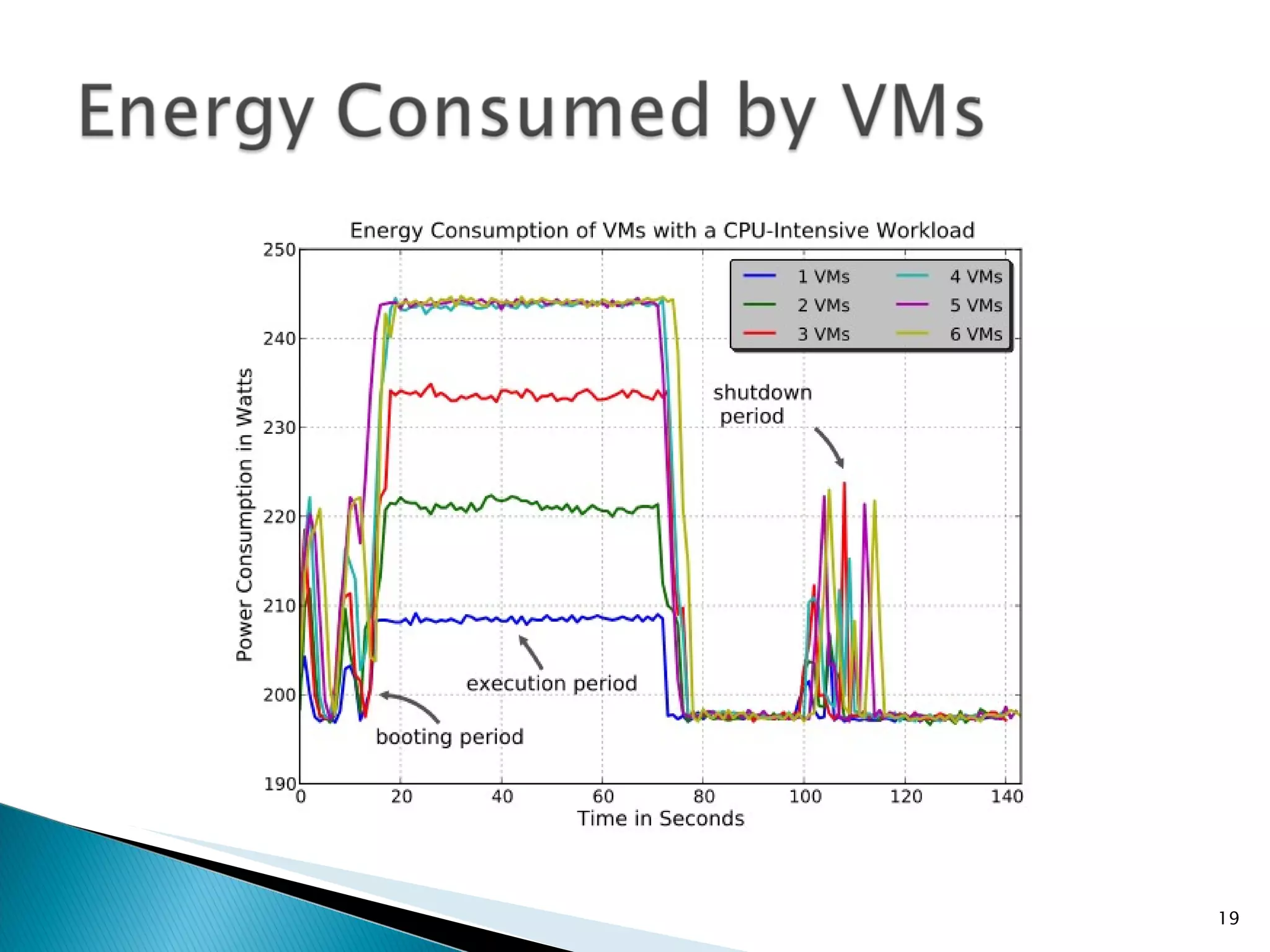
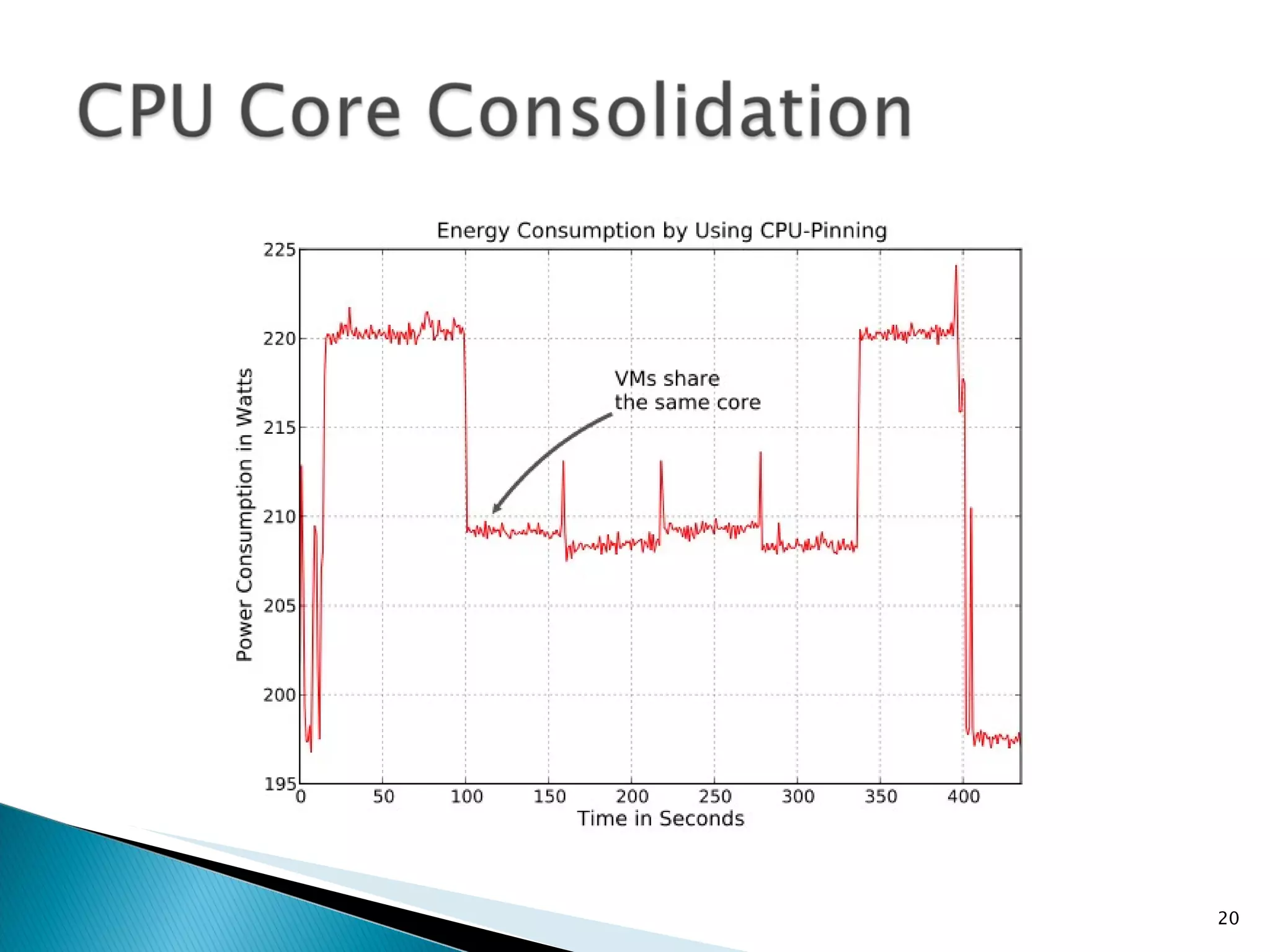
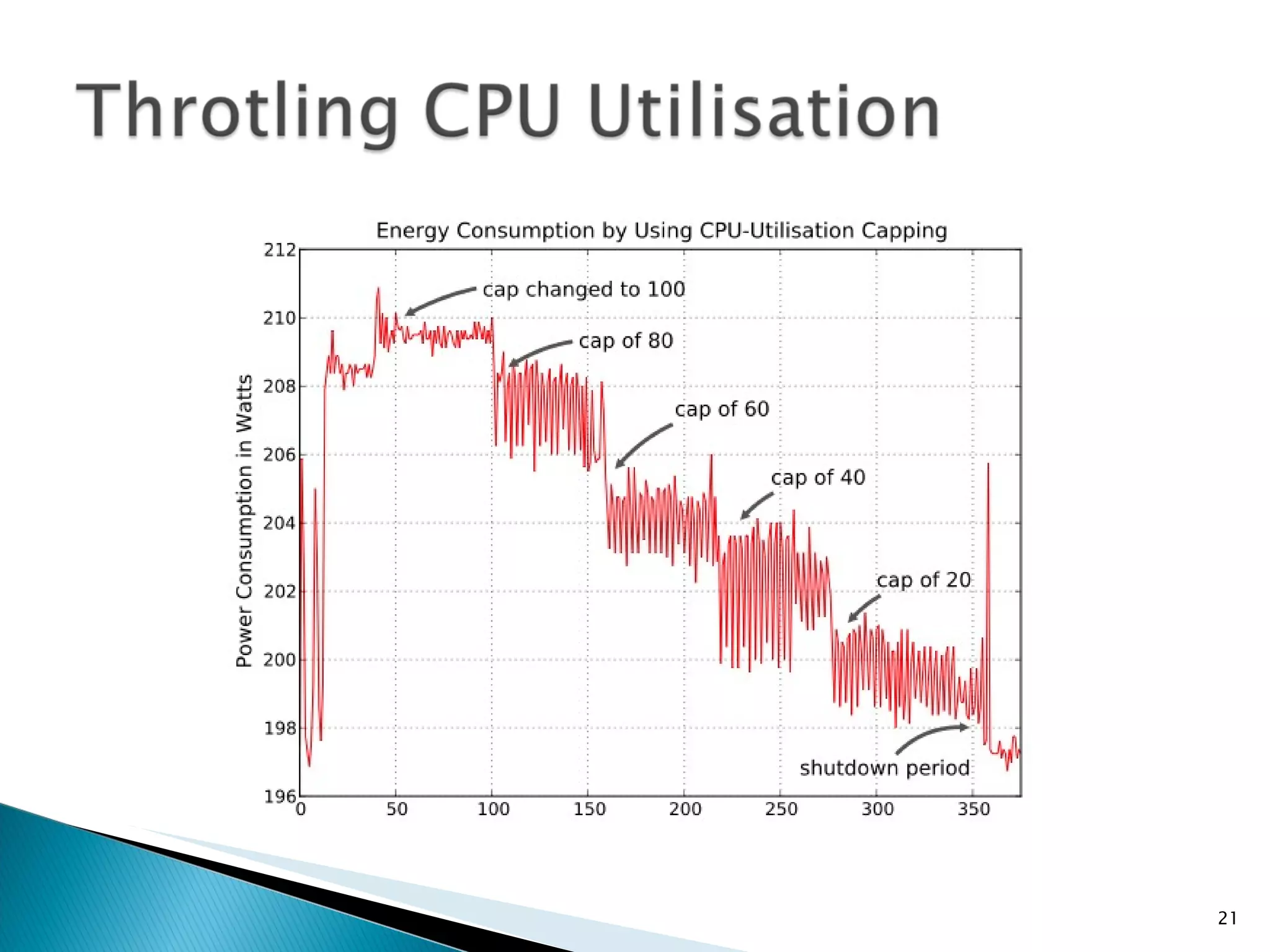
HP Proliant G2 servers 2.2GHz, 2 duo core CPUs per node Xen open source 3.4.1 Workload  cpuburn * Anne-Cécile Orgerie, Marcos Dias de Assunção and Laurent Lefèvre, Energy Aware Clouds. Grids, Clouds and Virtualization, Springer-Verlag London Ltd, ISBN: 978-0-857-29048-9, Sep. 2010
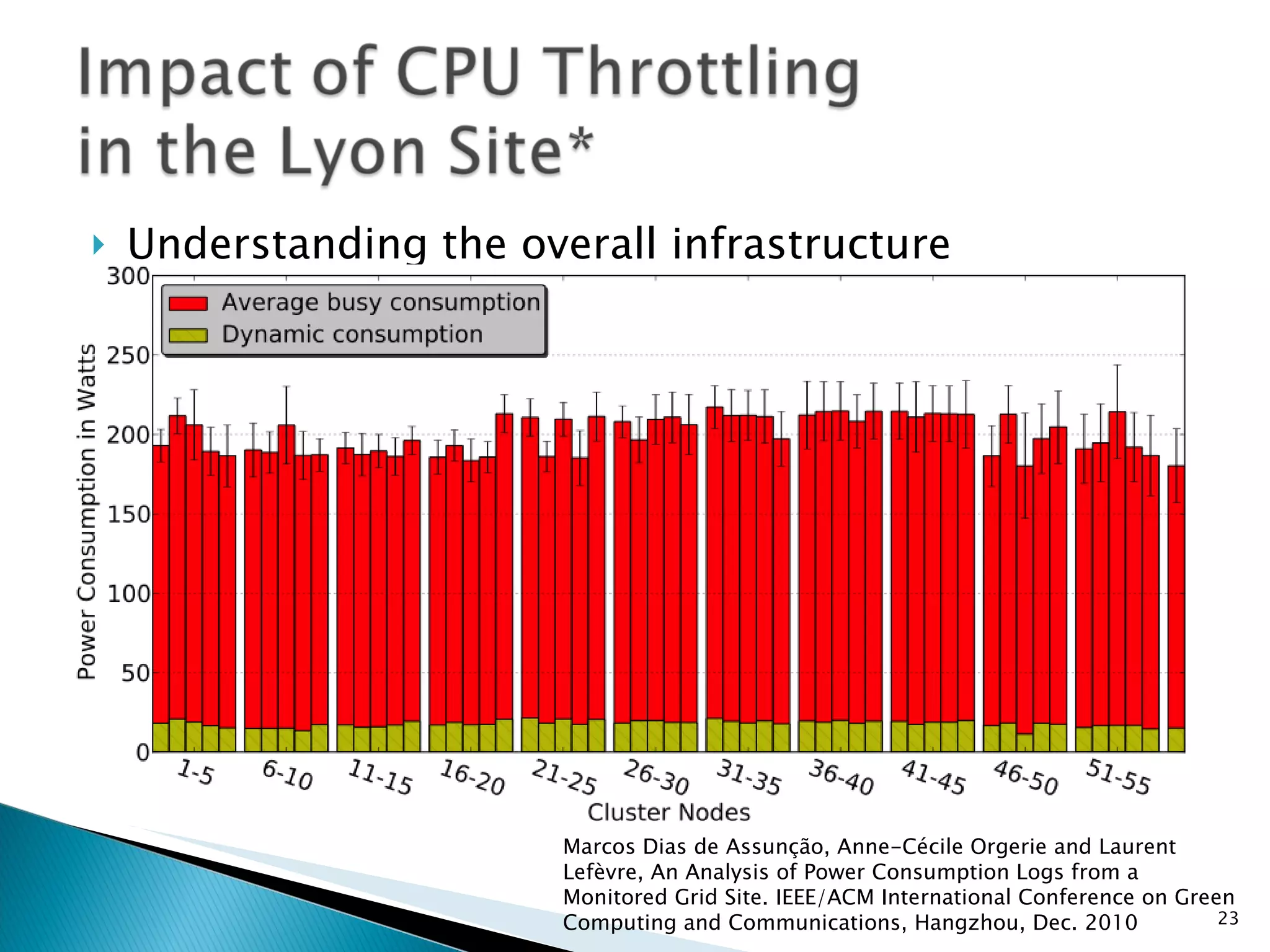
Understanding the overall infrastructure Marcos Dias de Assunção, Anne-Cécile Orgerie and Laurent Lefèvre, An Analysis of Power Consumption Logs from a Monitored Grid Site. IEEE/ACM International Conference on Green Computing and Communications, Hangzhou, Dec. 2010
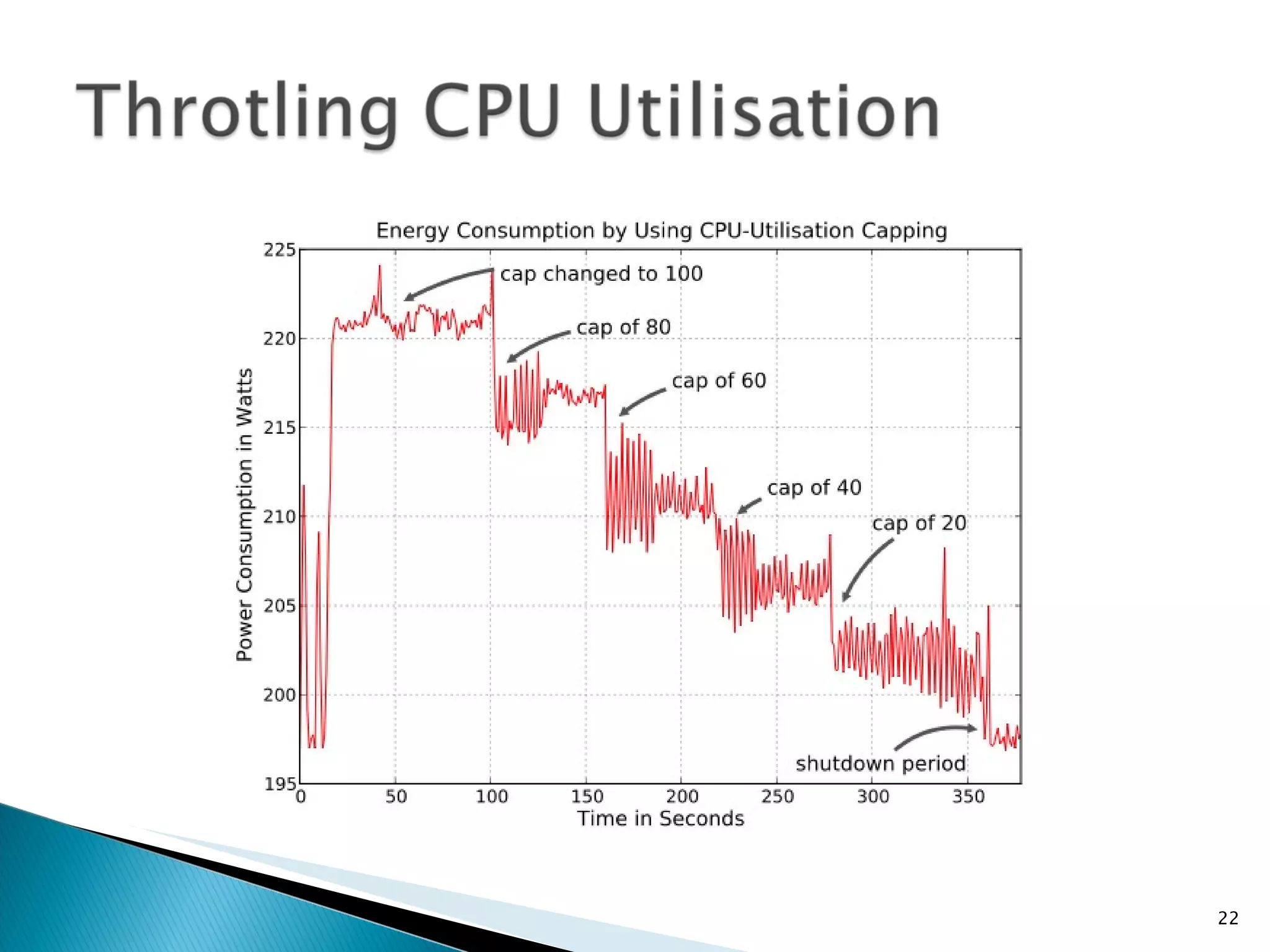
For each reservation, evaluate the application-driven consumption 3.05%  of the energy consumed during reservations is  due to running applications or services , which is also the maximum that a CPU throttling approach could save under current conditions
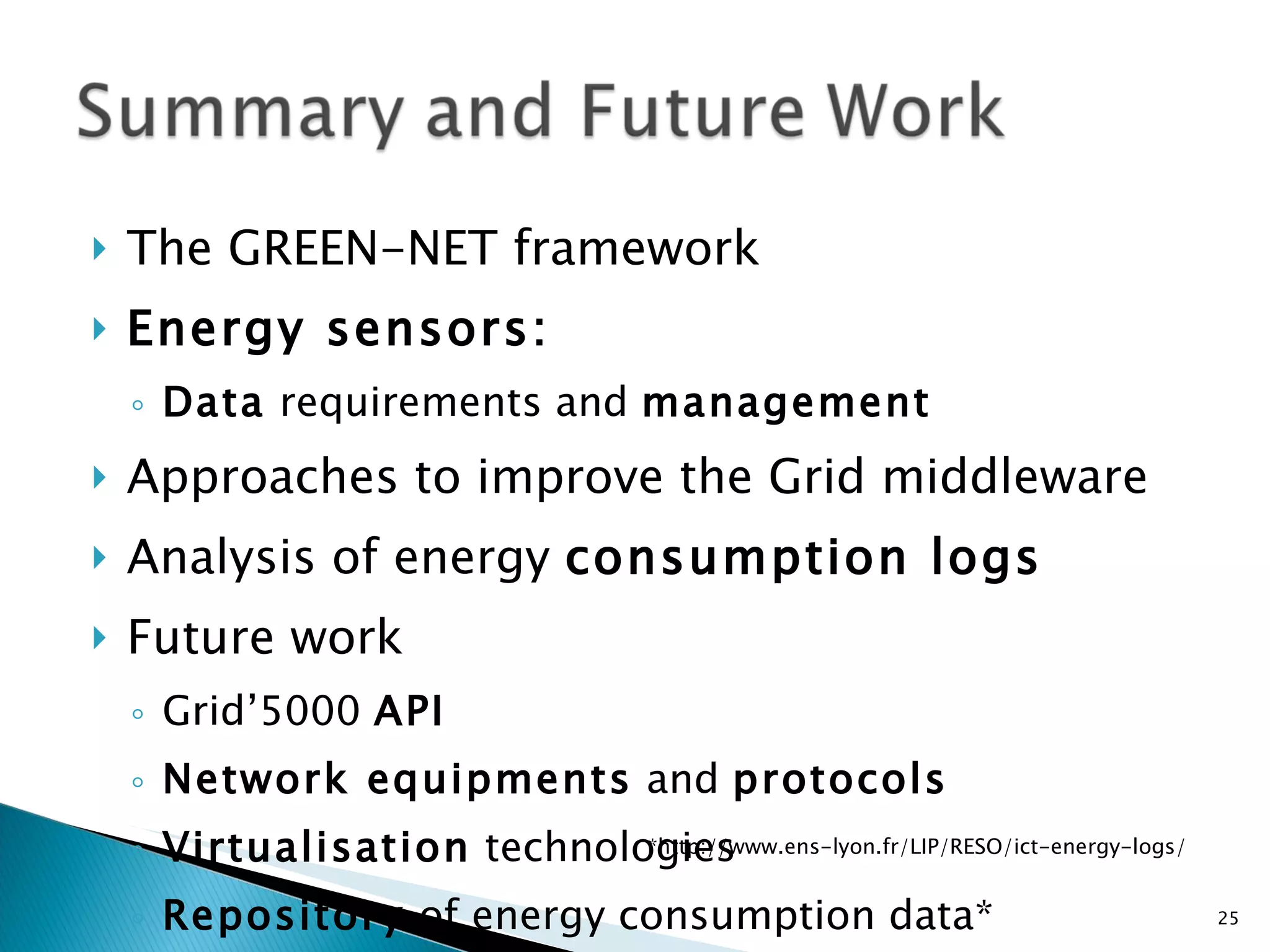
The GREEN-NET framework Energy sensors:  Data  requirements and  management Approaches to improve the Grid middleware Analysis of energy  consumption logs Future work Grid’5000  API Network equipments  and  protocols Virtualisation  technologies Repository  of energy consumption data* *http://www.ens-lyon.fr/LIP/RESO/ict-energy-logs/
Questions & Answers Email: assuncao at acm.org

B4 greengrid

  • 1.
    Marcos Dias deAssunção , Jean-Patrick Gelas, Laurent Lefèvre and Anne-Cécile Orgerie INRIA RESO, Université de Lyon École Normale Supérieure 46, allée d’Italie 69364 Lyon Cedex 07 - France Grenoble, June 2011
  • 2.
    Challenge of managingand providing resources to user applications Server farms, Grids, data centres and Clouds The Grid’5000: Experimental Grid composed of 9 sites distributed across France OAR * : open-source Resource Management System (RMS) based on high-level components Resource requests: Advance reservations System deployment with Kadeploy Best-effort jobs * Nicolas Capit et al., A Batch Scheduler with High Level Components, 5th IEEE International Symposium on Cluster Computing and the Grid (CCGrid'05), pp. 776-783, May 2005
  • 3.
    Energy consumption of IT CO 2 footprint of Grids and Clouds Existing hardware, software and cooling solutions Evaluation of proposed solutions GREEN-NET approach* Informing the users Involving the users Autonomic energy aware support * G. Costa et al., Multi-Facet Approach to Reduce Energy Consumption in Clouds and Grids: The GREEN-NET Framework. In 1st Int. Conf. on Energy Efficient Computing and Networking, Passau, 2010.
  • 5.
    The energysensor infrastructure : Users’ awareness of energy consumption Improving the design of user applications Energy-aware Grid middleware Power management policies R epository of energy consumption data Sensor heterogeneity Power meter HAMEG HM8115-2 Omegawatt box Library for interfacing with energy sensors
  • 6.
    Omegawatt box 6or 48 ports, communication via serial port Deployed in three sites of Grid’5000 Lyon, T o ulouse and Grenoble Client-side applications to obtain and store the energy consumption data * M. D. Assunção et al. The Green Grid'5000: Instrumenting and Using a Grid with Energy Sensors, 5th International Workshop on Distributed Cooperative Laboratories: Instrumenting the Grid, 2010
  • 7.
    Periodicity of energy measurements : Administrators ’ requirements Performance and energy consumption of applications Grid middleware designers One measurement per second for each equipment Data storage: Raw data (text files) Last values (text files in memory) Round-robin databases * * RRD, http://oss.oetiker.ch/rrdtool
  • 9.
    Profiling the energyconsumption of applications
  • 12.
    Next reservation Re = (l e , n e , t e ) Method 1 : At time t, the estimated start time of R e is the average of the arrival of reservations after time of the day t on: T he two previous days The same weekday of the previous week i.e. t e = 1/3 [t t,j-1 + t t,j-2 + t t,j-7 ] + t_feedback Method 2 : Average of characteristics of 5 previous reservations Logs of advance reservation requests Length or duration Number of nodes Start time
  • 13.
    U ser: always obeys the user’s demands F ully-green: uses the solution that saves the most energy **%-green: handles ** of requests, taken at random, with the fully-green scheme and the rest with the user policy D eadline: uses the fully-green approach if it does not delay the request for more than 24h of the start time required by the user
  • 14.
  • 16.
    Analysing the impactof resource allocation policies ~14% of the electricity consumed by the platform during ~5 months
  • 17.
    HP Proliant G2servers 2.2GHz, 2 duo core CPUs per node Xen open source 3.4.1 Workload cpuburn * Anne-Cécile Orgerie, Marcos Dias de Assunção and Laurent Lefèvre, Energy Aware Clouds. Grids, Clouds and Virtualization, Springer-Verlag London Ltd, ISBN: 978-0-857-29048-9, Sep. 2010
  • 23.
    Understanding the overallinfrastructure Marcos Dias de Assunção, Anne-Cécile Orgerie and Laurent Lefèvre, An Analysis of Power Consumption Logs from a Monitored Grid Site. IEEE/ACM International Conference on Green Computing and Communications, Hangzhou, Dec. 2010
  • 24.
    For each reservation,evaluate the application-driven consumption 3.05% of the energy consumed during reservations is due to running applications or services , which is also the maximum that a CPU throttling approach could save under current conditions
  • 25.
    The GREEN-NET frameworkEnergy sensors: Data requirements and management Approaches to improve the Grid middleware Analysis of energy consumption logs Future work Grid’5000 API Network equipments and protocols Virtualisation technologies Repository of energy consumption data* *http://www.ens-lyon.fr/LIP/RESO/ict-energy-logs/
  • 26.
    Questions & AnswersEmail: assuncao at acm.org