Francisco Antonio Morales

                                     Breakstone10@hotmail.com

                                                Task 3.3

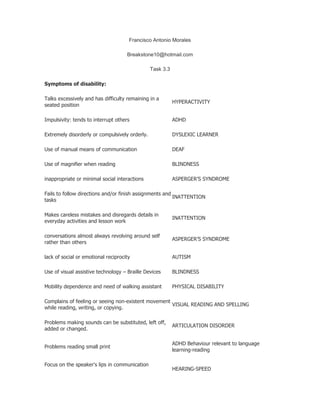
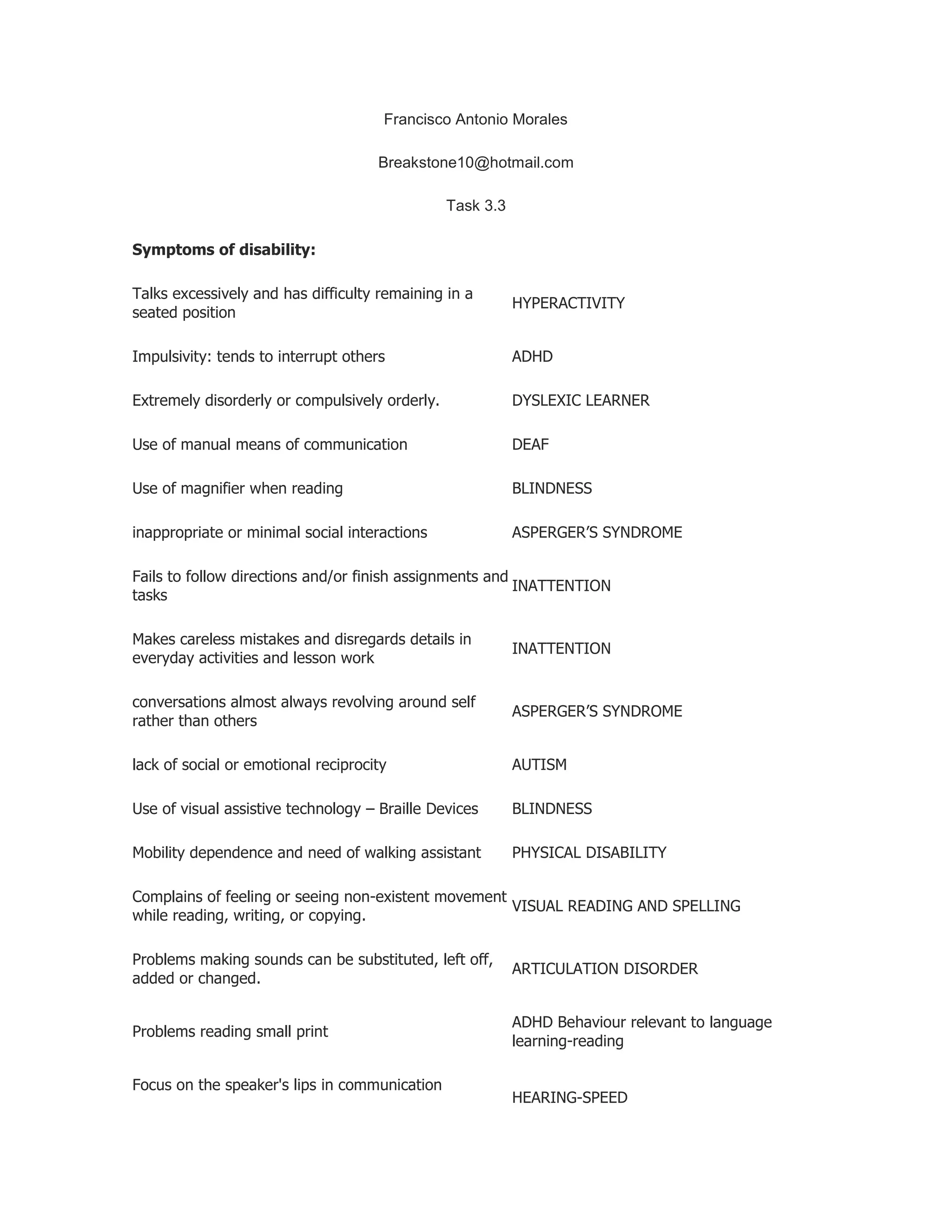
Symptoms of disability:

Talks excessively and has difficulty remaining in a
                                                           HYPERACTIVITY
seated position

Impulsivity: tends to interrupt others                     ADHD

Extremely disorderly or compulsively orderly.              DYSLEXIC LEARNER

Use of manual means of communication                       DEAF

Use of magnifier when reading                              BLINDNESS

inappropriate or minimal social interactions               ASPERGER’S SYNDROME

Fails to follow directions and/or finish assignments and
                                                         INATTENTION
tasks

Makes careless mistakes and disregards details in
                                                           INATTENTION
everyday activities and lesson work

conversations almost always revolving around self
                                                           ASPERGER’S SYNDROME
rather than others

lack of social or emotional reciprocity                    AUTISM

Use of visual assistive technology – Braille Devices       BLINDNESS

Mobility dependence and need of walking assistant          PHYSICAL DISABILITY

Complains of feeling or seeing non-existent movement
                                                     VISUAL READING AND SPELLING
while reading, writing, or copying.

Problems making sounds can be substituted, left off,
                                                           ARTICULATION DISORDER
added or changed.

                                                           ADHD Behaviour relevant to language
Problems reading small print
                                                           learning-reading

Focus on the speaker's lips in communication
                                                           HEARING-SPEED
PERCEPTION(UNDERSTANDING)

Trouble with writing or copying; pencil grip is unusual;
                                                         DYSLEXIC-WRITING AND MOTOR SKILLS
handwriting varies or is illegible

restricted, repetitive, and stereotyped patterns of
                                                           AUTISM
behavior

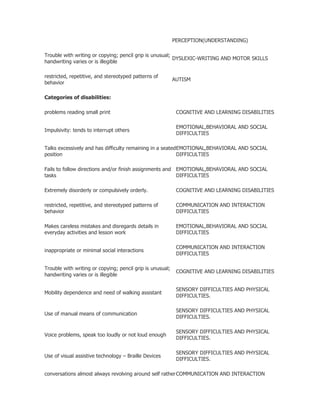
Categories of disabilities:

problems reading small print                                COGNITIVE AND LEARNING DISABILITIES

                                                            EMOTIONAL,BEHAVIORAL AND SOCIAL
Impulsivity: tends to interrupt others
                                                            DIFFICULTIES

Talks excessively and has difficulty remaining in a seated EMOTIONAL,BEHAVIORAL AND SOCIAL
position                                                   DIFFICULTIES

Fails to follow directions and/or finish assignments and EMOTIONAL,BEHAVIORAL AND SOCIAL
tasks                                                    DIFFICULTIES

Extremely disorderly or compulsively orderly.               COGNITIVE AND LEARNING DISABILITIES

restricted, repetitive, and stereotyped patterns of         COMMUNICATION AND INTERACTION
behavior                                                    DIFFICULTIES

Makes careless mistakes and disregards details in           EMOTIONAL,BEHAVIORAL AND SOCIAL
everyday activities and lesson work                         DIFFICULTIES

                                                            COMMUNICATION AND INTERACTION
inappropriate or minimal social interactions
                                                            DIFFICULTIES

Trouble with writing or copying; pencil grip is unusual;
                                                            COGNITIVE AND LEARNING DISABILITIES
handwriting varies or is illegible

                                                            SENSORY DIFFICULTIES AND PHYSICAL
Mobility dependence and need of walking assistant
                                                            DIFFICULTIES.

                                                            SENSORY DIFFICULTIES AND PHYSICAL
Use of manual means of communication
                                                            DIFFICULTIES.

                                                            SENSORY DIFFICULTIES AND PHYSICAL
Voice problems, speak too loudly or not loud enough
                                                            DIFFICULTIES.

                                                            SENSORY DIFFICULTIES AND PHYSICAL
Use of visual assistive technology – Braille Devices
                                                            DIFFICULTIES.

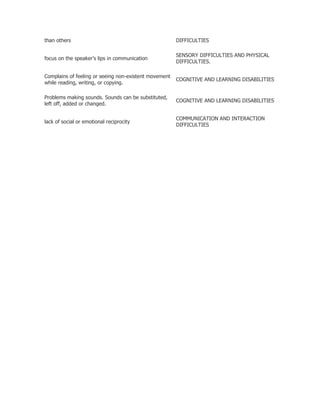
conversations almost always revolving around self rather COMMUNICATION AND INTERACTION
than others                                            DIFFICULTIES

                                                       SENSORY DIFFICULTIES AND PHYSICAL
focus on the speaker’s lips in communication
                                                       DIFFICULTIES.

Complains of feeling or seeing non-existent movement
                                                       COGNITIVE AND LEARNING DISABILITIES
while reading, writing, or copying.

Problems making sounds. Sounds can be substituted,
                                                       COGNITIVE AND LEARNING DISABILITIES
left off, added or changed.

                                                       COMMUNICATION AND INTERACTION
lack of social or emotional reciprocity
                                                       DIFFICULTIES

B3 t3.3 francisco_antonio

  • 1.
    Francisco Antonio Morales Breakstone10@hotmail.com Task 3.3 Symptoms of disability: Talks excessively and has difficulty remaining in a HYPERACTIVITY seated position Impulsivity: tends to interrupt others ADHD Extremely disorderly or compulsively orderly. DYSLEXIC LEARNER Use of manual means of communication DEAF Use of magnifier when reading BLINDNESS inappropriate or minimal social interactions ASPERGER’S SYNDROME Fails to follow directions and/or finish assignments and INATTENTION tasks Makes careless mistakes and disregards details in INATTENTION everyday activities and lesson work conversations almost always revolving around self ASPERGER’S SYNDROME rather than others lack of social or emotional reciprocity AUTISM Use of visual assistive technology – Braille Devices BLINDNESS Mobility dependence and need of walking assistant PHYSICAL DISABILITY Complains of feeling or seeing non-existent movement VISUAL READING AND SPELLING while reading, writing, or copying. Problems making sounds can be substituted, left off, ARTICULATION DISORDER added or changed. ADHD Behaviour relevant to language Problems reading small print learning-reading Focus on the speaker's lips in communication HEARING-SPEED
  • 2.
    PERCEPTION(UNDERSTANDING) Trouble with writingor copying; pencil grip is unusual; DYSLEXIC-WRITING AND MOTOR SKILLS handwriting varies or is illegible restricted, repetitive, and stereotyped patterns of AUTISM behavior Categories of disabilities: problems reading small print COGNITIVE AND LEARNING DISABILITIES EMOTIONAL,BEHAVIORAL AND SOCIAL Impulsivity: tends to interrupt others DIFFICULTIES Talks excessively and has difficulty remaining in a seated EMOTIONAL,BEHAVIORAL AND SOCIAL position DIFFICULTIES Fails to follow directions and/or finish assignments and EMOTIONAL,BEHAVIORAL AND SOCIAL tasks DIFFICULTIES Extremely disorderly or compulsively orderly. COGNITIVE AND LEARNING DISABILITIES restricted, repetitive, and stereotyped patterns of COMMUNICATION AND INTERACTION behavior DIFFICULTIES Makes careless mistakes and disregards details in EMOTIONAL,BEHAVIORAL AND SOCIAL everyday activities and lesson work DIFFICULTIES COMMUNICATION AND INTERACTION inappropriate or minimal social interactions DIFFICULTIES Trouble with writing or copying; pencil grip is unusual; COGNITIVE AND LEARNING DISABILITIES handwriting varies or is illegible SENSORY DIFFICULTIES AND PHYSICAL Mobility dependence and need of walking assistant DIFFICULTIES. SENSORY DIFFICULTIES AND PHYSICAL Use of manual means of communication DIFFICULTIES. SENSORY DIFFICULTIES AND PHYSICAL Voice problems, speak too loudly or not loud enough DIFFICULTIES. SENSORY DIFFICULTIES AND PHYSICAL Use of visual assistive technology – Braille Devices DIFFICULTIES. conversations almost always revolving around self rather COMMUNICATION AND INTERACTION
  • 3.
    than others DIFFICULTIES SENSORY DIFFICULTIES AND PHYSICAL focus on the speaker’s lips in communication DIFFICULTIES. Complains of feeling or seeing non-existent movement COGNITIVE AND LEARNING DISABILITIES while reading, writing, or copying. Problems making sounds. Sounds can be substituted, COGNITIVE AND LEARNING DISABILITIES left off, added or changed. COMMUNICATION AND INTERACTION lack of social or emotional reciprocity DIFFICULTIES