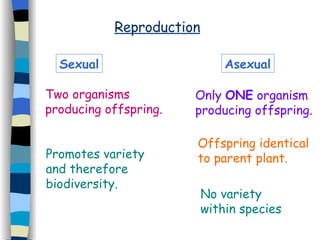
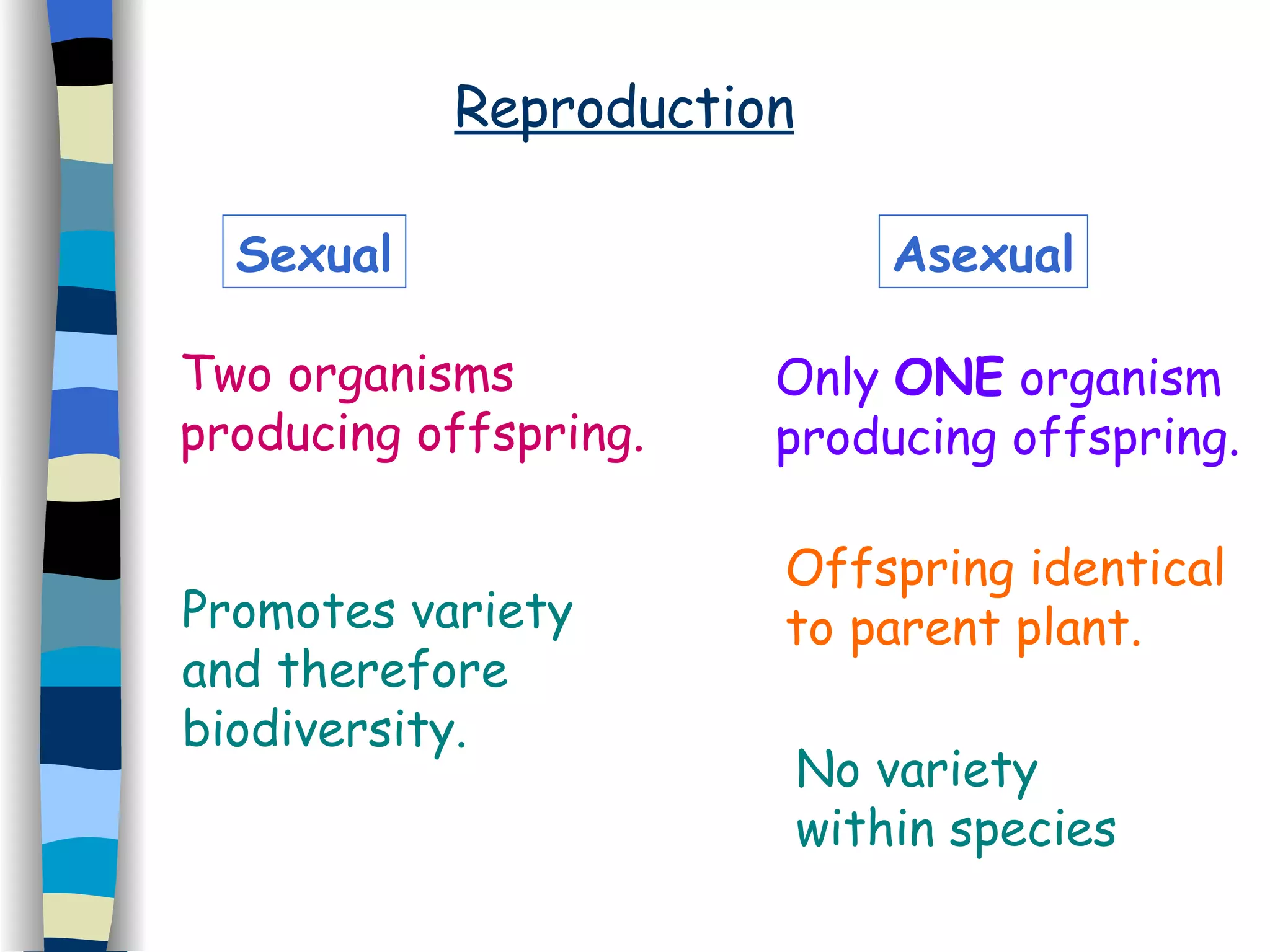
Reproduction Asexual Sexual Only  ONE  organism producing offspring. Offspring identical to parent plant. No variety within species Two organisms producing offspring. Promotes variety and therefore biodiversity.
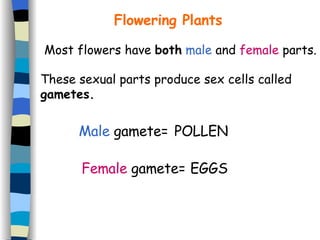
Flowering Plants Most flowers have  both   male  and  female  parts. These sexual parts produce sex cells called  gametes. Male  gamete= Female  gamete= POLLEN EGGS
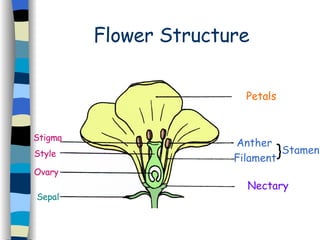
Flower Structure Petals Anther Filament Nectary Sepal Ovary Style Stigma Stamen }
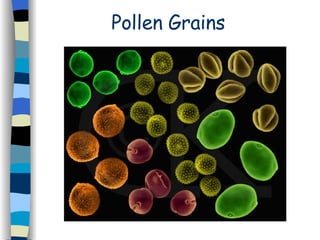
Pollen Grains
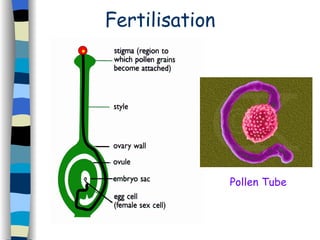
Fertilisation Pollen Tube
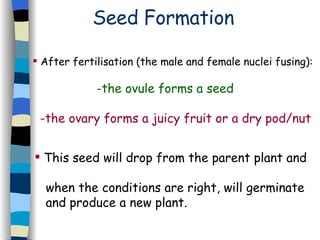
Seed Formation After fertilisation (the male and female nuclei fusing):  -the ovule forms a seed -the ovary forms a juicy fruit or a dry pod/nut This seed will drop from the parent plant and  when the conditions are right, will germinate  and produce a new plant.
Seed Dispersal Seeds need to be able to move to areas away from the parent plant.  This allows plants to colonise new areas and reduces competition between young plants for water and space. Seeds come in all different shapes and sizes to use wind, water and animals for dispersal.
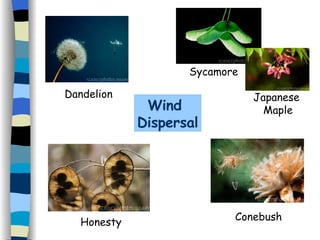
Wind  Dispersal Conebush Dandelion Honesty Sycamore Japanese  Maple
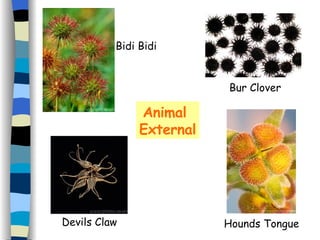
Animal  External Devils Claw Bur Clover Hounds Tongue Bidi Bidi
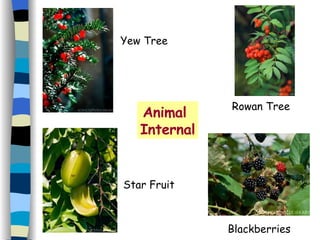
Animal  Internal Yew Tree Blackberries Star Fruit Rowan Tree
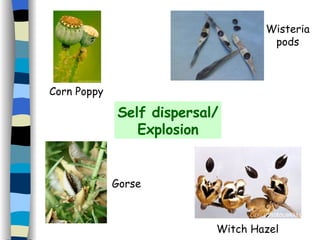
Self dispersal/ Explosion Corn Poppy Witch Hazel Wisteria pods Gorse
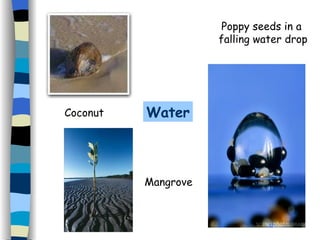
Water Coconut Mangrove Poppy seeds in a  falling water drop
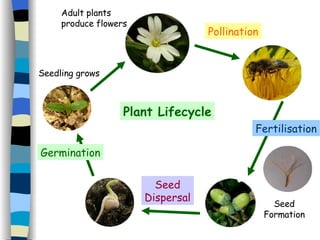
Plant Lifecycle Adult plants produce flowers Seed Formation Fertilisation Germination Pollination Seed Dispersal Seedling grows
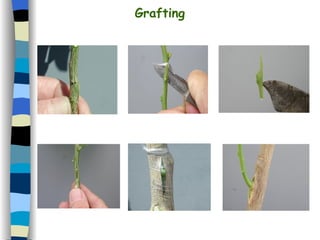
Grafting

B) Growing Plants

  • 1.
    Reproduction Asexual SexualOnly ONE organism producing offspring. Offspring identical to parent plant. No variety within species Two organisms producing offspring. Promotes variety and therefore biodiversity.
  • 2.
    Flowering Plants Mostflowers have both male and female parts. These sexual parts produce sex cells called gametes. Male gamete= Female gamete= POLLEN EGGS
  • 3.
    Flower Structure PetalsAnther Filament Nectary Sepal Ovary Style Stigma Stamen }
  • 4.
  • 5.
  • 6.
    Seed Formation Afterfertilisation (the male and female nuclei fusing): -the ovule forms a seed -the ovary forms a juicy fruit or a dry pod/nut This seed will drop from the parent plant and when the conditions are right, will germinate and produce a new plant.
  • 7.
    Seed Dispersal Seedsneed to be able to move to areas away from the parent plant. This allows plants to colonise new areas and reduces competition between young plants for water and space. Seeds come in all different shapes and sizes to use wind, water and animals for dispersal.
  • 8.
    Wind DispersalConebush Dandelion Honesty Sycamore Japanese Maple
  • 9.
    Animal ExternalDevils Claw Bur Clover Hounds Tongue Bidi Bidi
  • 10.
    Animal InternalYew Tree Blackberries Star Fruit Rowan Tree
  • 11.
    Self dispersal/ ExplosionCorn Poppy Witch Hazel Wisteria pods Gorse
  • 12.
    Water Coconut MangrovePoppy seeds in a falling water drop
  • 13.
    Plant Lifecycle Adultplants produce flowers Seed Formation Fertilisation Germination Pollination Seed Dispersal Seedling grows
  • 14.