Autonomic Computing
Presented by:Jaspreet Singh (07511502710)
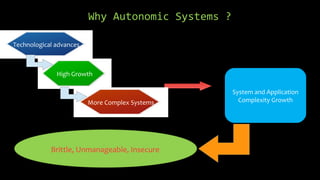
Why Autonomic Systems ?
Technological advances

High Growth

More Complex Systems

Brittle, Unmanageable, Insecure

System and Application
Complexity Growth
Concept Derived from Biology

v Strategies based on biological systems
v Inspired by Autonomic Nervous System in the human body.

Defined as : - A self managing autonomous and ubiquitous computing environment that
completely hides its complexity, thus providing the user with an interface that exactly
meets his/her needs.
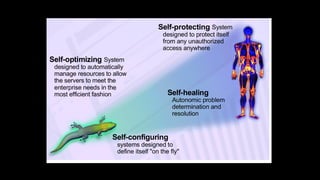
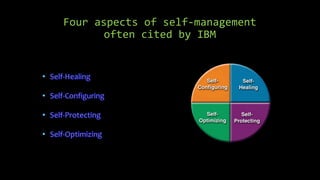
Four aspects of self-management
often cited by IBM
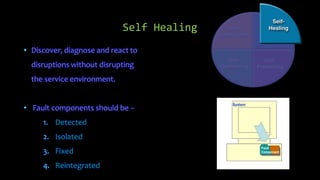
Self Healing
Self Configuring
Current Computing
Corporate Data centers have multiple
vendors and platforms. Installing, configuring
and integrating systems is time consuming
and error prone.
Autonomic Computing
Automated confihuration of components and
systems follows high level policies. Rest of
system adjusts automatically and seamlessly.
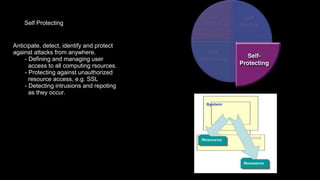
Self Protecting

Anticipate, detect, identify and protect
against attacks from anywhere.
- Defining and managing user
access to all computing rsources.
- Protecting against unauthorized
resource access, e.g. SSL
- Detecting intrusions and repoting
as they occur.
Self Optimizing

Monitor and tune resources
automatically
- support operating in
unpredictable environment.
- Efficient maximization of
resource utilization without
human
interference.
Dynamic resource allocation and
management.
- Resource: Storage, databases,
networks.
How it Works ?
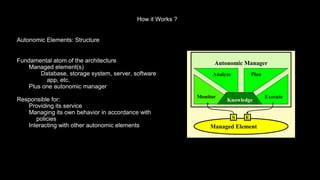
Autonomic Elements: Structure
Fundamental atom of the architecture
Managed element(s)
Database, storage system, server, software
app, etc.
Plus one autonomic manager
Responsible for:
Providing its service
Managing its own behavior in accordance with
policies
Interacting with other autonomic elements

Autonomic Manager
Analyze

Monitor

Plan

Knowledge
S

E

Managed Element

Execute
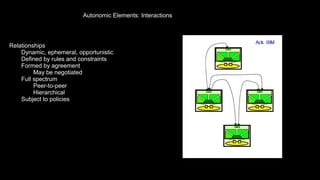
Autonomic Elements: Interactions

Relationships
Dynamic, ephemeral, opportunistic
Defined by rules and constraints
Formed by agreement
May be negotiated
Full spectrum
Peer-to-peer
Hierarchical
Subject to policies
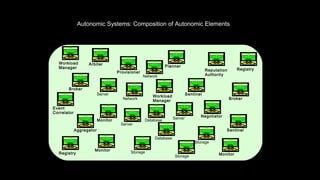
Autonomic Systems: Composition of Autonomic Elements

Workload
Manager

Arbiter

Planner
Provisioner

Broker

Server

Network

Sentinel

Workload
Manager

Network

Event
Correlator
Monitor

Server

Database

Server

Sentinel
Database

Monitor

Broker

Negotiator

Aggregator

Registry

Registry

Reputation
Authority

Storage

Storage
Storage

Monitor
Conclusion

• Solution of today’s increasing complexity in computing
science
Self-Management and dynamic adaptive behaviors
• Still challenges in diverse fields of science and
technology
– Autonomic behavior in one field of science
System managements, software engineering, etc.
– Needs for a abstraction and co-operation in relevant fields.
Autonomic computing is Solution of today’s increasing
complexity in computing science
Thank
You

Autonomic Computing (Basics) Presentation

  • 1.
  • 3.
    Why Autonomic Systems? Technological advances High Growth More Complex Systems Brittle, Unmanageable, Insecure System and Application Complexity Growth
  • 4.
    Concept Derived fromBiology v Strategies based on biological systems v Inspired by Autonomic Nervous System in the human body. Defined as : - A self managing autonomous and ubiquitous computing environment that completely hides its complexity, thus providing the user with an interface that exactly meets his/her needs.
  • 5.
    Four aspects ofself-management often cited by IBM
  • 6.
  • 7.
    Self Configuring Current Computing CorporateData centers have multiple vendors and platforms. Installing, configuring and integrating systems is time consuming and error prone. Autonomic Computing Automated confihuration of components and systems follows high level policies. Rest of system adjusts automatically and seamlessly.
  • 8.
    Self Protecting Anticipate, detect,identify and protect against attacks from anywhere. - Defining and managing user access to all computing rsources. - Protecting against unauthorized resource access, e.g. SSL - Detecting intrusions and repoting as they occur.
  • 9.
    Self Optimizing Monitor andtune resources automatically - support operating in unpredictable environment. - Efficient maximization of resource utilization without human interference. Dynamic resource allocation and management. - Resource: Storage, databases, networks.
  • 10.
    How it Works? Autonomic Elements: Structure Fundamental atom of the architecture Managed element(s) Database, storage system, server, software app, etc. Plus one autonomic manager Responsible for: Providing its service Managing its own behavior in accordance with policies Interacting with other autonomic elements Autonomic Manager Analyze Monitor Plan Knowledge S E Managed Element Execute
  • 11.
    Autonomic Elements: Interactions Relationships Dynamic,ephemeral, opportunistic Defined by rules and constraints Formed by agreement May be negotiated Full spectrum Peer-to-peer Hierarchical Subject to policies
  • 12.
    Autonomic Systems: Compositionof Autonomic Elements Workload Manager Arbiter Planner Provisioner Broker Server Network Sentinel Workload Manager Network Event Correlator Monitor Server Database Server Sentinel Database Monitor Broker Negotiator Aggregator Registry Registry Reputation Authority Storage Storage Storage Monitor
  • 14.
    Conclusion • Solution oftoday’s increasing complexity in computing science Self-Management and dynamic adaptive behaviors • Still challenges in diverse fields of science and technology – Autonomic behavior in one field of science System managements, software engineering, etc. – Needs for a abstraction and co-operation in relevant fields. Autonomic computing is Solution of today’s increasing complexity in computing science
  • 15.