

Autonomic
Computing
Under the guidance of

Prof.D.A.Noola
Presented by:

Kaushik Patidar
1
Contents
•
•
•
•
•
•
•
•
•
•

Introduction
Contemporary Glitches
Autonomic Nervous System
Conceptual framework and Architecture
Characteristics
Contemporary and Autonomic systems comparison
Research Issues and Challenges
Benefits
Conclusion
References
2
Introduction
A

software system that operates on its own or with a minimum of
human interference according to a set of rules

To

increase productivity while minimizing complexity for users,
capable of running themselves and adjusting to varying
circumstances

Control

theory, adaptive algorithms, software agents, robotics,
fault-tolerant computing, machine learning, artificial intelligence,
and many more
3
Contemporary Glitches

4
The Growing Complexity Problem
•

Average increase of computing devices 38% per annum

•

Ratio of Labour costs to Equipment costs around 18:1

•

Manual control is time-consuming, expensive, and errorprone

•

The distributed, diverse applications
heterogeneous tasks

deal with
5
The Evolution Problem
•

Maintenance and Evolutions of critical and legacy
systems

•

Keep the values of quality attributes within desired ranges

•

Monitor or verify requirements (functional or nonfunctional) over long periods of time

•

Adapt safety-critical systems without halting them
6
Autonomic Human Nervous System
•

•

A homeostatic system is an open system that maintains its
structure and functions by means dynamic equilibriums
Rigorously controlled by interdependent regulation mechanisms

•

A series of modifications that are equal in size and opposite in
direction to those that created the disturbance

•

The activities to maintain blood glucose level is an tremendous
example
7
Blood-Glucose Concentration Regulation
Glucose Concentration in Blood
(in percentage)

Activities

Less than 0.06

Tissue Starvations
Liver converts Glycogen to Glucose

More than normal

Pancreas secretes Insulin
Muscles and Skin disposes the excess

Greater than 0.18

Kidney excretes excess into urine
8
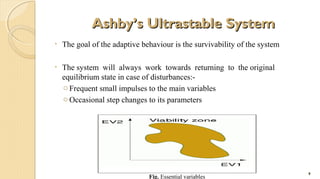
Ashby’s Ultrastable System
•

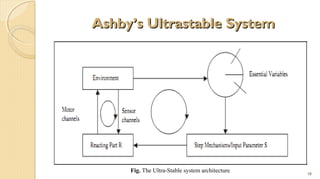
The goal of the adaptive behaviour is the survivability of the system

•

The system will always work towards returning to the original
equilibrium state in case of disturbances:o Frequent small impulses to the main variables
o Occasional step changes to its parameters

Fig. Essential variables

9
Ashby’s Ultrastable System

Fig. The Ultra-Stable system architecture

10
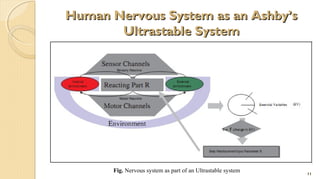
Human Nervous System as an Ashby’s
Ultrastable System

Fig. Nervous system as part of an Ultrastable system

11
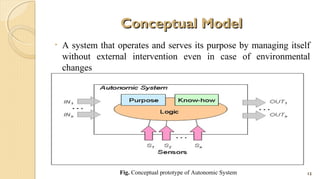
Conceptual Model
•

A system that operates and serves its purpose by managing itself
without external intervention even in case of environmental
changes

Fig. Conceptual prototype of Autonomic System

12
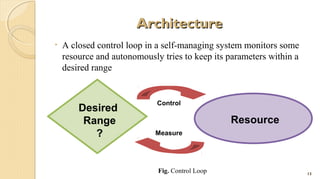
Architecture
•

A closed control loop in a self-managing system monitors some
resource and autonomously tries to keep its parameters within a
desired range

Desired
Range
?

Control

Resource
Measure

Fig. Control Loop

13
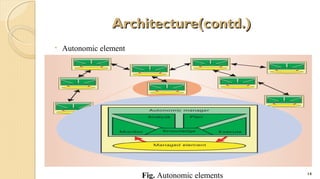
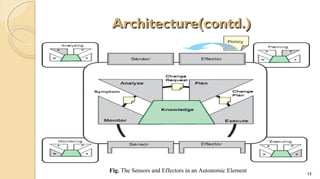
Architecture(contd.)
•

Autonomic element

Fig. Autonomic elements

14
Architecture(contd.)

Fig. The Sensors and Effectors in an Autonomic Element

15
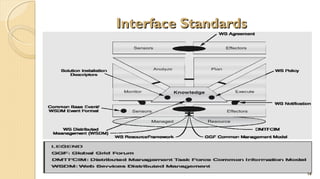
Interface Standards

16
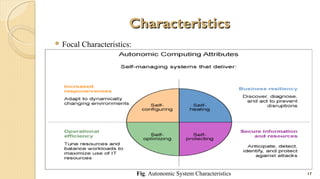
Characteristics
 Focal

Characteristics:

Fig. Autonomic System Characteristics

17
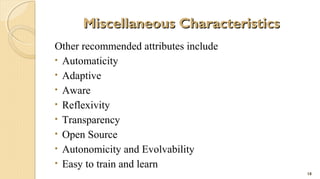
Miscellaneous Characteristics
Other recommended attributes include
• Automaticity
• Adaptive
• Aware
• Reflexivity
• Transparency
• Open Source
• Autonomicity and Evolvability
• Easy to train and learn
18
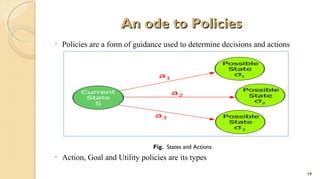
An ode to Policies
•

Policies are a form of guidance used to determine decisions and actions

Fig. States and Actions

•

Action, Goal and Utility policies are its types
19
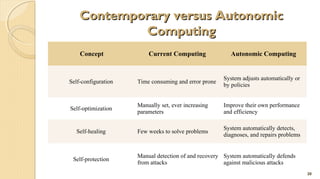
Contemporary versus Autonomic
Computing
Concept

Current Computing

Autonomic Computing

Self-configuration

Time consuming and error prone

System adjusts automatically or
by policies

Self-optimization

Manually set, ever increasing
parameters

Improve their own performance
and efficiency

Self-healing

Few weeks to solve problems

System automatically detects,
diagnoses, and repairs problems

Self-protection

Manual detection of and recovery System automatically defends
from attacks
against malicious attacks
20
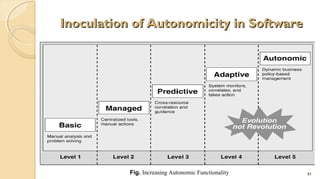
Inoculation of Autonomicity in Software

Fig. Increasing Autonomic Functionality

21
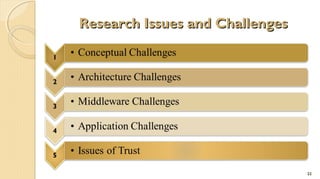
Research Issues and Challenges

22
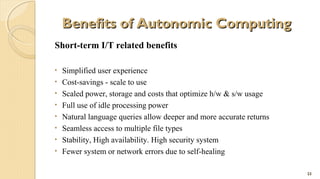
Benefits of Autonomic Computing
Short-term I/T related benefits
•
•
•
•
•
•
•
•

Simplified user experience
Cost-savings - scale to use
Scaled power, storage and costs that optimize h/w & s/w usage
Full use of idle processing power
Natural language queries allow deeper and more accurate returns
Seamless access to multiple file types
Stability, High availability. High security system
Fewer system or network errors due to self-healing
23
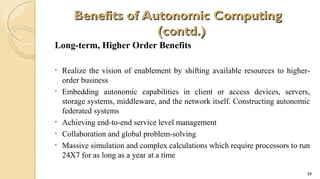
Benefits of Autonomic Computing
(contd.)
Long-term, Higher Order Benefits
•
•

•
•
•

Realize the vision of enablement by shifting available resources to higherorder business
Embedding autonomic capabilities in client or access devices, servers,
storage systems, middleware, and the network itself. Constructing autonomic
federated systems
Achieving end-to-end service level management
Collaboration and global problem-solving
Massive simulation and complex calculations which require processors to run
24X7 for as long as a year at a time
24
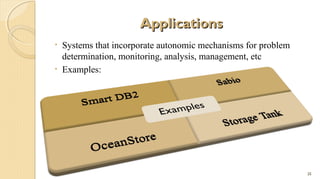
Applications
•
•

Systems that incorporate autonomic mechanisms for problem
determination, monitoring, analysis, management, etc
Examples:

25
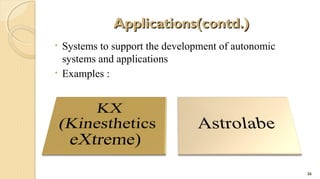
Applications(contd.)
Systems to support the development of autonomic
systems and applications
• Examples :
•

26
Conclusions
•

Users demand and crave simplicity in computing solutions

•

A system used by millions of people each day and administered
by a half-time person seems attainable with the notion of
automatic updates

•

It will take another decade for the proliferation of Autonomicity
in existing systems
27
References
[1] IBM Corporation. An architectural blueprint for autonomic computing.
April 2003.
[2] Manish Parashar and Salim Hariri , Autonomic Computing: An Overview,
The Applied Software Systems Laboratory, Rutgers University, Piscataway
NJ, University of Arizona, Tucson, AZ, USA.
[3] Hausi A. Müller, Liam O’Brien, Mark Klein and Bill Wood , Autonomic
Computing, April 2006
[4] IBM, “Autonomic Computing: IBM’s Perspective on the State of
Information Technology”,
http://www1.ibm.com/industries/government/doc/content /resource
/thought/278606109.html.
[5] IEEE Computer Magazine, Jan 2003
28
Any Queries ?
29
Thank
You
30

AutonomicComputing

  • 1.
    Autonomic Computing Under the guidanceof Prof.D.A.Noola Presented by: Kaushik Patidar 1
  • 2.
    Contents • • • • • • • • • • Introduction Contemporary Glitches Autonomic NervousSystem Conceptual framework and Architecture Characteristics Contemporary and Autonomic systems comparison Research Issues and Challenges Benefits Conclusion References 2
  • 3.
    Introduction A software system thatoperates on its own or with a minimum of human interference according to a set of rules To increase productivity while minimizing complexity for users, capable of running themselves and adjusting to varying circumstances Control theory, adaptive algorithms, software agents, robotics, fault-tolerant computing, machine learning, artificial intelligence, and many more 3
  • 4.
  • 5.
    The Growing ComplexityProblem • Average increase of computing devices 38% per annum • Ratio of Labour costs to Equipment costs around 18:1 • Manual control is time-consuming, expensive, and errorprone • The distributed, diverse applications heterogeneous tasks deal with 5
  • 6.
    The Evolution Problem • Maintenanceand Evolutions of critical and legacy systems • Keep the values of quality attributes within desired ranges • Monitor or verify requirements (functional or nonfunctional) over long periods of time • Adapt safety-critical systems without halting them 6
  • 7.
    Autonomic Human NervousSystem • • A homeostatic system is an open system that maintains its structure and functions by means dynamic equilibriums Rigorously controlled by interdependent regulation mechanisms • A series of modifications that are equal in size and opposite in direction to those that created the disturbance • The activities to maintain blood glucose level is an tremendous example 7
  • 8.
    Blood-Glucose Concentration Regulation GlucoseConcentration in Blood (in percentage) Activities Less than 0.06 Tissue Starvations Liver converts Glycogen to Glucose More than normal Pancreas secretes Insulin Muscles and Skin disposes the excess Greater than 0.18 Kidney excretes excess into urine 8
  • 9.
    Ashby’s Ultrastable System • Thegoal of the adaptive behaviour is the survivability of the system • The system will always work towards returning to the original equilibrium state in case of disturbances:o Frequent small impulses to the main variables o Occasional step changes to its parameters Fig. Essential variables 9
  • 10.
    Ashby’s Ultrastable System Fig.The Ultra-Stable system architecture 10
  • 11.
    Human Nervous Systemas an Ashby’s Ultrastable System Fig. Nervous system as part of an Ultrastable system 11
  • 12.
    Conceptual Model • A systemthat operates and serves its purpose by managing itself without external intervention even in case of environmental changes Fig. Conceptual prototype of Autonomic System 12
  • 13.
    Architecture • A closed controlloop in a self-managing system monitors some resource and autonomously tries to keep its parameters within a desired range Desired Range ? Control Resource Measure Fig. Control Loop 13
  • 14.
  • 15.
    Architecture(contd.) Fig. The Sensorsand Effectors in an Autonomic Element 15
  • 16.
  • 17.
  • 18.
    Miscellaneous Characteristics Other recommendedattributes include • Automaticity • Adaptive • Aware • Reflexivity • Transparency • Open Source • Autonomicity and Evolvability • Easy to train and learn 18
  • 19.
    An ode toPolicies • Policies are a form of guidance used to determine decisions and actions Fig. States and Actions • Action, Goal and Utility policies are its types 19
  • 20.
    Contemporary versus Autonomic Computing Concept CurrentComputing Autonomic Computing Self-configuration Time consuming and error prone System adjusts automatically or by policies Self-optimization Manually set, ever increasing parameters Improve their own performance and efficiency Self-healing Few weeks to solve problems System automatically detects, diagnoses, and repairs problems Self-protection Manual detection of and recovery System automatically defends from attacks against malicious attacks 20
  • 21.
    Inoculation of Autonomicityin Software Fig. Increasing Autonomic Functionality 21
  • 22.
    Research Issues andChallenges 22
  • 23.
    Benefits of AutonomicComputing Short-term I/T related benefits • • • • • • • • Simplified user experience Cost-savings - scale to use Scaled power, storage and costs that optimize h/w & s/w usage Full use of idle processing power Natural language queries allow deeper and more accurate returns Seamless access to multiple file types Stability, High availability. High security system Fewer system or network errors due to self-healing 23
  • 24.
    Benefits of AutonomicComputing (contd.) Long-term, Higher Order Benefits • • • • • Realize the vision of enablement by shifting available resources to higherorder business Embedding autonomic capabilities in client or access devices, servers, storage systems, middleware, and the network itself. Constructing autonomic federated systems Achieving end-to-end service level management Collaboration and global problem-solving Massive simulation and complex calculations which require processors to run 24X7 for as long as a year at a time 24
  • 25.
    Applications • • Systems that incorporateautonomic mechanisms for problem determination, monitoring, analysis, management, etc Examples: 25
  • 26.
    Applications(contd.) Systems to supportthe development of autonomic systems and applications • Examples : • 26
  • 27.
    Conclusions • Users demand andcrave simplicity in computing solutions • A system used by millions of people each day and administered by a half-time person seems attainable with the notion of automatic updates • It will take another decade for the proliferation of Autonomicity in existing systems 27
  • 28.
    References [1] IBM Corporation.An architectural blueprint for autonomic computing. April 2003. [2] Manish Parashar and Salim Hariri , Autonomic Computing: An Overview, The Applied Software Systems Laboratory, Rutgers University, Piscataway NJ, University of Arizona, Tucson, AZ, USA. [3] Hausi A. Müller, Liam O’Brien, Mark Klein and Bill Wood , Autonomic Computing, April 2006 [4] IBM, “Autonomic Computing: IBM’s Perspective on the State of Information Technology”, http://www1.ibm.com/industries/government/doc/content /resource /thought/278606109.html. [5] IEEE Computer Magazine, Jan 2003 28
  • 29.
  • 30.