Downloaded 31 times

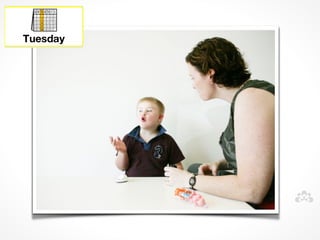
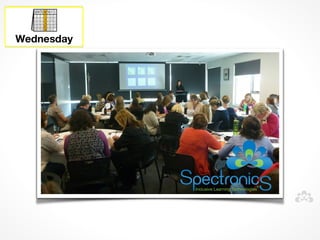

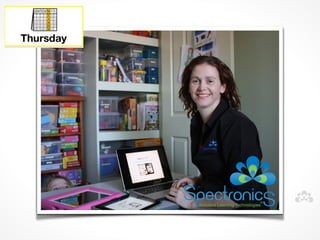
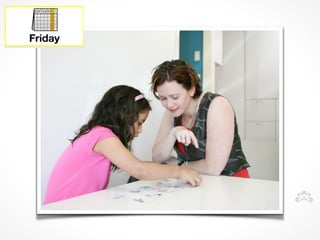




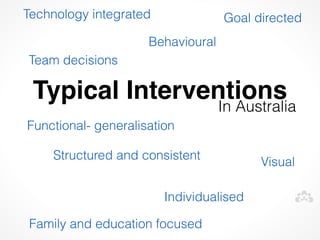
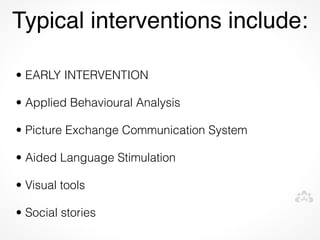
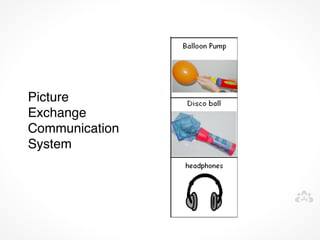
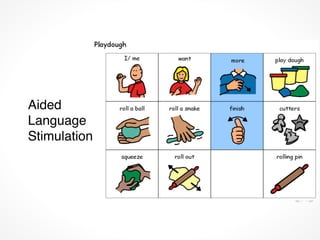
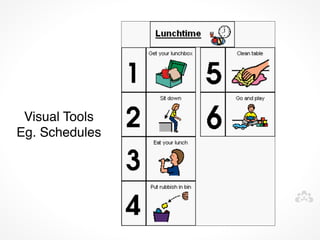
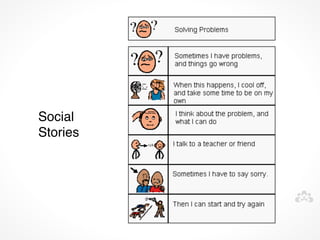
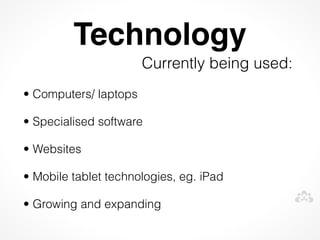
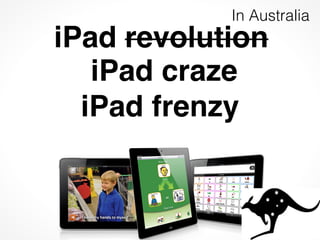
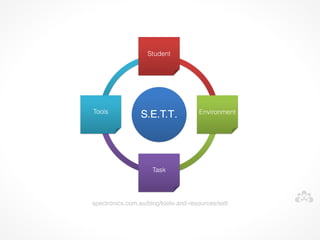
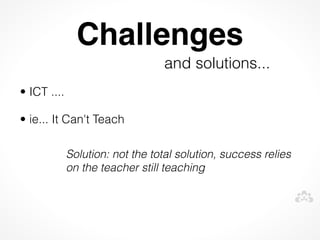
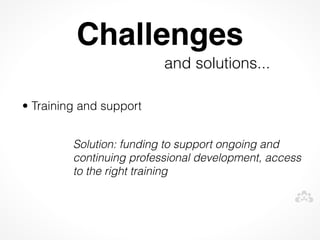
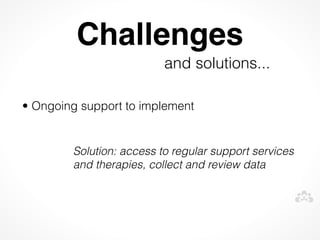
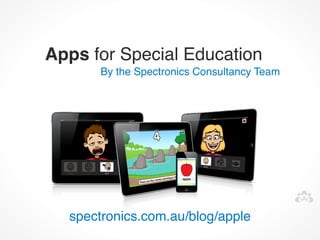



1) Technology such as iPads, laptops, and specialised software are increasingly being used to help develop communication, social, and learning skills for individuals with autism spectrum disorder (ASD). 2) While technology shows promise as an assistive tool, it also presents challenges around durability, appropriate app selection, and ensuring it does not replace other important interventions and strategies. 3) For technology to be effective, it must be integrated into a student's program as part of a comprehensive set of interventions and supports, including applied behavioural analysis, visual tools, social stories, and more. Ongoing training, support, and data collection are also needed.


