Downloaded 52 times
![AUGMENTED
REALITY
-REALITY REINVENTED
IT-591 Gurpreet Kaur [L-2010-AE-10-MCA]](https://image.slidesharecdn.com/augmentedreality-121027022908-phpapp01/85/Augmented-reality-1-320.jpg)


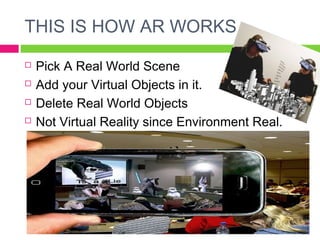

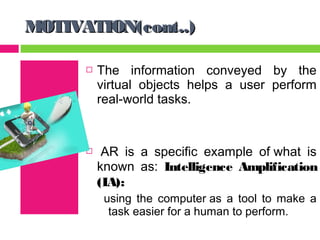
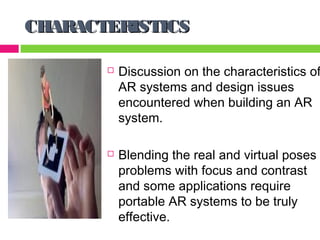




Augmented reality (AR) supplements reality by adding computer-generated perceptual information, like sound, video, graphics or GPS data to enhance the user's real-world experience. AR is achieved using devices like head-mounted displays or smartphone screens that overlay virtual objects on the real world. AR systems generate composite views by combining real scenes with virtual objects using tracking and computer vision. Examples of AR applications include medical visualization, military training, navigation aids, education, and entertainment experiences.


