1
Alexander V. Frolov
2013
 It is planned to produce experimental unit of high
efficient heat generator.
 This method use hydrogen dissociation –
recombination processes in closed volume of reactor.
There is no radiation here.
 We have to patent it and start sales of licenses.
 In collaboration with industrial partners we can
organize production facilities to fabricate high efficient
heat generators for sale.
2
 Product is new method to provide generation of
heat and equipment using this technology.
 Application:
 Homer heating 10 kW – 30 kW.
 Industrial needs 30 kW – 100 kW.
 Power engineering 1 MW – 100MW.
3
4
Main market is home and industrial water heaters.
Secondary market is electrical power plants using hot
steam source for turbines.
World market is about 15 Billion Euro + 3% year.
It is planned to reach 1% of World market in 5 years.
In 2016 sales can be about 165 Million Euro.
 Traditional boilers require a lot of electric energy.
 Fuel and electricity are not low cost.
 Customers are seeking energy saving methods.
 There is demand in energy sources for space
projects and new areas of the planet, where is not
possibility to provide fuel.
 World economics require new markets.
5
 Hydrogen molecule dissociation require energy
input to get two atoms of hydrogen.
 Two Hydrogen atoms can be recombined into one
molecule with great heat output.
 High efficiency of this processes (excess heat
output) is possible if we’ll use low-energy method
of dissociation of hydrogen.
6
 There are two main methods to use atomic hydrogen
for heat generation:
 1. It is possible to get heat directly during
recombination process H+H = H2+Q on surface of
catalizator (for example, tungsten).
 2. Other way is transmutation method, for example,
according Prof. Rossi technology it is possible to get
great heat output transforming nickel to copper Ni +
H = Cu + Q
7
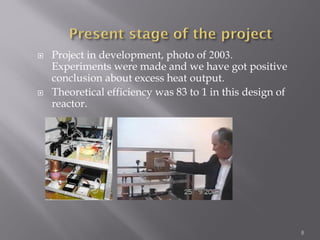
 Project in development, photo of 2003.
Experiments were made and we have got positive
conclusion about excess heat output.
 Theoretical efficiency was 83 to 1 in this design of
reactor.
8
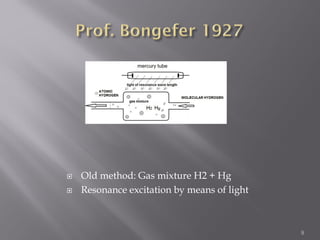
 Old method: Gas mixture H2 + Hg
 Resonance excitation by means of light
9
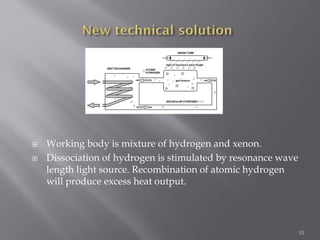
 Working body is mixture of hydrogen and xenon.
 Dissociation of hydrogen is stimulated by resonance wave
length light source. Recombination of atomic hydrogen
will produce excess heat output.
10
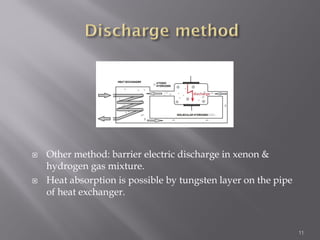
 Other method: barrier electric discharge in xenon &
hydrogen gas mixture.
 Heat absorption is possible by tungsten layer on the pipe
of heat exchanger.
11
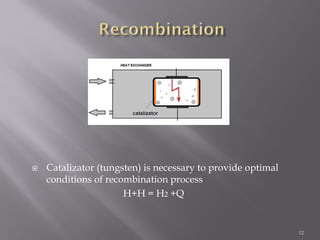
 Catalizator (tungsten) is necessary to provide optimal
conditions of recombination process
H+H = H2 +Q
12
13
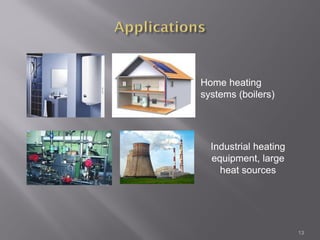
Home heating
systems (boilers)
Industrial heating
equipment, large
heat sources
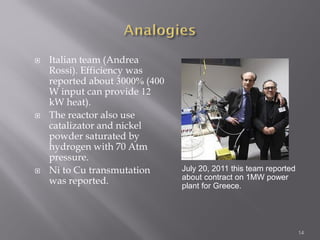
 Italian team (Andrea
Rossi). Efficiency was
reported about 3000% (400
W input can provide 12
kW heat).
 The reactor also use
catalizator and nickel
powder saturated by
hydrogen with 70 Atm
pressure.
 Ni to Cu transmutation
was reported.
14
July 20, 2011 this team reported
about contract on 1MW power
plant for Greece.
 Our technology does not require spending of the
catalizator.
 Rossi use cold fusion reaction of transformation Ni to
Cu. Also reactor require hydrogen input and
recharging.
 Ni and Hydrogen are fuel in this case.
 In closed cycles of dissociation – recombination there
is not waste of materials, here is no fuel.
 Efficiency of the proposed technology can be much
more better than Rossi’ process.
15
 2003 – 2005 was invested 50,000 USD.
 Patent was applied in Russia but failed.
 Experimental equipment was exported to London and
Sydney for testing. There are skeptical data.
 Next stage prototype require to be designed, tested
and new method can be patented.
 In 2014 we can start sales of licenses.
 Production facilities (home boilers and industrial heat
sources) can be started in 2015.
16
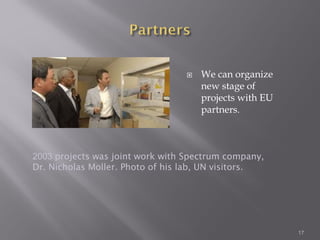
 We can organize
new stage of
projects with EU
partners.
17
2003 projects was joint work with Spectrum company,
Dr. Nicholas Moller. Photo of his lab, UN visitors.
18
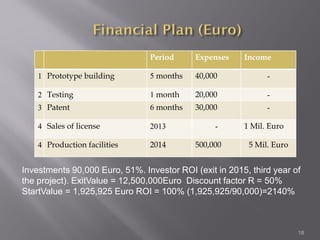
Period Expenses Income
1 Prototype building 5 months 40,000 -
2 Testing 1 month 20,000 -
3 Patent 6 months 30,000 -
4 Sales of license 2013 - 1 Mil. Euro
4 Production facilities 2014 500,000 5 Mil. Euro
Investments 90,000 Euro, 51%. Investor ROI (exit in 2015, third year of
the project). ExitValue = 12,500,000Euro Discount factor R = 50%
StartValue = 1,925,925 Euro ROI = 100% (1,925,925/90,000)=2140%
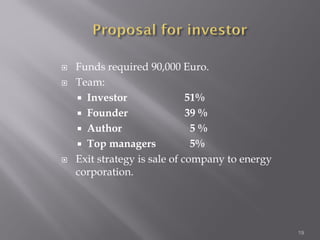
 Funds required 90,000 Euro.
 Team:
 Investor 51%
 Founder 39 %
 Author 5 %
 Top managers 5%
 Exit strategy is sale of company to energy
corporation.
19
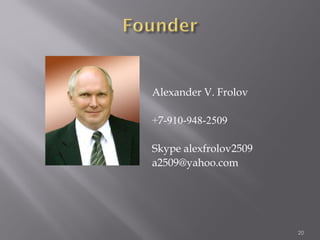
Alexander V. Frolov
+7-910-948-2509
Skype alexfrolov2509
a2509@yahoo.com
20

Atomic hydrogen power generator

  • 1.
  • 2.
     It isplanned to produce experimental unit of high efficient heat generator.  This method use hydrogen dissociation – recombination processes in closed volume of reactor. There is no radiation here.  We have to patent it and start sales of licenses.  In collaboration with industrial partners we can organize production facilities to fabricate high efficient heat generators for sale. 2
  • 3.
     Product isnew method to provide generation of heat and equipment using this technology.  Application:  Homer heating 10 kW – 30 kW.  Industrial needs 30 kW – 100 kW.  Power engineering 1 MW – 100MW. 3
  • 4.
    4 Main market ishome and industrial water heaters. Secondary market is electrical power plants using hot steam source for turbines. World market is about 15 Billion Euro + 3% year. It is planned to reach 1% of World market in 5 years. In 2016 sales can be about 165 Million Euro.
  • 5.
     Traditional boilersrequire a lot of electric energy.  Fuel and electricity are not low cost.  Customers are seeking energy saving methods.  There is demand in energy sources for space projects and new areas of the planet, where is not possibility to provide fuel.  World economics require new markets. 5
  • 6.
     Hydrogen moleculedissociation require energy input to get two atoms of hydrogen.  Two Hydrogen atoms can be recombined into one molecule with great heat output.  High efficiency of this processes (excess heat output) is possible if we’ll use low-energy method of dissociation of hydrogen. 6
  • 7.
     There aretwo main methods to use atomic hydrogen for heat generation:  1. It is possible to get heat directly during recombination process H+H = H2+Q on surface of catalizator (for example, tungsten).  2. Other way is transmutation method, for example, according Prof. Rossi technology it is possible to get great heat output transforming nickel to copper Ni + H = Cu + Q 7
  • 8.
     Project indevelopment, photo of 2003. Experiments were made and we have got positive conclusion about excess heat output.  Theoretical efficiency was 83 to 1 in this design of reactor. 8
  • 9.
     Old method:Gas mixture H2 + Hg  Resonance excitation by means of light 9
  • 10.
     Working bodyis mixture of hydrogen and xenon.  Dissociation of hydrogen is stimulated by resonance wave length light source. Recombination of atomic hydrogen will produce excess heat output. 10
  • 11.
     Other method:barrier electric discharge in xenon & hydrogen gas mixture.  Heat absorption is possible by tungsten layer on the pipe of heat exchanger. 11
  • 12.
     Catalizator (tungsten)is necessary to provide optimal conditions of recombination process H+H = H2 +Q 12
  • 13.
    13 Home heating systems (boilers) Industrialheating equipment, large heat sources
  • 14.
     Italian team(Andrea Rossi). Efficiency was reported about 3000% (400 W input can provide 12 kW heat).  The reactor also use catalizator and nickel powder saturated by hydrogen with 70 Atm pressure.  Ni to Cu transmutation was reported. 14 July 20, 2011 this team reported about contract on 1MW power plant for Greece.
  • 15.
     Our technologydoes not require spending of the catalizator.  Rossi use cold fusion reaction of transformation Ni to Cu. Also reactor require hydrogen input and recharging.  Ni and Hydrogen are fuel in this case.  In closed cycles of dissociation – recombination there is not waste of materials, here is no fuel.  Efficiency of the proposed technology can be much more better than Rossi’ process. 15
  • 16.
     2003 –2005 was invested 50,000 USD.  Patent was applied in Russia but failed.  Experimental equipment was exported to London and Sydney for testing. There are skeptical data.  Next stage prototype require to be designed, tested and new method can be patented.  In 2014 we can start sales of licenses.  Production facilities (home boilers and industrial heat sources) can be started in 2015. 16
  • 17.
     We canorganize new stage of projects with EU partners. 17 2003 projects was joint work with Spectrum company, Dr. Nicholas Moller. Photo of his lab, UN visitors.
  • 18.
    18 Period Expenses Income 1Prototype building 5 months 40,000 - 2 Testing 1 month 20,000 - 3 Patent 6 months 30,000 - 4 Sales of license 2013 - 1 Mil. Euro 4 Production facilities 2014 500,000 5 Mil. Euro Investments 90,000 Euro, 51%. Investor ROI (exit in 2015, third year of the project). ExitValue = 12,500,000Euro Discount factor R = 50% StartValue = 1,925,925 Euro ROI = 100% (1,925,925/90,000)=2140%
  • 19.
     Funds required90,000 Euro.  Team:  Investor 51%  Founder 39 %  Author 5 %  Top managers 5%  Exit strategy is sale of company to energy corporation. 19
  • 20.
    Alexander V. Frolov +7-910-948-2509 Skypealexfrolov2509 a2509@yahoo.com 20