Download to read offline
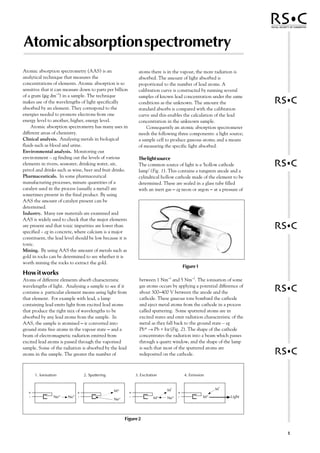


Atomic absorption spectrometry is an analytical technique that measures the concentration of elements in a sample by converting them to gaseous atoms and measuring how much light of a specific wavelength they absorb. It works by vaporizing the sample using a flame or heating and passing light from a hollow cathode lamp of the element through it. The amount of light absorbed is proportional to the concentration of the element and is measured using a detector. It has various applications in fields like clinical analysis, environmental monitoring, pharmaceuticals, mining and more. The document provides details on how atomic absorption spectrometry works and the components involved like the light source, atomization methods, and calibration.


