Mini Project Presentation 
Design of Automated Teller Machine 
Controller
Aim of the Project 
Design of Automated Teller Machine Controller
Objectives of the Project 
 To review the literature for understanding the Automated 
Teller Machine Controller realization for RTL Modeling 
 To arrive at the design specifications for architecture based on 
reviewed literature for intended application 
 To design Verilog module for controller and perform 
behavioral simulation 
 To Synthesis the design using the FPGA flow and perform 
implementation
Methods and Methodology 
Verilog model will be developed for selected architecture 
Functionality of the design will be verified using test 
bench in Modelsim 
Performance of the design with the required specifications 
will be compared 
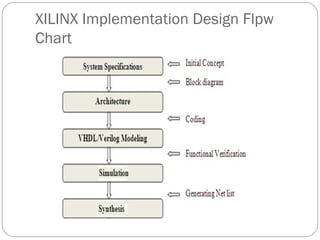
Synthesis will be performed and the gate level net list will 
be generated using Xilinx
ABSTRACT 
In the growing technological world, people want their work 
to be very simple in order to save their time. As we know 
some new technology is becoming popular in banking sector, 
which is referred as ATMs. It makes the work of people as 
well as the banking sectors to be easy. ATMs help in 
providing money to the people nearer to the living area by 
saving their time so that it becoming very popular. 
In this work the development of a Moore machine state 
diagram of an ATM controller.
. The developed design will be modeled using Verilog 
HDL language which is a Hardware Description 
Language (HDL) used to describe a digital system. The 
verification of developed model will be made by 
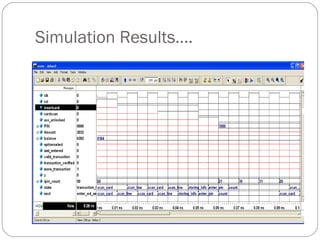
identifying the suitable test cases in a test bench. The 
simulation will be carried out using Modelsim tool and 
the intended functionality can be verified with the help 
of its simulation results and also it can be synthesized 
using the Xilinx tool.
LANGUAGES USED AND TOOLS 
VHDL/Verilog HDL 
TOOLS REQUIRED: 
MODELSIM – Simulation, 
 Xilinx - Synthesis
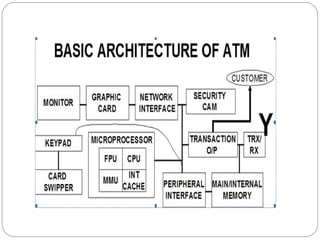
Basically an ATM (Automated Teller Machine) is the 
combination of hardware and software. The hardware used is 
card swiper, keypad, display, etc. The software such as 
operating system controls this hardware’s. Now a day’s 
digital system is entered in replacing the software. 
An automated teller machine (ATM) is a computerized 
electronic device that helps the customers of a financial 
institution to access the financial transactions in a public 
place without any help from others. 
ATMs have moved away from custom hardware 
architectures using microcontrollers and/or application-specific 
integrated circuits to adopting a hardware 
architecture that is very similar to a personal computer.
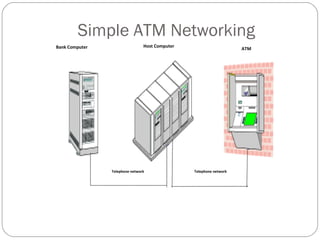
Simple ATM Networking 
Bank Computer Host Computer ATM 
Telephone network Telephone network
ATM accesses the bank account through telephone 
networking, a host processor and a bank computer to verify 
the data. All the operations of ATM are in synchronization in 
reference to a common clock source. In case of any 
misconnection between the process steps, the whole 
transaction is rolled back to effect no change in the account 
status. 
The ATM Controllers are working on windows based 
operating systems, which also provide ease to designers for 
programming and modeling its operation. ATM controllers 
are sophisticated chip elements designed and programmed to 
make the transaction simple and user-friendly
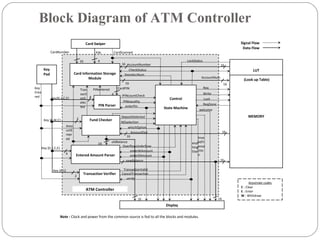
Block Diagram of ATM Controller 
Control 
State Machine 
Signal Flow 
Data Flow 
CardScanned 
Card Swiper 
4 
CardNumber PIN 
4 
PIN Parser 
4 
Fund Checker 
Entered Amount Parser 
AccountNumber 
IPINcountCheck 
DepositSelected 
NOselection 
OverflowUnderflow 
enterWAmount 
TransactionValid 
CancelTransaction 
Key{0,1,C,E} 
Note : Clock and power from the common source is fed to all the blocks and modules. 
Key 
Pad 
MEMORY 
Display 
LUT 
(Look up Table) 
Card Information Storage 
Module 
Transaction Verifier 
3 
4 
2 
16 16 
16 16 
16 
16 
16 
16 
16 16 
16 
CardPIN 
AccountNum 
PINentered 
enterPin 
Key 
Ente 
red 
Key {0,1,C,E} 
Tran 
sacti 
onS 
elec 
ted 
Amo 
untE 
nter 
ed 
CheckStatus 
StoreAccNum 
LockStatus 
PINequality 
whichOption 
oldBalance 
AmountOut 
enterDAmount 
newBalance 
verify 
Req 
Write 
Lock 
ReqDone 
welcome 
Inva 
lidTr 
ansa 
ctio 
n 
anyt 
hing 
Else 
Key {E,W,C} 
Key {0,1} 
Keystroke codes 
C : Clear 
E : Enter 
W : Withdraw 
ATM Controller
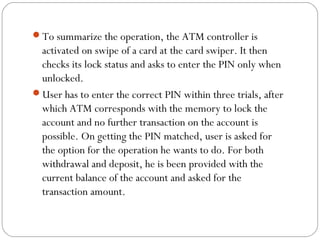
To summarize the operation, the ATM controller is 
activated on swipe of a card at the card swiper. It then 
checks its lock status and asks to enter the PIN only when 
unlocked. 
User has to enter the correct PIN within three trials, after 
which ATM corresponds with the memory to lock the 
account and no further transaction on the account is 
possible. On getting the PIN matched, user is asked for 
the option for the operation he wants to do. For both 
withdrawal and deposit, he is been provided with the 
current balance of the account and asked for the 
transaction amount.
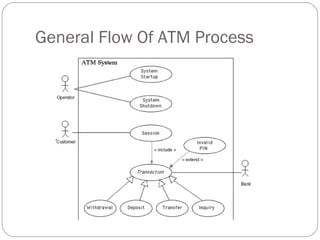
General Flow Of ATM Process
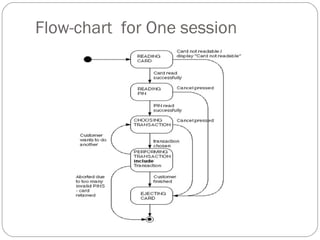
Flow-chart for One session
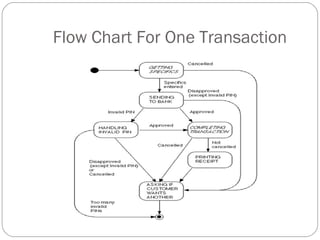
Flow Chart For One Transaction
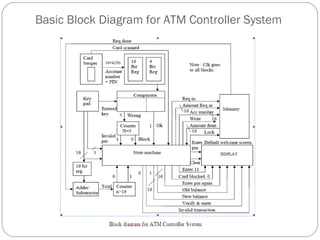
Basic Block Diagram for ATM Controller System
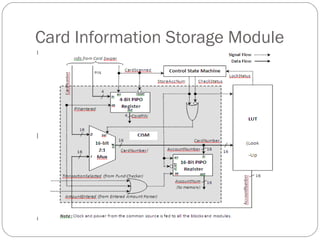
Card Information Storage Module
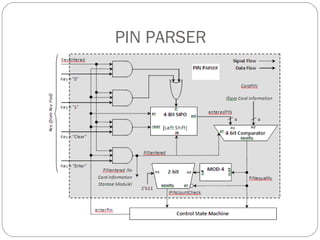
PIN PARSER
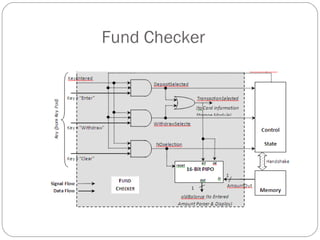
Fund Checker
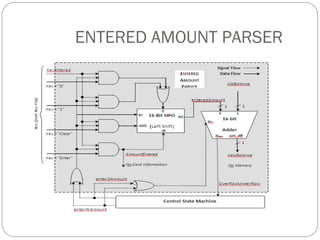
ENTERED AMOUNT PARSER
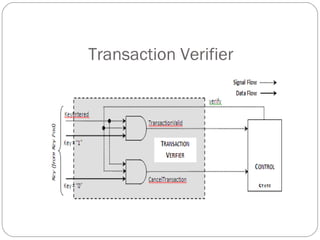
Transaction Verifier
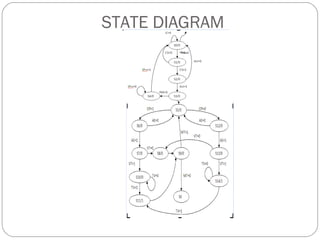
STATE DIAGRAM
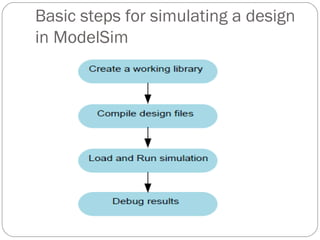
Basic steps for simulating a design 
in ModelSim
XILINX Implementation Design Flpw 
Chart
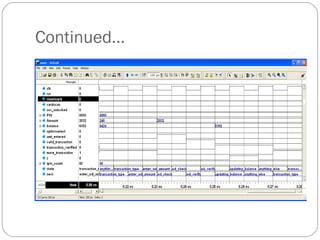
Simulation Results….
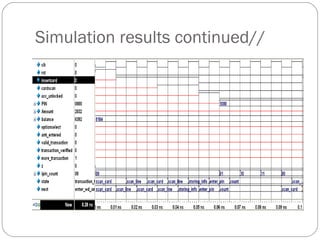
Simulation results continued//
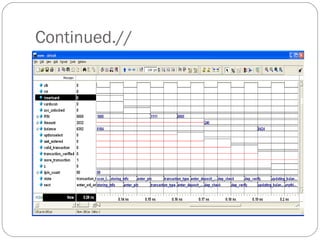
Continued.//
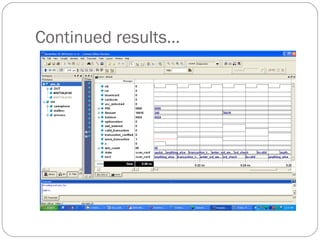
Continued…
Continued results…
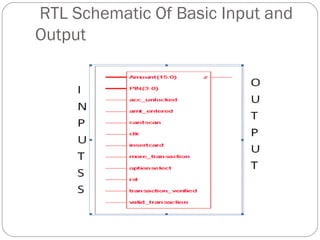
RTL Schematic Of Basic Input and 
Output
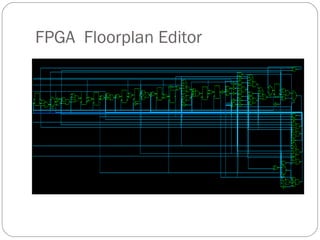
FPGA Floorplan Editor
THANK YOU

Atm.ppt

  • 1.
    Mini Project Presentation Design of Automated Teller Machine Controller
  • 2.
    Aim of theProject Design of Automated Teller Machine Controller
  • 3.
    Objectives of theProject  To review the literature for understanding the Automated Teller Machine Controller realization for RTL Modeling  To arrive at the design specifications for architecture based on reviewed literature for intended application  To design Verilog module for controller and perform behavioral simulation  To Synthesis the design using the FPGA flow and perform implementation
  • 4.
    Methods and Methodology Verilog model will be developed for selected architecture Functionality of the design will be verified using test bench in Modelsim Performance of the design with the required specifications will be compared Synthesis will be performed and the gate level net list will be generated using Xilinx
  • 5.
    ABSTRACT In thegrowing technological world, people want their work to be very simple in order to save their time. As we know some new technology is becoming popular in banking sector, which is referred as ATMs. It makes the work of people as well as the banking sectors to be easy. ATMs help in providing money to the people nearer to the living area by saving their time so that it becoming very popular. In this work the development of a Moore machine state diagram of an ATM controller.
  • 6.
    . The developeddesign will be modeled using Verilog HDL language which is a Hardware Description Language (HDL) used to describe a digital system. The verification of developed model will be made by identifying the suitable test cases in a test bench. The simulation will be carried out using Modelsim tool and the intended functionality can be verified with the help of its simulation results and also it can be synthesized using the Xilinx tool.
  • 7.
    LANGUAGES USED ANDTOOLS VHDL/Verilog HDL TOOLS REQUIRED: MODELSIM – Simulation,  Xilinx - Synthesis
  • 9.
    Basically an ATM(Automated Teller Machine) is the combination of hardware and software. The hardware used is card swiper, keypad, display, etc. The software such as operating system controls this hardware’s. Now a day’s digital system is entered in replacing the software. An automated teller machine (ATM) is a computerized electronic device that helps the customers of a financial institution to access the financial transactions in a public place without any help from others. ATMs have moved away from custom hardware architectures using microcontrollers and/or application-specific integrated circuits to adopting a hardware architecture that is very similar to a personal computer.
  • 10.
    Simple ATM Networking Bank Computer Host Computer ATM Telephone network Telephone network
  • 11.
    ATM accesses thebank account through telephone networking, a host processor and a bank computer to verify the data. All the operations of ATM are in synchronization in reference to a common clock source. In case of any misconnection between the process steps, the whole transaction is rolled back to effect no change in the account status. The ATM Controllers are working on windows based operating systems, which also provide ease to designers for programming and modeling its operation. ATM controllers are sophisticated chip elements designed and programmed to make the transaction simple and user-friendly
  • 12.
    Block Diagram ofATM Controller Control State Machine Signal Flow Data Flow CardScanned Card Swiper 4 CardNumber PIN 4 PIN Parser 4 Fund Checker Entered Amount Parser AccountNumber IPINcountCheck DepositSelected NOselection OverflowUnderflow enterWAmount TransactionValid CancelTransaction Key{0,1,C,E} Note : Clock and power from the common source is fed to all the blocks and modules. Key Pad MEMORY Display LUT (Look up Table) Card Information Storage Module Transaction Verifier 3 4 2 16 16 16 16 16 16 16 16 16 16 16 CardPIN AccountNum PINentered enterPin Key Ente red Key {0,1,C,E} Tran sacti onS elec ted Amo untE nter ed CheckStatus StoreAccNum LockStatus PINequality whichOption oldBalance AmountOut enterDAmount newBalance verify Req Write Lock ReqDone welcome Inva lidTr ansa ctio n anyt hing Else Key {E,W,C} Key {0,1} Keystroke codes C : Clear E : Enter W : Withdraw ATM Controller
  • 13.
    To summarize theoperation, the ATM controller is activated on swipe of a card at the card swiper. It then checks its lock status and asks to enter the PIN only when unlocked. User has to enter the correct PIN within three trials, after which ATM corresponds with the memory to lock the account and no further transaction on the account is possible. On getting the PIN matched, user is asked for the option for the operation he wants to do. For both withdrawal and deposit, he is been provided with the current balance of the account and asked for the transaction amount.
  • 14.
    General Flow OfATM Process
  • 15.
  • 16.
    Flow Chart ForOne Transaction
  • 17.
    Basic Block Diagramfor ATM Controller System
  • 18.
  • 19.
  • 20.
  • 21.
  • 22.
  • 23.
  • 24.
    Basic steps forsimulating a design in ModelSim
  • 25.
  • 26.
  • 27.
  • 28.
  • 29.
  • 30.
  • 31.
    RTL Schematic OfBasic Input and Output
  • 32.
  • 33.