The Very Young Learner and Learning English Language through the Vehicle of Sport and Dance
A Case study Polona Oblak, M.Sc. Matjaž Vehovar, BA
Who are we? Co-operation between Secondary Grammar School (SSD Borci) and Faculty of Education Maribor Pilot Project (4 years)
Target Group Children aged 4-7: Old Enough to Socialise ‘ Young’ Enough to Acquire a Language?! Being the most Receptive Whole Person Development/ Life-long Learning Develop Skills and Abilities
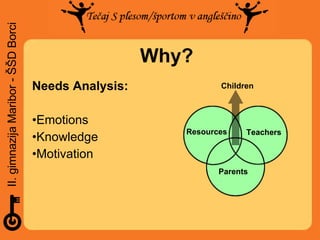
Why? Needs Analysis: Emotions Knowledge  Motivation Children Resources Parents Teachers
How? Sportshall 2 Professionals (Sports,English) Small Groups (10 - 12) EFL (English as a Foreign Language) 90 Minutes per Week
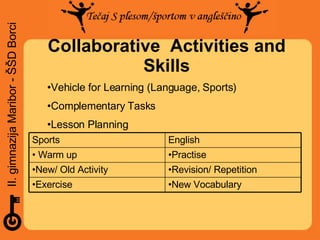
Collaborative  Activities and Skills Vehicle for Learning (Language, Sports) Complementary Tasks Lesson Planning New Vocabulary Exercise Revision/ Repetition New/ Old Activity Practise Warm up English Sports
T eam-teaching Traditional Team-teaching Diferentiated Split class Team-teaching Parallel Instruction Complimentary or Supportive Instruction Monitoring Teacher English Corner Warming up Activities Stations
Cross-disciplinary Goals Stimulative  Enviroment  Engagement of Students in Authentic real-world Tasks Satisfy Different Learning Styles Develop Child’s Multiple Intelligences Student-centred and Teacher Facilitated Approach
Main Sport Objectives Functional Capabilities (cardio-vascular system, heart, and loungs) Psychomotor Development Learning the Motor–physical Skills Relaxation (Yoga for Children)
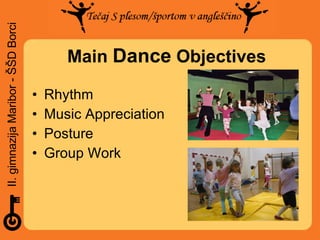
Main  Dance  Objectives Rhythm Music Appreciation Posture Group Work
Main Language Objectives Positive Attitude towards Foreign Language Learning Pronunciation Acquire Chunks of Language Grasp the Meaning Develop Child’s Imagination and Be Creative  Use their Instinct for Talk and Interaction for FLA
Project Perspectives Find Cross-curricular Activities that would link Sports/ Dance and English Produce more Authentic Situations Include Native Speaker Apply to other Languages (German, French, Spanish) Write and Publish own Materials (activities, tasks, audio-video) Develop Methods of Assessment and Evaluation for Very Young Learners
Conclusion Life-long Learning Methodology: Team-teaching Approach: Collaboration Activities: Synergy Worthwhile Activity Motivation: High Achievers
Further Reading Bergen D. (1994). Child Education: Developing Art and Science od Team Teaching. Davis, J. R. (1995). Interdisciplinary courses and teamteaching: New arrangements for learning. Phoenix: Orxy Press.   Dunn, O. (1984). Developing English with Young Learners. Hemel Hampsted. Practice Hall. Lightbown, M.P. and Spada, N. (1999). How Languages are Learned. Oxford: OUP. Oblak, P. (2003). The Young Learner and Learning a Language through the Vehicle of Sport: A Case Study. Oxford: Oxford Brookes University.
Thank you for your Attention!

Atee Oblak

  • 1.
    The Very YoungLearner and Learning English Language through the Vehicle of Sport and Dance
  • 2.
    A Case studyPolona Oblak, M.Sc. Matjaž Vehovar, BA
  • 3.
    Who are we?Co-operation between Secondary Grammar School (SSD Borci) and Faculty of Education Maribor Pilot Project (4 years)
  • 4.
    Target Group Childrenaged 4-7: Old Enough to Socialise ‘ Young’ Enough to Acquire a Language?! Being the most Receptive Whole Person Development/ Life-long Learning Develop Skills and Abilities
  • 5.
    Why? Needs Analysis:Emotions Knowledge Motivation Children Resources Parents Teachers
  • 6.
    How? Sportshall 2Professionals (Sports,English) Small Groups (10 - 12) EFL (English as a Foreign Language) 90 Minutes per Week
  • 7.
    Collaborative Activitiesand Skills Vehicle for Learning (Language, Sports) Complementary Tasks Lesson Planning New Vocabulary Exercise Revision/ Repetition New/ Old Activity Practise Warm up English Sports
  • 8.
    T eam-teaching TraditionalTeam-teaching Diferentiated Split class Team-teaching Parallel Instruction Complimentary or Supportive Instruction Monitoring Teacher English Corner Warming up Activities Stations
  • 9.
    Cross-disciplinary Goals Stimulative Enviroment Engagement of Students in Authentic real-world Tasks Satisfy Different Learning Styles Develop Child’s Multiple Intelligences Student-centred and Teacher Facilitated Approach
  • 10.
    Main Sport ObjectivesFunctional Capabilities (cardio-vascular system, heart, and loungs) Psychomotor Development Learning the Motor–physical Skills Relaxation (Yoga for Children)
  • 11.
    Main Dance Objectives Rhythm Music Appreciation Posture Group Work
  • 12.
    Main Language ObjectivesPositive Attitude towards Foreign Language Learning Pronunciation Acquire Chunks of Language Grasp the Meaning Develop Child’s Imagination and Be Creative Use their Instinct for Talk and Interaction for FLA
  • 13.
    Project Perspectives FindCross-curricular Activities that would link Sports/ Dance and English Produce more Authentic Situations Include Native Speaker Apply to other Languages (German, French, Spanish) Write and Publish own Materials (activities, tasks, audio-video) Develop Methods of Assessment and Evaluation for Very Young Learners
  • 14.
    Conclusion Life-long LearningMethodology: Team-teaching Approach: Collaboration Activities: Synergy Worthwhile Activity Motivation: High Achievers
  • 15.
    Further Reading BergenD. (1994). Child Education: Developing Art and Science od Team Teaching. Davis, J. R. (1995). Interdisciplinary courses and teamteaching: New arrangements for learning. Phoenix: Orxy Press. Dunn, O. (1984). Developing English with Young Learners. Hemel Hampsted. Practice Hall. Lightbown, M.P. and Spada, N. (1999). How Languages are Learned. Oxford: OUP. Oblak, P. (2003). The Young Learner and Learning a Language through the Vehicle of Sport: A Case Study. Oxford: Oxford Brookes University.
  • 16.
    Thank you foryour Attention!