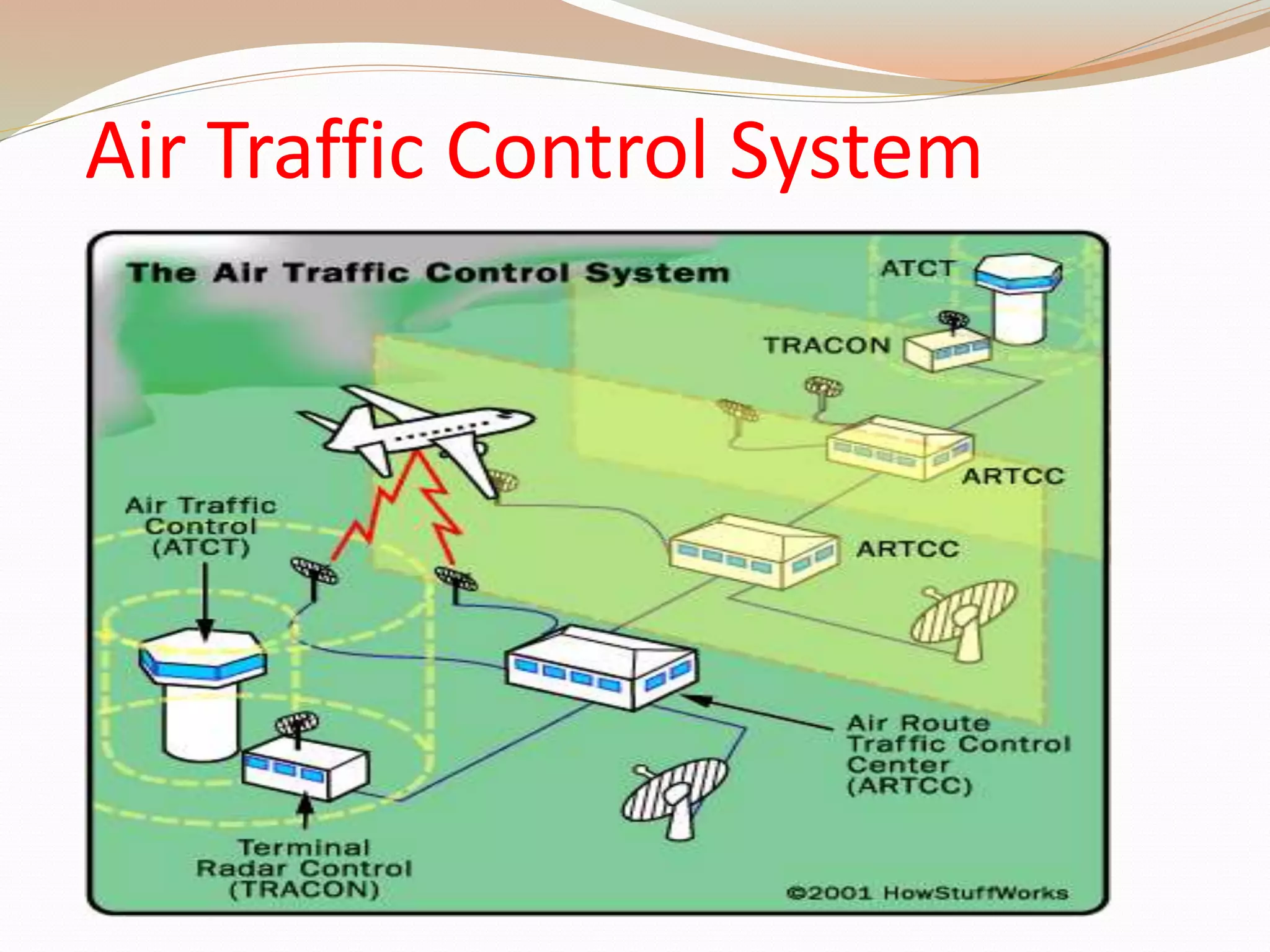
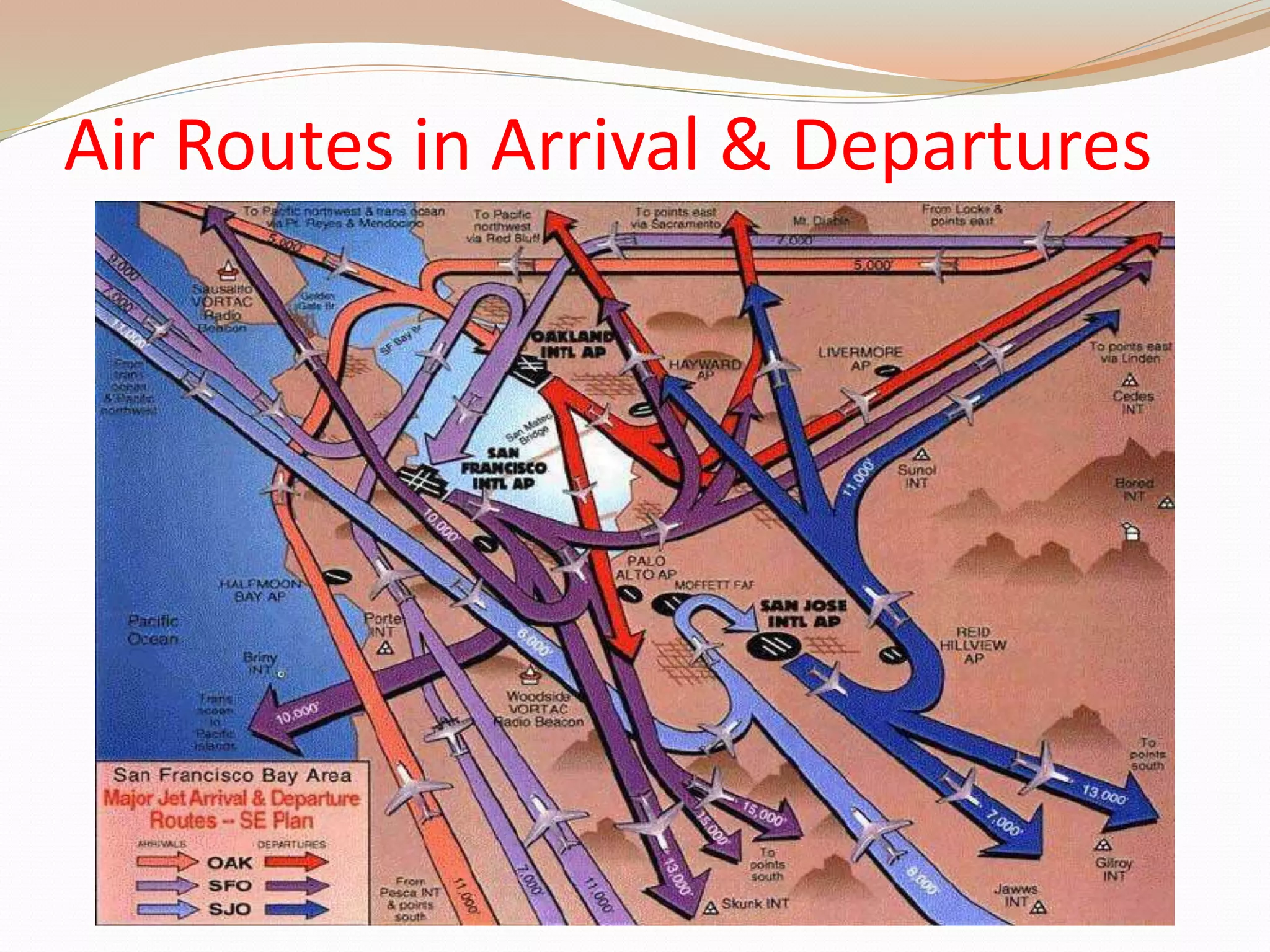
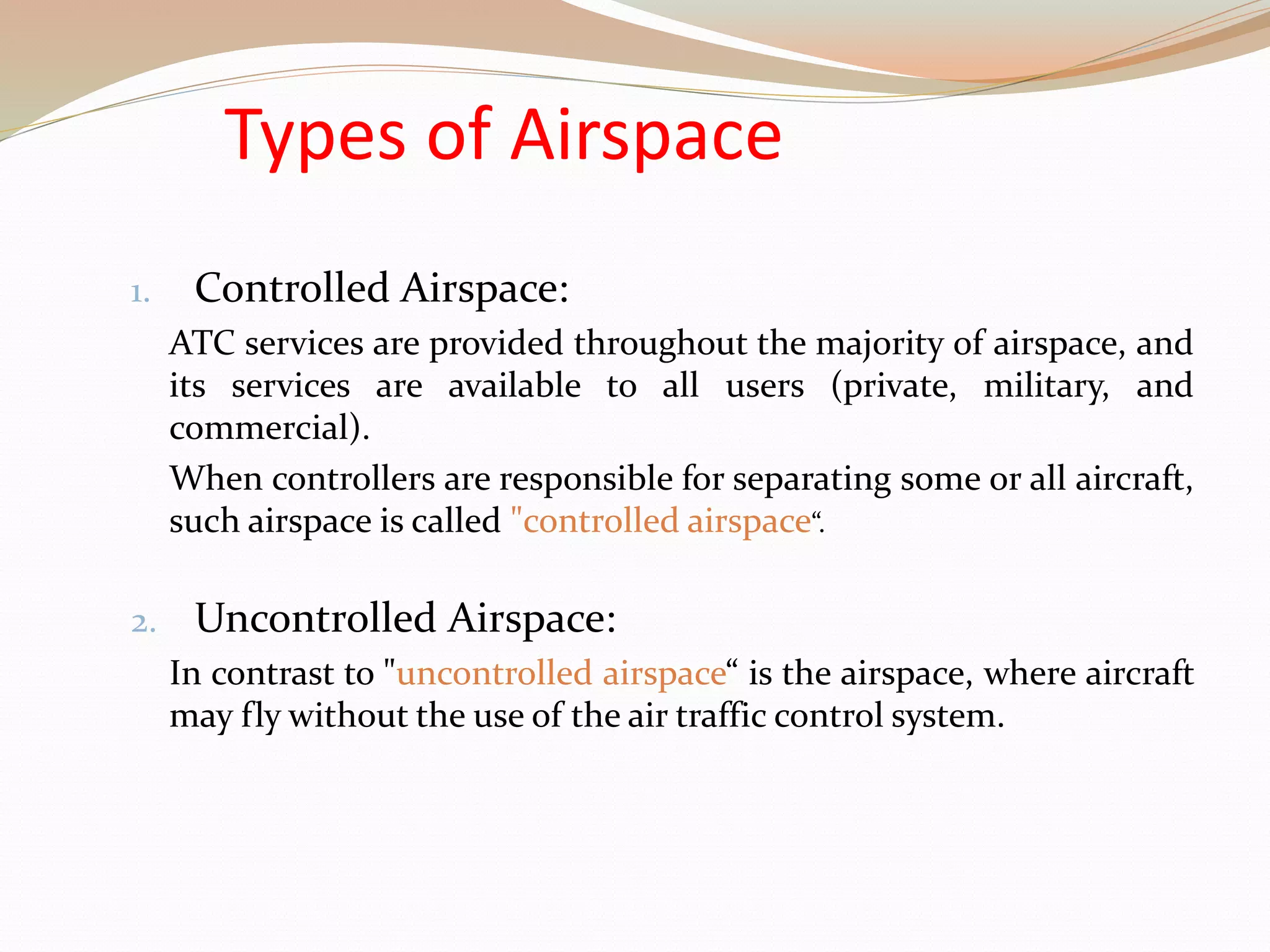
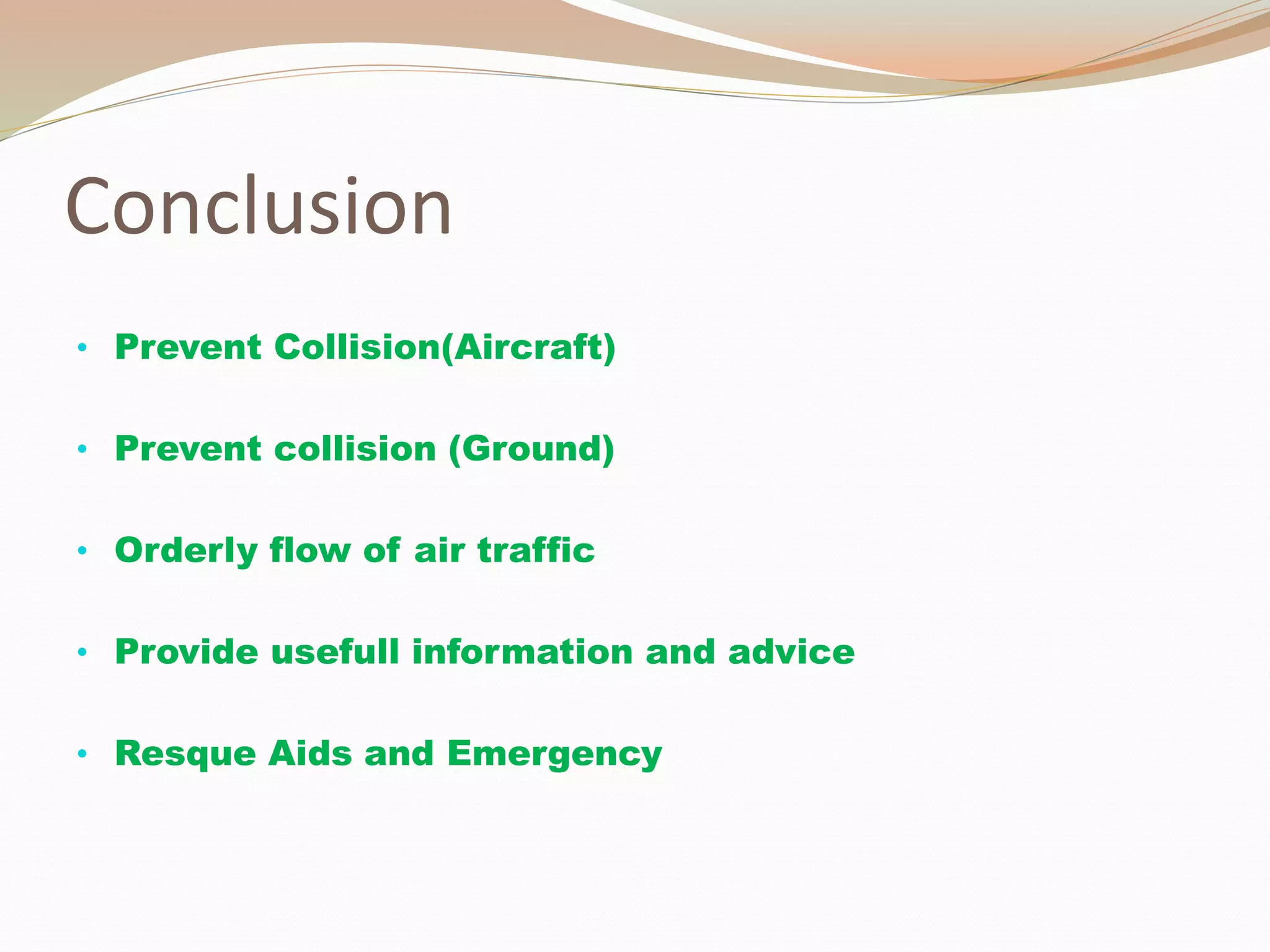
The document discusses air traffic control (ATC), which is a service that directs aircraft both on the ground and in the air to safely and efficiently guide air traffic. The primary goals of ATC are to prevent collisions between aircraft, organize traffic flow, and provide pilots with information. The document outlines the ATC system, different types of airspace that have varying levels of ATC, and concludes that ATC aims to prevent collisions of aircraft and objects on the ground while allowing for orderly traffic flow and pilot assistance.






![A presentation on internship from jaipur Airport [AAI]](https://cdn.slidesharecdn.com/ss_thumbnails/airportpptbyadityasept-160404162154-thumbnail.jpg?width=640&height=640&fit=bounds)
![Seminar Report on Airport Authority of India [AAI]](https://cdn.slidesharecdn.com/ss_thumbnails/fullreport-160404161443-thumbnail.jpg?width=640&height=640&fit=bounds)


