SUBMITTED TO: PROF. RIZMAN ALI
SUBMITTED BY: ALI JAN MUHAMMAD
REG NO: FA21-BMC-029
STAGE
1
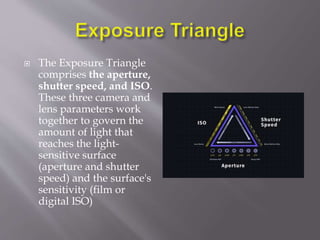
 The Exposure Triangle
comprises the aperture,
shutter speed, and ISO.
These three camera and
lens parameters work
together to govern the
amount of light that
reaches the light-
sensitive surface
(aperture and shutter
speed) and the surface's
sensitivity (film or
digital ISO)
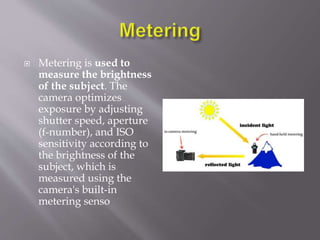
 Metering is used to
measure the brightness
of the subject. The
camera optimizes
exposure by adjusting
shutter speed, aperture
(f-number), and ISO
sensitivity according to
the brightness of the
subject, which is
measured using the
camera's built-in
metering senso
 This include a persons
personal interest that
how he look, read and
take the pictures.
 Personal Exposure of
a person matters a lot
in taking and reading
the image precisely.
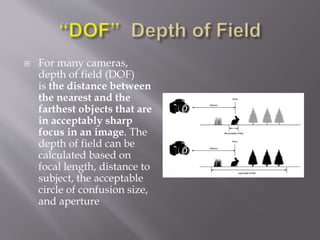
 For many cameras,
depth of field (DOF)
is the distance between
the nearest and the
farthest objects that are
in acceptably sharp
focus in an image. The
depth of field can be
calculated based on
focal length, distance to
subject, the acceptable
circle of confusion size,
and aperture
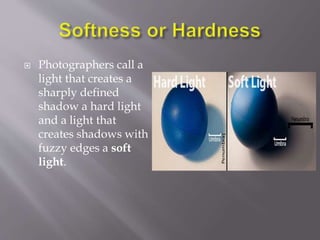
 Photographers call a
light that creates a
sharply defined
shadow a hard light
and a light that
creates shadows with
fuzzy edges a soft
light.
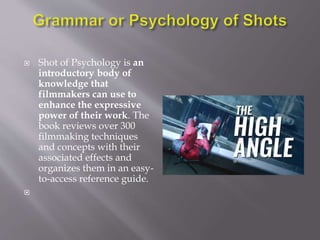
 Shot of Psychology is an
introductory body of
knowledge that
filmmakers can use to
enhance the expressive
power of their work. The
book reviews over 300
filmmaking techniques
and concepts with their
associated effects and
organizes them in an easy-
to-access reference guide.

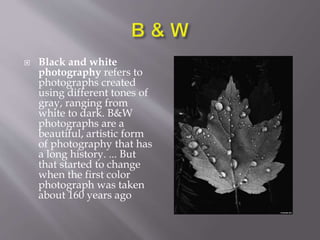
 Black and white
photography refers to
photographs created
using different tones of
gray, ranging from
white to dark. B&W
photographs are a
beautiful, artistic form
of photography that has
a long history. ... But
that started to change
when the first color
photograph was taken
about 160 years ago
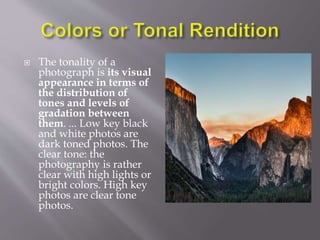
 The tonality of a
photograph is its visual
appearance in terms of
the distribution of
tones and levels of
gradation between
them. ... Low key black
and white photos are
dark toned photos. The
clear tone: the
photography is rather
clear with high lights or
bright colors. High key
photos are clear tone
photos.
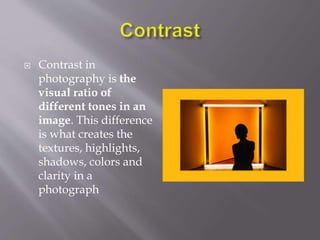
 Contrast in
photography is the
visual ratio of
different tones in an
image. This difference
is what creates the
textures, highlights,
shadows, colors and
clarity in a
photograph
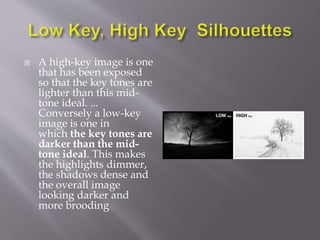
 A high-key image is one
that has been exposed
so that the key tones are
lighter than this mid-
tone ideal. ...
Conversely a low-key
image is one in
which the key tones are
darker than the mid-
tone ideal. This makes
the highlights dimmer,
the shadows dense and
the overall image
looking darker and
more brooding
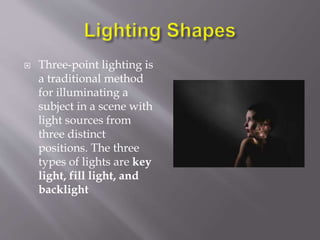
 Three-point lighting is
a traditional method
for illuminating a
subject in a scene with
light sources from
three distinct
positions. The three
types of lights are key
light, fill light, and
backlight
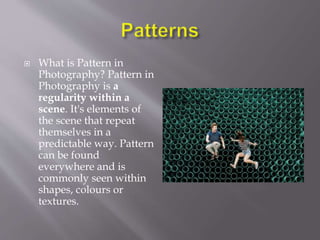
 What is Pattern in
Photography? Pattern in
Photography is a
regularity within a
scene. It's elements of
the scene that repeat
themselves in a
predictable way. Pattern
can be found
everywhere and is
commonly seen within
shapes, colours or
textures.
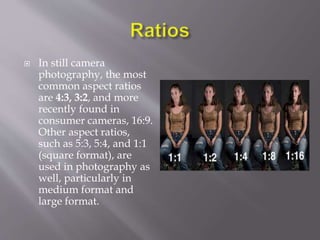
 In still camera
photography, the most
common aspect ratios
are 4:3, 3:2, and more
recently found in
consumer cameras, 16:9.
Other aspect ratios,
such as 5:3, 5:4, and 1:1
(square format), are
used in photography as
well, particularly in
medium format and
large format.
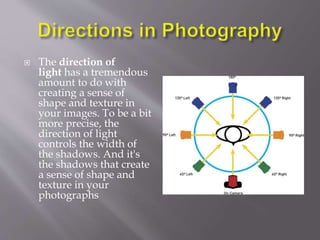
 The direction of
light has a tremendous
amount to do with
creating a sense of
shape and texture in
your images. To be a bit
more precise, the
direction of light
controls the width of
the shadows. And it's
the shadows that create
a sense of shape and
texture in your
photographs
STAGE
2
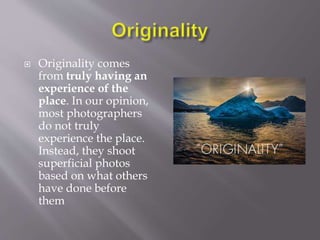
 Originality comes
from truly having an
experience of the
place. In our opinion,
most photographers
do not truly
experience the place.
Instead, they shoot
superficial photos
based on what others
have done before
them
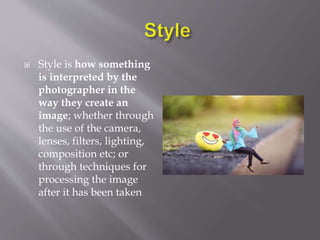
 Style is how something
is interpreted by the
photographer in the
way they create an
image; whether through
the use of the camera,
lenses, filters, lighting,
composition etc; or
through techniques for
processing the image
after it has been taken
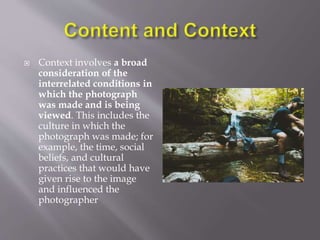
 Context involves a broad
consideration of the
interrelated conditions in
which the photograph
was made and is being
viewed. This includes the
culture in which the
photograph was made; for
example, the time, social
beliefs, and cultural
practices that would have
given rise to the image
and influenced the
photographer
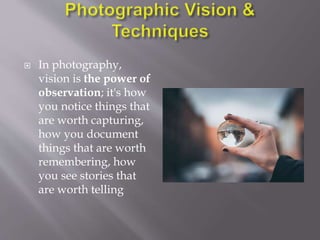
 In photography,
vision is the power of
observation; it's how
you notice things that
are worth capturing,
how you document
things that are worth
remembering, how
you see stories that
are worth telling
 
By Earl
Nottingham. 


Photograp
hers often hear the
phrase “You've got a
great eye.” In reality, a
“great eye” is nothing
more than a learned
sense of visual
awareness that enables
you to quickly
recognize a subject or
situation that lends
itself to the creation of
an exciting photograph.
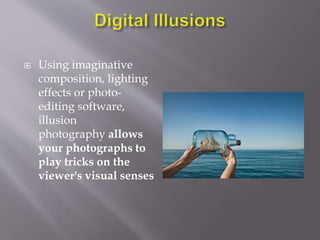
 Using imaginative
composition, lighting
effects or photo-
editing software,
illusion
photography allows
your photographs to
play tricks on the
viewer's visual senses
THANK YOU

ASSINGMENT PHOTO JOURNALISM.pptx

  • 1.
    SUBMITTED TO: PROF.RIZMAN ALI SUBMITTED BY: ALI JAN MUHAMMAD REG NO: FA21-BMC-029
  • 2.
  • 3.
     The ExposureTriangle comprises the aperture, shutter speed, and ISO. These three camera and lens parameters work together to govern the amount of light that reaches the light- sensitive surface (aperture and shutter speed) and the surface's sensitivity (film or digital ISO)
  • 4.
     Metering isused to measure the brightness of the subject. The camera optimizes exposure by adjusting shutter speed, aperture (f-number), and ISO sensitivity according to the brightness of the subject, which is measured using the camera's built-in metering senso
  • 5.
     This includea persons personal interest that how he look, read and take the pictures.  Personal Exposure of a person matters a lot in taking and reading the image precisely.
  • 6.
     For manycameras, depth of field (DOF) is the distance between the nearest and the farthest objects that are in acceptably sharp focus in an image. The depth of field can be calculated based on focal length, distance to subject, the acceptable circle of confusion size, and aperture
  • 7.
     Photographers calla light that creates a sharply defined shadow a hard light and a light that creates shadows with fuzzy edges a soft light.
  • 8.
     Shot ofPsychology is an introductory body of knowledge that filmmakers can use to enhance the expressive power of their work. The book reviews over 300 filmmaking techniques and concepts with their associated effects and organizes them in an easy- to-access reference guide. 
  • 9.
     Black andwhite photography refers to photographs created using different tones of gray, ranging from white to dark. B&W photographs are a beautiful, artistic form of photography that has a long history. ... But that started to change when the first color photograph was taken about 160 years ago
  • 10.
     The tonalityof a photograph is its visual appearance in terms of the distribution of tones and levels of gradation between them. ... Low key black and white photos are dark toned photos. The clear tone: the photography is rather clear with high lights or bright colors. High key photos are clear tone photos.
  • 11.
     Contrast in photographyis the visual ratio of different tones in an image. This difference is what creates the textures, highlights, shadows, colors and clarity in a photograph
  • 12.
     A high-keyimage is one that has been exposed so that the key tones are lighter than this mid- tone ideal. ... Conversely a low-key image is one in which the key tones are darker than the mid- tone ideal. This makes the highlights dimmer, the shadows dense and the overall image looking darker and more brooding
  • 13.
     Three-point lightingis a traditional method for illuminating a subject in a scene with light sources from three distinct positions. The three types of lights are key light, fill light, and backlight
  • 14.
     What isPattern in Photography? Pattern in Photography is a regularity within a scene. It's elements of the scene that repeat themselves in a predictable way. Pattern can be found everywhere and is commonly seen within shapes, colours or textures.
  • 15.
     In stillcamera photography, the most common aspect ratios are 4:3, 3:2, and more recently found in consumer cameras, 16:9. Other aspect ratios, such as 5:3, 5:4, and 1:1 (square format), are used in photography as well, particularly in medium format and large format.
  • 16.
     The directionof light has a tremendous amount to do with creating a sense of shape and texture in your images. To be a bit more precise, the direction of light controls the width of the shadows. And it's the shadows that create a sense of shape and texture in your photographs
  • 17.
  • 18.
     Originality comes fromtruly having an experience of the place. In our opinion, most photographers do not truly experience the place. Instead, they shoot superficial photos based on what others have done before them
  • 19.
     Style ishow something is interpreted by the photographer in the way they create an image; whether through the use of the camera, lenses, filters, lighting, composition etc; or through techniques for processing the image after it has been taken
  • 20.
     Context involvesa broad consideration of the interrelated conditions in which the photograph was made and is being viewed. This includes the culture in which the photograph was made; for example, the time, social beliefs, and cultural practices that would have given rise to the image and influenced the photographer
  • 21.
     In photography, visionis the power of observation; it's how you notice things that are worth capturing, how you document things that are worth remembering, how you see stories that are worth telling
  • 22.
      By Earl Nottingham.          Photograp hers often hear the phrase “You've got a great eye.” In reality, a “great eye” is nothing more than a learned sense of visual awareness that enables you to quickly recognize a subject or situation that lends itself to the creation of an exciting photograph.
  • 23.
     Using imaginative composition,lighting effects or photo- editing software, illusion photography allows your photographs to play tricks on the viewer's visual senses
  • 24.