LIGHTING Sam Stockwell
LIGHTING- WHY IS LIGHTING
EFFECTIVE?
Filmmaking is all about capturing light. A bright light catches the
viewers eye. A scene can be lit by available light (the sun, moon or
existing light sources) or using powerful and expensive artificial light.
The way a scene is lit influences how the audience will react
emotionally to your movie.
The angle and direction of light gives your audience clues about
where and what time of day the scene is taking place. The quality of
light can hide or reveal key parts of a scene which can influence the
audiences reaction.
In films the lighting is a high priority because how well the movie is
lit influences how the audience perceives the production values of the
movie and therefore the quality of the movie. Badly lit images can do
more to make a film look more basic.
QUALITY OF LIGHT
Light can be put into different sections such as:
Angle
Brightness
Colour
Number of lights and how they contrast together
LIGHTING
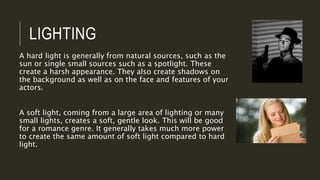
A hard light is generally from natural sources, such as the
sun or single small sources such as a spotlight. These
create a harsh appearance. They also create shadows on
the background as well as on the face and features of your
actors.
A soft light, coming from a large area of lighting or many
small lights, creates a soft, gentle look. This will be good
for a romance genre. It generally takes much more power
to create the same amount of soft light compared to hard
light.
SET UP OF LIGHT
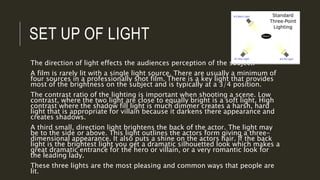
The direction of light effects the audiences perception of the subject.
A film is rarely lit with a single light source. There are usually a minimum of
four sources in a professionally shot film. There is a key light that provides
most of the brightness on the subject and is typically at a 3/4 position.
The contrast ratio of the lighting is important when shooting a scene. Low
contrast, where the two light are close to equally bright is a soft light. High
contrast where the shadow fill light is much dimmer creates a harsh, hard
light that is appropriate for villain because it darkens there appearance and
creates shadows.
A third small, direction light brightens the back of the actor. The light may
be to the side or above. This light outlines the actors form giving a three-
dimensional appearance. It also puts a shine on the actors hair. If the back
light is the brightest light you get a dramatic silhouetted look which makes a
great dramatic entrance for the hero or villain, or a very romantic look for
the leading lady.
These three lights are the most pleasing and common ways that people are
lit.

Lighting examples

  • 1.
  • 2.
    LIGHTING- WHY ISLIGHTING EFFECTIVE? Filmmaking is all about capturing light. A bright light catches the viewers eye. A scene can be lit by available light (the sun, moon or existing light sources) or using powerful and expensive artificial light. The way a scene is lit influences how the audience will react emotionally to your movie. The angle and direction of light gives your audience clues about where and what time of day the scene is taking place. The quality of light can hide or reveal key parts of a scene which can influence the audiences reaction. In films the lighting is a high priority because how well the movie is lit influences how the audience perceives the production values of the movie and therefore the quality of the movie. Badly lit images can do more to make a film look more basic.
  • 3.
    QUALITY OF LIGHT Lightcan be put into different sections such as: Angle Brightness Colour Number of lights and how they contrast together
  • 4.
    LIGHTING A hard lightis generally from natural sources, such as the sun or single small sources such as a spotlight. These create a harsh appearance. They also create shadows on the background as well as on the face and features of your actors. A soft light, coming from a large area of lighting or many small lights, creates a soft, gentle look. This will be good for a romance genre. It generally takes much more power to create the same amount of soft light compared to hard light.
  • 5.
    SET UP OFLIGHT The direction of light effects the audiences perception of the subject. A film is rarely lit with a single light source. There are usually a minimum of four sources in a professionally shot film. There is a key light that provides most of the brightness on the subject and is typically at a 3/4 position. The contrast ratio of the lighting is important when shooting a scene. Low contrast, where the two light are close to equally bright is a soft light. High contrast where the shadow fill light is much dimmer creates a harsh, hard light that is appropriate for villain because it darkens there appearance and creates shadows. A third small, direction light brightens the back of the actor. The light may be to the side or above. This light outlines the actors form giving a three- dimensional appearance. It also puts a shine on the actors hair. If the back light is the brightest light you get a dramatic silhouetted look which makes a great dramatic entrance for the hero or villain, or a very romantic look for the leading lady. These three lights are the most pleasing and common ways that people are lit.