Three-point lighting

Three-point lighting is a standard method used in visual media such as video, film, still
photography and computer-generated imagery. By using three separate positions, the
photographer can illuminate the shot's subject (such as a person) however desired, while
also controlling (or eliminating entirely) the shading and shadows produced by direct lighting.

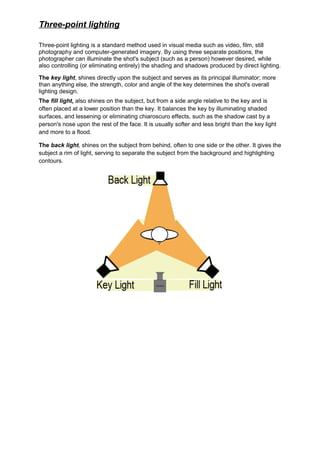
The key light, shines directly upon the subject and serves as its principal illuminator; more
than anything else, the strength, color and angle of the key determines the shot's overall
lighting design.
The fill light, also shines on the subject, but from a side angle relative to the key and is
often placed at a lower position than the key. It balances the key by illuminating shaded
surfaces, and lessening or eliminating chiaroscuro effects, such as the shadow cast by a
person's nose upon the rest of the face. It is usually softer and less bright than the key light
and more to a flood.

The back light, shines on the subject from behind, often to one side or the other. It gives the
subject a rim of light, serving to separate the subject from the background and highlighting
contours.

Three point lighting

  • 1.
    Three-point lighting Three-point lightingis a standard method used in visual media such as video, film, still photography and computer-generated imagery. By using three separate positions, the photographer can illuminate the shot's subject (such as a person) however desired, while also controlling (or eliminating entirely) the shading and shadows produced by direct lighting. The key light, shines directly upon the subject and serves as its principal illuminator; more than anything else, the strength, color and angle of the key determines the shot's overall lighting design. The fill light, also shines on the subject, but from a side angle relative to the key and is often placed at a lower position than the key. It balances the key by illuminating shaded surfaces, and lessening or eliminating chiaroscuro effects, such as the shadow cast by a person's nose upon the rest of the face. It is usually softer and less bright than the key light and more to a flood. The back light, shines on the subject from behind, often to one side or the other. It gives the subject a rim of light, serving to separate the subject from the background and highlighting contours.