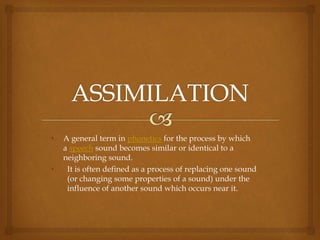
• A general term in phonetics for the process by which
a speech sound becomes similar or identical to a
neighboring sound.
• It is often defined as a process of replacing one sound
(or changing some properties of a sound) under the
influence of another sound which occurs near it.

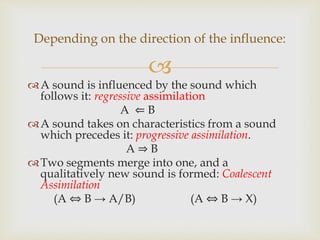
A sound is influenced by the sound which
follows it: regressive assimilation
A ⇐ B
A sound takes on characteristics from a sound
which precedes it: progressive assimilation.
A ⇒ B
Two segments merge into one, and a
qualitatively new sound is formed: Coalescent
Assimilation
(A ⇔ B → A/B) (A ⇔ B → X)
Depending on the direction of the influence:

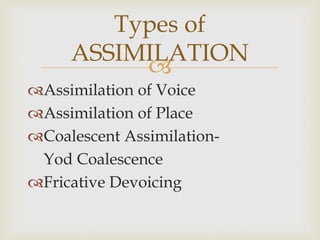
Assimilation of Voice
Assimilation of Place
Coalescent Assimilation-
Yod Coalescence
Fricative Devoicing
Types of
ASSIMILATION

 Regressive
-of course / əf kɔːs /
-supposed to / səˈpəʊst tə/
-used to /juːst tə/
-newspaper /ˈnjuːspeɪpə/
- have to /hæf tə/
 Progressive (Established cases)
-the weakest form of IS/HAS
-the genitive case
-the third person singular morphene
-the preterite morphene
-the plural morphene
Assimilation of Voice
/ˈdʌzənz/

/t/ FOLLOWED
BY /p/ /b / / m/
BECOMES
/p/
/d/ /b /
/n/ /m/
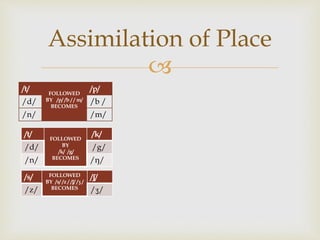
Assimilation of Place
/t/ FOLLOWED
BY
/k/ /g/
BECOMES
/k/
/d/ /g/
/n/ /ŋ/
/s/ FOLLOWED
BY /s/ /z / /ʃ/ /ʒ /
BECOMES
/ʃ/
/z/ /ʒ/

 1- /t/ + /j/ = /tʃ /
Nice to meet you
meet + you /mi:t jʊ/ = /mi:tʃʊ/
 2- /d/ + /j/ = /dʒ /
Would you like some tea?
would + you /wʊd jʊ/ = /wʊdʒʊ/
 3- /s/ + /j/ = /ʃ /
It's just you = it's jus' you /dʒʌs jʊ/= /dʒʌʃʊ/
 4- /z/ + /j/ = /ʒ /
learning centres such as universities
as + universities /əz ju:nɪvɜ:sɪtɪz/ = /əʒu:nɪvɜ:sɪtɪz/
Coalescent Assimilation

/v/
Becomes
/f/
When followed by any voiceless
sound
/z/ /s/
/ʒ/
/ /
/ʃ/
/ /
Fricative Devoicing

ASSIMILATION.pptx

  • 1.
    • A generalterm in phonetics for the process by which a speech sound becomes similar or identical to a neighboring sound. • It is often defined as a process of replacing one sound (or changing some properties of a sound) under the influence of another sound which occurs near it.
  • 2.
     A sound isinfluenced by the sound which follows it: regressive assimilation A ⇐ B A sound takes on characteristics from a sound which precedes it: progressive assimilation. A ⇒ B Two segments merge into one, and a qualitatively new sound is formed: Coalescent Assimilation (A ⇔ B → A/B) (A ⇔ B → X) Depending on the direction of the influence:
  • 3.
     Assimilation of Voice Assimilationof Place Coalescent Assimilation- Yod Coalescence Fricative Devoicing Types of ASSIMILATION
  • 4.
      Regressive -of course/ əf kɔːs / -supposed to / səˈpəʊst tə/ -used to /juːst tə/ -newspaper /ˈnjuːspeɪpə/ - have to /hæf tə/  Progressive (Established cases) -the weakest form of IS/HAS -the genitive case -the third person singular morphene -the preterite morphene -the plural morphene Assimilation of Voice /ˈdʌzənz/
  • 5.
     /t/ FOLLOWED BY /p//b / / m/ BECOMES /p/ /d/ /b / /n/ /m/ Assimilation of Place /t/ FOLLOWED BY /k/ /g/ BECOMES /k/ /d/ /g/ /n/ /ŋ/ /s/ FOLLOWED BY /s/ /z / /ʃ/ /ʒ / BECOMES /ʃ/ /z/ /ʒ/
  • 6.
      1- /t/+ /j/ = /tʃ / Nice to meet you meet + you /mi:t jʊ/ = /mi:tʃʊ/  2- /d/ + /j/ = /dʒ / Would you like some tea? would + you /wʊd jʊ/ = /wʊdʒʊ/  3- /s/ + /j/ = /ʃ / It's just you = it's jus' you /dʒʌs jʊ/= /dʒʌʃʊ/  4- /z/ + /j/ = /ʒ / learning centres such as universities as + universities /əz ju:nɪvɜ:sɪtɪz/ = /əʒu:nɪvɜ:sɪtɪz/ Coalescent Assimilation
  • 7.
     /v/ Becomes /f/ When followed byany voiceless sound /z/ /s/ /ʒ/ / / /ʃ/ / / Fricative Devoicing