The Industrial
 Revolution
 By: Keenan Reardon
Industrial Revolution

• The Industrial Revolution was a time
  period during the late 1700s in
  England when people replaced hand-
  tools with machines that were much
  more efficient.
• It started in england but quickly
  spread to other countries like the U.S.
Urbanization
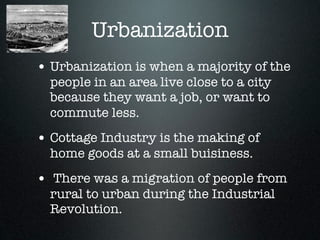
• Urbanization is when a majority of the
  people in an area live close to a city
  because they want a job, or want to
  commute less.
• Cottage Industry is the making of
  home goods at a small buisiness.
• There was a migration of people from
  rural to urban during the Industrial
  Revolution.
Agricultural Revolution
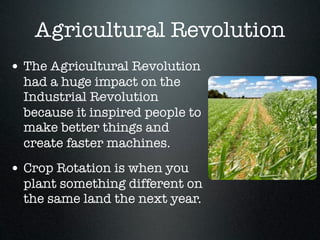
• The Agricultural Revolution
  had a huge impact on the
  Industrial Revolution
  because it inspired people to
  make better things and
  create faster machines.
• Crop Rotation is when you
  plant something different on
  the same land the next year.
Textiles
• The first invention in
  the industrial revolution
  was the Steam Engine.

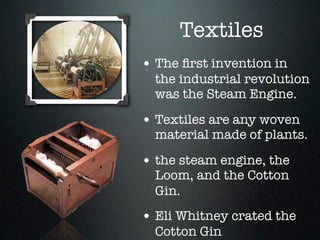
• Textiles are any woven
  material made of plants.

• the steam engine, the
  Loom, and the Cotton
  Gin.
• Eli Whitney crated the
  Cotton Gin
Steam Engine
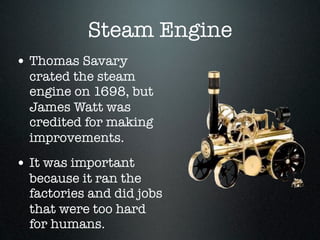
• Thomas Savary
  crated the steam
  engine on 1698, but
  James Watt was
  credited for making
  improvements.
• It was important
  because it ran the
  factories and did jobs
  that were too hard
  for humans.
Bessemer Process
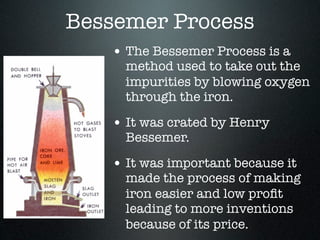
   • The Bessemer Process is a
     method used to take out the
     impurities by blowing oxygen
     through the iron.

   • It was crated by Henry
     Bessemer.

   • It was important because it
     made the process of making
     iron easier and low profit
     leading to more inventions
     because of its price.
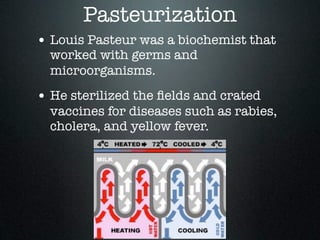
Pasteurization
• Louis Pasteur was a biochemist that
  worked with germs and
  microorganisms.
• He sterilized the fields and crated
  vaccines for diseases such as rabies,
  cholera, and yellow fever.
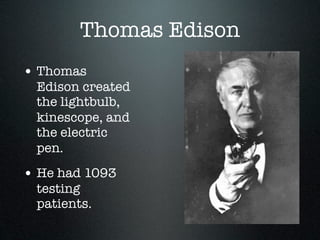
Thomas Edison
• Thomas
 Edison created
 the lightbulb,
 kinescope, and
 the electric
 pen.
• He had 1093
 testing
 patients.
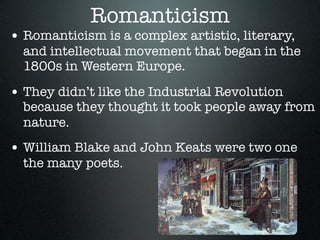
Romanticism
• Romanticism is a complex artistic, literary,
  and intellectual movement that began in the
  1800s in Western Europe.

• They didn’t like the Industrial Revolution
  because they thought it took people away from
  nature.
• William Blake and John Keats were two one
  the many poets.

Assignment 3.1

  • 1.
    The Industrial Revolution By: Keenan Reardon
  • 2.
    Industrial Revolution • TheIndustrial Revolution was a time period during the late 1700s in England when people replaced hand- tools with machines that were much more efficient. • It started in england but quickly spread to other countries like the U.S.
  • 3.
    Urbanization • Urbanization iswhen a majority of the people in an area live close to a city because they want a job, or want to commute less. • Cottage Industry is the making of home goods at a small buisiness. • There was a migration of people from rural to urban during the Industrial Revolution.
  • 4.
    Agricultural Revolution • TheAgricultural Revolution had a huge impact on the Industrial Revolution because it inspired people to make better things and create faster machines. • Crop Rotation is when you plant something different on the same land the next year.
  • 5.
    Textiles • The firstinvention in the industrial revolution was the Steam Engine. • Textiles are any woven material made of plants. • the steam engine, the Loom, and the Cotton Gin. • Eli Whitney crated the Cotton Gin
  • 6.
    Steam Engine • ThomasSavary crated the steam engine on 1698, but James Watt was credited for making improvements. • It was important because it ran the factories and did jobs that were too hard for humans.
  • 7.
    Bessemer Process • The Bessemer Process is a method used to take out the impurities by blowing oxygen through the iron. • It was crated by Henry Bessemer. • It was important because it made the process of making iron easier and low profit leading to more inventions because of its price.
  • 8.
    Pasteurization • Louis Pasteurwas a biochemist that worked with germs and microorganisms. • He sterilized the fields and crated vaccines for diseases such as rabies, cholera, and yellow fever.
  • 9.
    Thomas Edison • Thomas Edison created the lightbulb, kinescope, and the electric pen. • He had 1093 testing patients.
  • 10.
    Romanticism • Romanticism isa complex artistic, literary, and intellectual movement that began in the 1800s in Western Europe. • They didn’t like the Industrial Revolution because they thought it took people away from nature. • William Blake and John Keats were two one the many poets.

Editor's Notes