The Industrial
 Revolution
   By Destiny Anger
What is the Industrial
            Revolution?

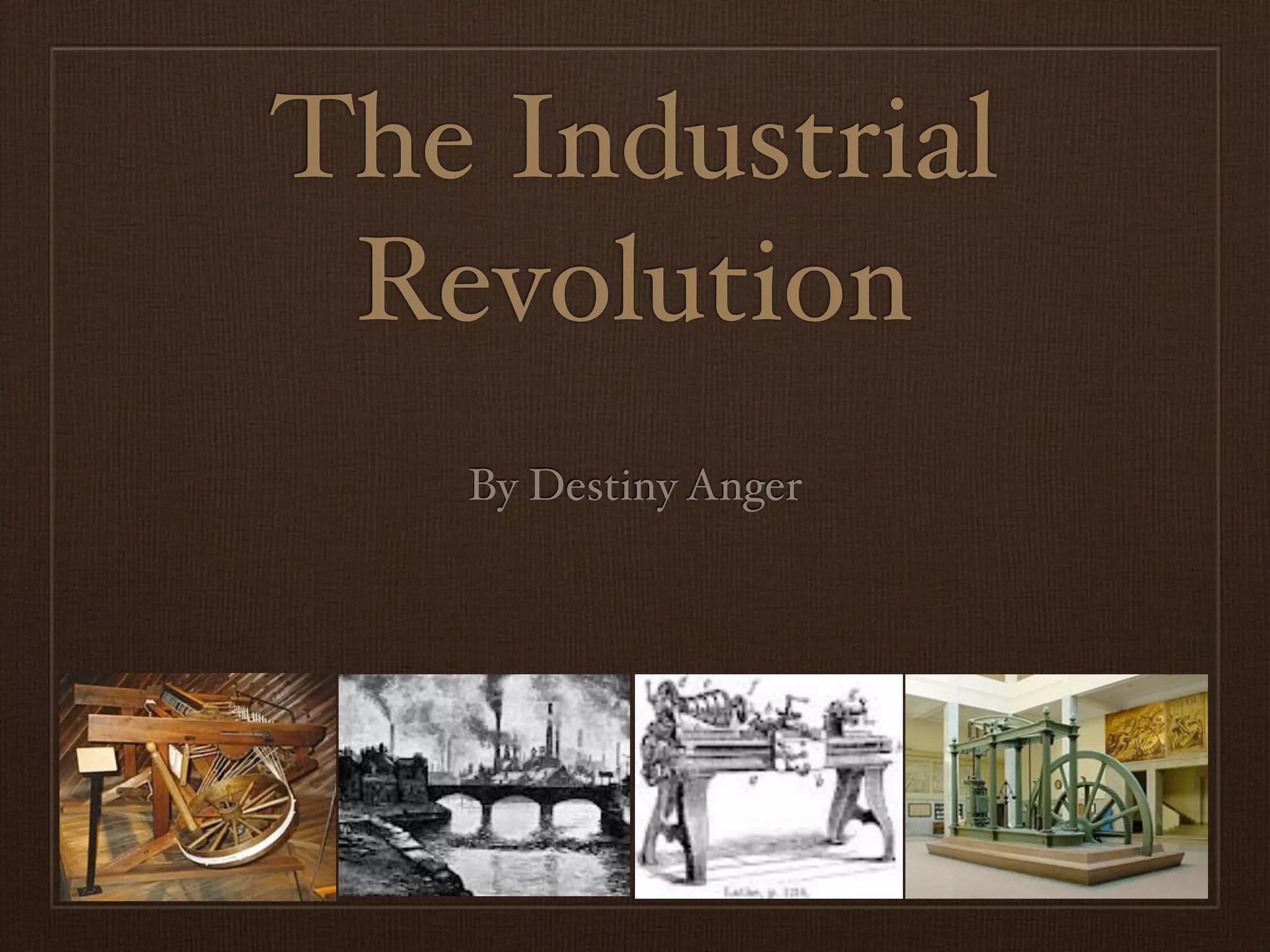
❖   It was a time from the 18th to the 19th century where major
    agricultural, manufacturing, mining, transportation, and
    technology changes occurred.

❖   It began in Britain, but spread throughout Western Europe,
    North America and Japan.
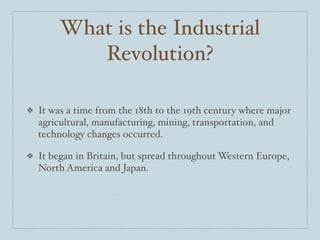
What is urbanization?
❖   It’s the condition of being
    urbanized.

❖   A cottage industry a primarily
    manufacturing industry which
    includes many producers that
    work from their homes.

❖   There was a migration of people
    from rural to urban during the
    Industrial Revolution.

❖   People migrated from rural to
    urban because life in the city
    was easier, and all the jobs
    started popping up in the citites.
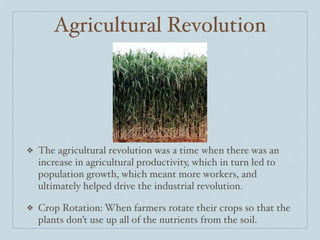
Agricultural Revolution


❖   The agricultural revolution was a time when there was an
    increase in agricultural productivity, which in turn led to
    population growth, which meant more workers, and
    ultimately helped drive the industrial revolution.

❖   Crop Rotation: When farmers rotate their crops so that the
    plants don’t use up all of the nutrients from the soil.
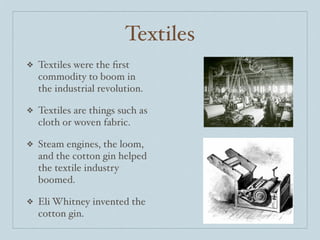
Textiles
❖   Textiles were the first
    commodity to boom in
    the industrial revolution.

❖   Textiles are things such as
    cloth or woven fabric.

❖   Steam engines, the loom,
    and the cotton gin helped
    the textile industry
    boomed.

❖   Eli Whitney invented the
    cotton gin.
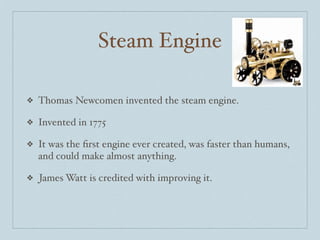
Steam Engine

❖   Thomas Newcomen invented the steam engine.

❖   Invented in 1775

❖   It was the first engine ever created, was faster than humans,
    and could make almost anything.

❖   James Watt is credited with improving it.
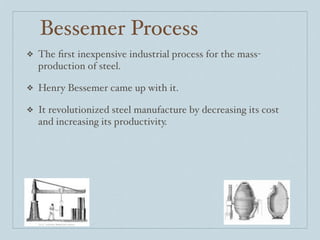
Bessemer Process
❖   The first inexpensive industrial process for the mass-
    production of steel.

❖   Henry Bessemer came up with it.

❖   It revolutionized steel manufacture by decreasing its cost
    and increasing its productivity.
Pasteurization

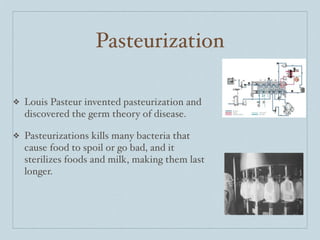
❖   Louis Pasteur invented pasteurization and
    discovered the germ theory of disease.

❖   Pasteurizations kills many bacteria that
    cause food to spoil or go bad, and it
    sterilizes foods and milk, making them last
    longer.
Thomas Edison
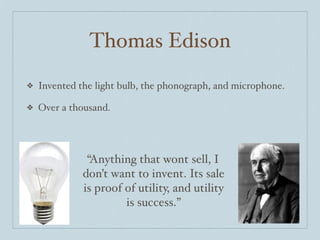
❖   Invented the light bulb, the phonograph, and microphone.

❖   Over a thousand.


               “Anything that wont sell, I
              don’t want to invent. Its sale
              is proof of utility, and utility
                       is success.”
Romanticism


❖   Was an artistic, intellectual, and literal movement.

❖   it gained strength in reaction to the industrial revolution.

❖   Some authors from the Romantic period include Emily
    Dickinson and Washington Irving.

Assignment 3.1

  • 1.
  • 2.
    What is theIndustrial Revolution? ❖ It was a time from the 18th to the 19th century where major agricultural, manufacturing, mining, transportation, and technology changes occurred. ❖ It began in Britain, but spread throughout Western Europe, North America and Japan.
  • 3.
    What is urbanization? ❖ It’s the condition of being urbanized. ❖ A cottage industry a primarily manufacturing industry which includes many producers that work from their homes. ❖ There was a migration of people from rural to urban during the Industrial Revolution. ❖ People migrated from rural to urban because life in the city was easier, and all the jobs started popping up in the citites.
  • 4.
    Agricultural Revolution ❖ The agricultural revolution was a time when there was an increase in agricultural productivity, which in turn led to population growth, which meant more workers, and ultimately helped drive the industrial revolution. ❖ Crop Rotation: When farmers rotate their crops so that the plants don’t use up all of the nutrients from the soil.
  • 5.
    Textiles ❖ Textiles were the first commodity to boom in the industrial revolution. ❖ Textiles are things such as cloth or woven fabric. ❖ Steam engines, the loom, and the cotton gin helped the textile industry boomed. ❖ Eli Whitney invented the cotton gin.
  • 6.
    Steam Engine ❖ Thomas Newcomen invented the steam engine. ❖ Invented in 1775 ❖ It was the first engine ever created, was faster than humans, and could make almost anything. ❖ James Watt is credited with improving it.
  • 7.
    Bessemer Process ❖ The first inexpensive industrial process for the mass- production of steel. ❖ Henry Bessemer came up with it. ❖ It revolutionized steel manufacture by decreasing its cost and increasing its productivity.
  • 8.
    Pasteurization ❖ Louis Pasteur invented pasteurization and discovered the germ theory of disease. ❖ Pasteurizations kills many bacteria that cause food to spoil or go bad, and it sterilizes foods and milk, making them last longer.
  • 9.
    Thomas Edison ❖ Invented the light bulb, the phonograph, and microphone. ❖ Over a thousand. “Anything that wont sell, I don’t want to invent. Its sale is proof of utility, and utility is success.”
  • 10.
    Romanticism ❖ Was an artistic, intellectual, and literal movement. ❖ it gained strength in reaction to the industrial revolution. ❖ Some authors from the Romantic period include Emily Dickinson and Washington Irving.

Editor's Notes