Download as PDF, PPTX


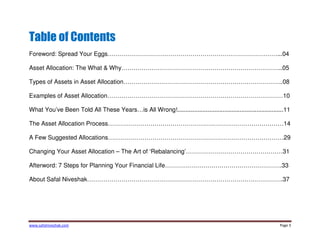


The document discusses asset allocation and provides guidance on how to build an investment portfolio. It defines asset allocation as dividing investments among different asset classes to reduce risk. The key aspects covered include: - Asset allocation is the most important factor influencing investment returns, accounting for over 90% of results. - Common asset classes include stocks, bonds, cash, gold, and real estate. - An individual's asset allocation should consider their goals, risk tolerance, age, income stability, and time horizon rather than just their age. - The document provides a process for determining one's asset allocation, including assessing if they are more like a stock or bond based on their career and financial situation.


