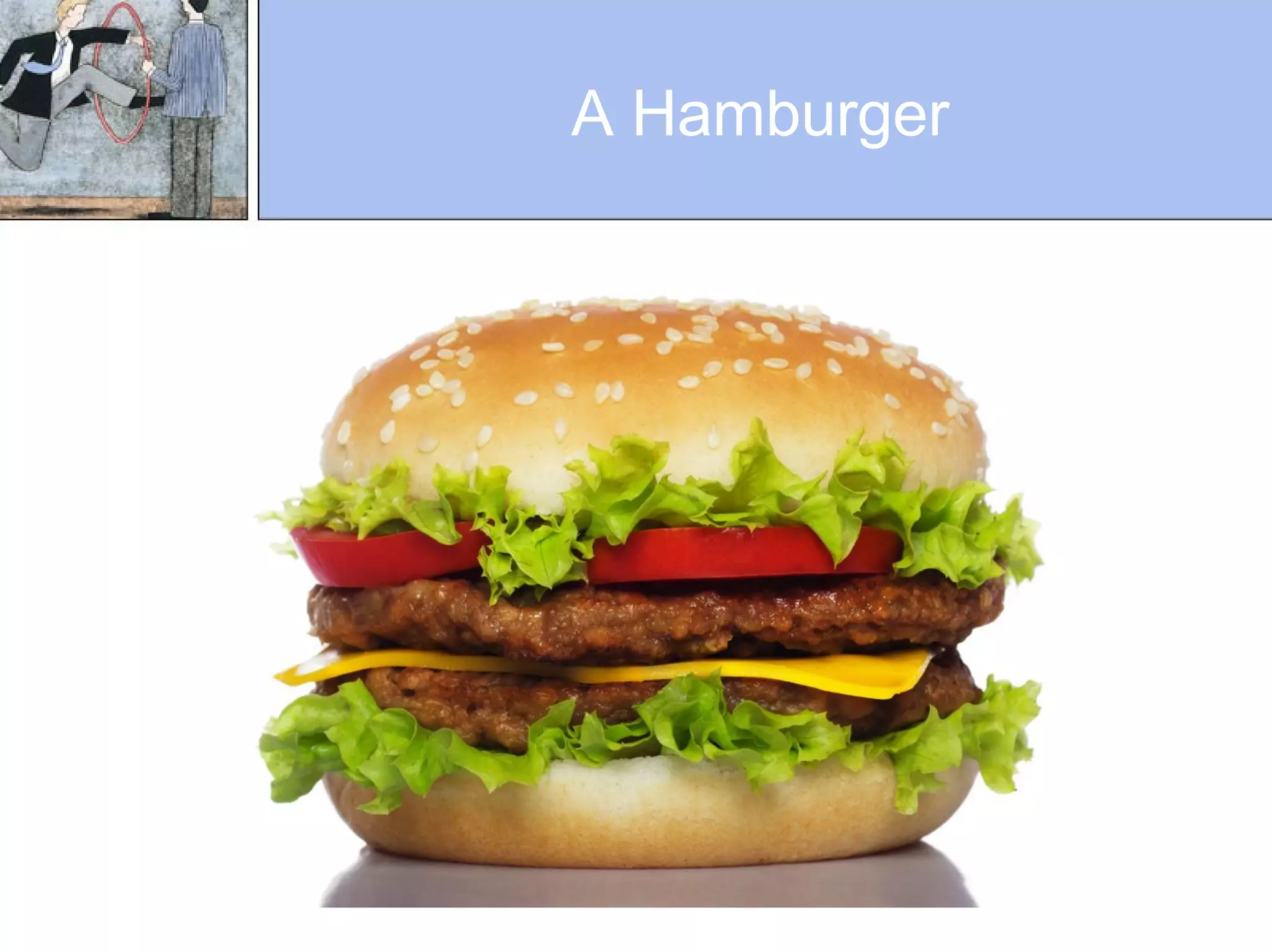
This document provides guidance on designing rubrics to assess student work. It discusses holistic vs. analytic rubrics and the steps to build a rubric, including defining criteria and performance levels. Key aspects are deciding top and bottom achievement levels, and then determining intermediate standards. Descriptive language in rubrics should focus on relative frequencies of errors or qualities rather than specific numbers. Rubrics should be based on learning objectives and understandable by others. A sample rubric is built to assess hamburgers on qualities of the bun, condiments, cooking, and toppings.