Assessment Methods
&
Feedback
2013 -2014
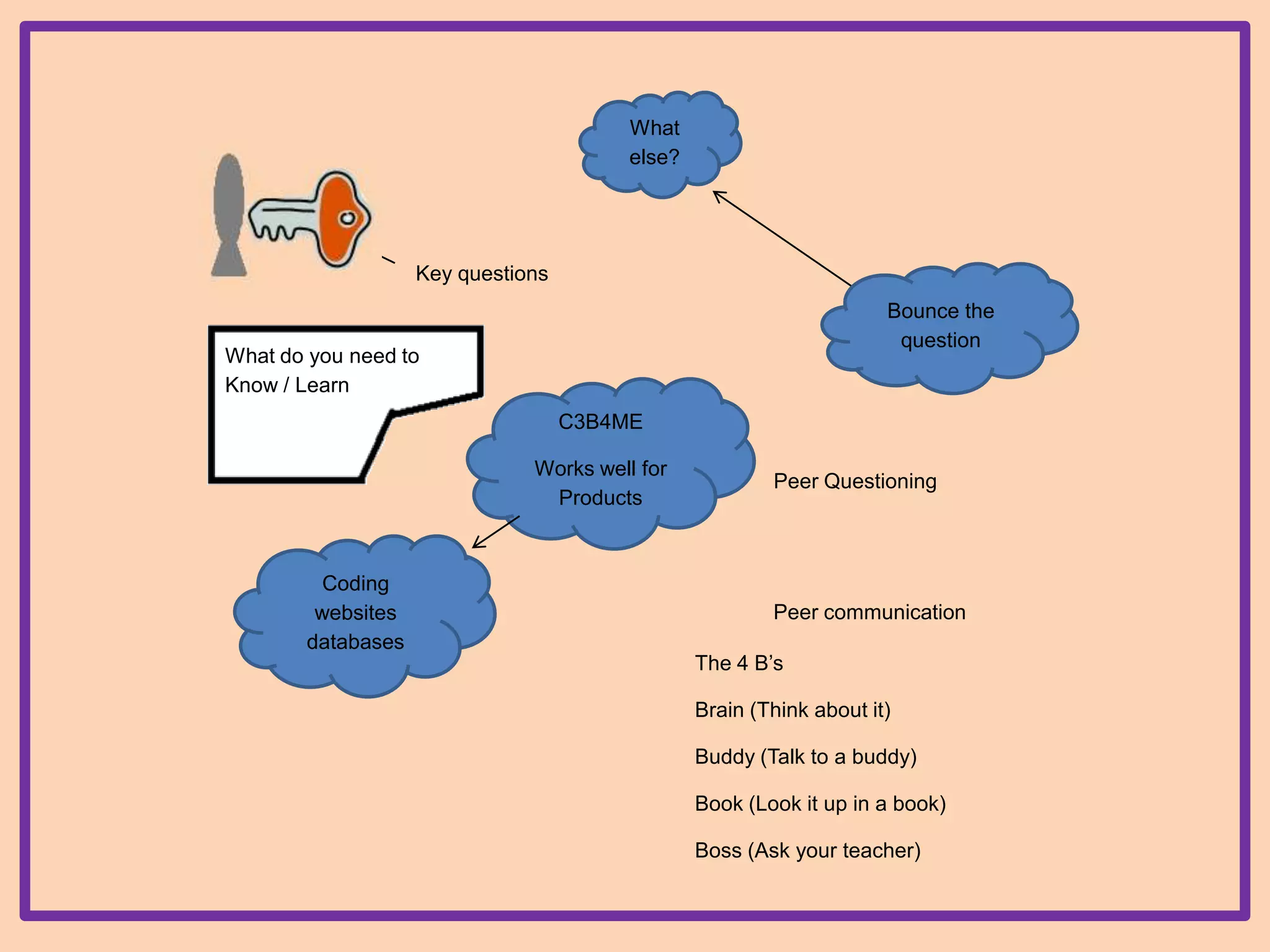
What
else?

Key questions
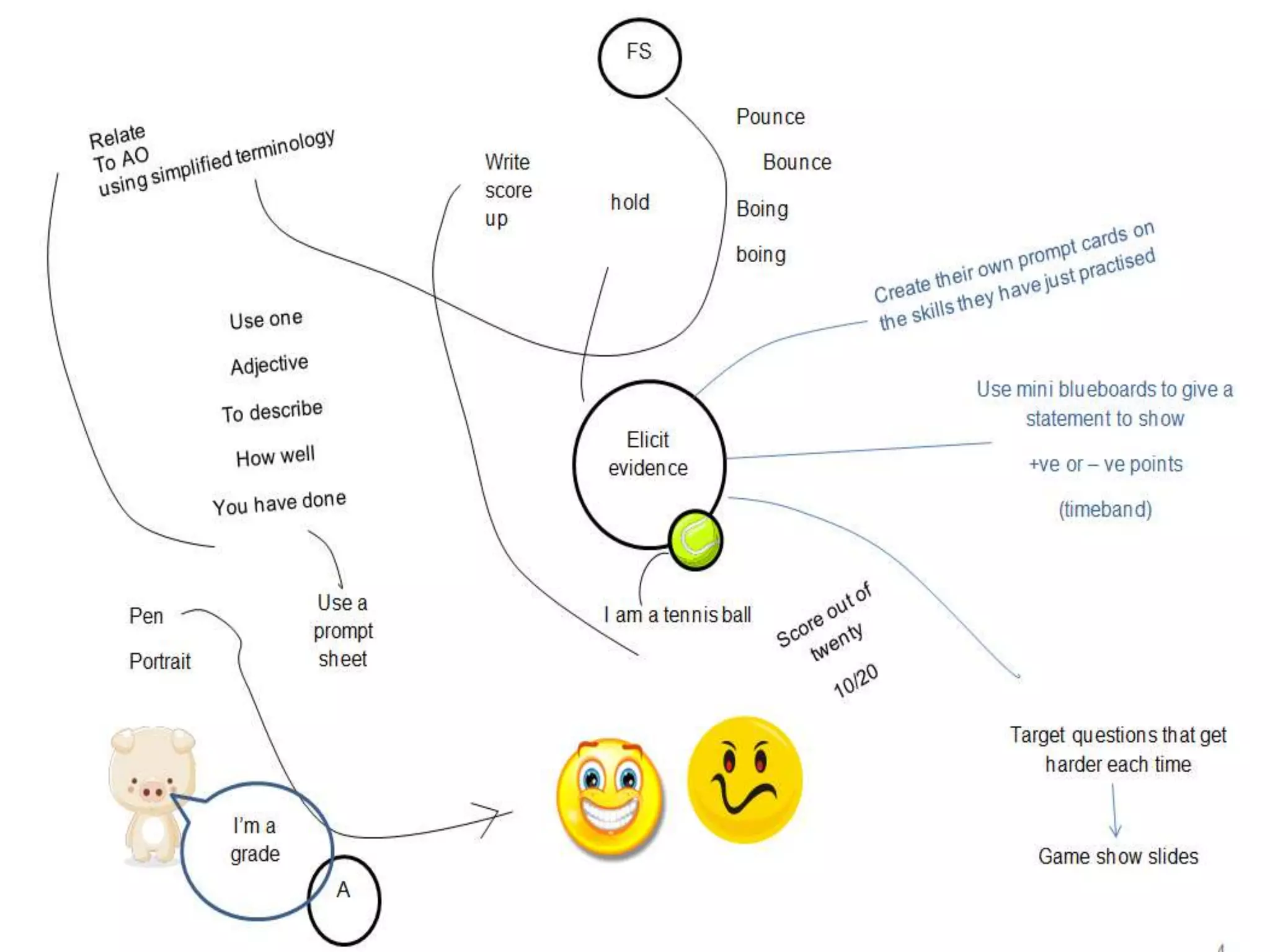
Bounce the
question

What do you need to
Know / Learn
C3B4ME
Works well for
Products

Coding
websites
databases

Peer Questioning

Peer communication
The 4 Bโ€Ÿs
Brain (Think about it)
Buddy (Talk to a buddy)
Book (Look it up in a book)
Boss (Ask your teacher)
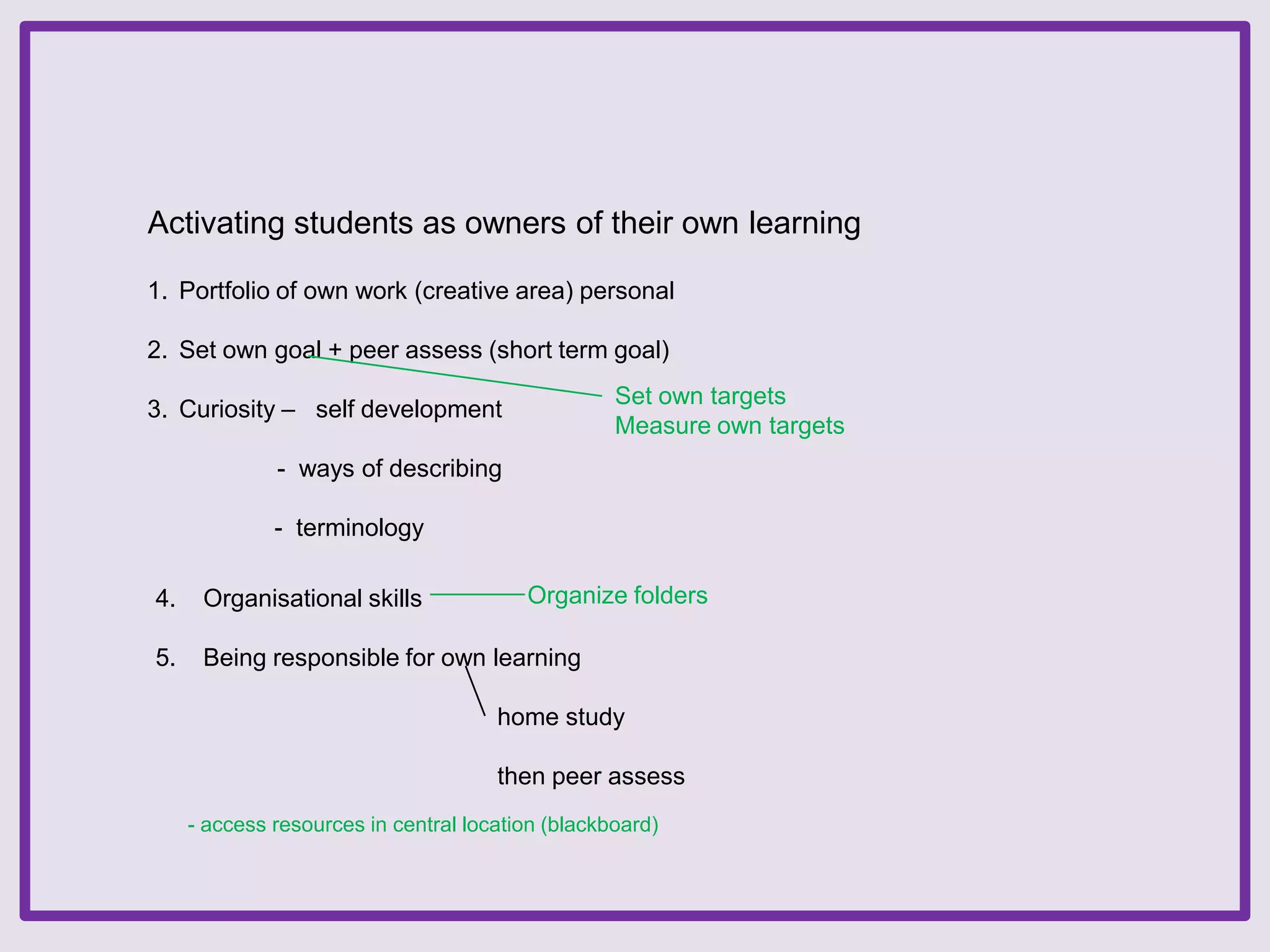
Activating students as owners of their own learning
1. Portfolio of own work (creative area) personal
2. Set own goal + peer assess (short term goal)
Set own targets
Measure own targets

3. Curiosity โ€“ self development
- ways of describing
- terminology

Organize folders

4.

Organisational skills

5.

Being responsible for own learning
home study
then peer assess
- access resources in central location (blackboard)
Individual

โ€ข

Research tasks

โ€ข

Jigsaw / group teaching

โ€ข

Peer assessment

โ€ข

Self assessment / reflection

โ€ข

Students to set own targets

โ€ข

C3B4E

group
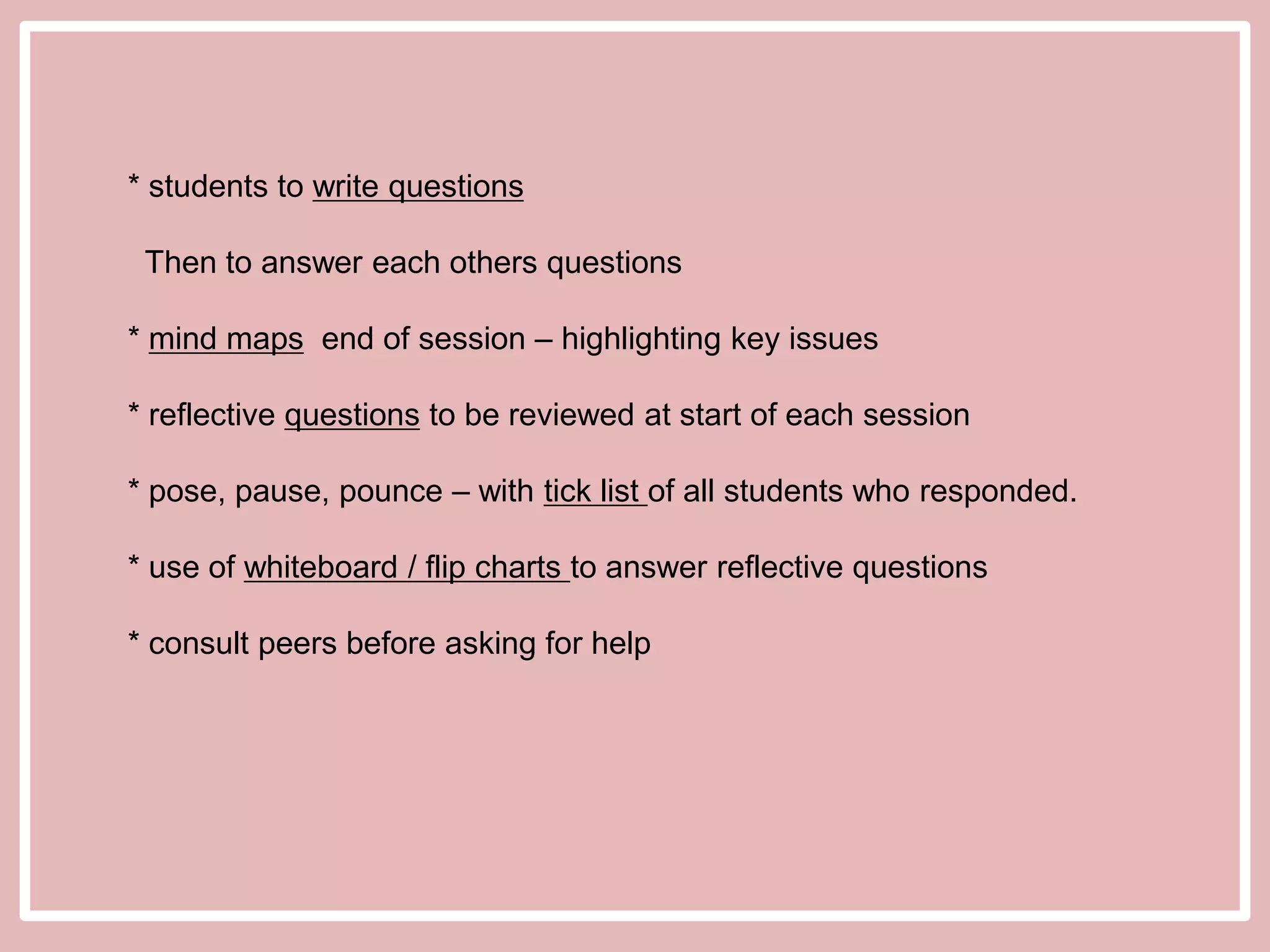
* students to write questions

Then to answer each others questions
* mind maps end of session โ€“ highlighting key issues
* reflective questions to be reviewed at start of each session
* pose, pause, pounce โ€“ with tick list of all students who responded.
* use of whiteboard / flip charts to answer reflective questions
* consult peers before asking for help
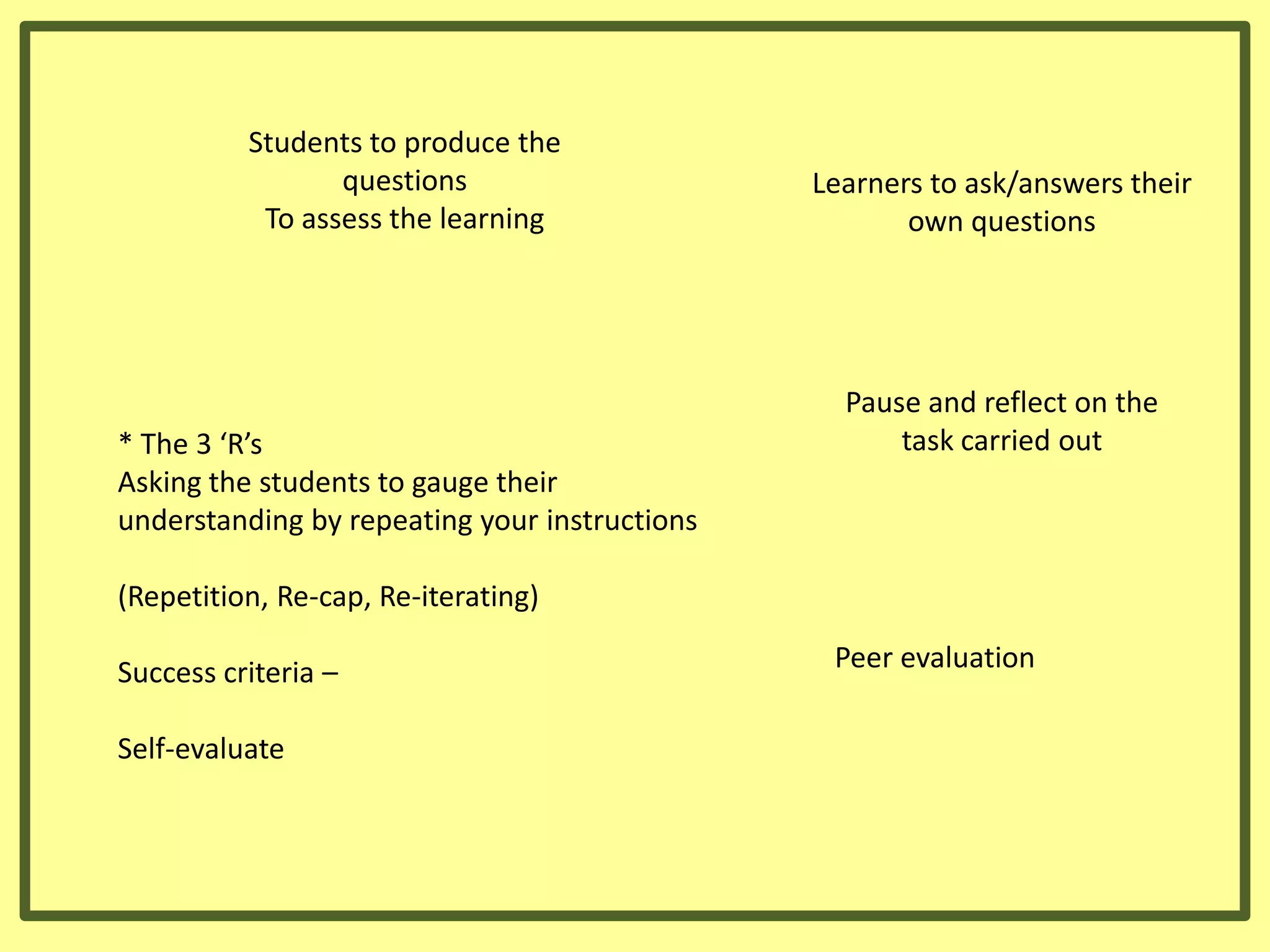
Students to produce the
questions
To assess the learning

* The 3 โ€˜Rโ€™s
Asking the students to gauge their
understanding by repeating your instructions

Learners to ask/answers their
own questions

Pause and reflect on the
task carried out

(Repetition, Re-cap, Re-iterating)

Success criteria โ€“
Self-evaluate

Peer evaluation
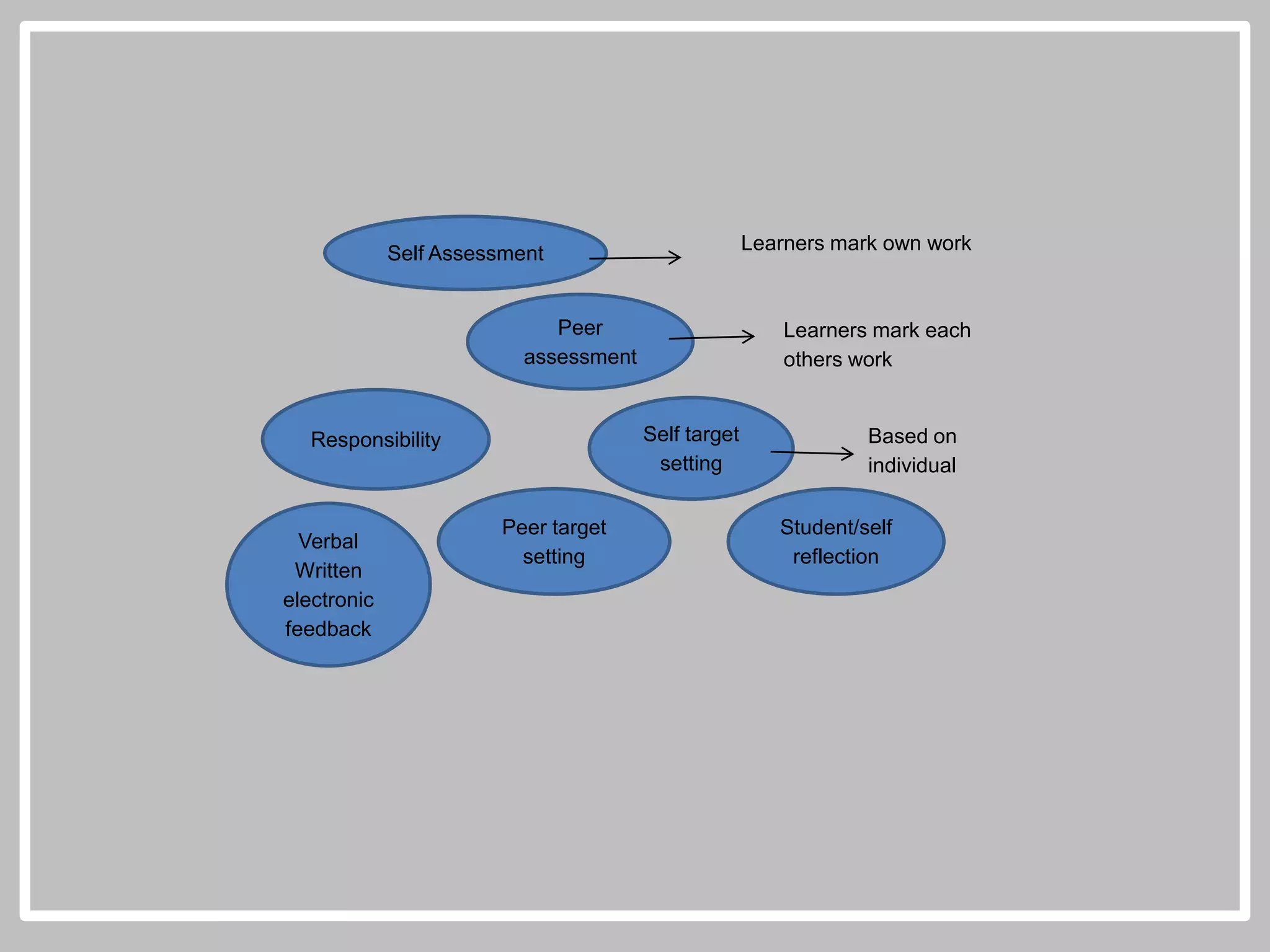
Learners mark own work

Self Assessment

Peer
assessment

Self target
setting

Responsibility

Verbal
Written
electronic
feedback

Learners mark each
others work

Peer target
setting

Based on
individual
Student/self
reflection
โ€ข

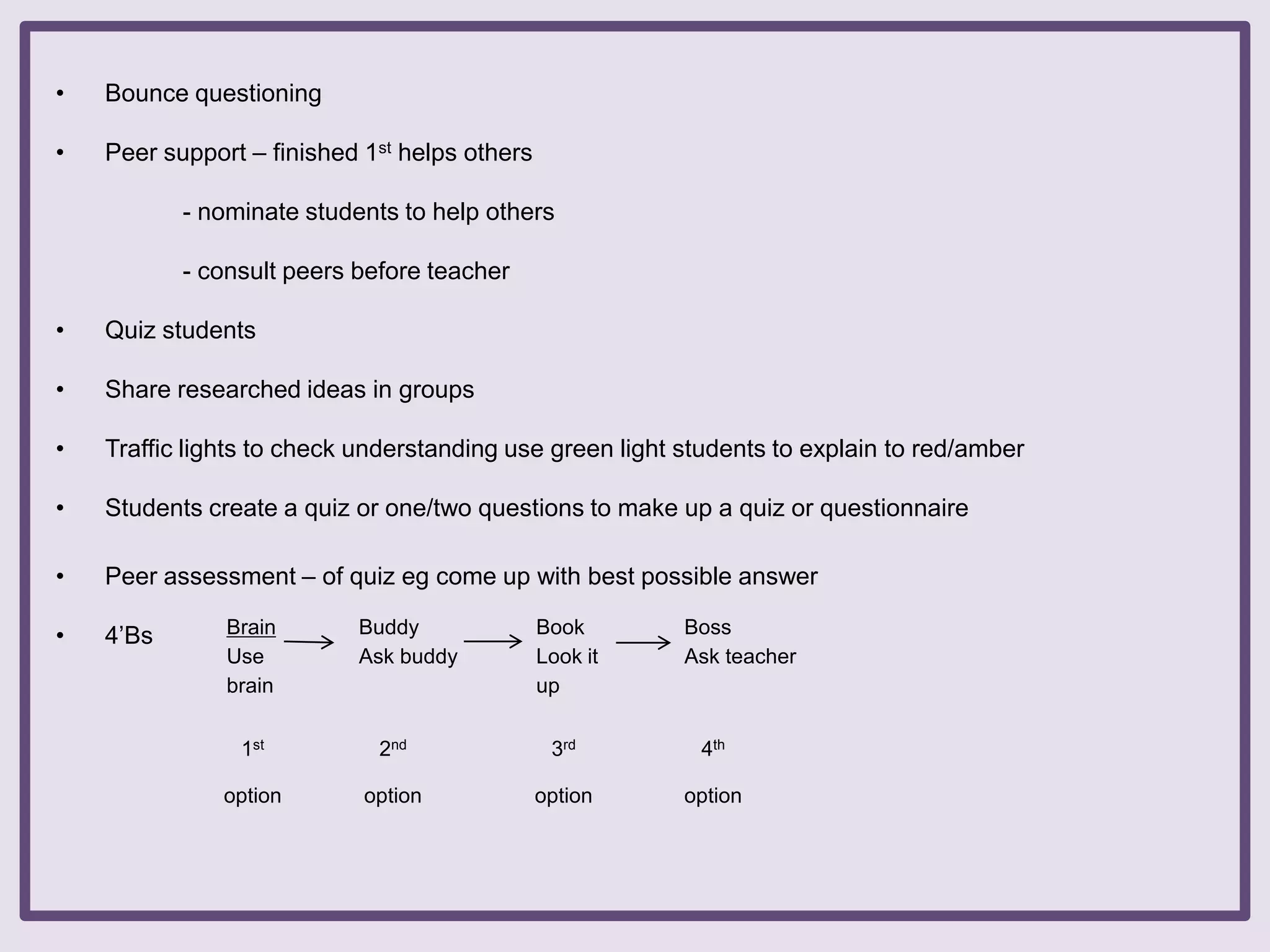
Bounce questioning

โ€ข

Peer support โ€“ finished 1st helps others
- nominate students to help others
- consult peers before teacher

โ€ข

Quiz students

โ€ข

Share researched ideas in groups

โ€ข

Traffic lights to check understanding use green light students to explain to red/amber

โ€ข

Students create a quiz or one/two questions to make up a quiz or questionnaire

โ€ข

Peer assessment โ€“ of quiz eg come up with best possible answer

โ€ข

4โ€ŸBs

Brain
Use
brain

Buddy
Ask buddy

Book
Look it
up

Boss
Ask teacher

1st

2nd

3rd

4th

option

option

option

option
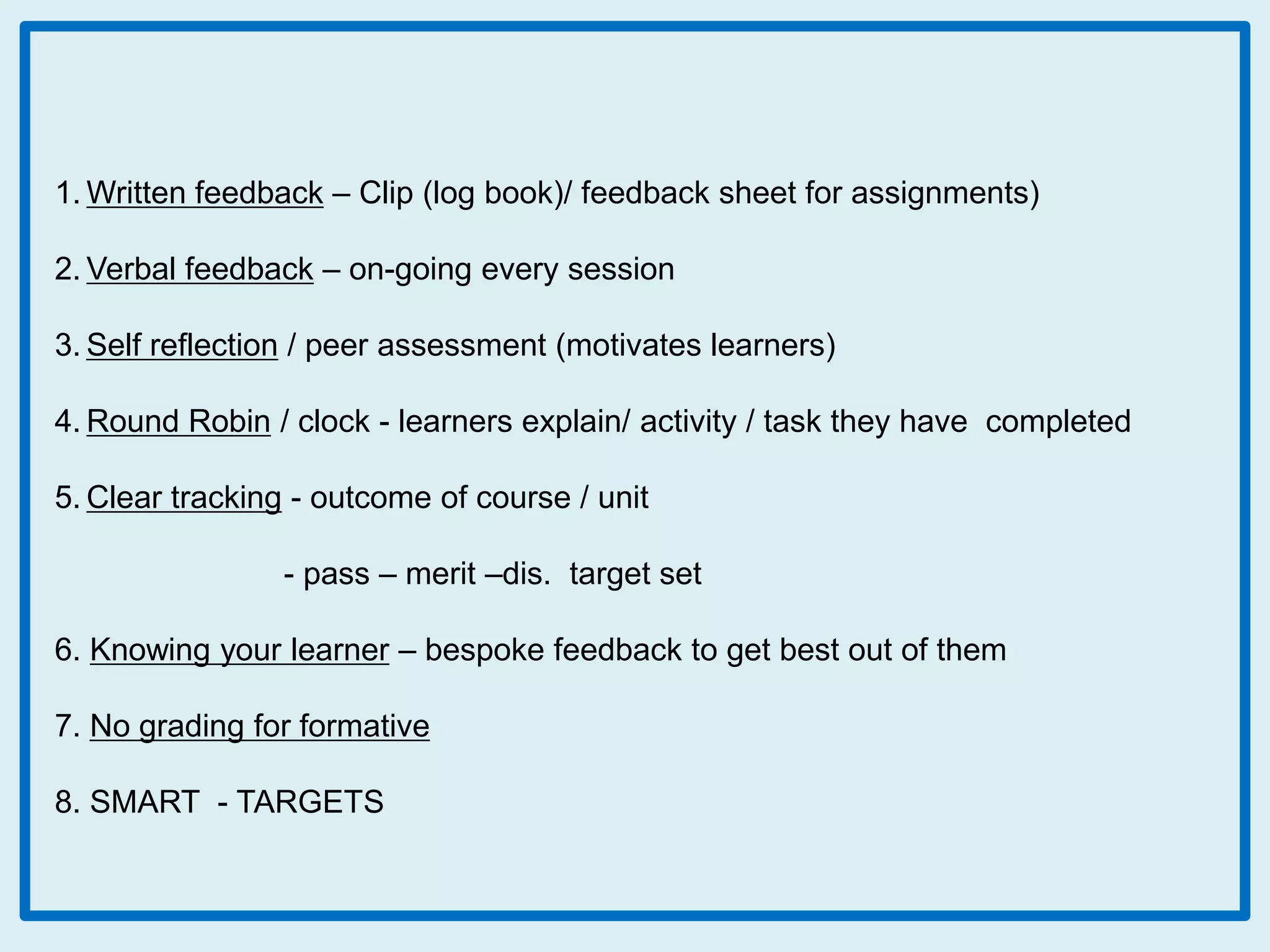
1. Written feedback โ€“ Clip (log book)/ feedback sheet for assignments)
2. Verbal feedback โ€“ on-going every session
3. Self reflection / peer assessment (motivates learners)
4. Round Robin / clock - learners explain/ activity / task they have completed
5. Clear tracking - outcome of course / unit
- pass โ€“ merit โ€“dis. target set

6. Knowing your learner โ€“ bespoke feedback to get best out of them
7. No grading for formative
8. SMART - TARGETS
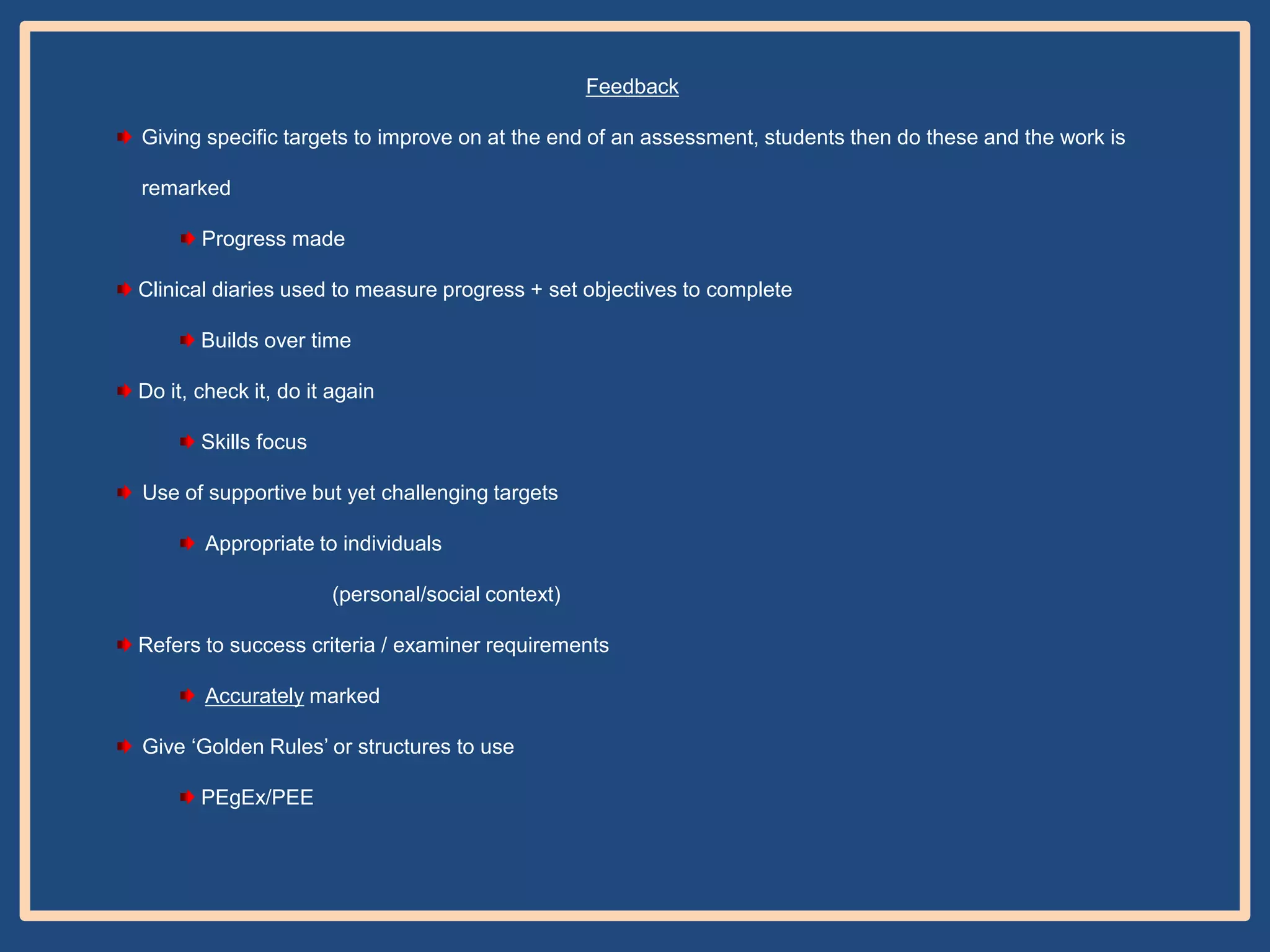
Feedback
Giving specific targets to improve on at the end of an assessment, students then do these and the work is
remarked
Progress made
Clinical diaries used to measure progress + set objectives to complete
Builds over time
Do it, check it, do it again
Skills focus
Use of supportive but yet challenging targets

Appropriate to individuals
(personal/social context)
Refers to success criteria / examiner requirements
Accurately marked
Give โ€žGolden Rulesโ€Ÿ or structures to use
PEgEx/PEE
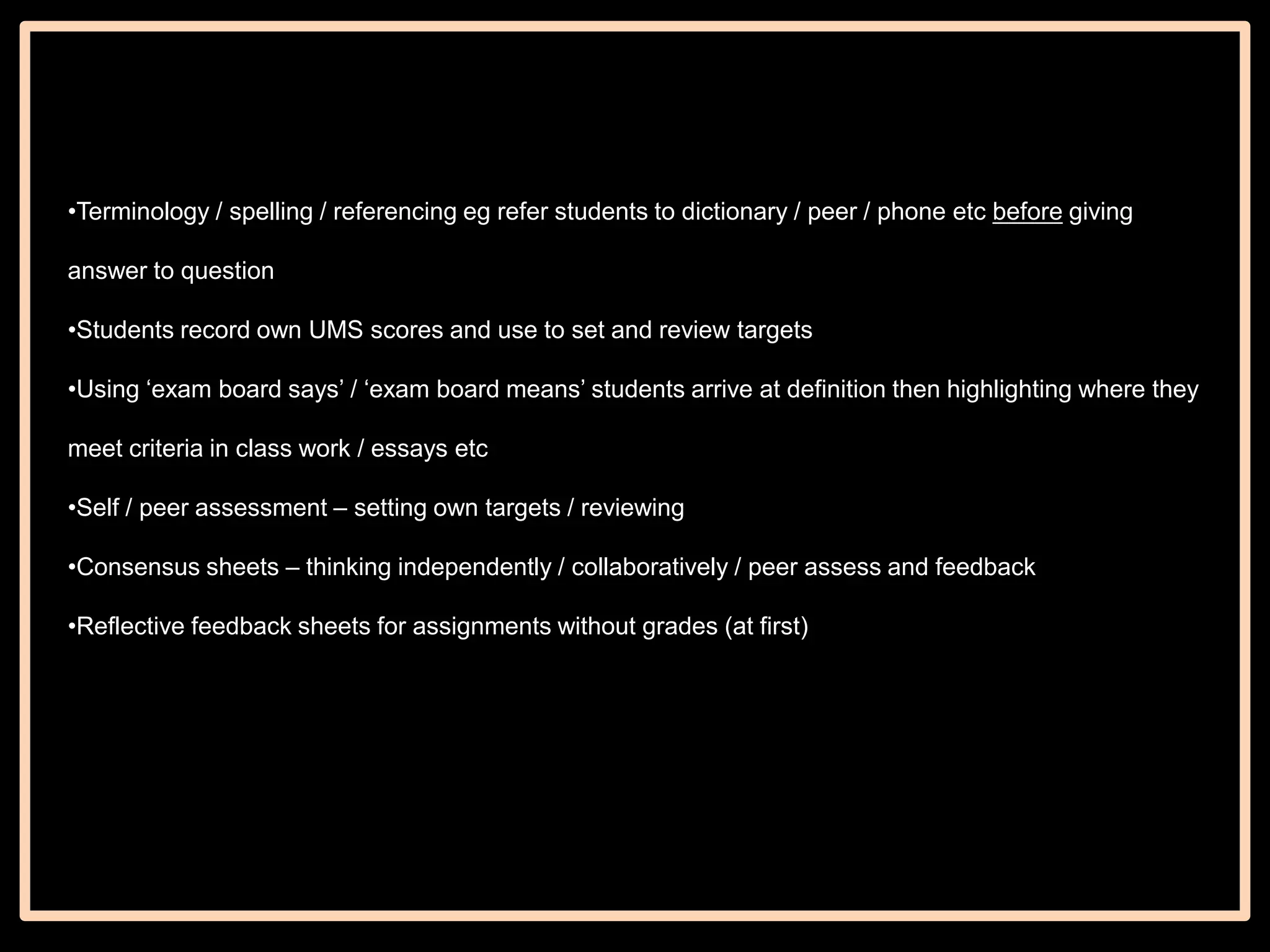
โ€ขTerminology / spelling / referencing eg refer students to dictionary / peer / phone etc before giving
answer to question

โ€ขStudents record own UMS scores and use to set and review targets
โ€ขUsing โ€žexam board saysโ€Ÿ / โ€žexam board meansโ€Ÿ students arrive at definition then highlighting where they
meet criteria in class work / essays etc
โ€ขSelf / peer assessment โ€“ setting own targets / reviewing
โ€ขConsensus sheets โ€“ thinking independently / collaboratively / peer assess and feedback
โ€ขReflective feedback sheets for assignments without grades (at first)
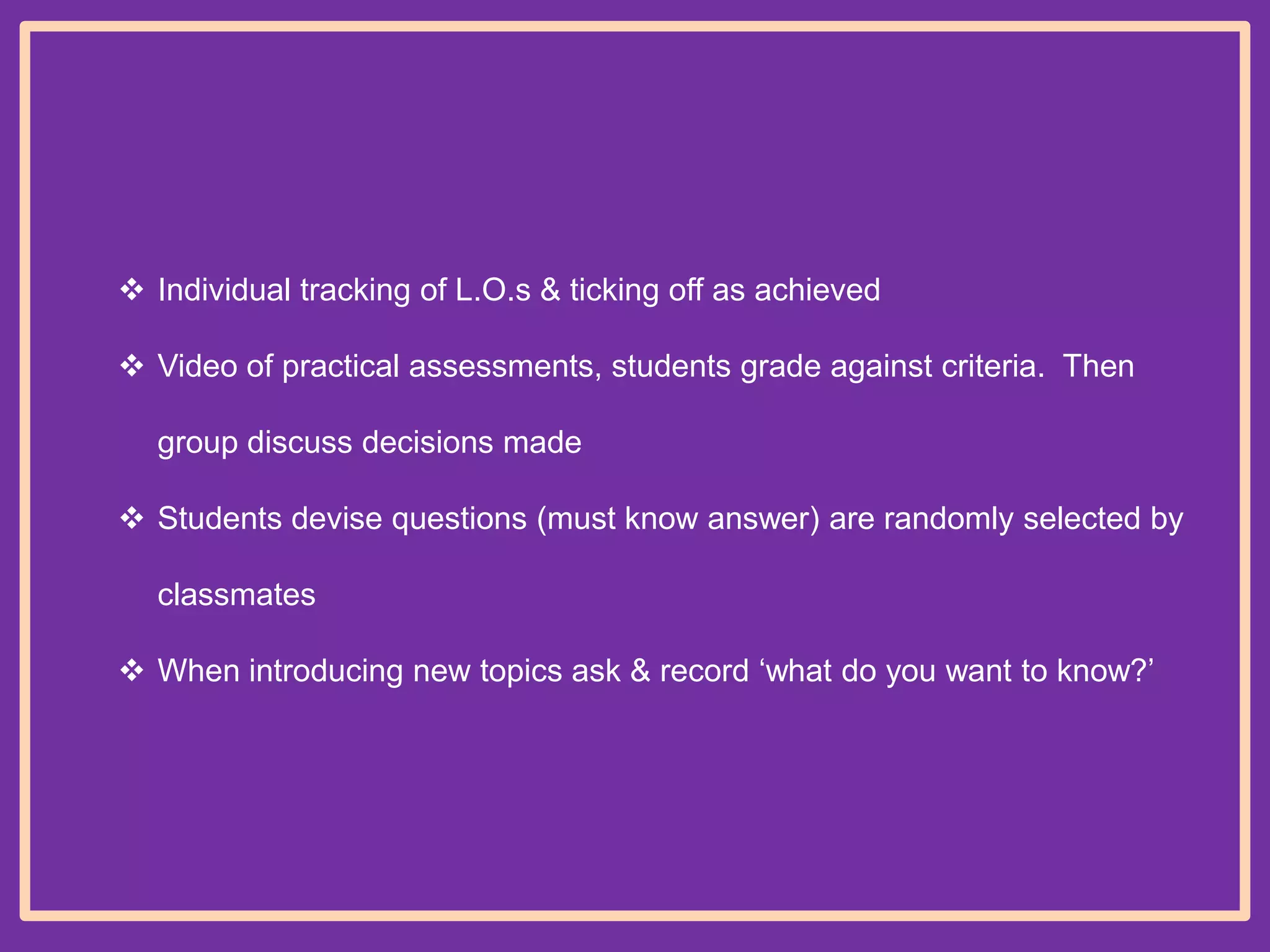
๏ถ Individual tracking of L.O.s & ticking off as achieved
๏ถ Video of practical assessments, students grade against criteria. Then
group discuss decisions made
๏ถ Students devise questions (must know answer) are randomly selected by
classmates
๏ถ When introducing new topics ask & record โ€žwhat do you want to know?โ€Ÿ
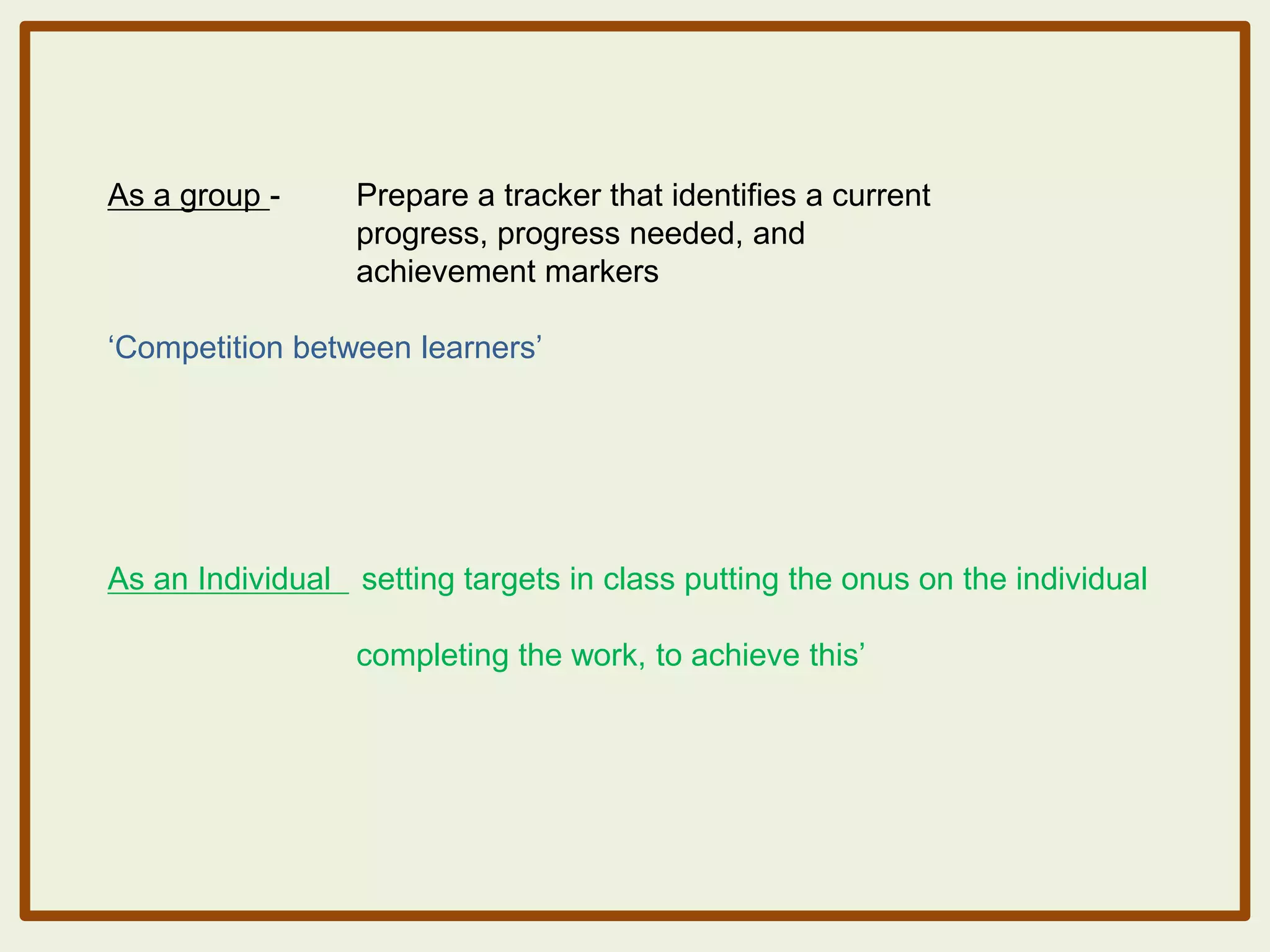
As a group -

Prepare a tracker that identifies a current
progress, progress needed, and
achievement markers

โ€žCompetition between learnersโ€Ÿ

As an Individual setting targets in class putting the onus on the individual
completing the work, to achieve thisโ€Ÿ
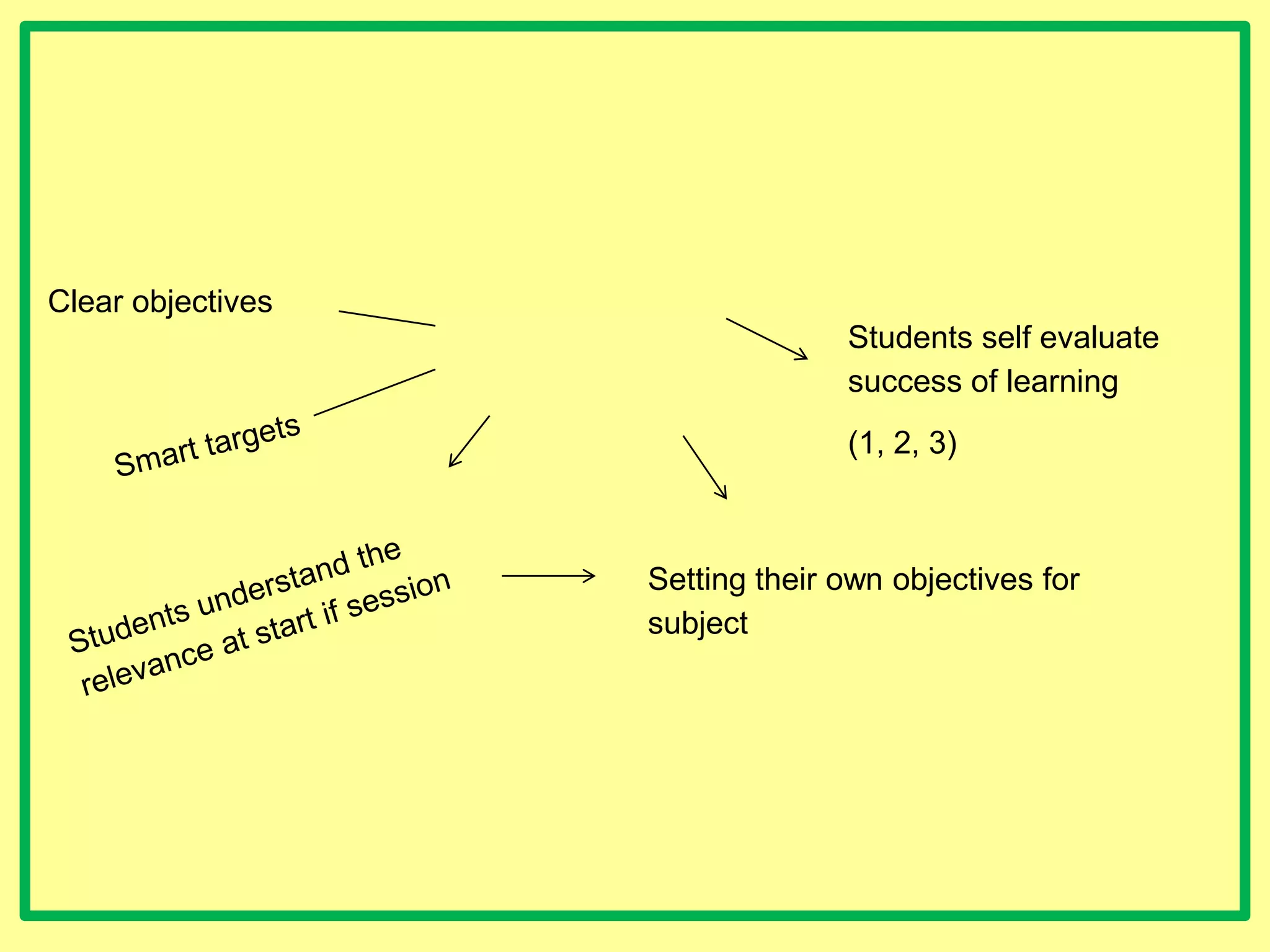
Clear objectives
Students self evaluate
success of learning
(1, 2, 3)

Setting their own objectives for
subject
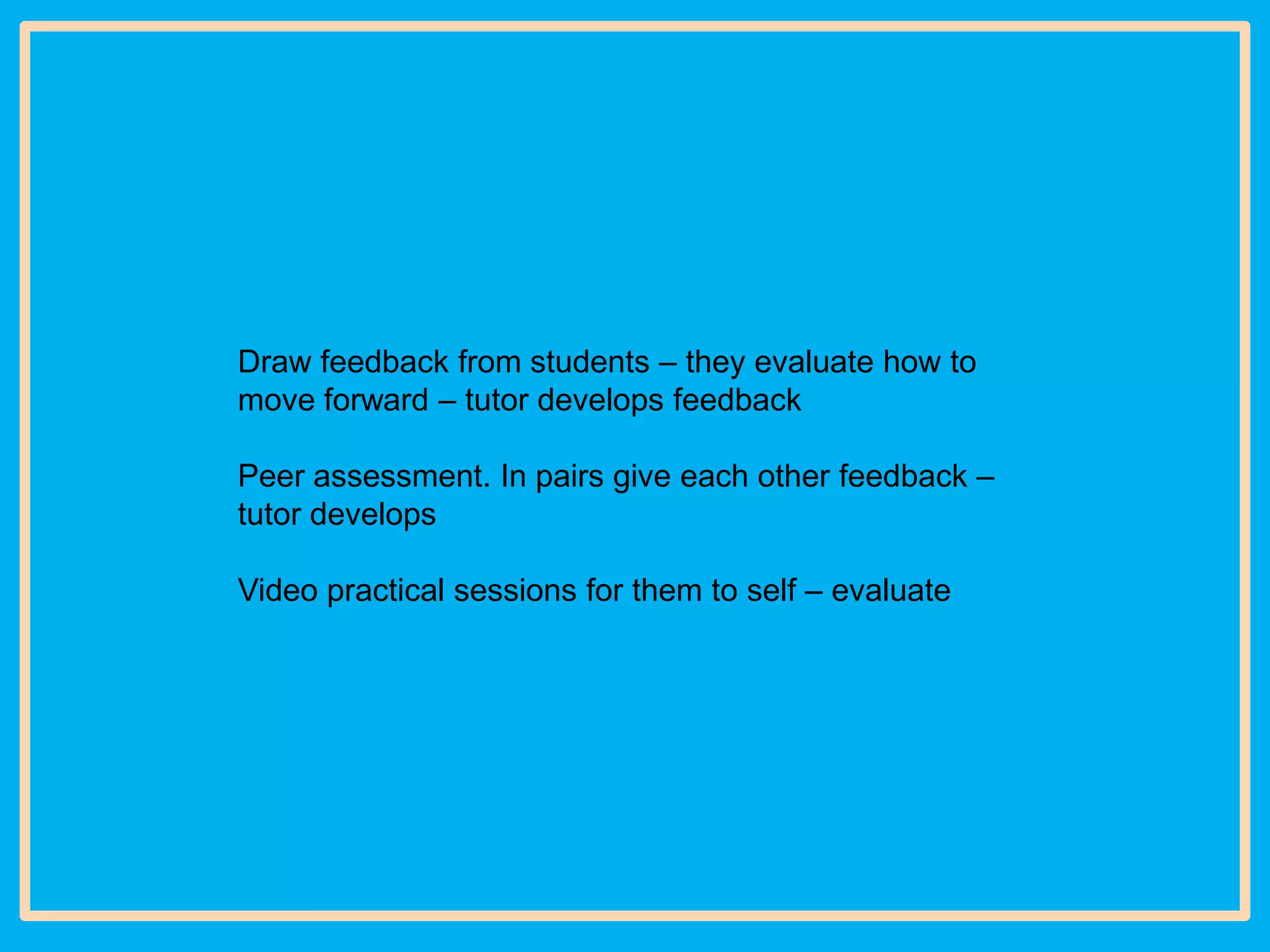
Draw feedback from students โ€“ they evaluate how to
move forward โ€“ tutor develops feedback
Peer assessment. In pairs give each other feedback โ€“
tutor develops

Video practical sessions for them to self โ€“ evaluate
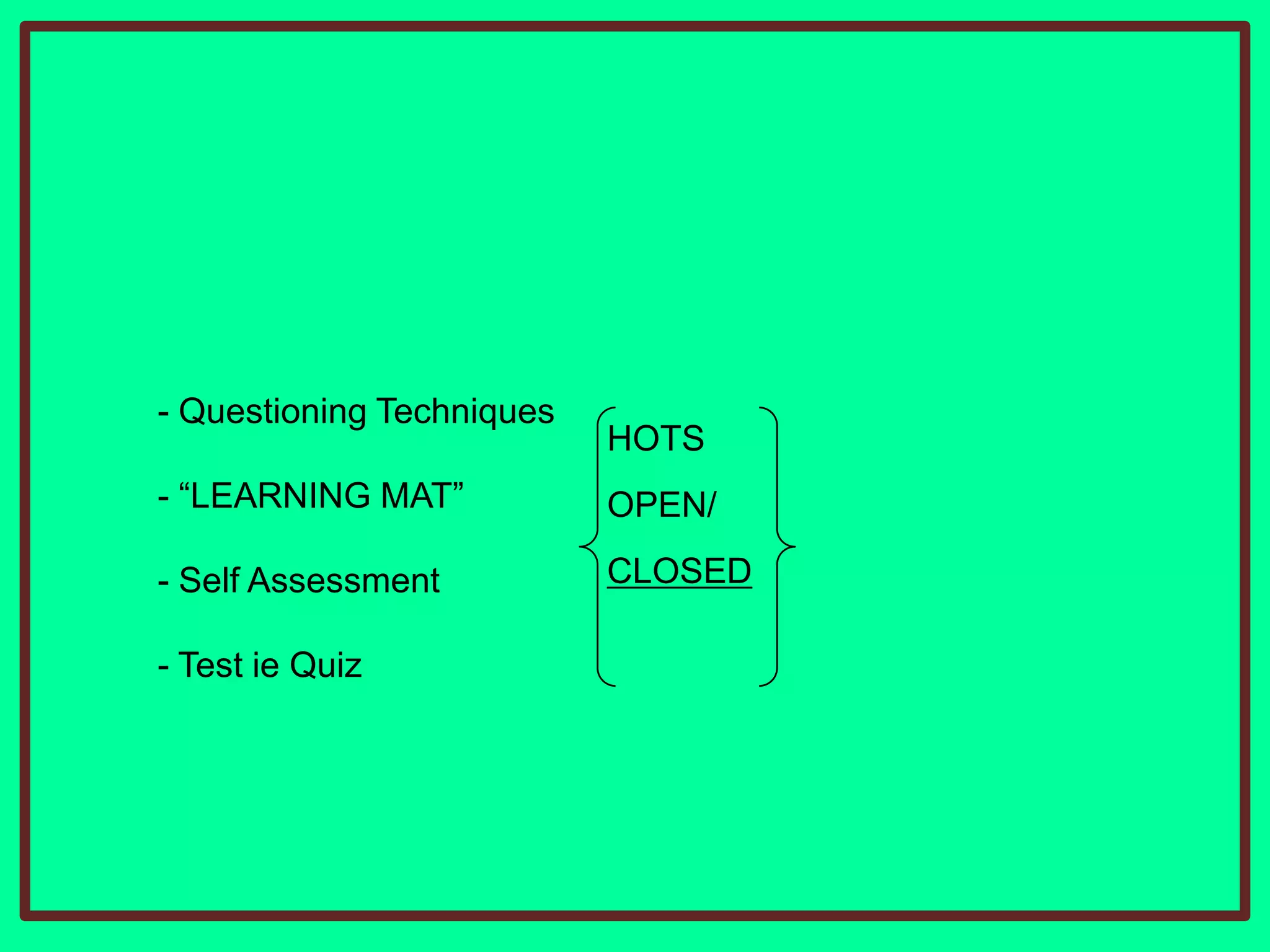
- Questioning Techniques

HOTS

- โ€œLEARNING MATโ€

OPEN/

- Self Assessment

CLOSED

- Test ie Quiz
โ€ข Activating students as resources
โ€ข Buddy system (Peer support)
โ€ข Peer assessment / feedback
โ€ข Pairing / discussion (show and tell)
โ€ข Students led session (L2 to L1 etc)
(Facilitators)

โ€ข Students Instructional demonstrations for use by peers
Demonstrate โ€“ to each other
Explain โ€“ answers to each other

Expand โ€“ on answers
Assess โ€“ peer
Set questions โ€“ for each other
Personal knowledge + experience
4 โ€žBโ€Ÿs โ€“ Brain, buddy, book โ€“ boss
Targets โ€“ compare + review + access

Assessment methods & feedback 2013 2014

  • 1.
  • 2.
    What else? Key questions Bounce the question Whatdo you need to Know / Learn C3B4ME Works well for Products Coding websites databases Peer Questioning Peer communication The 4 Bโ€Ÿs Brain (Think about it) Buddy (Talk to a buddy) Book (Look it up in a book) Boss (Ask your teacher)
  • 3.
    Activating students asowners of their own learning 1. Portfolio of own work (creative area) personal 2. Set own goal + peer assess (short term goal) Set own targets Measure own targets 3. Curiosity โ€“ self development - ways of describing - terminology Organize folders 4. Organisational skills 5. Being responsible for own learning home study then peer assess - access resources in central location (blackboard)
  • 4.
    Individual โ€ข Research tasks โ€ข Jigsaw /group teaching โ€ข Peer assessment โ€ข Self assessment / reflection โ€ข Students to set own targets โ€ข C3B4E group
  • 5.
    * students towrite questions Then to answer each others questions * mind maps end of session โ€“ highlighting key issues * reflective questions to be reviewed at start of each session * pose, pause, pounce โ€“ with tick list of all students who responded. * use of whiteboard / flip charts to answer reflective questions * consult peers before asking for help
  • 6.
    Students to producethe questions To assess the learning * The 3 โ€˜Rโ€™s Asking the students to gauge their understanding by repeating your instructions Learners to ask/answers their own questions Pause and reflect on the task carried out (Repetition, Re-cap, Re-iterating) Success criteria โ€“ Self-evaluate Peer evaluation
  • 7.
    Learners mark ownwork Self Assessment Peer assessment Self target setting Responsibility Verbal Written electronic feedback Learners mark each others work Peer target setting Based on individual Student/self reflection
  • 8.
    โ€ข Bounce questioning โ€ข Peer supportโ€“ finished 1st helps others - nominate students to help others - consult peers before teacher โ€ข Quiz students โ€ข Share researched ideas in groups โ€ข Traffic lights to check understanding use green light students to explain to red/amber โ€ข Students create a quiz or one/two questions to make up a quiz or questionnaire โ€ข Peer assessment โ€“ of quiz eg come up with best possible answer โ€ข 4โ€ŸBs Brain Use brain Buddy Ask buddy Book Look it up Boss Ask teacher 1st 2nd 3rd 4th option option option option
  • 10.
    1. Written feedbackโ€“ Clip (log book)/ feedback sheet for assignments) 2. Verbal feedback โ€“ on-going every session 3. Self reflection / peer assessment (motivates learners) 4. Round Robin / clock - learners explain/ activity / task they have completed 5. Clear tracking - outcome of course / unit - pass โ€“ merit โ€“dis. target set 6. Knowing your learner โ€“ bespoke feedback to get best out of them 7. No grading for formative 8. SMART - TARGETS
  • 11.
    Feedback Giving specific targetsto improve on at the end of an assessment, students then do these and the work is remarked Progress made Clinical diaries used to measure progress + set objectives to complete Builds over time Do it, check it, do it again Skills focus Use of supportive but yet challenging targets Appropriate to individuals (personal/social context) Refers to success criteria / examiner requirements Accurately marked Give โ€žGolden Rulesโ€Ÿ or structures to use PEgEx/PEE
  • 12.
    โ€ขTerminology / spelling/ referencing eg refer students to dictionary / peer / phone etc before giving answer to question โ€ขStudents record own UMS scores and use to set and review targets โ€ขUsing โ€žexam board saysโ€Ÿ / โ€žexam board meansโ€Ÿ students arrive at definition then highlighting where they meet criteria in class work / essays etc โ€ขSelf / peer assessment โ€“ setting own targets / reviewing โ€ขConsensus sheets โ€“ thinking independently / collaboratively / peer assess and feedback โ€ขReflective feedback sheets for assignments without grades (at first)
  • 13.
    ๏ถ Individual trackingof L.O.s & ticking off as achieved ๏ถ Video of practical assessments, students grade against criteria. Then group discuss decisions made ๏ถ Students devise questions (must know answer) are randomly selected by classmates ๏ถ When introducing new topics ask & record โ€žwhat do you want to know?โ€Ÿ
  • 14.
    As a group- Prepare a tracker that identifies a current progress, progress needed, and achievement markers โ€žCompetition between learnersโ€Ÿ As an Individual setting targets in class putting the onus on the individual completing the work, to achieve thisโ€Ÿ
  • 15.
    Clear objectives Students selfevaluate success of learning (1, 2, 3) Setting their own objectives for subject
  • 16.
    Draw feedback fromstudents โ€“ they evaluate how to move forward โ€“ tutor develops feedback Peer assessment. In pairs give each other feedback โ€“ tutor develops Video practical sessions for them to self โ€“ evaluate
  • 17.
    - Questioning Techniques HOTS -โ€œLEARNING MATโ€ OPEN/ - Self Assessment CLOSED - Test ie Quiz
  • 18.
    โ€ข Activating studentsas resources โ€ข Buddy system (Peer support) โ€ข Peer assessment / feedback โ€ข Pairing / discussion (show and tell) โ€ข Students led session (L2 to L1 etc) (Facilitators) โ€ข Students Instructional demonstrations for use by peers
  • 19.
    Demonstrate โ€“ toeach other Explain โ€“ answers to each other Expand โ€“ on answers Assess โ€“ peer Set questions โ€“ for each other Personal knowledge + experience 4 โ€žBโ€Ÿs โ€“ Brain, buddy, book โ€“ boss Targets โ€“ compare + review + access