Purchase/Collect The Components
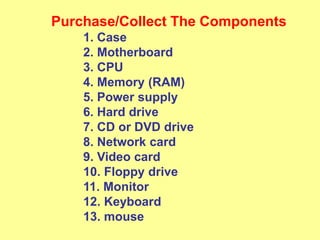
1. Case
2. Motherboard
3. CPU
4. Memory (RAM)
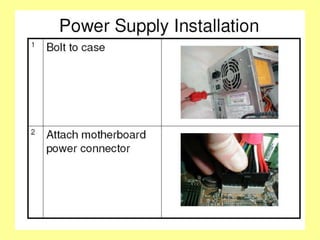
5. Power supply
6. Hard drive
7. CD or DVD drive
8. Network card
9. Video card
10. Floppy drive
11. Monitor
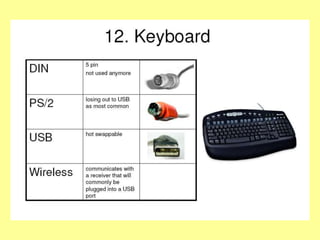
12. Keyboard
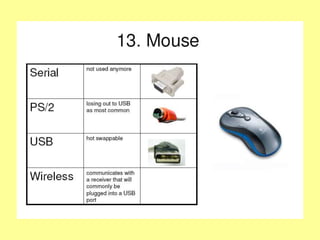
13. mouse
Steps In Building Your Own PC
1. Purchase/Collect The
Components
2. Case Preparation
3. Configure Your
Motherboard
4. Install the CPU
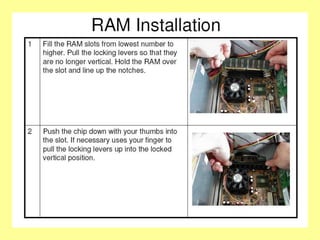
5. Install Memory
6. Install the Motherboard
7. Configure the Hard
Drive & CD-ROM
8. Mount Hard Drive
9. Install the Floppy &
CD-ROM
10. Connect the Floppy
Drive
11. Connect the Hard
Drive & CD-ROM
12. Install The Video Card
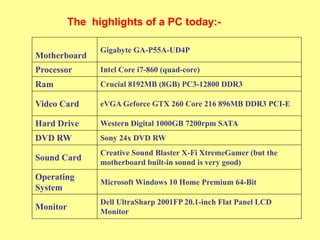
The highlights of a PC today:-
Motherboard
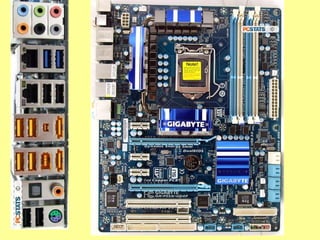
Gigabyte GA-P55A-UD4P
Processor Intel Core i7-860 (quad-core)
Ram Crucial 8192MB (8GB) PC3-12800 DDR3
Video Card eVGA Geforce GTX 260 Core 216 896MB DDR3 PCI-E
Hard Drive Western Digital 1000GB 7200rpm SATA
DVD RW Sony 24x DVD RW
Sound Card
Creative Sound Blaster X-Fi XtremeGamer (but the
motherboard built-in sound is very good)
Operating
System
Microsoft Windows 10 Home Premium 64-Bit
Monitor
Dell UltraSharp 2001FP 20.1-inch Flat Panel LCD
Monitor
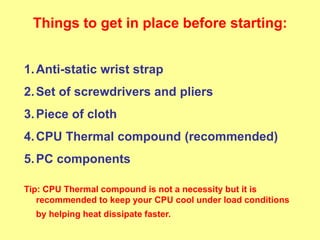
Things to get in place before starting:
1.Anti-static wrist strap
2.Set of screwdrivers and pliers
3.Piece of cloth
4.CPU Thermal compound (recommended)
5.PC components
Tip: CPU Thermal compound is not a necessity but it is
recommended to keep your CPU cool under load conditions
by helping heat dissipate faster.
Case Preparation
• Review Screw Supply
– Chassis screws
– Smaller screws
– Standoffs
– Washers
Case Preparation
• Clean Case
• Inspect the Power Supply
• Inspect Power Switch
• Install Feet
• Install Case Fan
• Configure the LED
• Free Up the Drive Bays
Configure Your Motherboard
• Read the Manual
• Set the voltage settings
• Set the processor speed
Installing the motherboard
Make sure you have all the components in place
and a nice, clean and big enough place to work
with.
Put your antic-static wrist strap on to prevent
your components from getting affected. Make
sure your hands are clean before starting. First
we will be installing the motherboard which is a
piece of cake to install.
1. Open the side doors of the cabinet
2. Lay the cabinet on its side
3. Put the motherboard in place
4. Drive in all the required screws
Tip: Most motherboards come with an antistatic bag. It is
advisable to put the motherboard on it for some time and
then remove it from the antistatic bag before placing it in
the cabinet.
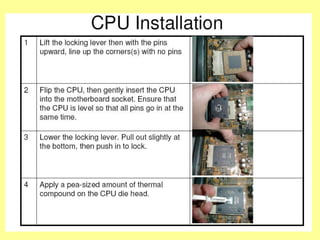
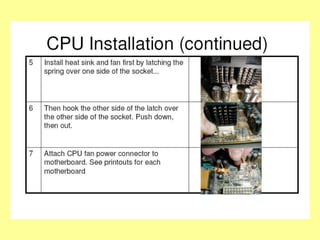
CPU Installation
CPU is the heart of a computer so make sure you handle it
properly and do not drop it or mishandle it. Also try not to
touch the pins frequently so that they do not get dirty. Get
hold of your motherboard and CPU manual. You need to
place the CPU on the dotted white patch of the
motherboard in a particular fashion for it to fit properly.
There is a golden mark on the CPU to help you assist.
Consult both your motherboard and CPU manual to see
which position it fits exactly or you could also use try all
the 4 positions.
•Lift the CPU lever on the motherboard
•Place the CPU properly on the motherboard
•Pull down the lever to secure the CPU in place
Warning: Do not try to push the CPU into the motherboard!
Configure the
Hard Drive & CD-ROM
• The motherboard has 2 IDE channels that
each support 2 devices.
• If you put 2 devices on the first IDE channel,
the first device (the one with your operating
system) will be the “master.”
• The 2nd device will be the slave.
• The same goes for the 2nd IDE channel.
• Generally, it is a good idea to put hard drives
on 1 IDE channel and CD-ROMs on the 2nd
IDE channel.
Mount Hard Drive
• A power supply is like a magnet, and
magnets and your data do not go together.
Don't install a hard drive anywhere near the
power supply. Keep your hard drive near the
front of the case.
• Slide the hard drive into an available drive
rail of the case.
• Screw the drive into place.
• Remember, power connectors face the back.
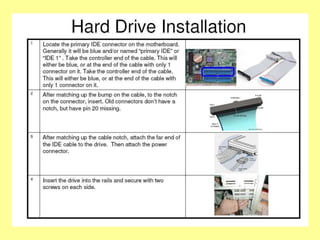
Installing the hard disk
Hard disk is another fragile component of the
computer and needs to handled carefully.
Place the hard drive into the bay
Secure the drive with screws
Connect the power cable from PSU
Connect the data cable from motherboard into the
drive
If your hard drive is a SATA one then connect one
end of SATA cable into the motherboard and other
into the SATA port on the hard disk. If your hard disk
is PATA type then use the IDE cable instead of the
SATA cable.
Tip: If your PSU does not support SATA power supply then you
will need to get an converter which will convert your standard
IDE power connector to a SATA power connector.
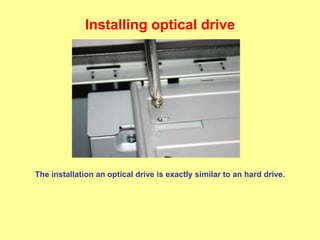
Installing optical drive
The installation an optical drive is exactly similar to an hard drive.
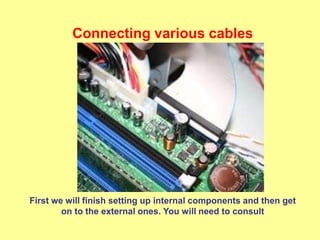
Connecting various cables
First we will finish setting up internal components and then get
on to the external ones. You will need to consult
Assemble your pc
Assemble your pc

Assemble your pc

  • 2.
    Purchase/Collect The Components 1.Case 2. Motherboard 3. CPU 4. Memory (RAM) 5. Power supply 6. Hard drive 7. CD or DVD drive 8. Network card 9. Video card 10. Floppy drive 11. Monitor 12. Keyboard 13. mouse
  • 3.
    Steps In BuildingYour Own PC 1. Purchase/Collect The Components 2. Case Preparation 3. Configure Your Motherboard 4. Install the CPU 5. Install Memory 6. Install the Motherboard 7. Configure the Hard Drive & CD-ROM 8. Mount Hard Drive 9. Install the Floppy & CD-ROM 10. Connect the Floppy Drive 11. Connect the Hard Drive & CD-ROM 12. Install The Video Card
  • 4.
    The highlights ofa PC today:- Motherboard Gigabyte GA-P55A-UD4P Processor Intel Core i7-860 (quad-core) Ram Crucial 8192MB (8GB) PC3-12800 DDR3 Video Card eVGA Geforce GTX 260 Core 216 896MB DDR3 PCI-E Hard Drive Western Digital 1000GB 7200rpm SATA DVD RW Sony 24x DVD RW Sound Card Creative Sound Blaster X-Fi XtremeGamer (but the motherboard built-in sound is very good) Operating System Microsoft Windows 10 Home Premium 64-Bit Monitor Dell UltraSharp 2001FP 20.1-inch Flat Panel LCD Monitor
  • 6.
    Things to getin place before starting: 1.Anti-static wrist strap 2.Set of screwdrivers and pliers 3.Piece of cloth 4.CPU Thermal compound (recommended) 5.PC components Tip: CPU Thermal compound is not a necessity but it is recommended to keep your CPU cool under load conditions by helping heat dissipate faster.
  • 7.
    Case Preparation • ReviewScrew Supply – Chassis screws – Smaller screws – Standoffs – Washers
  • 8.
    Case Preparation • CleanCase • Inspect the Power Supply • Inspect Power Switch • Install Feet • Install Case Fan • Configure the LED • Free Up the Drive Bays
  • 9.
    Configure Your Motherboard •Read the Manual • Set the voltage settings • Set the processor speed
  • 10.
    Installing the motherboard Makesure you have all the components in place and a nice, clean and big enough place to work with. Put your antic-static wrist strap on to prevent your components from getting affected. Make sure your hands are clean before starting. First we will be installing the motherboard which is a piece of cake to install. 1. Open the side doors of the cabinet 2. Lay the cabinet on its side 3. Put the motherboard in place 4. Drive in all the required screws Tip: Most motherboards come with an antistatic bag. It is advisable to put the motherboard on it for some time and then remove it from the antistatic bag before placing it in the cabinet.
  • 11.
    CPU Installation CPU isthe heart of a computer so make sure you handle it properly and do not drop it or mishandle it. Also try not to touch the pins frequently so that they do not get dirty. Get hold of your motherboard and CPU manual. You need to place the CPU on the dotted white patch of the motherboard in a particular fashion for it to fit properly. There is a golden mark on the CPU to help you assist. Consult both your motherboard and CPU manual to see which position it fits exactly or you could also use try all the 4 positions. •Lift the CPU lever on the motherboard •Place the CPU properly on the motherboard •Pull down the lever to secure the CPU in place Warning: Do not try to push the CPU into the motherboard!
  • 16.
    Configure the Hard Drive& CD-ROM • The motherboard has 2 IDE channels that each support 2 devices. • If you put 2 devices on the first IDE channel, the first device (the one with your operating system) will be the “master.” • The 2nd device will be the slave. • The same goes for the 2nd IDE channel. • Generally, it is a good idea to put hard drives on 1 IDE channel and CD-ROMs on the 2nd IDE channel.
  • 17.
    Mount Hard Drive •A power supply is like a magnet, and magnets and your data do not go together. Don't install a hard drive anywhere near the power supply. Keep your hard drive near the front of the case. • Slide the hard drive into an available drive rail of the case. • Screw the drive into place. • Remember, power connectors face the back.
  • 19.
    Installing the harddisk Hard disk is another fragile component of the computer and needs to handled carefully. Place the hard drive into the bay Secure the drive with screws Connect the power cable from PSU Connect the data cable from motherboard into the drive If your hard drive is a SATA one then connect one end of SATA cable into the motherboard and other into the SATA port on the hard disk. If your hard disk is PATA type then use the IDE cable instead of the SATA cable. Tip: If your PSU does not support SATA power supply then you will need to get an converter which will convert your standard IDE power connector to a SATA power connector.
  • 20.
    Installing optical drive Theinstallation an optical drive is exactly similar to an hard drive.
  • 23.
    Connecting various cables Firstwe will finish setting up internal components and then get on to the external ones. You will need to consult