ASPERGILLOSIS
VARSHINI, S.
III B.Sc. MICROBIOLOGY
PG & RESEARCH DEPARTMENT OF
BIOTECHNOLOGY AND MICROBIOLOGY,
NATIONAL COLLEGE [AUTONOMOUS]
TIRUCHIRAPPALLI - 620001
TAMIL NADU , INDIA.
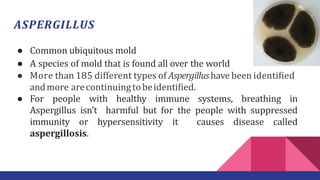
ASPERGILLUS
● Common ubiquitous mold
● A species of mold that is found all over the world
● More than 185 different types of Aspergillushave been identified
andmore arecontinuingtobeidentified.
● For people with healthy immune systems, breathing in
Aspergillus isn't harmful but for the people with suppressed
immunity or hypersensitivity it causes disease called
aspergillosis.
ASPERGILLOSIS
● Transmission of this disease occurs by inhalation of the spores
● Out of 185 species only 20 species cause disease
● Only 3 out of 20 are constantly cause disease regularly in almost
all cases
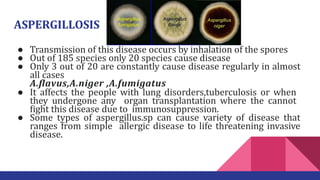
A.flavus,A.niger ,A.fumigatus
● It affects the people with lung disorders,tuberculosis or when
they undergone any organ transplantation where the cannot
fight this disease due to immunosuppression.
● Some types of aspergillus.sp can cause variety of disease that
ranges from simple allergic disease to life threatening invasive
disease.
HISTORY
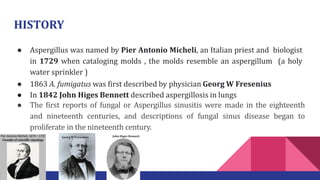
● Aspergillus was named by Pier Antonio Micheli, an Italian priest and biologist
in 1729 when cataloging molds , the molds resemble an aspergillum (a holy
water sprinkler )
● 1863 A. fumigatus was first described by physician Georg W Fresenius
● In 1842 John Higes Bennett described aspergillosis in lungs
● The first reports of fungal or Aspergillus sinusitis were made in the eighteenth
and nineteenth centuries, and descriptions of fungal sinus disease began to
proliferate in the nineteenth century.
Georg W Fresenius John Higes Bennett
MORPHOLOGY
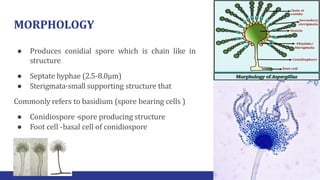
● Produces conidial spore which is chain like in
structure
● Septate hyphae (2.5-8.0μm)
● Sterigmata-small supporting structure that
Commonly refers to basidium (spore bearing cells )
● Conidiospore -spore producing structure
● Foot cell -basal cell of conidiospore
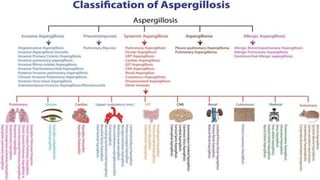
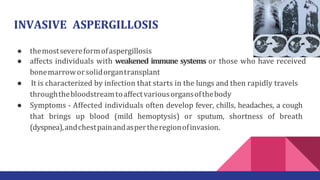
INVASIVE ASPERGILLOSIS
● themostsevereformofaspergillosis
● affects individuals with weakened immune systems or those who have received
bonemarroworsolidorgantransplant
● It is characterized by infection that starts in the lungs and then rapidly travels
throughthebloodstreamtoaffectvariousorgansofthebody
● Symptoms - Affected individuals often develop fever, chills, headaches, a cough
that brings up blood (mild hemoptysis) or sputum, shortness of breath
(dyspnea),andchestpainandaspertheregionofinvasion.
PNEUMOMYCOSIS
● PNEUMOMYCOSIS (BROODER PNEUMONIA) - pneumonial
infection caused by fungi
● Symptoms -coughing, wastage of muscles , lethargy, anorexia
(loss of appetite),lymph node enlargement and oculonasal
discharge H&E stain showing a fungal pneumonia (pulmonary
aspergillosis)
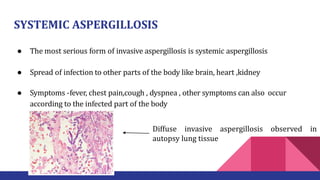
SYSTEMIC ASPERGILLOSIS
● The most serious form of invasive aspergillosis is systemic aspergillosis
● Spread of infection to other parts of the body like brain, heart ,kidney
● Symptoms -fever, chest pain,cough , dyspnea , other symptoms can also occur
according to the infected part of the body
Diffuse invasive aspergillosis observed in
autopsy lung tissue
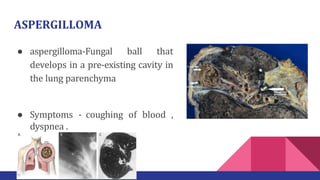
ASPERGILLOMA
● aspergilloma-Fungal ball that
develops in a pre-existing cavity in
the lung parenchyma
● Symptoms - coughing of blood ,
dyspnea .
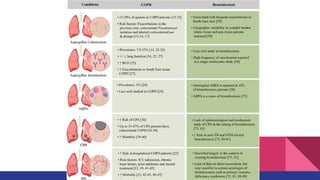
ALLERGIC PULMONARY SYNDROME ASSOCIATED
WITH ASPERGILLOSIS
● This type of aspergillosis occur only to the individual with long
term asthma or cystic fibrosis
● Symptoms -Initial response with allergy and also include chronic
wheezing , shortness in breath ( dyspnea) and a feeling of poor
health also causes chest pain and cough that brings up blood
● Can also end up in bronchiectasis and loss of lung function if
untreated
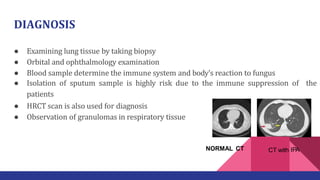
DIAGNOSIS
● Examining lung tissue by taking biopsy
● Orbital and ophthalmology examination
● Blood sample determine the immune system and body’s reaction to fungus
● Isolation of sputum sample is highly risk due to the immune suppression of the
patients
● HRCT scan is also used for diagnosis
● Observation of granulomas in respiratory tissue
NORMAL CT CT with IPA
TREATMENT
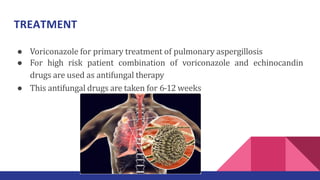
● Voriconazole for primary treatment of pulmonary aspergillosis
● For high risk patient combination of voriconazole and echinocandin
drugs are used as antifungal therapy
● This antifungal drugs are taken for 6-12 weeks
THANK YOU

Aspergillosis

  • 1.
    ASPERGILLOSIS VARSHINI, S. III B.Sc.MICROBIOLOGY PG & RESEARCH DEPARTMENT OF BIOTECHNOLOGY AND MICROBIOLOGY, NATIONAL COLLEGE [AUTONOMOUS] TIRUCHIRAPPALLI - 620001 TAMIL NADU , INDIA.
  • 2.
    ASPERGILLUS ● Common ubiquitousmold ● A species of mold that is found all over the world ● More than 185 different types of Aspergillushave been identified andmore arecontinuingtobeidentified. ● For people with healthy immune systems, breathing in Aspergillus isn't harmful but for the people with suppressed immunity or hypersensitivity it causes disease called aspergillosis.
  • 3.
    ASPERGILLOSIS ● Transmission ofthis disease occurs by inhalation of the spores ● Out of 185 species only 20 species cause disease ● Only 3 out of 20 are constantly cause disease regularly in almost all cases A.flavus,A.niger ,A.fumigatus ● It affects the people with lung disorders,tuberculosis or when they undergone any organ transplantation where the cannot fight this disease due to immunosuppression. ● Some types of aspergillus.sp can cause variety of disease that ranges from simple allergic disease to life threatening invasive disease.
  • 4.
    HISTORY ● Aspergillus wasnamed by Pier Antonio Micheli, an Italian priest and biologist in 1729 when cataloging molds , the molds resemble an aspergillum (a holy water sprinkler ) ● 1863 A. fumigatus was first described by physician Georg W Fresenius ● In 1842 John Higes Bennett described aspergillosis in lungs ● The first reports of fungal or Aspergillus sinusitis were made in the eighteenth and nineteenth centuries, and descriptions of fungal sinus disease began to proliferate in the nineteenth century. Georg W Fresenius John Higes Bennett
  • 5.
    MORPHOLOGY ● Produces conidialspore which is chain like in structure ● Septate hyphae (2.5-8.0μm) ● Sterigmata-small supporting structure that Commonly refers to basidium (spore bearing cells ) ● Conidiospore -spore producing structure ● Foot cell -basal cell of conidiospore
  • 7.
    INVASIVE ASPERGILLOSIS ● themostsevereformofaspergillosis ●affects individuals with weakened immune systems or those who have received bonemarroworsolidorgantransplant ● It is characterized by infection that starts in the lungs and then rapidly travels throughthebloodstreamtoaffectvariousorgansofthebody ● Symptoms - Affected individuals often develop fever, chills, headaches, a cough that brings up blood (mild hemoptysis) or sputum, shortness of breath (dyspnea),andchestpainandaspertheregionofinvasion.
  • 8.
    PNEUMOMYCOSIS ● PNEUMOMYCOSIS (BROODERPNEUMONIA) - pneumonial infection caused by fungi ● Symptoms -coughing, wastage of muscles , lethargy, anorexia (loss of appetite),lymph node enlargement and oculonasal discharge H&E stain showing a fungal pneumonia (pulmonary aspergillosis)
  • 9.
    SYSTEMIC ASPERGILLOSIS ● Themost serious form of invasive aspergillosis is systemic aspergillosis ● Spread of infection to other parts of the body like brain, heart ,kidney ● Symptoms -fever, chest pain,cough , dyspnea , other symptoms can also occur according to the infected part of the body Diffuse invasive aspergillosis observed in autopsy lung tissue
  • 10.
    ASPERGILLOMA ● aspergilloma-Fungal ballthat develops in a pre-existing cavity in the lung parenchyma ● Symptoms - coughing of blood , dyspnea .
  • 11.
    ALLERGIC PULMONARY SYNDROMEASSOCIATED WITH ASPERGILLOSIS ● This type of aspergillosis occur only to the individual with long term asthma or cystic fibrosis ● Symptoms -Initial response with allergy and also include chronic wheezing , shortness in breath ( dyspnea) and a feeling of poor health also causes chest pain and cough that brings up blood ● Can also end up in bronchiectasis and loss of lung function if untreated
  • 13.
    DIAGNOSIS ● Examining lungtissue by taking biopsy ● Orbital and ophthalmology examination ● Blood sample determine the immune system and body’s reaction to fungus ● Isolation of sputum sample is highly risk due to the immune suppression of the patients ● HRCT scan is also used for diagnosis ● Observation of granulomas in respiratory tissue NORMAL CT CT with IPA
  • 14.
    TREATMENT ● Voriconazole forprimary treatment of pulmonary aspergillosis ● For high risk patient combination of voriconazole and echinocandin drugs are used as antifungal therapy ● This antifungal drugs are taken for 6-12 weeks
  • 15.