P. Karthika
Assistant Professor
Periyar University, Salem - 11
Aseptic processing is a processing technique
wherein commercially thermally sterilized
liquid products (typically food or
pharmaceutical) are packaged into previously
sterilized containers under sterile conditions
to produce shelf-stable products that do not
need refrigeration.
 Carton Boxes: Some of the existing aseptic carton boxes may now be
filled with particulates, also aseptically.
 Bags and Pouches: Pillow pouches are usually used for packaging of
milk; three-sided sealed pouch, however, is suitable also for aseptic
packaging of particulates up to particle sizes of 12µ and bag sizes
from 1-5 litres.
 Cups and Trays: These are either used pre-made or formed, filled
and sealed in thermoform/ fill/seal machines. Both types of
machines exist for filling particulates and also in packs suitable for
microwave heating.
 Bottles and Jars: Glass bottles may be aseptically filled with food
containing small particles, for instance for baby food. Jars may be
filled with larger particles - 12mm cube size or larger - if one
dimension is smaller. In a recent development, returnable bottles are
filled aseptically, which up to now were applied only for UHT –
treated milk.
 Metal Cans: The existing slit filler, however, limits
applications to liquids with very small particles, such
as rice. Fruits, Juices in Tetra Pack with and without
Spin Cap 316
 Plastic Cans: An aseptic machine for filling and closing
of two-piece plastic cans, ‘gourmet cans’, was recently
developed. Cans and lids with easy opening feature
consist of PP/ EVOH/PP. They are sterilized with
hydrogen peroxide, UV radiation and heat-sealed
inductively. The can is presently offered for liquids only
– for example coffee.
 Composite Cans: These may, at present, not be filled
with particulate food, but only with fruit juice with
long fibers.
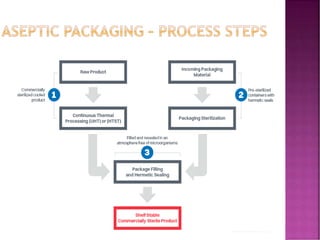
 Sterilization of the products before filling
 Sterilization of packaging materials or
containers and closures before filling
 Sterilization of aseptic installations before
operation (UHT unit, lines for products, sterile
air and gases, filler and relevant machine zones)
Conventional Process Flow Aseptic Process Flow
311
 Maintaining sterility in this total system during
operation; sterilization of all media entering the
system, like air, gases, sterile water
 Production of hermetic packages
 convenience – it is portable and light
 food safety – the process ensures that the food is safe
from harmful bacteria
 no refrigeration is required – which saves energy in
the transportation and storage of the food product
 less energy is required – less energy to heat and
sterilise the product and the container
 protection of nutritional content – the food product
contains more nutrients due to less heat damage;
preservatives do not need to be added
 low packaging to product ratio – there is more than
90% food product to 10% package
 storage efficiency – brick shapes are easier to pack in
bulk than cans or jars
 recycling difficult
 production costs – due to a more complicated
system, production costs increase, resulting
in increased costs for the consumer
• Different materials - together
in a layered structure
•(usually 5-7) to provide an
adequate level of protection to
the product
•at an acceptable cost
Aseptic package

Aseptic package

  • 1.
  • 2.
    Aseptic processing isa processing technique wherein commercially thermally sterilized liquid products (typically food or pharmaceutical) are packaged into previously sterilized containers under sterile conditions to produce shelf-stable products that do not need refrigeration.
  • 3.
     Carton Boxes:Some of the existing aseptic carton boxes may now be filled with particulates, also aseptically.  Bags and Pouches: Pillow pouches are usually used for packaging of milk; three-sided sealed pouch, however, is suitable also for aseptic packaging of particulates up to particle sizes of 12µ and bag sizes from 1-5 litres.  Cups and Trays: These are either used pre-made or formed, filled and sealed in thermoform/ fill/seal machines. Both types of machines exist for filling particulates and also in packs suitable for microwave heating.  Bottles and Jars: Glass bottles may be aseptically filled with food containing small particles, for instance for baby food. Jars may be filled with larger particles - 12mm cube size or larger - if one dimension is smaller. In a recent development, returnable bottles are filled aseptically, which up to now were applied only for UHT – treated milk.
  • 4.
     Metal Cans:The existing slit filler, however, limits applications to liquids with very small particles, such as rice. Fruits, Juices in Tetra Pack with and without Spin Cap 316  Plastic Cans: An aseptic machine for filling and closing of two-piece plastic cans, ‘gourmet cans’, was recently developed. Cans and lids with easy opening feature consist of PP/ EVOH/PP. They are sterilized with hydrogen peroxide, UV radiation and heat-sealed inductively. The can is presently offered for liquids only – for example coffee.  Composite Cans: These may, at present, not be filled with particulate food, but only with fruit juice with long fibers.
  • 6.
     Sterilization ofthe products before filling  Sterilization of packaging materials or containers and closures before filling  Sterilization of aseptic installations before operation (UHT unit, lines for products, sterile air and gases, filler and relevant machine zones) Conventional Process Flow Aseptic Process Flow 311  Maintaining sterility in this total system during operation; sterilization of all media entering the system, like air, gases, sterile water  Production of hermetic packages
  • 7.
     convenience –it is portable and light  food safety – the process ensures that the food is safe from harmful bacteria  no refrigeration is required – which saves energy in the transportation and storage of the food product  less energy is required – less energy to heat and sterilise the product and the container  protection of nutritional content – the food product contains more nutrients due to less heat damage; preservatives do not need to be added  low packaging to product ratio – there is more than 90% food product to 10% package  storage efficiency – brick shapes are easier to pack in bulk than cans or jars
  • 8.
     recycling difficult production costs – due to a more complicated system, production costs increase, resulting in increased costs for the consumer
  • 10.
    • Different materials- together in a layered structure •(usually 5-7) to provide an adequate level of protection to the product •at an acceptable cost