Food Packaging Technology
P. Karthika
Assistant Professor
Department of Food Science and
Nutrition
Periyar University, Salem -11
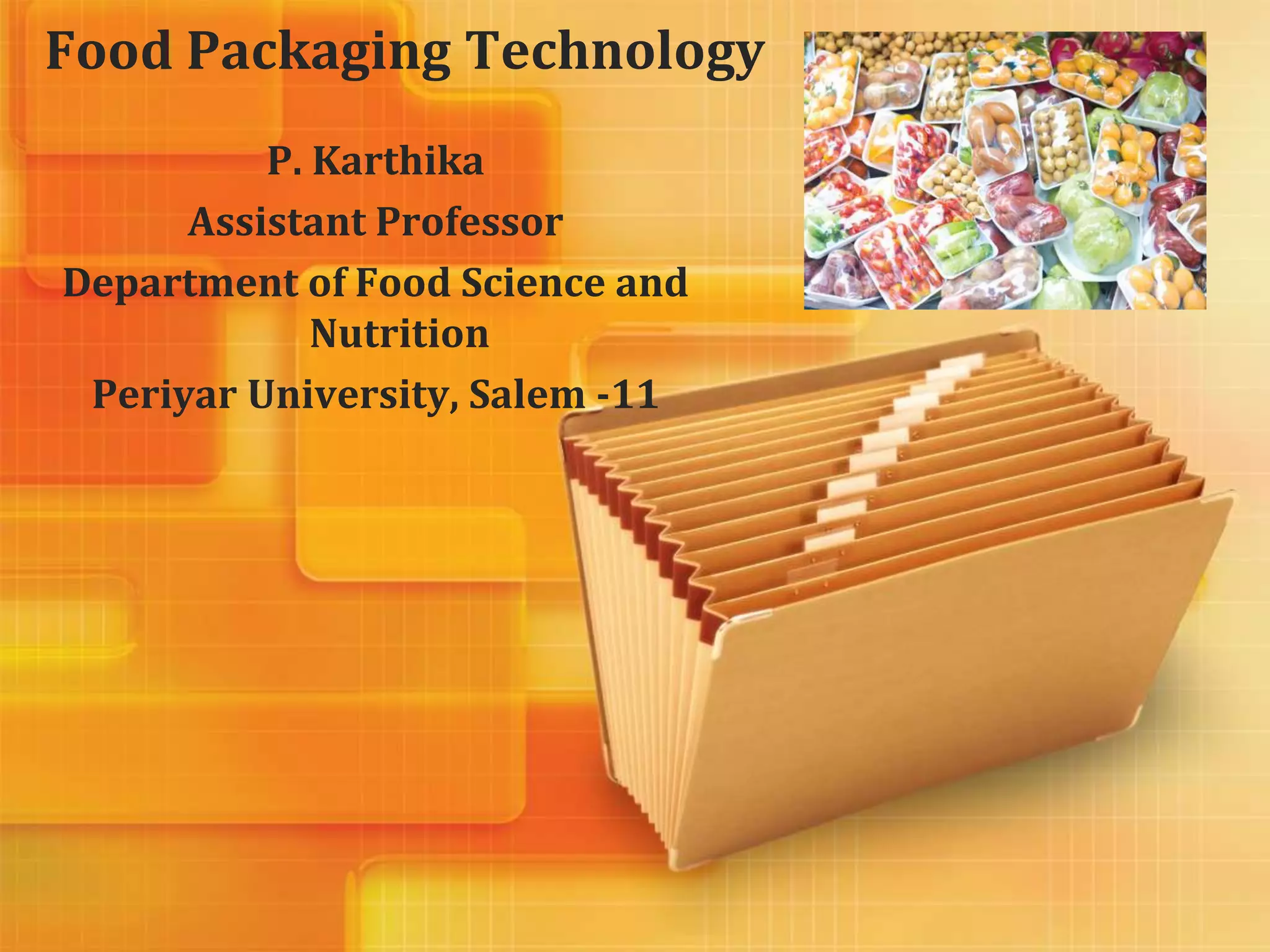
Food Packaging is the packaging of the
food product, to protect from contamination
and damage besides conserving taste &
quality during the shelf life of a food
product.
Definition
Importance of food packaging
• Food packaging is very important not only as a
protection of food but also as a means of marketing
the food product.
• All food packages highlights about the freshness,
healthy and traceability of the food item.
• Packaging has become an important part of the value
chain analysis, regarding food safety.
• The importance of food packaging is further
strengthened by the final choice of the consumers
because it directly involves appeal, convenience,
information and branding.
Roles of Food Packaging
• to protect food products from outside influences and
damage
• to contain the food
• to provide consumers with ingredient and
nutritional information
• to contain food in a cost-effective way that satisfies
industry requirements and consumer desires,
maintains food safety, and minimizes environmental
impact.
Purposes
• Protection: The food which kept in the package requires protection from various things
like vibration, shock, compression, temperature, etc.
•Barrier protection: Packaging is required to provide a barrier from oxygen, dust, water
vapor, etc. Keeping the contents of the food fresh, clean, and safe for the required shelf life is
a basic function.
•Containment: Small food items are typically grouped together in one package for
efficiency. Granular materials and powders need containment.
•Label Information: All food products packages require labels on the nutrition facts, how
to use, dispose, date of manufacturing and expiry of the package or product.
•Marketing: Proper food packaging with proper information plays a vital role in
encouraging potential customers to buy the product and this case the food packaging design
plays an equally important role. The more attractive the design is, the more is its chances of
buying.
•Security: Proper packaging can play an essential role in reducing the security risks of
shipment. With tamper evident features, there is no chances of the food packages being
destroyed or contaminated during shipment.
•Convenience: Food packages have certain features which add convenience in handling,
stacking, distribution, sale, display, re-closing, opening, use, and reuse.
•Portion control: Lastly, food packaging provides information on the exact portion of
contents available in that particular product.
Principles of package development
• Product assessment
• Hazards of distribution (mechanical, climatic,
biological, etc.)
• Marketing requirements (competitors, retail service,
customer, convenience, etc.)
• Selection of packaging material and packaging
machinery
Requirements for effective food packaging
• Nontoxic
• Protect against contamination from microorganisms
• Act as a barrier to moisture loss or gain and oxygen ingress
• Protect against ingress of odors or environmental toxicants
• Filter out harmful UV light
• Provide resistance to physical damage
• Transparent (8) be tamper – resistant or tamper – evident
• Easy to open
• Have dispensing and resealing features
• Easy dispose
• Meet size, shape and weight requirements
• Have appearance, printability features
• Low cost
• Compatible with food
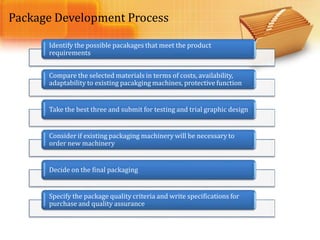
Package Development Process
Identify the possible pacakages that meet the product
requirements
Compare the selected materials in terms of costs, availability,
adaptability to existing pacakging machines, protective function
Take the best three and submit for testing and trial graphic design
Consider if existing packaging machinery will be necessary to
order new machinery
Decide on the final packaging
Specify the package quality criteria and write specifications for
purchase and quality assurance
Food packaging technology

Food packaging technology

  • 1.
    Food Packaging Technology P.Karthika Assistant Professor Department of Food Science and Nutrition Periyar University, Salem -11
  • 2.
    Food Packaging isthe packaging of the food product, to protect from contamination and damage besides conserving taste & quality during the shelf life of a food product. Definition
  • 3.
    Importance of foodpackaging • Food packaging is very important not only as a protection of food but also as a means of marketing the food product. • All food packages highlights about the freshness, healthy and traceability of the food item. • Packaging has become an important part of the value chain analysis, regarding food safety. • The importance of food packaging is further strengthened by the final choice of the consumers because it directly involves appeal, convenience, information and branding.
  • 4.
    Roles of FoodPackaging • to protect food products from outside influences and damage • to contain the food • to provide consumers with ingredient and nutritional information • to contain food in a cost-effective way that satisfies industry requirements and consumer desires, maintains food safety, and minimizes environmental impact.
  • 5.
    Purposes • Protection: Thefood which kept in the package requires protection from various things like vibration, shock, compression, temperature, etc. •Barrier protection: Packaging is required to provide a barrier from oxygen, dust, water vapor, etc. Keeping the contents of the food fresh, clean, and safe for the required shelf life is a basic function. •Containment: Small food items are typically grouped together in one package for efficiency. Granular materials and powders need containment. •Label Information: All food products packages require labels on the nutrition facts, how to use, dispose, date of manufacturing and expiry of the package or product. •Marketing: Proper food packaging with proper information plays a vital role in encouraging potential customers to buy the product and this case the food packaging design plays an equally important role. The more attractive the design is, the more is its chances of buying. •Security: Proper packaging can play an essential role in reducing the security risks of shipment. With tamper evident features, there is no chances of the food packages being destroyed or contaminated during shipment. •Convenience: Food packages have certain features which add convenience in handling, stacking, distribution, sale, display, re-closing, opening, use, and reuse. •Portion control: Lastly, food packaging provides information on the exact portion of contents available in that particular product.
  • 6.
    Principles of packagedevelopment • Product assessment • Hazards of distribution (mechanical, climatic, biological, etc.) • Marketing requirements (competitors, retail service, customer, convenience, etc.) • Selection of packaging material and packaging machinery
  • 7.
    Requirements for effectivefood packaging • Nontoxic • Protect against contamination from microorganisms • Act as a barrier to moisture loss or gain and oxygen ingress • Protect against ingress of odors or environmental toxicants • Filter out harmful UV light • Provide resistance to physical damage • Transparent (8) be tamper – resistant or tamper – evident • Easy to open • Have dispensing and resealing features • Easy dispose • Meet size, shape and weight requirements • Have appearance, printability features • Low cost • Compatible with food
  • 8.
    Package Development Process Identifythe possible pacakages that meet the product requirements Compare the selected materials in terms of costs, availability, adaptability to existing pacakging machines, protective function Take the best three and submit for testing and trial graphic design Consider if existing packaging machinery will be necessary to order new machinery Decide on the final packaging Specify the package quality criteria and write specifications for purchase and quality assurance