Artificial Ventilation
Research
Done by Azra Maliha
Definition
Types of ventilation
1. Supply ventilation
2.Exhaust ventilation
3.Balanced ventilation
a. Heat recovery
b. Energy recovery
Advantages of artificial ventilation
Is there any concern?
Case study
Cundall office
References
Index
Definition
Artificial or mechanical ventilation means supporting or
stimulating natural ventilation through mechanisms or
machines. This uses mechanical fans and other
systems to drive the stale interior air of a building to the
outside and allow fresh air inside.
Types of ventilations
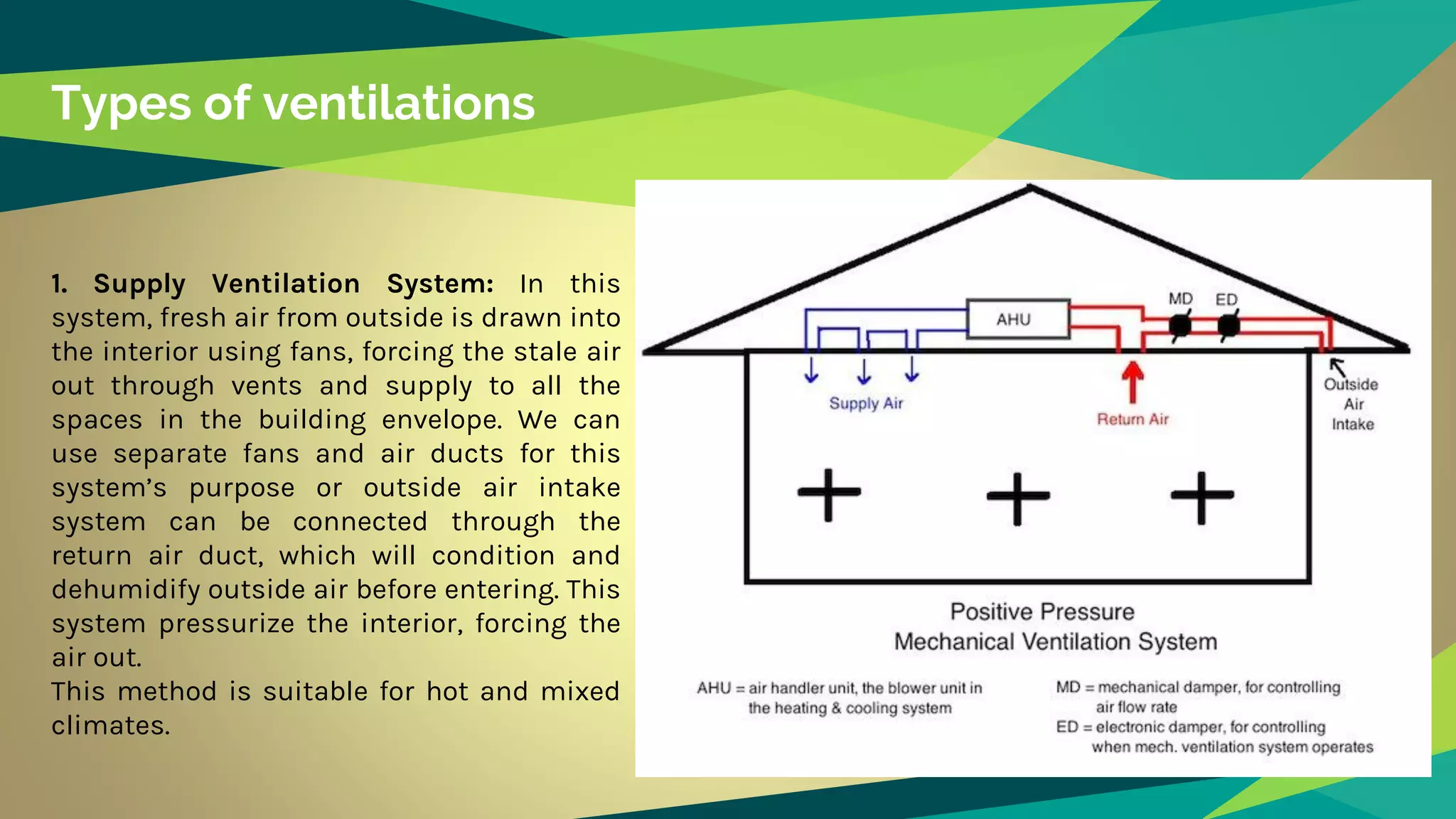
1. Supply Ventilation System: In this
system, fresh air from outside is drawn into
the interior using fans, forcing the stale air
out through vents and supply to all the
spaces in the building envelope. We can
use separate fans and air ducts for this
system’s purpose or outside air intake
system can be connected through the
return air duct, which will condition and
dehumidify outside air before entering. This
system pressurize the interior, forcing the
air out.
This method is suitable for hot and mixed
climates.
Types of ventilations
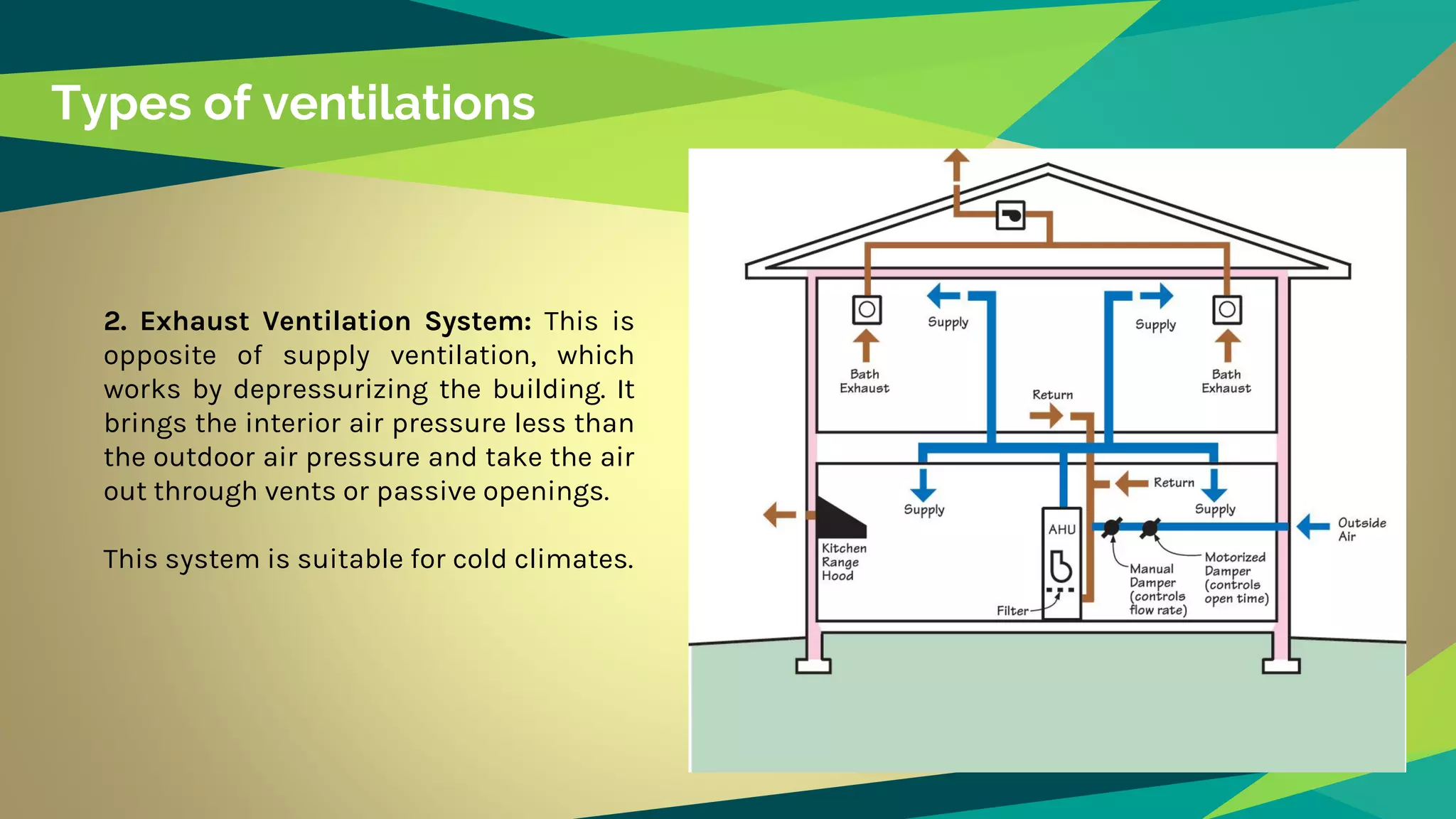
2. Exhaust Ventilation System: This is
opposite of supply ventilation, which
works by depressurizing the building. It
brings the interior air pressure less than
the outdoor air pressure and take the air
out through vents or passive openings.
This system is suitable for cold climates.
Types of ventilations
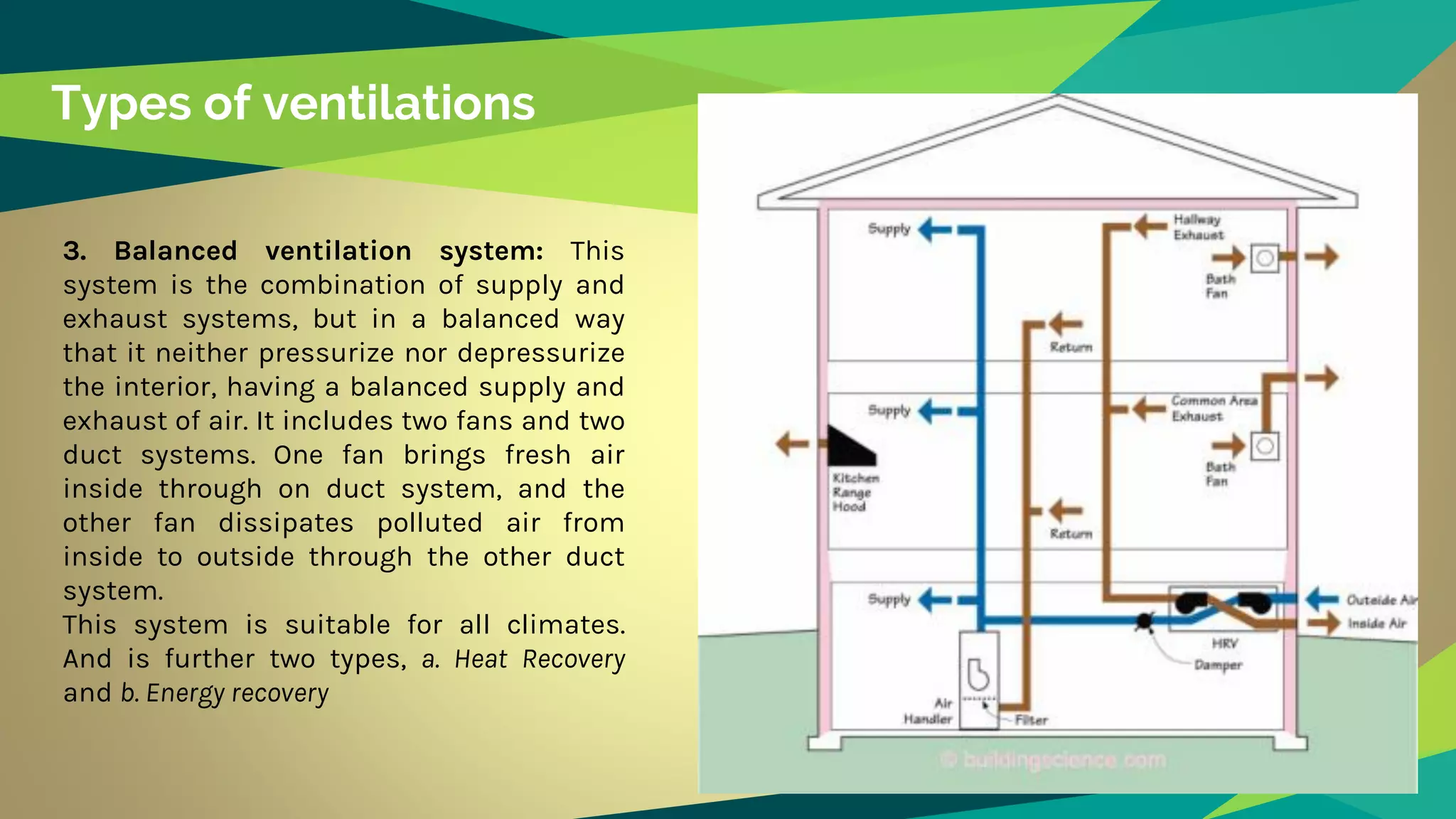
3. Balanced ventilation system: This
system is the combination of supply and
exhaust systems, but in a balanced way
that it neither pressurize nor depressurize
the interior, having a balanced supply and
exhaust of air. It includes two fans and two
duct systems. One fan brings fresh air
inside through on duct system, and the
other fan dissipates polluted air from
inside to outside through the other duct
system.
This system is suitable for all climates.
And is further two types, a. Heat Recovery
and b. Energy recovery
Types of ventilations
a. Heat recovery (HRV) helps in transmission of heat from exhaust air to received
air during the summer season and from received air to exhaust air in the air
winter season to reduce the heating and cooling load. This ensures comfort for
the occupants.
b. Energy recovery (ERV) transfers heat and moisture between the exhaust and
received air, which reduces the moisture content of the incoming air in summer,
that would otherwise had to be dehumidified through some electrical system. In
winter, this system adds moisture to the receiving air to avoid excessive indoor
dryness, leading to occupant comforts.
Advantages of artificial ventilation
• No need to depend on natural conditions or weather
• Provide required amount of air exchange and can be easily controlled
• Air is distributed in places where it is required
• Natural ventilation often includes opening windows, facades or doors which
brings dust or outdoor dirt in situations of strong wind, which is not seen in
artificial ventilation
• Not noisy
• The systems do not interfere with building envelope or any other constructional
system
• Air can be humidify or dehumidify, filtered, cooled or heated according to
occupants’ desires or location weather and climate
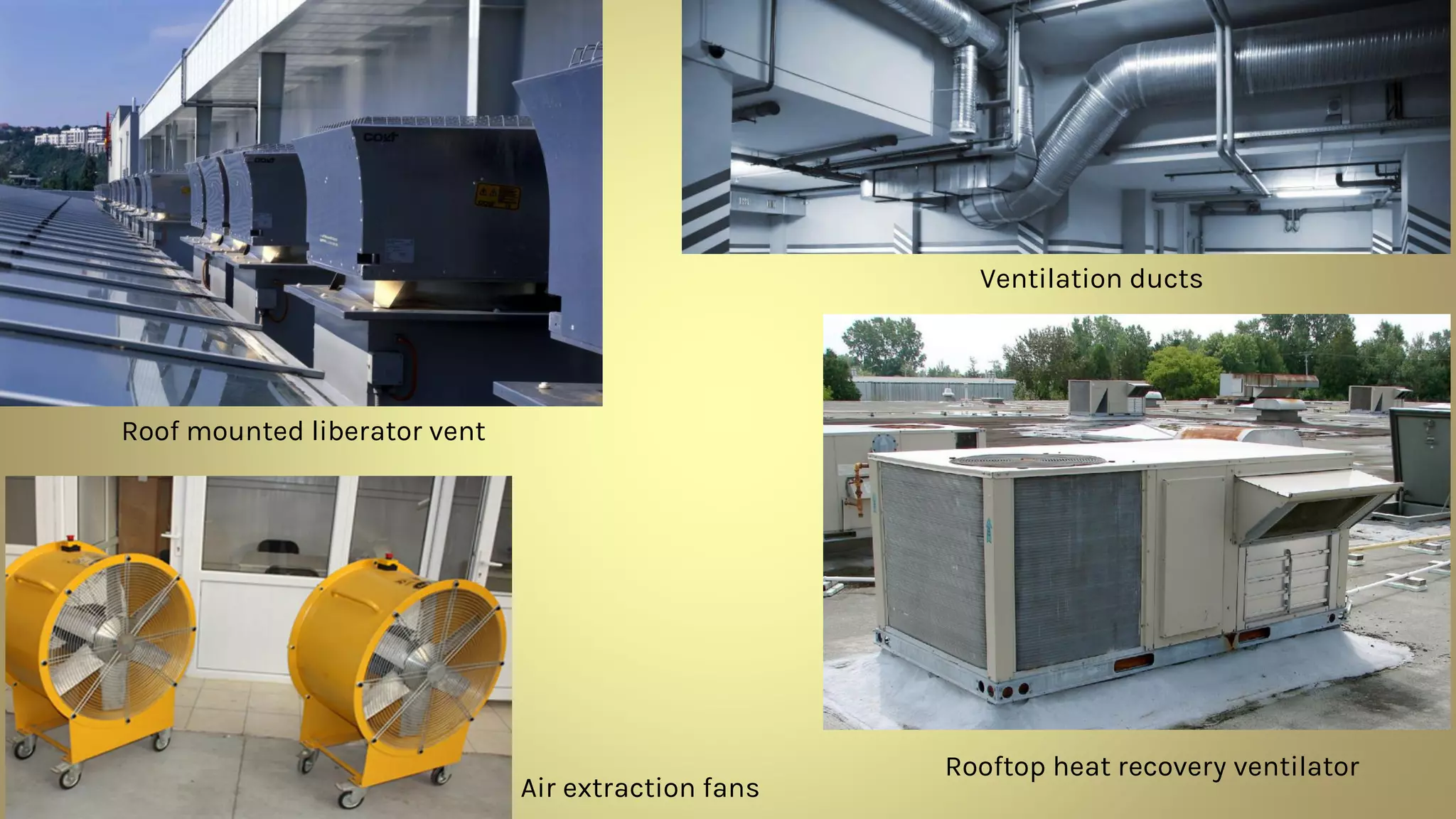
Roof mounted liberator vent
Ventilation ducts
Rooftop heat recovery ventilator
Air extraction fans
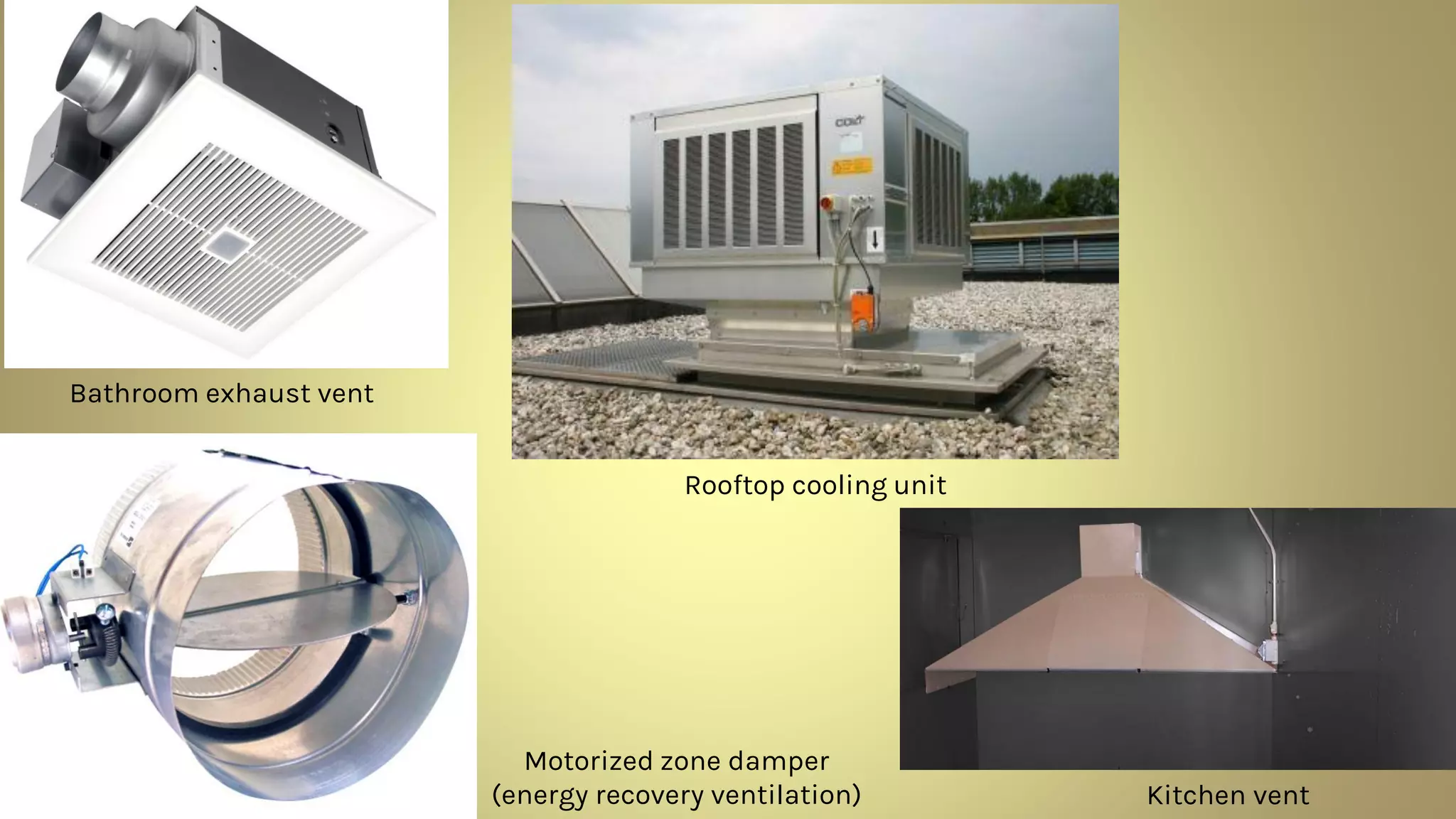
Bathroom exhaust vent
Rooftop cooling unit
Kitchen vent
Motorized zone damper
(energy recovery ventilation)
“Is there any concern?
•mechanical ventilation must be implemented in proper and accurate way considering the
weather of the location, space and building type. Faulty systems may lead to serious health
issues caused by pressure differences, over heating or over cooling.
•a good quality or branded artificial ventilation system is often expensive, so not everyone
can afford so much of it. Although latest innovative technologies are making such systems
more cost effective.
Case Study
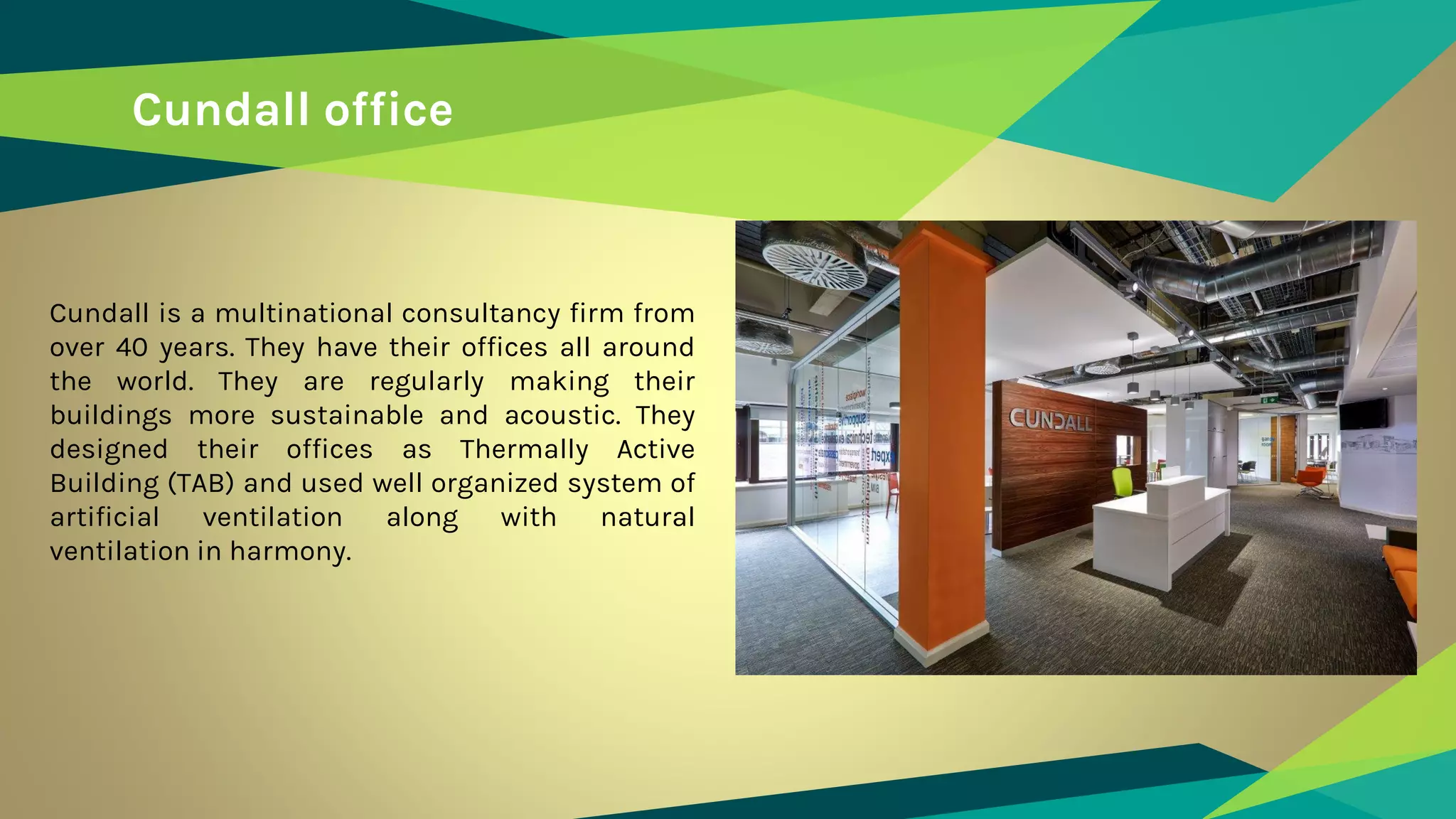
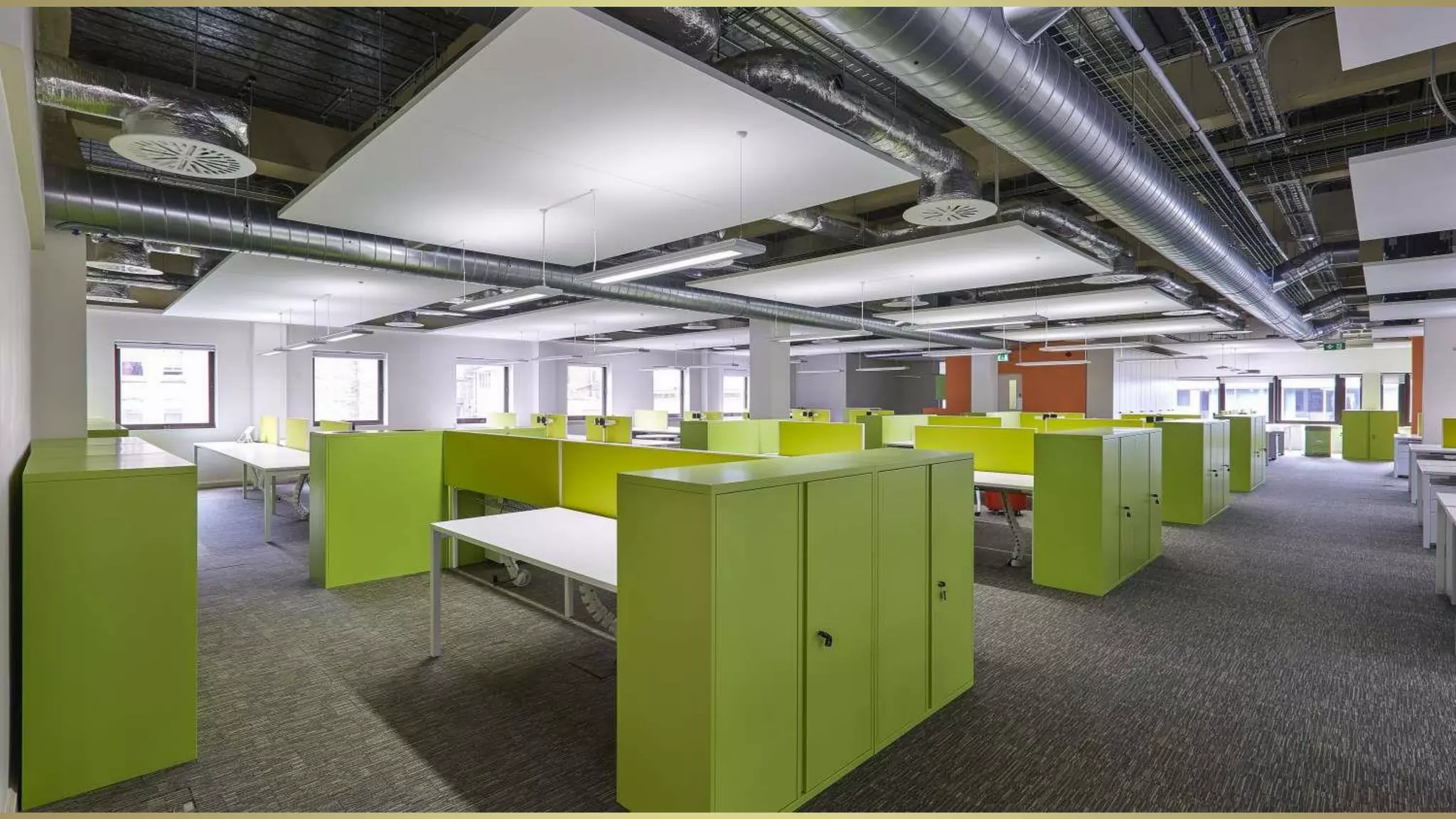
Cundall is a multinational consultancy firm from
over 40 years. They have their offices all around
the world. They are regularly making their
buildings more sustainable and acoustic. They
designed their offices as Thermally Active
Building (TAB) and used well organized system of
artificial ventilation along with natural
ventilation in harmony.
Cundall office
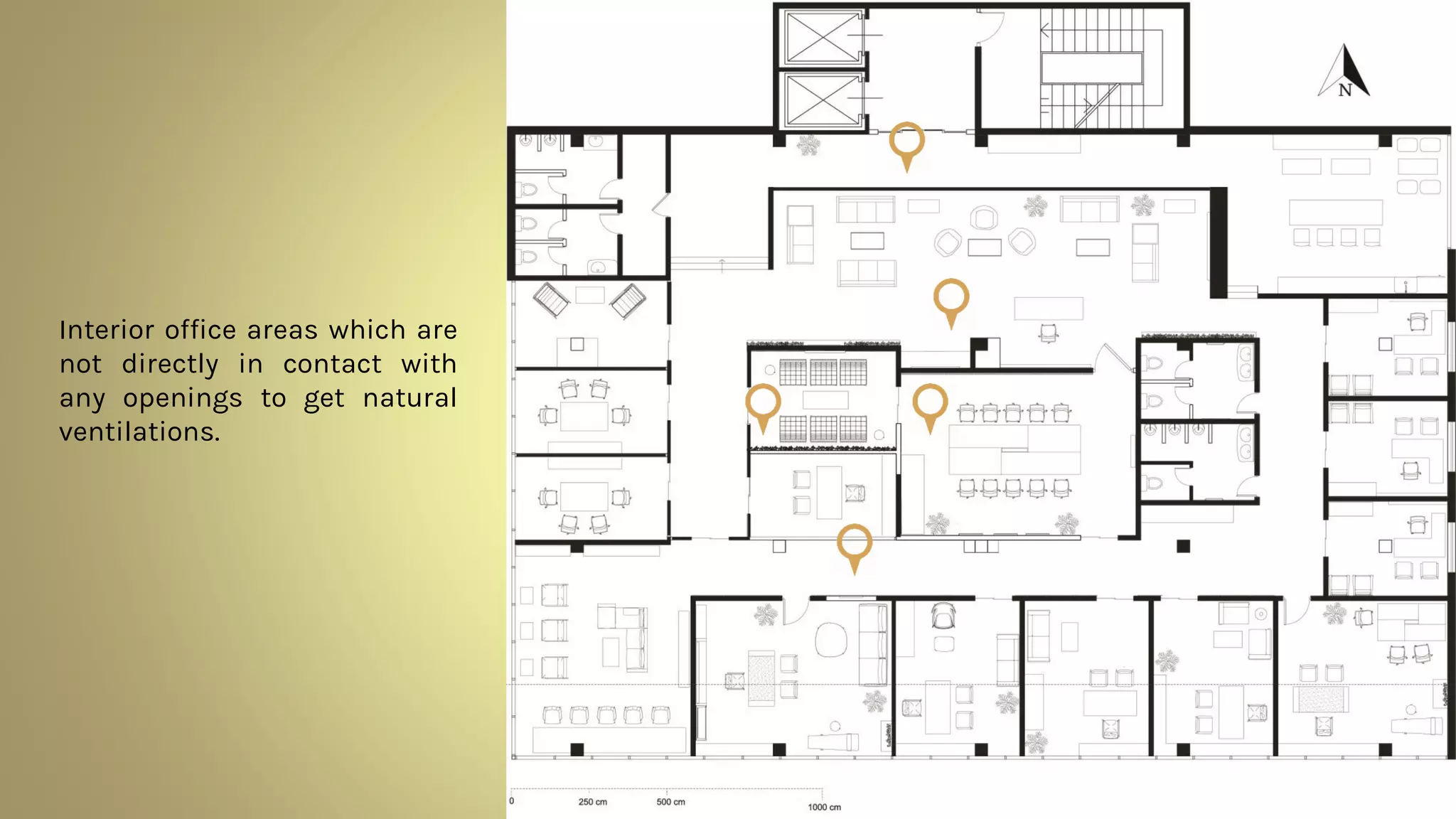
Application
Interior office areas which are
not directly in contact with
any openings to get natural
ventilations.
References
• http://www.thegreenage.co.uk/mechanical-ventilation-in-buildings-what-you-need-to-know/
• https://www.energystar.gov/ia/new_ homes/features/MechVent_ 062906.pdf
• http://www.greenbuildingadvisor.com/green-basics/mechanical-systems-deliver-comfort-and-utility-savings
• https://www.hometips.com/how-it-works/ventilation-systems-exhaust.html
• http://www.nrc-cnrc.gc.ca/ctu-sc/ctu_ sc_ n14
• http://www.ehow.com/info_ 8602703_ advantages-disadvantages-mechanical-ventilation-systems.html
• https://cundallconversations.com/2014/12/19/smart-buildings-smart-climate-smart-acoustics-an-evolution-
through-design/

Artificialventilation

  • 1.
  • 2.
    Definition Types of ventilation 1.Supply ventilation 2.Exhaust ventilation 3.Balanced ventilation a. Heat recovery b. Energy recovery Advantages of artificial ventilation Is there any concern? Case study Cundall office References Index
  • 3.
    Definition Artificial or mechanicalventilation means supporting or stimulating natural ventilation through mechanisms or machines. This uses mechanical fans and other systems to drive the stale interior air of a building to the outside and allow fresh air inside.
  • 4.
    Types of ventilations 1.Supply Ventilation System: In this system, fresh air from outside is drawn into the interior using fans, forcing the stale air out through vents and supply to all the spaces in the building envelope. We can use separate fans and air ducts for this system’s purpose or outside air intake system can be connected through the return air duct, which will condition and dehumidify outside air before entering. This system pressurize the interior, forcing the air out. This method is suitable for hot and mixed climates.
  • 5.
    Types of ventilations 2.Exhaust Ventilation System: This is opposite of supply ventilation, which works by depressurizing the building. It brings the interior air pressure less than the outdoor air pressure and take the air out through vents or passive openings. This system is suitable for cold climates.
  • 6.
    Types of ventilations 3.Balanced ventilation system: This system is the combination of supply and exhaust systems, but in a balanced way that it neither pressurize nor depressurize the interior, having a balanced supply and exhaust of air. It includes two fans and two duct systems. One fan brings fresh air inside through on duct system, and the other fan dissipates polluted air from inside to outside through the other duct system. This system is suitable for all climates. And is further two types, a. Heat Recovery and b. Energy recovery
  • 7.
    Types of ventilations a.Heat recovery (HRV) helps in transmission of heat from exhaust air to received air during the summer season and from received air to exhaust air in the air winter season to reduce the heating and cooling load. This ensures comfort for the occupants. b. Energy recovery (ERV) transfers heat and moisture between the exhaust and received air, which reduces the moisture content of the incoming air in summer, that would otherwise had to be dehumidified through some electrical system. In winter, this system adds moisture to the receiving air to avoid excessive indoor dryness, leading to occupant comforts.
  • 8.
    Advantages of artificialventilation • No need to depend on natural conditions or weather • Provide required amount of air exchange and can be easily controlled • Air is distributed in places where it is required • Natural ventilation often includes opening windows, facades or doors which brings dust or outdoor dirt in situations of strong wind, which is not seen in artificial ventilation • Not noisy • The systems do not interfere with building envelope or any other constructional system • Air can be humidify or dehumidify, filtered, cooled or heated according to occupants’ desires or location weather and climate
  • 9.
    Roof mounted liberatorvent Ventilation ducts Rooftop heat recovery ventilator Air extraction fans
  • 10.
    Bathroom exhaust vent Rooftopcooling unit Kitchen vent Motorized zone damper (energy recovery ventilation)
  • 11.
    “Is there anyconcern? •mechanical ventilation must be implemented in proper and accurate way considering the weather of the location, space and building type. Faulty systems may lead to serious health issues caused by pressure differences, over heating or over cooling. •a good quality or branded artificial ventilation system is often expensive, so not everyone can afford so much of it. Although latest innovative technologies are making such systems more cost effective.
  • 12.
  • 13.
    Cundall is amultinational consultancy firm from over 40 years. They have their offices all around the world. They are regularly making their buildings more sustainable and acoustic. They designed their offices as Thermally Active Building (TAB) and used well organized system of artificial ventilation along with natural ventilation in harmony. Cundall office
  • 16.
  • 17.
    Interior office areaswhich are not directly in contact with any openings to get natural ventilations.
  • 18.
    References • http://www.thegreenage.co.uk/mechanical-ventilation-in-buildings-what-you-need-to-know/ • https://www.energystar.gov/ia/new_homes/features/MechVent_ 062906.pdf • http://www.greenbuildingadvisor.com/green-basics/mechanical-systems-deliver-comfort-and-utility-savings • https://www.hometips.com/how-it-works/ventilation-systems-exhaust.html • http://www.nrc-cnrc.gc.ca/ctu-sc/ctu_ sc_ n14 • http://www.ehow.com/info_ 8602703_ advantages-disadvantages-mechanical-ventilation-systems.html • https://cundallconversations.com/2014/12/19/smart-buildings-smart-climate-smart-acoustics-an-evolution- through-design/