Prashant Chaurasiya
M.Pharm- 4th sem
Pharmaceutics
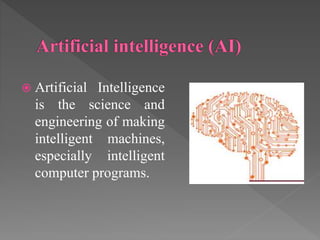
 Artificial Intelligence
is the science and
engineering of making
intelligent machines,
especially intelligent
computer programs.
 Artificial intelligence is showing the potential to
be a faster, more efficient way to find and develop
new drugs.
 A growing number of organizations &
universities are focusing to minimize the
complexities involved in classic way of drug
discovery by using AI computing to envisage
which drug candidates are most likely to be
effective treatments.
 A software generates new molecular structures
by combining properties of existing drugs.
 Automatic chemical design helps drug discovery
for a faster & accurate manner.
 A treatment method from the ground up using a
deep learning neural network.
 A system to use historical , biological &
chemical data to imagine novel molecules with
the potential to fight major diseases.
Properties of AI software
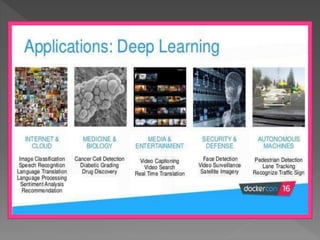
 Deep learning technique known as a generative adversarial
network (GAN) by Baltimore based company, Insilico
Medicine.
 GPU (graphics processing unit)-accelerated deep learning to
target cancer and age-related illnesses by above organization.
 Benevolent Bio’s deep learning software, powered by the
NVIDIA DGX-1 AI supercomputer (it ingests & analyzes the
information to find connections and propose drug candidates).
 Get rid of data mining by humans.
 Saving of time.
 After initial set up, expenses will be less vs
classical way to discover drug (at least for a
particular research direction)
Robots are doing assay analysis and automating the
movement of test tubes in research laboratories.
Because of the high number of samples that need
analysis and the amount of data collection required,
the process and costs are easily validated with
robotics,” says Chetan Kapoor , Chief Executive
Officer of Agile Planet Inc. (Austin, Texas).
“In pharmaceutical applications, hospitals use robots to
mix potentially hazardous cancer drugs and those
associated with radiation.”
Robotics in the Pharmaceutical and
Life Sciences Industry
 One of the most widespread uses is for re-
purposing drugs — finding new uses for existing
drugs or late-stage drug candidates.
 We don’t have to repeat all the phase I testing
and all the toxicology testing, when we take it
into another phase II trial [for] a different
indication, so we can accelerate the process of
medicine development quite dramatically,”
 Intelligent automation is providing pharma
and biotech companies, and their contract
manufacturing partners, major gains with
minimized risk.
 Over reliance on traditional full-automation
robotics also risks removing flexibility to
incorporate changes for new regulations or the
ability to catch errors and innovate that comes
from human line operators.
 When used correctly, intelligent automation in
the form of robotic process automation (RPA),
cognitive computing, and machine learning
techniques can offer the best of both worlds.
 Artificial intelligence will never eradicate the
jobs of scientists unlike it may do for other
industries where danger of losing jobs is looming
like anything.
 This is so because, here health aspect of people is
associated and therefore even an iota of AI
enabled stuff has to be ensured and validated by
scientists.
 Robots can perform tasks around three or four
times faster than humans
 Can be used 24 hours a day
 Such qualities make them excellent at producing
large quantities of a product in a short space of
time
 Robots are also able to move to a precision smaller
than a sheet of paper, which far exceeds the
accuracy that any human could provide
Use Of Robots In The Pharmaceutical Industry
 The robots are capable of operating at 120 cycles
per second, with ten variants of the bottle capable
of running on the system
 only requirement for the human employees is to
select the correct program for the robotic system
itself.
 Many of the tests performed in the lab are to do with
research, discovery and development of drugs, and
usually involve repetitive tasks such as moving fluids
and test tubes
 Robots are an ideal choice for these jobs because they
are easy to automate and provide a high level of
accuracy and consistency.
 Robots in such a way also enables researchers to
bypass menial tasks and focus their time on more
worthwhile activities such as real drug development
and research.
Use Of Robots In The Laboratories
 laboratory technician or researcher does not
require engineering skills, but can program the
robot using simple instructions
 The precision is so high that robots today can put
40,000 dots of DNA onto a single microscopic
slide – such a feat cannot be rivalled by human
hands.
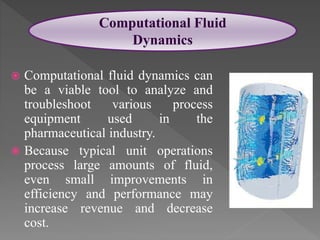
 Computational fluid dynamics can
be a viable tool to analyze and
troubleshoot various process
equipment used in the
pharmaceutical industry.
 Because typical unit operations
process large amounts of fluid,
even small improvements in
efficiency and performance may
increase revenue and decrease
cost.
Computational Fluid
Dynamics
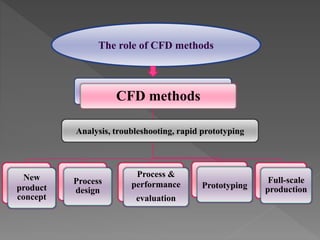
CFD methods
New
product
concept
Process
design
Process &
performance
evaluation
Prototyping
Full-scale
production
The role of CFD methods
Analysis, troubleshooting, rapid prototyping
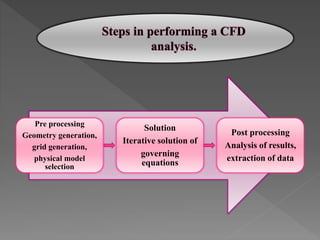
Pre processing
Geometry generation,
grid generation,
physical model
selection
Solution
Iterative solution of
governing
equations
Post processing
Analysis of results,
extraction of data
THANKYOU…

Artificial Intligence and Robotics ppt

  • 1.
  • 2.
     Artificial Intelligence isthe science and engineering of making intelligent machines, especially intelligent computer programs.
  • 3.
     Artificial intelligenceis showing the potential to be a faster, more efficient way to find and develop new drugs.  A growing number of organizations & universities are focusing to minimize the complexities involved in classic way of drug discovery by using AI computing to envisage which drug candidates are most likely to be effective treatments.
  • 4.
     A softwaregenerates new molecular structures by combining properties of existing drugs.  Automatic chemical design helps drug discovery for a faster & accurate manner.  A treatment method from the ground up using a deep learning neural network.  A system to use historical , biological & chemical data to imagine novel molecules with the potential to fight major diseases. Properties of AI software
  • 5.
     Deep learningtechnique known as a generative adversarial network (GAN) by Baltimore based company, Insilico Medicine.  GPU (graphics processing unit)-accelerated deep learning to target cancer and age-related illnesses by above organization.  Benevolent Bio’s deep learning software, powered by the NVIDIA DGX-1 AI supercomputer (it ingests & analyzes the information to find connections and propose drug candidates).
  • 7.
     Get ridof data mining by humans.  Saving of time.  After initial set up, expenses will be less vs classical way to discover drug (at least for a particular research direction)
  • 9.
    Robots are doingassay analysis and automating the movement of test tubes in research laboratories. Because of the high number of samples that need analysis and the amount of data collection required, the process and costs are easily validated with robotics,” says Chetan Kapoor , Chief Executive Officer of Agile Planet Inc. (Austin, Texas). “In pharmaceutical applications, hospitals use robots to mix potentially hazardous cancer drugs and those associated with radiation.” Robotics in the Pharmaceutical and Life Sciences Industry
  • 10.
     One ofthe most widespread uses is for re- purposing drugs — finding new uses for existing drugs or late-stage drug candidates.  We don’t have to repeat all the phase I testing and all the toxicology testing, when we take it into another phase II trial [for] a different indication, so we can accelerate the process of medicine development quite dramatically,”
  • 11.
     Intelligent automationis providing pharma and biotech companies, and their contract manufacturing partners, major gains with minimized risk.  Over reliance on traditional full-automation robotics also risks removing flexibility to incorporate changes for new regulations or the ability to catch errors and innovate that comes from human line operators.
  • 12.
     When usedcorrectly, intelligent automation in the form of robotic process automation (RPA), cognitive computing, and machine learning techniques can offer the best of both worlds.
  • 13.
     Artificial intelligencewill never eradicate the jobs of scientists unlike it may do for other industries where danger of losing jobs is looming like anything.  This is so because, here health aspect of people is associated and therefore even an iota of AI enabled stuff has to be ensured and validated by scientists.
  • 14.
     Robots canperform tasks around three or four times faster than humans  Can be used 24 hours a day  Such qualities make them excellent at producing large quantities of a product in a short space of time  Robots are also able to move to a precision smaller than a sheet of paper, which far exceeds the accuracy that any human could provide Use Of Robots In The Pharmaceutical Industry
  • 15.
     The robotsare capable of operating at 120 cycles per second, with ten variants of the bottle capable of running on the system  only requirement for the human employees is to select the correct program for the robotic system itself.
  • 16.
     Many ofthe tests performed in the lab are to do with research, discovery and development of drugs, and usually involve repetitive tasks such as moving fluids and test tubes  Robots are an ideal choice for these jobs because they are easy to automate and provide a high level of accuracy and consistency.  Robots in such a way also enables researchers to bypass menial tasks and focus their time on more worthwhile activities such as real drug development and research. Use Of Robots In The Laboratories
  • 17.
     laboratory technicianor researcher does not require engineering skills, but can program the robot using simple instructions  The precision is so high that robots today can put 40,000 dots of DNA onto a single microscopic slide – such a feat cannot be rivalled by human hands.
  • 18.
     Computational fluiddynamics can be a viable tool to analyze and troubleshoot various process equipment used in the pharmaceutical industry.  Because typical unit operations process large amounts of fluid, even small improvements in efficiency and performance may increase revenue and decrease cost. Computational Fluid Dynamics
  • 19.
  • 20.
    Pre processing Geometry generation, gridgeneration, physical model selection Solution Iterative solution of governing equations Post processing Analysis of results, extraction of data
  • 21.