Downloaded 550 times




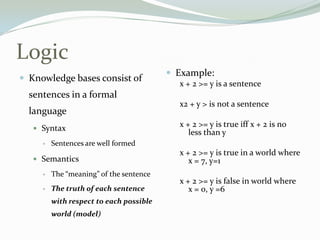
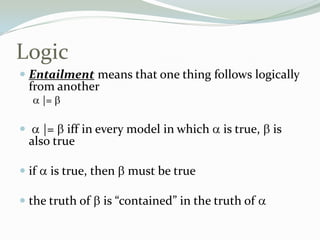
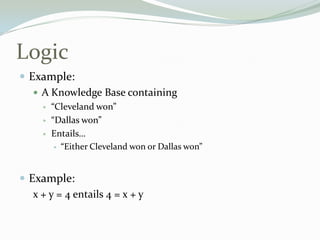
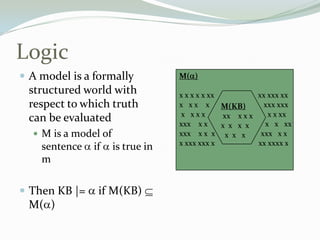
![Logic
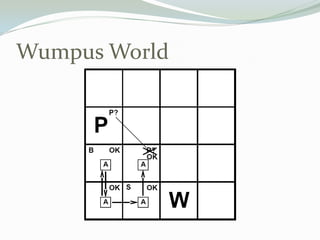
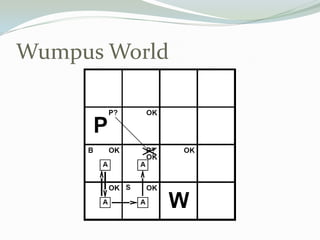
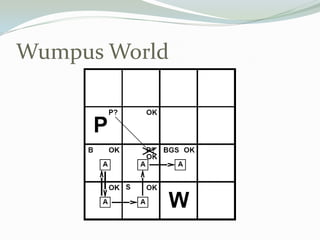
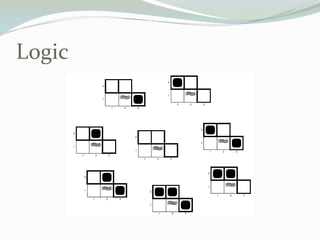
Entailment in Wumpus
World
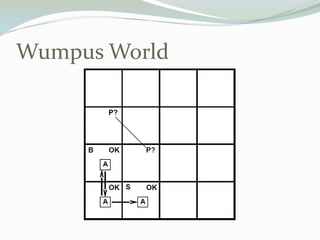
Situation after detecting
nothing in [1,1], moving
right, breeze in [2,1]
Consider possible
models for ? assuming
only pits
3 Boolean choices => 8
possible models](https://image.slidesharecdn.com/artificialintelligence-130625043253-phpapp02/85/Artificial-intelligence-Logic-Agents-24-320.jpg)
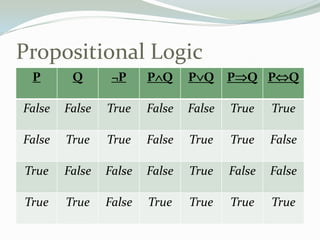
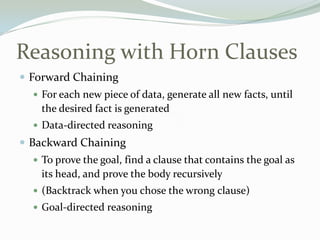
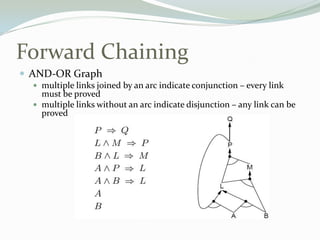
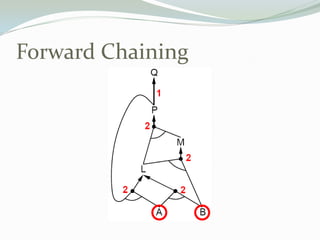
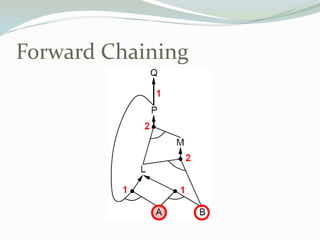
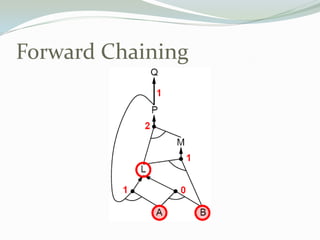
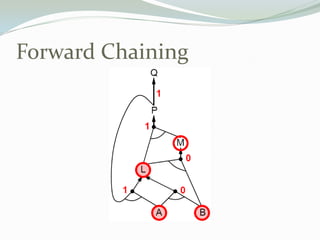
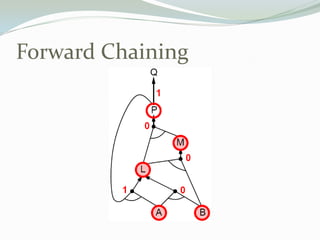
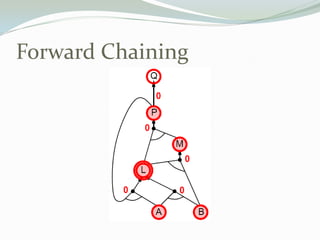
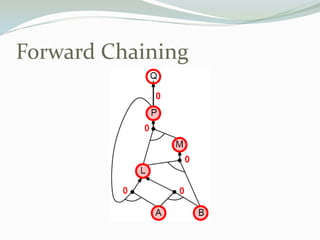
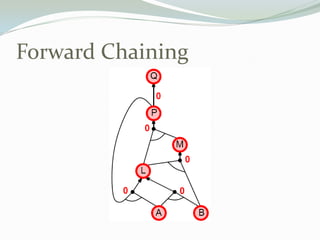
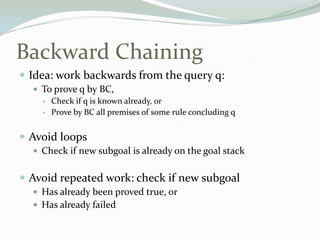
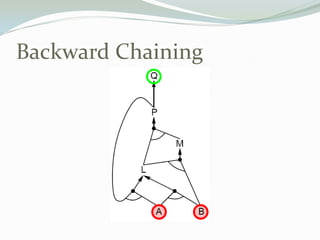
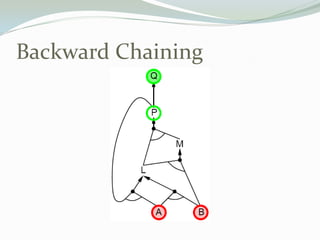
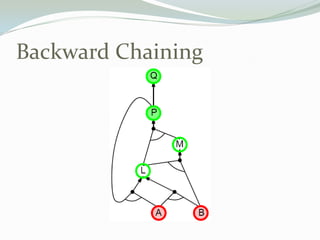
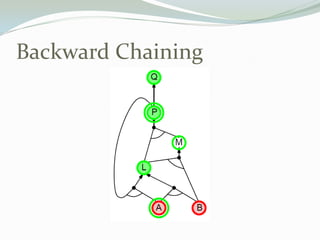
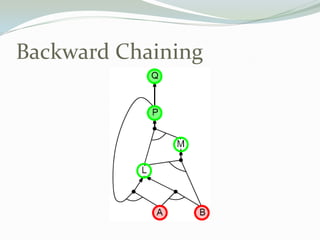
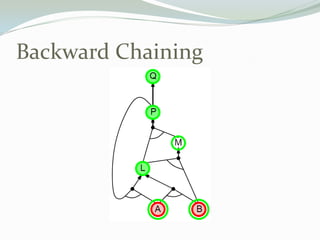
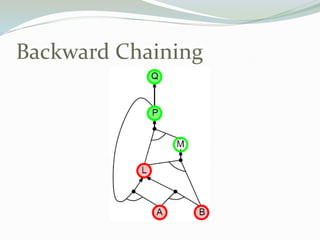
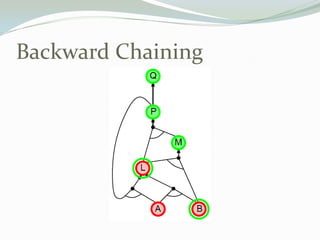
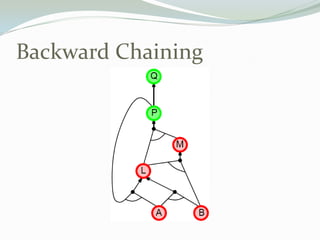
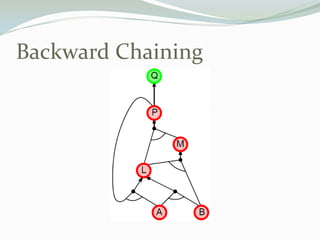
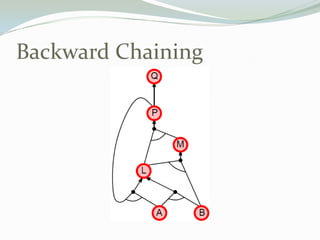
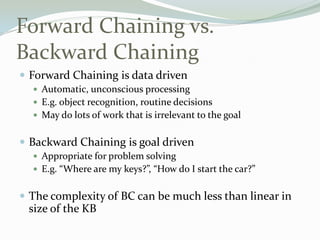


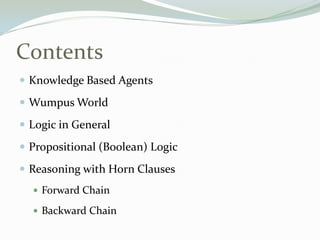
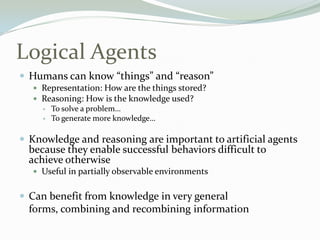
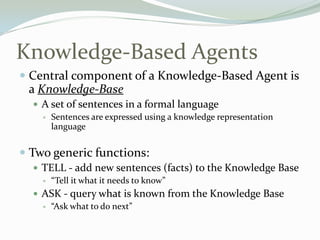
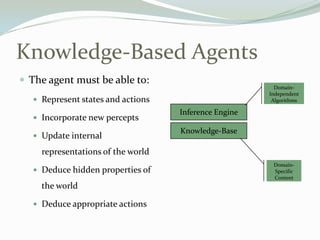
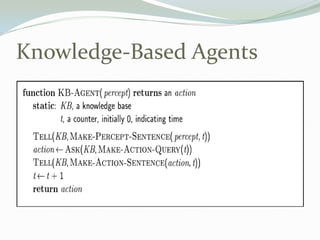
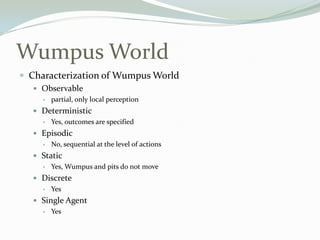
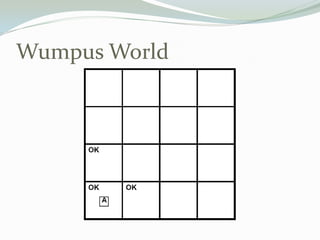
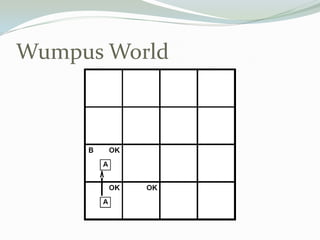
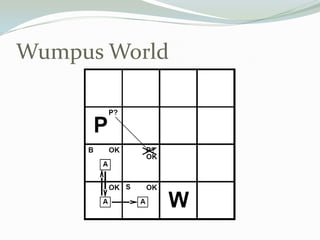
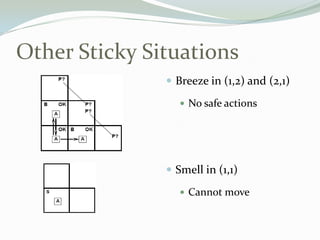
The document describes logical agents and knowledge representation. It contains the following key points: - Logical agents use knowledge representation and reasoning to solve problems and generate new knowledge. This enables intelligent behavior in partially observable environments. - A knowledge-based agent's central component is its knowledge base, which contains sentences in a formal language that can be queried or added to. - Wumpus World is described as an example environment, where the agent must navigate, avoid dangers, and find gold using limited sensory information and logical reasoning. - Propositional and predicate logic are introduced as knowledge representation languages. Forward and backward chaining are also described as techniques for logical inference.


![Getting Started with Apache Spark: Big Data Made Simple [Free Meetup]](https://cdn.slidesharecdn.com/ss_thumbnails/apachesparkgettingstarted-260203175547-8361bcc3-thumbnail.jpg?width=640&height=640&fit=bounds)


