Downloaded 1,026 times

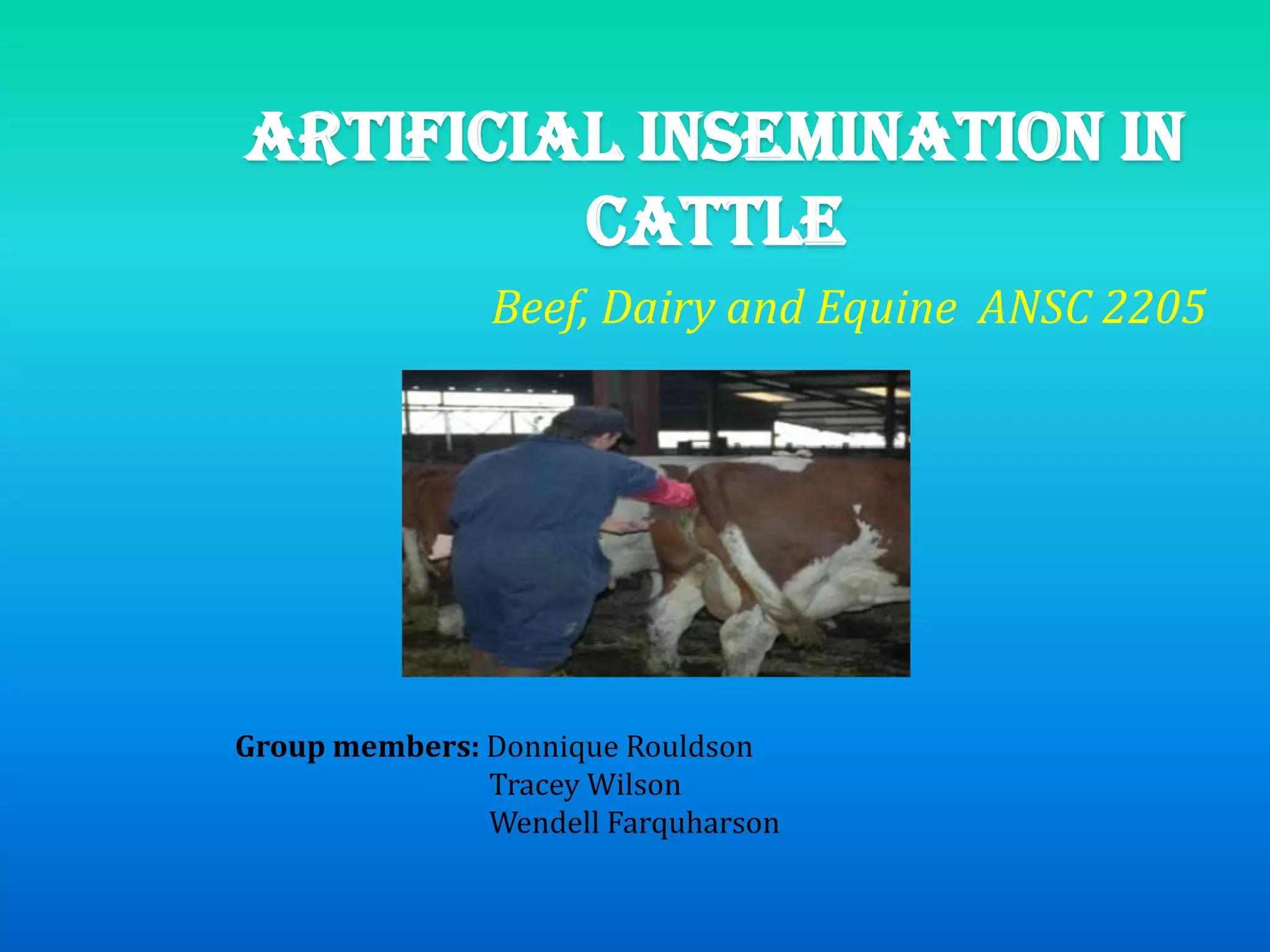
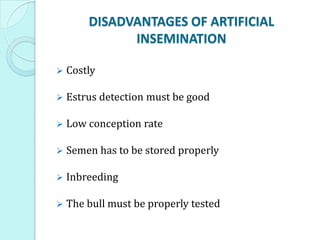


The first successful artificial insemination was performed in dogs in 1780 by Italian physiologist Lazzaro Spallanzani. This technique was refined in Russia in the 1930s and led to the widespread use of AI in animals after cryopreservation methods for semen were developed. The main advantages of AI in cattle are that desirable bull traits can be passed on to more offspring more quickly, it increases bull usage efficiency and genetic selection, and decreases costs while increasing safety and reducing disease transmission. However, AI requires good heat detection by farmers and proper semen storage, and can decrease genetic variability if the best bulls are not accurately identified.


