ANIMAL HANDLING AND 
RESTRAINT 
Prepared by: Muslim
ANIMAL HANDLING AND 
RESTRAINT 
Animal restraint is the process of preventing an 
animal from action or motion … 
• An animal may require restraint for examination, 
treatment and milking … 
• Restraint can be achieved simply by moral 
persuasion, by physical force and by chemical 
means.
STEPS OF PERSONAL BIO-SAFETY 
DURING ANIMAL 
HANDLING 
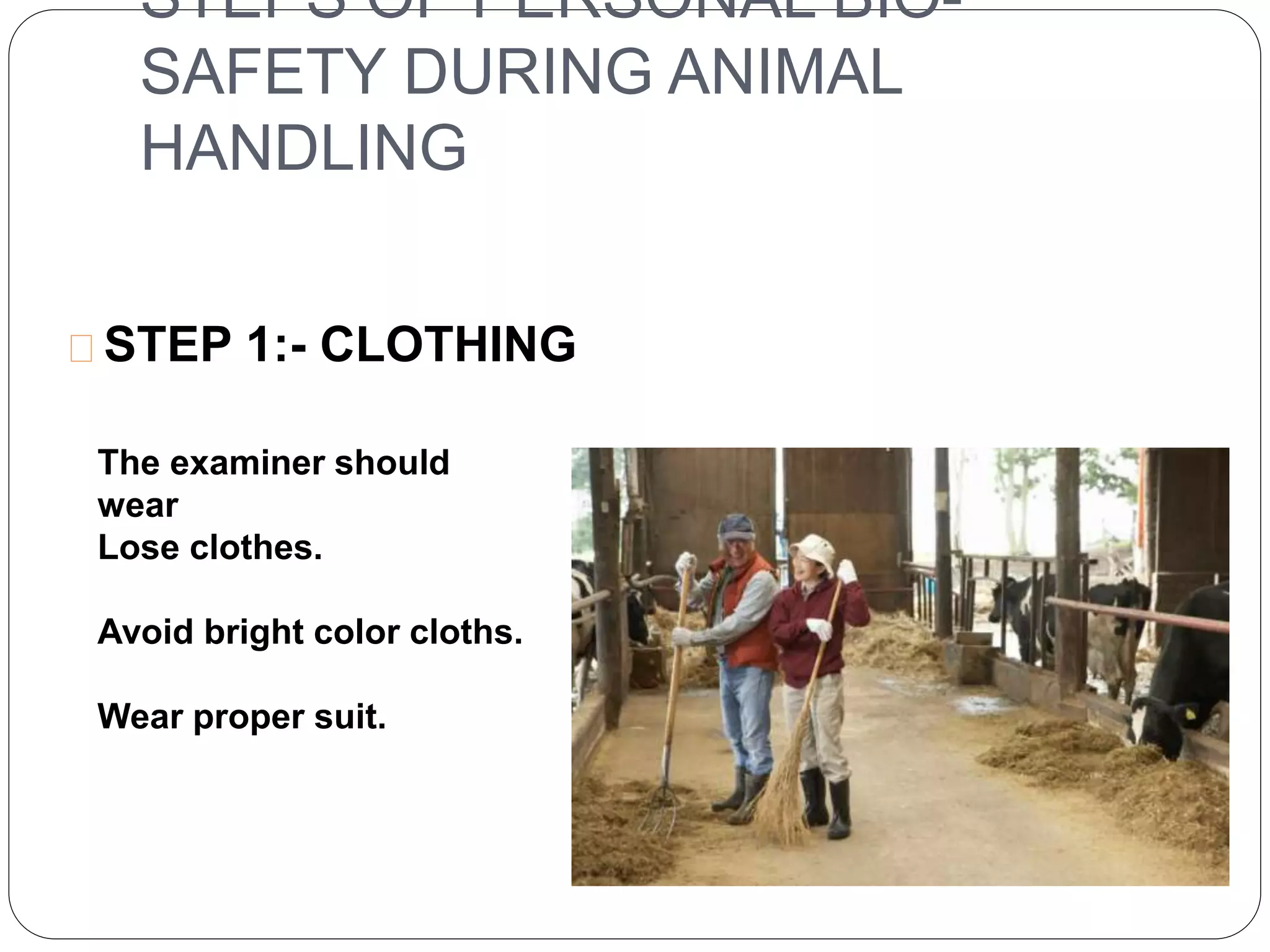
STEP 1:- CLOTHING 
The examiner should 
wear 
Lose clothes. 
Avoid bright color cloths. 
Wear proper suit.
STEP 2:- HEALTH CONDITION 
If the examiner is unhealthy 
or 
Suffering from any disease 
there is strong possibility 
that his illness became 
severe. 
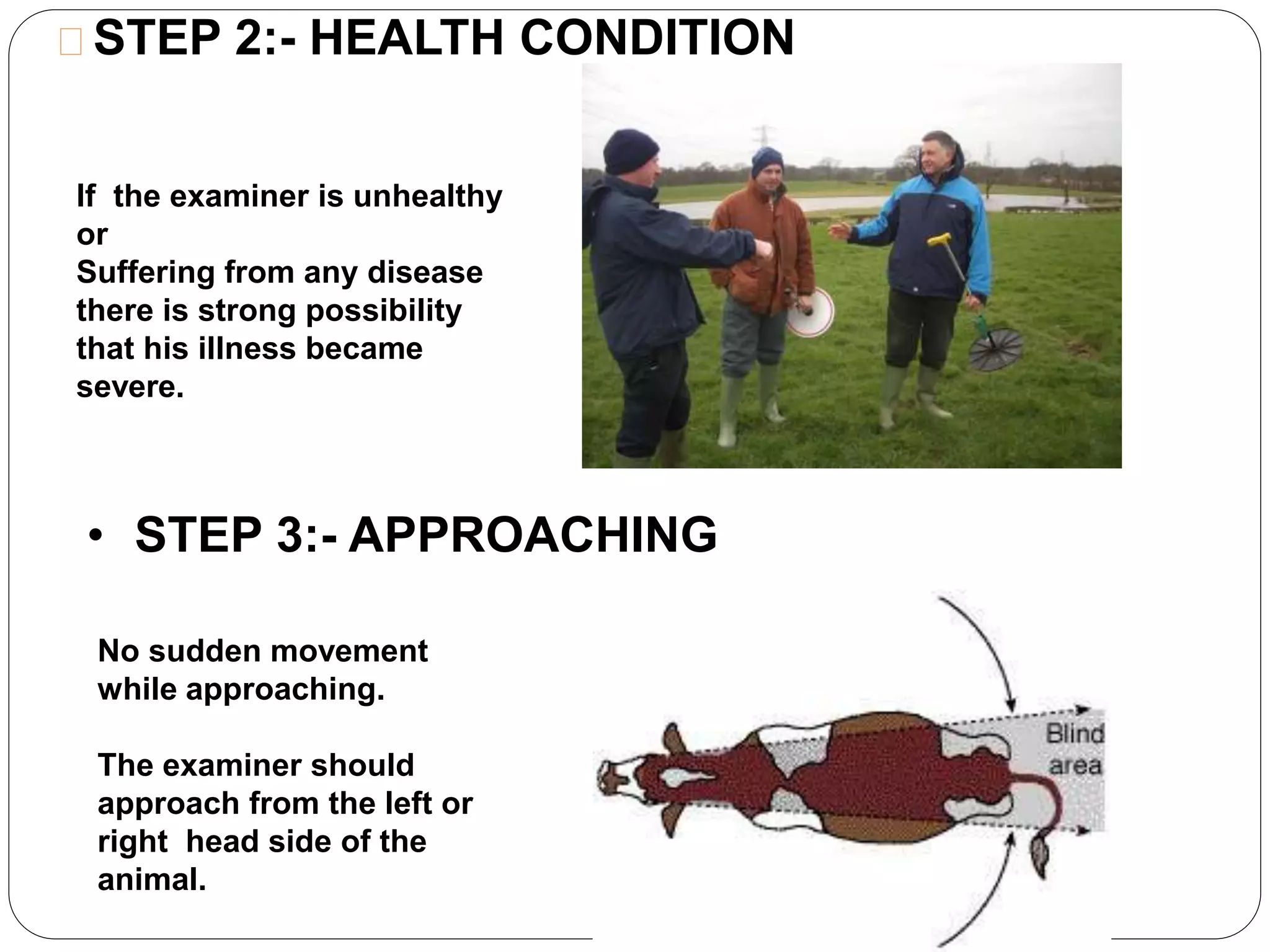
• STEP 3:- APPROACHING 
No sudden movement 
while approaching. 
The examiner should 
approach from the left or 
right head side of the 
animal.
RESTRAINT TECHNIQUES 
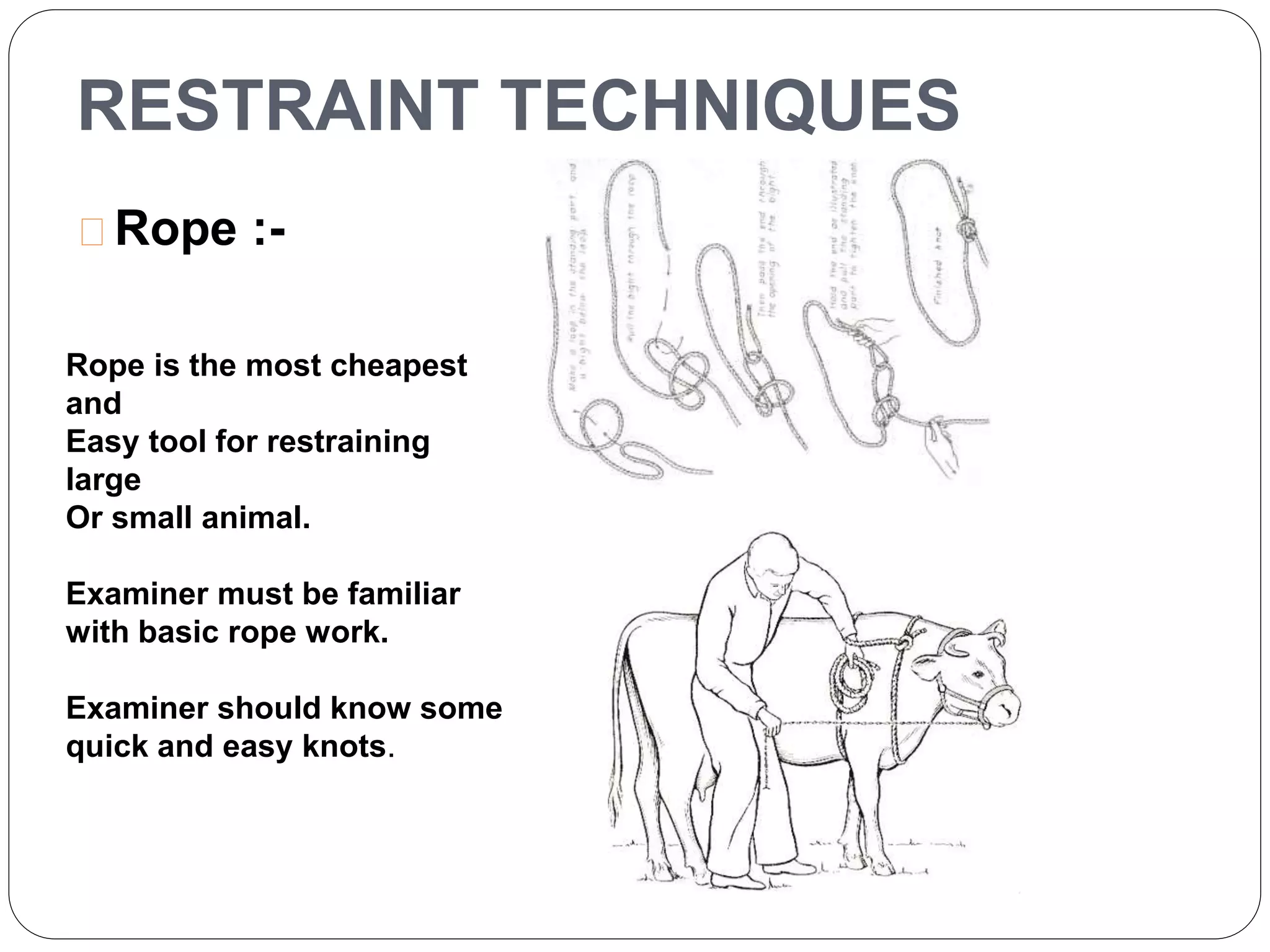
Rope :- 
Rope is the most cheapest 
and 
Easy tool for restraining 
large 
Or small animal. 
Examiner must be familiar 
with basic rope work. 
Examiner should know some 
quick and easy knots.
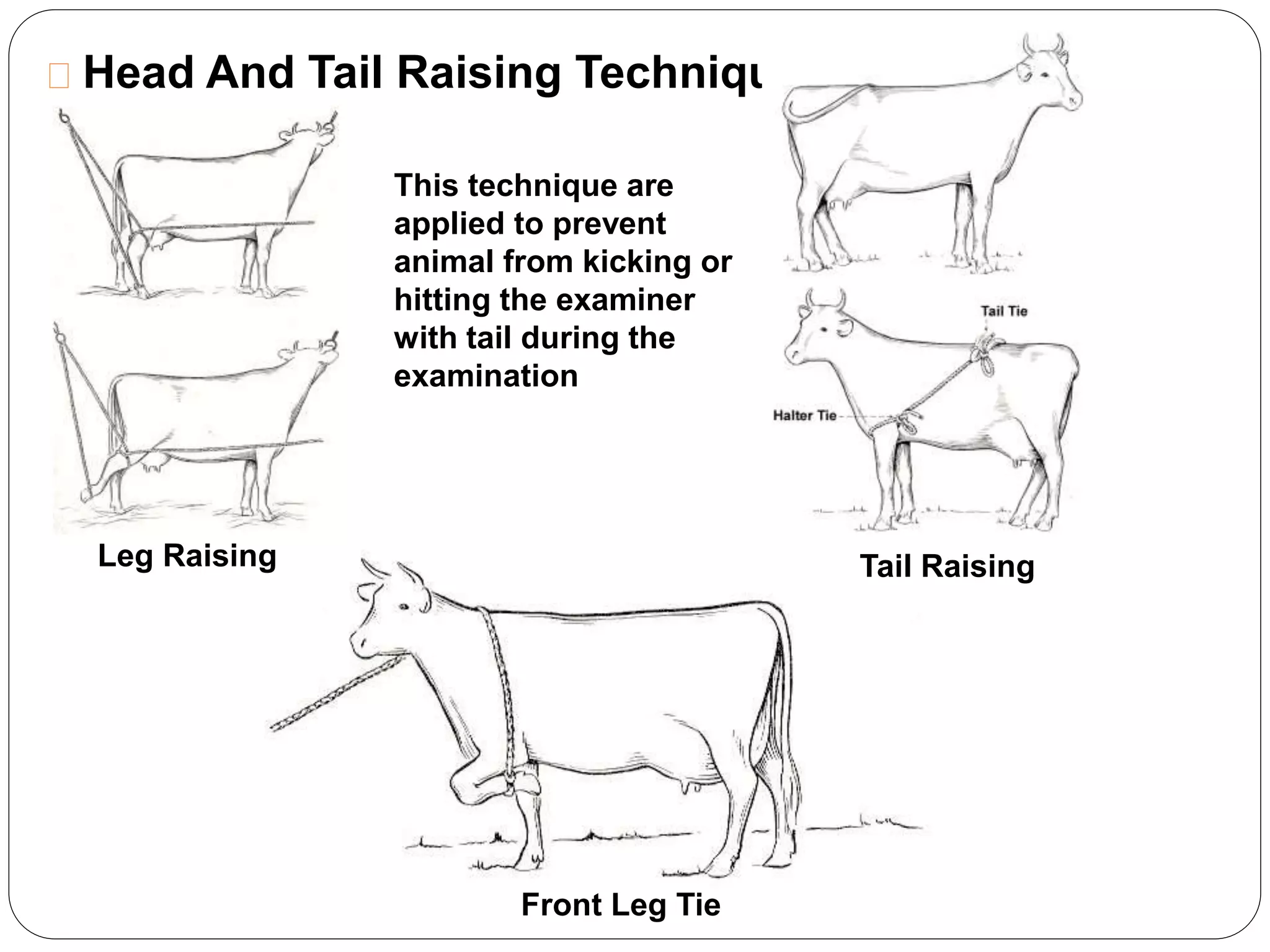
Head And Tail Raising Technique:- 
This technique are 
applied to prevent 
animal from kicking or 
hitting the examiner 
with tail during the 
examination 
Leg Raising Tail Raising 
Front Leg Tie
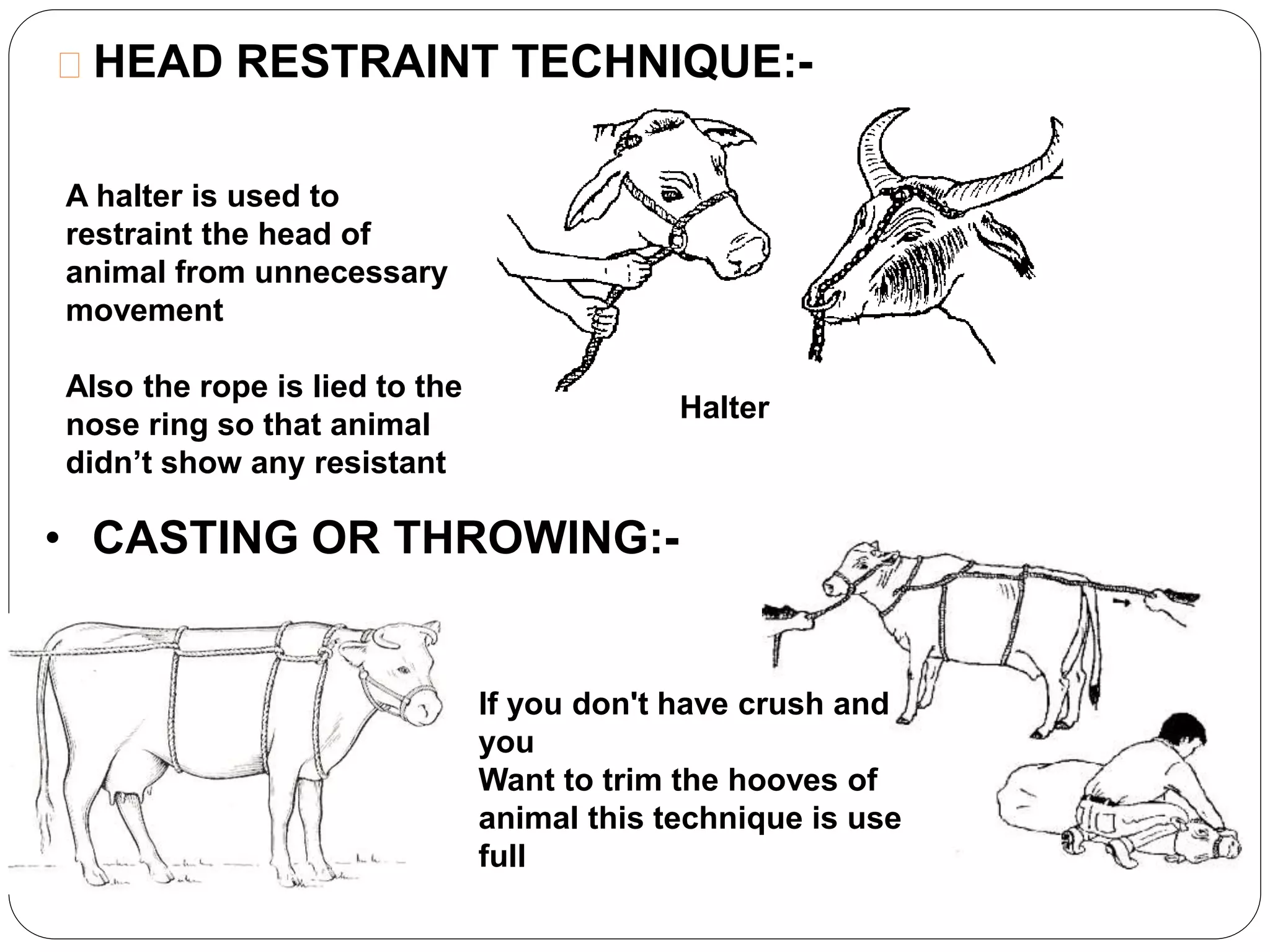
HEAD RESTRAINT TECHNIQUE:- 
• CASTING OR THROWING:- 
Halter 
A halter is used to 
restraint the head of 
animal from unnecessary 
movement 
Also the rope is lied to the 
nose ring so that animal 
didn’t show any resistant 
If you don't have crush and 
you 
Want to trim the hooves of 
animal this technique is use 
full
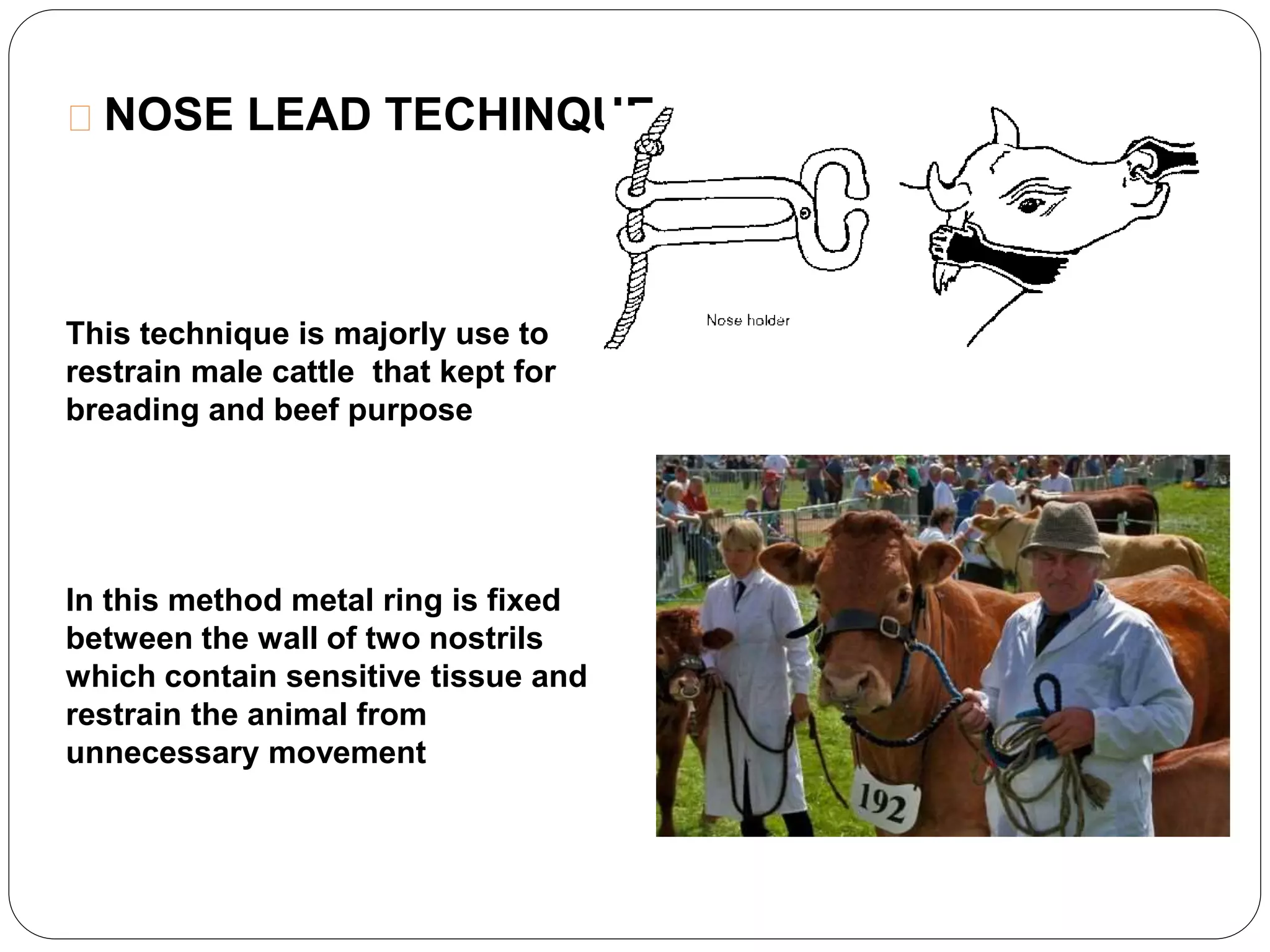
NOSE LEAD TECHINQUE:- 
This technique is majorly use to 
restrain male cattle that kept for 
breading and beef purpose 
In this method metal ring is fixed 
between the wall of two nostrils 
which contain sensitive tissue and 
restrain the animal from 
unnecessary movement
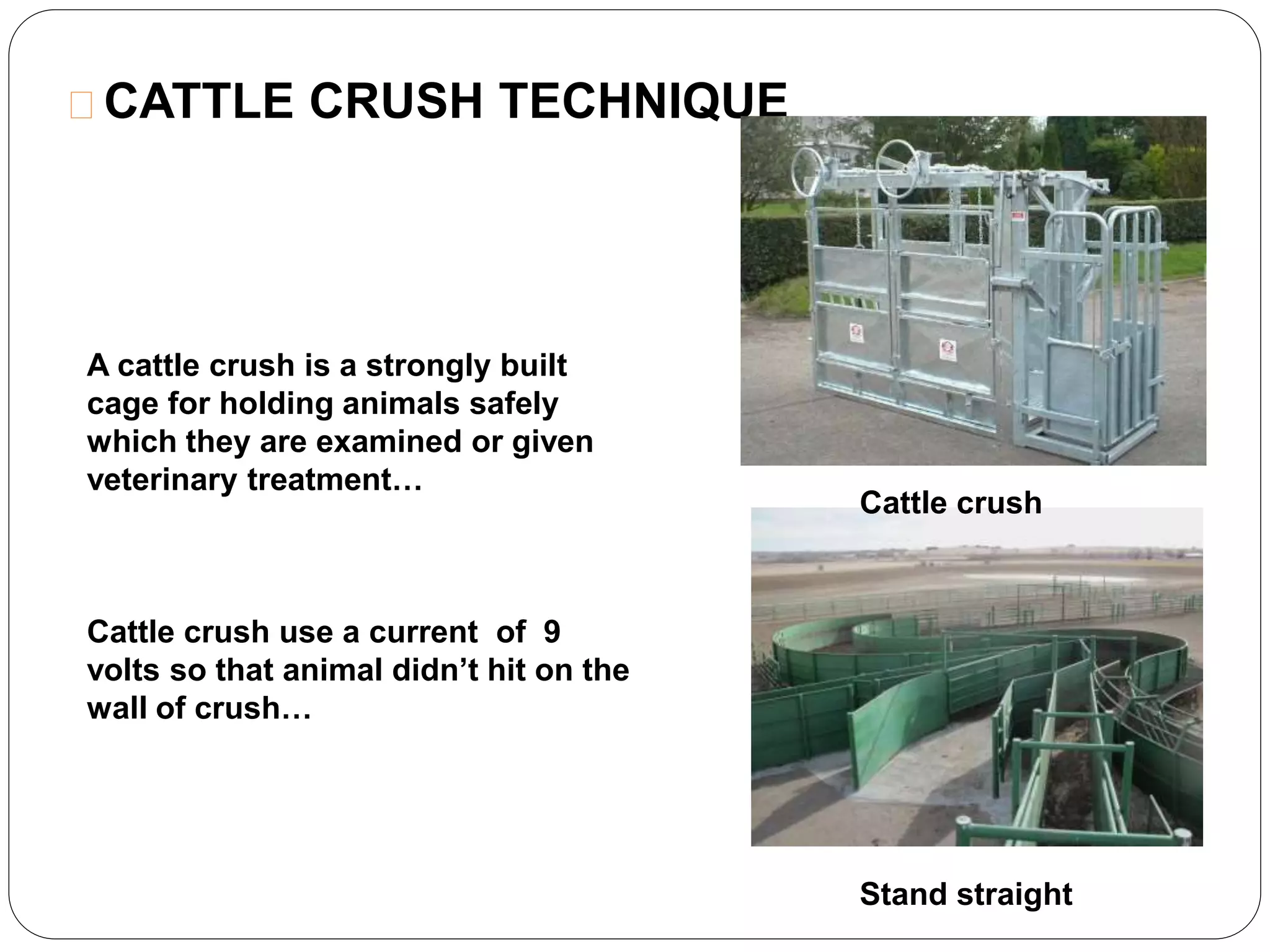
CATTLE CRUSH TECHNIQUE 
Cattle crush 
Stand straight 
A cattle crush is a strongly built 
cage for holding animals safely 
which they are examined or given 
veterinary treatment… 
Cattle crush use a current of 9 
volts so that animal didn’t hit on the 
wall of crush…
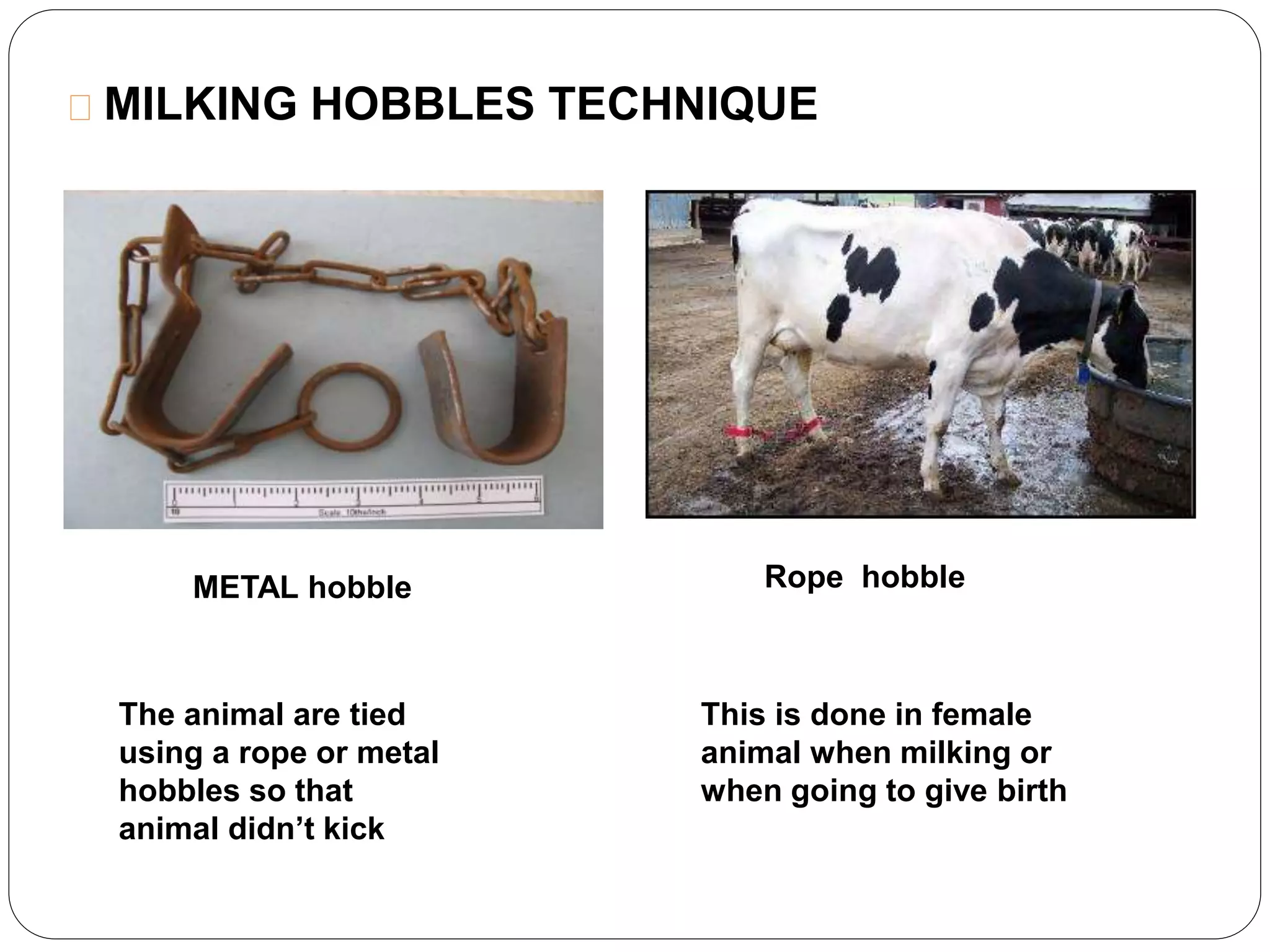
MILKING HOBBLES TECHNIQUE 
METAL hobble Rope hobble 
The animal are tied 
using a rope or metal 
hobbles so that 
animal didn’t kick 
This is done in female 
animal when milking or 
when going to give birth
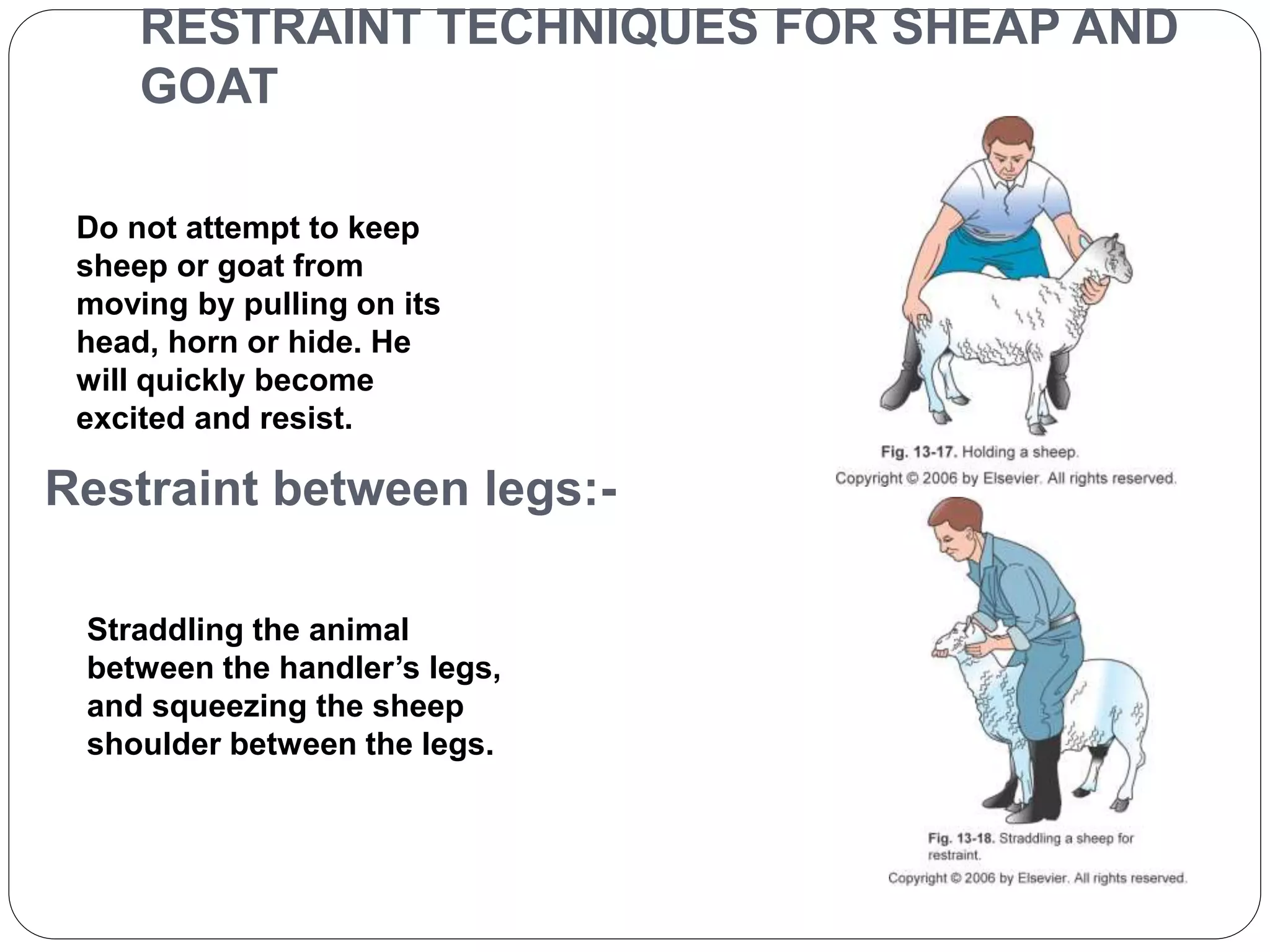
RESTRAINT TECHNIQUES FOR SHEAP AND 
GOAT 
Do not attempt to keep 
sheep or goat from 
moving by pulling on its 
head, horn or hide. He 
will quickly become 
excited and resist. 
Restraint between legs:- 
Straddling the animal 
between the handler’s legs, 
and squeezing the sheep 
shoulder between the legs.
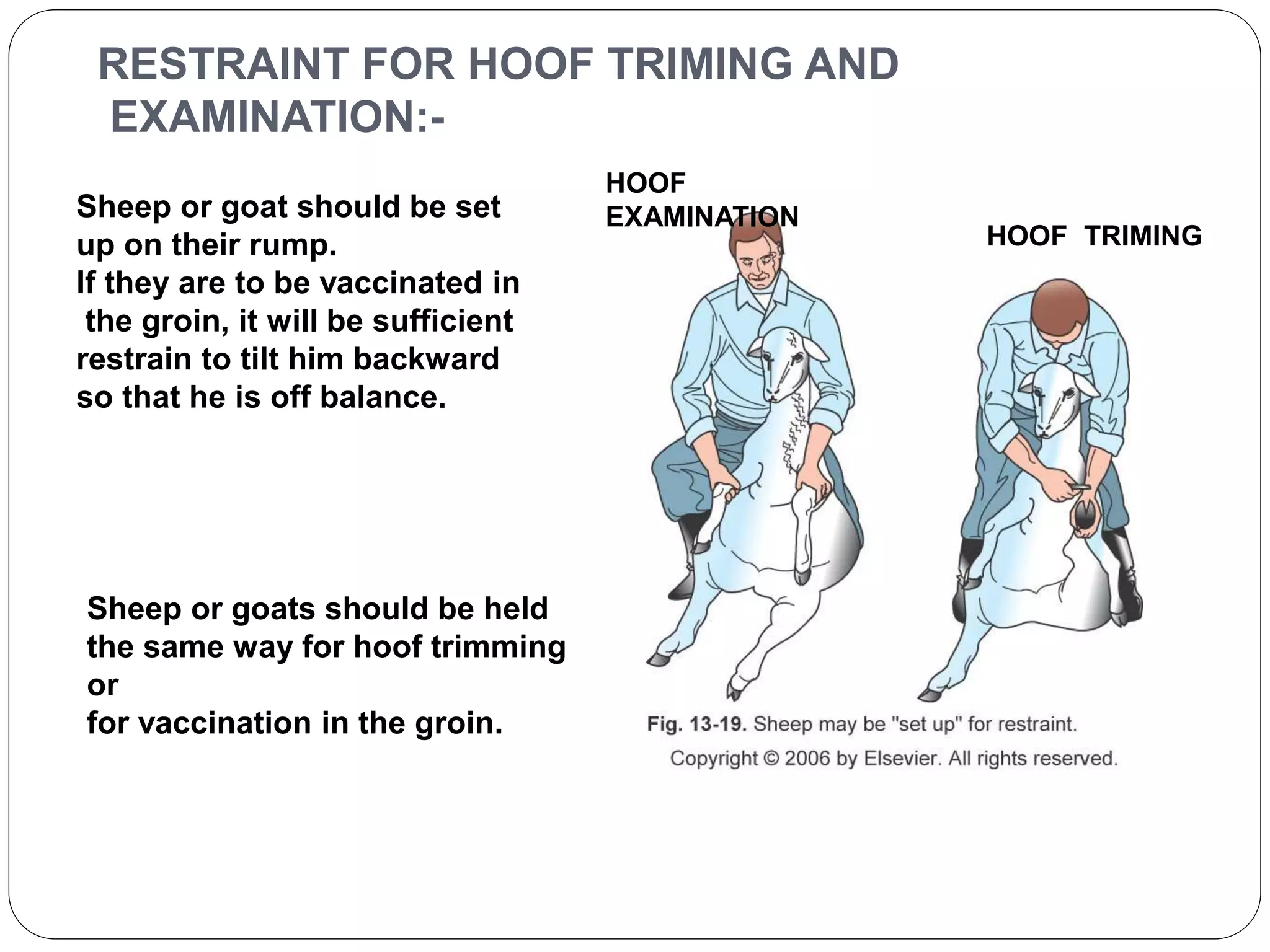
RESTRAINT FOR HOOF TRIMING AND 
EXAMINATION:- 
Sheep or goat should be set 
up on their rump. 
If they are to be vaccinated in 
the groin, it will be sufficient 
restrain to tilt him backward 
so that he is off balance. 
HOOF TRIMING 
HOOF 
EXAMINATION 
Sheep or goats should be held 
the same way for hoof trimming 
or 
for vaccination in the groin.
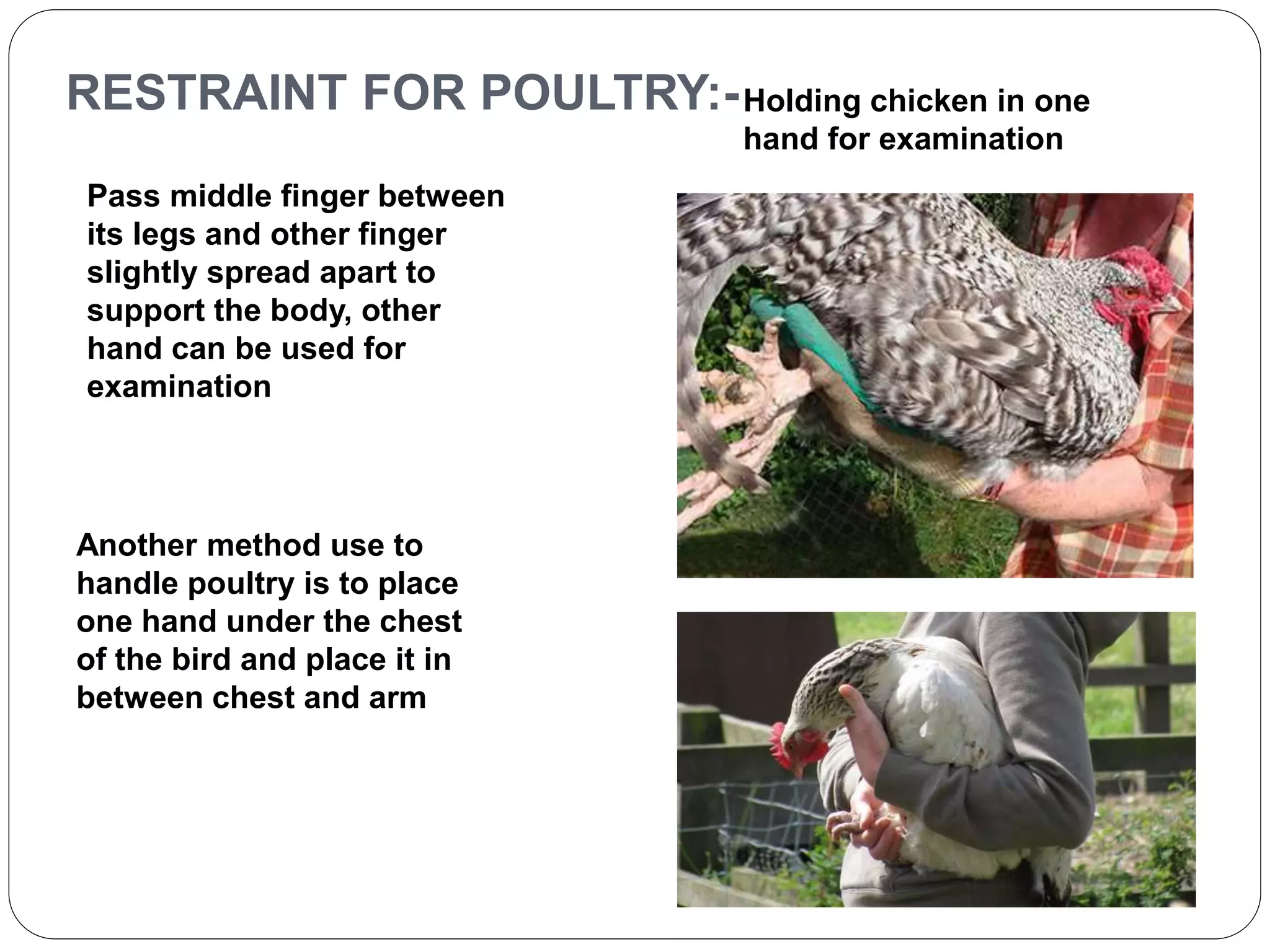
RESTRAINT FOR POULTRY:- 
Pass middle finger between 
its legs and other finger 
slightly spread apart to 
support the body, other 
hand can be used for 
examination 
Another method use to 
handle poultry is to place 
one hand under the chest 
of the bird and place it in 
between chest and arm 
Holding chicken in one 
hand for examination

Animal handling & Restrain

  • 1.
    ANIMAL HANDLING AND RESTRAINT Prepared by: Muslim
  • 2.
    ANIMAL HANDLING AND RESTRAINT Animal restraint is the process of preventing an animal from action or motion … • An animal may require restraint for examination, treatment and milking … • Restraint can be achieved simply by moral persuasion, by physical force and by chemical means.
  • 3.
    STEPS OF PERSONALBIO-SAFETY DURING ANIMAL HANDLING STEP 1:- CLOTHING The examiner should wear Lose clothes. Avoid bright color cloths. Wear proper suit.
  • 4.
    STEP 2:- HEALTHCONDITION If the examiner is unhealthy or Suffering from any disease there is strong possibility that his illness became severe. • STEP 3:- APPROACHING No sudden movement while approaching. The examiner should approach from the left or right head side of the animal.
  • 5.
    RESTRAINT TECHNIQUES Rope:- Rope is the most cheapest and Easy tool for restraining large Or small animal. Examiner must be familiar with basic rope work. Examiner should know some quick and easy knots.
  • 6.
    Head And TailRaising Technique:- This technique are applied to prevent animal from kicking or hitting the examiner with tail during the examination Leg Raising Tail Raising Front Leg Tie
  • 7.
    HEAD RESTRAINT TECHNIQUE:- • CASTING OR THROWING:- Halter A halter is used to restraint the head of animal from unnecessary movement Also the rope is lied to the nose ring so that animal didn’t show any resistant If you don't have crush and you Want to trim the hooves of animal this technique is use full
  • 8.
    NOSE LEAD TECHINQUE:- This technique is majorly use to restrain male cattle that kept for breading and beef purpose In this method metal ring is fixed between the wall of two nostrils which contain sensitive tissue and restrain the animal from unnecessary movement
  • 9.
    CATTLE CRUSH TECHNIQUE Cattle crush Stand straight A cattle crush is a strongly built cage for holding animals safely which they are examined or given veterinary treatment… Cattle crush use a current of 9 volts so that animal didn’t hit on the wall of crush…
  • 10.
    MILKING HOBBLES TECHNIQUE METAL hobble Rope hobble The animal are tied using a rope or metal hobbles so that animal didn’t kick This is done in female animal when milking or when going to give birth
  • 11.
    RESTRAINT TECHNIQUES FORSHEAP AND GOAT Do not attempt to keep sheep or goat from moving by pulling on its head, horn or hide. He will quickly become excited and resist. Restraint between legs:- Straddling the animal between the handler’s legs, and squeezing the sheep shoulder between the legs.
  • 12.
    RESTRAINT FOR HOOFTRIMING AND EXAMINATION:- Sheep or goat should be set up on their rump. If they are to be vaccinated in the groin, it will be sufficient restrain to tilt him backward so that he is off balance. HOOF TRIMING HOOF EXAMINATION Sheep or goats should be held the same way for hoof trimming or for vaccination in the groin.
  • 13.
    RESTRAINT FOR POULTRY:- Pass middle finger between its legs and other finger slightly spread apart to support the body, other hand can be used for examination Another method use to handle poultry is to place one hand under the chest of the bird and place it in between chest and arm Holding chicken in one hand for examination