

Improving breeding and reproductive performance of Dairy Animals
Dr. Aarab lund
Dvm,rvmp
 How to Improving milk production of dairy cattle
breeds…?
 How to Grading up of non descript cows….?
 How to Introducing genes for high production by
Exotic breeds….?
 Learn about new breeding methods.
Objectives…..???
Improving breeding performance of Dairy Animals
Breeding performance of Dairy Animals can be improved
by many ways, but mostly following methods of
crossbreeding is used:
 1.Grading up of non descript cows with improved indigenous
breeds
 2.Crisscrossing of Exotic Dairy breeds with Indigenous dairy
breeds.
Cross breeding
 Mating of individuals of two/more different breeds.
 Major tool for improving the animal productivity in different countries.
 Introduce genes for higher productivity
 Increase the efficiency of milk production.
 Climates variation and the prices of the feedstuff can affect reproductive performance,
health, and survival.
 Milk prices heavily influenced by milk composition (fat and protein).
 Crossbreeding is one alternative for improvement of milk composition, health, fertility, and
survival.
 Heterosis/Hybrid Vigour.
 Usually first cross progeny are superior to the inferior parents in the productive traits and
often to both parents. This level of superiority is called Heterosis/Hybrid Vigour.
1.Grading Up
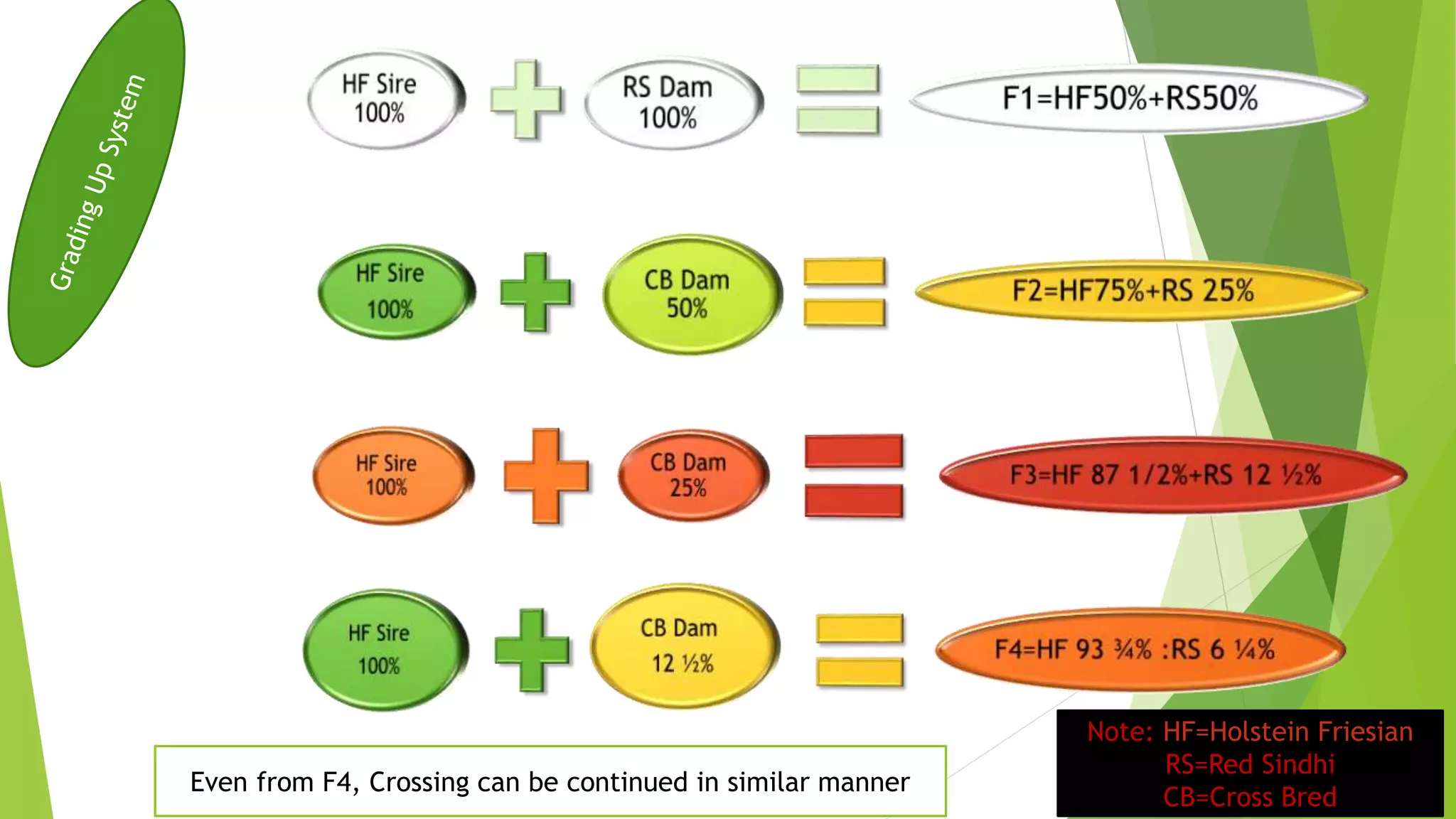
 Grading Up ->exotic breeds (e.g. Holstein Friesian) with indigenous (e.g. Red
Sindhi) and crossbred females.
 This method is common in the world over to upgrade one breed and convert it to
another.
 At F4 generation animal become almost entirely of the exotic type (i.e. animal
would be 93.8% pure).
 Better Sire must be used in this type of mating leads to better end product.
 In this case, the major effect of heterosis is in the F1 generation (i.e.Original
crossbred).
Note: HF=Holstein Friesian
RS=Red Sindhi
CB=Cross Bred
Even from F4, Crossing can be continued in similar manner
2.Crisscrossing(Two breed rotation system)
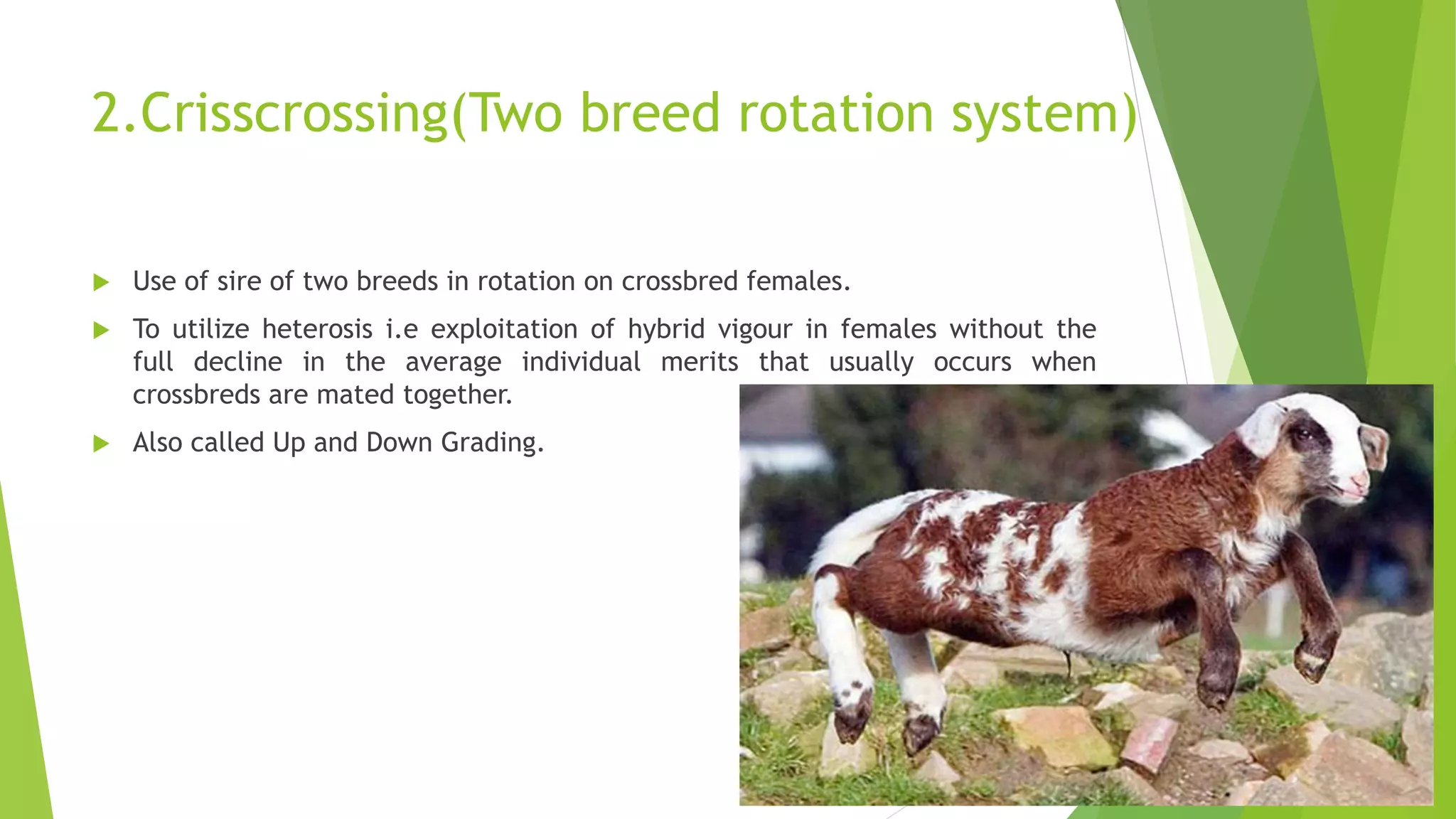
 Use of sire of two breeds in rotation on crossbred females.
 To utilize heterosis i.e exploitation of hybrid vigour in females without the
full decline in the average individual merits that usually occurs when
crossbreds are mated together.
 Also called Up and Down Grading.
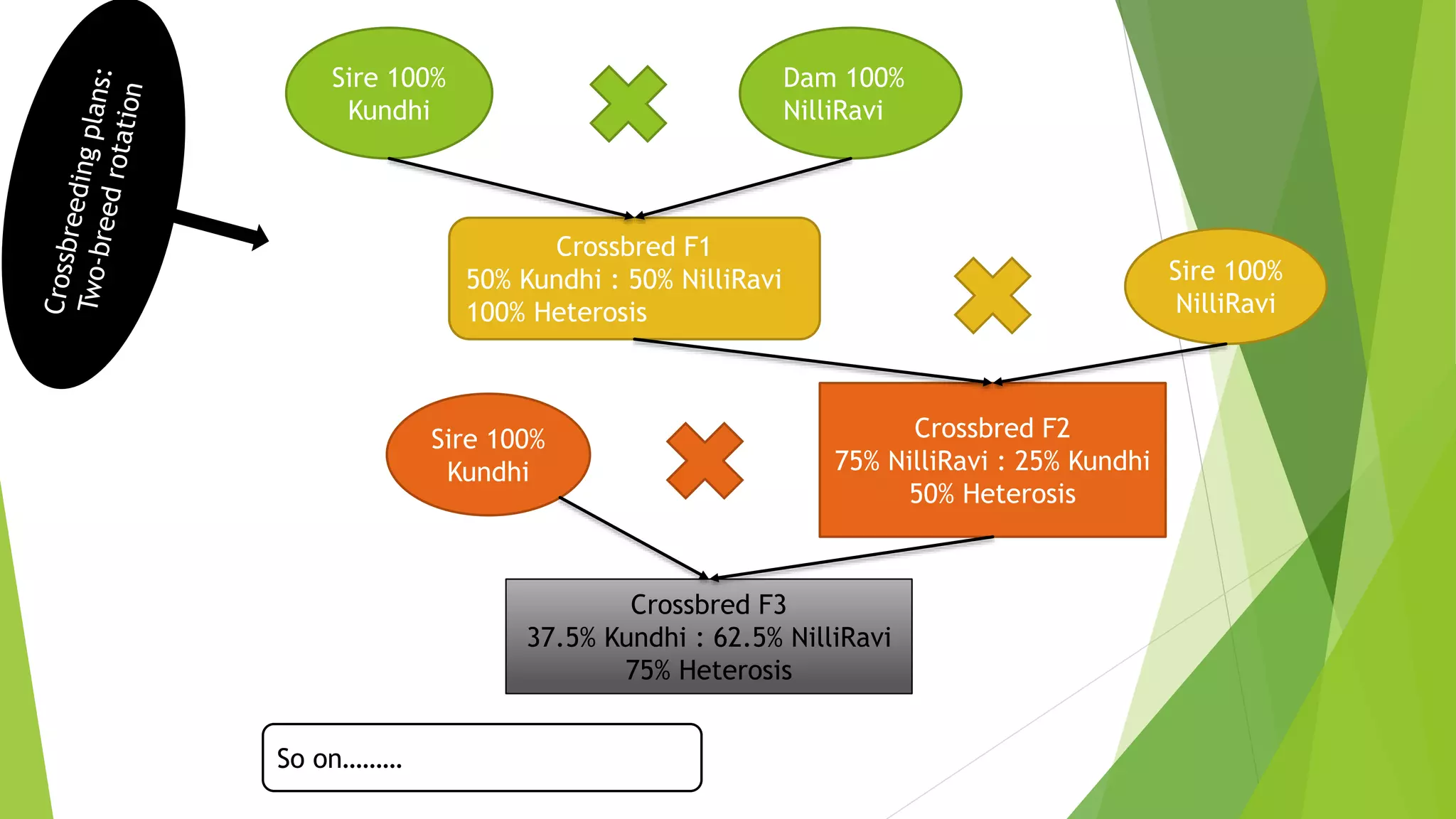
Sire 100%
Kundhi
Dam 100%
NilliRavi
Crossbred F1
50% Kundhi : 50% NilliRavi
100% Heterosis
Sire 100%
NilliRavi
Crossbred F2
75% NilliRavi : 25% Kundhi
50% Heterosis
Sire 100%
Kundhi
Crossbred F3
37.5% Kundhi : 62.5% NilliRavi
75% Heterosis
So on………
Improving reproductive performance of Dairy Animals
Objectives
 Causes of reproductive inefficiency ??
 How to improving reproductive
performances?
 New reproductive tools in farms animals
Reproductive inefficiency in dairy
Reproductive efficiency has declined in the dairy industry, mostly
due to following reason;
 Anestrus
 Failure to observe heat &
 True anestrous
 Failure to breed
 Management decision
 Failure to conceive
 Fertilization failure (male size)
 Fertilization (female size)
 AI technique
 Early embryonic death
 Stillbirth / dystocia
 Disease parameter (i.e., ketosis, mastitis, retained placenta,
and cystic ovarian disease)
Improving reproductive efficiency
There are several reproductive technologies available to improve reproductive
efficiency.
 Estrus detection & control
 Estrus detection
 Synchronization & Ovsynch
 AI
 Protect embryonic loss
 Hormone
 Feeding
 Embryo Transfer
 Superovulation
Synchronization
 Synchronization is management technique that makes use of hormones to control or reschedule the
estrous cycle
 Two most common methods of synchronization are used for dairy animals.
 These used to synchronize estrus without estrus detection can have a significant effect on
reproductive efficiency.
 Ovsynch
 Ovsynch involves the administration of GnRH, followed by an injection of PGF 2a seven days later, and
an injection of GnRH 48 hours later. Animals are inseminated at eight to 18 hours after the second
GnRH injection.
 Pre-synchronization
 Presynch involves the administration of PGF 2a 14 and 28 days before the first injection of GnRH for
the Ovsynch protocol to cows.
 Early Pregnancy Detection and Resynchronization.
 Embryonic survival->Hormonal control(hCG,CIDR-B) and Feeding control(Protein composition)
Embryo Transfer
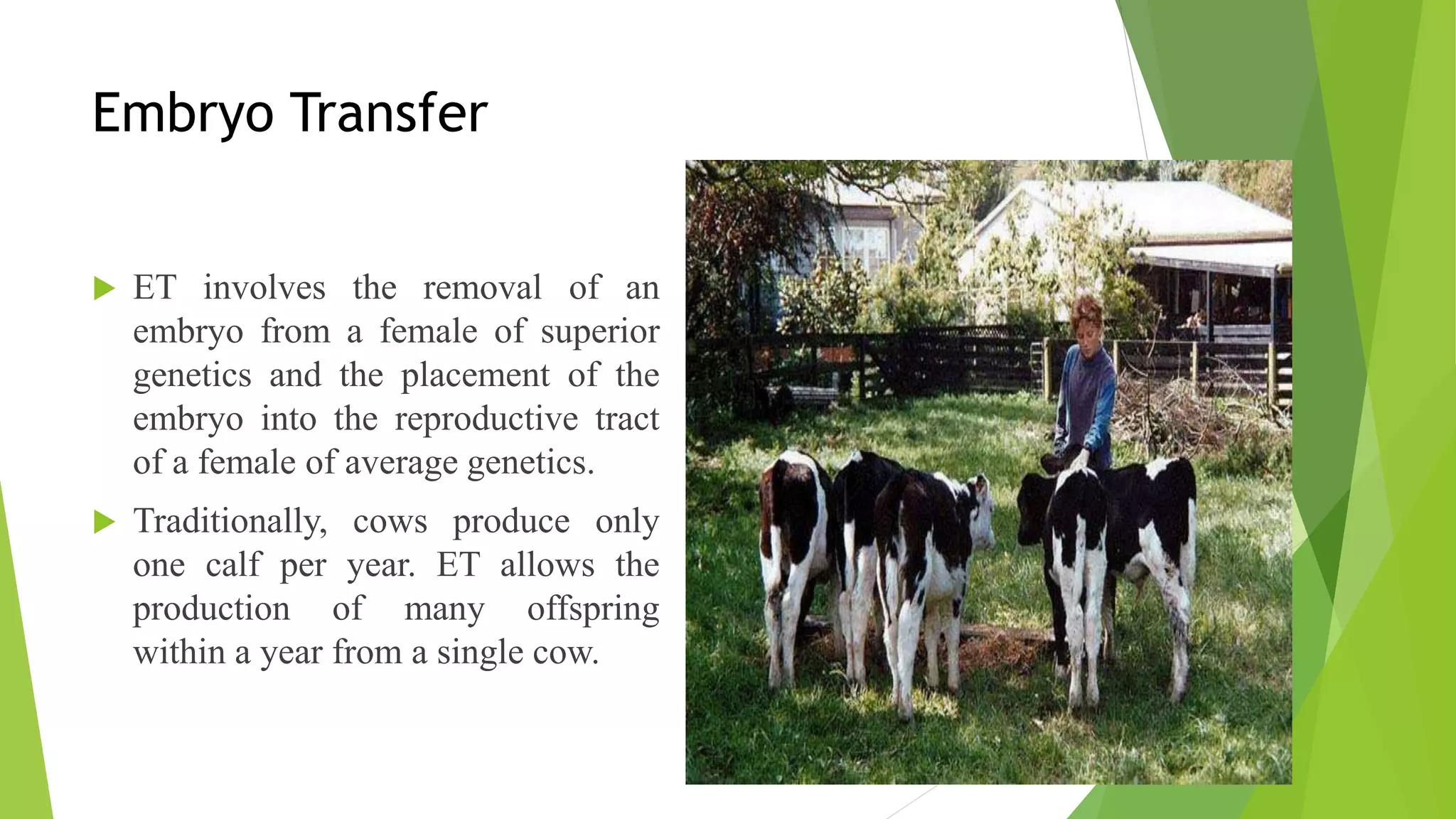
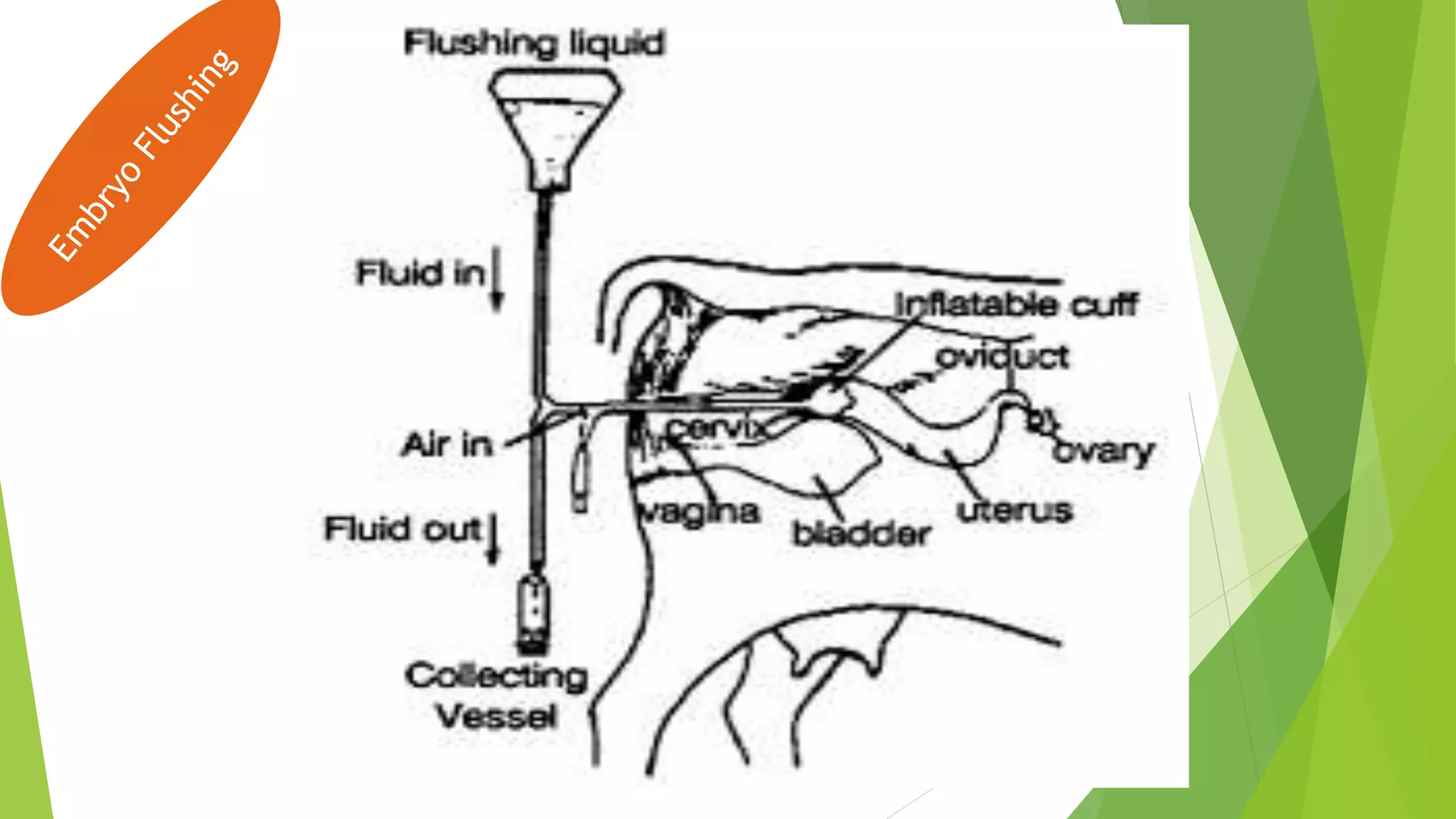
 ET involves the removal of an
embryo from a female of superior
genetics and the placement of the
embryo into the reproductive tract
of a female of average genetics.
 Traditionally, cows produce only
one calf per year. ET allows the
production of many offspring
within a year from a single cow.
Superovulation of the donor cow
 Superovulation is the release of multiple eggs at a single estrus.
 10 or more viable egg cells at one estrus.
 Procedure:
 FSH are injected twice a day for four days.
 Prostaglandin injection is given on the third day cause CL regression and a
heat or estrus to occur approximately 48 to 60 hours later.
Improving breeding&reproductive performance of dairy animals

Improving breeding&reproductive performance of dairy animals

  • 2.
    Improving breeding andreproductive performance of Dairy Animals Dr. Aarab lund Dvm,rvmp
  • 3.
     How toImproving milk production of dairy cattle breeds…?  How to Grading up of non descript cows….?  How to Introducing genes for high production by Exotic breeds….?  Learn about new breeding methods. Objectives…..???
  • 4.
    Improving breeding performanceof Dairy Animals Breeding performance of Dairy Animals can be improved by many ways, but mostly following methods of crossbreeding is used:  1.Grading up of non descript cows with improved indigenous breeds  2.Crisscrossing of Exotic Dairy breeds with Indigenous dairy breeds.
  • 5.
    Cross breeding  Matingof individuals of two/more different breeds.  Major tool for improving the animal productivity in different countries.  Introduce genes for higher productivity  Increase the efficiency of milk production.  Climates variation and the prices of the feedstuff can affect reproductive performance, health, and survival.  Milk prices heavily influenced by milk composition (fat and protein).  Crossbreeding is one alternative for improvement of milk composition, health, fertility, and survival.  Heterosis/Hybrid Vigour.  Usually first cross progeny are superior to the inferior parents in the productive traits and often to both parents. This level of superiority is called Heterosis/Hybrid Vigour.
  • 6.
    1.Grading Up  GradingUp ->exotic breeds (e.g. Holstein Friesian) with indigenous (e.g. Red Sindhi) and crossbred females.  This method is common in the world over to upgrade one breed and convert it to another.  At F4 generation animal become almost entirely of the exotic type (i.e. animal would be 93.8% pure).  Better Sire must be used in this type of mating leads to better end product.  In this case, the major effect of heterosis is in the F1 generation (i.e.Original crossbred).
  • 7.
    Note: HF=Holstein Friesian RS=RedSindhi CB=Cross Bred Even from F4, Crossing can be continued in similar manner
  • 8.
    2.Crisscrossing(Two breed rotationsystem)  Use of sire of two breeds in rotation on crossbred females.  To utilize heterosis i.e exploitation of hybrid vigour in females without the full decline in the average individual merits that usually occurs when crossbreds are mated together.  Also called Up and Down Grading.
  • 9.
    Sire 100% Kundhi Dam 100% NilliRavi CrossbredF1 50% Kundhi : 50% NilliRavi 100% Heterosis Sire 100% NilliRavi Crossbred F2 75% NilliRavi : 25% Kundhi 50% Heterosis Sire 100% Kundhi Crossbred F3 37.5% Kundhi : 62.5% NilliRavi 75% Heterosis So on………
  • 10.
  • 11.
    Objectives  Causes ofreproductive inefficiency ??  How to improving reproductive performances?  New reproductive tools in farms animals
  • 12.
    Reproductive inefficiency indairy Reproductive efficiency has declined in the dairy industry, mostly due to following reason;  Anestrus  Failure to observe heat &  True anestrous  Failure to breed  Management decision  Failure to conceive  Fertilization failure (male size)  Fertilization (female size)  AI technique  Early embryonic death  Stillbirth / dystocia  Disease parameter (i.e., ketosis, mastitis, retained placenta, and cystic ovarian disease)
  • 13.
    Improving reproductive efficiency Thereare several reproductive technologies available to improve reproductive efficiency.  Estrus detection & control  Estrus detection  Synchronization & Ovsynch  AI  Protect embryonic loss  Hormone  Feeding  Embryo Transfer  Superovulation
  • 14.
    Synchronization  Synchronization ismanagement technique that makes use of hormones to control or reschedule the estrous cycle  Two most common methods of synchronization are used for dairy animals.  These used to synchronize estrus without estrus detection can have a significant effect on reproductive efficiency.  Ovsynch  Ovsynch involves the administration of GnRH, followed by an injection of PGF 2a seven days later, and an injection of GnRH 48 hours later. Animals are inseminated at eight to 18 hours after the second GnRH injection.  Pre-synchronization  Presynch involves the administration of PGF 2a 14 and 28 days before the first injection of GnRH for the Ovsynch protocol to cows.  Early Pregnancy Detection and Resynchronization.  Embryonic survival->Hormonal control(hCG,CIDR-B) and Feeding control(Protein composition)
  • 16.
    Embryo Transfer  ETinvolves the removal of an embryo from a female of superior genetics and the placement of the embryo into the reproductive tract of a female of average genetics.  Traditionally, cows produce only one calf per year. ET allows the production of many offspring within a year from a single cow.
  • 20.
    Superovulation of thedonor cow  Superovulation is the release of multiple eggs at a single estrus.  10 or more viable egg cells at one estrus.  Procedure:  FSH are injected twice a day for four days.  Prostaglandin injection is given on the third day cause CL regression and a heat or estrus to occur approximately 48 to 60 hours later.