Downloaded 25 times


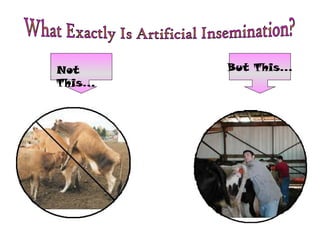
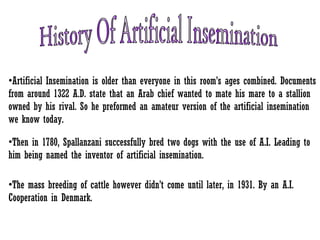
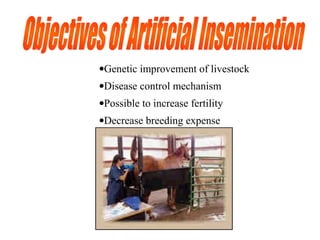
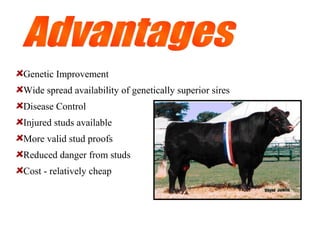
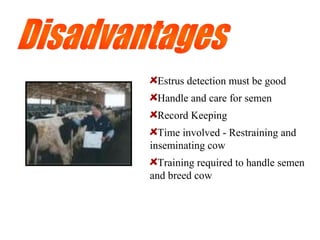

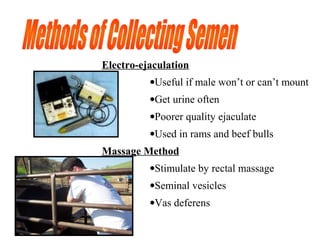
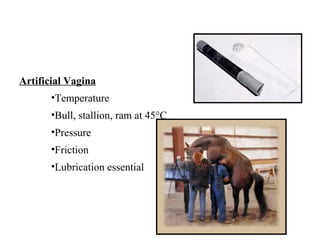
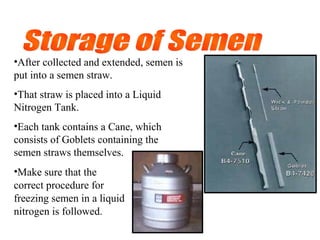
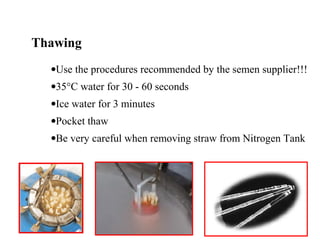
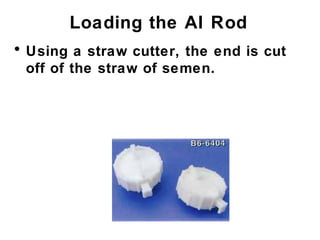
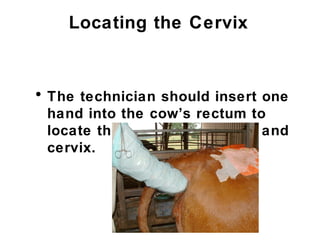


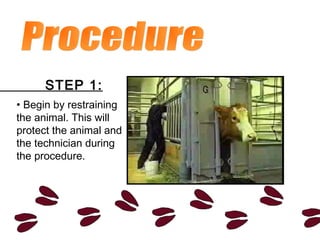
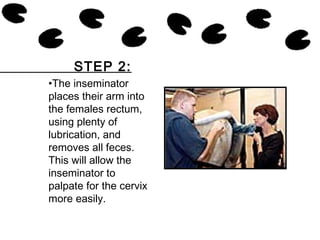
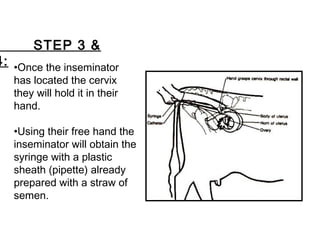
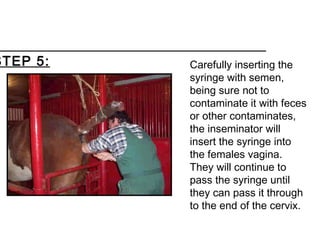
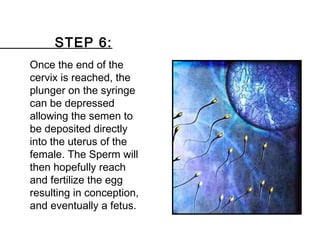

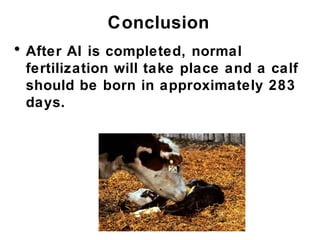


Artificial insemination has been practiced since the early 14th century when an Arab chief inseminated his mare. The modern technique was developed in the 18th century through experiments breeding dogs. However, widespread use for cattle breeding did not occur until the 20th century. The document goes on to describe the process of collecting, extending, freezing and thawing semen, as well as detecting estrus and performing the artificial insemination using a pipette to deposit semen directly into the uterus. If done correctly, the female should become pregnant and give birth approximately 283 days later.


