Ms. Hafsa Ayyub
University Institute of Radiological sciences & Medical Imaging
University of Lahore
 To understand the structure of Arteries
 What is Arteriosclerosis?
 What is Atherosclerosis and its
pathogenesis?
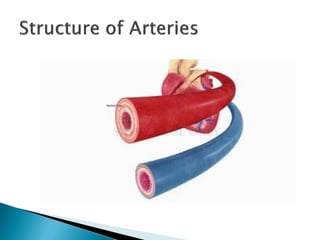
 Structure of
Arteries
 Arteriosclerosis
definition
 Morphological
Patterns
 Risk Factors
 Atherosclerosis
 Definition
 Risk Factors
 Signs and
symptoms
 Pathogenesis
 Diagnosis
 Treatment
 Medication
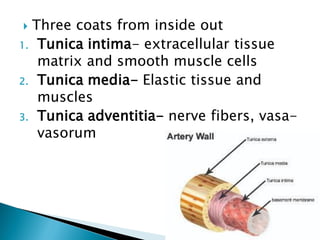
 Three coats from inside out
1. Tunica intima- extracellular tissue
matrix and smooth muscle cells
2. Tunica media- Elastic tissue and
muscles
3. Tunica adventitia- nerve fibers, vasa-
vasorum
 Hardening of arteries
 Group of disorders as associated with
it that are related to the hardening
and thicken of arteries
 Healthy arteries are flexible and
elastic, but over time, the walls in
arteries can harden, a condition
commonly called hardening of the
arteries
 Atherosclerosis is a specific type
of arteriosclerosis
 These terms sometimes use
interchangeably
1. Atherosclerosis- formation of fibrofatty
plague- involves medium and large vessels
2. Monckeberg’s medial calcific sclerosis-
Calcification in the media of muscular
arteries
- In elderly  aging change
- No abnormality
3. Arteriolosclerosis- small vessel sclerosis
4. Artherosclerosis
 Etiology is unknown
 Age
 Male gender
- More in men than in premenopausal
women (protecting agent: estrogen)
 Family History
- males- before 45 years
- Females- after 50 years
- Genetic derangement in lipoprotein
metabolism
 Diabetes Mellitus
 Hypertension
 Cigarette smoking
 Obesity
 Lifestyle (lack of exercise, alcoholism,
diet)
 Oral contraceptives
 Gout
 Infections
 Inc. levels of Coagulating factors
Ms. Mahjabeen
University Institute of Radiological sciences
& Medical Imaging
University of Lahore
 Arteriosclerosis in which
an artery wall thickens as a result
of invasion and accumulation
of white blood cells (foam cells)
and proliferation of intimal-
smooth-muscle cell creating
an atheromatous (fibrofatty)
plaque.
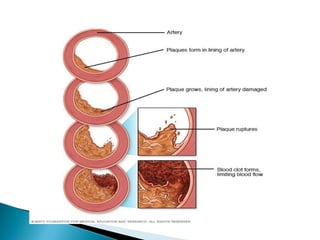
 The plaque is divided into three
distinct components:
 The atheroma which is the nodular
accumulation of a soft, flaky, yellowish
material at the center of large plaques,
composed of macrophages nearest
the lumen of the artery
 Underlying areas of cholesterol
crystals
 Calcification at the outer base of older
or more advanced lesions.
1:Diabetes or impaired glucose
tolerance.
2:Dyslipoproteinemia (unhealthy
patterns of serum proteins carrying
fats & cholesterol).
3:Tobacco smoking increases risk by
200% after several pack years.
4: Elevated serum C-reactive
protein concentration.
5:Vitamin B6 deficiency.
6:Dietary iodine
deficiency and hypothyroidism,
which cause elevated serum
cholesterol.
7: Advanced age and Male sex.
8:Obesity.
 Atherosclerosis is asymptomatic
for decades because the arteries
enlarge at all plaque locations,
thus there is no effect on blood
flow.
 Even most plaque ruptures do not
produce symptoms until enough
narrowing or closure of an artery,
due to clots, occurs. Signs and
symptoms only occur after severe
narrowing or closure impedes
blood flow to different organs
enough to induce symptoms.
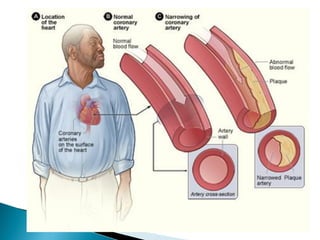
 Marked narrowing in the coronary
arteries, which are responsible for
bringing oxygenated blood to the
heart, can produce symptoms such as
the chest pain of angina and shortness
of breath, sweating, nausea, dizziness
or light-headedness, breathlessness
or palpitations. Abnormal heart
rhythms called arrhythmias (the heart
is either beating too slow or too fast)
are another consequence of ischemia.
 One recent hypothesis suggests that,
for unknown reasons, leukocytes,
such as monocytes or basophils, begin
to attack the endothelium of the artery
lumen in cardiac muscle. The
ensuing inflammation leads to
formation of atheromatous plaques in
the arterial tunica intima, a region of
the vessel wall located between
the endothelium and the tunica media.
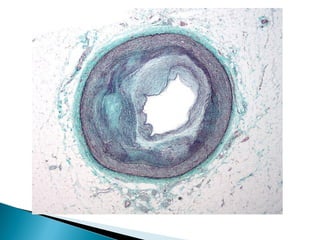
 The bulk of these lesions is made of
excess fat, collagen, and elastin. At
first, as the plaques grow, only wall
thickening occurs without any
narrowing. Stenosis is a late event,
which may never occur and is often
the result of repeated plaque rupture
and healing responses, not just the
atherosclerotic process by itself.
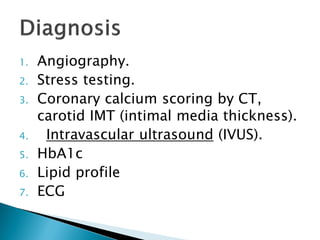
1. Angiography.
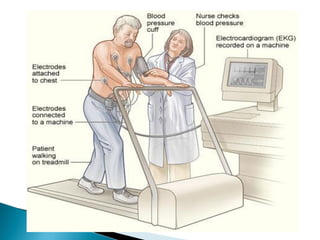
2. Stress testing.
3. Coronary calcium scoring by CT,
carotid IMT (intimal media thickness).
4. Intravascular ultrasound (IVUS).
5. HbA1c
6. Lipid profile
7. ECG
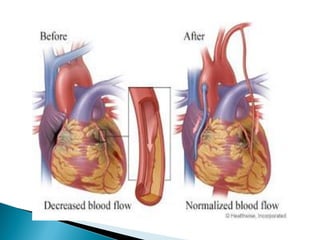
 Lifestyle changes:
Reducing risk factors that lead to
atherosclerosis will slow or stop the
process. That means a
healthy diet, exercise, and
no smoking. These changes won't
remove blockages, but they’re proven
to lower the risk of heart attacks and
strokes.
 Medication:
Taking drugs for high
cholesterol and high blood
pressure will slow and may even
halt atherosclerosis. They could
also lower your risk of heart
attack and stroke.
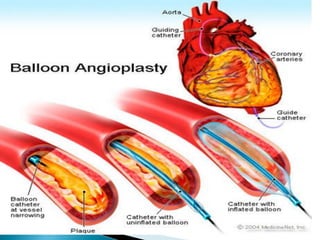
 Angiography and stenting:
Using a thin tube inserted into an
artery in the leg or arm, doctors can
get to diseased arteries. Blockages are
visible on a live X-ray
screen. Angioplasty (catheters with
balloon tips) and stenting can often
open up a blocked artery. Stenting
helps to reduce symptoms, although it
does not prevent future heart attacks.
 Bypass surgery: Surgeons "harvest" a
healthy blood vessel (often from the
leg or chest). They use the healthy
vessel to go around a blocked
segment.
 These procedures can have
complications. They’re usually saved
for people with significant symptoms
or limitations caused by
atherosclerosis.
• Short text book of pathology by
Mohammad Inam Danish.
• General pathology by Firdaus.
• Pathology-Wikipidea
 We understand the structure of
Arteries and their composition.
 We have learnt that What is
Arteriosclerosis and its morphological
patterans?
 Know about Atherosclerosis and its
pathogenesis?
Arteriosclerosis.pdf

Arteriosclerosis.pdf

  • 2.
    Ms. Hafsa Ayyub UniversityInstitute of Radiological sciences & Medical Imaging University of Lahore
  • 3.
     To understandthe structure of Arteries  What is Arteriosclerosis?  What is Atherosclerosis and its pathogenesis?
  • 4.
     Structure of Arteries Arteriosclerosis definition  Morphological Patterns  Risk Factors  Atherosclerosis  Definition  Risk Factors  Signs and symptoms  Pathogenesis  Diagnosis  Treatment  Medication
  • 6.
     Three coatsfrom inside out 1. Tunica intima- extracellular tissue matrix and smooth muscle cells 2. Tunica media- Elastic tissue and muscles 3. Tunica adventitia- nerve fibers, vasa- vasorum
  • 7.
     Hardening ofarteries  Group of disorders as associated with it that are related to the hardening and thicken of arteries  Healthy arteries are flexible and elastic, but over time, the walls in arteries can harden, a condition commonly called hardening of the arteries
  • 8.
     Atherosclerosis isa specific type of arteriosclerosis  These terms sometimes use interchangeably
  • 10.
    1. Atherosclerosis- formationof fibrofatty plague- involves medium and large vessels 2. Monckeberg’s medial calcific sclerosis- Calcification in the media of muscular arteries - In elderly  aging change - No abnormality 3. Arteriolosclerosis- small vessel sclerosis 4. Artherosclerosis
  • 11.
     Etiology isunknown  Age  Male gender - More in men than in premenopausal women (protecting agent: estrogen)
  • 12.
     Family History -males- before 45 years - Females- after 50 years - Genetic derangement in lipoprotein metabolism  Diabetes Mellitus
  • 13.
     Hypertension  Cigarettesmoking  Obesity  Lifestyle (lack of exercise, alcoholism, diet)  Oral contraceptives  Gout  Infections  Inc. levels of Coagulating factors
  • 14.
    Ms. Mahjabeen University Instituteof Radiological sciences & Medical Imaging University of Lahore
  • 15.
     Arteriosclerosis inwhich an artery wall thickens as a result of invasion and accumulation of white blood cells (foam cells) and proliferation of intimal- smooth-muscle cell creating an atheromatous (fibrofatty) plaque.
  • 16.
     The plaqueis divided into three distinct components:  The atheroma which is the nodular accumulation of a soft, flaky, yellowish material at the center of large plaques, composed of macrophages nearest the lumen of the artery  Underlying areas of cholesterol crystals  Calcification at the outer base of older or more advanced lesions.
  • 17.
    1:Diabetes or impairedglucose tolerance. 2:Dyslipoproteinemia (unhealthy patterns of serum proteins carrying fats & cholesterol). 3:Tobacco smoking increases risk by 200% after several pack years. 4: Elevated serum C-reactive protein concentration.
  • 18.
    5:Vitamin B6 deficiency. 6:Dietaryiodine deficiency and hypothyroidism, which cause elevated serum cholesterol. 7: Advanced age and Male sex. 8:Obesity.
  • 19.
     Atherosclerosis isasymptomatic for decades because the arteries enlarge at all plaque locations, thus there is no effect on blood flow.
  • 20.
     Even mostplaque ruptures do not produce symptoms until enough narrowing or closure of an artery, due to clots, occurs. Signs and symptoms only occur after severe narrowing or closure impedes blood flow to different organs enough to induce symptoms.
  • 21.
     Marked narrowingin the coronary arteries, which are responsible for bringing oxygenated blood to the heart, can produce symptoms such as the chest pain of angina and shortness of breath, sweating, nausea, dizziness or light-headedness, breathlessness or palpitations. Abnormal heart rhythms called arrhythmias (the heart is either beating too slow or too fast) are another consequence of ischemia.
  • 22.
     One recenthypothesis suggests that, for unknown reasons, leukocytes, such as monocytes or basophils, begin to attack the endothelium of the artery lumen in cardiac muscle. The ensuing inflammation leads to formation of atheromatous plaques in the arterial tunica intima, a region of the vessel wall located between the endothelium and the tunica media.
  • 23.
     The bulkof these lesions is made of excess fat, collagen, and elastin. At first, as the plaques grow, only wall thickening occurs without any narrowing. Stenosis is a late event, which may never occur and is often the result of repeated plaque rupture and healing responses, not just the atherosclerotic process by itself.

  • 25.
    1. Angiography. 2. Stresstesting. 3. Coronary calcium scoring by CT, carotid IMT (intimal media thickness). 4. Intravascular ultrasound (IVUS). 5. HbA1c 6. Lipid profile 7. ECG
  • 28.
     Lifestyle changes: Reducingrisk factors that lead to atherosclerosis will slow or stop the process. That means a healthy diet, exercise, and no smoking. These changes won't remove blockages, but they’re proven to lower the risk of heart attacks and strokes.
  • 29.
     Medication: Taking drugsfor high cholesterol and high blood pressure will slow and may even halt atherosclerosis. They could also lower your risk of heart attack and stroke.
  • 30.
     Angiography andstenting: Using a thin tube inserted into an artery in the leg or arm, doctors can get to diseased arteries. Blockages are visible on a live X-ray screen. Angioplasty (catheters with balloon tips) and stenting can often open up a blocked artery. Stenting helps to reduce symptoms, although it does not prevent future heart attacks.
  • 31.
     Bypass surgery:Surgeons "harvest" a healthy blood vessel (often from the leg or chest). They use the healthy vessel to go around a blocked segment.  These procedures can have complications. They’re usually saved for people with significant symptoms or limitations caused by atherosclerosis.
  • 34.
    • Short textbook of pathology by Mohammad Inam Danish. • General pathology by Firdaus. • Pathology-Wikipidea
  • 35.
     We understandthe structure of Arteries and their composition.  We have learnt that What is Arteriosclerosis and its morphological patterans?  Know about Atherosclerosis and its pathogenesis?