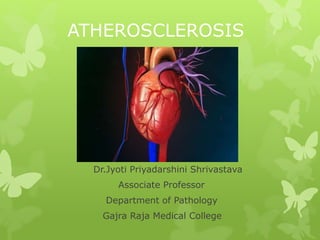
ATHEROSCLEROSIS
Dr.Jyoti Priyadarshini Shrivastava
Associate Professor
Department of Pathology
Gajra Raja Medical College
PATHOLOGY
 Bridging Discipline
 General Pathology and Systemic /Special Pathology
CORE OF PATHOLOGY
1.Etiology
2.Pathogenesis
3.Morphology
4.Clinical Significance
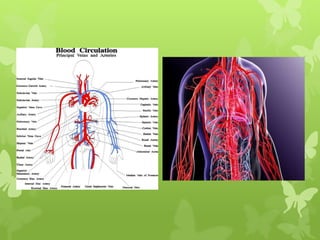
BLOOD VESSELS
Closed circuits for the transport of
blood from the heart to the tissues for
exchange of gases and nutrients and
vice versa.
Arteries
Veins
Capillaries
The Vascular System
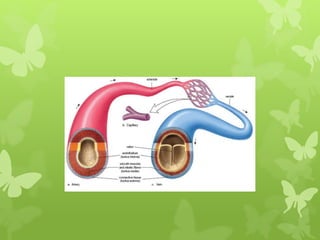
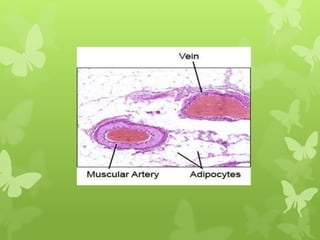
 The arterial system - high-pressure system, so
arteries have thick walls that appear round in cross
section.
 The venous system - lower-pressure system,
containing veins that have larger lumens and thinner
walls. They often appear flattened.
 Arteries, arterioles, venules, and veins are composed of
three tunics known as the tunica intima, tunica media,
and tunica externa.
 Capillaries have only a tunica intima layer
(An adult's blood vs. be closer to 100,000 miles long)
(300 million capillaries in the human body. )
Capillary bed: network of 10–100 capillaries connecting arterioles to venules
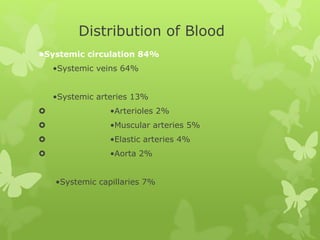
Distribution of Blood
•Systemic circulation 84%
•Systemic veins 64%
•Systemic arteries 13%
 •Arterioles 2%
 •Muscular arteries 5%
 •Elastic arteries 4%
 •Aorta 2%
•Systemic capillaries 7%
ATHEROSCLEROSIS
INTRODUCTION
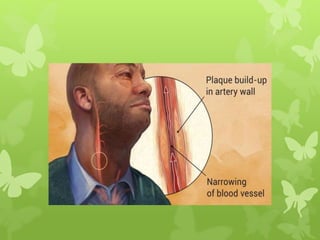
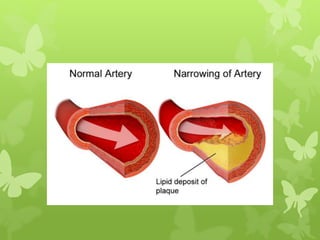
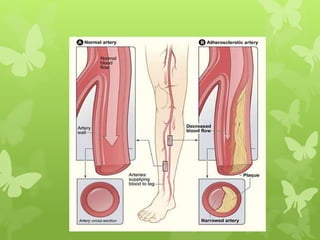
Atherosclerosis is a condition
where the arteries become
narrowed and hardened due to a
build up of plaque in the artery
wall.
 Sclerosis= Hardening
 Arteriosclerosis=Hardening of Arteries
 Three Patterns:
 1.Atherosclerosis
 2.Monkeberg’s Medial calcific sclerosis
 3.Arteriolosclerosis
 Hypertension
 Diabetes Mellitus
 4.Senile Arteriosclerosis
DEFINITION
Atherosclerosis is a specific form of
arteriosclerosis affecting intima of
large(elastic) and medium sized muscular
arteries characterised by fibrofatty plaques or
atheromas.
Athero- porridge,gruel
Sclerosis-Scarring/Connective tissue
Atherosclerosis: Hardening and loss of elasticity
Points to remember
1.Progressive disease
2.Intima
3.Fatty streaks(Precursor)
4.Eccenteric lesions at branching points
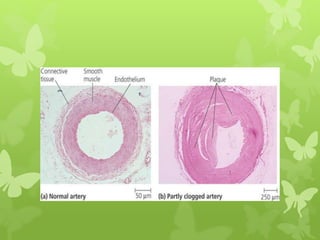
PLAQUE
Plaque is a sticky substance made up of fat,
cholesterol, calcium, and other substances
found in the blood.
The presence of the plaque induces the
muscle cells of the blood vessel to stretch,
compensating for the additional bulk, and the
endothelial lining thickens, increasing the
separation between the plaque and lumen.
Plaque hardens and narrows your arteries.
That limits the flow of oxygen-rich blood to
your body.
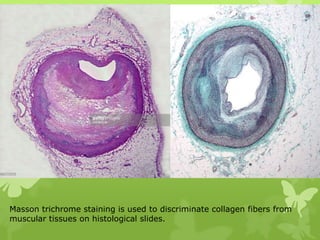
Masson trichrome staining is used to discriminate collagen fibers from
muscular tissues on histological slides.
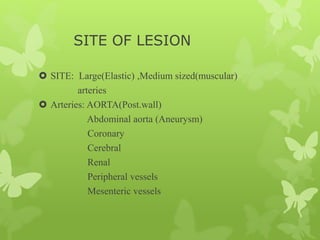
SITE OF LESION
 SITE: Large(Elastic) ,Medium sized(muscular)
arteries
 Arteries: AORTA(Post.wall)
Abdominal aorta (Aneurysm)
Coronary
Cerebral
Renal
Peripheral vessels
Mesenteric vessels
Aetiology
ETIOLOGY
 Major risk Factors:
Modifiable-Dyslipidaemia, HTN, D.M., Smoking
Non- Modifiable-Age, Sex, Genetic Factors, Family/race
(Constitutional)
 Emerging Risk Factors:
Environmental factors
Obesity
Hormones
Physical inactivity
Stress
Homocystinuria
Alcohol
Prothrombotic factors
Infections(Herpes,CMV)
High CRP
Two risk factors –Increased risk
by 4 Folds
Three risk factors- Increased
risk by 7 Folds
 Age
A dominant influence
Atherosclerosis begins in the young, but does not precipitate organ
injury until later in life.
 Gender
Men more prone than women, but by age 60--7070 about equal
frequency.
Oestrgen and HDL are protective .
 Family History
Familial/racial cluster of risk factors- Blacks
Genetic differences
Emerging Risk Factors
 1.Environmental influences: > in developed nations,
Western world
 2.Obesity: >20% overweight
 3.Physical inactivity/lack ofexercise
 4.Stress:Type A personality
 5.Homocystinuria(inborn error of metabolism)
 6.Infections:CMV,HSV, C.pneumoniae
 7.CRP:
Major risk Factors
 Modified by Life Style /Pharmacotherapy
LIPID DISORDERS:
Virchow-Cholesterol crystals in Atheromatous lesions
Hyperlipidemia :
(Increased Cholesterol,Triglycerides,Liporoteins)
Major factor
Directly proportional
EVIDENCES:
1. Bad cholesterol(LDL,IDL)-Connstituent of plaque
2. HDL: Removes cholesterol
Ratio of LDL:HDL::4:1
3. Experimental animals
4. Diseases inducing hypercholesterolemia- Dm, Nephrotic Syndrome,
Myxoedema,Xanthomaosis
5. IHD more in H+chol.
HYPERLIPIDEMIA
 Higher-than-normal levels of cholesterol, triglycerides,
and other lipids and Lipoproteins in the blood.
1.Familial
2.Acquired
FAMILIAL HYPERLIPIDEMIA
 Familial :Inherited Autosomal Recessive/Dominant
trait.
 LDL receptor via apolipoprotein E
 Gene mutation of apolipoprotein, Hepatic Lipoprotein
receptors, Lipoprotein lipase enzyme.
 LDL accumulation- Atheromas
Xanthoma
ACQUIRED HYPERLIPIDEMIA
I.Dietary Factors:
Cholesterol and Saturated Fats> 40%
Saturated fat intake > 10% of total calories.
(single bonds,stable,deposited under skin)
II.Diseases:
Diabetes
Myxoedema
Nephrotic syndrome
Hypothyroidism
III. Obesity and Smoking
IV. Progesterone
V.Hypertension :
(lipid lowering drugs reduces the chances of IHD)
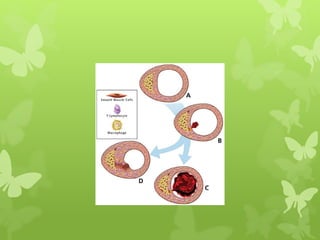
PATHOGENESISMultifactorial Process
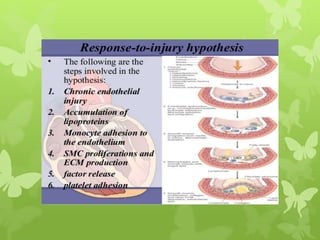
Insudation Hypothesis/Lipid theory/Response
to Injury Hypothesis(Virchow)
(Rudolf Ludwig Carl Virchow "the father of modern
pathology")
 Imbibed lipids from blood
 Cellular proliferation of Intimal cells
Encrustation Hypothesis/Thrombogenic
theory:(Rockitansky)
Atheroma encrusted on arterial wall
Thrombus –platelets,fibrin and leucocytes
Thrombosis not a sole factor
Merged with Response -to-injury Hypothesis
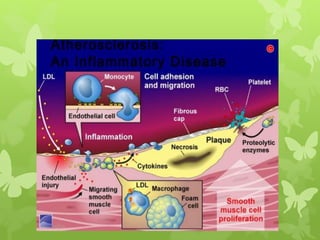
Reaction to Injury Hypothesis(Ross)
Widely accepted
Encorporates Lipid theory + Thrombogenic
theory
Components of Reaction-to-injury
Hypothesis
1.Endothelial Injury
2.Intimal SMC proliferation
3.Role of Blood Monocytes
4.Role of Dyslipidemia
5.Thrombosis
Endothelial injury
 1.Mechanical trauma
 2.Haemodynamic forces(Branching/openings)
 3.Immunological/chemical mechanisms
 Metabolic agent:
Chronic Dyslipidemia
Homocystinuria
 Infections
 Hypoxia
 Radiation
 Carbon monoxide
 Tobacco products
Intimal SMC proliferation
 Enothelial damage
 Subendothelium exposed
 Adherence,Aggregation and platelet release reactions
 Inflammatory cells enter
 Proliferation Of SMC’s
 (IL-1,TNF)Production of extracellular matrix
 PDGF,FGF----SMC proliferation in Intima
 TGF-B andIFN- Gamma activate T lymphocytes.Collagen
synthesis
 NO and Endothelin-SMC,Collagen,Elastic fibres
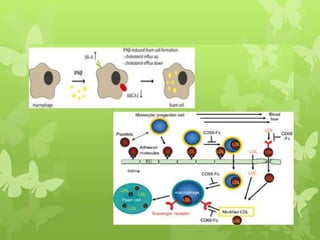
Role of Blood Monocytes
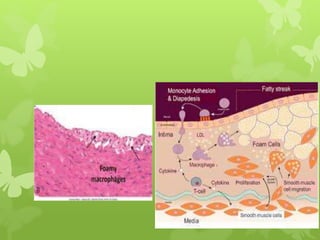
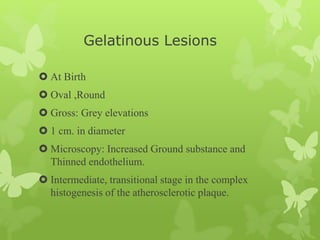
LDL in monocyte---Oxidised LDL----foam
cells.
For endothelium—Oxidised LDL-----
Cytotoxic.
Death of Foam cells by Apoptosis releases
Lipids to form Lipid Core of Plaque.
Role of Dyslipidemia
 1.Endothelial Injury and Dysfunction
 2.Increased permeability
 3.Foam cell formation by Oxidised LDL,
(HDL—Anti atherogenic)
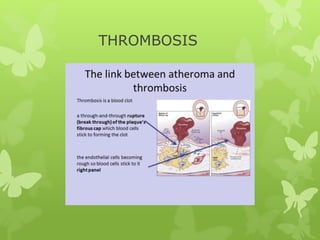
THROMBOSIS
 1.Endothelial damage
 2.Platelet aggregation
 3.Inflammatory reaction
 4.Thrombus formation+Foam cells
 5.Atheromatous Plaque
 6.Fibrin and WBC’s
Monoclonal Hypothesis
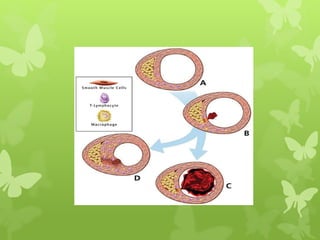
 SMC proliferation is initial event
 Monoclonal proliferation(Neoplasms)
 SMC show only one form of G6PD isoenzymes.
 Monoclonality is due to mutation by
Chemicals
Metabolites
Viruses
MORPHOLOGY
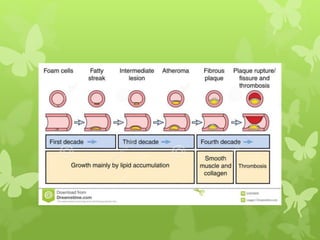
STAGES
Intimal Thickening
Fatty Streaks and Dots
Fibrous Plaque
Atheroma
Atherosclerosis
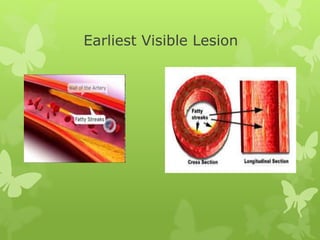
Fatty Streaks
At Birth
Asymptomatic
Dots or streaks
1 mm in size
Disappear with age
Aorta(Post.wall),major arteries
Earliest Visible Lesion
Gelatinous Lesions
 At Birth
 Oval ,Round
 Gross: Grey elevations
 1 cm. in diameter
 Microscopy: Increased Ground substance and
Thinned endothelium.
 Intermediate, transitional stage in the complex
histogenesis of the atherosclerotic plaque.
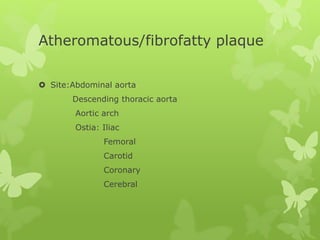
Atheromatous/fibrofatty plaque
 Site:Abdominal aorta
Descending thoracic aorta
Aortic arch
Ostia: Iliac
Femoral
Carotid
Coronary
Cerebral
Atheromatous Plaque
Gross:
White to yellowish
1-2 cm
Raised
Cut Section:
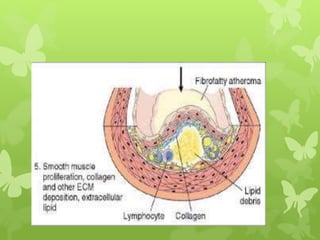
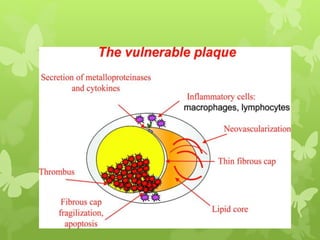
1.Fibrous Cap
2.Necrotic centre
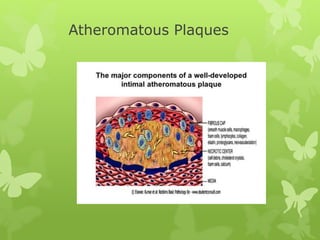
 Fibrous cap
Superficial luminal part
Covered by enothelium
SMC,Dense connective tissue, ECM(Proteoglycans, collagen)
 Cellular Area
Macrophages
Foam cells
Lymphocytes
SMC
+/- Lipids
 Deeper central soft core
Lipid,Cholesterol cleft, Fibrin,NecroticDebris, Lipid laden Foam cells
 Advanced Lesion: Thick fibrous cap
Atheromatous Plaques
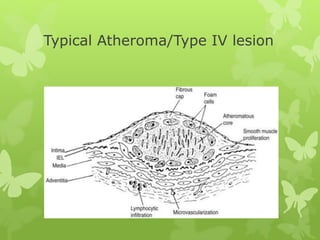
Typical Atheroma/Type IV lesion
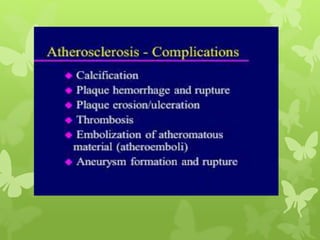
Complicated Plaques
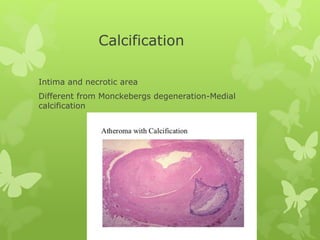
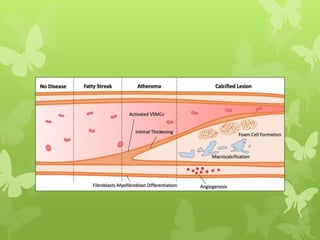
Calcification
Intima and necrotic area
Different from Monckebergs degeneration-Medial
calcification
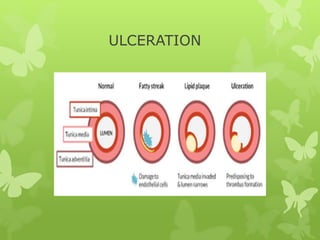
ULCERATION
THROMBOSIS
HAEMORRHAGE
Intimal haemorrhage from ulceration
Common in coronary arteries
Hematoma contains hemosiderin laden
macrophages
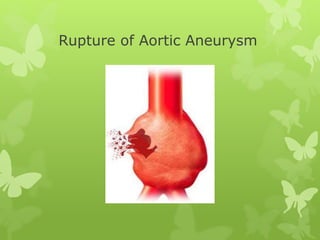
ANEURYSM FORMATION
 Basically Intimal disease
 Advanced----Media and adventiia show secondary
changes
 Media---Atrophy
Thinning
Fragmentation of IEL
 Adventitia: Fibrosis
Inflammation
Rupture of Aortic Aneurysm
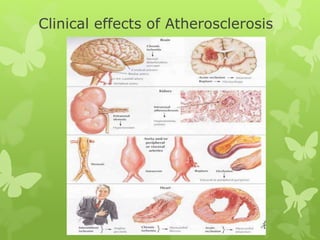
Clinical effects of Atherosclerosis
Atherosclerosis Score Index (ASI)
Whole-body magnetic resonance angiography
(WB-MRA) has shown its potential for the
non-invasive assessment of nearly the entire
arterial vasculature within one examination.
Association between the GES(Gene
Expression Score ) based on age, sex and
peripheral blood cell expression levels of 23
genes measured by quantitative real-time
PCR (qRT-PCR)and coronary arterial Plaque
Burden and Stenosis by CT-angiography
Atherosclerosis Scoring
 The traditional Framingham Risk Score
 [QRISK score (http://www.qrisk.org)
 Reynolds Risk Score
(http://www.reynoldsriskscore.org)]
 The Society for Heart Attack and Eradication (SHAPE)
guidelines ; they advocate assessment of biomarkers in
all intermediate risk patients, a position not yet
endorsed by NLA. ACC/AHA
 Guideline for Assessment of Cardiovascular Risk in
Asymptomatic Adults (2010) lists a few diagnostic tests
as Class IIa recommendations.
THANK YOU

Atherosclerosis

  • 1.
    ATHEROSCLEROSIS Dr.Jyoti Priyadarshini Shrivastava AssociateProfessor Department of Pathology Gajra Raja Medical College
  • 3.
    PATHOLOGY  Bridging Discipline General Pathology and Systemic /Special Pathology CORE OF PATHOLOGY 1.Etiology 2.Pathogenesis 3.Morphology 4.Clinical Significance
  • 4.
    BLOOD VESSELS Closed circuitsfor the transport of blood from the heart to the tissues for exchange of gases and nutrients and vice versa. Arteries Veins Capillaries
  • 5.
    The Vascular System The arterial system - high-pressure system, so arteries have thick walls that appear round in cross section.  The venous system - lower-pressure system, containing veins that have larger lumens and thinner walls. They often appear flattened.  Arteries, arterioles, venules, and veins are composed of three tunics known as the tunica intima, tunica media, and tunica externa.  Capillaries have only a tunica intima layer (An adult's blood vs. be closer to 100,000 miles long) (300 million capillaries in the human body. ) Capillary bed: network of 10–100 capillaries connecting arterioles to venules
  • 7.
    Distribution of Blood •Systemiccirculation 84% •Systemic veins 64% •Systemic arteries 13%  •Arterioles 2%  •Muscular arteries 5%  •Elastic arteries 4%  •Aorta 2% •Systemic capillaries 7%
  • 10.
  • 11.
    INTRODUCTION Atherosclerosis is acondition where the arteries become narrowed and hardened due to a build up of plaque in the artery wall.
  • 12.
     Sclerosis= Hardening Arteriosclerosis=Hardening of Arteries  Three Patterns:  1.Atherosclerosis  2.Monkeberg’s Medial calcific sclerosis  3.Arteriolosclerosis  Hypertension  Diabetes Mellitus  4.Senile Arteriosclerosis
  • 13.
    DEFINITION Atherosclerosis is aspecific form of arteriosclerosis affecting intima of large(elastic) and medium sized muscular arteries characterised by fibrofatty plaques or atheromas. Athero- porridge,gruel Sclerosis-Scarring/Connective tissue Atherosclerosis: Hardening and loss of elasticity
  • 14.
    Points to remember 1.Progressivedisease 2.Intima 3.Fatty streaks(Precursor) 4.Eccenteric lesions at branching points
  • 17.
    PLAQUE Plaque is asticky substance made up of fat, cholesterol, calcium, and other substances found in the blood. The presence of the plaque induces the muscle cells of the blood vessel to stretch, compensating for the additional bulk, and the endothelial lining thickens, increasing the separation between the plaque and lumen. Plaque hardens and narrows your arteries. That limits the flow of oxygen-rich blood to your body.
  • 20.
    Masson trichrome stainingis used to discriminate collagen fibers from muscular tissues on histological slides.
  • 21.
    SITE OF LESION SITE: Large(Elastic) ,Medium sized(muscular) arteries  Arteries: AORTA(Post.wall) Abdominal aorta (Aneurysm) Coronary Cerebral Renal Peripheral vessels Mesenteric vessels
  • 23.
  • 24.
    ETIOLOGY  Major riskFactors: Modifiable-Dyslipidaemia, HTN, D.M., Smoking Non- Modifiable-Age, Sex, Genetic Factors, Family/race (Constitutional)  Emerging Risk Factors: Environmental factors Obesity Hormones Physical inactivity Stress Homocystinuria Alcohol Prothrombotic factors Infections(Herpes,CMV) High CRP
  • 25.
    Two risk factors–Increased risk by 4 Folds Three risk factors- Increased risk by 7 Folds
  • 26.
     Age A dominantinfluence Atherosclerosis begins in the young, but does not precipitate organ injury until later in life.  Gender Men more prone than women, but by age 60--7070 about equal frequency. Oestrgen and HDL are protective .  Family History Familial/racial cluster of risk factors- Blacks Genetic differences
  • 27.
    Emerging Risk Factors 1.Environmental influences: > in developed nations, Western world  2.Obesity: >20% overweight  3.Physical inactivity/lack ofexercise  4.Stress:Type A personality  5.Homocystinuria(inborn error of metabolism)  6.Infections:CMV,HSV, C.pneumoniae  7.CRP:
  • 28.
    Major risk Factors Modified by Life Style /Pharmacotherapy LIPID DISORDERS: Virchow-Cholesterol crystals in Atheromatous lesions Hyperlipidemia : (Increased Cholesterol,Triglycerides,Liporoteins) Major factor Directly proportional EVIDENCES: 1. Bad cholesterol(LDL,IDL)-Connstituent of plaque 2. HDL: Removes cholesterol Ratio of LDL:HDL::4:1 3. Experimental animals 4. Diseases inducing hypercholesterolemia- Dm, Nephrotic Syndrome, Myxoedema,Xanthomaosis 5. IHD more in H+chol.
  • 29.
    HYPERLIPIDEMIA  Higher-than-normal levelsof cholesterol, triglycerides, and other lipids and Lipoproteins in the blood. 1.Familial 2.Acquired
  • 30.
    FAMILIAL HYPERLIPIDEMIA  Familial:Inherited Autosomal Recessive/Dominant trait.  LDL receptor via apolipoprotein E  Gene mutation of apolipoprotein, Hepatic Lipoprotein receptors, Lipoprotein lipase enzyme.  LDL accumulation- Atheromas Xanthoma
  • 31.
    ACQUIRED HYPERLIPIDEMIA I.Dietary Factors: Cholesteroland Saturated Fats> 40% Saturated fat intake > 10% of total calories. (single bonds,stable,deposited under skin) II.Diseases: Diabetes Myxoedema Nephrotic syndrome Hypothyroidism III. Obesity and Smoking IV. Progesterone V.Hypertension : (lipid lowering drugs reduces the chances of IHD)
  • 32.
  • 33.
    Insudation Hypothesis/Lipid theory/Response toInjury Hypothesis(Virchow) (Rudolf Ludwig Carl Virchow "the father of modern pathology")  Imbibed lipids from blood  Cellular proliferation of Intimal cells
  • 34.
    Encrustation Hypothesis/Thrombogenic theory:(Rockitansky) Atheroma encrustedon arterial wall Thrombus –platelets,fibrin and leucocytes Thrombosis not a sole factor Merged with Response -to-injury Hypothesis
  • 35.
    Reaction to InjuryHypothesis(Ross) Widely accepted Encorporates Lipid theory + Thrombogenic theory
  • 36.
    Components of Reaction-to-injury Hypothesis 1.EndothelialInjury 2.Intimal SMC proliferation 3.Role of Blood Monocytes 4.Role of Dyslipidemia 5.Thrombosis
  • 37.
    Endothelial injury  1.Mechanicaltrauma  2.Haemodynamic forces(Branching/openings)  3.Immunological/chemical mechanisms  Metabolic agent: Chronic Dyslipidemia Homocystinuria  Infections  Hypoxia  Radiation  Carbon monoxide  Tobacco products
  • 38.
    Intimal SMC proliferation Enothelial damage  Subendothelium exposed  Adherence,Aggregation and platelet release reactions  Inflammatory cells enter  Proliferation Of SMC’s  (IL-1,TNF)Production of extracellular matrix  PDGF,FGF----SMC proliferation in Intima  TGF-B andIFN- Gamma activate T lymphocytes.Collagen synthesis  NO and Endothelin-SMC,Collagen,Elastic fibres
  • 39.
    Role of BloodMonocytes LDL in monocyte---Oxidised LDL----foam cells. For endothelium—Oxidised LDL----- Cytotoxic. Death of Foam cells by Apoptosis releases Lipids to form Lipid Core of Plaque.
  • 41.
    Role of Dyslipidemia 1.Endothelial Injury and Dysfunction  2.Increased permeability  3.Foam cell formation by Oxidised LDL, (HDL—Anti atherogenic)
  • 42.
    THROMBOSIS  1.Endothelial damage 2.Platelet aggregation  3.Inflammatory reaction  4.Thrombus formation+Foam cells  5.Atheromatous Plaque  6.Fibrin and WBC’s
  • 44.
    Monoclonal Hypothesis  SMCproliferation is initial event  Monoclonal proliferation(Neoplasms)  SMC show only one form of G6PD isoenzymes.  Monoclonality is due to mutation by Chemicals Metabolites Viruses
  • 49.
  • 50.
    STAGES Intimal Thickening Fatty Streaksand Dots Fibrous Plaque Atheroma Atherosclerosis
  • 51.
    Fatty Streaks At Birth Asymptomatic Dotsor streaks 1 mm in size Disappear with age Aorta(Post.wall),major arteries
  • 52.
  • 54.
    Gelatinous Lesions  AtBirth  Oval ,Round  Gross: Grey elevations  1 cm. in diameter  Microscopy: Increased Ground substance and Thinned endothelium.  Intermediate, transitional stage in the complex histogenesis of the atherosclerotic plaque.
  • 55.
    Atheromatous/fibrofatty plaque  Site:Abdominalaorta Descending thoracic aorta Aortic arch Ostia: Iliac Femoral Carotid Coronary Cerebral
  • 56.
    Atheromatous Plaque Gross: White toyellowish 1-2 cm Raised Cut Section: 1.Fibrous Cap 2.Necrotic centre
  • 57.
     Fibrous cap Superficialluminal part Covered by enothelium SMC,Dense connective tissue, ECM(Proteoglycans, collagen)  Cellular Area Macrophages Foam cells Lymphocytes SMC +/- Lipids  Deeper central soft core Lipid,Cholesterol cleft, Fibrin,NecroticDebris, Lipid laden Foam cells  Advanced Lesion: Thick fibrous cap
  • 58.
  • 59.
  • 60.
  • 61.
    Calcification Intima and necroticarea Different from Monckebergs degeneration-Medial calcification
  • 63.
  • 64.
  • 66.
    HAEMORRHAGE Intimal haemorrhage fromulceration Common in coronary arteries Hematoma contains hemosiderin laden macrophages
  • 67.
    ANEURYSM FORMATION  BasicallyIntimal disease  Advanced----Media and adventiia show secondary changes  Media---Atrophy Thinning Fragmentation of IEL  Adventitia: Fibrosis Inflammation
  • 70.
  • 72.
    Clinical effects ofAtherosclerosis
  • 73.
    Atherosclerosis Score Index(ASI) Whole-body magnetic resonance angiography (WB-MRA) has shown its potential for the non-invasive assessment of nearly the entire arterial vasculature within one examination. Association between the GES(Gene Expression Score ) based on age, sex and peripheral blood cell expression levels of 23 genes measured by quantitative real-time PCR (qRT-PCR)and coronary arterial Plaque Burden and Stenosis by CT-angiography
  • 74.
    Atherosclerosis Scoring  Thetraditional Framingham Risk Score  [QRISK score (http://www.qrisk.org)  Reynolds Risk Score (http://www.reynoldsriskscore.org)]  The Society for Heart Attack and Eradication (SHAPE) guidelines ; they advocate assessment of biomarkers in all intermediate risk patients, a position not yet endorsed by NLA. ACC/AHA  Guideline for Assessment of Cardiovascular Risk in Asymptomatic Adults (2010) lists a few diagnostic tests as Class IIa recommendations.
  • 75.