Aromatherapy
Remedial treatment of
disease or disorder
using aromatic
essential oils from
plants.
Holistic: Physical
Emotional
Mental
Spiritual
Aromatherapy
Introduction
Kathryn Gorges
1
Topics
 Attributes of essential oils
 Healing process
 Derivation of essential oils
 History
 Examples
Aromatherapy Introduction
Kathryn Gorges
2
Types of oils
 Essential oils
 Vegetable oils
 Infused herbal oil
 Flower essence
 Aromatic chemical
Aromatherapy Introduction
Kathryn Gorges
3
Purpose for the plant
 Immune system
 Anti-bacterial
 Insect:
 Attraction for fertilization
 Prevention of attack
 Protection from dehydration
Aromatherapy Introduction
Kathryn Gorges
4
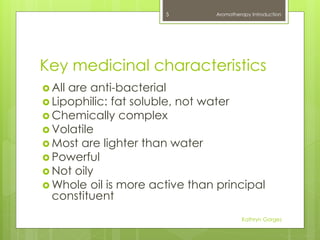
Key medicinal characteristics
 All are anti-bacterial
 Lipophilic: fat soluble, not water
 Chemically complex
 Volatile
 Most are lighter than water
 Powerful
 Not oily
 Whole oil is more active than principal
constituent
Aromatherapy Introduction
Kathryn Gorges
5
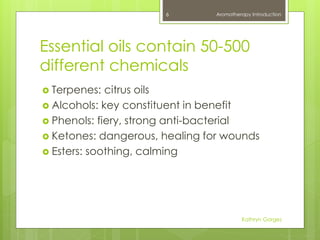
Essential oils contain 50-500
different chemicals
 Terpenes: citrus oils
 Alcohols: key constituent in benefit
 Phenols: fiery, strong anti-bacterial
 Ketones: dangerous, healing for wounds
 Esters: soothing, calming
Aromatherapy Introduction
Kathryn Gorges
6
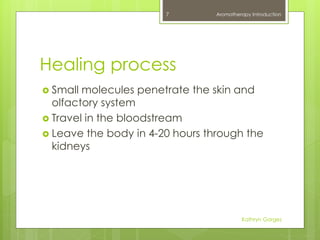
Healing process
 Small molecules penetrate the skin and
olfactory system
 Travel in the bloodstream
 Leave the body in 4-20 hours through the
kidneys
Aromatherapy Introduction
Kathryn Gorges
7
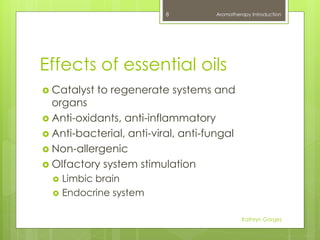
Effects of essential oils
 Catalyst to regenerate systems and
organs
 Anti-oxidants, anti-inflammatory
 Anti-bacterial, anti-viral, anti-fungal
 Non-allergenic
 Olfactory system stimulation
 Limbic brain
 Endocrine system
Aromatherapy Introduction
Kathryn Gorges
8
Aromatherapy Introduction9
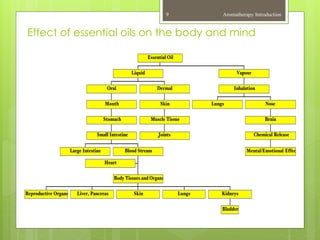
Effect of essential oils on the body and mind
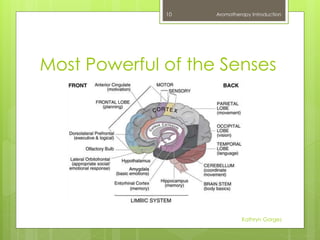
Most Powerful of the Senses
Aromatherapy Introduction
Kathryn Gorges
10
Derivation
 Distillation
 Cold expression
 Enfleurage
 Solvent extraction
 Carbon dioxide extraction
Aromatherapy Introduction
Kathryn Gorges
11
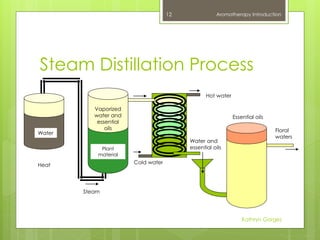
Steam Distillation Process
Aromatherapy Introduction
Kathryn Gorges
12
Hot water
Cold water
Water and
essential oils
Floral
waters
Essential oils
Vaporized
water and
essential
oils
Plant
material
Water
Steam
Heat
History
 Ancient
 Fragrances associated with gods
 Sumeria: botanical healers
 Egypt: massage, reflexology
 Spiritual use of oils was transformative
 Cedarwood: sacred oil
Aromatherapy Introduction
Kathryn Gorges
13
History
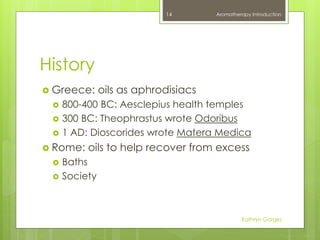
 Greece: oils as aphrodisiacs
 800-400 BC: Aesclepius health temples
 300 BC: Theophrastus wrote Odoribus
 1 AD: Dioscorides wrote Matera Medica
 Rome: oils to help recover from excess
 Baths
 Society
Aromatherapy Introduction
Kathryn Gorges
14
History
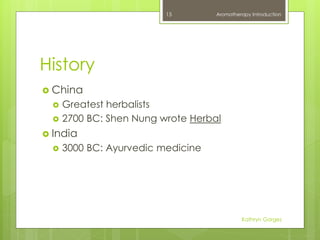
 China
 Greatest herbalists
 2700 BC: Shen Nung wrote Herbal
 India
 3000 BC: Ayurvedic medicine
Aromatherapy Introduction
Kathryn Gorges
15
Methods of use
Aromatherapy Introduction
Kathryn Gorges
16
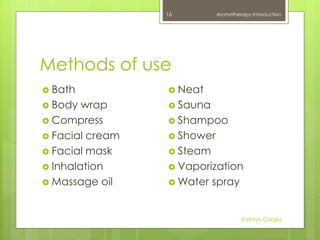
 Bath
 Body wrap
 Compress
 Facial cream
 Facial mask
 Inhalation
 Massage oil
 Neat
 Sauna
 Shampoo
 Shower
 Steam
 Vaporization
 Water spray
Aromatherapy Introduction17
Applications of oils
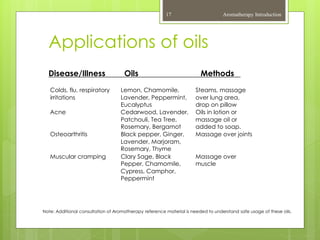
Colds, flu, respiratory
irritations
Lemon, Chamomile,
Lavender, Peppermint,
Eucalyptus
Steams, massage
over lung area,
drop on pillow
Acne Cedarwood, Lavender,
Patchouli, Tea Tree,
Rosemary, Bergamot
Oils in lotion or
massage oil or
added to soap.
Osteoarthritis Black pepper, Ginger,
Lavender, Marjoram,
Rosemary, Thyme
Massage over joints
Muscular cramping Clary Sage, Black
Pepper, Chamomile,
Cypress, Camphor,
Peppermint
Massage over
muscle
Disease/Illness Oils Methods
Note: Additional consultation of Aromatherapy reference material is needed to understand safe usage of these oils.
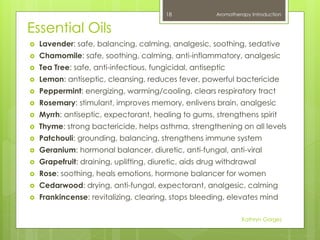
Essential Oils
 Lavender: safe, balancing, calming, analgesic, soothing, sedative
 Chamomile: safe, soothing, calming, anti-inflammatory, analgesic
 Tea Tree: safe, anti-infectious, fungicidal, antiseptic
 Lemon: antiseptic, cleansing, reduces fever, powerful bactericide
 Peppermint: energizing, warming/cooling, clears respiratory tract
 Rosemary: stimulant, improves memory, enlivens brain, analgesic
 Myrrh: antiseptic, expectorant, healing to gums, strengthens spirit
 Thyme: strong bactericide, helps asthma, strengthening on all levels
 Patchouli: grounding, balancing, strengthens immune system
 Geranium: hormonal balancer, diuretic, anti-fungal, anti-viral
 Grapefruit: draining, uplifting, diuretic, aids drug withdrawal
 Rose: soothing, heals emotions, hormone balancer for women
 Cedarwood: drying, anti-fungal, expectorant, analgesic, calming
 Frankincense: revitalizing, clearing, stops bleeding, elevates mind
Aromatherapy Introduction
Kathryn Gorges
18
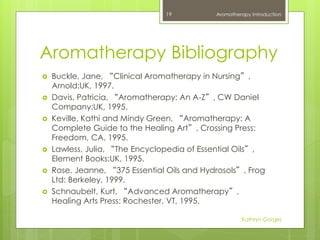
Aromatherapy Bibliography
 Buckle, Jane, “Clinical Aromatherapy in Nursing”,
Arnold:UK, 1997.
 Davis, Patricia, “Aromatherapy: An A-Z”, CW Daniel
Company:UK, 1995.
 Keville, Kathi and Mindy Green, “Aromatherapy: A
Complete Guide to the Healing Art”, Crossing Press:
Freedom, CA, 1995.
 Lawless, Julia, “The Encyclopedia of Essential Oils”,
Element Books:UK, 1995.
 Rose, Jeanne, “375 Essential Oils and Hydrosols”, Frog
Ltd: Berkeley, 1999.
 Schnaubelt, Kurt, “Advanced Aromatherapy”,
Healing Arts Press: Rochester, VT, 1995.
Aromatherapy Introduction
Kathryn Gorges
19

Aromatherapy Introduction

  • 1.
    Aromatherapy Remedial treatment of diseaseor disorder using aromatic essential oils from plants. Holistic: Physical Emotional Mental Spiritual Aromatherapy Introduction Kathryn Gorges 1
  • 2.
    Topics  Attributes ofessential oils  Healing process  Derivation of essential oils  History  Examples Aromatherapy Introduction Kathryn Gorges 2
  • 3.
    Types of oils Essential oils  Vegetable oils  Infused herbal oil  Flower essence  Aromatic chemical Aromatherapy Introduction Kathryn Gorges 3
  • 4.
    Purpose for theplant  Immune system  Anti-bacterial  Insect:  Attraction for fertilization  Prevention of attack  Protection from dehydration Aromatherapy Introduction Kathryn Gorges 4
  • 5.
    Key medicinal characteristics All are anti-bacterial  Lipophilic: fat soluble, not water  Chemically complex  Volatile  Most are lighter than water  Powerful  Not oily  Whole oil is more active than principal constituent Aromatherapy Introduction Kathryn Gorges 5
  • 6.
    Essential oils contain50-500 different chemicals  Terpenes: citrus oils  Alcohols: key constituent in benefit  Phenols: fiery, strong anti-bacterial  Ketones: dangerous, healing for wounds  Esters: soothing, calming Aromatherapy Introduction Kathryn Gorges 6
  • 7.
    Healing process  Smallmolecules penetrate the skin and olfactory system  Travel in the bloodstream  Leave the body in 4-20 hours through the kidneys Aromatherapy Introduction Kathryn Gorges 7
  • 8.
    Effects of essentialoils  Catalyst to regenerate systems and organs  Anti-oxidants, anti-inflammatory  Anti-bacterial, anti-viral, anti-fungal  Non-allergenic  Olfactory system stimulation  Limbic brain  Endocrine system Aromatherapy Introduction Kathryn Gorges 8
  • 9.
    Aromatherapy Introduction9 Effect ofessential oils on the body and mind
  • 10.
    Most Powerful ofthe Senses Aromatherapy Introduction Kathryn Gorges 10
  • 11.
    Derivation  Distillation  Coldexpression  Enfleurage  Solvent extraction  Carbon dioxide extraction Aromatherapy Introduction Kathryn Gorges 11
  • 12.
    Steam Distillation Process AromatherapyIntroduction Kathryn Gorges 12 Hot water Cold water Water and essential oils Floral waters Essential oils Vaporized water and essential oils Plant material Water Steam Heat
  • 13.
    History  Ancient  Fragrancesassociated with gods  Sumeria: botanical healers  Egypt: massage, reflexology  Spiritual use of oils was transformative  Cedarwood: sacred oil Aromatherapy Introduction Kathryn Gorges 13
  • 14.
    History  Greece: oilsas aphrodisiacs  800-400 BC: Aesclepius health temples  300 BC: Theophrastus wrote Odoribus  1 AD: Dioscorides wrote Matera Medica  Rome: oils to help recover from excess  Baths  Society Aromatherapy Introduction Kathryn Gorges 14
  • 15.
    History  China  Greatestherbalists  2700 BC: Shen Nung wrote Herbal  India  3000 BC: Ayurvedic medicine Aromatherapy Introduction Kathryn Gorges 15
  • 16.
    Methods of use AromatherapyIntroduction Kathryn Gorges 16  Bath  Body wrap  Compress  Facial cream  Facial mask  Inhalation  Massage oil  Neat  Sauna  Shampoo  Shower  Steam  Vaporization  Water spray
  • 17.
    Aromatherapy Introduction17 Applications ofoils Colds, flu, respiratory irritations Lemon, Chamomile, Lavender, Peppermint, Eucalyptus Steams, massage over lung area, drop on pillow Acne Cedarwood, Lavender, Patchouli, Tea Tree, Rosemary, Bergamot Oils in lotion or massage oil or added to soap. Osteoarthritis Black pepper, Ginger, Lavender, Marjoram, Rosemary, Thyme Massage over joints Muscular cramping Clary Sage, Black Pepper, Chamomile, Cypress, Camphor, Peppermint Massage over muscle Disease/Illness Oils Methods Note: Additional consultation of Aromatherapy reference material is needed to understand safe usage of these oils.
  • 18.
    Essential Oils  Lavender:safe, balancing, calming, analgesic, soothing, sedative  Chamomile: safe, soothing, calming, anti-inflammatory, analgesic  Tea Tree: safe, anti-infectious, fungicidal, antiseptic  Lemon: antiseptic, cleansing, reduces fever, powerful bactericide  Peppermint: energizing, warming/cooling, clears respiratory tract  Rosemary: stimulant, improves memory, enlivens brain, analgesic  Myrrh: antiseptic, expectorant, healing to gums, strengthens spirit  Thyme: strong bactericide, helps asthma, strengthening on all levels  Patchouli: grounding, balancing, strengthens immune system  Geranium: hormonal balancer, diuretic, anti-fungal, anti-viral  Grapefruit: draining, uplifting, diuretic, aids drug withdrawal  Rose: soothing, heals emotions, hormone balancer for women  Cedarwood: drying, anti-fungal, expectorant, analgesic, calming  Frankincense: revitalizing, clearing, stops bleeding, elevates mind Aromatherapy Introduction Kathryn Gorges 18
  • 19.
    Aromatherapy Bibliography  Buckle,Jane, “Clinical Aromatherapy in Nursing”, Arnold:UK, 1997.  Davis, Patricia, “Aromatherapy: An A-Z”, CW Daniel Company:UK, 1995.  Keville, Kathi and Mindy Green, “Aromatherapy: A Complete Guide to the Healing Art”, Crossing Press: Freedom, CA, 1995.  Lawless, Julia, “The Encyclopedia of Essential Oils”, Element Books:UK, 1995.  Rose, Jeanne, “375 Essential Oils and Hydrosols”, Frog Ltd: Berkeley, 1999.  Schnaubelt, Kurt, “Advanced Aromatherapy”, Healing Arts Press: Rochester, VT, 1995. Aromatherapy Introduction Kathryn Gorges 19