Aromatherapy means \"
treatment using scents\"
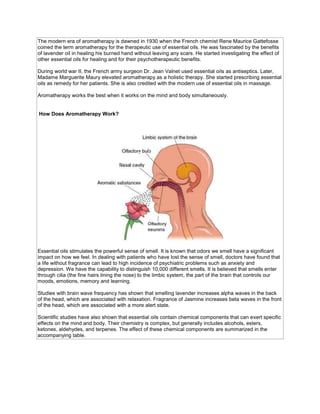
. It is a holistic treatment of caring for the body with pleasant smelling botanical oils such as rose, lemon, lavender and peppermint. The essential oils are added to the bath or massaged into the skin, inhaled directly or diffused to scent an entire room. Aromatherapy is used for the relief of pain, care for the skin, alleviate tension and fatigue and invigorate the entire body. Essential oils can affect the mood, alleviate fatigue, reduce anxiety and promote relaxation. When inhaled, they work on the brain and nervous system through stimulation of the olfactory nerves.The essential oils are aromatic essences extracted from plants, flowers, trees, fruits, bark, grasses and seeds with distinctive therapeutic, psychological, and physiological properties, which improve and prevent illness. There are about 150 essential oils. Most of these oils have antiseptic properties; some are antiviral, anti-inflammatory, pain-relieving, antidepressant and expectorant.Other properties of the essential oils which are taken advantage of in aromatherapy are their stimulation, relaxation, digestion improvement, and diuretic properties.To get the maximum benefit from essential oils, it should be made from natural, pure raw materials. Synthetically made oils do not work.Aromatherapy is one of the fastest growing fields in alternative medicine. It is widely used at home, clinics and hospitals for a variety of applications such as pain relief for women in labor pain, relieving pain caused by the side effects of the chemotherapy undergone by the cancer patients, and rehabilitation of cardiac patients.Aromatherapy is already slowly getting into the mainstream. In Japan, engineers are incorporating aroma systems into new buildings. In one such application, the scent of lavender and rosemary is pumped into the customer area to calm down the waiting customers, while the perfumes from lemon and eucalyptus are used in the bank teller counters to keep the staff alert.The Science of ScentAromatherapy works with your sense of smell and when used for medicinal purposes, when essential oils are absorbed into the bloodstream.When you inhale, scent is picked up by your olfactory receptors and transmitted to your brain's limbic system, which is connected to memory and emotion. That's why coming across a scent from your childhood-cotton candy, for example-takes you straight back to the first time you went to the county fair.Aromatherapy works on the same principle. Different essential oils have different properties-some calm and relax, while others stimulate and awaken-and may be used separately or in combination to bring about the desired effect. When aromatherapy is used topically, like in aromatherapy massage, the oils are absorbed through the skin. History of AromatherapyAromatherapy had been around for 6000 years or more. The Greeks, Romans, and ancient Egyptians all used aromatherapy oils. The Egyptian physician Imhotep recommended fragrant oils for bathing, massage, and for embalming their dead nearly 6000 years ago. Imhotep is the Egyptian god of medicine and healing. Hippocrates, the father of modern medicine, used aromatherapy baths and scented massage. He used aromatic fumigations to rid Athens of the plague.The modern era of aromatherapy is dawned in 1930 when the French chemist Rene Maurice Gattefosse coined the term aromatherapy for the therapeutic use of essential oils. He was fascinated by the benefits of lavender oil in healing his burned hand without leaving any scars. He started investigating the effect of other essential oils for healing and for their psychotherapeutic benefits.During world war II, the French army surgeon Dr. Jean Valnet used essential oils as antiseptics. Later, Madame Marguerite Maury elevated aromatherapy as a holistic therapy. She started prescribing essential oils as remedy for her patients. She is also credited with the modern use of essential oils in massage.Aromatherapy works the best when it works on the mind and body simultaneously.   How Does Aromatherapy Work?   Essential oils stimulates the powerful sense of smell. It is known that odors we smell have a significant impact on how we feel. In dealing with patients who have lost the sense of smell, doctors have found that a life without fragrance can lead to high incidence of psychiatric problems such as anxiety and depression. We have the capability to distinguish 10,000 different smells. It is believed that smells enter through cilia (the fine hairs lining the nose) to the limbic system, the part of the brain that controls our moods, emotions, memory and learning.Studies with brain wave frequency has shown that smelling lavender increases alpha waves in the back of the head, which are associated with relaxation. Fragrance of Jasmine increases beta waves in the front of the head, which are associated with a more alert state.Scientific studies have also shown that essential oils contain chemical components that can exert specific effects on the mind and body. Their chemistry is complex, but generally includes alcohols, esters, ketones, aldehydes, and terpenes. The effect of these chemical components are summarized in the accompanying table.<br />
How it works

How it works

  • 1.
     Aromatherapy means \" treatmentusing scents\" . It is a holistic treatment of caring for the body with pleasant smelling botanical oils such as rose, lemon, lavender and peppermint. The essential oils are added to the bath or massaged into the skin, inhaled directly or diffused to scent an entire room. Aromatherapy is used for the relief of pain, care for the skin, alleviate tension and fatigue and invigorate the entire body. Essential oils can affect the mood, alleviate fatigue, reduce anxiety and promote relaxation. When inhaled, they work on the brain and nervous system through stimulation of the olfactory nerves.The essential oils are aromatic essences extracted from plants, flowers, trees, fruits, bark, grasses and seeds with distinctive therapeutic, psychological, and physiological properties, which improve and prevent illness. There are about 150 essential oils. Most of these oils have antiseptic properties; some are antiviral, anti-inflammatory, pain-relieving, antidepressant and expectorant.Other properties of the essential oils which are taken advantage of in aromatherapy are their stimulation, relaxation, digestion improvement, and diuretic properties.To get the maximum benefit from essential oils, it should be made from natural, pure raw materials. Synthetically made oils do not work.Aromatherapy is one of the fastest growing fields in alternative medicine. It is widely used at home, clinics and hospitals for a variety of applications such as pain relief for women in labor pain, relieving pain caused by the side effects of the chemotherapy undergone by the cancer patients, and rehabilitation of cardiac patients.Aromatherapy is already slowly getting into the mainstream. In Japan, engineers are incorporating aroma systems into new buildings. In one such application, the scent of lavender and rosemary is pumped into the customer area to calm down the waiting customers, while the perfumes from lemon and eucalyptus are used in the bank teller counters to keep the staff alert.The Science of ScentAromatherapy works with your sense of smell and when used for medicinal purposes, when essential oils are absorbed into the bloodstream.When you inhale, scent is picked up by your olfactory receptors and transmitted to your brain's limbic system, which is connected to memory and emotion. That's why coming across a scent from your childhood-cotton candy, for example-takes you straight back to the first time you went to the county fair.Aromatherapy works on the same principle. Different essential oils have different properties-some calm and relax, while others stimulate and awaken-and may be used separately or in combination to bring about the desired effect. When aromatherapy is used topically, like in aromatherapy massage, the oils are absorbed through the skin. History of AromatherapyAromatherapy had been around for 6000 years or more. The Greeks, Romans, and ancient Egyptians all used aromatherapy oils. The Egyptian physician Imhotep recommended fragrant oils for bathing, massage, and for embalming their dead nearly 6000 years ago. Imhotep is the Egyptian god of medicine and healing. Hippocrates, the father of modern medicine, used aromatherapy baths and scented massage. He used aromatic fumigations to rid Athens of the plague.The modern era of aromatherapy is dawned in 1930 when the French chemist Rene Maurice Gattefosse coined the term aromatherapy for the therapeutic use of essential oils. He was fascinated by the benefits of lavender oil in healing his burned hand without leaving any scars. He started investigating the effect of other essential oils for healing and for their psychotherapeutic benefits.During world war II, the French army surgeon Dr. Jean Valnet used essential oils as antiseptics. Later, Madame Marguerite Maury elevated aromatherapy as a holistic therapy. She started prescribing essential oils as remedy for her patients. She is also credited with the modern use of essential oils in massage.Aromatherapy works the best when it works on the mind and body simultaneously.   How Does Aromatherapy Work?   Essential oils stimulates the powerful sense of smell. It is known that odors we smell have a significant impact on how we feel. In dealing with patients who have lost the sense of smell, doctors have found that a life without fragrance can lead to high incidence of psychiatric problems such as anxiety and depression. We have the capability to distinguish 10,000 different smells. It is believed that smells enter through cilia (the fine hairs lining the nose) to the limbic system, the part of the brain that controls our moods, emotions, memory and learning.Studies with brain wave frequency has shown that smelling lavender increases alpha waves in the back of the head, which are associated with relaxation. Fragrance of Jasmine increases beta waves in the front of the head, which are associated with a more alert state.Scientific studies have also shown that essential oils contain chemical components that can exert specific effects on the mind and body. Their chemistry is complex, but generally includes alcohols, esters, ketones, aldehydes, and terpenes. The effect of these chemical components are summarized in the accompanying table.<br />