SITE
ANALYSIS
A
summary
of
Edward
T.
White,
Site
Analysis
Diagramming
Information
For
Architectural
Design
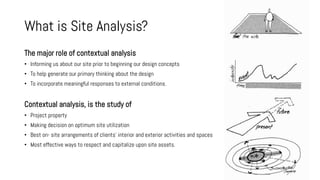
What is Site Analysis?
The major role of contextual analysis
• Informing us about our site prior to beginning our design concepts
• To help generate our primary thinking about the design
• To incorporate meaningful responses to external conditions.
Contextual analysis, is the study of
• Project property
• Making decision on optimum site utilization
• Best on- site arrangements of clients' interior and exterior activities and spaces
• Most effective ways to respect and capitalize upon site assets.
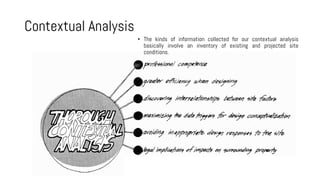
Contextual Analysis
• The kinds of information collected for our contextual analysis
basically involve an inventory of existing and projected site
conditions.
Information Needed
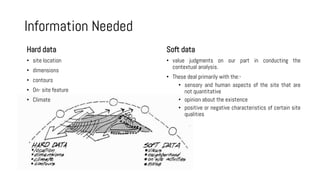
Hard data
• site location
• dimensions
• contours
• On- site feature
• Climate
Soft data
• value judgments on our part in conducting the
contextual analysis.
• These deal primarily with the:-
• sensory and human aspects of the site that are
not quantitative
• opinion about the existence
• positive or negative characteristics of certain site
qualities
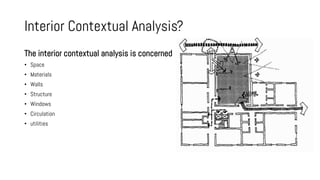
Interior Contextual Analysis?
The interior contextual analysis is concerned
• Space
• Materials
• Walls
• Structure
• Windows
• Circulation
• utilities
LOCATION
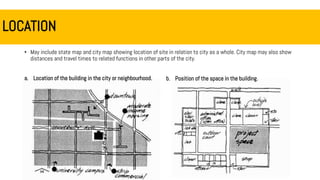
• May include state map and city map showing location of site in relation to city as a whole. City map may also show
distances and travel times to related functions in other parts of the city.
a. Location of the building in the city or neighbourhood. b. Position of the space in the building.
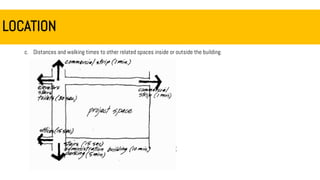
c. Distances and walking times to other related spaces inside or outside the building.
LOCATION
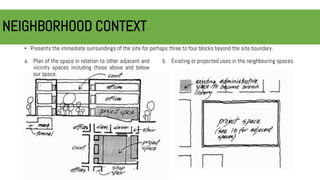
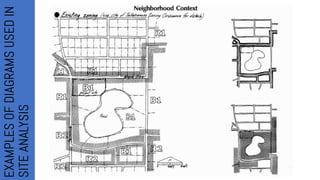
NEIGHBORHOOD CONTEXT
• Presents the immediate surroundings of the site for perhaps three to four blocks beyond the site boundary.
a. Plan of the space in relation to other adjacent and
vicinity spaces including those above and below
our space.
b. Existing or projected uses in the neighbouring spaces.
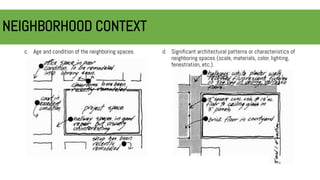
c. Age and condition of the neighboring spaces. d. Significant architectural patterns or characteristics of
neighboring spaces (scale, materials, color, lighting,
fenestration, etc.).
NEIGHBORHOOD CONTEXT
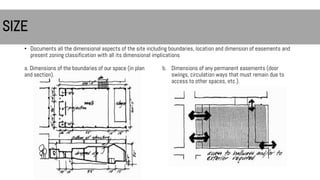
SIZE
• Documents all the dimensional aspects of the site including boundaries, location and dimension of easements and
present zoning classification with all its dimensional implications
a. Dimensions of the boundaries of our space (in plan
and section).
b. Dimensions of any permanent easements (door
swings, circulation ways that must remain due to
access to other spaces, etc.).
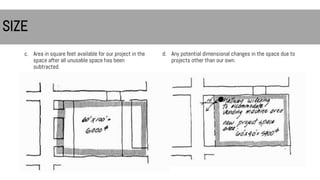
c. Area in square feet available for our project in the
space after all unusable space has been
subtracted.
d. Any potential dimensional changes in the space due to
projects other than our own.
SIZE
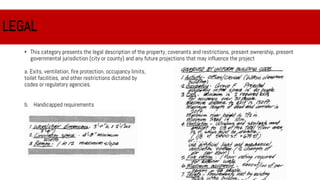
LEGAL
• This category presents the legal description of the property, covenants and restrictions, present ownership, present
governmental jurisdiction (city or county) and any future projections that may influence the project
a. Exits, ventilation, fire protection, occupancy limits,
toilet facilities, and other restrictions dictated by
codes or regulatory agencies.
b. Handicapped requirements
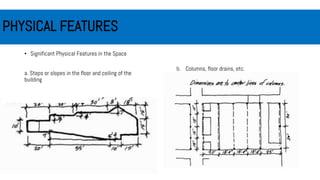
PHYSICAL FEATURES
• Significant Physical Features in the Space
a. Steps or slopes in the floor and ceiling of the
building
b. Columns, floor drains, etc.
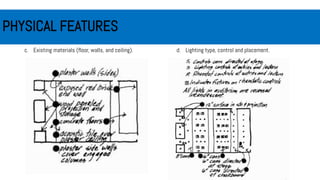
c. Existing materials (floor, walls, and ceiling). d. Lighting type, control and placement.
PHYSICAL FEATURES
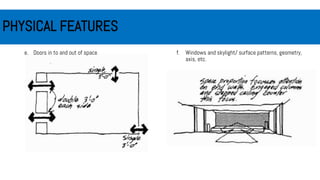
e. Doors in to and out of space f. Windows and skylight/ surface patterns, geometry,
axis, etc.
PHYSICAL FEATURES
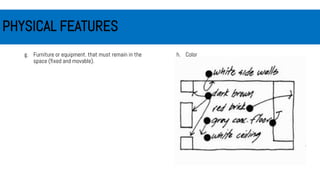
g. Furniture or equipment. that must remain in the
space (fixed and movable).
h. Color
PHYSICAL FEATURES
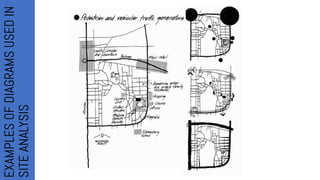
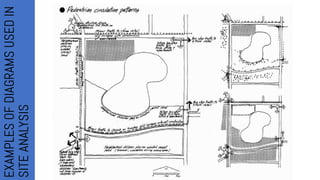
CIRCULATION
• Presents all vehicular and pedestrian movement patterns on and around the site. Data includes duration and peak
loads for surrounding vehicular traffic and pedestrian movement, bus stops, site access edges, traffic generators,
service truck access and intermittent traffic.
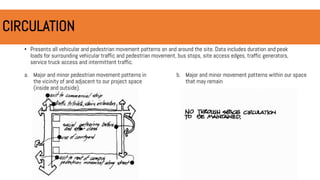
a. Major and minor pedestrian movement patterns in
the vicinity of and adjacent to our project space
(inside and outside).
b. Major and minor movement patterns within our space
that may remain
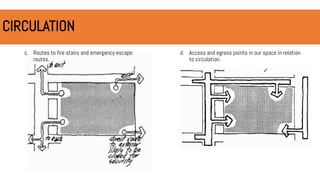
c. Routes to fire stairs and emergency escape
routes.
d. Access and egress points in our space in relation
to circulation.
CIRCULATION
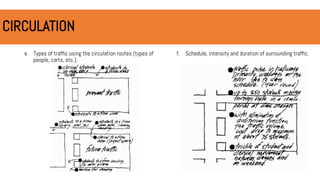
e. Types of traffic using the circulation routes (types of
people, carts, etc.).
f. Schedule, intensity and duration of surrounding traffic.
CIRCULATION
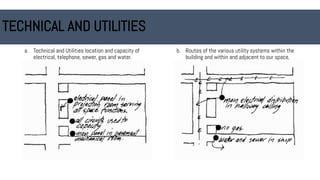
TECHNICAL AND UTILITIES
a. Technical and Utilities location and capacity of
electrical, telephone, sewer, gas and water.
b. Routes of the various utility systems within the
building and within and adjacent to our space,
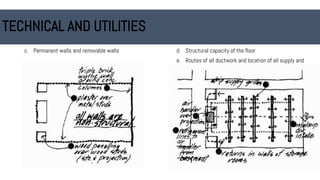
TECHNICAL AND UTILITIES
c. Permanent walls and removable walls d. Structural capacity of the floor
e. Routes of all ductwork and location of all supply and
return grills
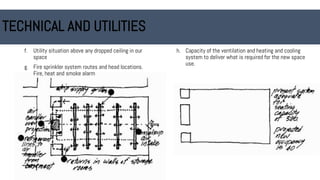
TECHNICAL AND UTILITIES
f. Utility situation above any dropped ceiling in our
space
g. Fire sprinkler system routes and head locations.
Fire, heat and smoke alarm
h. Capacity of the ventilation and heating and cooling
system to deliver what is required for the new space
use.
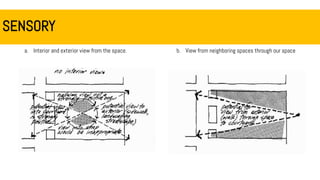
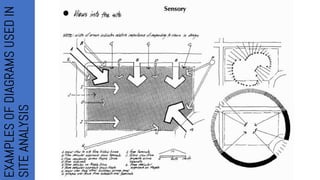
SENSORY
a. Interior and exterior view from the space. b. View from neighboring spaces through our space
SENSORY
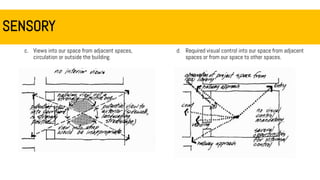
c. Views into our space from adjacent spaces,
circulation or outside the building.
d. Required visual control into our space from adjacent
spaces or from our space to other spaces.
SENSORY
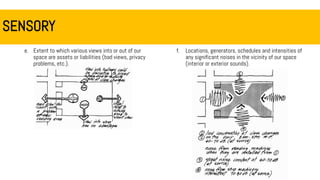
e. Extent to which various views into or out of our
space are assets or liabilities (bad views, privacy
problems, etc.).
f. Locations, generators, schedules and intensities of
any significant noises in the vicinity of our space
(interior or exterior sounds).
SENSORY
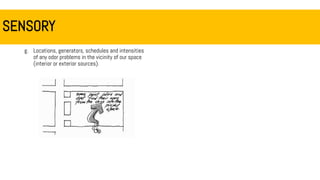
g. Locations, generators, schedules and intensities
of any odor problems in the vicinity of our space
(interior or exterior sources).
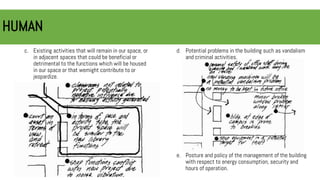
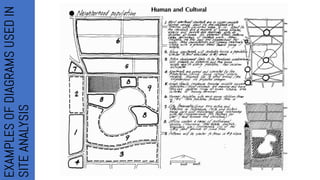
HUMAN
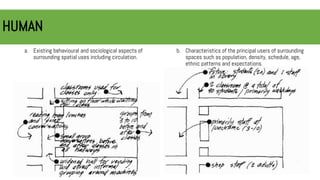
a. Existing behavioural and sociological aspects of
surrounding spatial uses including circulation.
b. Characteristics of the principal users of surrounding
spaces such as population, density, schedule, age,
ethnic patterns and expectations.
d. Potential problems in the building such as vandalism
and criminal activities.
e. Posture and policy of the management of the building
with respect to energy consumption, security and
hours of operation.
HUMAN
c. Existing activities that will remain in our space, or
in adjacent spaces that could be beneficial or
detrimental to the functions which will be housed
in our space or that wemight contribute to or
jeopardize.
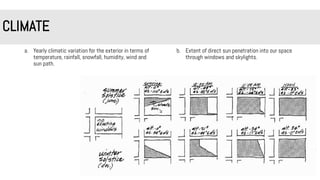
b. Extent of direct sun penetration into our space
through windows and skylights.
CLIMATE
a. Yearly climatic variation for the exterior in terms of
temperature, rainfall, snowfall, humidity, wind and
sun path.
EXAMPLES
OF
DIAGRAMS
USED
IN
SITE
ANALYSIS
EXAMPLES
OF
DIAGRAMS
USED
IN
SITE
ANALYSIS
EXAMPLES
OF
DIAGRAMS
USED
IN
SITE
ANALYSIS
EXAMPLES
OF
DIAGRAMS
USED
IN
SITE
ANALYSIS
EXAMPLES
OF
DIAGRAMS
USED
IN
SITE
ANALYSIS
EXAMPLES
OF
DIAGRAMS
USED
IN
SITE
ANALYSIS
EXAMPLES
OF
DIAGRAMS
USED
IN
SITE
ANALYSIS
EXAMPLES
OF
DIAGRAMS
USED
IN
SITE
ANALYSIS

SITE ANALYSIS (1).pdf

  • 1.
  • 2.
    What is SiteAnalysis? The major role of contextual analysis • Informing us about our site prior to beginning our design concepts • To help generate our primary thinking about the design • To incorporate meaningful responses to external conditions. Contextual analysis, is the study of • Project property • Making decision on optimum site utilization • Best on- site arrangements of clients' interior and exterior activities and spaces • Most effective ways to respect and capitalize upon site assets.
  • 3.
    Contextual Analysis • Thekinds of information collected for our contextual analysis basically involve an inventory of existing and projected site conditions.
  • 4.
    Information Needed Hard data •site location • dimensions • contours • On- site feature • Climate Soft data • value judgments on our part in conducting the contextual analysis. • These deal primarily with the:- • sensory and human aspects of the site that are not quantitative • opinion about the existence • positive or negative characteristics of certain site qualities
  • 5.
    Interior Contextual Analysis? Theinterior contextual analysis is concerned • Space • Materials • Walls • Structure • Windows • Circulation • utilities
  • 6.
    LOCATION • May includestate map and city map showing location of site in relation to city as a whole. City map may also show distances and travel times to related functions in other parts of the city. a. Location of the building in the city or neighbourhood. b. Position of the space in the building.
  • 7.
    c. Distances andwalking times to other related spaces inside or outside the building. LOCATION
  • 8.
    NEIGHBORHOOD CONTEXT • Presentsthe immediate surroundings of the site for perhaps three to four blocks beyond the site boundary. a. Plan of the space in relation to other adjacent and vicinity spaces including those above and below our space. b. Existing or projected uses in the neighbouring spaces.
  • 9.
    c. Age andcondition of the neighboring spaces. d. Significant architectural patterns or characteristics of neighboring spaces (scale, materials, color, lighting, fenestration, etc.). NEIGHBORHOOD CONTEXT
  • 10.
    SIZE • Documents allthe dimensional aspects of the site including boundaries, location and dimension of easements and present zoning classification with all its dimensional implications a. Dimensions of the boundaries of our space (in plan and section). b. Dimensions of any permanent easements (door swings, circulation ways that must remain due to access to other spaces, etc.).
  • 11.
    c. Area insquare feet available for our project in the space after all unusable space has been subtracted. d. Any potential dimensional changes in the space due to projects other than our own. SIZE
  • 12.
    LEGAL • This categorypresents the legal description of the property, covenants and restrictions, present ownership, present governmental jurisdiction (city or county) and any future projections that may influence the project a. Exits, ventilation, fire protection, occupancy limits, toilet facilities, and other restrictions dictated by codes or regulatory agencies. b. Handicapped requirements
  • 13.
    PHYSICAL FEATURES • SignificantPhysical Features in the Space a. Steps or slopes in the floor and ceiling of the building b. Columns, floor drains, etc.
  • 14.
    c. Existing materials(floor, walls, and ceiling). d. Lighting type, control and placement. PHYSICAL FEATURES
  • 15.
    e. Doors into and out of space f. Windows and skylight/ surface patterns, geometry, axis, etc. PHYSICAL FEATURES
  • 16.
    g. Furniture orequipment. that must remain in the space (fixed and movable). h. Color PHYSICAL FEATURES
  • 17.
    CIRCULATION • Presents allvehicular and pedestrian movement patterns on and around the site. Data includes duration and peak loads for surrounding vehicular traffic and pedestrian movement, bus stops, site access edges, traffic generators, service truck access and intermittent traffic. a. Major and minor pedestrian movement patterns in the vicinity of and adjacent to our project space (inside and outside). b. Major and minor movement patterns within our space that may remain
  • 18.
    c. Routes tofire stairs and emergency escape routes. d. Access and egress points in our space in relation to circulation. CIRCULATION
  • 19.
    e. Types oftraffic using the circulation routes (types of people, carts, etc.). f. Schedule, intensity and duration of surrounding traffic. CIRCULATION
  • 20.
    TECHNICAL AND UTILITIES a.Technical and Utilities location and capacity of electrical, telephone, sewer, gas and water. b. Routes of the various utility systems within the building and within and adjacent to our space,
  • 21.
    TECHNICAL AND UTILITIES c.Permanent walls and removable walls d. Structural capacity of the floor e. Routes of all ductwork and location of all supply and return grills
  • 22.
    TECHNICAL AND UTILITIES f.Utility situation above any dropped ceiling in our space g. Fire sprinkler system routes and head locations. Fire, heat and smoke alarm h. Capacity of the ventilation and heating and cooling system to deliver what is required for the new space use.
  • 23.
    SENSORY a. Interior andexterior view from the space. b. View from neighboring spaces through our space
  • 24.
    SENSORY c. Views intoour space from adjacent spaces, circulation or outside the building. d. Required visual control into our space from adjacent spaces or from our space to other spaces.
  • 25.
    SENSORY e. Extent towhich various views into or out of our space are assets or liabilities (bad views, privacy problems, etc.). f. Locations, generators, schedules and intensities of any significant noises in the vicinity of our space (interior or exterior sounds).
  • 26.
    SENSORY g. Locations, generators,schedules and intensities of any odor problems in the vicinity of our space (interior or exterior sources).
  • 27.
    HUMAN a. Existing behaviouraland sociological aspects of surrounding spatial uses including circulation. b. Characteristics of the principal users of surrounding spaces such as population, density, schedule, age, ethnic patterns and expectations.
  • 28.
    d. Potential problemsin the building such as vandalism and criminal activities. e. Posture and policy of the management of the building with respect to energy consumption, security and hours of operation. HUMAN c. Existing activities that will remain in our space, or in adjacent spaces that could be beneficial or detrimental to the functions which will be housed in our space or that wemight contribute to or jeopardize.
  • 29.
    b. Extent ofdirect sun penetration into our space through windows and skylights. CLIMATE a. Yearly climatic variation for the exterior in terms of temperature, rainfall, snowfall, humidity, wind and sun path.
  • 30.
  • 31.
  • 32.
  • 33.
  • 34.
  • 35.
  • 36.
  • 37.