


ASU – Ain Shams University
Faculty of Engineering
Department of Architectural Engineering
ARC 122: History & Theory of Architecture
Fall 2017
Instructor: Dr. Yasser Mahgoub
Lecture 3c - Design Methods
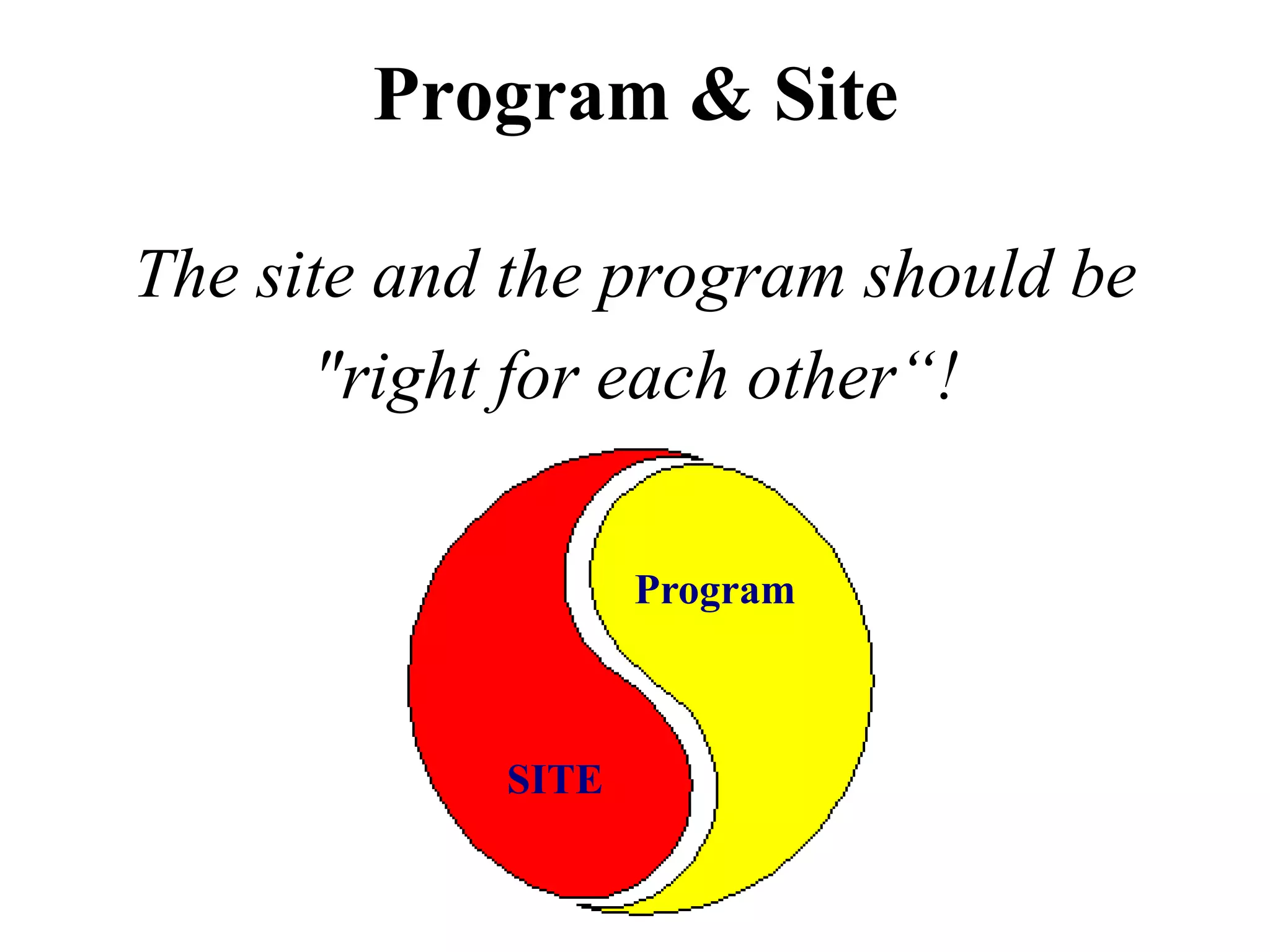
Program & Site
The site and the program should be
"right for each other“!
PROGRAM
SITE
Program
Relationships
Relationships
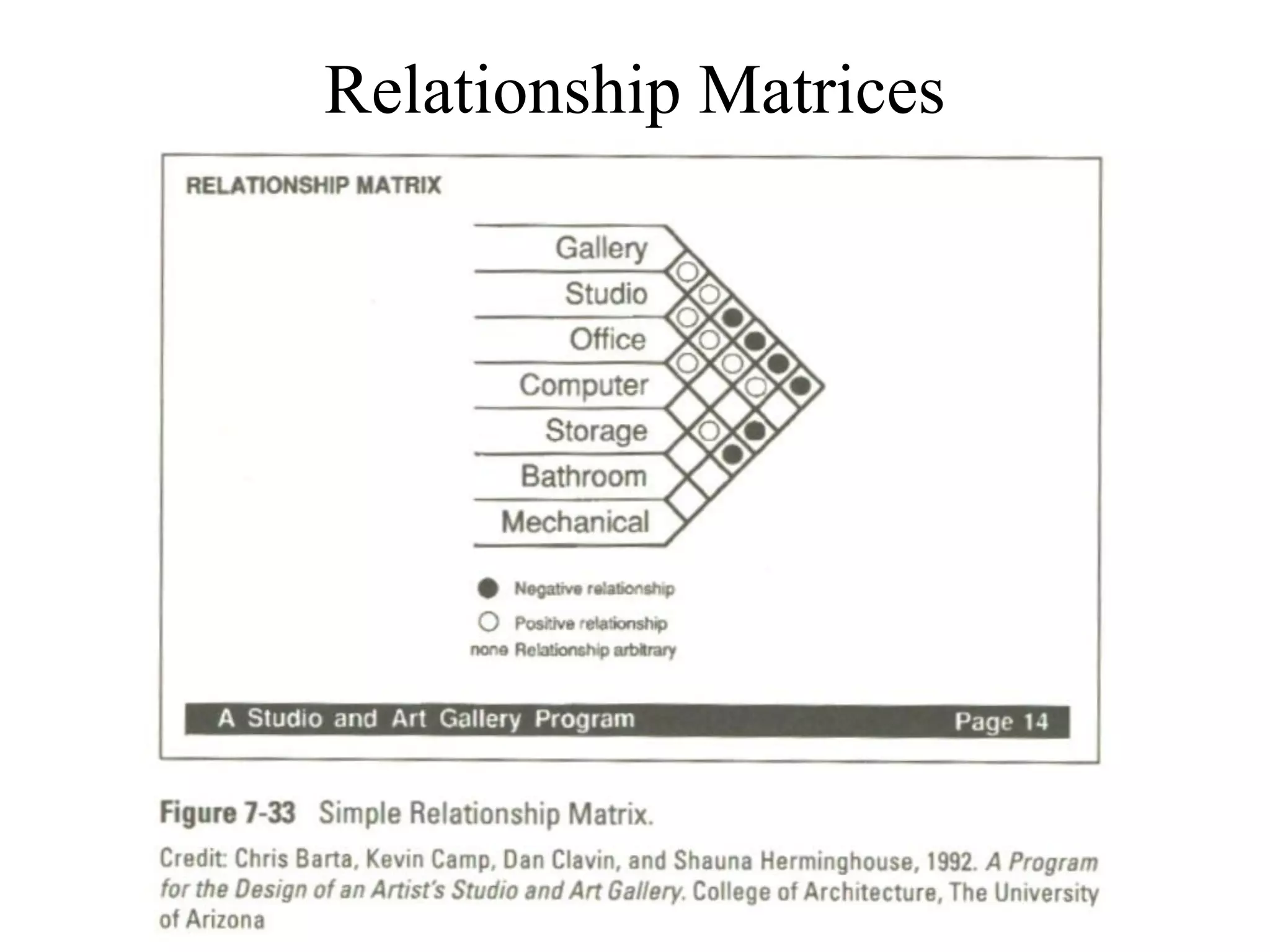
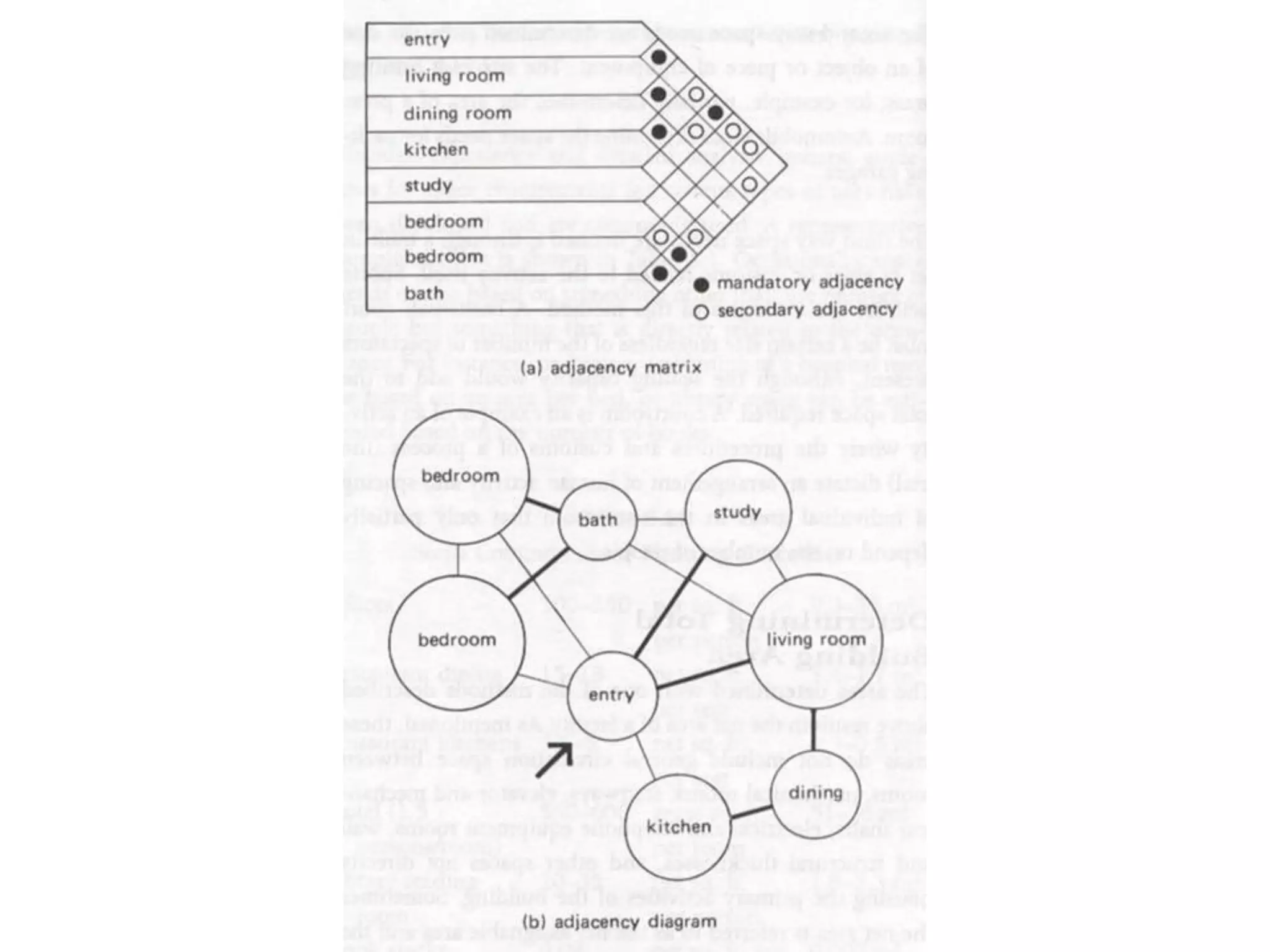
• Relationship Matrices
• Relationship Diagrams
Understanding relationships is a very
basic and important part of
architectural programming.
Relationships
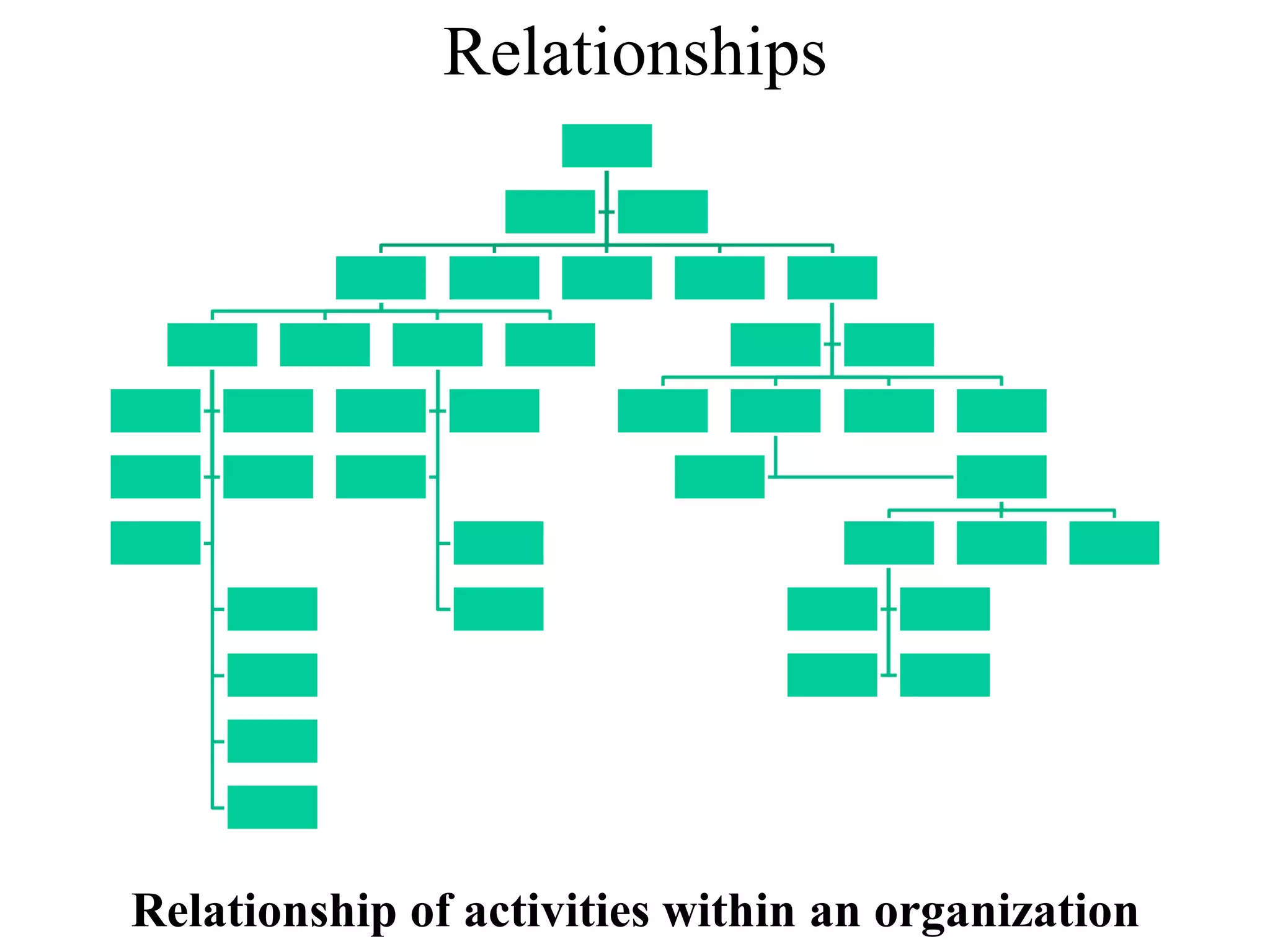
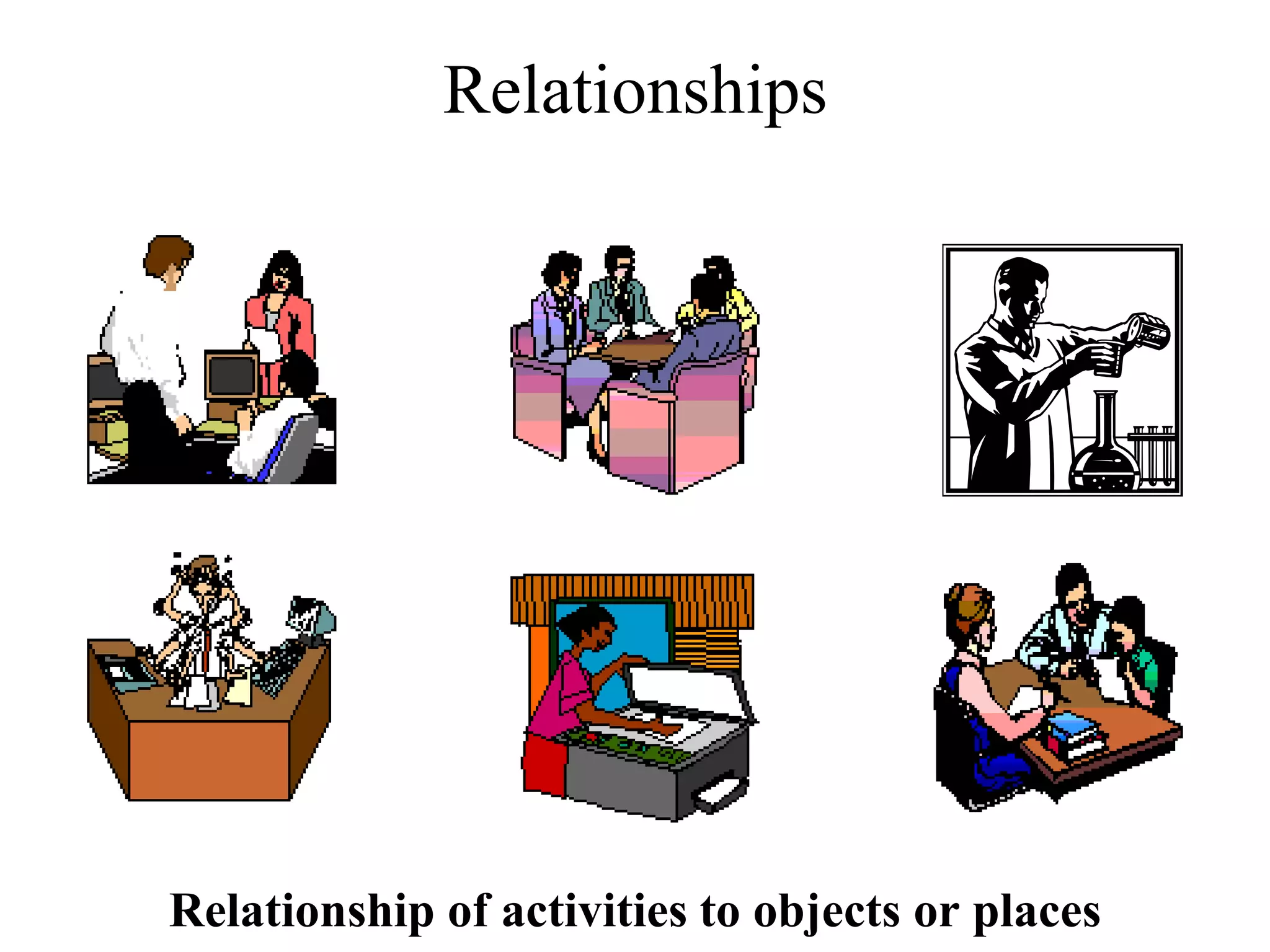
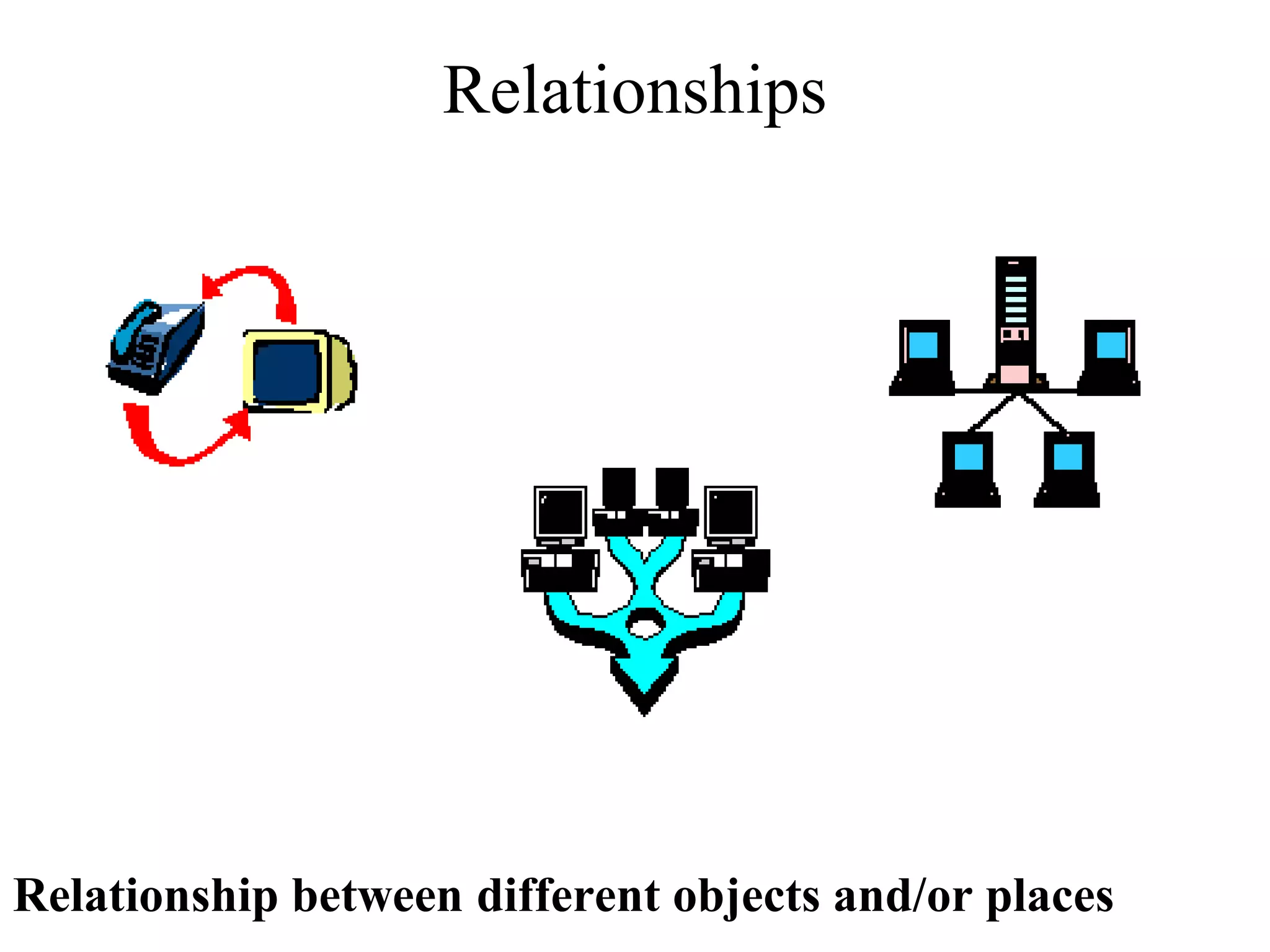
Three distinct levels:
1. Relationship of activities within an
organization.
2. Relationship of activities to objects or
places.
3. Relationship between different objects
and/or places.
Relationships
Relationship of activities within an organization
Relationships
Relationship of activities to objects or places
Relationships
Relationship between different objects and/or places
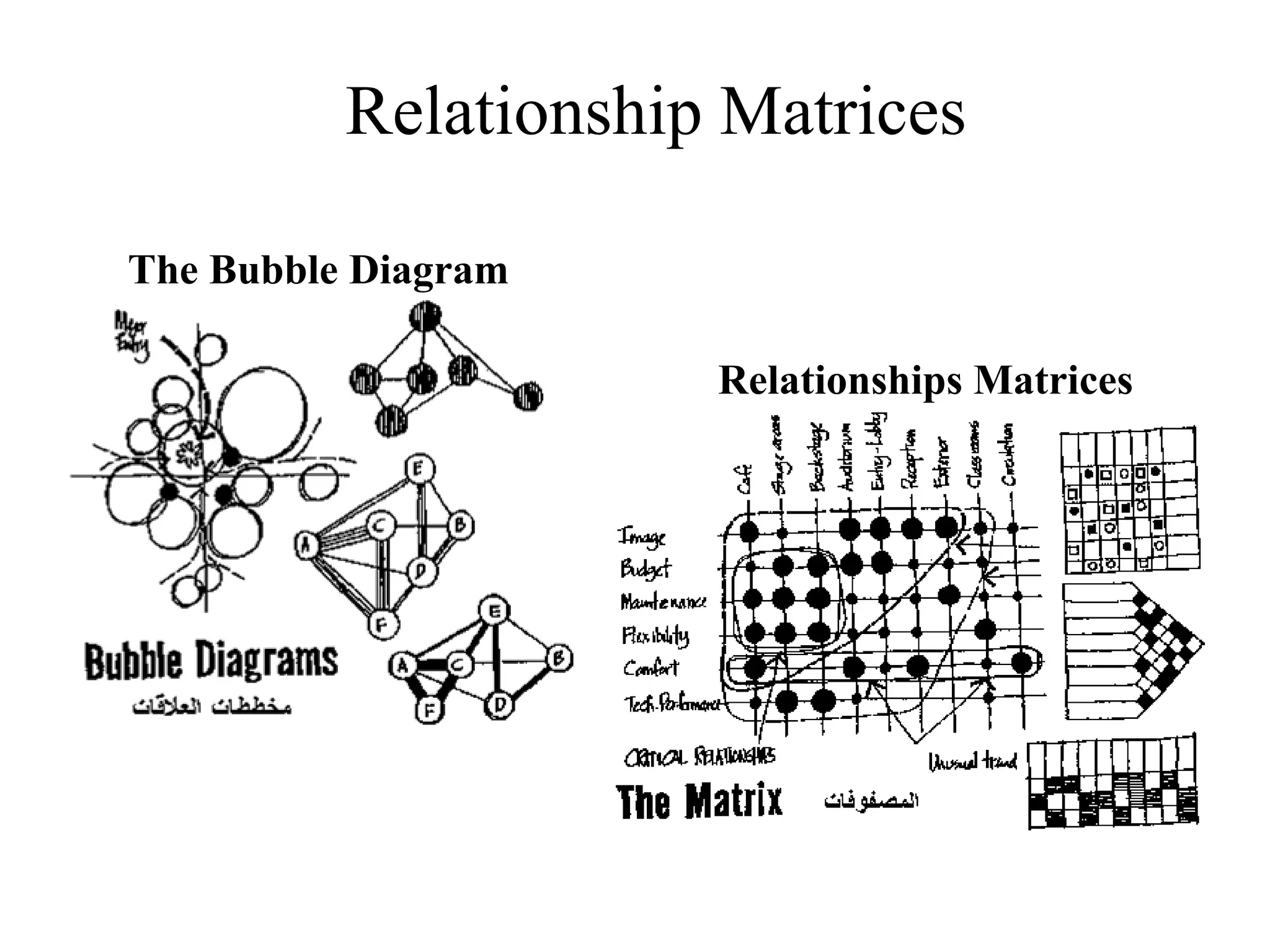
Relationship Matrices
The Bubble Diagram
Relationships Matrices
Relationship Matrices
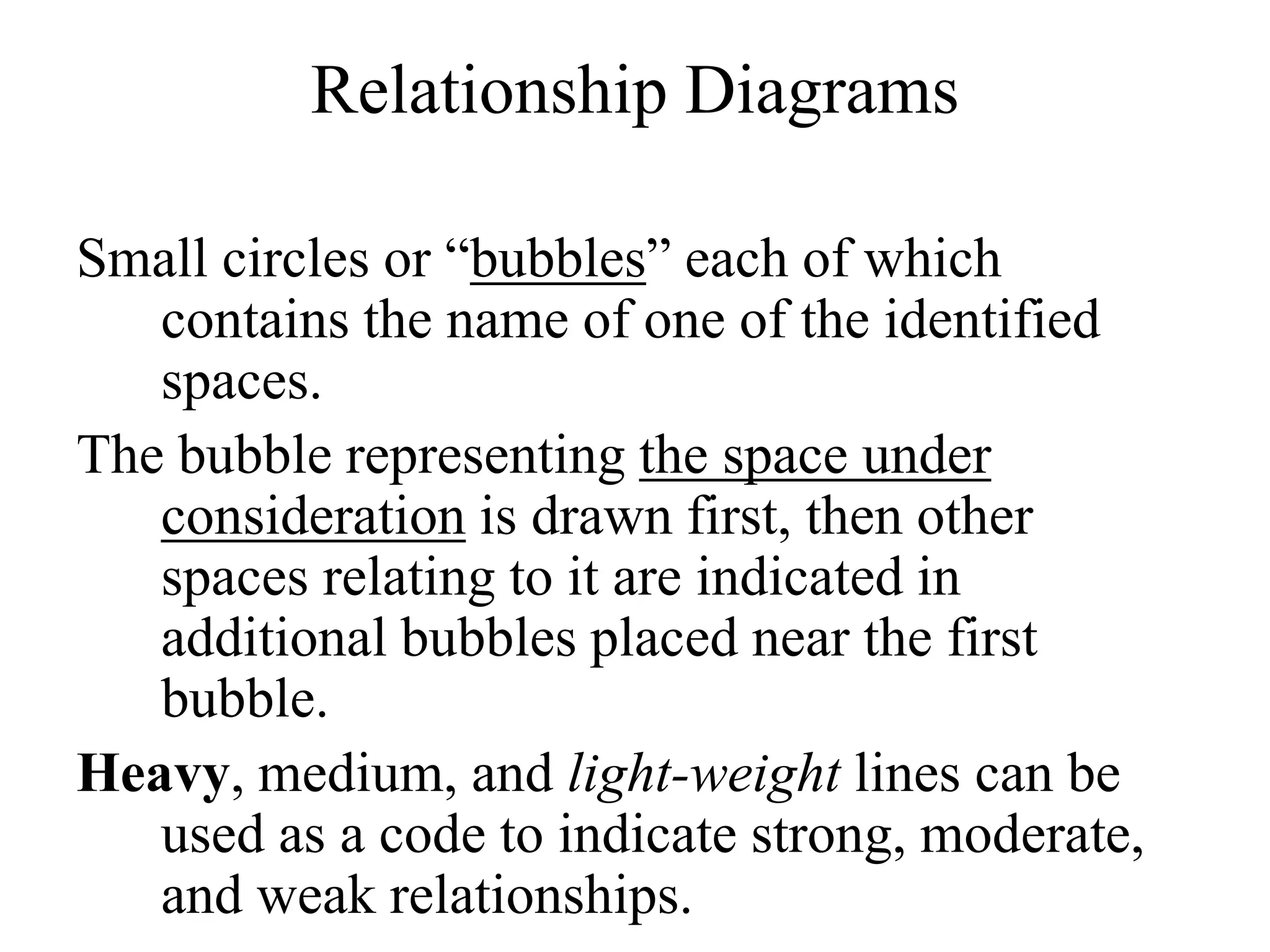
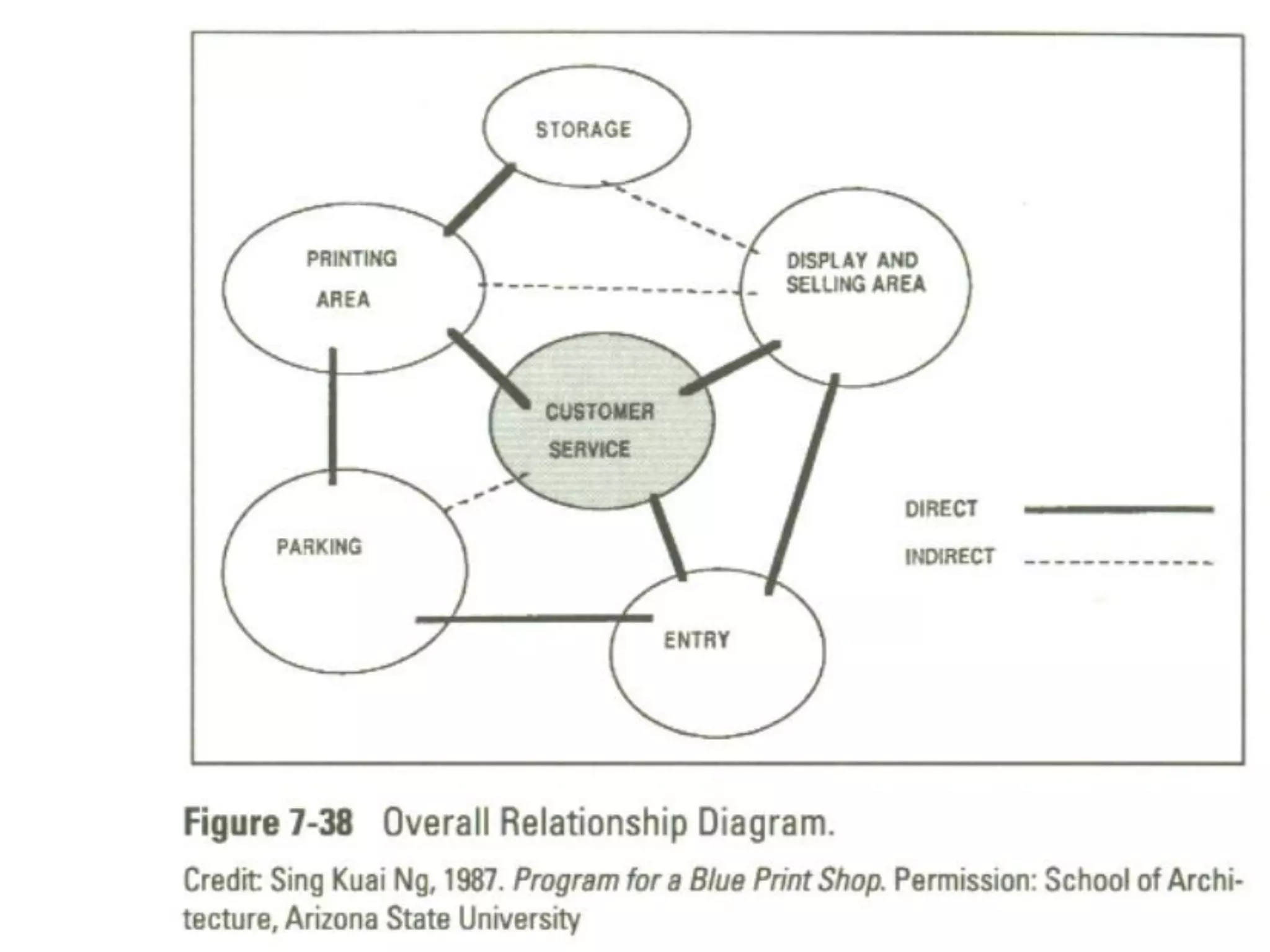
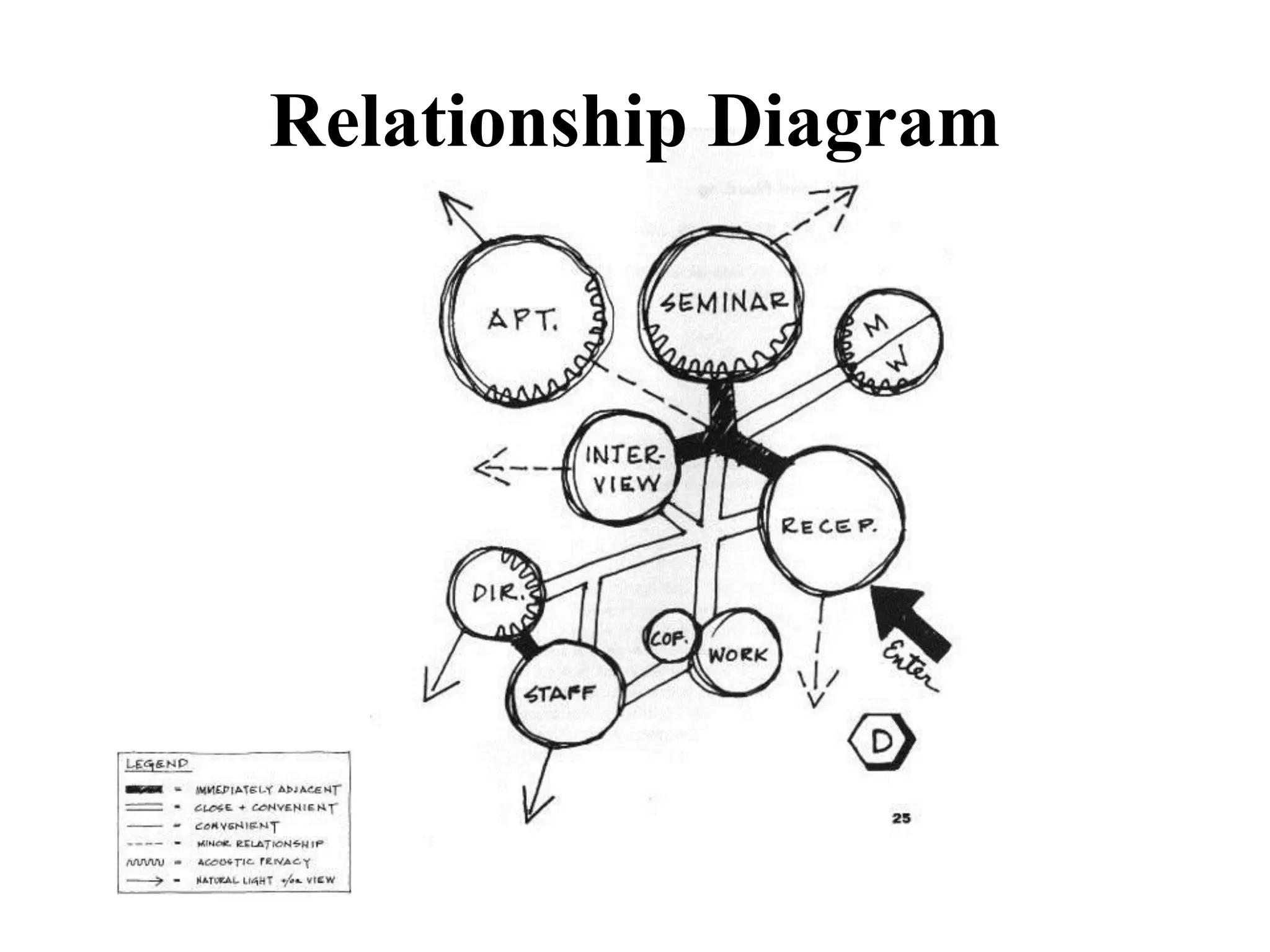
Relationship Diagrams
Small circles or “bubbles” each of which
contains the name of one of the identified
spaces.
The bubble representing the space under
consideration is drawn first, then other
spaces relating to it are indicated in
additional bubbles placed near the first
bubble.
Heavy, medium, and light-weight lines can be
used as a code to indicate strong, moderate,
and weak relationships.
Context
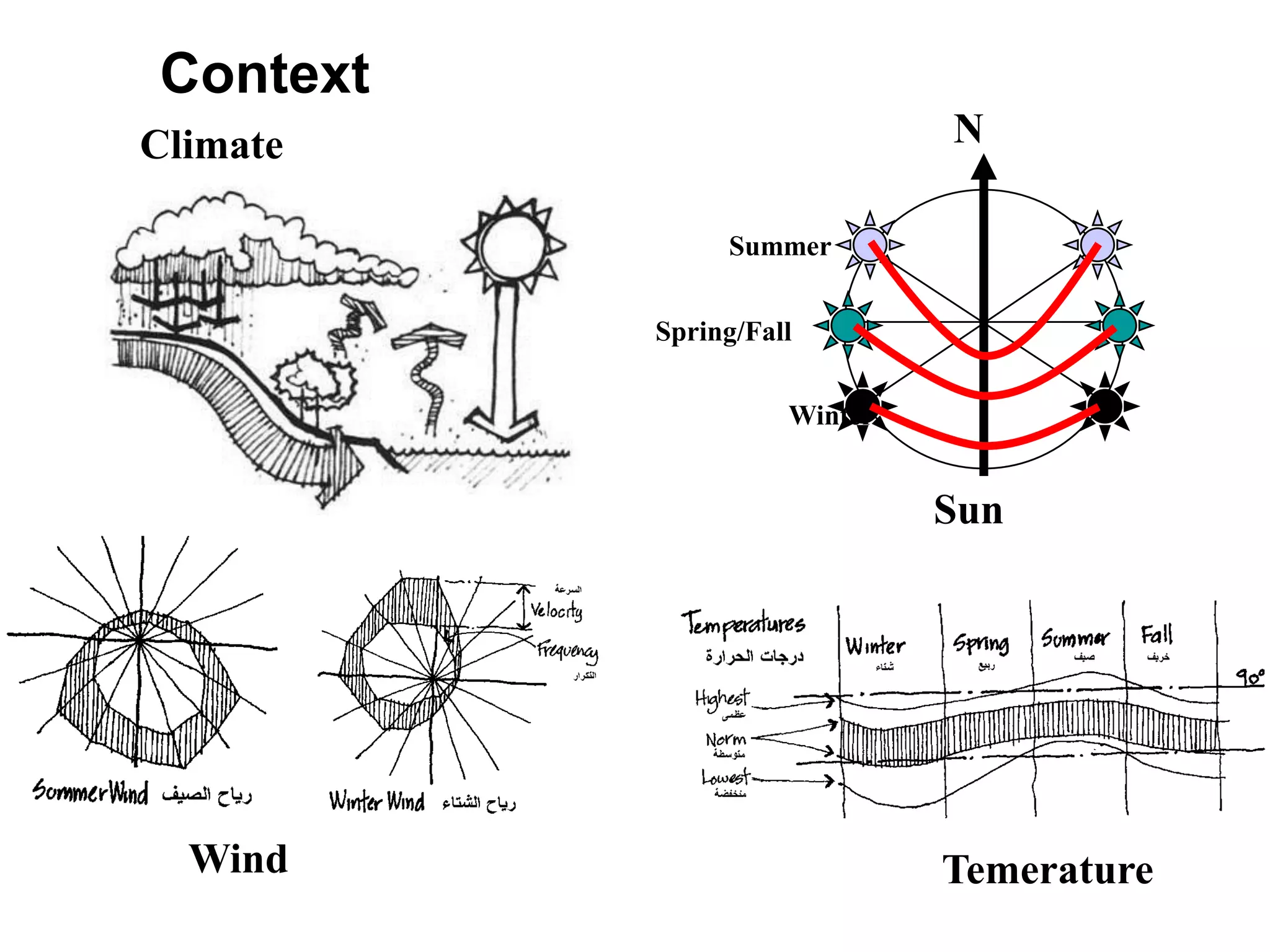
Climate
Context
N
Summer
Spring/Fall
Winter
Sun
Wind Temerature
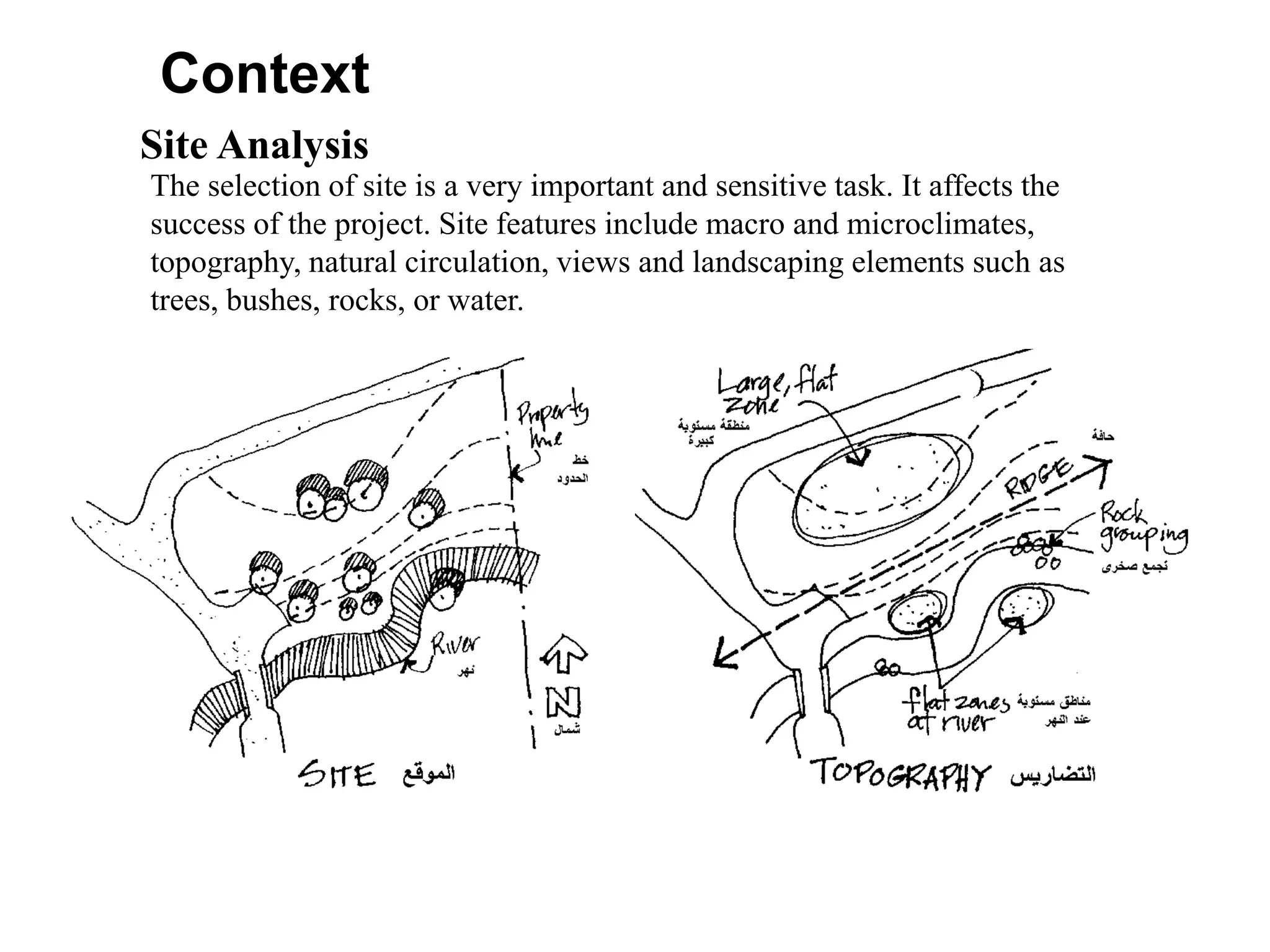
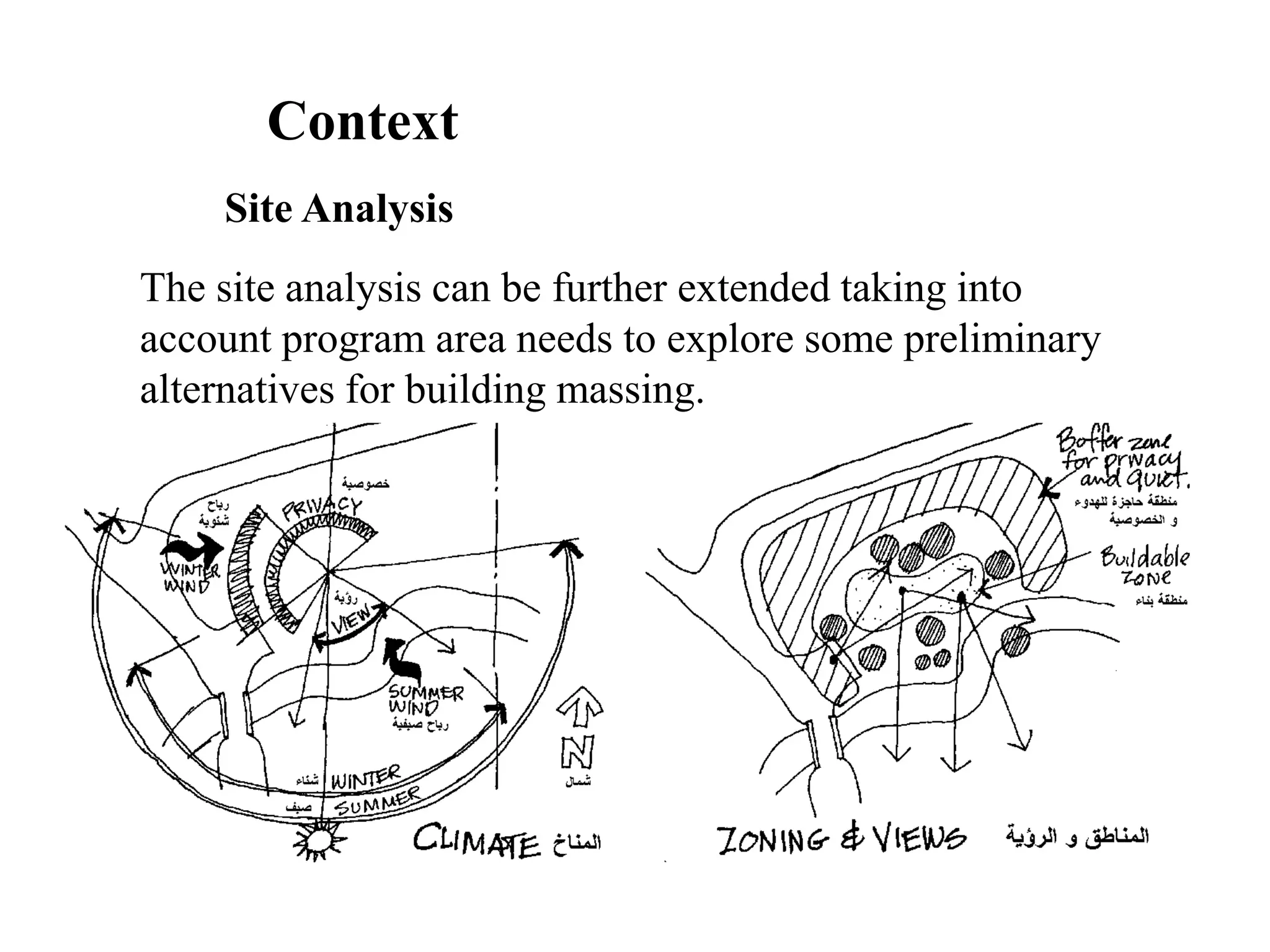
Site Analysis
The selection of site is a very important and sensitive task. It affects the
success of the project. Site features include macro and microclimates,
topography, natural circulation, views and landscaping elements such as
trees, bushes, rocks, or water.
Context
Context
Site Analysis
The site analysis can be further extended taking into
account program area needs to explore some preliminary
alternatives for building massing.
Form
Design phases of architectural design
• Site analysis is treated as distinct phase probably
because it involves on-site activity in real projects.
• In contrast to the pre-design stage, schematic design
phase is a problem solving stage in this phase.
• What is called „creative part‟ usually refers to the
schematic design phase where main concepts of
form and space are generated.
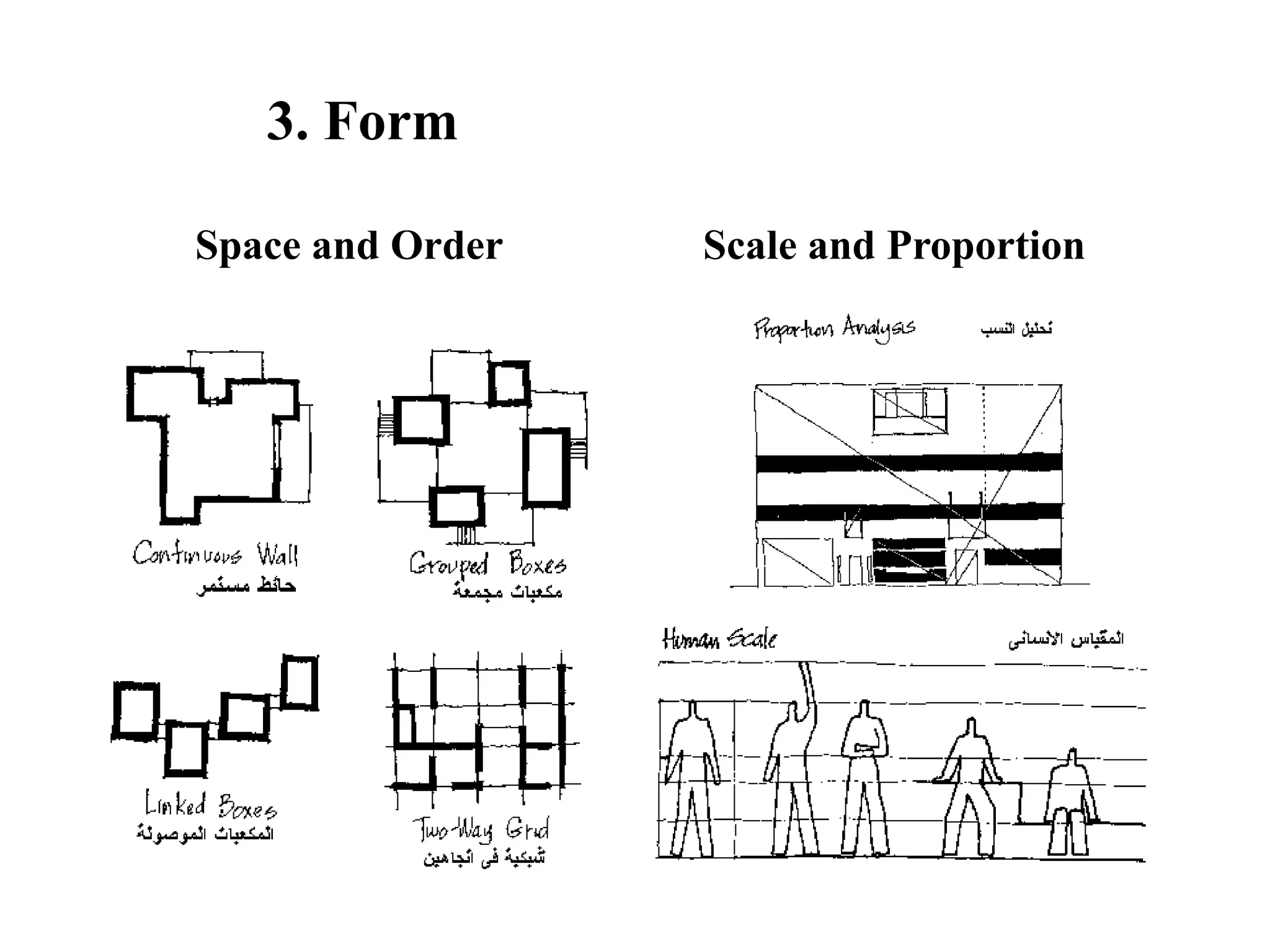
Space and Order
3. Form
Scale and Proportion
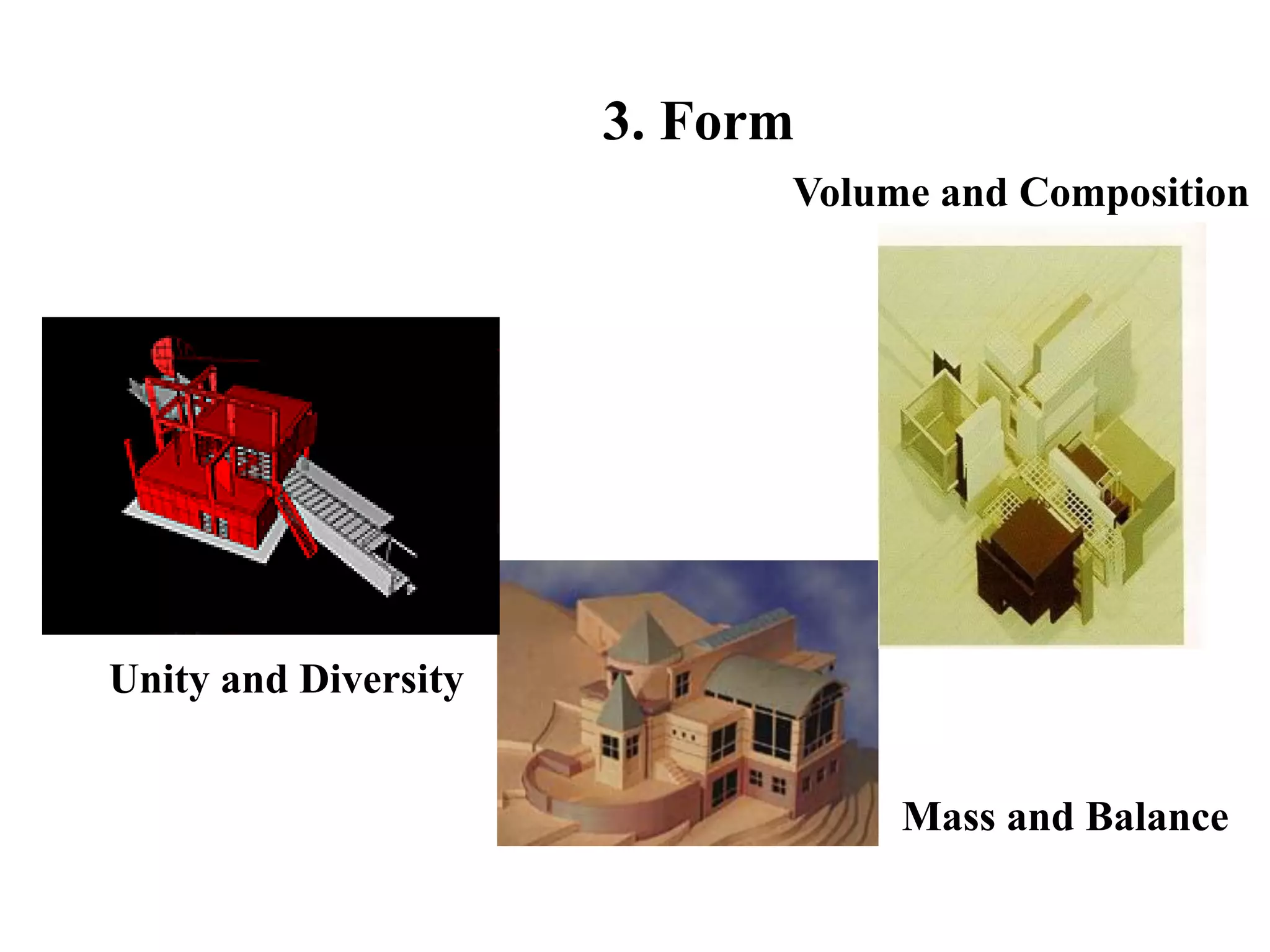
3. Form
Mass and Balance
Volume and Composition
Unity and Diversity
Programming Example
Programming Example
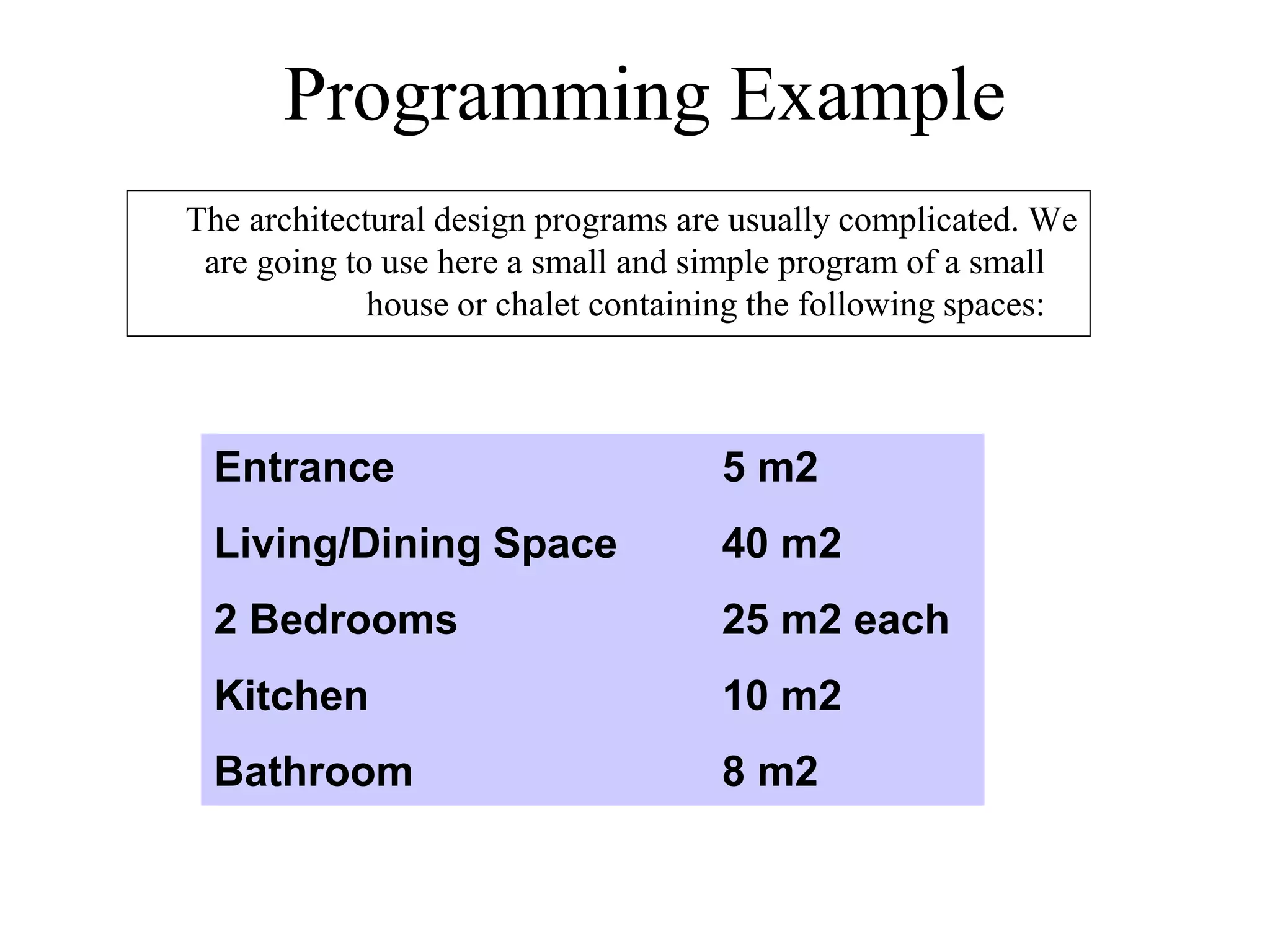
The architectural design programs are usually complicated. We
are going to use here a small and simple program of a small
house or chalet containing the following spaces:
Entrance 5 m2
Living/Dining Space 40 m2
2 Bedrooms 25 m2 each
Kitchen 10 m2
Bathroom 8 m2
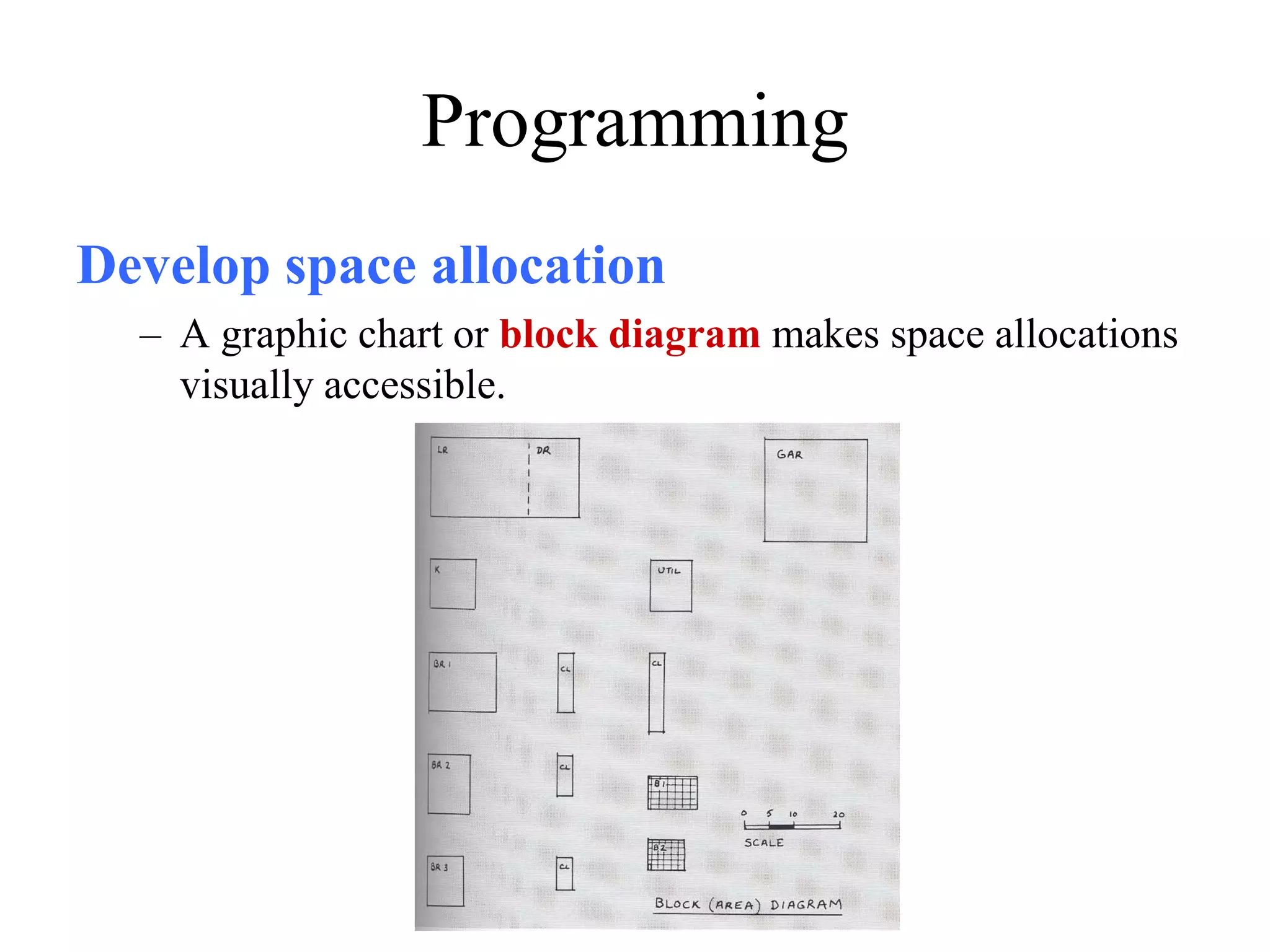
Develop space allocation
– A graphic chart or block diagram makes space allocations
visually accessible.
Programming
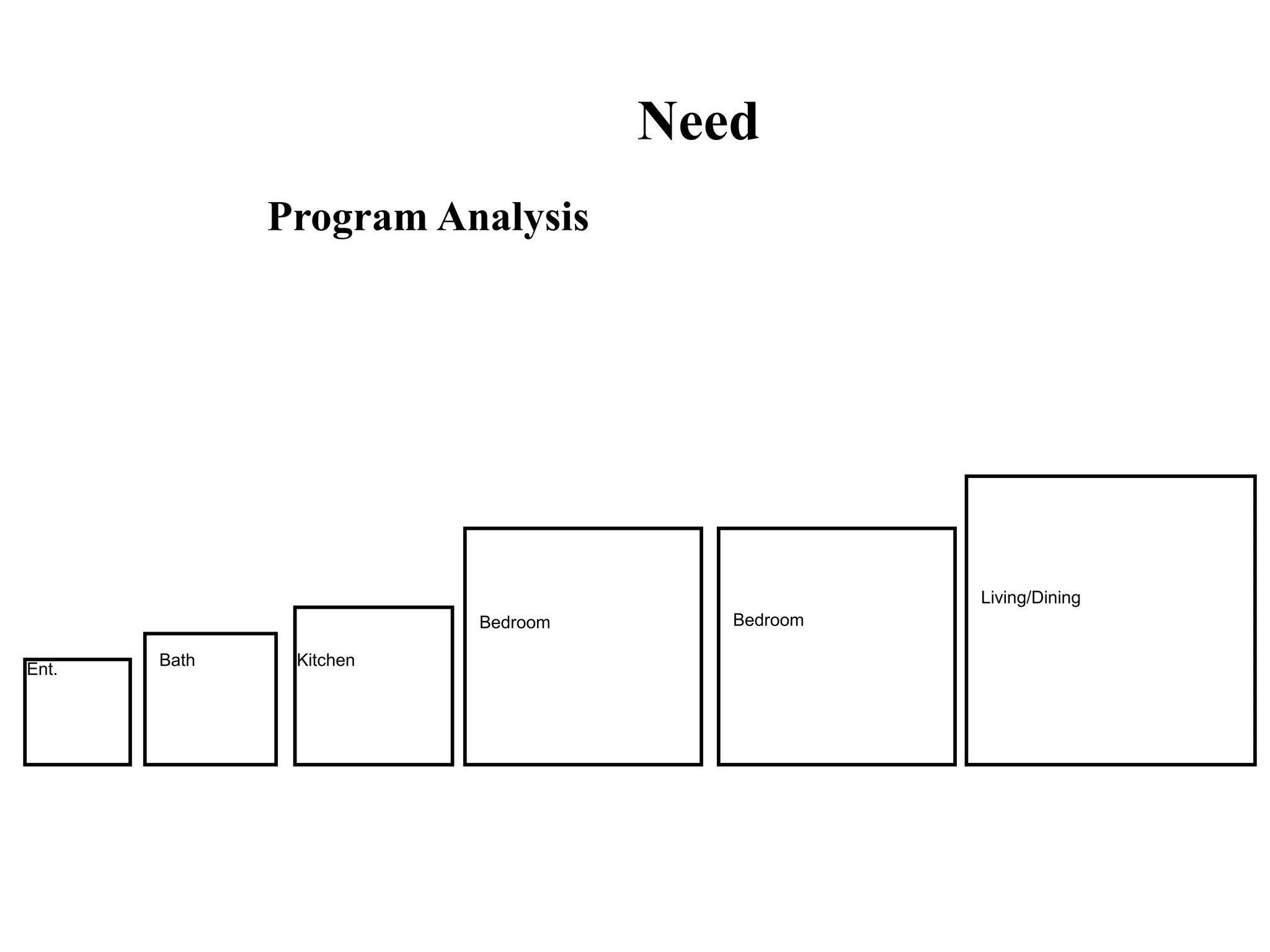
Program Analysis
Need
Ent.
Bedroom
Living/Dining
Bedroom
Bath Kitchen
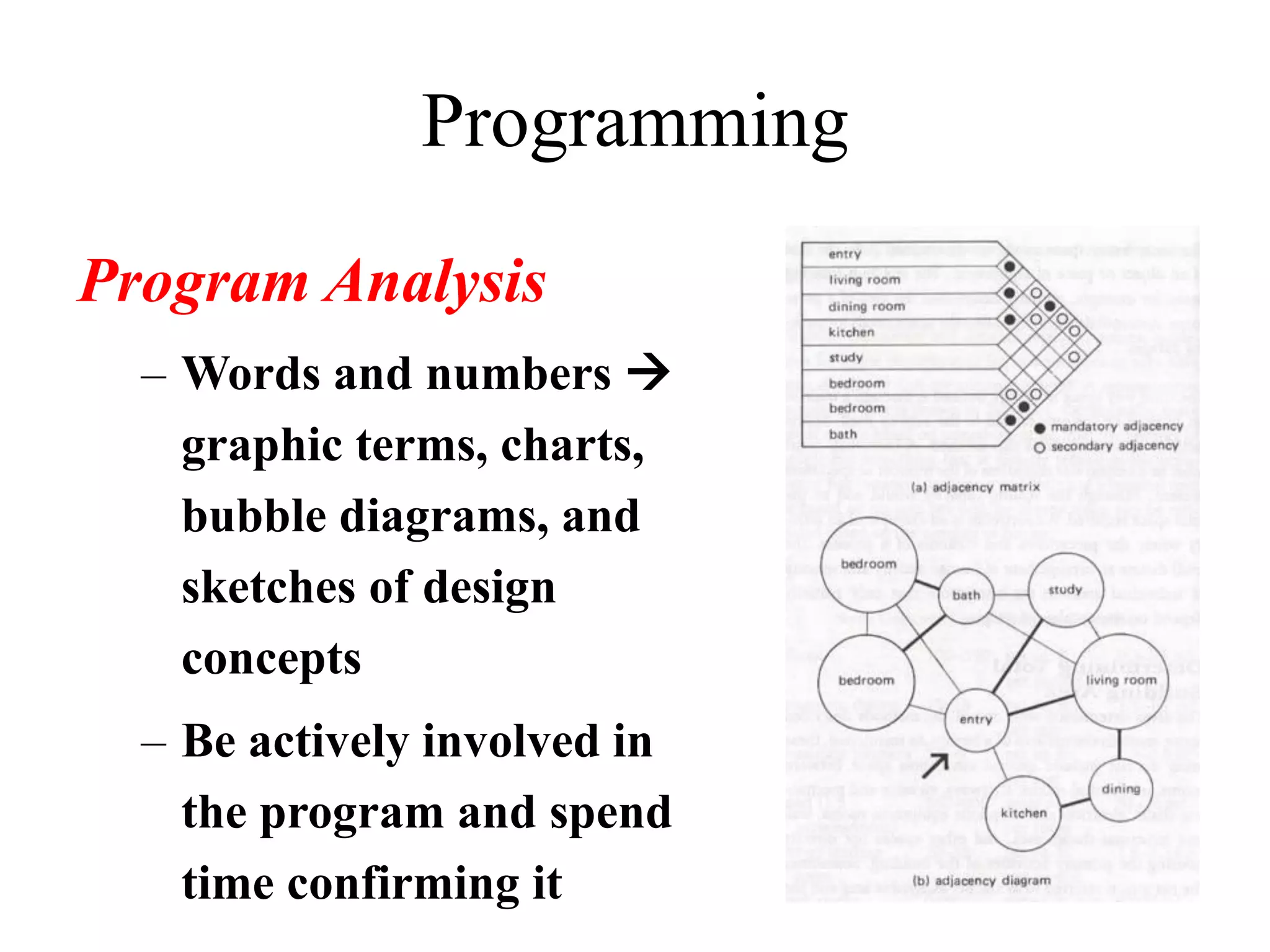
Program Analysis
– Words and numbers 
graphic terms, charts,
bubble diagrams, and
sketches of design
concepts
– Be actively involved in
the program and spend
time confirming it
Programming
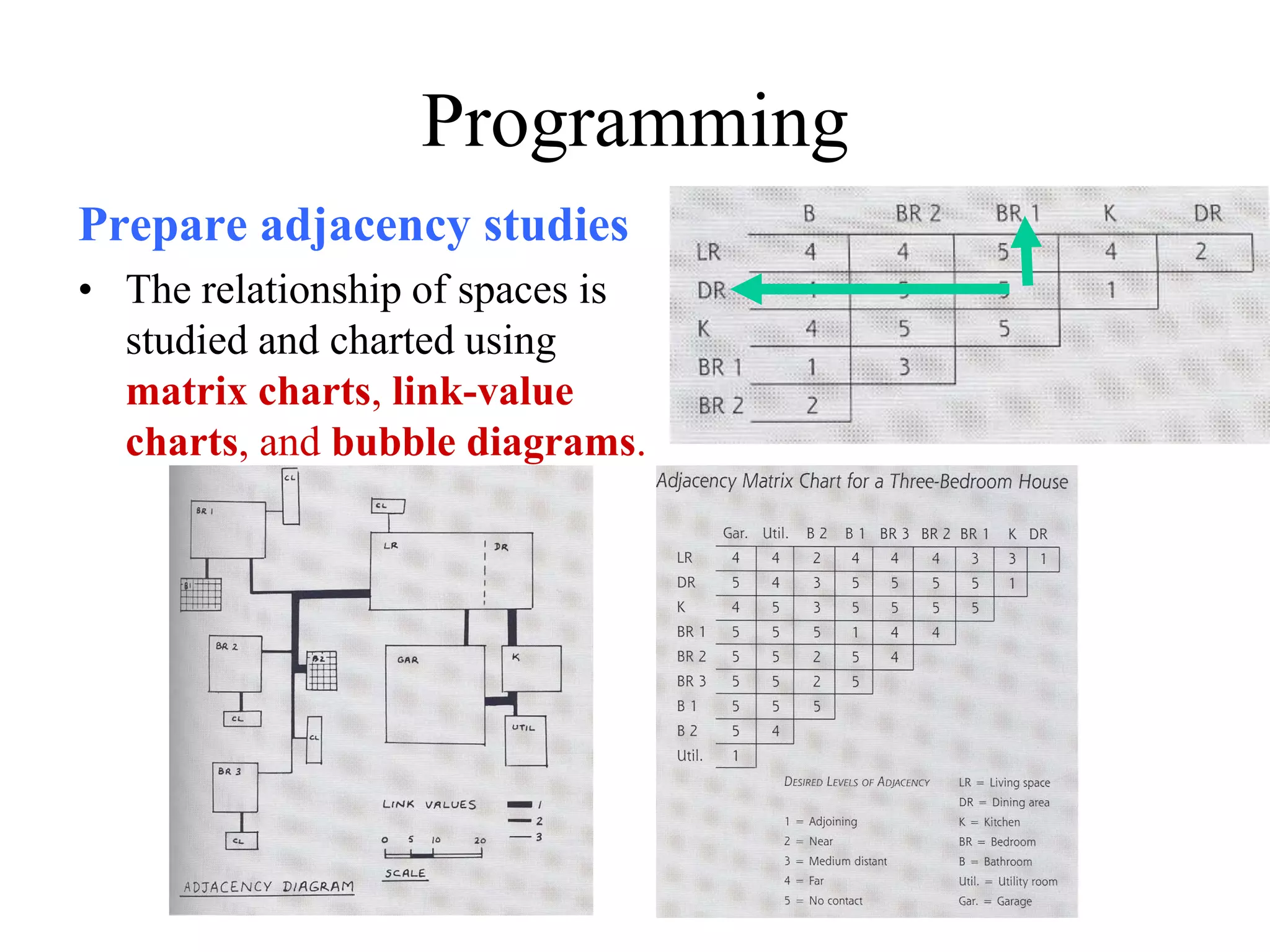
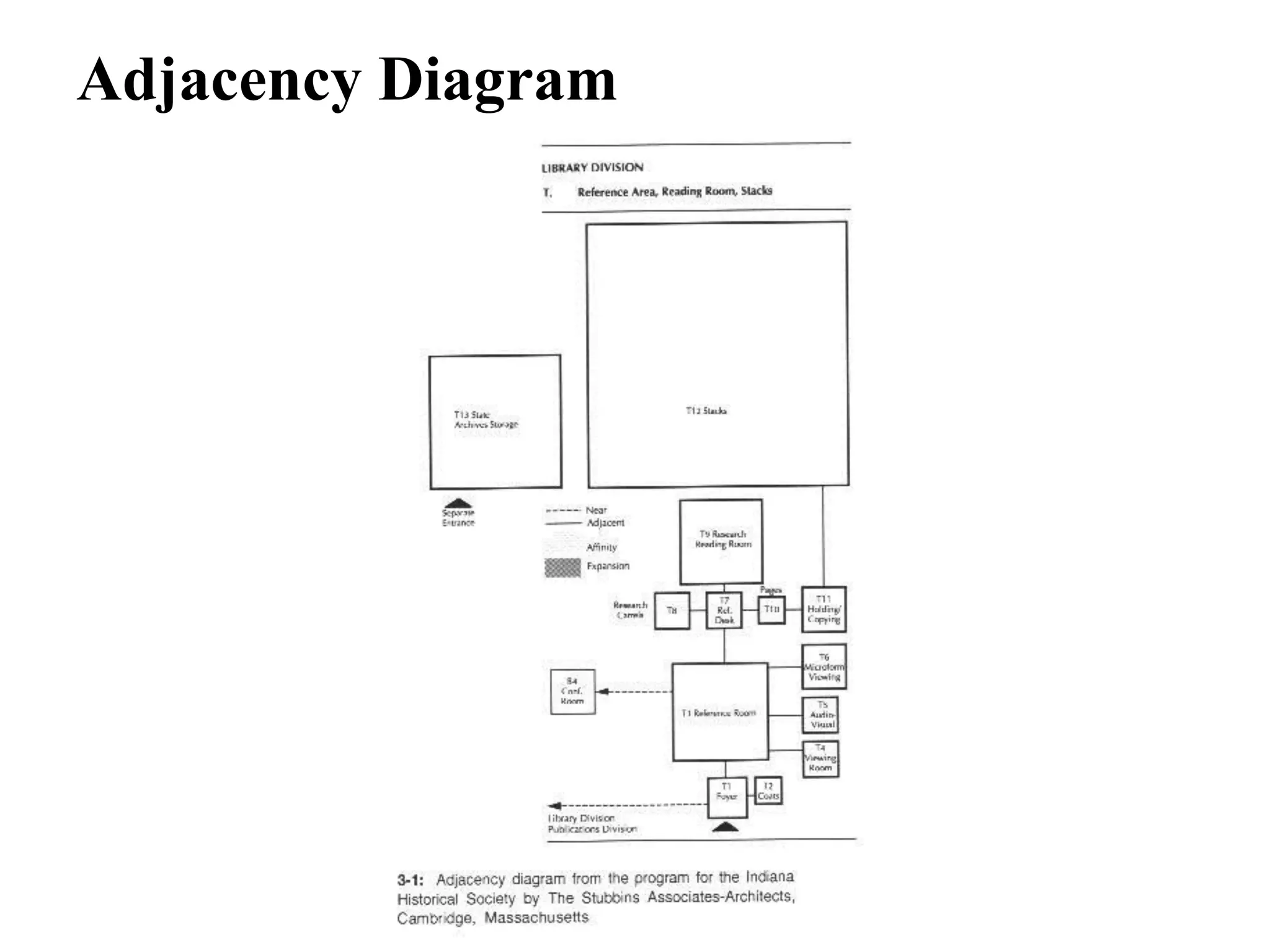
Prepare adjacency studies
• The relationship of spaces is
studied and charted using
matrix charts, link-value
charts, and bubble diagrams.
Programming
Relationship Diagram
Adjacency Diagram
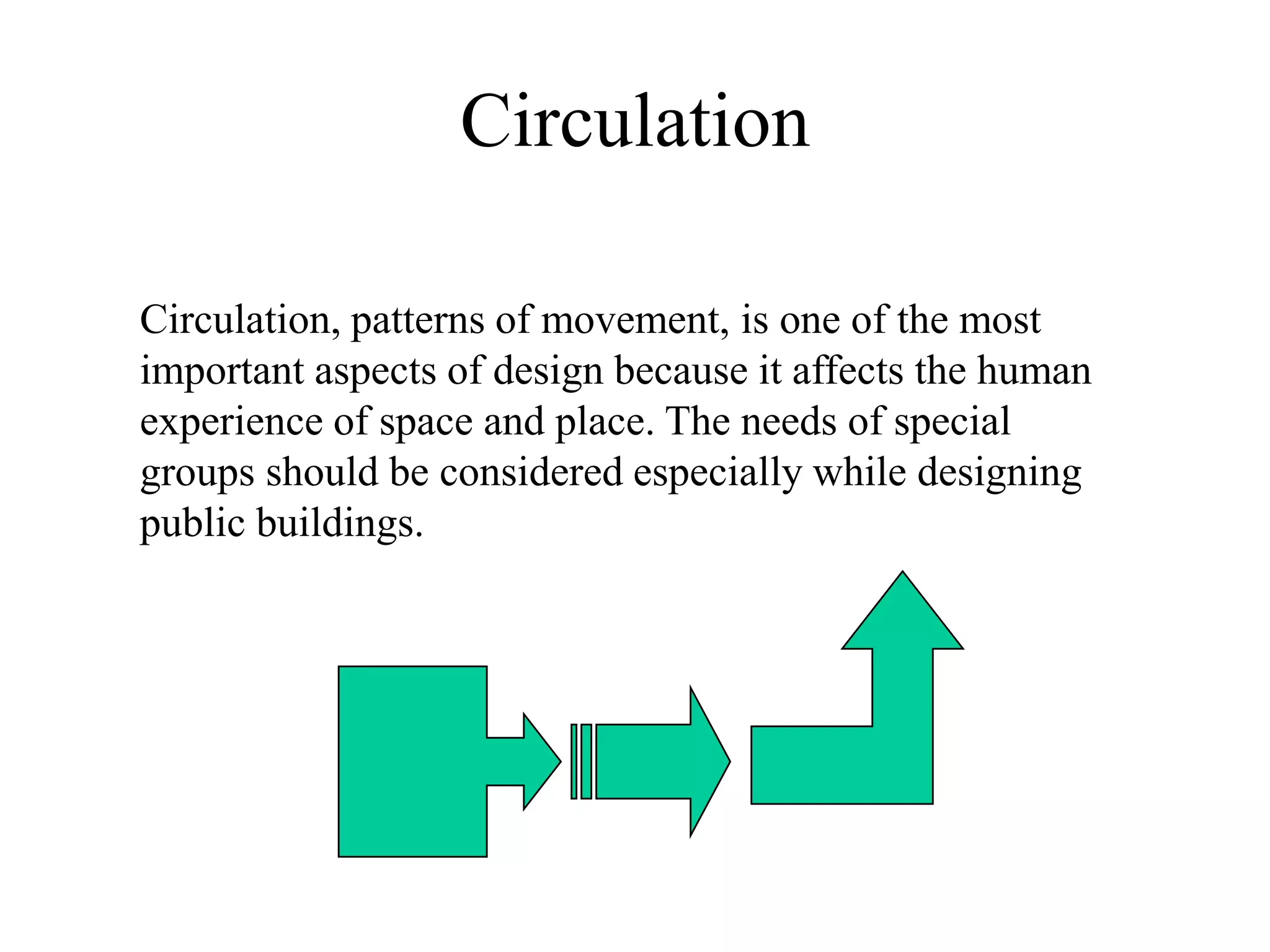
Circulation, patterns of movement, is one of the most
important aspects of design because it affects the human
experience of space and place. The needs of special
groups should be considered especially while designing
public buildings.
Circulation
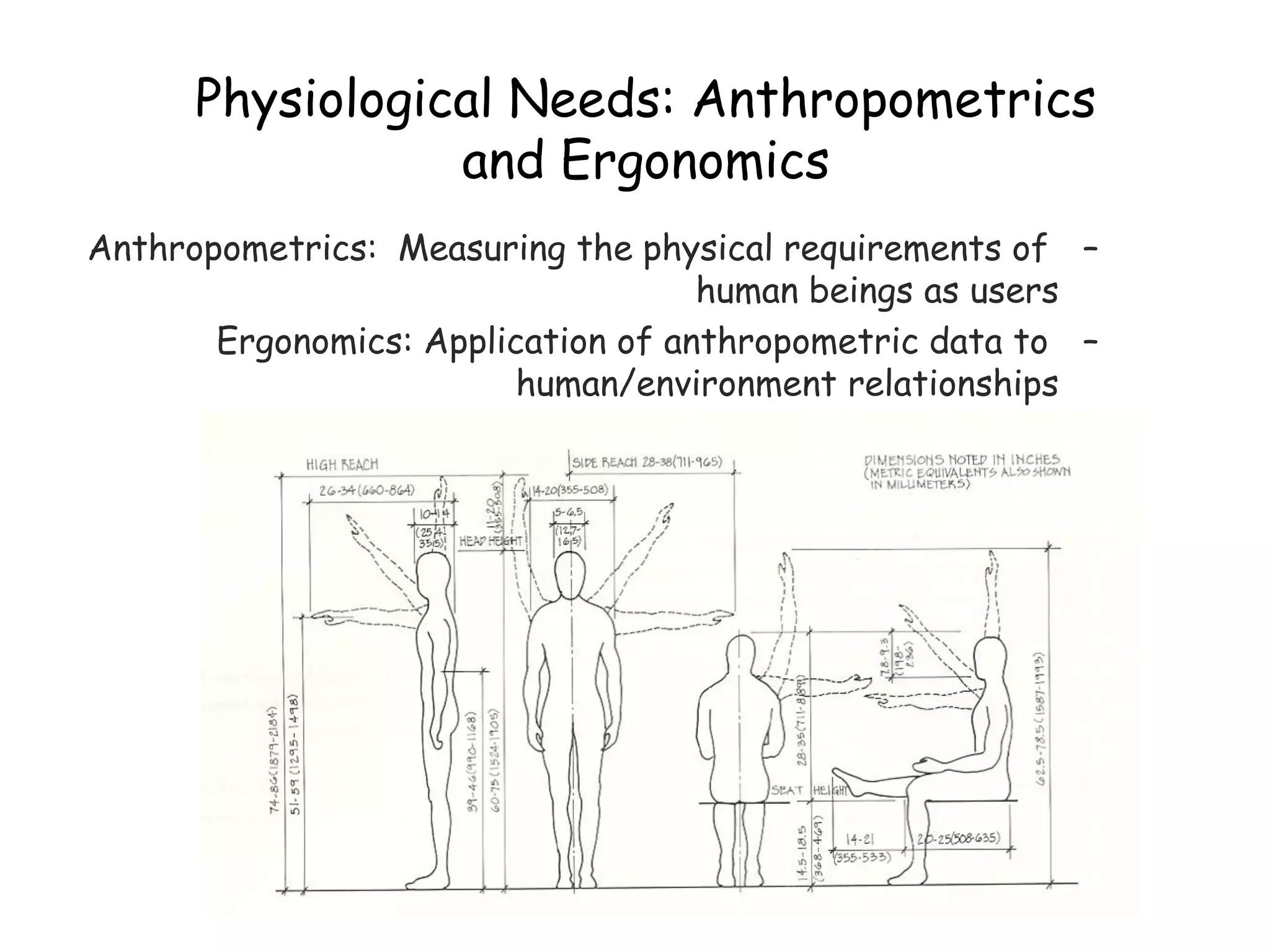
Physiological Needs: Anthropometrics
and Ergonomics
–Anthropometrics: Measuring the physical requirements of
human beings as users
–Ergonomics: Application of anthropometric data to
human/environment relationships
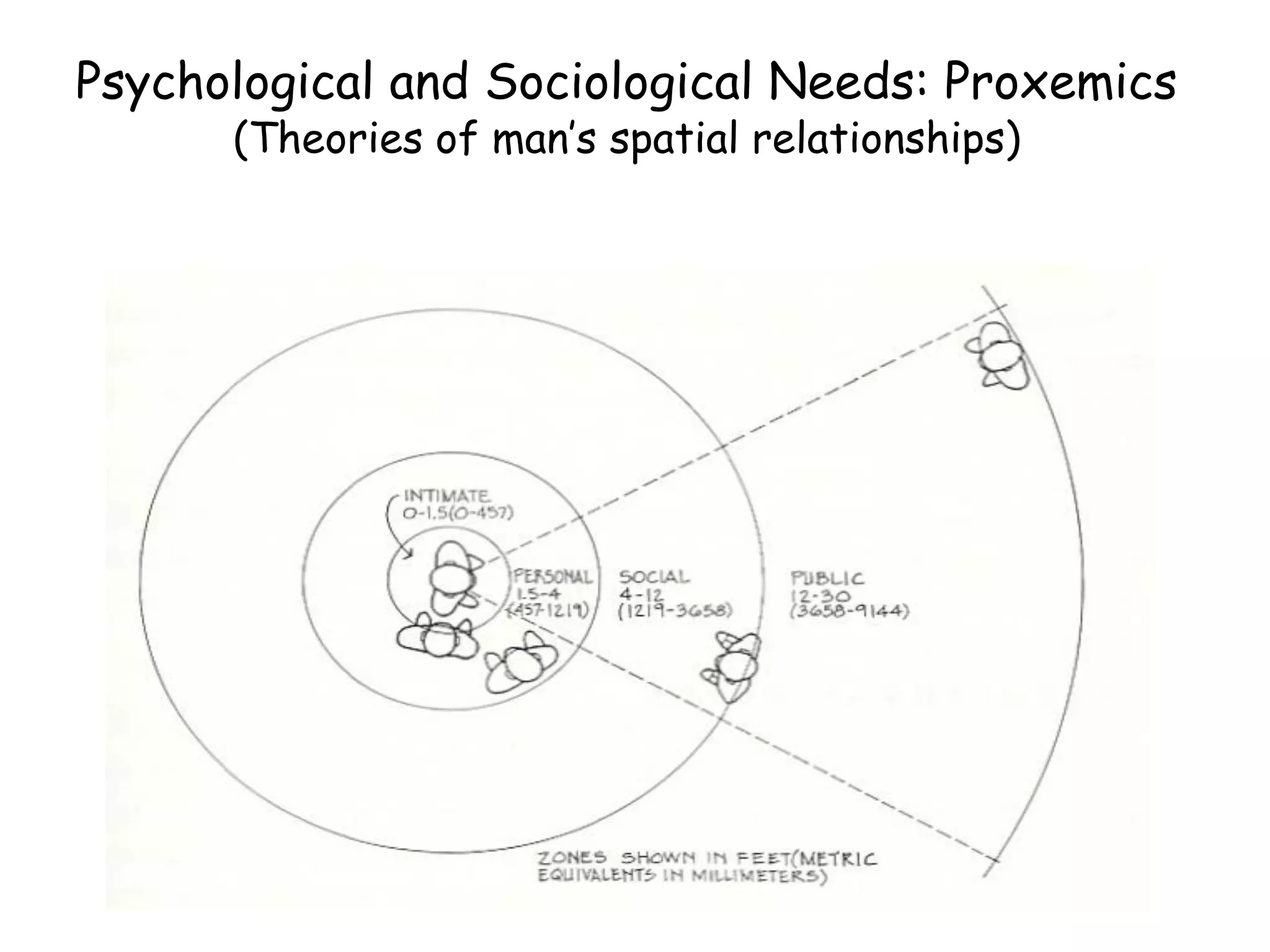
Psychological and Sociological Needs: Proxemics
(Theories of man’s spatial relationships)
Design
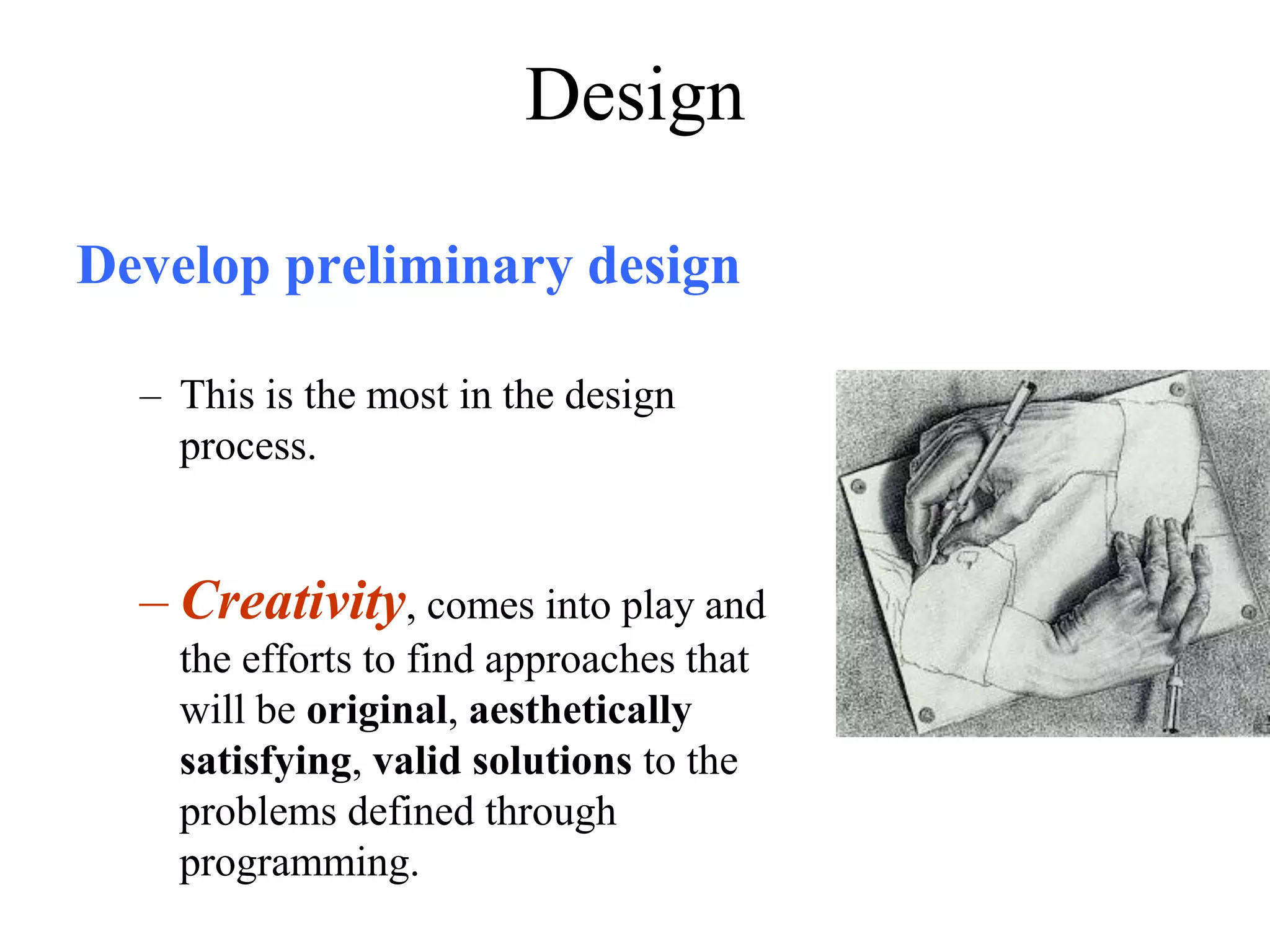
Develop preliminary design
– This is the most in the design
process.
– Creativity, comes into play and
the efforts to find approaches that
will be original, aesthetically
satisfying, valid solutions to the
problems defined through
programming.
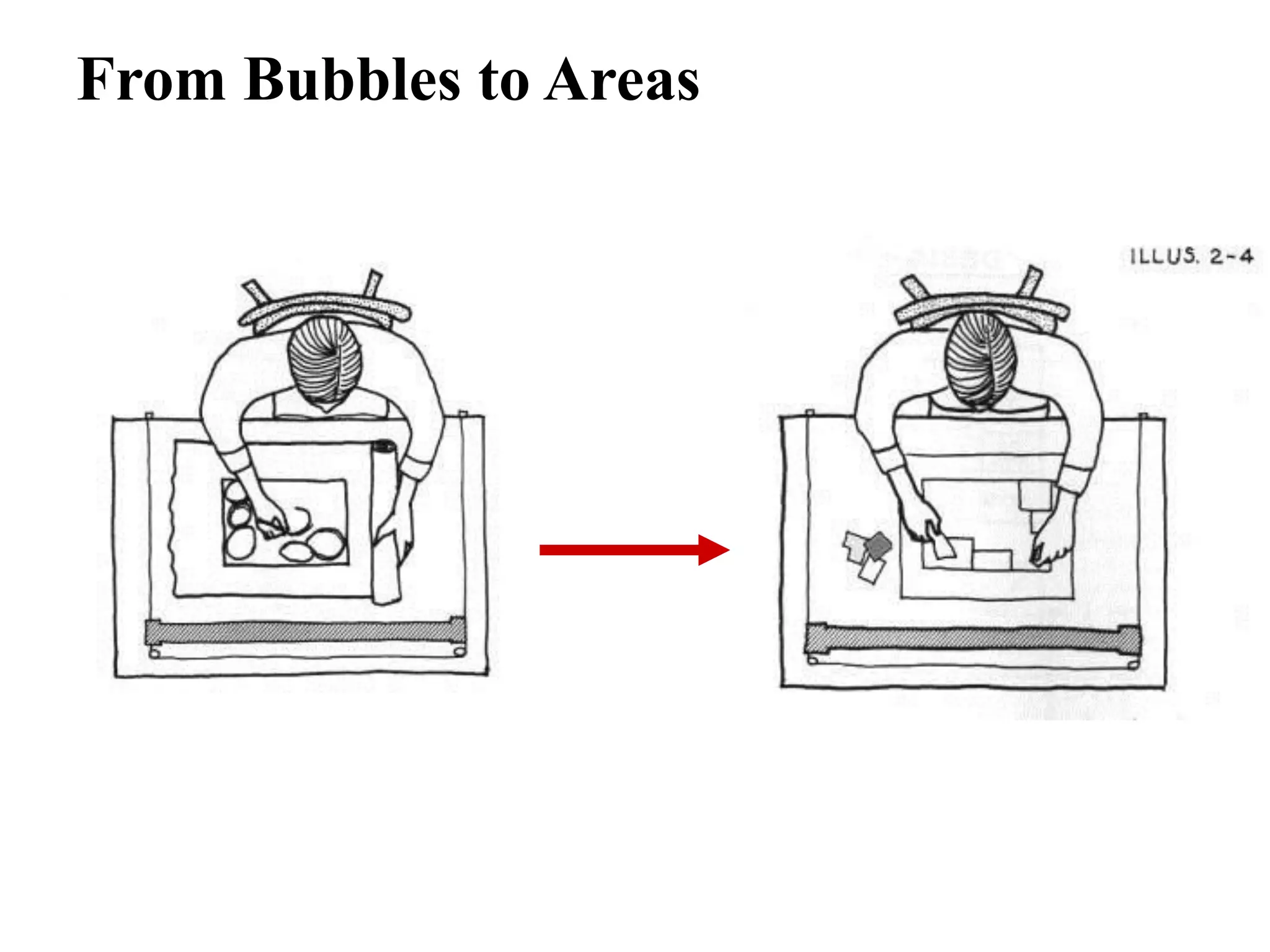
From Bubbles to Areas
– Even experienced and highly skilled designers often find it
difficult how this aspect of the design process works.
– They will say that they “think about “the problem until
they are “hit by an idea”.
Design
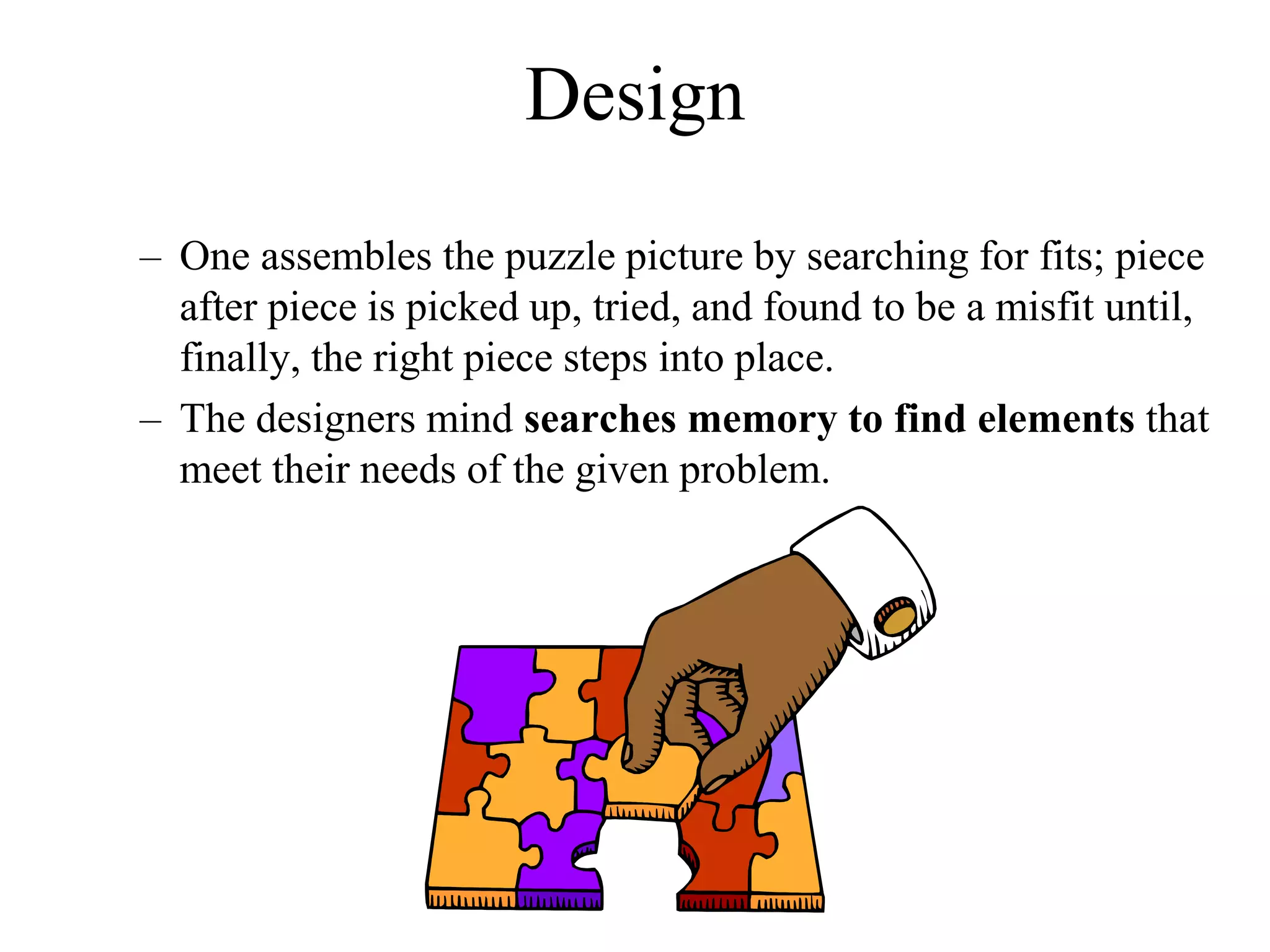
– One assembles the puzzle picture by searching for fits; piece
after piece is picked up, tried, and found to be a misfit until,
finally, the right piece steps into place.
– The designers mind searches memory to find elements that
meet their needs of the given problem.
Design
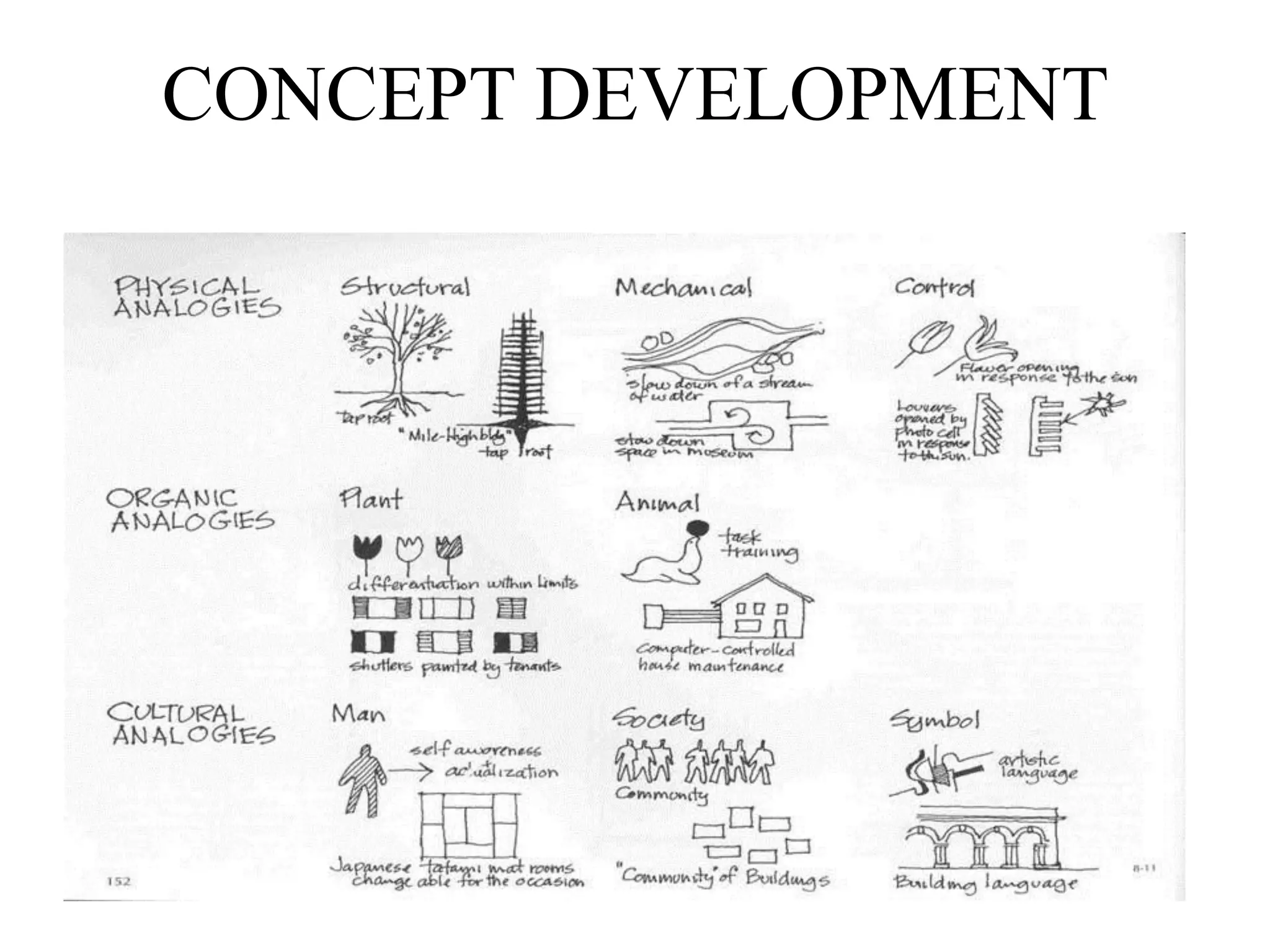
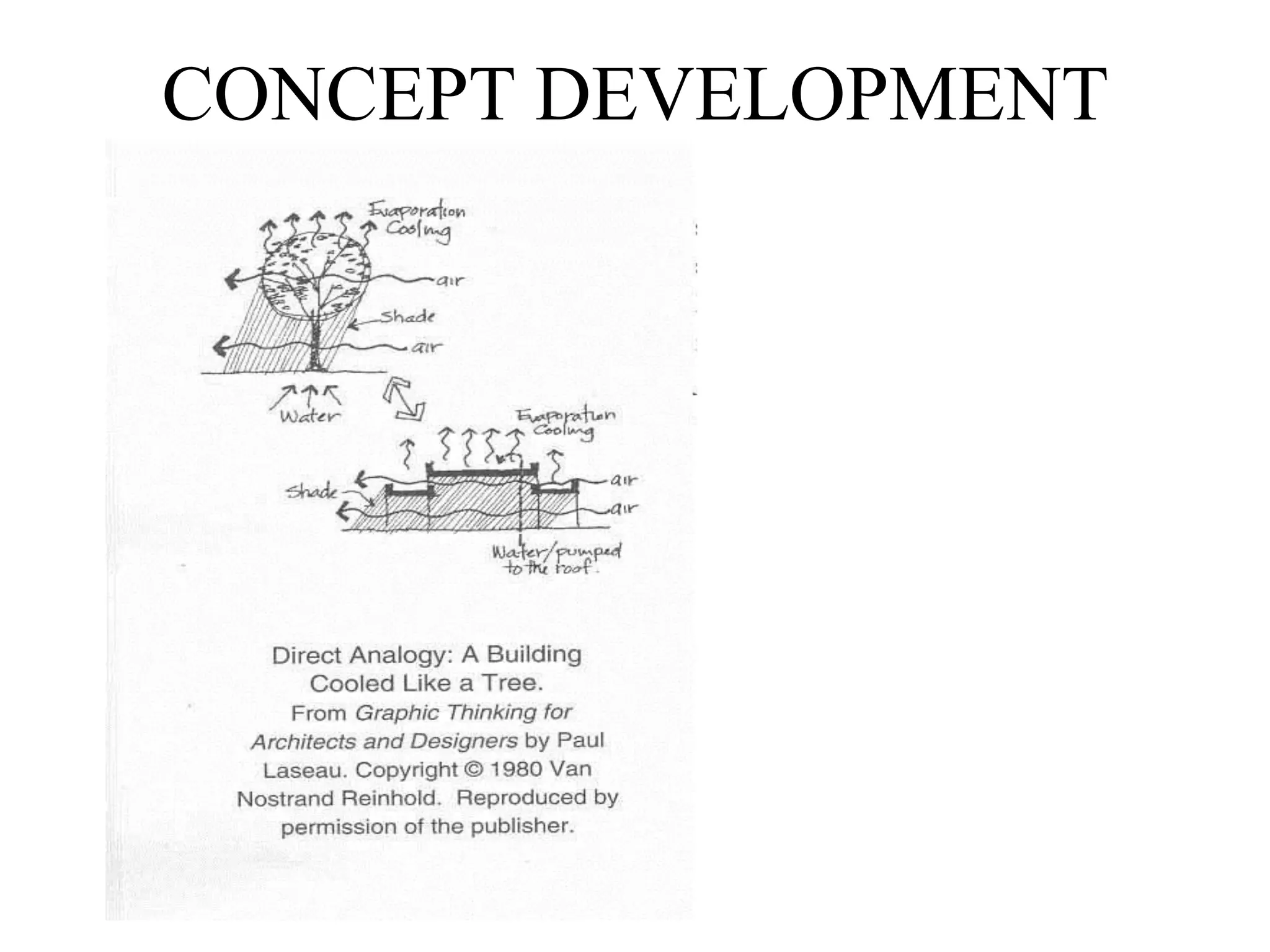
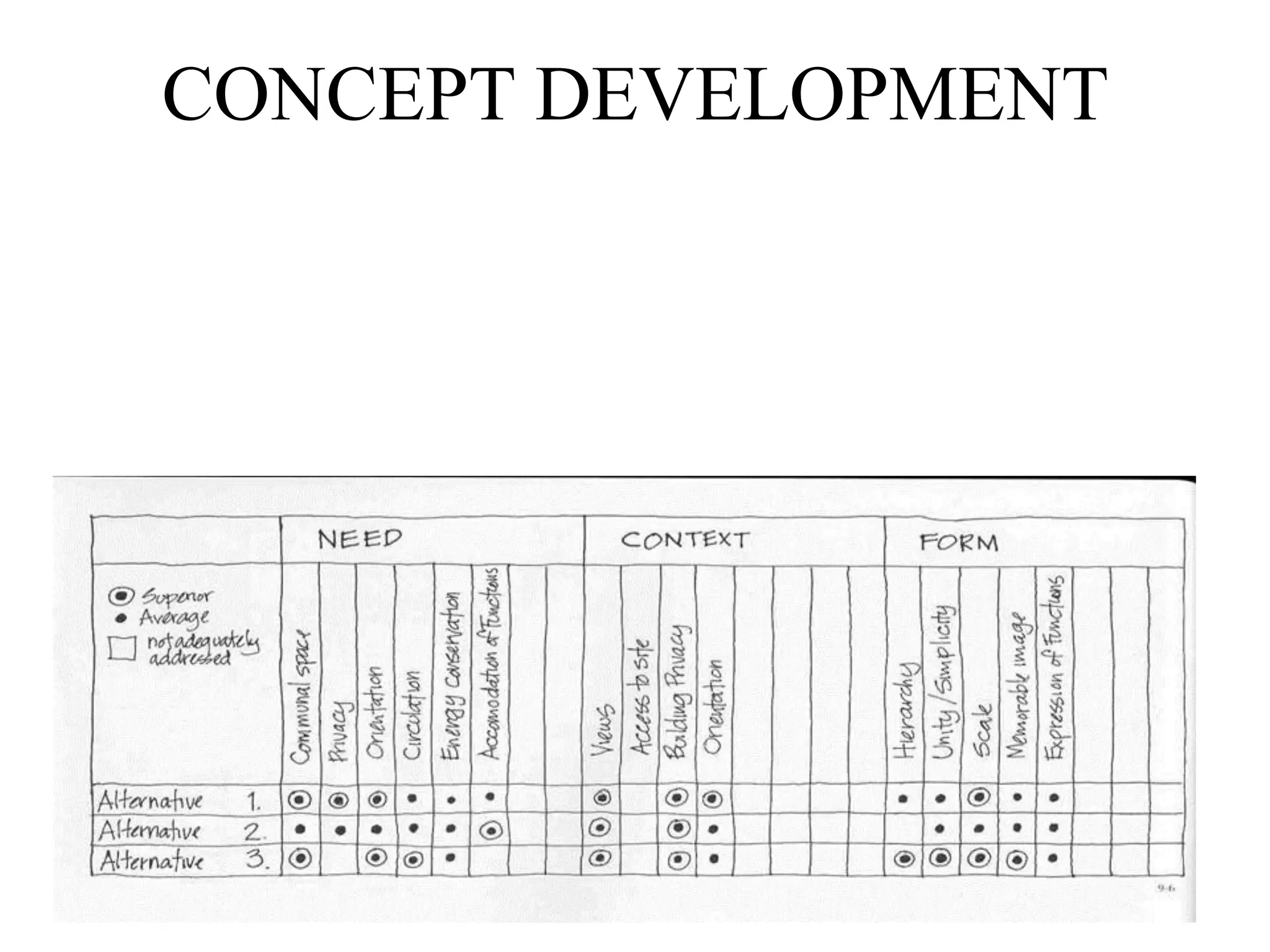
Ideation: Concept Statements
Verbalization of how to achieve project
objectives.
Establishes underlying principles, both
aesthetic and functional, that the physical
designs will address.
It discusses methods that will be used to
achieve results.
CONCEPT DEVELOPMENT
CONCEPT DEVELOPMENT
CONCEPT DEVELOPMENT
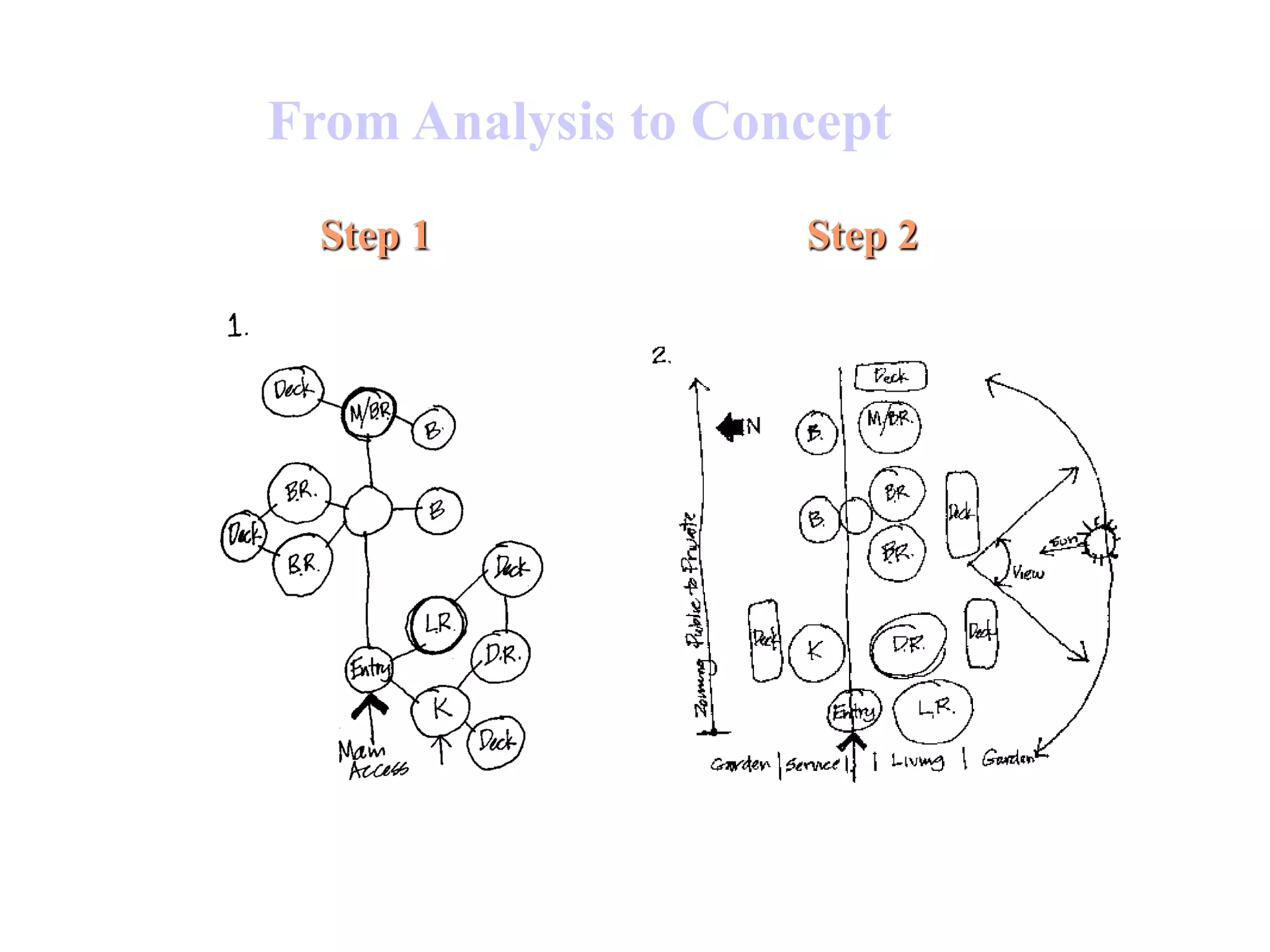
From Analysis to Concept
Step 1 Step 2
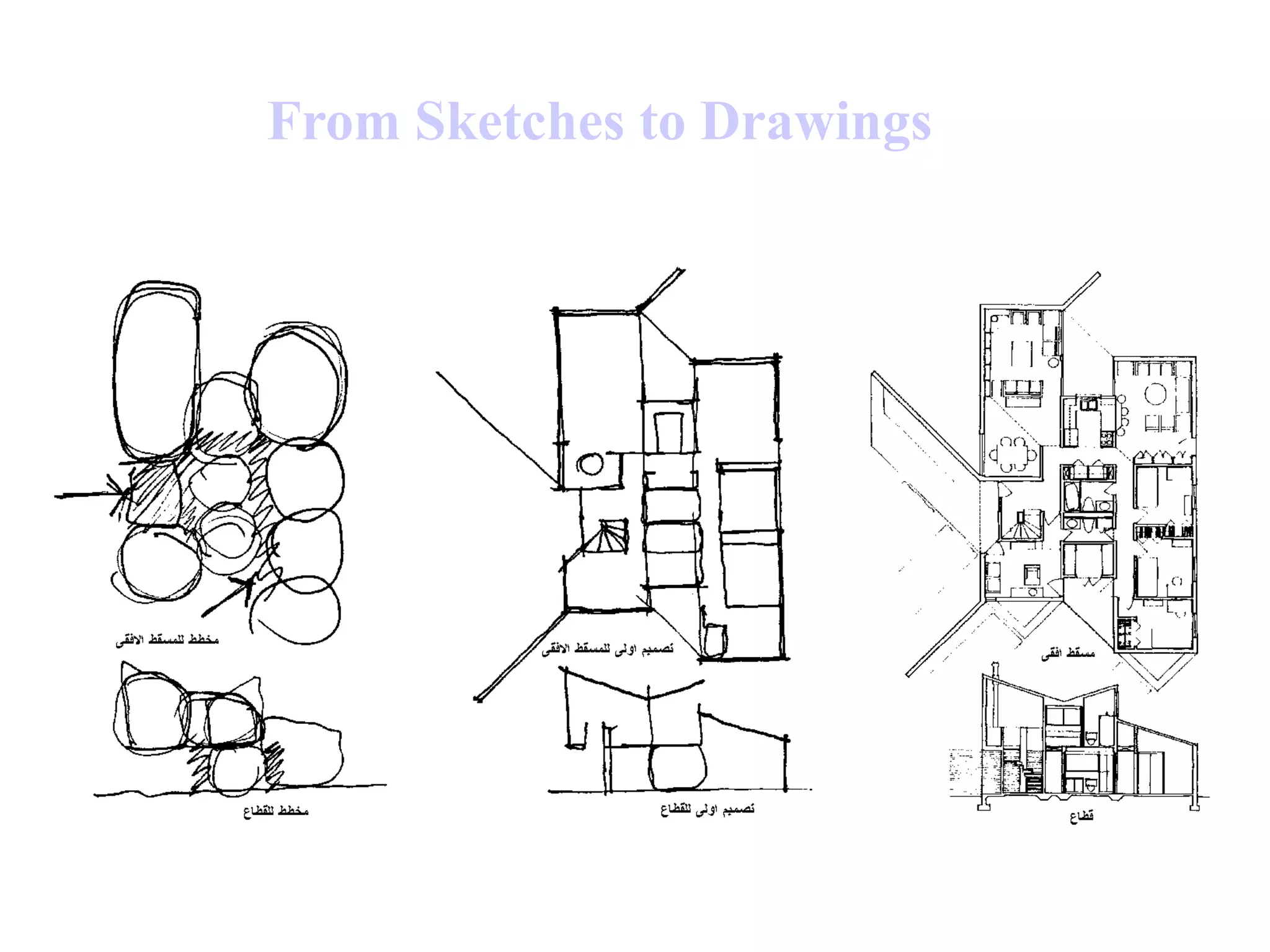
From Sketches to Drawings
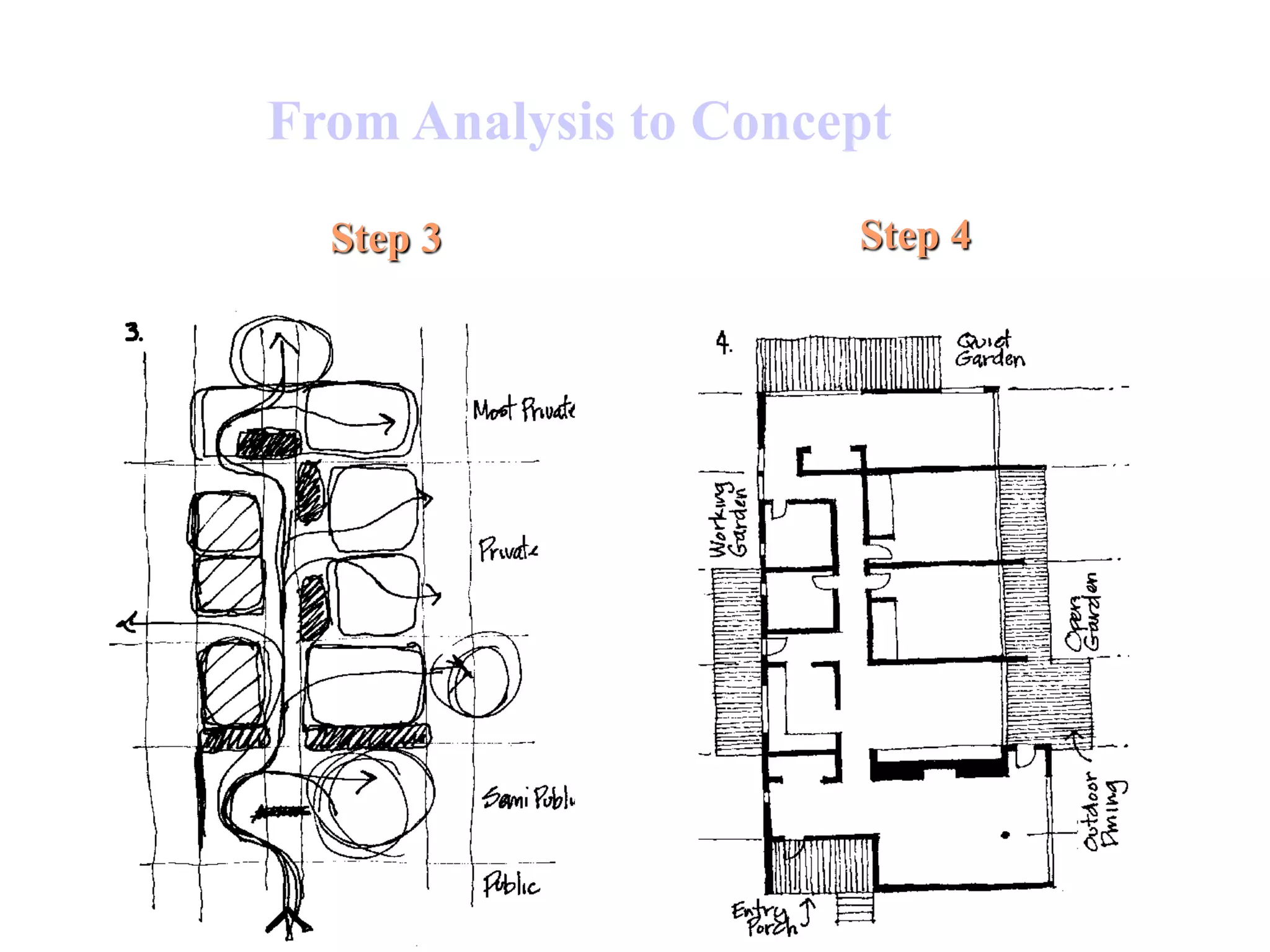
From Analysis to Concept
Step 3 Step 4
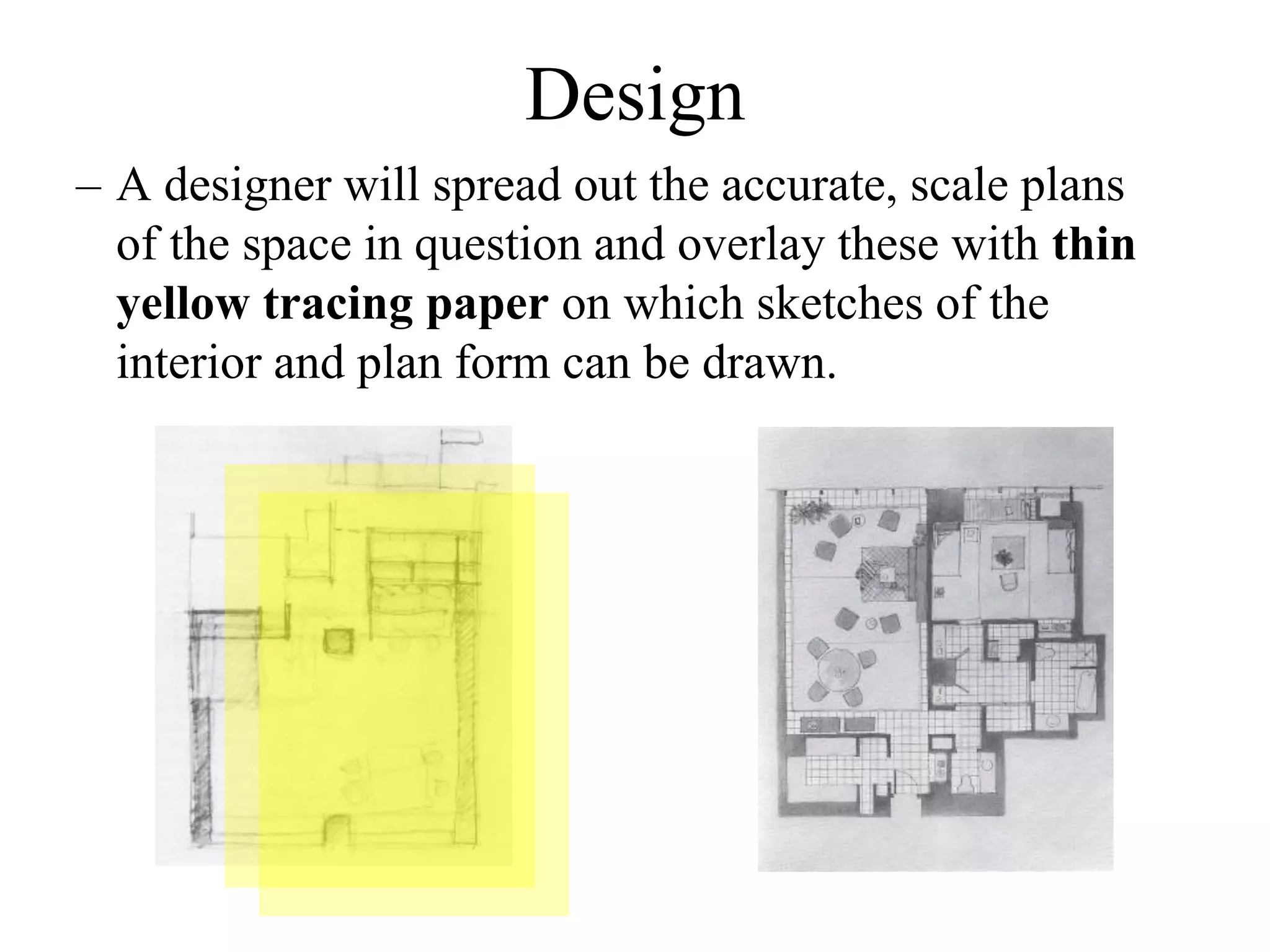
– A designer will spread out the accurate, scale plans
of the space in question and overlay these with thin
yellow tracing paper on which sketches of the
interior and plan form can be drawn.
Design
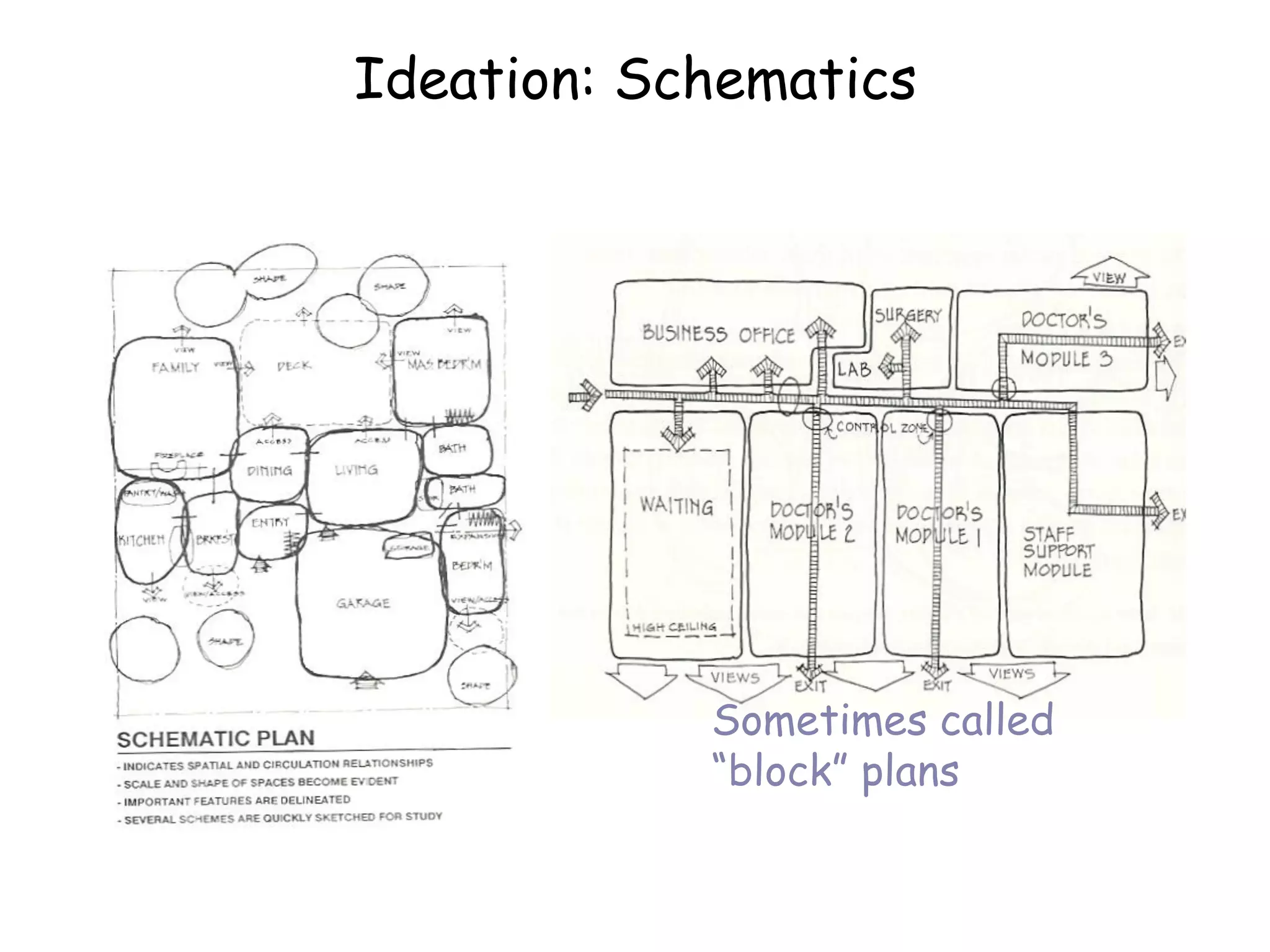
Ideation: Schematics
Sometimes called
“block” plans
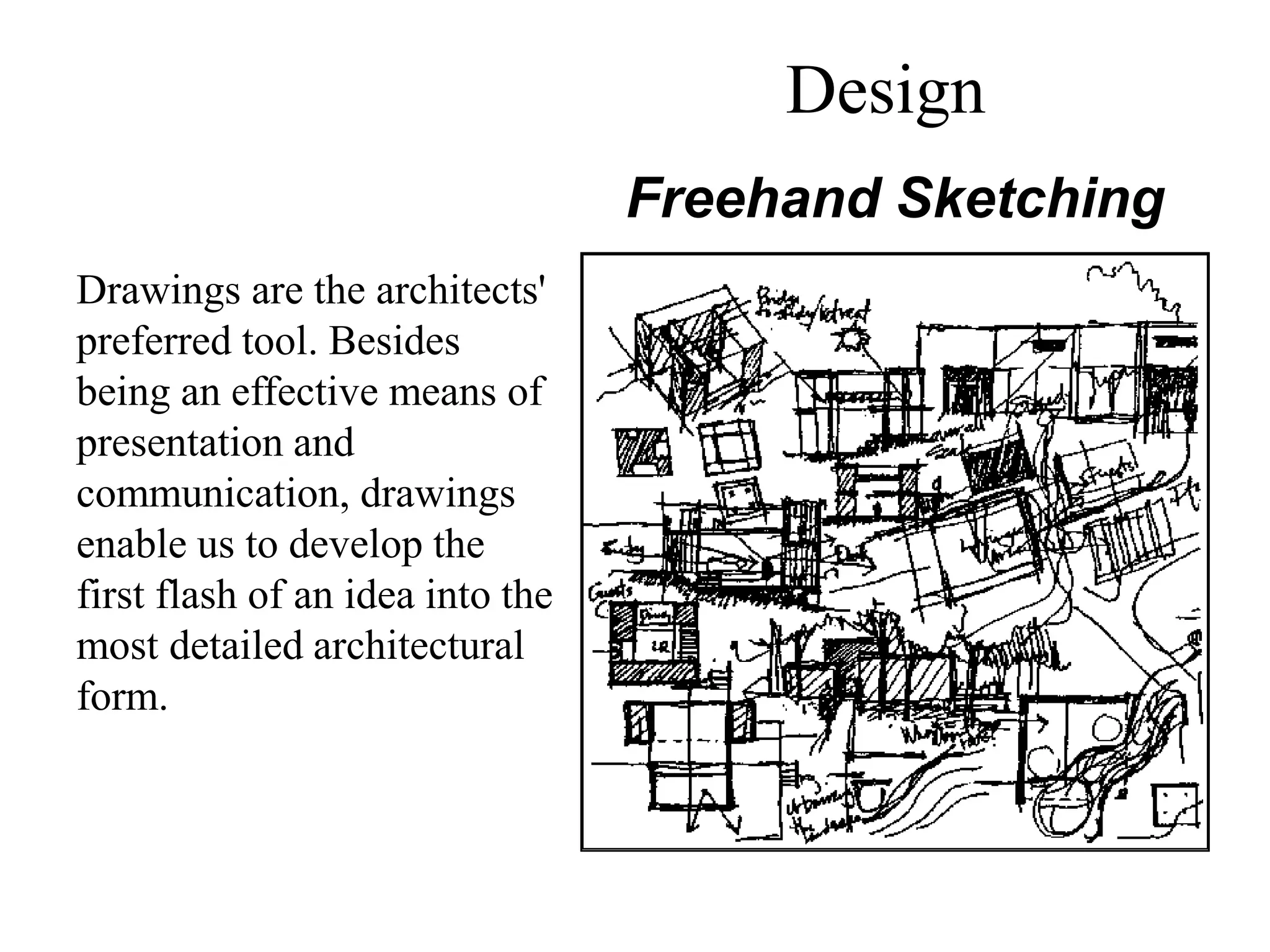
Drawings are the architects'
preferred tool. Besides
being an effective means of
presentation and
communication, drawings
enable us to develop the
first flash of an idea into the
most detailed architectural
form.
Freehand Sketching
Design
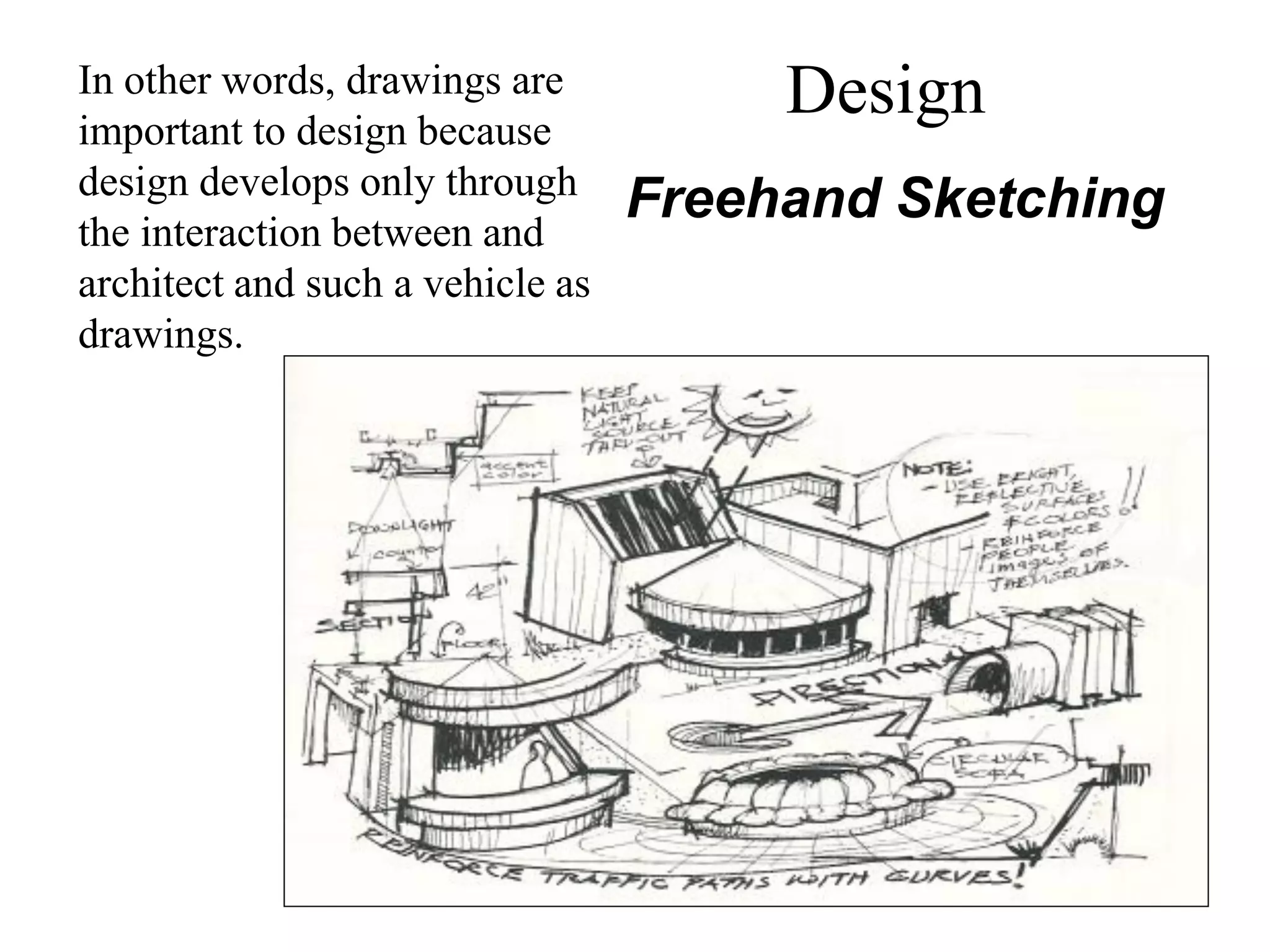
In other words, drawings are
important to design because
design develops only through
the interaction between and
architect and such a vehicle as
drawings.
Freehand Sketching
Design
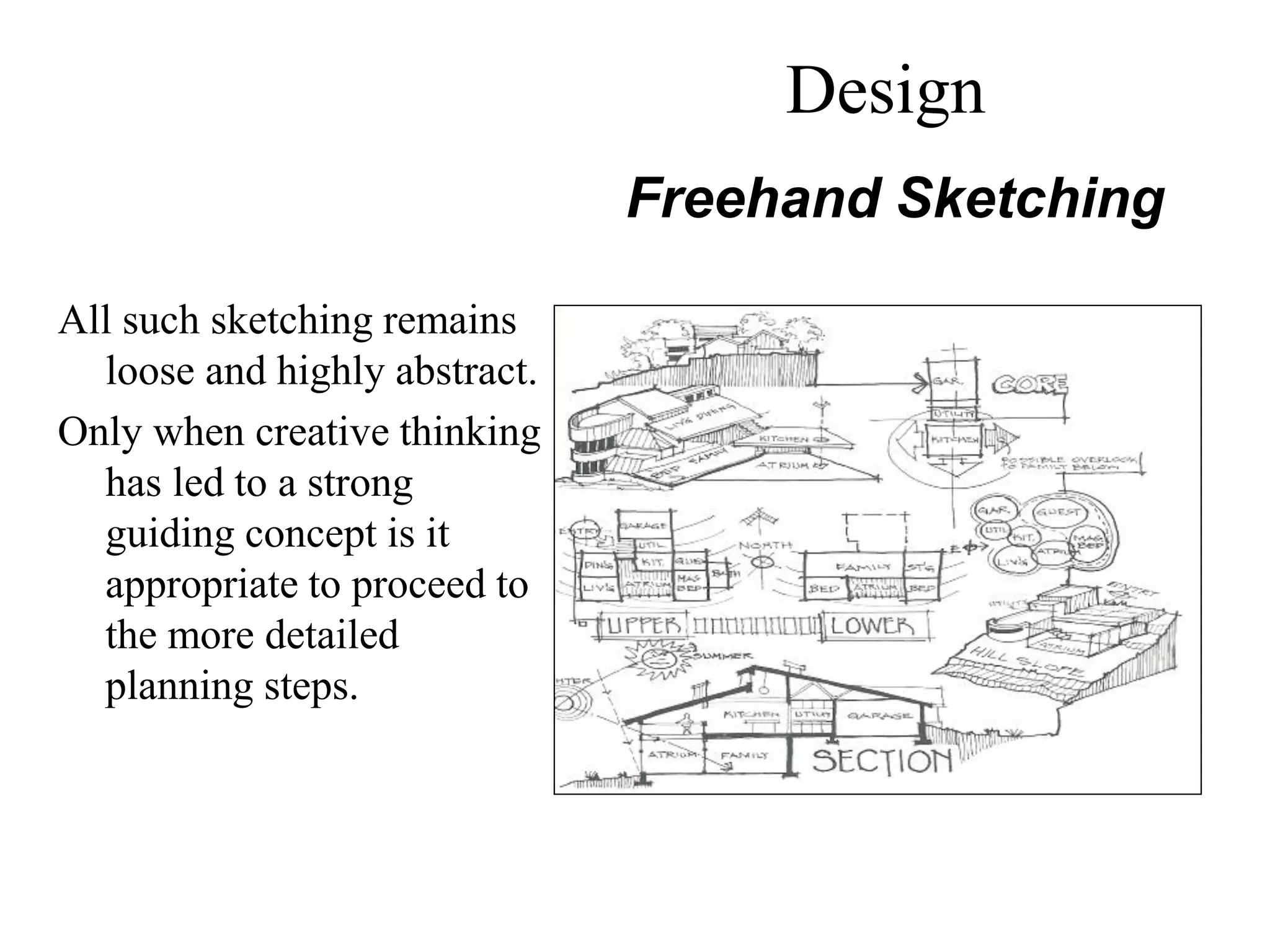
All such sketching remains
loose and highly abstract.
Only when creative thinking
has led to a strong
guiding concept is it
appropriate to proceed to
the more detailed
planning steps.
Freehand Sketching
Design
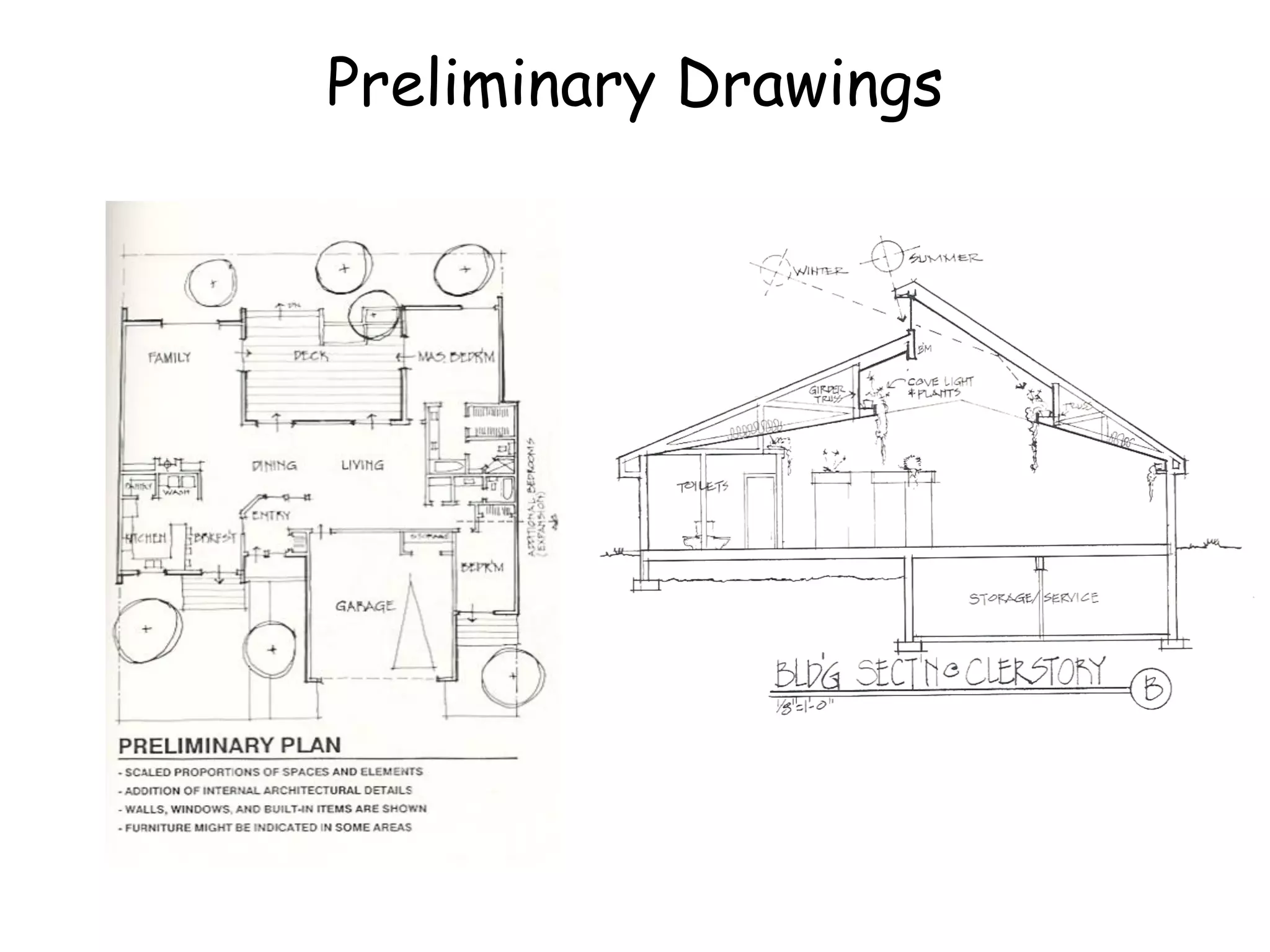
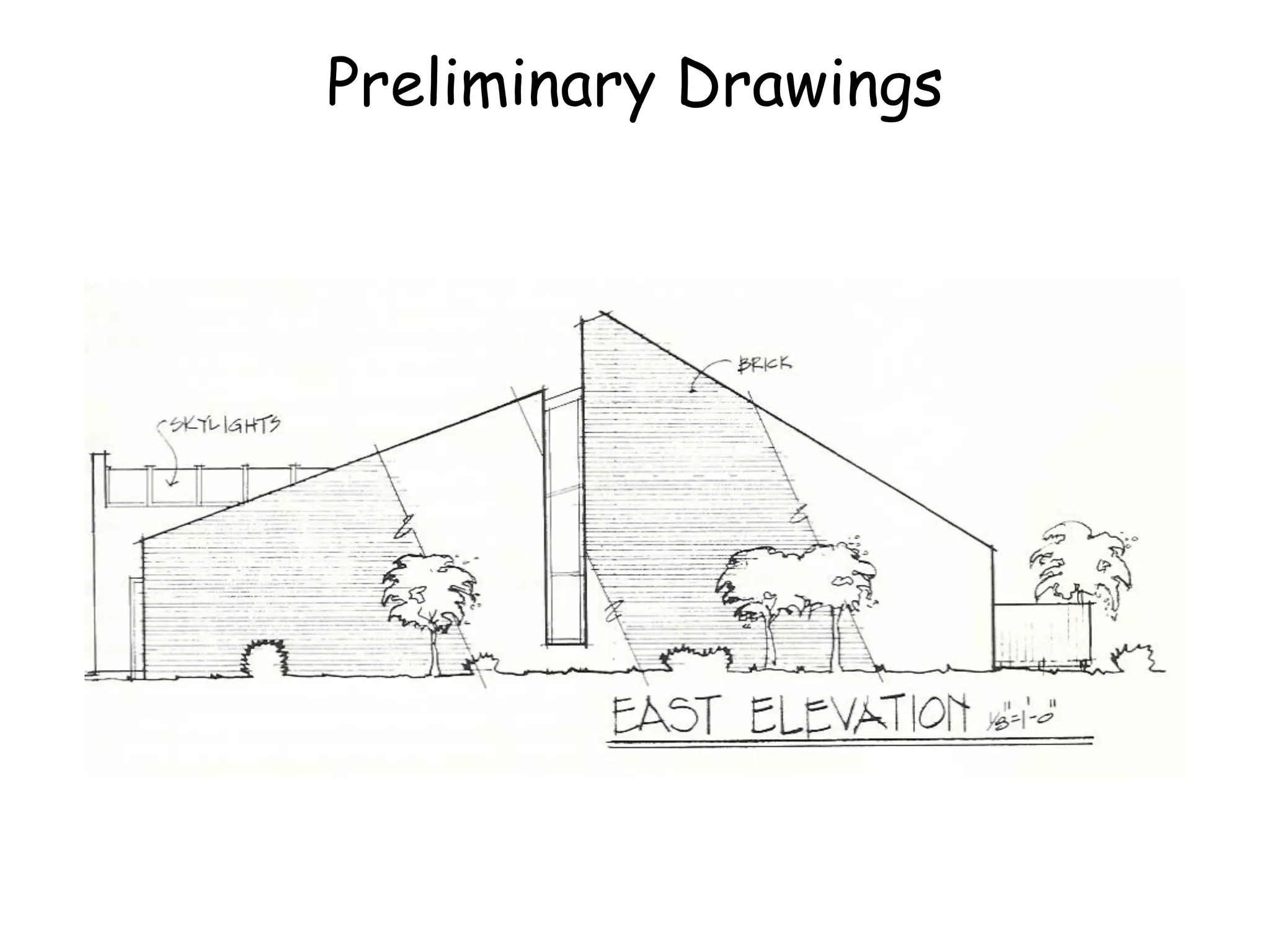
Preliminary Drawings
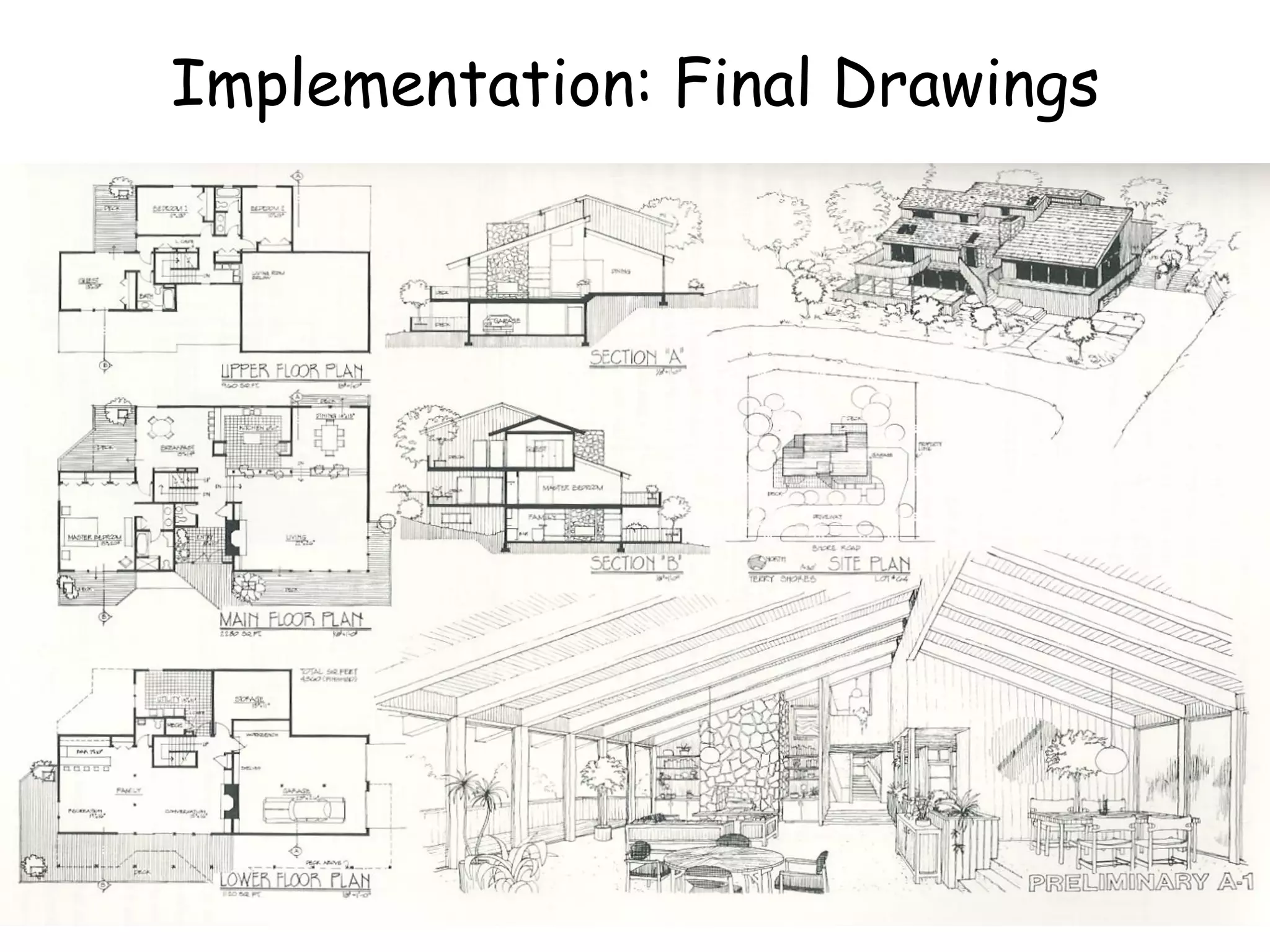
Implementation: Final Drawings
Thank you.
Dr. Yasser Mahgoub

Asu history and theory lecture 3c-based design method 28-10-2017