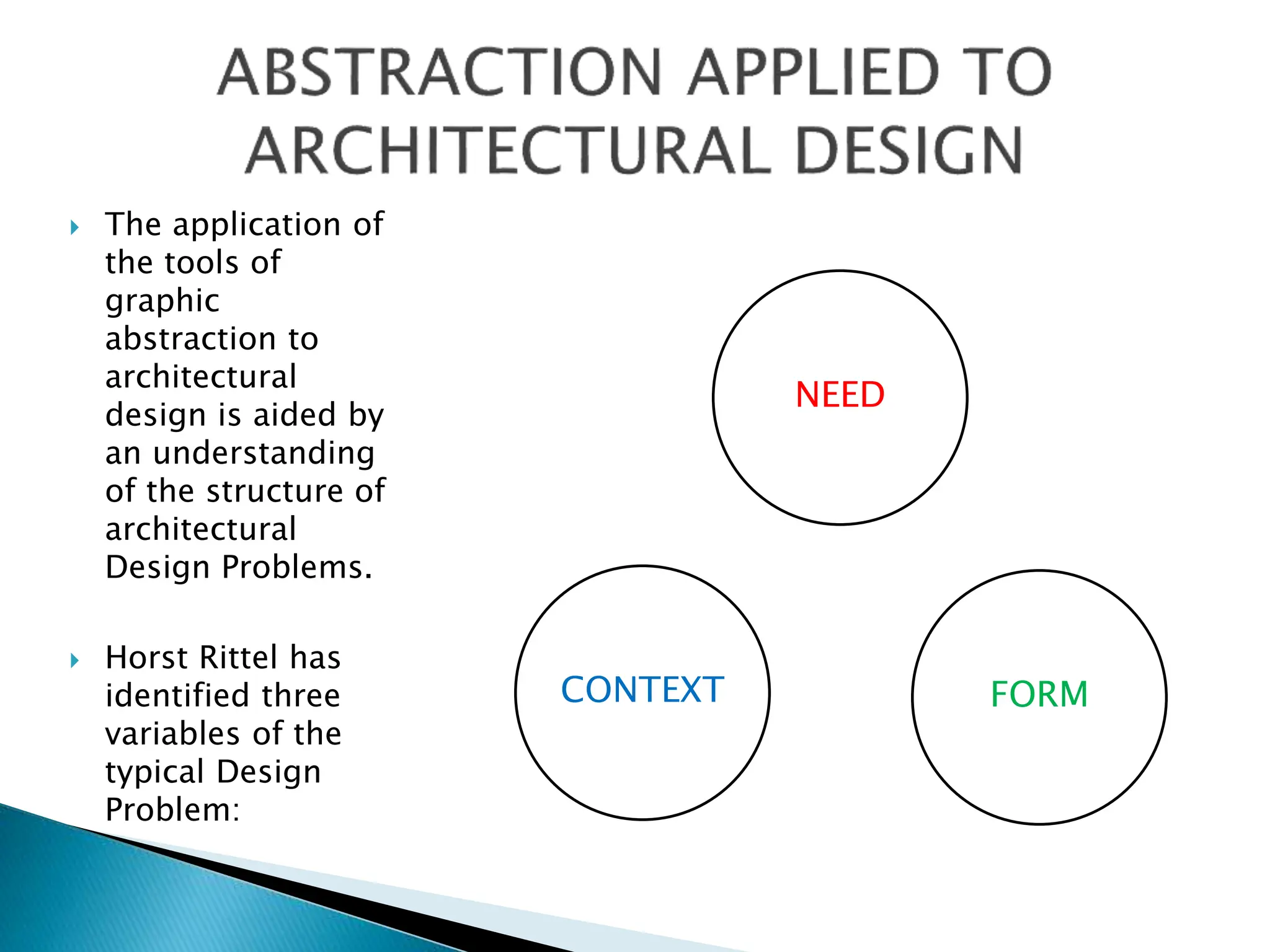
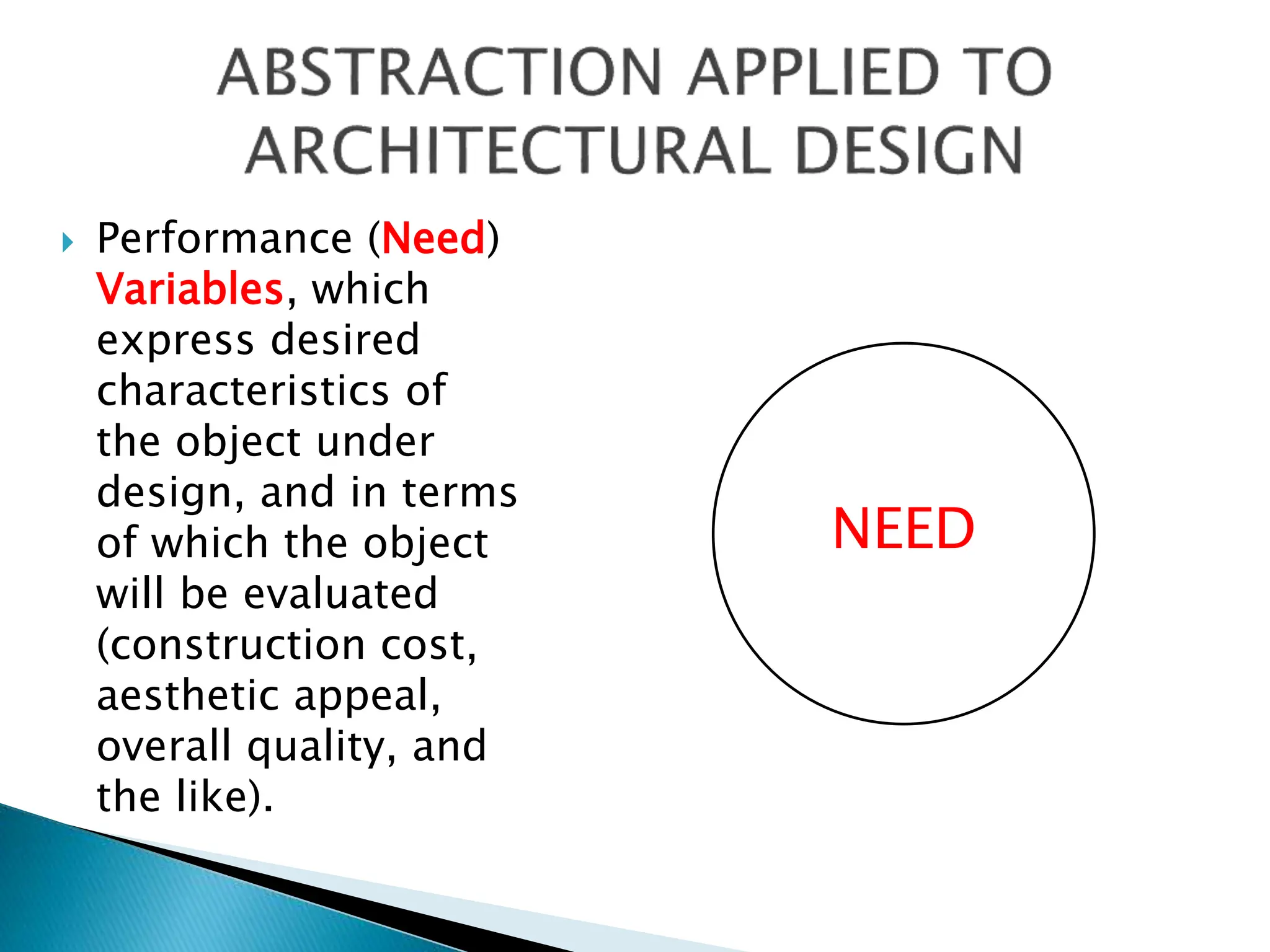
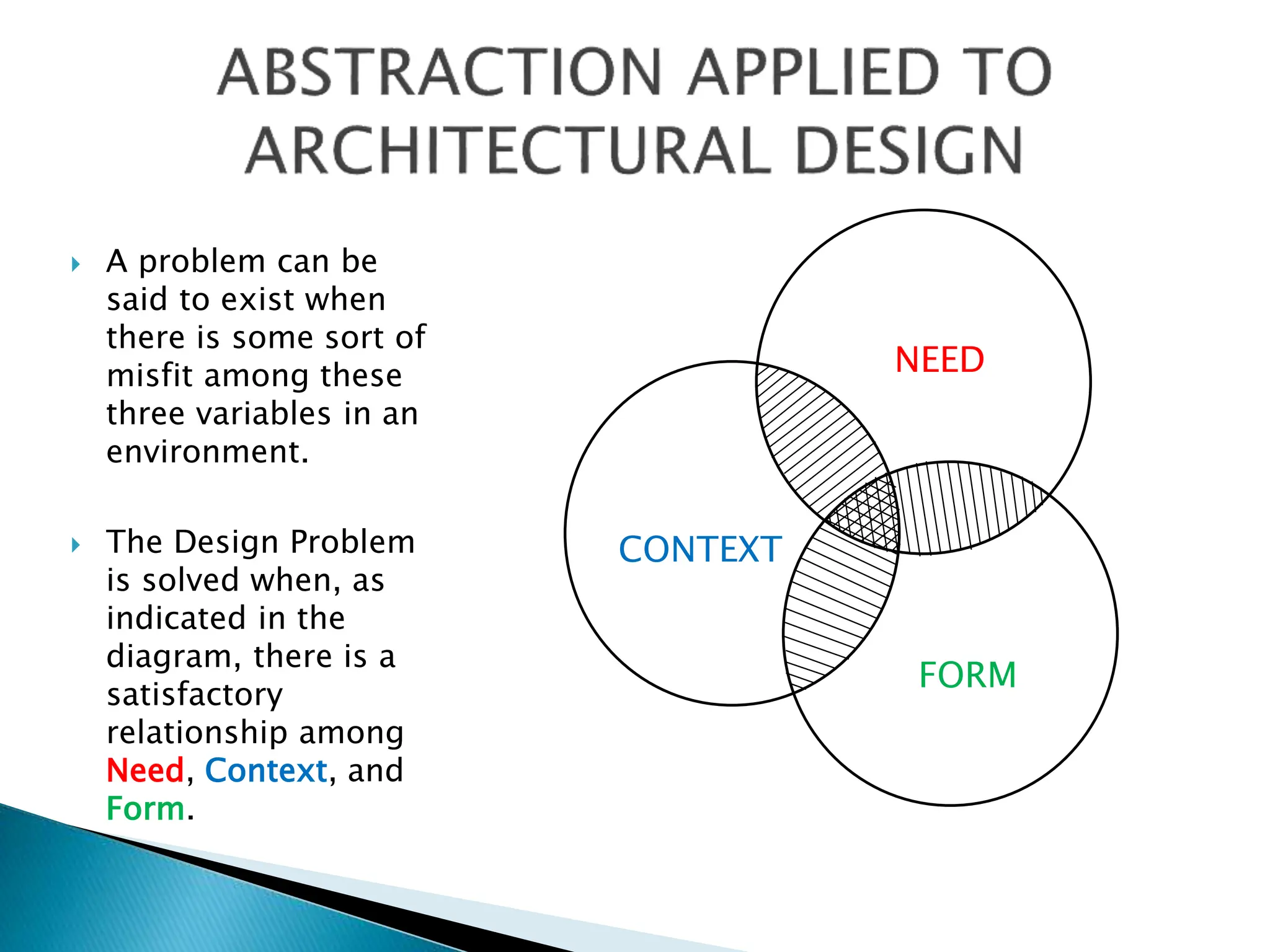
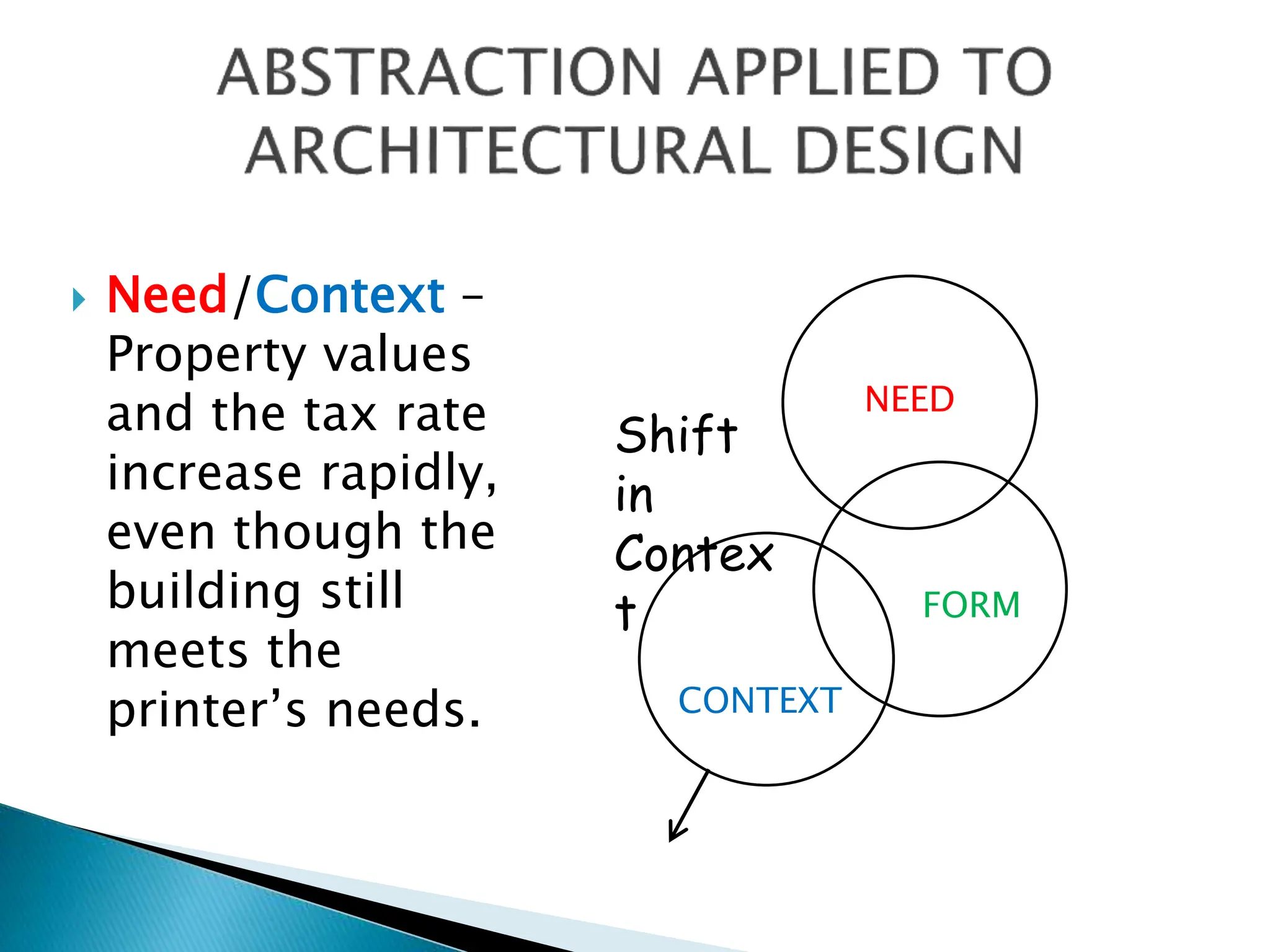
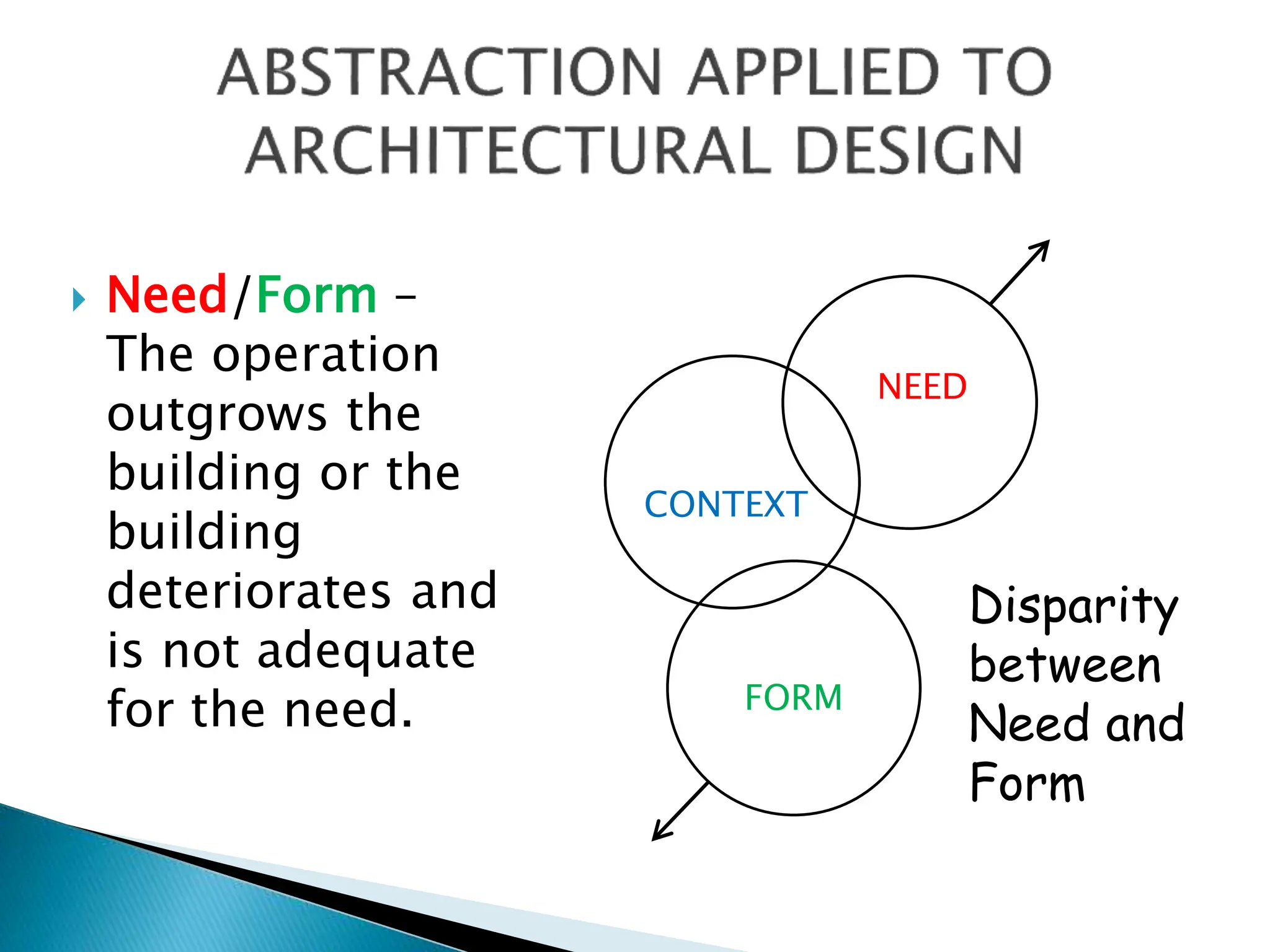
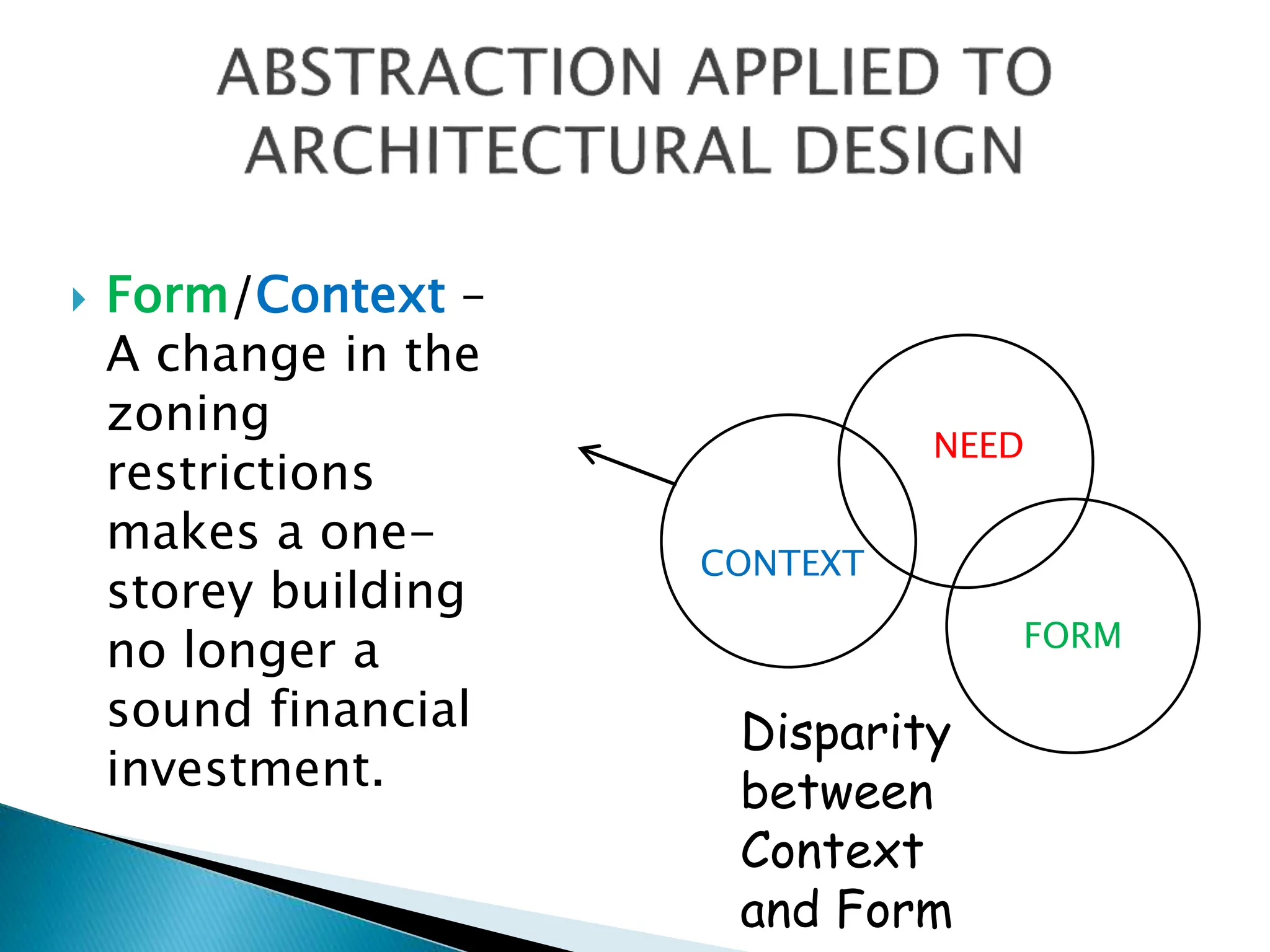
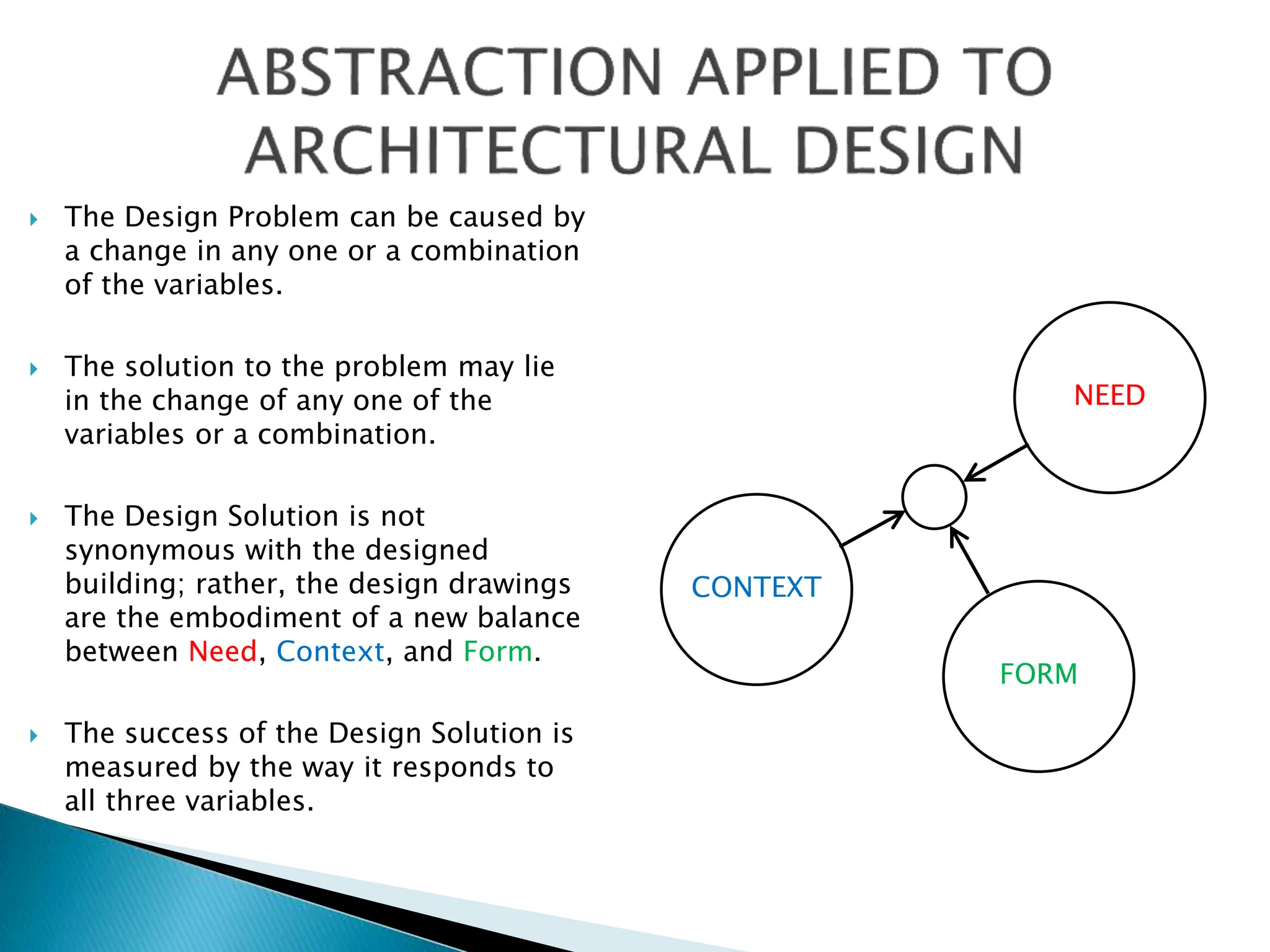
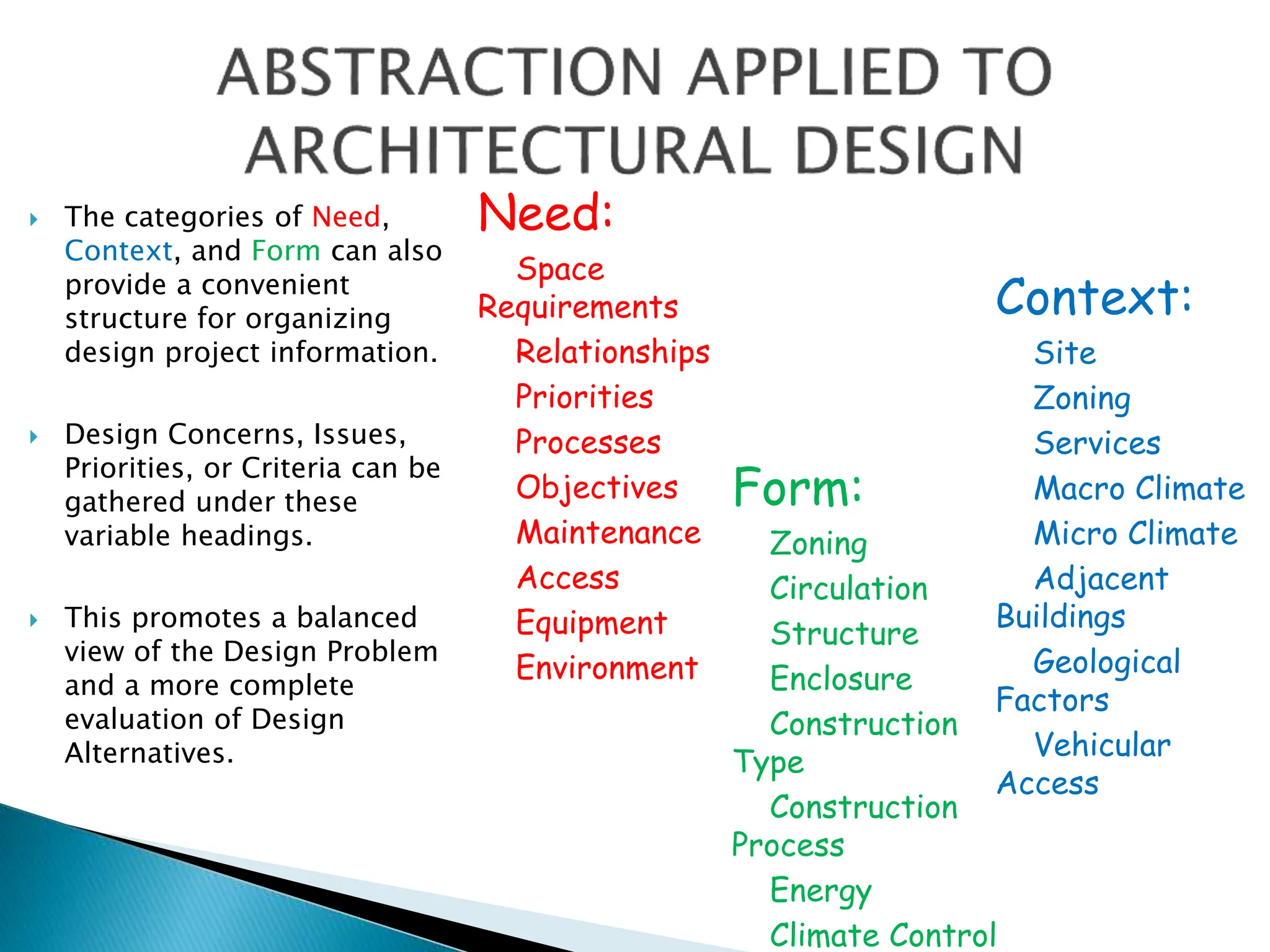
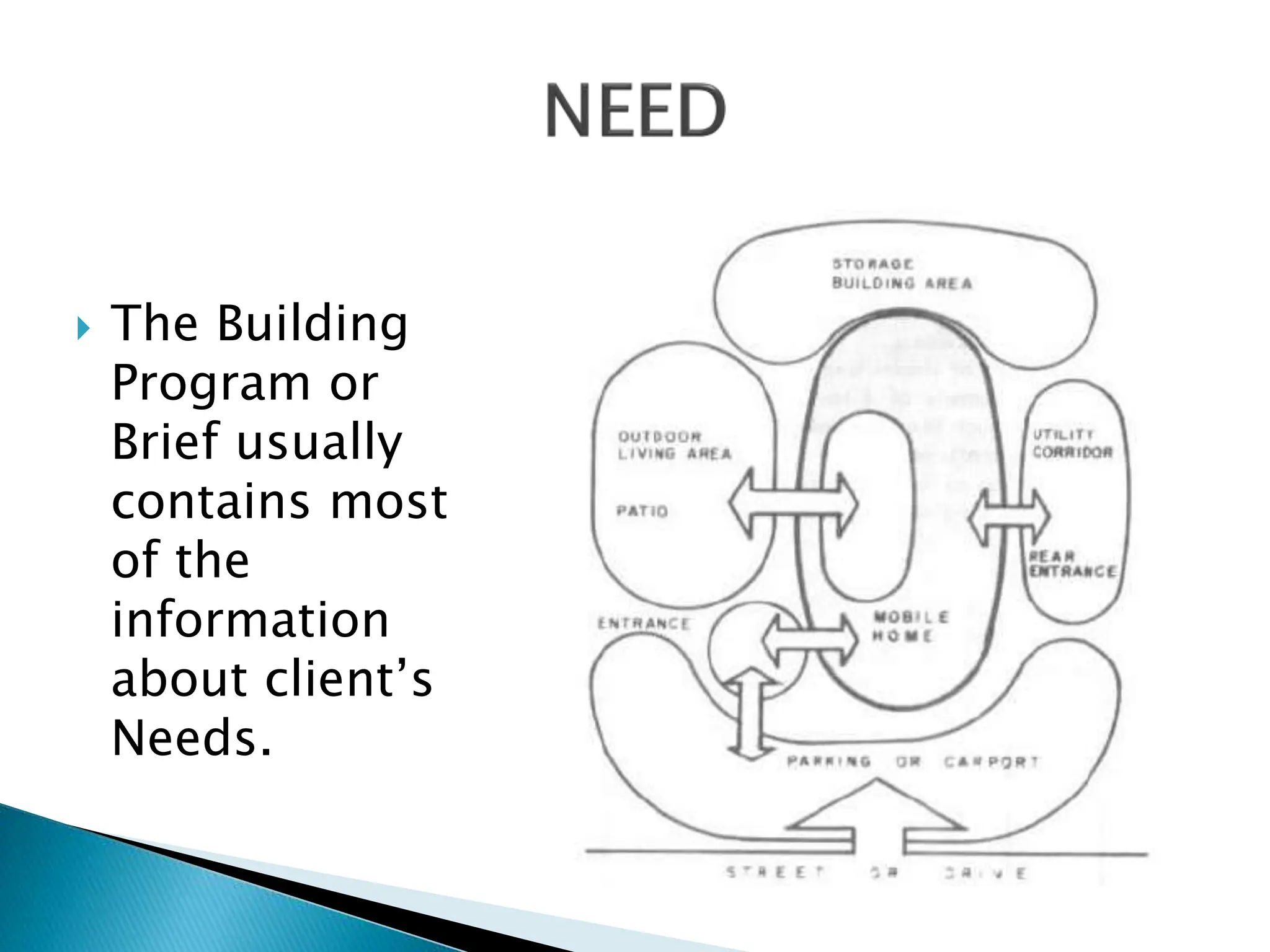
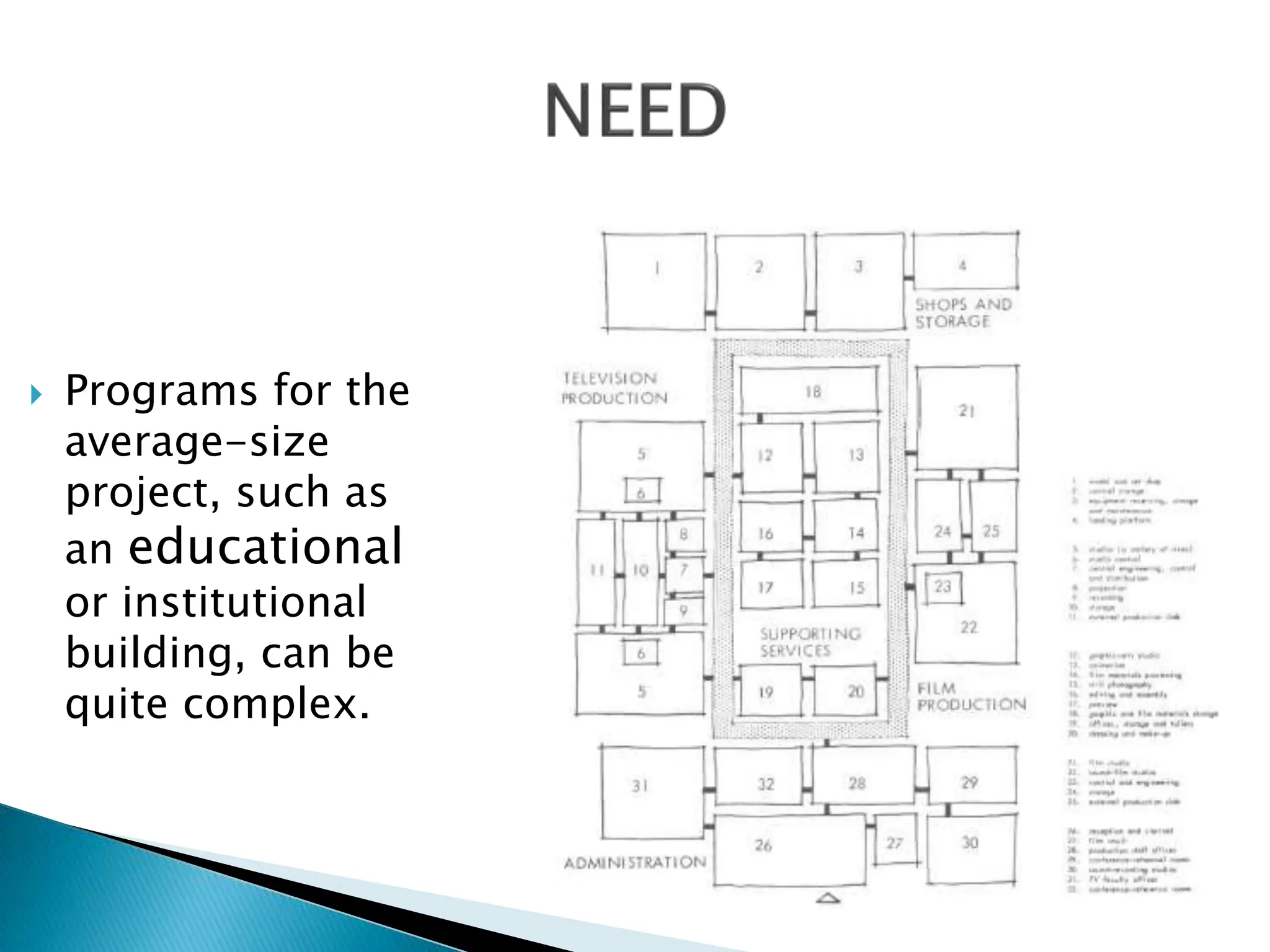
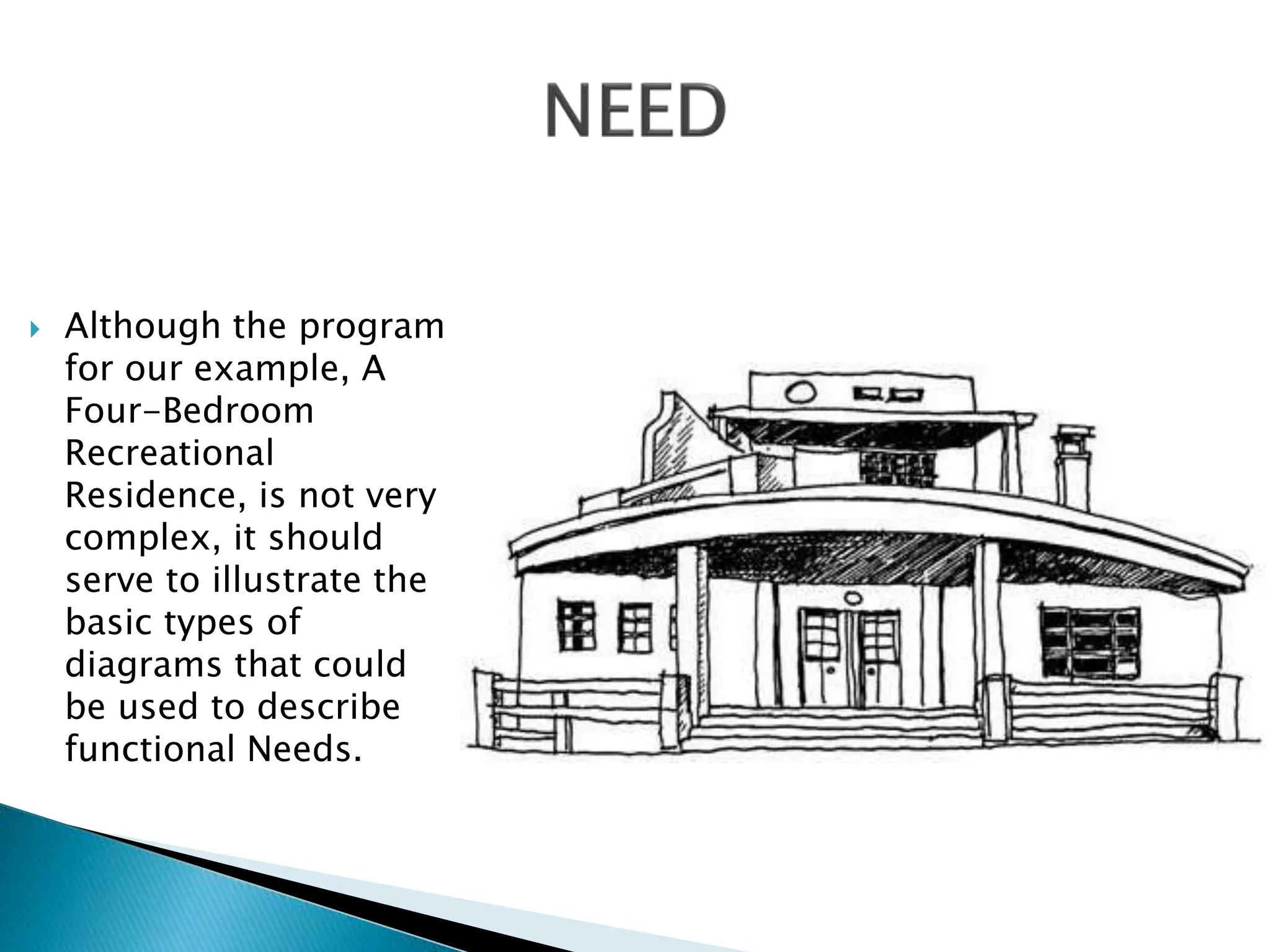
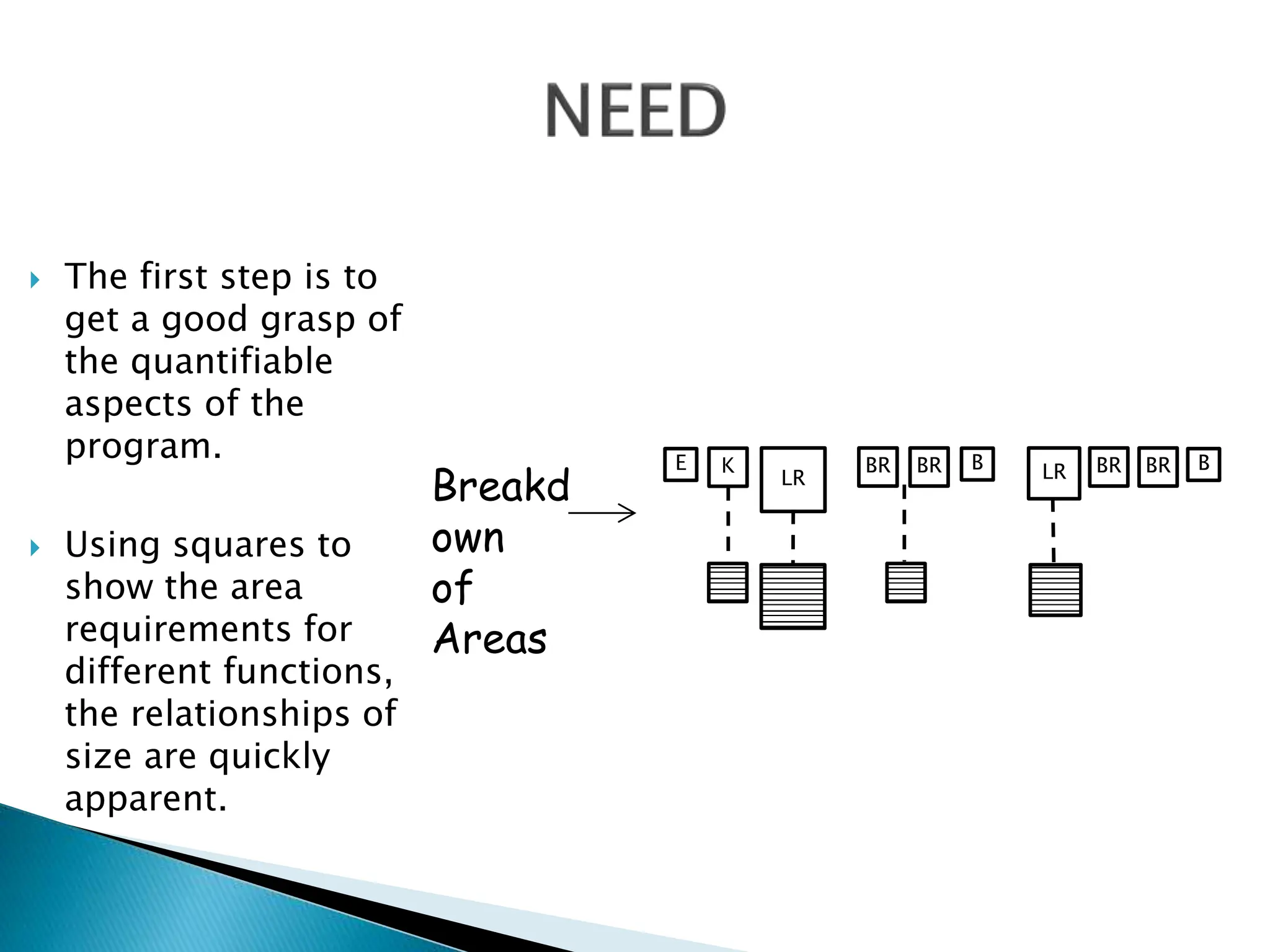
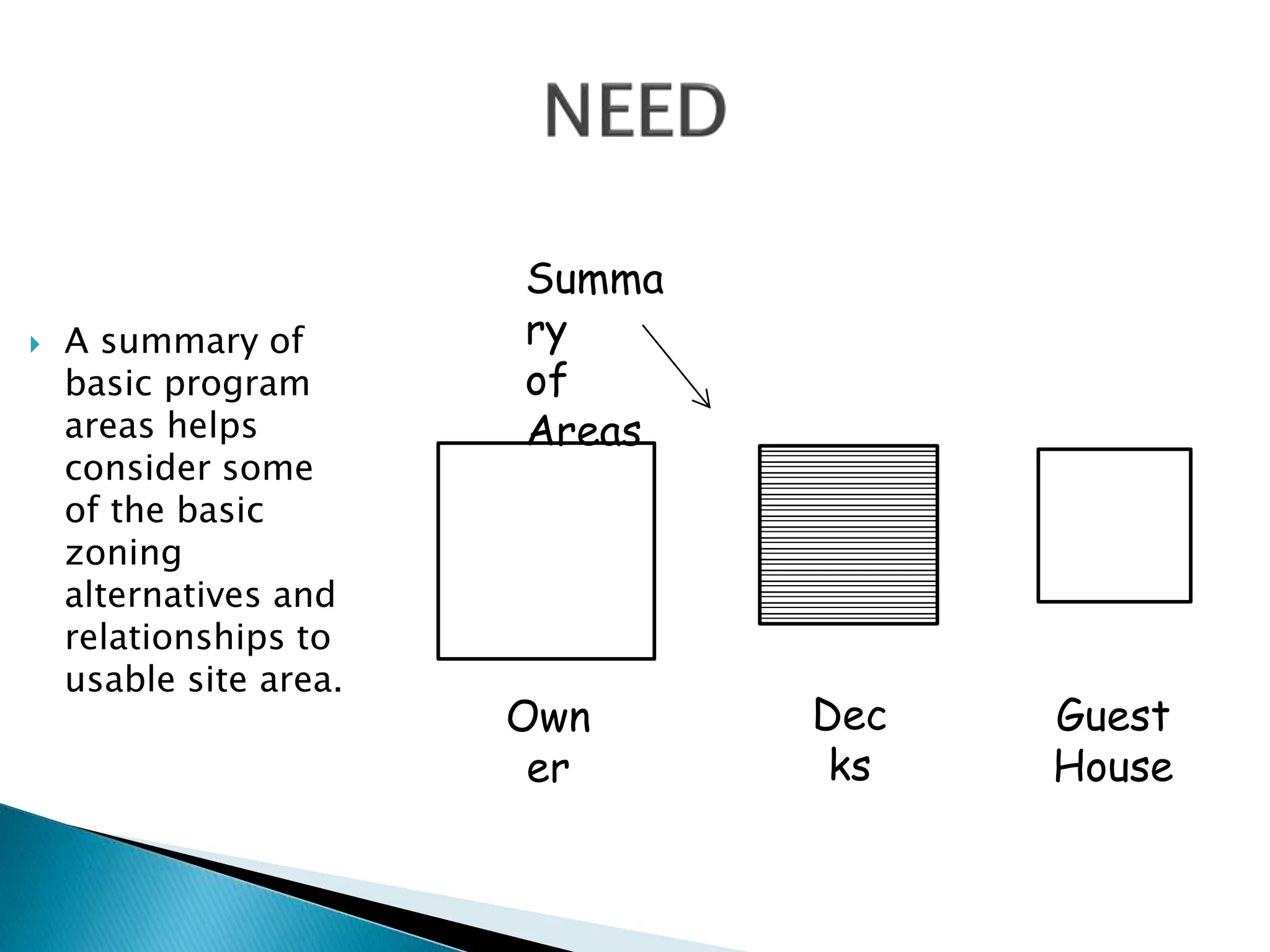
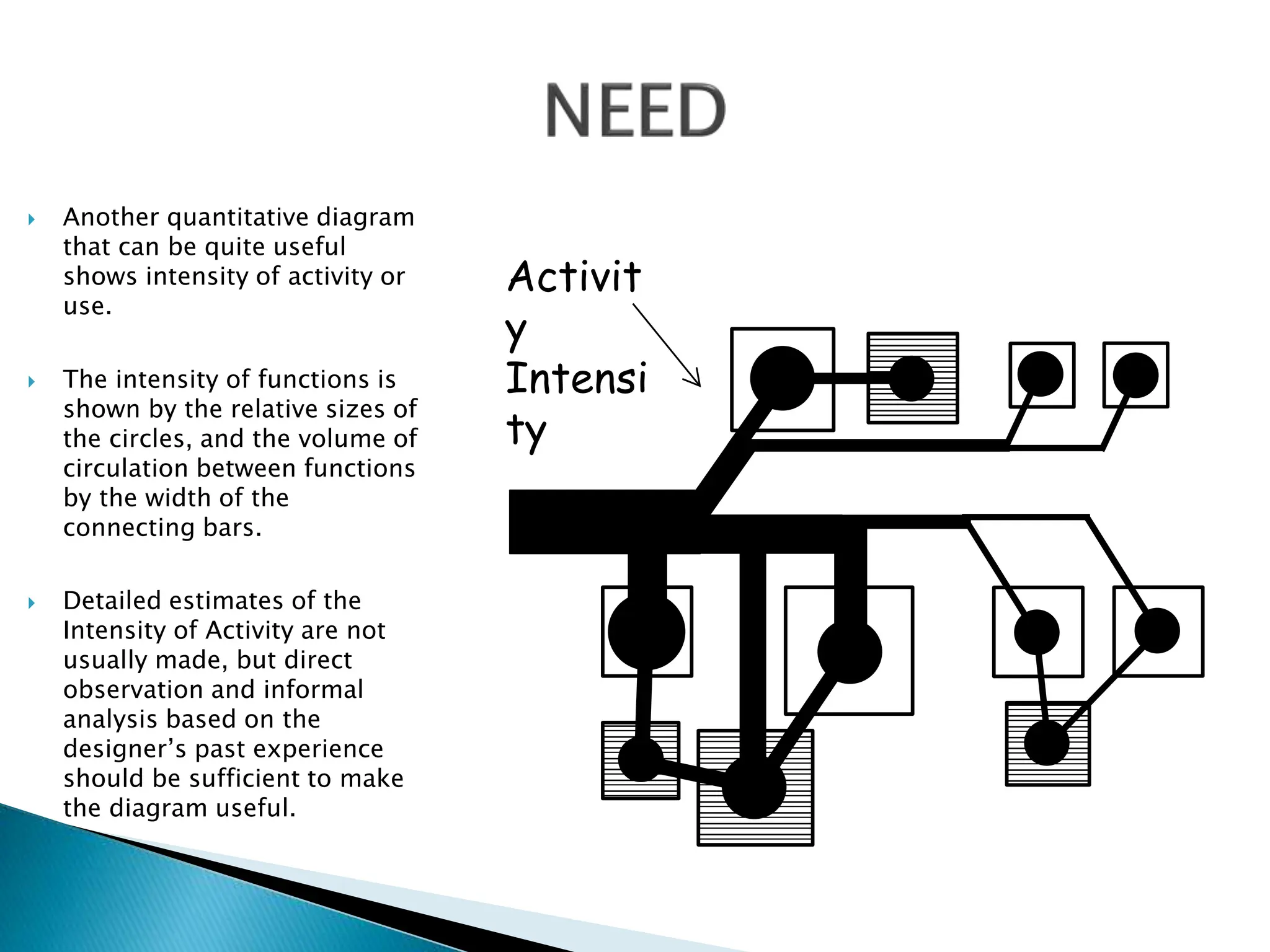
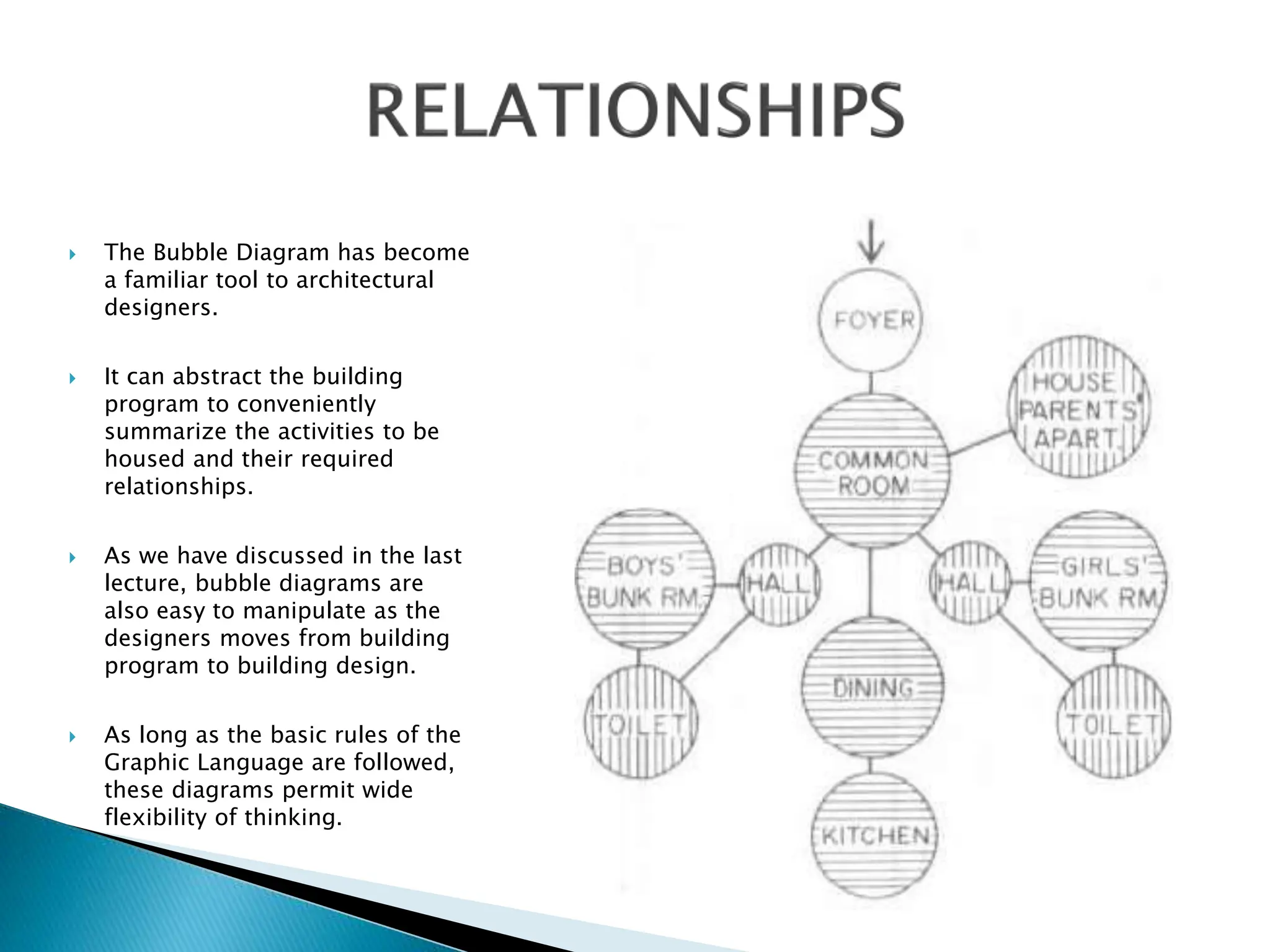
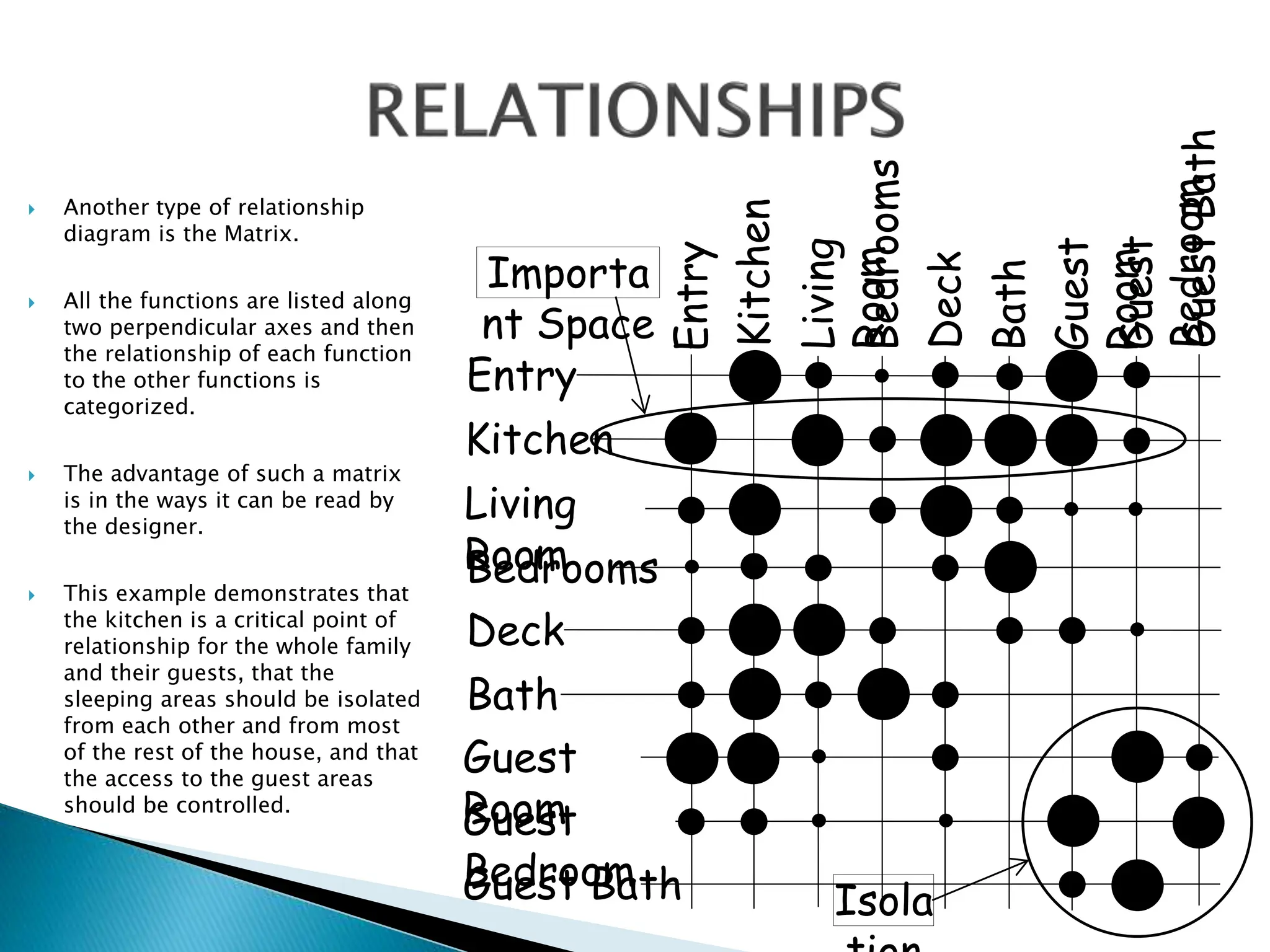
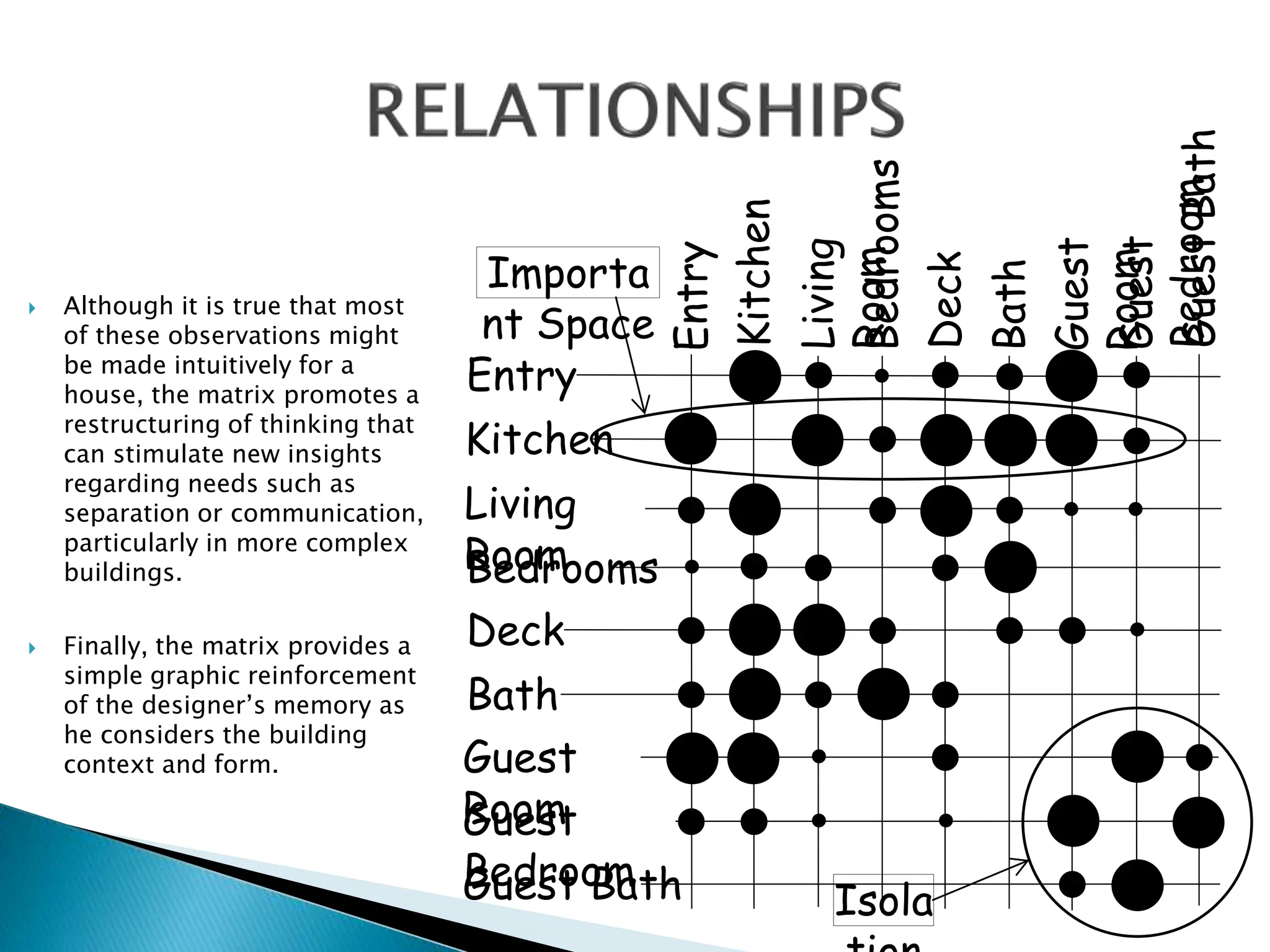
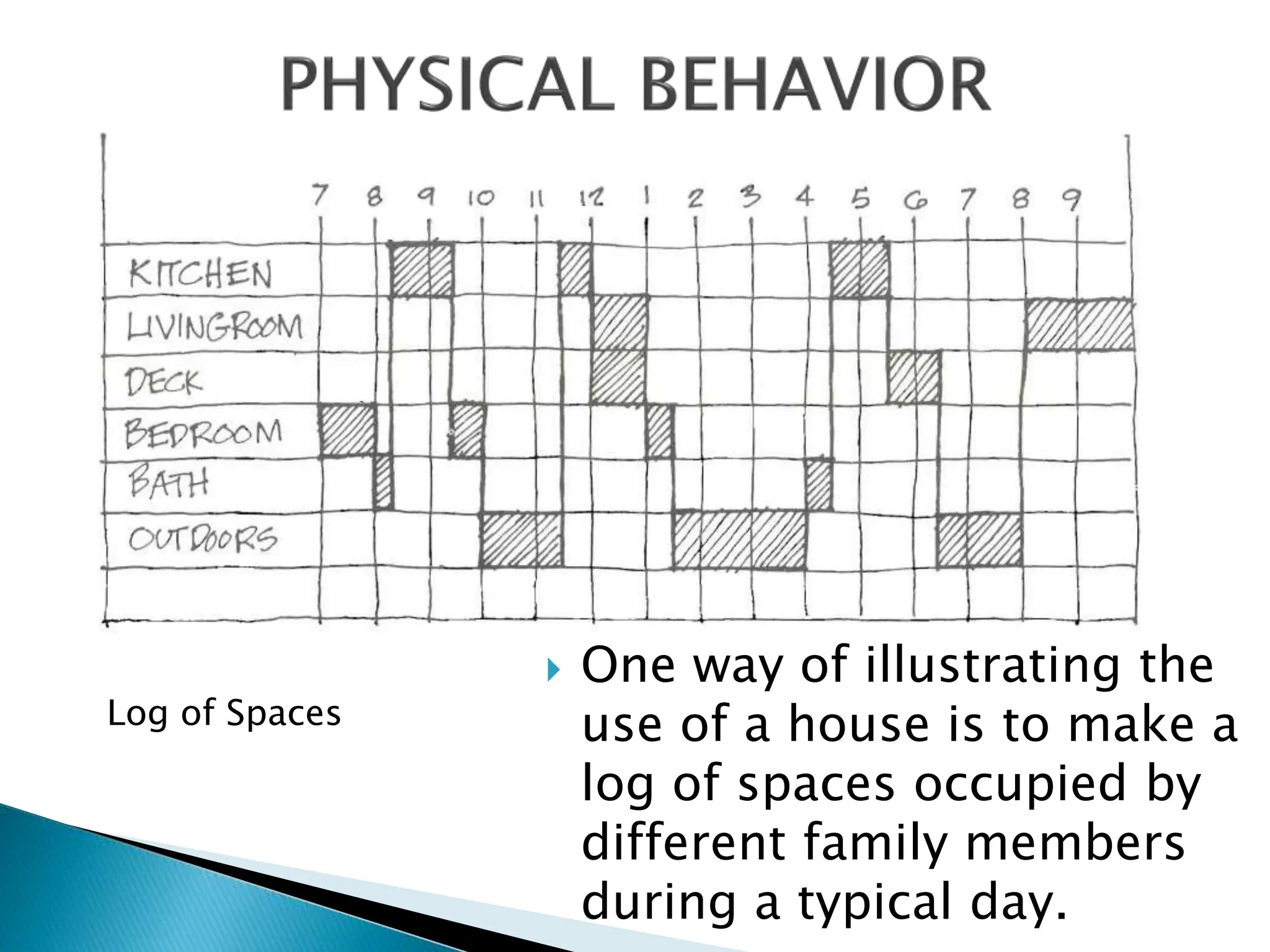
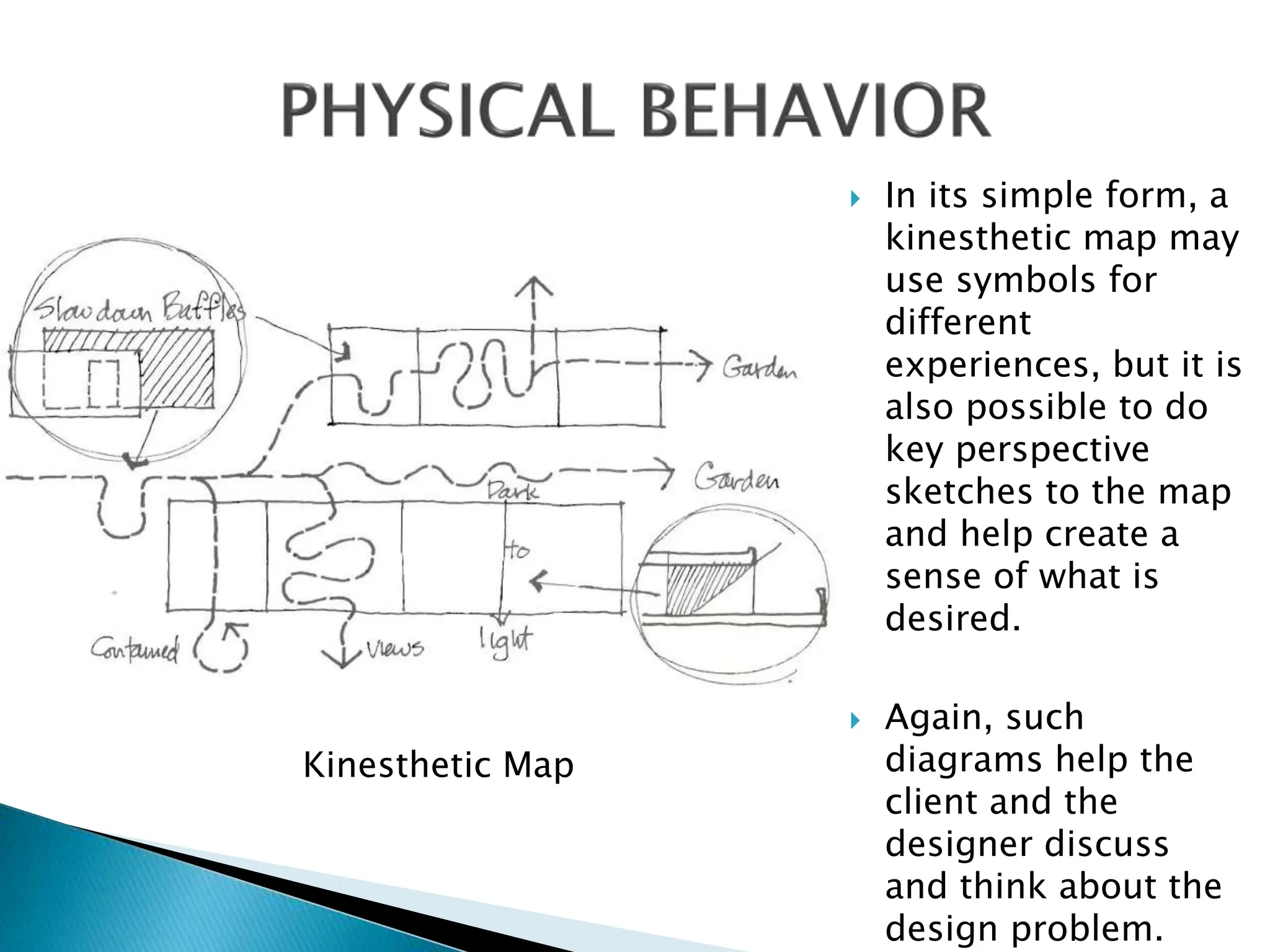
This document discusses abstraction and diagrams used in architectural design to represent client needs and program requirements. It describes how needs, context, and form variables define architectural design problems. Diagrams like bubble diagrams, area summaries, and relationship matrices can abstractly represent a program's quantitative and qualitative needs to aid the design process. Capturing circulation experiences and how family members use spaces through maps and logs further informs a design solution. These graphic tools help structure information and stimulate new insights for balancing needs, context, and an optimal building form.



![RA 9514 (BVBVBVBVBVBVBVBVBBVBVBVBBVB)].pdf](https://cdn.slidesharecdn.com/ss_thumbnails/ra9514roboto-240215092702-ec8c7fe4-thumbnail.jpg?width=640&height=640&fit=bounds)


![Number_Guessing_Game_Dsbsbssbzboc[1].pptx](https://cdn.slidesharecdn.com/ss_thumbnails/numberguessinggamedoc1-251206215042-a076fc05-thumbnail.jpg?width=640&height=640&fit=bounds)


