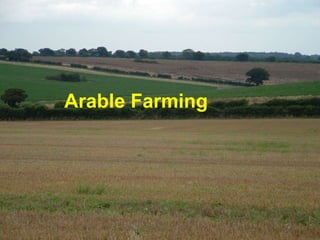
Arable Farming
Source:
Arable Crops
• Cereals
– Wheat, Barley, Oats
• Oilseeds
– Oilseed Rape, Linseed
• Legumes
– Clover, Peas, Beans
• Root Crops
– Potatoes, Sugar Beet, Field Veg
• Forage crops
– Stubble Turnips, Maize
Source: www.ecifm.rdg.ac.uk
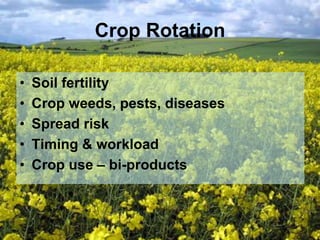
Crop Rotation
• Soil fertility
• Crop weeds, pests, diseases
• Spread risk
• Timing & workload
• Crop use – bi-products
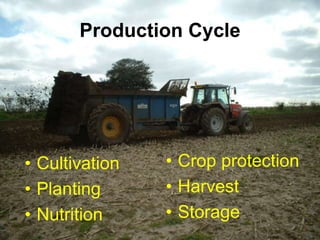
Production Cycle
• Cultivation
• Planting
• Nutrition
• Crop protection
• Harvest
• Storage
Cultivation
• Bury trash
• Loosen soil
• Plant into clean soil
Planting
• Fine, firm tilth
• Seed rate, depth
• Tramlines
Nutrition
• Fertilizer
• FYM and Slurry
• N,P,K
• Timing
• Pollution
• Cost
Crop Protection
• Weeds – competition
• Pests – damage
• Diseases – damage
• Human/animal health
• Quantity – yield
• Quality – use
Harvest
• Timing
• Weather
• Crop condition
• Trafficking
• Aftermath
• Storage
An Arable Year
Month Wheat Potatoes OSR Sugar
Beet
Sept Cultivate Drilling Campaig
n begins
Oct Drilling
Nov/Dec Sprays Sprays
Jan/Feb Cultivate
De-stone
Cultivate
March Fertilizer Cultivate Fertilizer
Spray
Drilling
April Fertilizer
Spray
Planting Flowering Sprays
May Spray Spray Spray Sprays
June Spray 1st Earlies
harvested
Swath/
Dessicate
Sprays
July Harvest 2nd Earlies
harvested
Harvest
August Harvest Main crop
harvest
3 signs of Environmental
Improvement
• Pollution incidents caused by farming have
fallen by 92% since 1990
• Levels of pesticides detected in rivers
have declined
• Some farmland wildlife species have
begun to stabilise and recover (otters and
stone curlews)
Source: Good Farming, Better Environment by EA and NFU
Top 3 Concerns
• Nutrients, pesticides and sediment from
farms are still polluting watercourses
• Some farmland species are still in decline
– 6 out of the 9 most threatened farmland bird
species (starling, turtle dove, yellowhammer,
linnet, grey partridge, and skylark) continue
to decline.
• Climate change implications still unknown
Source: Good Farming, Better Environment by EA and NFU
Dramatic Decline in Farmland
Birds
89%
Since 1970
55%
Since 1970
88%
Since 1970
Population Decline
What changes in farming practices
have led to species decline?

Arable farming

  • 1.
  • 2.
  • 4.
    Arable Crops • Cereals –Wheat, Barley, Oats • Oilseeds – Oilseed Rape, Linseed • Legumes – Clover, Peas, Beans • Root Crops – Potatoes, Sugar Beet, Field Veg • Forage crops – Stubble Turnips, Maize
  • 5.
  • 7.
    Crop Rotation • Soilfertility • Crop weeds, pests, diseases • Spread risk • Timing & workload • Crop use – bi-products
  • 8.
    Production Cycle • Cultivation •Planting • Nutrition • Crop protection • Harvest • Storage
  • 9.
    Cultivation • Bury trash •Loosen soil • Plant into clean soil
  • 10.
    Planting • Fine, firmtilth • Seed rate, depth • Tramlines
  • 11.
    Nutrition • Fertilizer • FYMand Slurry • N,P,K • Timing • Pollution • Cost
  • 12.
    Crop Protection • Weeds– competition • Pests – damage • Diseases – damage • Human/animal health • Quantity – yield • Quality – use
  • 13.
    Harvest • Timing • Weather •Crop condition • Trafficking • Aftermath • Storage
  • 14.
    An Arable Year MonthWheat Potatoes OSR Sugar Beet Sept Cultivate Drilling Campaig n begins Oct Drilling Nov/Dec Sprays Sprays Jan/Feb Cultivate De-stone Cultivate
  • 15.
    March Fertilizer CultivateFertilizer Spray Drilling April Fertilizer Spray Planting Flowering Sprays May Spray Spray Spray Sprays June Spray 1st Earlies harvested Swath/ Dessicate Sprays July Harvest 2nd Earlies harvested Harvest August Harvest Main crop harvest
  • 16.
    3 signs ofEnvironmental Improvement • Pollution incidents caused by farming have fallen by 92% since 1990 • Levels of pesticides detected in rivers have declined • Some farmland wildlife species have begun to stabilise and recover (otters and stone curlews) Source: Good Farming, Better Environment by EA and NFU
  • 17.
    Top 3 Concerns •Nutrients, pesticides and sediment from farms are still polluting watercourses • Some farmland species are still in decline – 6 out of the 9 most threatened farmland bird species (starling, turtle dove, yellowhammer, linnet, grey partridge, and skylark) continue to decline. • Climate change implications still unknown Source: Good Farming, Better Environment by EA and NFU
  • 19.
    Dramatic Decline inFarmland Birds 89% Since 1970 55% Since 1970 88% Since 1970 Population Decline
  • 20.
    What changes infarming practices have led to species decline?